Medicaid Program Integrity: Tracking State-Specific and Nationwide Federal Action
Tracking Federal Action
The Trump Administration and Congress continue to focus on rooting out fraud, waste, and abuse in federal programs, including Medicaid. Those efforts include 50-state initiatives and targeted actions that focus on issues in specific states. Given the quickly evolving Medicaid program integrity landscape, this page tracks emerging developments in the federal government’s approach to program integrity in Medicaid, along with the implications of those actions for different states. For more detailed analyses and context, see ‘Related Resources’ in Section 2.
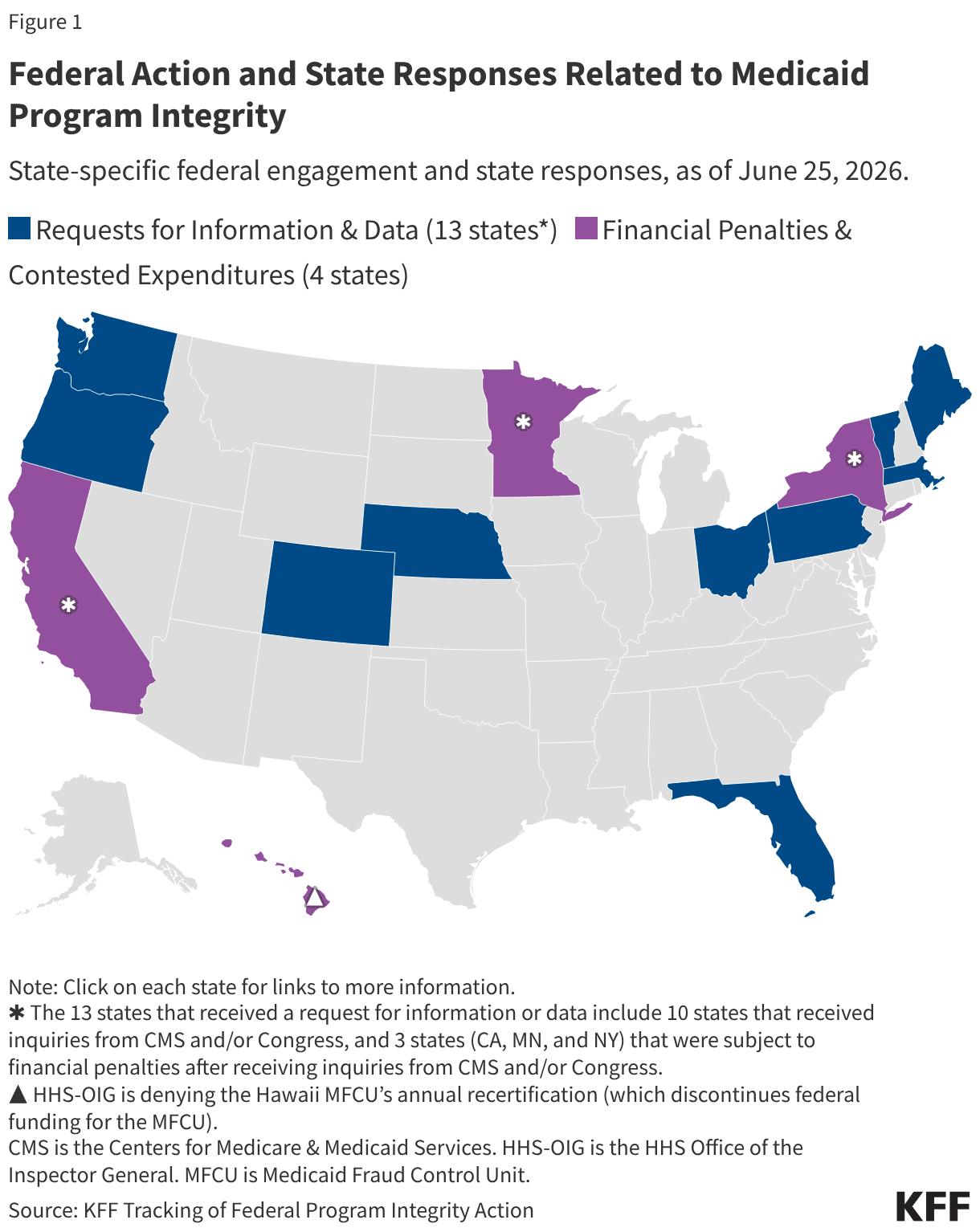
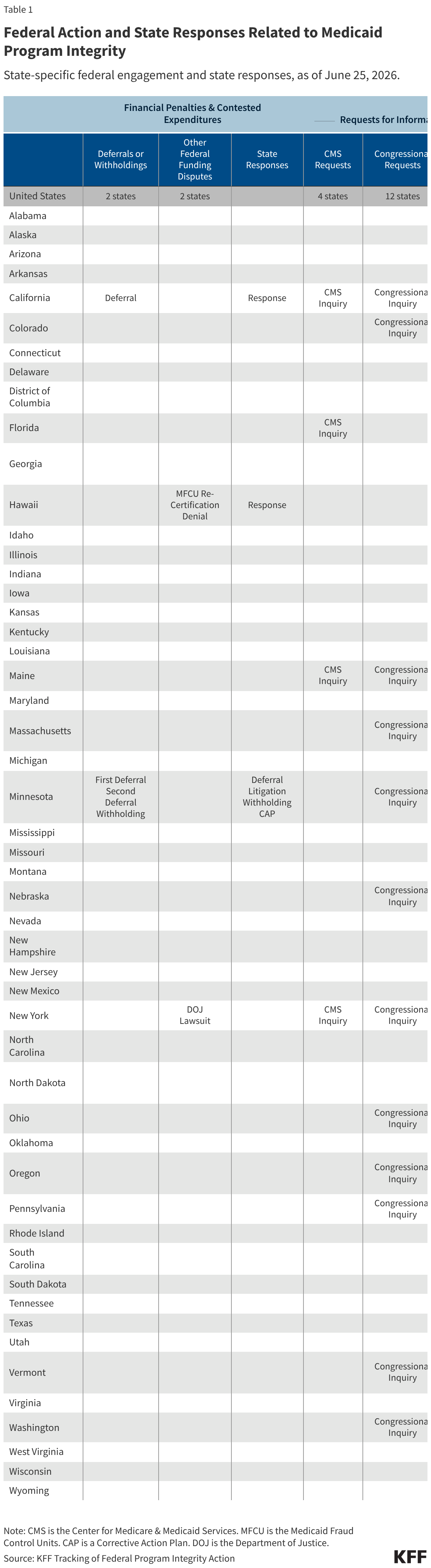
This page tracks the federal government’s 50-state initiatives and targeted actions focused on Medicaid program integrity (Figure 1 and Table 1). The map and tracker include federal actions towards states and exclude actions towards providers (such as those governing providers’ ability to participate in Medicaid and civil or criminal charges).
The following federal actions are included when materials are publicly available, along with states’ publicly available responses:
- Financial penalties and contested expenditures including:
- Notices of potential or actual withholding, deferrals, or disallowances of federal funding expressly tied to program integrity concerns; and
- Other federal Medicaid funding in dispute (e.g., Health and Human Services (HHS)-Office of the Inspector General (OIG) funding for Medicaid Fraud Control Units or Department of Justice (DOJ)-contested state Medicaid program expenses).
- Requests for state information and state responses, including formal inquiries, probes, or other materials that investigate specific state Medicaid programs or require states to respond with new information or an action plan.
The figure and table exclude the following actions:
- Routine deferrals/disallowances (i.e., deferrals/disallowances only for longstanding disputed Medicaid claims and/or are not identified by CMS as expressly tied to concerns about fraud/waste/abuse);
- HHS-OIG audits that are initiated as part of planned work and are more narrow or targeted in scope, and/or are not expressly tied to broader concerns about fraud/waste/abuse;
- Routine DOJ proceedings (i.e., proceedings which target specific instances of fraud/waste/abuse against a Medicaid program but do not name a state Medicaid official as party to the case nor tie state claims for federal Medicaid funds to a case outcome); and
- State or federal actions that do not have publicly available documentation (i.e., actions that may be referenced or announced in reporting or on social media but without documentation from federal or state governments).
Related Resources
KFF issue briefs related to Medicaid program integrity or fraud, waste, and abuse.
- States’ Use of Program Integrity Tools in Medicaid Home Care
- Understanding the Role of Medicaid Fraud Control Units (MFCUs)
- What to Know About Recent Federal Actions Involving State Medicaid Program Integrity
- CMS’ New Approach to Federal Medicaid Spending in Cases of Potential Fraud
- Understanding Medicaid Home Care Amid CMS Focus on Potential Fraud and Abuse
- What Newly Released Medicaid Data Do and Don’t Tell Us
- 5 Key Facts About Medicaid Program Integrity – Fraud, Waste, Abuse and Improper Payments