Immigrant Health

survey of immigrants

KFF-New York Times Survey: Immigrants Report Rising Fear, Negative Economic and Health Impacts, and Changing Political Views During the First Year of President Trump’s Second Term

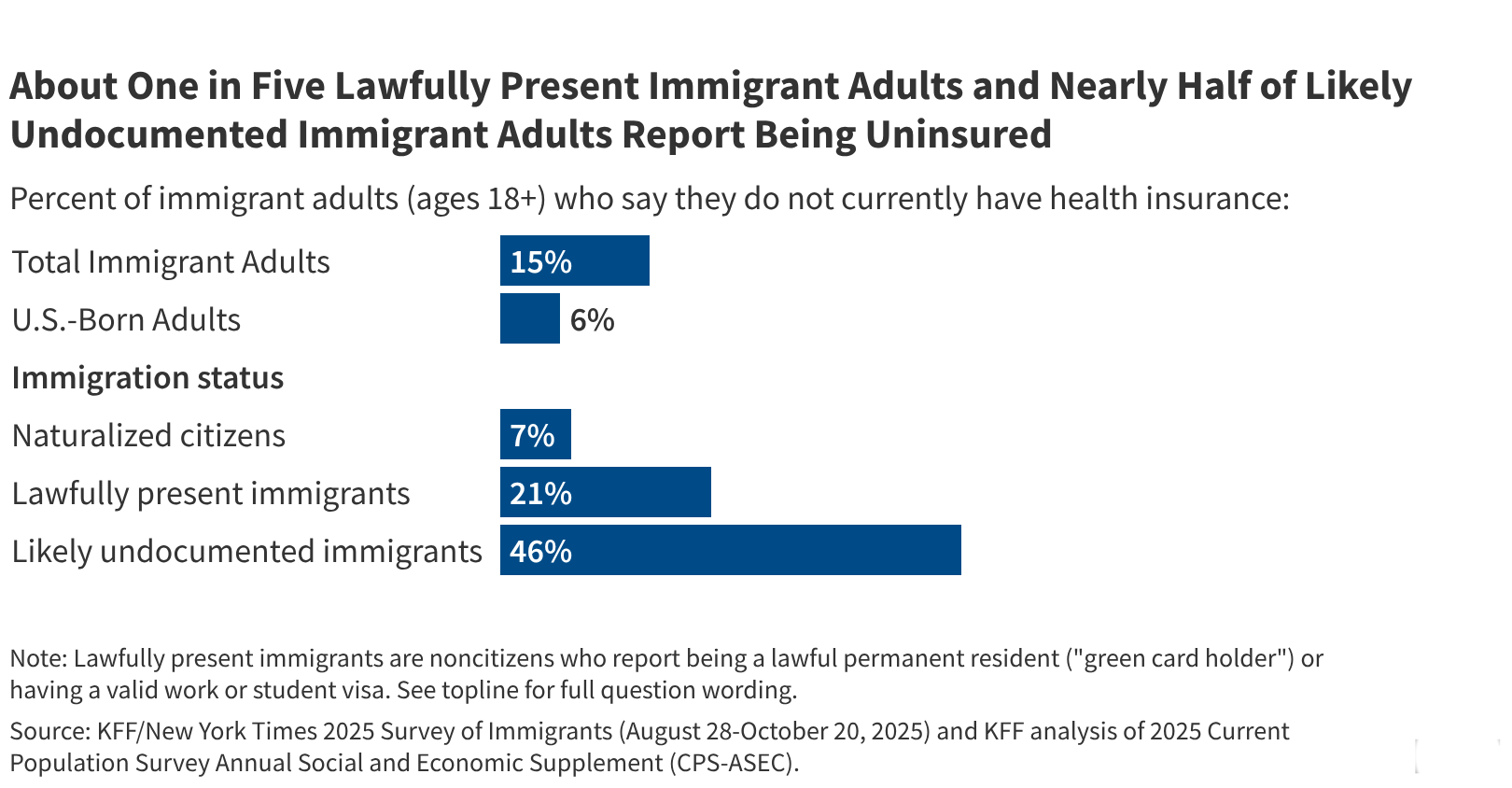
The 2025 Survey of Immigrants, a partnership between KFF and The New York Times, takes an in-depth look at the experiences of immigrants during the first year of President Trump’s second term, including their worries related to increased immigration enforcement, their health and economic wellbeing, and the political views and preferences of immigrant voters. The survey paints a portrait of families under strain — where fear of detention and economic instability are negatively impacting immigrants’ health and reshaping immigrant families’ daily lives and views of U.S. political parties.

Read the News Release | Explore The New York Times’ Reporting
Key Facts and Analysis

Subscribe to KFF Emails

Choose which emails are best for you.
Sign up here

Filter

121 - 130 of 161 Results

  • Potential Effects of Public Charge Changes on Health Coverage for Citizen Children

    Issue Brief

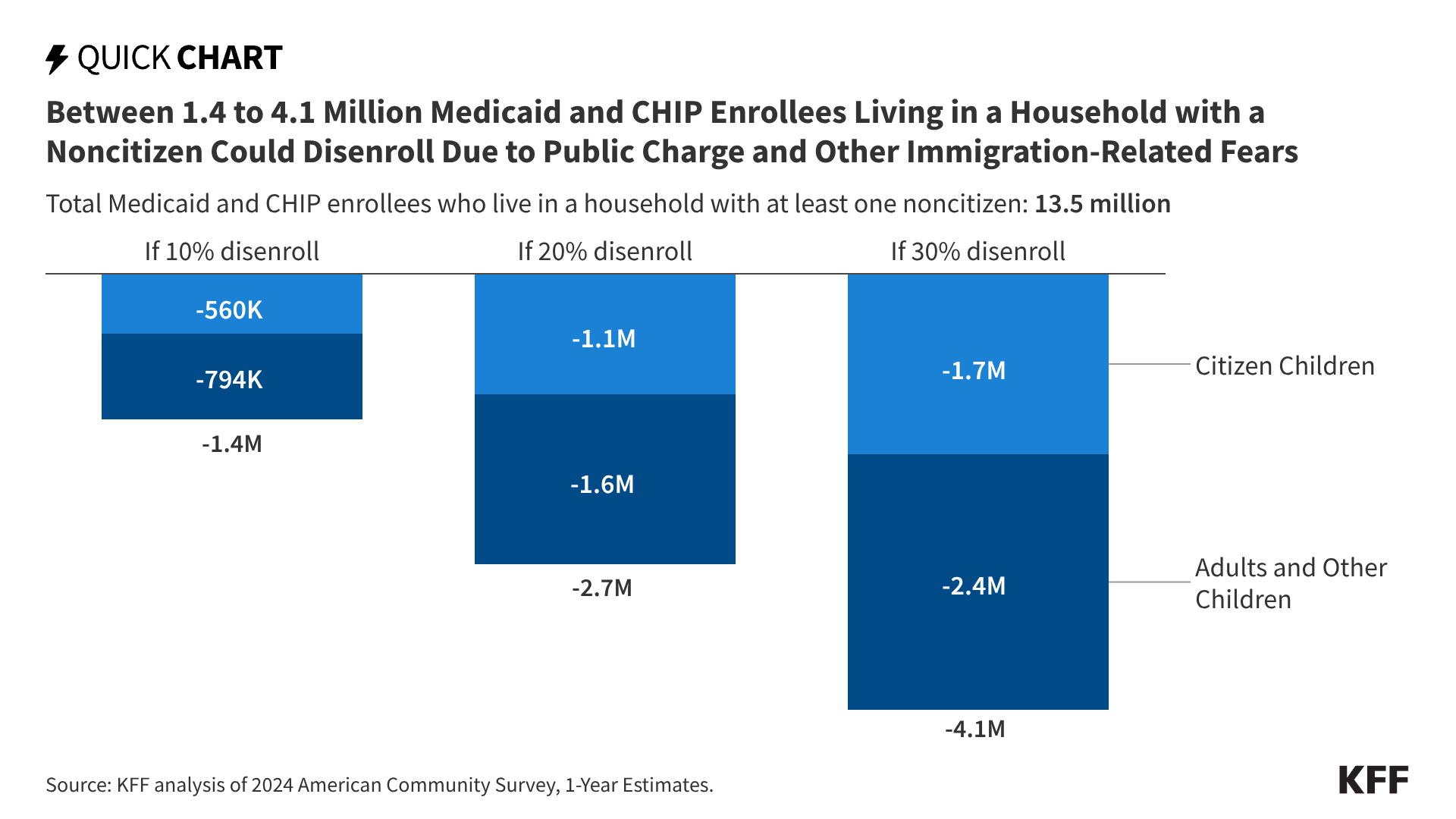
    The Trump Administration is pursuing changes that, for the first time, would allow the federal government to take into account use of Medicaid, CHIP, subsidies for Marketplace coverage and other health, nutrition, and non-cash programs when making public charge determinations. These changes would likely lead to decreased participation in Medicaid, CHIP, Marketplace coverage, and other programs among legal immigrants and their citizen children, even though they would remain eligible.

  • Nearly 20 Million Children Live in Immigrant Families that Could Be Affected by Evolving Immigration Policies

    Issue Brief

    President Trump has intensified national debate about immigration by implementing policies to enhance immigration enforcement and restrict legal immigration. Recent findings show that the climate surrounding these policies has significantly increased fear and uncertainty among immigrant families, broadly affecting families across different immigration statuses and locations. The effects extend to lawfully present immigrants, including lawful permanent residents or “green card” holders, and children in immigrant families, who are predominantly U.S.-born citizens. In particular, findings point to both short- and long-term negative consequences on the health and well-being of children in immigrant families.
    Potential changes to public charge policies intended to reduce use of public programs by immigrant families, including their citizen children, could further increase strains on immigrant families and lead to losses in health coverage. To provide insight into the scope of potential impacts of continually evolving immigration policy on children, this data note provides nationwide and state-level estimates (Table 1) of citizen children living in immigrant families and the number currently covered by Medicaid/CHIP coverage.

  • Hurricane Harvey: The Experiences of Immigrants Living in the Texas Gulf Coast

    Report

    In order to better understand the particular needs of immigrants both in recovering from and preparing for future storms, this analysis from the Kaiser Family Foundation and the Episcopal Health Foundation highlights the views and experiences of foreign-born residents who were living in 24 coastal Texas counties hard-hit by Hurricane Harvey. Specifically, the brief explores the financial circumstances of immigrants following the storm, as well as their health care access, social support, and top priorities for rebuilding and recovery efforts in their area.

  • Vivir en una Familia de Inmigrantes en los Estados Unidos: Cómo el Miedo y el Estrés Tóxico Están Afectando la Vida Diaria, el Bienestar y la Salud

    Issue Brief

    Este informe examina las experiencias de los padres y hijos de inmigrantes, incluidos los inmigrantes indocumentados y aquellos legalmente presentes, con las nuevas restricciones de inmigración y el aumento de las leyes de inmigración siendo perseguidos por la Administración de Trump que están reformando la política de inmigración del EE.UU.. Realizamos grupos focales con 100 padres de 15 países y 13 entrevistas con pediatras para obtener una idea de cómo el ambiente actual está afectando la vida diaria, el bienestar y la salud de las familias inmigrantes, incluidos sus hijos.

  • Living in an Immigrant Family in America: How Fear and Toxic Stress are Affecting Daily Life, Well-Being, & Health

    Issue Brief

    This brief examines the experiences of immigrant parents and children, including immigrants who are undocumented and those lawfully present, with the new restrictions on immigration and increased immigration enforcement being pursued by the Trump Administration that are reshaping U.S. immigration policy. Findings are based on focus groups in eight cities and four states with 100 parents in immigrant families from 15 countries, as well as telephone interviews with 13 pediatricians who serve immigrant communities.

  • Survey: Three Months after Hurricane Harvey, Nearly Half of Affected Texas Residents Say They are Not Getting the Help They Need to Recover

    News Release

    KFF/EHF Survey Examines Residents’ Experiences and Views in 24 Hard-Hit Counties across Texas Two-thirds (66%) of residents across 24 Texas counties report that they suffered property damage, employment disruptions and/or lost income due to Hurricane Harvey, finds a new Kaiser Family Foundation/Episcopal Health Foundation survey.

  • An Early Assessment of Hurricane Harvey’s Impact on Vulnerable Texans in the Gulf Coast Region: Their Voices and Priorities to Inform Rebuilding Efforts

    Report

    To understand the needs and circumstances of vulnerable Texans affected by Hurricane Harvey, the Kaiser Family Foundation and the Episcopal Health Foundation partnered to conduct a survey of adults in 24 coastal Texas counties hard-hit by the storm, along with 5 focus groups in Houston and Beaumont. The survey finds residents’ top needs in recovering from the disaster focus on housing and financial issues, while some also struggle with access to health care and mental health issues resulting from the storm. Black and Hispanic residents and those with lower incomes are more likely to report being affected by Harvey-related property damage and employment issues. The survey also probes residents’ views on the local, state, and federal governments’ response to the storm, as well as the priorities they see for the rebuilding moving forward.