Immigrant Health

survey of immigrants

KFF-New York Times Survey: Immigrants Report Rising Fear, Negative Economic and Health Impacts, and Changing Political Views During the First Year of President Trump’s Second Term

The 2025 Survey of Immigrants, a partnership between KFF and The New York Times, takes an in-depth look at the experiences of immigrants during the first year of President Trump’s second term, including their worries related to increased immigration enforcement, their health and economic wellbeing, and the political views and preferences of immigrant voters. The survey paints a portrait of families under strain — where fear of detention and economic instability are negatively impacting immigrants’ health and reshaping immigrant families’ daily lives and views of U.S. political parties.

Read the News Release | Explore The New York Times’ Reporting

Subscribe to KFF Emails

Choose which emails are best for you.
Sign up here

Filter

131 - 140 of 175 Results

  • Health Coverage and Care of Undocumented Immigrants

    Issue Brief

    Recently, many of the Democratic presidential candidates indicated support for expanding health coverage to undocumented immigrants. To help inform the implications of such an expansion, this brief provides an overview of current health coverage and care for undocumented immigrants

  • Medicaid: What to Watch in 2019 from the Administration, Congress, and the States

    Issue Brief

    Medicaid, the provider of health insurance coverage for about one in five Americans and the largest payer for long-term care services in the community and nursing homes, continues to be a key part of health policy debates at the federal and state level. Important Medicaid issues to watch in 2019 include Medicaid expansion developments amid ongoing litigation about the ACA’s constitutionality as well as Medicaid demonstration waiver activities, including those focused on work requirements and…

  • Conversation on Health Care and the 2018 Midterm Elections

    Event Date:
    Event

    Health care ranks among the top issues voters want to hear candidates talk about on the campaign trail, with costs being the most concerning health issue for voters. Meanwhile, the constitutionality of the Affordable Care Act (ACA) continues to be challenged in the judicial system with the latest case potentially jeopardizing the law’s protections for people with pre-existing conditions. And in four states, ACA Medicaid expansion initiatives are on the ballot to newly expand or…

  • When a Family Member is Detained or Deported, Immigrant Families Often Face Financial Hardship, Physical and Emotional Health Consequences and New Fears of Engaging with Public Programs

    News Release

    As the Trump Administration pursues enhanced enforcement of the nation’s immigration laws, a new issue brief from the Kaiser Family Foundation documents how the detention or deportation of an individual can have major effects on families and communities. They include sudden and severe financial hardship and emotional trauma that can trigger long-term effects on mental and physical health, especially for children. At the same time as families are facing these increased needs, their fears of…

  • Family Consequences of Detention/Deportation: Effects on Finances, Health, and Well-Being

    Issue Brief

    This report examines the direct consequences to family finances, health, and well-being when a member of the household is detained or deported. It is based on 20 in-person interviews with families who recently had a family member detained or deported and 12 telephone interviews with health centers, legal services providers, educators, and community organizations serving immigrant families in California, Texas, and the Washington, DC area.

  • One Year After the Storm: Texas Gulf Coast Residents’ Views and Experiences with Hurricane Harvey Recovery

    Report

    The Kaiser Family Foundation/Episcopal Health Foundation Harvey Anniversary Survey examines the views, experiences, and long-term recovery needs of vulnerable Gulf Coast Texans who were affected by Hurricane Harvey. This survey – a follow-up to a survey conducted by the partners 3 months after the storm – measures residents’ challenges with housing, financial assistance, health care, and mental health, as well as views on priorities and preparedness moving forward. It finds many challenges are especially salient…

  • Survey: One Year after Hurricane Harvey, 3 in 10 Affected Texas Gulf Coast Residents Say Their Lives Remain Disrupted

    News Release

    Nearly a year after Hurricane Harvey swamped the Texas Gulf Coast, a growing share of affected residents say their lives are back on track, but three in 10 (30%) say their lives remain disrupted, finds a new Kaiser Family Foundation/Episcopal Health Foundation survey of residents in 24 hard-hit Texas counties. Overall the new survey finds 70 percent of affected residents say their lives are largely or almost back to normal, up from 56 percent three…

  • Key Health Implications of Separation of Families at the Border (as of June 27, 2018)

    Fact Sheet

    This fact sheet examines key health implications of separating immigrant children from their parents at the border, as of June 27, 2018. The practice came to light after implementation of the Trump Administration's zero tolerance policy for individuals entering into the U.S. without authorization. Research shows that separating children from their parents exposes them to trauma and toxic stress that can have lifelong impacts on their health.

  • New Brief Examines Potential Effects of Public Charge Changes on Health Coverage for Citizen Children 

    News Release

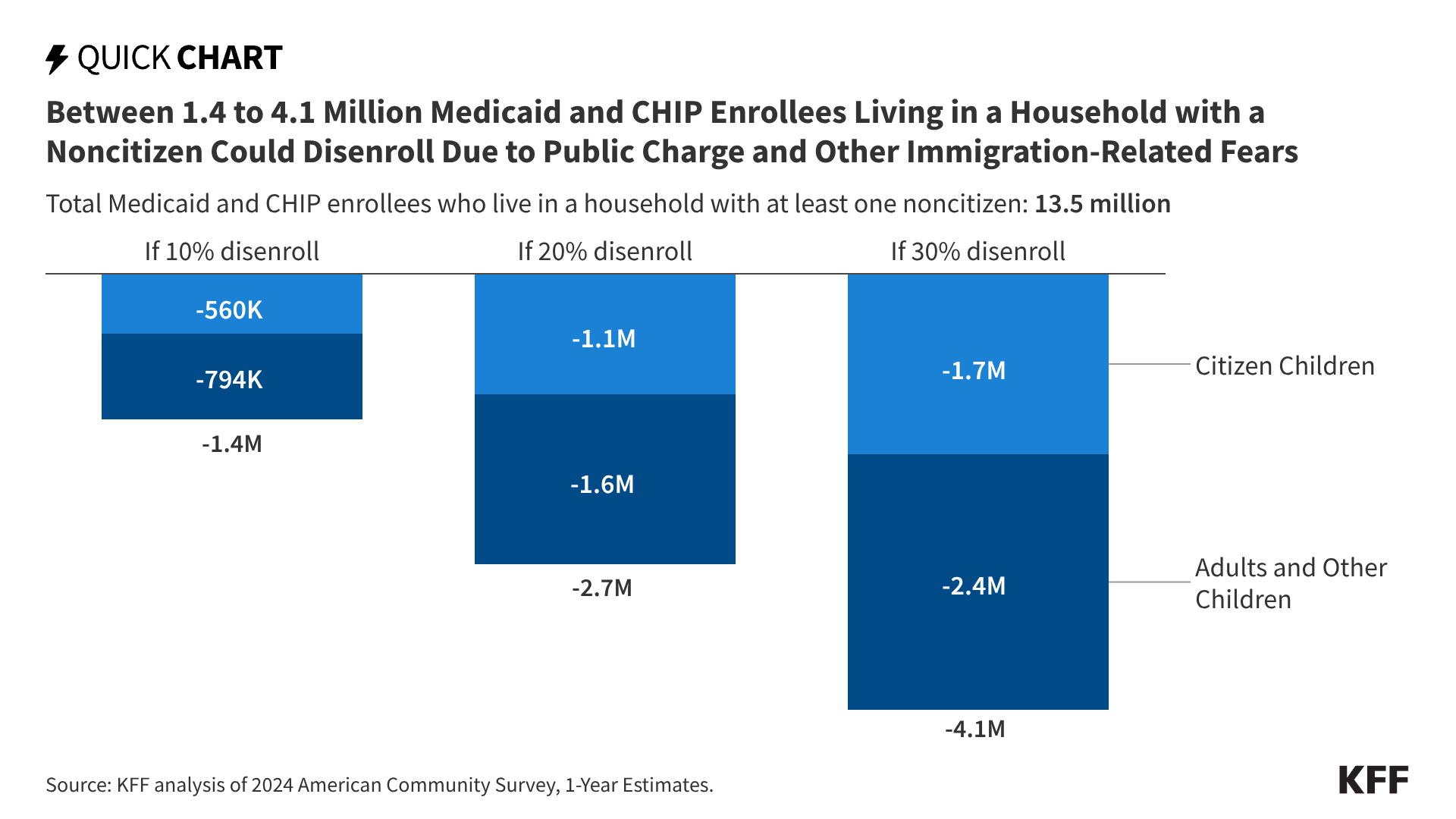
      The Trump Administration is pursuing changes that, for the first time, would allow the federal government to take into account the use of federal health, nutrition, and other non-cash public programs, including Medicaid and the Children’s Health Insurance Program (CHIP), when making a determination about whether someone is likely to be a “public charge.” Under these changes, use of these programs by an individual or a family member, including a citizen child, could result…