Immigrant Health

survey of immigrants

KFF-New York Times Survey: Immigrants Report Rising Fear, Negative Economic and Health Impacts, and Changing Political Views During the First Year of President Trump’s Second Term

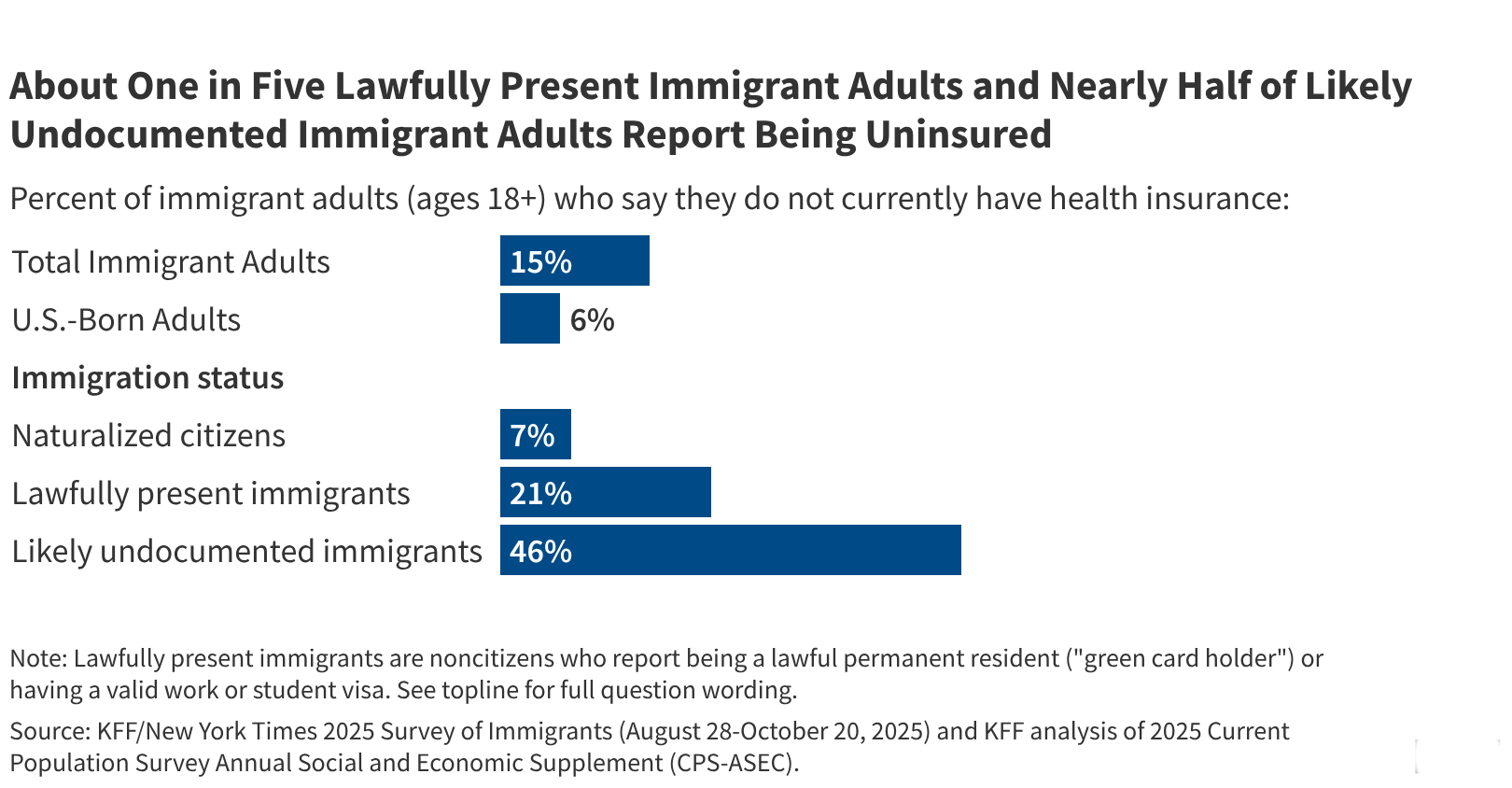
The 2025 Survey of Immigrants, a partnership between KFF and The New York Times, takes an in-depth look at the experiences of immigrants during the first year of President Trump’s second term, including their worries related to increased immigration enforcement, their health and economic wellbeing, and the political views and preferences of immigrant voters. The survey paints a portrait of families under strain — where fear of detention and economic instability are negatively impacting immigrants’ health and reshaping immigrant families’ daily lives and views of U.S. political parties.

Read the News Release | Explore The New York Times’ Reporting
Stay informed.

Stay informed.

Filter

1-10 of 188 results

  • Midterm Election Update: Immigrant Health Policy  

    Fact Sheet

    Immigration restrictions and enforcement are central to the Trump administration’s domestic agenda and a focus of debate in the 2026 midterm elections. These policies have ripple effects on health care: immigration-related fears are leading some immigrant families to avoid medical care and drop coverage, including for U.S. citizen children, and visa restrictions could strain a health care workforce that relies on immigrants. Federal law has also narrowed eligibility for health coverage among lawfully present immigrants,…

  • Green Card Processing Backlogs for Refugees and Asylees Could Have Implications for Health Coverage and Care 

    Issue Brief

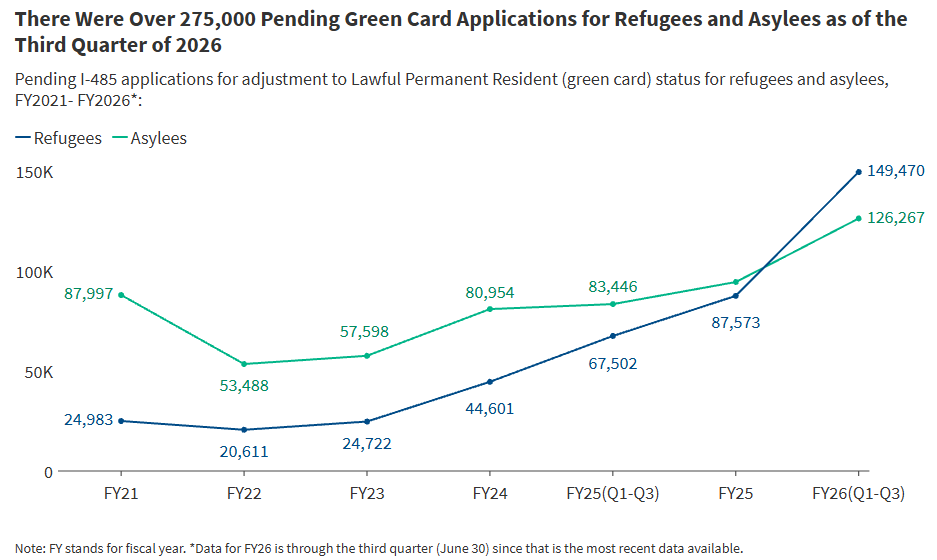
    This data note highlights changes in green card (I-485) application processing for refugees and asylees between fiscal year (FY) 2021 and FY2025, as well as across the first three quarters of FY2025 to FY2026 (since FY2026 data are only available through the third quarter). It discusses the implications of these trends for access to federally funded health coverage following eligibility changes under the 2025 reconciliation law.

  • Number of States Affected by Key Medicaid Provisions in the 2025 Reconciliation Law

    Which States Will Be Affected by Key Medicaid Provisions in the 2025 Reconciliation Law?

    Policy Watch

    The 2025 reconciliation law makes sweeping changes to Medicaid that will affect every state through key eligibility and financing changes, including new work requirements, immigrant eligibility restrictions, and changes to provider taxes and state directed payments. This issue brief explains which states will be affected by each of these key provisions.

  • Community Health Center Patients, Financing, and Services

    Issue Brief

    Community health centers served more than 32.7 million patients in medically underserved urban and rural areas in 2025. This brief reports on health center patients, services, and financing in 2025, using national data from the Uniform Data System (UDS).

  • Overview of Health Coverage and Care for Individuals with Limited English Proficiency (LEP)

    Issue Brief

    As of 2024, approximately 28.5 million people in the United States ages five and older have limited English proficiency (LEP). Individuals with LEP disproportionately experience gaps in health insurance coverage and poor health outcomes, in part, due to language access barriers. Because people of color are more likely than White people to have LEP, these barriers can also exacerbate racial and ethnic disparities in health and health care.

  • An image of text is an excerpt from Drishti Pillai's quick take which reads, "A decline in H-1B workers would disproportionately impact states that employ the largest shares of H-1B workers (NY, MA, CA, and PA), lower income and rural areas where H-1B health care workers often are employed, and smaller employers, who would face greater challenges paying the fee."

    The Trump Administration’s Proposed $103,265 Fee for H-1B Visas Could Affect the Health Care Workforce

    Quick Insights

    The proposed $103,265 fee could lead to reductions in U.S. health care workforce, increasing barriers to care….A decline in H-1B workers would disproportionately impact states that employ the largest shares of H-1B workers (NY, MA, CA, and PA), lower income and rural areas where H-1B health care workers often are employed, and smaller employers, who would face greater challenges paying the fee.

  • c alt text: Quote from Samantha Artiga, KFF Senior Vice President and Director of the Racial Equity and Health Policy Program. It says, “While the DHS guidance provides more details on public charge determinations under the new rule, it leaves key concepts unspecified and grants substantial discretion to individual immigration officers. This will likely result in ongoing confusion and fear among immigrant families that may deter them and their citizen children from participating in programs that help pay for health care, housing, or food even if they are eligible.”

    New Guidance on Public Charge Determinations Does Not Specify Key Concepts, Likely Resulting in Immigrant Families Facing Ongoing Confusion and Fear

    Quick Insights

    While the DHS guidance provides more details on public charge determinations under the new rule, it leaves key concepts unspecified and grants substantial discretion to individual immigration officers. This will likely result in ongoing confusion and fear among immigrant families that may deter them and their citizen children from participating in programs that help pay for health care, housing, or food even if they are eligible.