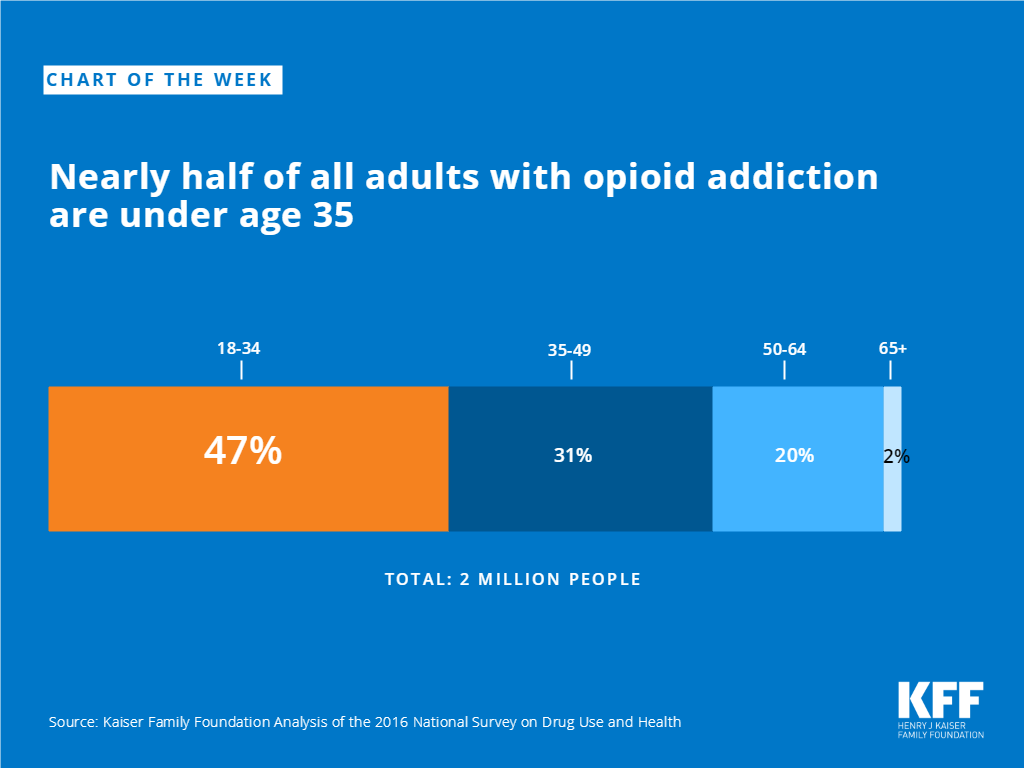
Nearly half of all adults with opioid addiction are under age 35
Source
Kaiser Family Foundation Analysis of the 2016 National Survey on Drug Use and Health
The independent source for health policy research, polling, and news.
Kaiser Family Foundation Analysis of the 2016 National Survey on Drug Use and Health
Key Findings
Puerto Rico and the U.S. Virgin Islands (USVI) suffered significant damage to their infrastructure and health care systems from Hurricanes Irma and Maria in September 2017. Drawing on interviews with residents and key stakeholders as well as public reports, this brief provides an overview of the status of the recovery efforts six months after the storms, with a focus on the health care systems. It finds:
Hurricane Maria made landfall in Puerto Rico and the U.S. Virgin Islands (USVI) on September 20th, two weeks after Hurricane Irma hit on September 6, 2017. The storms caused significant physical damage to the infrastructure and health care systems, leaving severe economic and health consequences in their wakes. This brief provides an overview of the status of the recovery in Puerto Rico and USVI six months after the storms, with a focus on the health care systems and health needs of residents. It is based on public reports and over 30 in-person and phone interviews with residents, local and federal government officials, and providers conducted between February and April 2018. The brief builds on earlier work that examined how residents in Puerto Rico were faring two months after the storm and key issues for recovery in Puerto Rico and USVI identified during a Fall 2017 roundtable with key stakeholders.
Amid continuing recovery efforts following hurricanes #Irma and #Maria, health care systems in #PuertoRico and the #USVI have resumed operations, but there are still limitations on access and gaps in services.
Hurricanes Irma and Maria caused devastating damage to both Puerto Rico and USVI, and exacerbated pre-existing fiscal and health challenges. The storms damaged and destroyed key transportation, communication, and electricity infrastructure, creating major economic and health care problems. These problems exacerbated existing difficulties, many of which stemmed from disparities in the federal government’s treatment of territories compared to states.1
Prior to the storms, Puerto Rico and USVI had fiscal challenges, including high rates of debt, poverty, and unemployment, and they faced a range of health disparities. In Puerto Rico, the population had higher rates of fair/poor health, heart attack/heart disease, diabetes, depression, disability, low-birthweight infants, and infant mortality than both USVI and the United States overall. The share of uninsured in USVI (30%) was much higher than in Puerto Rico (7%) and the rest of the United States (12%). In addition, Puerto Rico and USVI suffered from poor health infrastructure and a shrinking health care workforce.
Unlike states, federal Medicaid funds are capped for Puerto Rico and USVI, and they have a fixed federal Medicaid match rate that is lower than the rate they would receive if they were states. The 50 states and D.C. receive federal Medicaid funding on an open-ended basis, with a federal match rate that varies across states based on state per capita income. In contrast, annual federal Medicaid funding for the territories is subject to a statutory cap, with a fixed federal match rate of 55%. This match rate is lower than the rate the territories would receive if the rate was based on per capita income like the states. Prior to the storms, Puerto Rico also was anticipating facing a large funding gap as additional funds provided under the Affordable Care Act (ACA) were running out.
Two months after the storms, residents in Puerto Rico reported continued difficulties meeting basic needs, and daily life remained challenging. Many were without power, and some continued to have problems accessing water and gas. Many individuals were still displaced from their homes or had family and friends living with them, and many schools were still closed or operating on shortened schedules. Moreover, individuals were facing increased financial pressures, as work options were limited with many businesses remaining closed. Residents pointed to increased physical health needs and difficulties managing chronic conditions without power and with limited access to fresh food. They also described profound effects on their mental and emotional health, with many feeling stressed and anxious and having trouble sleeping at night.
In a Fall 2017 roundtable discussion, key stakeholders pointed to short- and long-term options to address health care needs in Puerto Rico and USVI, and emphasized the need to address pre-existing fiscal debt problems as well as economic damages from the storms. They identified building a strong health care system with adequate financing as a key component of economic development and recovery. In particular, they noted the importance of both short-term federal funding relief for Medicaid and legislation to address the longer-term issues of the cap on federal funds and lower federal match rate for the territories.
Although progress has continued with power restoration, power remains unstable in Puerto Rico, and remote areas have not had their power restored. FEMA reported that less than 10% of Puerto Rico was still without power as of March 16, 2018,2 and Puerto Rico’s government reports that approximately 95% of Puerto Rico Electric Power Authority (PREPA) customers had power generation as of April 5, 2018.3 It is unclear when the entire island will have power restored. In USVI, all electricity customers had their power restored by March 9, 2018,4 and power is generally stable. Many interviewees went months without power, with some only recently regaining it at the time of the interviews. Although some had access to generators, they noted that they could only run the generators on an intermittent basis and faced costs to maintain and fuel them. Interviewees in Puerto Rico noted that, although more areas have power restored, it is unstable and remote areas remain without power. They said that the power instability contributes to uncertainty, stress, and complication in their daily lives. For example, some said that they limit purchases of fresh food since it may be lost if they have a power outage. Unreliable cellular and internet access also contributes to ongoing communication challenges in both territories.

There are some early signs of economic recovery, but revenues and tourism are still down, particularly in USVI, where major hotels have not reopened. Interviewees in both territories noted that, although some businesses have reopened, others have closed or are operating on a limited scale. Interviewees also noted that the presence of relief workers on the islands has helped fuel revenues for hotels and restaurants, but their departures leave a growing gap in business. Overall, tourism remains down, particularly in USVI, where the major hotels are still closed. In Puerto Rico, total lodgings registered with the Puerto Rico Tourism Company in January 2018 were down over 54% from January 2017, with the decline even greater in non-metropolitan areas.5 As of February 27, 2018, 85% of hotels were operating.6 In USVI, approximately 40% of traditional hotel accommodations across the territory were open as of March 1, 2018, but many of those open were filled with relief workers.7 All ports were open, and cruise ship ports of call to St. Thomas had returned to their pre-hurricane levels.
Many residents felt that the federal response through FEMA has been slow and inadequate. Interviewees noted that FEMA assistance is limited and not available to everyone. Several residents said they had applied for FEMA assistance to repair their homes but were denied or were still waiting for a response. Others noted that they had received $500 in aid from FEMA but would not be receiving any additional assistance. As of mid-April 2018, FEMA had approved 449,000 of the 1.1 million registrations for assistance for the Individual Assistance Program, providing a total of $1.2 billion in funds.8 In March 2018, FEMA announced plans to accept signed self-declarations of homeownership for cases in which all other forms of verification are destroyed or nonexistent, to help address gaps in assistance stemming from challenges showing proof of ownership and other documentation.9 FEMA has also extended the deadline to register for FEMA assistance to June 18, 2018.10 Individuals had mixed views on local government response efforts. Some were frustrated with local governments’ efforts and felt that they were not doing enough to assist individuals and/or were complicating or slowing recovery efforts. Others felt that the local response has been strong and played a helpful role in recovery within the community.
Hospitals, clinics, and local health officials had generally positive views of their experiences working with federal partners and the military. Territory officials and some providers reported positive experiences with FEMA, noting that they were working closely with the agency to finalize damage assessments and rebuild facilities. Officials in USVI noted that, through their coordination with FEMA, they will be able to build back health facilities at a higher level to provide greater resiliency for future storms. Providers and officials also described positive working relationships with their partners at the U.S. Department of Health and Human Services (HHS), including staff from the Centers for Medicare and Medicaid Services (CMS). In addition, the Office of the Assistant Secretary for Preparedness and Response (ASPR) and the Health Resources and Services Administration (HRSA) within HHS have been active in the recovery and working closely with FEMA, territory officials, and providers. ASPR leads the nation’s medical and public health preparedness, response to, and recovery from disasters and public health emergencies,11 while HRSA works to improve access to health care for vulnerable and underserved communities and individuals.12 ASPR representatives report continuing to work with territory officials to close the gap between their prioritized health care needs and resources to meet them. As part of its support for community health centers, HRSA described its top priorities as training personnel, building up communications, and expanding capacity for mental health services. In addition to the HHS agencies, several interviewees described positive experiences working with the military, particularly immediately after the storms to bring supplies and services to remote regions.
Interviewees noted that clinics played a key role in response efforts, particularly in the immediate aftermath of the storms, but received little government support. They noted that clinic staff were instrumental in connecting with individuals after the storms to assess their needs and bring them necessary supplies, medications, and services. Clinics described how staff traveled out to the surrounding community on a daily basis to assess needs and coordinate responses. Clinic representatives generally felt that they had very limited government support in the aftermath of the storms, noting that they did not receive any assistance obtaining fuel for generators, which was a major challenge. In addition, one clinic representative noted that, although they had been involved in emergency planning activities, the government did not coordinate with the clinic on response efforts.
Many interviewees felt that private organizations, volunteers, and local communities have played an instrumental role in recovery. They noted that private organizations and volunteers, often coming from the mainland, brought supplies and services into communities, including health care services. Moreover, residents pointed to the strength and resiliency within their communities, noting that neighbors worked together to provide support as well as supplies and resources. Many interviewees also emphasized that local individuals leading recovery efforts have been working tirelessly for months amid their own losses and difficulties, and they noted the importance of providing support for these individuals.

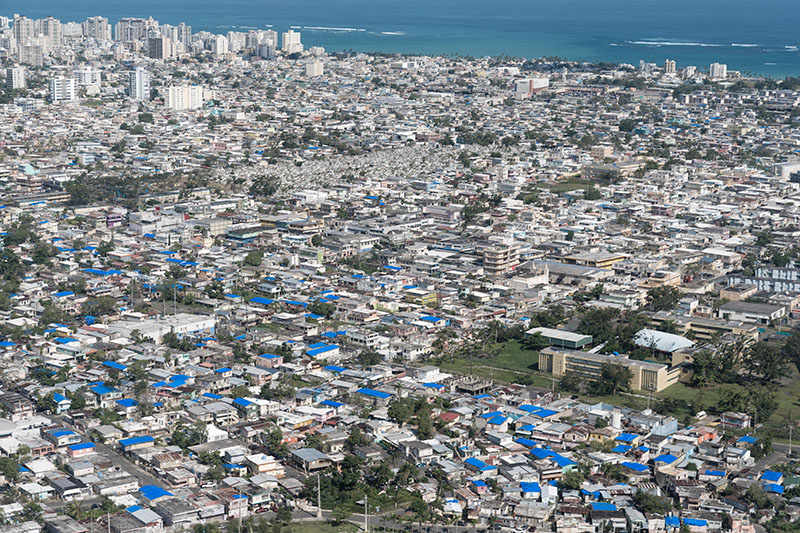
Many residents still have major damage to their homes, with some still living in alternative living arrangements with other family. Across both territories, many homes still have blue tarp roofs awaiting long-term repairs. All of the interviewed residents who experienced damage to their homes were still in the process of repairing their homes. Some were living in their damaged homes, while others had made other living arrangements, typically living with other family members. Some interviewees said that these living arrangements had led to increased stress and strains on family relationships. According to FEMA, as of March 16, 2018, more than 3,500 Puerto Ricans were still living in hotels on the island and across 37 states with temporary housing vouchers.13 FEMA has extended this temporary sheltering program twice; the most recent extension ends on May 14, 2018.14
Residents continue to face financial instability, reflecting more limited work options and ongoing costs associated with recovery. Interviewees noted that many individuals have lost or changed jobs or experienced reductions in work hours following the storms, which has increased financial strains on families and forced some to deplete their savings. Further, they pointed to increased costs associated with recovery, including generator fuel, replacement of damaged and lost items, and repairs. Some said that increased financial pressures have forced them to change or postpone plans for the future, such as delaying education and career plans.
Children’s daily lives and education remain disrupted. In USVI, with many schools still damaged, they are sharing space and operating on four-hour schedules. Interviewees noted that this arrangement is difficult for children and parents, particularly for parents to accommodate work schedules to the reduced school hours. Many families with school-aged children have left USVI due to the limited school schedule. Interviewees noted that it is unclear how long schools will continue to operate on the part-day schedule, and that additional families may leave if it extends into the next school year. Teachers in Puerto Rico also noted that students have left the island, and that many may not return. On April 5, 2018, Puerto Rico’s Department of Education announced the closure of 283 of its approximately 1,110 schools for the 2018-2019 school year, due to a reduction of 38,762 students since May 2017.15 The movement of school-aged children off the islands is leading to separation of families in some cases. For example, children may be sent to live with a relative on the mainland while the parents remain on the islands. In addition, interviewees noted that children who have stayed on the islands are experiencing problems performing in school, with some still displaced from their homes and/or without power, and some dealing with ongoing fear and emotional stress from the storms.

Residents, particularly young professionals and health care providers, are continuing to migrate away from the islands. Interviewees noted that outmigration had been an issue prior to the hurricanes and that the storms exacerbated this problem, particularly among young professionals and health care providers. They noted that, as these populations leave, the remaining population is older and has less family available to help care for them. Although data on Puerto Rico and USVI population loss since the storms are limited, one analysis found that the net number of domestic air passengers departing Puerto Rico between August and November 2017 was roughly 160,000 people above trend.16 In its new fiscal plan, the Puerto Rican government projects a 10.9% cumulative decline in population over the six years following the hurricanes.17 Another study projects that between 114,000 and 213,000 Puerto Rico residents will leave the island annually in the aftermath of Hurricane Maria. The study estimates that Puerto Rico may lose up to 470,335 residents, or 14% of the population, from 2017-2019 alone.18 Projections indicate that Florida will receive the majority of this outflow, with approximately 41,000 to 82,000 people expected there in the first year after Hurricane Maria.19
Providers, health officials, and residents pointed to increases in physical health problems after the storms. While territory officials and providers noted that they were successful in preventing and containing major outbreaks of disease following the storms, interviewees described increases in other health care needs. They said that some individuals experienced worsened chronic conditions, such as diabetes and hypertension, due to gaps in care and medications following the storms. They also noted that limited access to fresh food and increased reliance on highly processed provisions have made it more difficult for many individuals to manage their chronic conditions. Some residents and providers described new or worsened health problems, such as ulcers and weight gain, due to increased stress. Some also pointed to increases in orthopedic problems, such as back, shoulder, and knee pain, associated with moving heavy objects as part of recovery-related activities as well as a lack of elevators during power outages for people living in high-rise buildings.

Housing and transportation challenges and the continued instability of power have made it more difficult for individuals to access care and manage their conditions. For example, the power instability has made it difficult to keep insulin refrigerated and has limited access to oxygen, dialysis, and other machines. Providers also noted that, as an increasing number of individuals leave the island, many elderly residents have lost caregiving support, leaving them with gaps in care. Red Cross personnel have been monitoring and supporting residents of public housing in USVI and have found that many individuals are still disoriented from the storms. Elderly residents have faced particular issues, such as intrusive thoughts and nightmares, trouble sleeping and eating, and isolation due to the lack of a support system. One interviewee also pointed to particular challenges facing people with serious mental illness who are not in appropriate housing situations and lack sufficient support.
Mental health needs have sharply increased, and many individuals are still struggling emotionally six months after the storms. Individual residents described ongoing emotional effects, including stress and anxiety, problems sleeping and eating, and crying and depression. Providers, including community health centers that conduct routine screenings for mental health needs, also reported sharp increases in depression, anxiety, panic attacks, and post-traumatic stress disorder (PTSD) among the communities they serve. Some interviewees pointed to ongoing emotional struggles among children, noting that some become very fearful and cry every time it rains. Preliminary data also point to growing mental health needs. From November 2017 through January 2018, a crisis hotline run by Puerto Rico’s Department of Health received 3,050 calls from people who said they had attempted suicide, a 246% increase compared to the same time last year.20 In the same three-month period, the hotline received 9,645 calls from people who said that they had thought about attempting suicide — an 83% jump from the same time last year.21 Despite the growing need, interviewees indicated that many residents are not receiving mental health care, reflecting long-term stigma associated with receiving mental health services and a limited supply of mental health providers.
Analysis points to a potentially higher death rate stemming from the storms than the official counts. The official death toll from Hurricane Maria in Puerto Rico stands at 6422 , and five deaths were attributed to Hurricanes Irma and Maria in USVI.23 However, a New York Times report in December 2017 estimated hurricane-related deaths in Puerto Rico as high as 1,052 based on analysis of mortality data compared to previous years.24 The additional deaths were most often attributable to sepsis, pneumonia, and breathing disorders, which could have been caused indirectly by the hurricanes due to effects such as delayed medical treatment, power outages for medical equipment, and poor conditions in homes and health care facilities. The Governor of Puerto Rico signed an executive order in January 2018 to establish a working group tasked with revising the number of deaths related to Hurricane Maria.25 Additional external work is underway to study Hurricane Maria-related excess mortality in Puerto Rico as well.26

Prior to the hurricanes, residents in both territories relied on a system of hospitals and clinics as well as private providers for care. There were approximately 70 hospitals providing care in Puerto Rico,27 along with 20 federally funded health centers that provided primary and preventive care services at 93 urban and rural sites.28 In USVI, there were two hospitals, Schneider Regional Medical Center on St. Thomas and the Governor Juan F. Luis Hospital and Medical Center on St. Croix, as well as two Federally Qualified Health Centers (FQHCs), including the St. Thomas East End Medical Center Corporation on St. Thomas and the Frederiksted Health Center (FHC) on St. Croix. In addition, the Schneider Regional Medical System operated the Myrah Keating Smith Community Health Center on St. John. The USVI Department of Health operated three health facilities across the three major islands.29 Both territories also had a network of private providers, although they were facing provider shortages and difficulties attracting and retaining providers.
Hospitals and clinics in Puerto Rico have resumed operations, but a number of clinics still do not have stable power. In Puerto Rico, hospitals were prioritized as critical facilities, and local officials provided support to resume operations as quickly as possible after the hurricanes. Six months after the storms, all of the hospitals are operational. Many of the clinics in Puerto Rico suffered damages and lost power.30 While they have resumed operations, as of mid-March 2018, approximately 1 in 10 (11%) of the permanent health center sites have limited or no grid power. Three of these health centers have intermittent grid power and rely on generators as a backup source of power, while five remain without grid power and rely solely on generators. An additional health center converted to solar power in lieu of continuing to rely on a generator, and five health centers are operating from mobile vans. Clinic directors noted that they tried to resume operations as quickly as possible after the storms but received little support and faced challenges due to limited generator capacity and difficulty obtaining fuel for generators. Interviewees emphasized that the mountainous regions and offshore islands of Puerto Rico continue to have major access problems six months after the storms. Many residents in remote regions, particularly elderly individuals, remain unable to travel to sites of care. Through volunteer, military, and other efforts, some individuals are continuing to go into these communities to deliver care, but as relief efforts phase out, these access difficulties may increase. On the offshore islands, availability of services remains severely limited, requiring dialysis patients to travel to the main island for care.
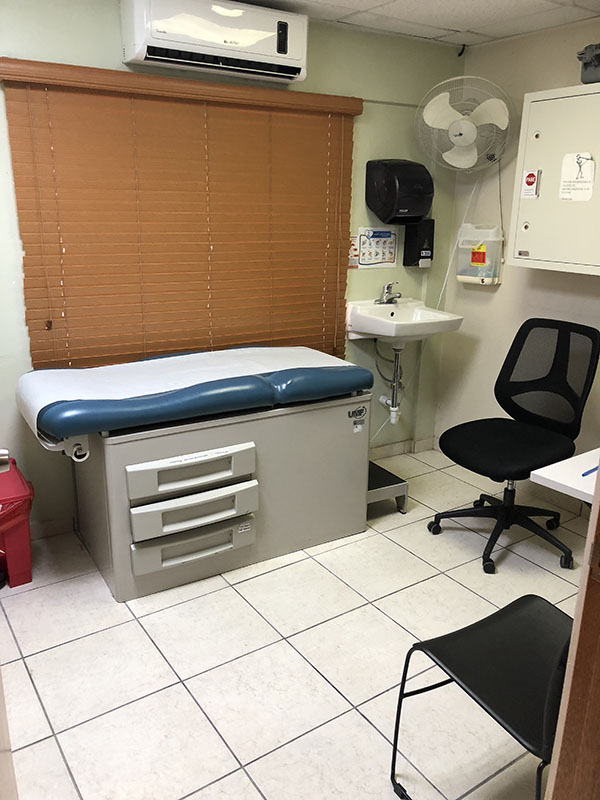
In USVI, services remain limited due to major structural damage to the hospitals and other facilities, requiring some patients to continue to be transferred off-island for care. In USVI, both hospitals as well as some urgent care centers and health department facilities suffered damage from the storms that limited their operations. Schneider Regional Medical Center on St. Thomas suffered major structural damage, leaving it with limited capacity to provide inpatient care, emergency services, and dialysis care six months after the storms. The storms also destroyed its cancer treatment center, leaving it unable to provide radiation treatment. Since the storms, the hospital has lost over 170 employees, including many nursing staff, and it is relying on travel and temporary nurses to help fill in the gaps created by these losses. As of mid-April 2018, the hospital was waiting on a final determination from FEMA as to whether it will repair and rebuild the existing facility or construct a new facility. The storms also caused significant damage to the Myrah Keating Smith Community Health Center on St. John, leaving it inoperable. It has since been merged into a Department of Health clinic on the island. Directors from both FQHCs reported limited physical damage, enabling them to resume operations quickly after the storms. However, FHC reported that it has lost nurses, dental staff, and ancillary workers, stretching remaining staff members to meet patient needs while continuing to deal with periodic power outages. Overall, the ongoing service limitations across the USVI require continued off-island transfers for individuals with high needs and limit the ability of evacuated individuals to return home. Prior to and in the immediate aftermath of the storms, the Department of Health coordinated the evacuation of almost 800 people, including many dialysis patients. Officials noted that modular units and dialysis trailers are being brought to USVI to expand service capacity, which will hopefully reduce off-island transfers and allow more evacuees to return home.
Many private providers remain closed or have left the territories, which has exacerbated pre-existing access challenges, particularly for specialty and mental health care. Interviewees noted that, prior to the storms, the territories had difficulty attracting and retaining a sufficient supply of specialty providers due to low payment rates. Moreover, mental health services in both territories were limited. The storms exacerbated these issues, as many private providers remain closed and an increasing number of providers have left the island, while health needs, particularly mental health needs, have increased. Recruiting and retaining providers and allied health professionals currently is a top priority for health facilities and local health officials in both territories.
Hospitals and clinics are facing increased financial strain as the territories’ uninsured populations grow due to increases in unemployment. Respondents noted that, as people lose jobs, many are losing health insurance. While some may qualify for Medicaid coverage, a number are becoming uninsured. Hospital and clinic staff noted that this shift in coverage is increasing financial strain on their operations due to losses of commercial pay patients.
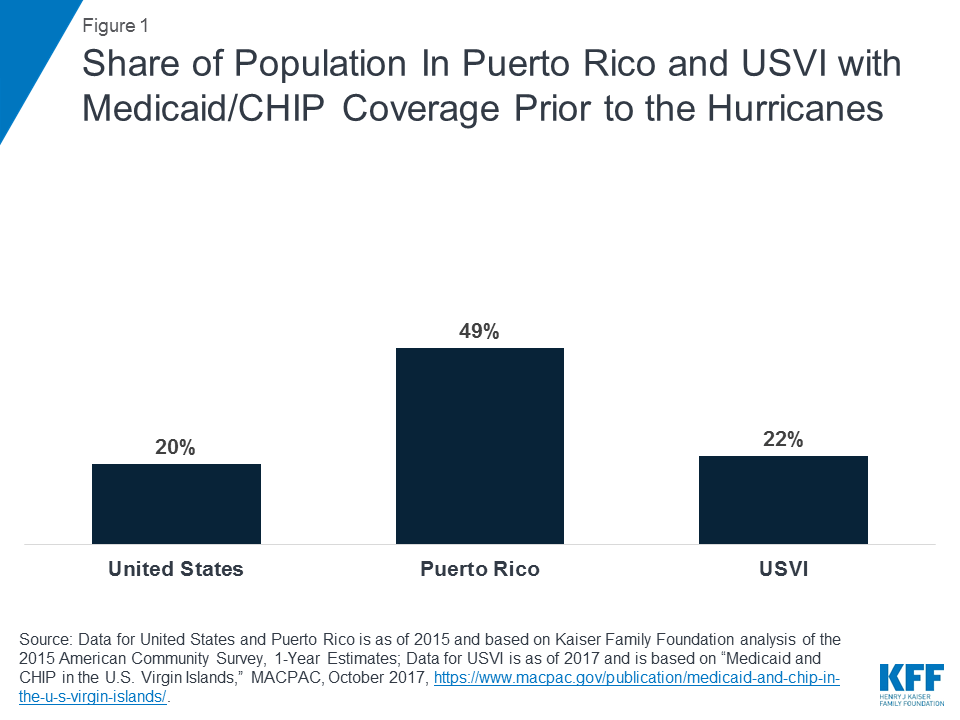
Both territories have taken steps to facilitate access to Medicaid. Medicaid and the Children’s Health Insurance Program played important roles covering residents in both territories before the storms, covering nearly half of the population in Puerto Rico (49%) and over one in five individuals (22%) in USVI (Figure 1). Puerto Rico delayed Medicaid renewals for 12 months and USVI delayed renewals for six months to help individuals maintain stable coverage amid the recovery efforts. Local officials and providers also noted that they are engaging in outreach and education efforts to help reach and enroll individuals who may be newly eligible for Medicaid as they are losing jobs and income. In USVI, hospitals’ use of presumptive eligibility determinations is helping to facilitate access to coverage, and they are planning to expand use of presumptive eligibility to the clinics. Puerto Rico officials said that, overall, they are expecting a small increase in enrollment of about 1%, which would reflect both an increase in the number of individuals qualifying for the program and disenrollment of individuals leaving the island.
The February 2018 federal budget bill provided instrumental federal support for the territories’ Medicaid programs, but it did not address underlying disparities faced by the territories. Unlike the states, which receive federal Medicaid matching funds based on a formula tied to per capita income on an open-ended basis, the territories receive a fixed federal match rate (55%) that is lower than what they would receive based on the per capita income formula and are also subject to a cap on federal funds. The budget bill increased the federal caps for Puerto Rico ($4.8 billion) and USVI (approximately $142.5 million) and provided Medicaid funds at 100% federal match from January 2018 through September 2019.31 Local officials and providers noted that these funds provide much needed immediate assistance and fiscal relief, but they expressed significant concerns about what will happen when the funding ends since no long-term changes were made to the federal match rate or cap on federal funds. They noted that, when the federal funding ends, they will face major fiscal challenges, particularly since the territories’ economies will not have fully recovered by that time. They stressed the importance of a longer-term solution to address the disparities in their federal match rate and cap on federal funds as well as other differences in how the territories are treated, including their exclusion from receipt of Disproportionate Share Hospital payments and variations in Medicare payments.
To achieve savings required by its Fiscal Oversight Board, Puerto Rico is implementing major delivery system reform on a rapid timeline. Under the fiscal plan that the Puerto Rican government proposed to comply with the Federal Control Board, the territory targets an $841 million reduction in health care spending by FY2023.32 The fiscal plan also proposes a new health care model designed to achieve administrative and financial efficiency. Currently, one of four MCOs, along with an additional plan serving a special population, serves each of eight geographic regions on the island.33 Beginning on October 1, 2018, the new model will require MCOs to compete in a single territory-wide region to provide services to the approximately 1.3 million enrollees across the island.34 Other changes will include increased preference for generic drugs, a capped per-member-per-month payment amount, and benefit redesign. Some stakeholders question whether reducing health care spending while trying to rebuild infrastructure and capacity is prudent, especially since costs are currently lower than costs on the mainland. Given the focus on recovery efforts and other system demands, there are also concerns about whether local governments can implement these reforms on the currently required timeline.
USVI is also engaged in broad delivery system reform efforts aimed at reducing fragmentation of care and expanding access to services. Before the hurricanes, providers and officials in USVI had been collaborating on improvements to the delivery system. Following the storms, they expanded their efforts by arranging six USVI-led working groups focused on different aspects of the health care system in terms of storm recovery and mitigation for future natural disasters. These working groups include topics such as environmental health, patient-centered models of care, and data-informed community health. Health care officials in the territory are already pursuing a number of steps to achieve a more integrated system, such as building up case management and navigator services, increasing outreach to the uninsured or underinsured through provider referrals, and expanding access to telemedicine. They are also collaborating on hurricane recovery by working together on issues such as mental health, reinforcing electronic health data systems, and a continued focus on achieving a robust health care workforce.
Individuals and organizations are seeking to improve their preparations and resilience for future hurricanes and other disasters, but they have limited time to do so before the coming hurricane season. Individuals noted specific steps that they will likely take to prepare for future hurricanes, including taking out more cash, obtaining medication supplies for longer periods of time, establishing communication plans with friends and families, and identifying safer places to shelter. One major challenge facing individuals, however, is that many houses remain damaged and are unlikely to be repaired before the next hurricane season begins. Hospitals and clinics are also reviewing their disaster response plans. They noted that their top priorities include facilitating access to power and communications by expanding generator capacity, exploring solar power options, identifying ways to ensure refrigeration for medications amid power outages, and obtaining satellite phones. Other actions they noted are improving the pre-staging of supplies, identifying patients with health needs to ensure that they have adequate medications and supplies, collecting and documenting information to assist with disaster response (e.g., location coordinates and generator fuel capacity), and planning for rapid support of staff. Some providers noted that they are reviewing their budgeting for emergency response and exploring options, such as obtaining mobile units, to expand their capacity to provide services in the community in the aftermath of a disaster. It was noted that clinics played a key role in the immediate response, as they were able to reach people quickly, and that it will be important to recognize and enhance their response capacity in the future. Interviewees noted that, while some steps can be taken quickly to improve recovery and response efforts, others will take time that extends beyond the coming hurricane season.

In September 2017, Hurricanes Irma and Maria created historic damage to Puerto Rico and USVI, exacerbating preexisting economic and health issues. Six months after the storms, continued progress has occurred with recovery, but much work remains. Individuals’ lives remain disrupted, with many homes still damaged and individuals continuing to face financial pressures and insecurity. While power has been largely restored in USVI, the territory’s hospitals continue to deal with significant infrastructural damage, limiting service capacity. In Puerto Rico, power remains unstable, and remote areas continue to face major access challenges. In both territories, increased outmigration of providers has increased pre-existing access limitations for both specialty and mental health care. At the same time, mental and physical health needs have increased, particularly for depression, anxiety, and chronic conditions such as diabetes and hypertension. Children, elderly individuals, and people with disabilities have been particularly affected and face ongoing challenges, including loss of support as family members leave the islands. The temporary federal funding relief for Medicaid passed by Congress will provide essential support for the territories’ health care system, but the relief funding does not address underlying fiscal problems or the disparity in federal Medicaid match rates and the cap on federal Medicaid funds faced by the territories. Individuals and organizations are taking steps to prepare for future natural disasters but have limited time and resources to prepare for the coming hurricane season, which is just weeks away.
A new Kaiser Family Foundation analysis of short-term, limited duration health plans for sale through two major national online brokers finds big gaps in the benefits they offer.
Through an executive order and proposed new regulations, the Trump Administration is seeking to encourage broader use of short-term, limited duration health plans as a cheaper alternative to individual market plans that comply with the Affordable Care Act’s requirements. Repeal of the individual mandate penalty – which currently applies to people buying short-term plans – is also expected to boost enrollment starting next year.
The analysis examines 24 distinct short-term insurance products currently marketed in 45 states and the District of Columbia through eHealth or Agile Health Insurance. It finds:
In seven states – Alaska, California, Hawaii, Maryland, Montana, New Mexico and Utah – none of the available short-term plans cover any of these four benefit categories. When short-term plans do cover mental health, substance abuse, and prescription drugs, the analysis finds they almost always include meaningful limitations and exclusions that would not be permitted in ACA-compliant plans.
Short-term plans traditionally have been marketed to people who experience temporary gaps in coverage. Unlike ACA-compliant plans, short-term policies can deny or restrict coverage to people with pre-existing conditions and are not required to cover essential health benefits. They also can include dollar caps on coverage and higher deductibles that would not be allowed under ACA-compliant individual market and group health plans.
The analysis confirms that these short-term plans often have premiums much lower than ACA coverage – often 20 percent or less than the lowest-cost bronze plan available through the ACA marketplace in the same location.
To the extent that healthy individuals opt for cheaper short-term policies instead of ACA-compliant plans, adverse selection would raise the cost of coverage for people with health conditions who remain in the ACA-compliant market. Tax credits would offset those higher premiums for low- to moderate-income people who qualify for them, though middle-income families not eligible for subsidies would likely face premium increases.
On October 14, 2025, KFF published a new brief that provides updated data as well as new analyses on short-term limited-duration health plans, using a revised methodology.
Short-term, limited duration (STLD) health insurance has long been offered to individuals through the non-group market and through associations. The product was designed for people who experience a temporary gap in health coverage.1 Unlike other products that are considered “limited benefit” or “excepted benefit” policies – such as cancer-only policies or hospital indemnity policies that pay a fixed dollar benefit per inpatient stay – short-term policies are generally considered to be “major medical” coverage; however, short-term policies are distinguished from other comprehensive major medical policies because they only provide coverage for a limited term, typically less than 365 days. Short-term policies are also characterized by other significant limitations, including the types of services covered, often with a dollar maximum.
Late last year, Congress repealed the Affordable Care Act’s individual mandate penalty, the requirement that individuals have minimum essential health coverage or face a tax penalty. Starting in 2019, the tax penalty will be reduced to $0. It is possible this change could lead more consumers to consider purchasing short-term policies. In addition, late last year, President Trump issued an executive order directing the Secretary of Health and Human Services to take steps to expand the availability of short-term health insurance policies, and a proposed regulation to increase the maximum coverage term under such policies was published in February. This brief provides background information on short-term policies and how they differ from ACA-compliant health plans.
As the name suggests, short-term health insurance policies are not renewable. Whereas federal law since 19962 has required all other individual health insurance to be guaranteed renewable at the policyholder’s option, coverage under a short-term policy terminates at the end of the contract term. To continue coverage beyond that date requires applying for a new policy. As a result, an individual who buys a short-term policy and then becomes seriously ill will not be able to renew coverage when the policy ends.3
The Affordable Care Act (ACA) exempted short-term policies from market rules that apply to most major medical health insurance policies sold to individuals in the non-group market: rules that prohibit medical underwriting, pre-existing condition exclusions, and lifetime and annual limits, and that require minimum coverage standards. By contrast, short-term policies:
Due to these limitations in coverage, short-term policies, not surprisingly, cost less than ACA-compliant major medical health insurance policies. A review of short-term policies offered on two large online private insurance marketplaces, eHealth and Agile Health Insurance, shows it is not uncommon to find the cheapest short-term policy priced at 20% or less of the premium for the lowest cost ACA-compliant bronze plan in an area (Table 1).
There are 24 distinct short-term products on eHealth and/or Agile Health Insurance in 45 states and the District of Columbia, ranging from only one product in New Mexico to 22 in West Virginia. Each product has distinct benefits and exclusions, and is typically offered with varying levels of patient cost-sharing. Due primarily to more comprehensive state laws regulating short-term plans, in five states insurers do not offer any short-term plans on eHealth or Agile Health Insurance.6
Of the short-term products offered on eHealth and/or Agile Health Insurance across all states, 43% do not cover mental health services, 62% do not cover services for substance abuse treatment (both alcohol and other drugs), 71% do not cover outpatient prescription drugs, and no plans cover maternity care. In seven states, none of these four benefit categories are covered in the short-term policies offered. The availability of these select benefits is shown in Table 2 (including state variations as specified in plan brochures).
Analysis: Most short-term health plans don’t cover substance abuse or prescription drugs; none cover maternity care
Even when short-term plans do cover mental health, substance abuse, and prescription drugs, limitations and exclusions almost always apply that would not be permitted under ACA-compliant plans. For example, six of the seven products that offer prescription drug coverage apply a dollar maximum cap on the benefit, such as $3,000. With respect to products offering some coverage for mental health and substance abuse treatment, all impose significant limits on the benefits. Examples of coverage limitations for these benefit categories include a $50 maximum for outpatient visits, a 31-day maximum for inpatient care, and/or a policy term maximum of $3,000. Some states have enacted stronger parity regulations for mental health and substance abuse services that extend to short-term policies.7 All of the policies reviewed exclude coverage for pre-existing conditions, although one issuer provides a $500 allowance for benefits related to a pre-existing condition, and another issuer will reportedly launch a product in some states that provides a benefit for certain pre-existing conditions up to $25,000.8 ,9
Short-term policies are not considered minimum essential coverage (MEC) for purposes of satisfying the ACA individual mandate. Individuals who are covered only under short-term policies for a year and who do not otherwise qualify for exemptions from the mandate could face a tax penalty in 2018 – the greater of $695 or 2.5% of income above the tax filing threshold. However, even taking the tax penalty into account, short-term policies can be cheaper for individuals healthy enough to qualify to purchase them. Once ACA market rules took effect in 2014, some short-term policy marketing materials specifically highlighted this differential.10 Once the individual mandate penalty drops to $0 in 2019, the cost differential between short-term policies and ACA-compliant policies will be even greater.
The number of short-term policies in effect today is not known. Most such policies appear to be sold through associations, though a small number are sold directly through the non-group market. News reports suggest short-term policy sales may have grown since ACA market reforms were implemented. One industry survey found that more purchasers cited lower price (51%) than the need for temporary coverage (39%) as the primary reason for buying short-term policies.11
Concerned that short-term policies were becoming an alternative to ACA-compliant major medical policies, and not just a bridge for short coverage gaps, the Obama Administration published new rules for such policies in 2016. The final regulation defined short-term policies as those with an expiration date specified in the contract, taking into account any extension that may be elected by the policyholder with or without the issuer’s consent, which is less than 3 months after the original effective date of the contract. This new maximum policy term was consistent with the ACA individual mandate exemption for short periods (defined as less than 3 months) of uninsurance. The final regulation also required short-term policies to include prominent consumer notices that coverage does not constitute qualifying health coverage (MEC) for purposes of satisfying the individual mandate. These rules took effect for short-term policies sold on or after January 1, 2017.
Since the 2016 rule took effect, short-term policy terms appear to now be limited to less than 3 months; however, some issuers offer “four-packs” of short-term policies with sequential effective dates scheduled 3 months apart, enabling consumers to continue to buy up to a year of short-term coverage at a time.12
In February of this year, the Trump Administration published a proposed regulation amending the definition of short-term policies to include those offering a maximum coverage period of less than 12 months. The proposed rule also sought public comment on other regulation or guidance that could be issued to ease the sale of such policies.
| Table 1: ACA Marketplace Plans vs. Short-Term Health Insurance Plans in Select Cities, 40-year-old male | ||||
| Premiums and Coverage Caps | ||||
| City | Monthly Premium for Lowest Cost Bronze Marketplace Plan (unsubsidized) | Range of Monthly Premiums for Short-Term Plans | Range of Out-of-Pocket Cost-Sharing Maximums for Short-Term Plans | Range of Policy Coverage Caps for Short-Term Plans |
| Phoenix, AZ | $405 | $36 – $437 | $500 – $30,000 | $250,000 –$2 million |
| Los Angeles, CA | $264 | $141 – $566 | $2,500 – $10,000 | $750,000 –$2 million |
| Denver, CO | $338 | $35 – $262 | $2,000 – $20,000 | $250,000 –$1.5 million |
| Miami, FL | $297 | $46 – $983 | $250 – $22,500 | $250,000 –$2 million |
| Atlanta, GA | $371 | $47 – $503 | $1,000 – $22,500 | $250,000 –$2 million |
| Chicago, IL | $305 | $55 – $573 | $250 – $22,500 | $250,000 –$2 million |
| St. Louis, MO | $281 | $38 – $423 | $1,000 – $20,000 | $250,000 –$2 million |
| Columbus, OH | $289 | $25 – $305 | $250 – $20,000 | $250,000 –$2 million |
| Houston, TX | $270 | $55 – $644 | $250 – $22,500 | $250,000 –$2 million |
| Virginia Beach, VA | $479 | $44 – $583 | $250 – $20,000 | $250,000 –$2 million |
| SOURCE: Kaiser Family Foundation Subsidy Calculator for ACA-compliant plan premiums; eHealth and Agile Health Insurance for short-term policy premiums and features.NOTES: Monthly premiums for Marketplace plans do not reflect discounts for premium tax credits. Monthly premiums for short-term plans reflect prices posted online; these rates are not guaranteed and may be adjusted after medical underwriting. Short-term monthly premiums also do not all reflect association membership fees often required for purchase.Out-of-pocket cost-sharing maximum for short-term plans applies to a 3-month term of coverage; by contrast, out-of-pocket cost-sharing maximum for an ACA-compliant plan in 2018 is $7,350 for the calendar year. | ||||
| Table 2: Percentage of Short-Term Health Insurance Products Covering Select Benefits | ||||||
| State | Major City | Number of Short-Term Products Available1 | Mental Health | Substance Abuse2 | Prescription Drugs3 | Maternity |
| Alabama | Birmingham | 17 | 71% | 41% | 24% | 0% |
| Alaska | Anchorage | 3 | 0% | 0% | 0% | 0% |
| Arizona | Phoenix | 21 | 57% | 33% | 33% | 0% |
| Arkansas | Little Rock | 21 | 57% | 33% | 33% | 0% |
| California | Los Angeles | 2 | 0% | 0% | 0% | 0% |
| Colorado | Denver | 7 | 57% | 57% | 0% | 0% |
| Connecticut | Hartford | 10 | 100% | 100% | 60% | 0% |
| Delaware | Wilmington | 21 | 81% | 57% | 33% | 0% |
| DC | Washington | 11 | 82% | 36% | 9% | 0% |
| Florida | Miami | 21 | 57% | 33% | 33% | 0% |
| Georgia | Atlanta | 19 | 53% | 37% | 37% | 0% |
| Hawaii | Honolulu | 3 | 0% | 0% | 0% | 0% |
| Idaho | Boise | 8 | 50% | 25% | 0% | 0% |
| Illinois | Chicago | 21 | 57% | 33% | 33% | 0% |
| Indiana | Indianapolis | 19 | 53% | 26% | 37% | 0% |
| Iowa | Cedar Rapids | 21 | 57% | 33% | 33% | 0% |
| Kansas | Wichita | 11 | 27% | 27% | 45% | 0% |
| Kentucky | Louisville | 19 | 53% | 26% | 37% | 0% |
| Louisiana | New Orleans | 18 | 50% | 39% | 33% | 0% |
| Maine | Portland | 5 | 20% | 20% | 0% | 0% |
| Maryland | Baltimore | 4 | 0% | 0% | 0% | 0% |
| Massachusetts | Boston | 0 | NA | NA | NA | NA |
| Michigan | Detroit | 16 | 44% | 25% | 44% | 0% |
| Minnesota | Minneapolis | 6 | 67% | 67% | 0% | 0% |
| Mississippi | Jackson | 21 | 57% | 33% | 33% | 0% |
| Missouri | St. Louis | 12 | 50% | 50% | 25% | 0% |
| Montana | Billings | 4 | 0% | 0% | 0% | 0% |
| Nebraska | Omaha | 20 | 55% | 30% | 35% | 0% |
| Nevada | Las Vegas | 18 | 50% | 39% | 33% | 0% |
| New Hampshire | Manchester | 2 | 100% | 100% | 0% | 0% |
| New Jersey | Newark | 0 | NA | NA | NA | NA |
| New Mexico | Albuquerque | 1 | 0% | 0% | 0% | 0% |
| New York | New York City | 0 | NA | NA | NA | NA |
| North Carolina | Charlotte | 16 | 44% | 44% | 38% | 0% |
| North Dakota | Fargo | 6 | 83% | 50% | 0% | 0% |
| Ohio | Cleveland | 20 | 55% | 30% | 30% | 0% |
| Oklahoma | Oklahoma City | 21 | 57% | 33% | 33% | 0% |
| Oregon | Portland | 13 | 62% | 62% | 23% | 0% |
| Pennsylvania | Philadelphia | 21 | 57% | 33% | 33% | 0% |
| Rhode Island | Providence | 0 | NA | NA | NA | NA |
| South Carolina | Columbia | 17 | 47% | 35% | 29% | 0% |
| South Dakota | Sioux Falls | 8 | 50% | 50% | 0% | 0% |
| Tennessee | Nashville | 17 | 71% | 41% | 29% | 0% |
| Texas | Houston | 18 | 72% | 44% | 28% | 0% |
| Utah | Salt Lake City | 3 | 0% | 0% | 0% | 0% |
| Vermont | Burlington | 0 | NA | NA | NA | NA |
| Virginia | Richmond | 15 | 73% | 40% | 20% | 0% |
| Washington | Seattle | 2 | 100% | 100% | 0% | 0% |
| West Virginia | Huntington | 22 | 59% | 36% | 32% | 0% |
| Wisconsin | Milwaukee | 18 | 72% | 56% | 39% | 0% |
| Wyoming | Cheyenne | 17 | 71% | 41% | 24% | 0% |
| US Averages | 57% | 38% | 29% | 0% | ||
| SOURCE: Kaiser Family Foundation analysis of short-term health insurance plans on eHealth and Agile Health Insurance websites, April 2018.NOTES: Information is based on the plan brochures and may not reflect all plan variations required by state law. Plans that offer coverage for these four benefit categories often apply limits and exclusions on these services which are not reflected in this table. Five states (MA, NJ, NY, RI, and VT) do not have short-term plan offerings on either of these websites.1 An insurer may offer a number of plans with variable cost-sharing structures within each product type. This analysis only looks at the number of distinct products offered.2 Products that cover services for alcohol and other drugs (excluding tobacco) are considered to cover substance abuse. Products that only offer coverage for treatment of alcohol disorders are not considered to cover substance abuse. Three of the short-term products available do not specify in the plan brochure whether treatment for substance abuse is covered; in these instances, we do not consider the benefit category to be covered.3 Products that cover both inpatient and outpatient prescription drugs are considered to offer prescription drug coverage. Products that only cover prescription drugs when administered in an inpatient setting are not considered to offer that benefit category. | ||||||
Short-term health insurance policies offer lower monthly premiums compared to ACA-compliant plans because short-term policies offer less insurance protection. Medically underwritten policies can only be purchased by people when they are healthy. Individuals who buy short-term policies and then develop health conditions will lose coverage when the contract ends. Short-term policies typically do not cover essential benefits, such as prescription drugs, and often apply dollar caps and higher deductibles on coverage that are no longer allowed under ACA-compliant individual market and group health plans. As a result, people who buy short-term policies today in order to reduce their monthly premiums take a risk that, if they do need medical care, they could be left with uncovered bills and/or find themselves “uninsurable” under such plans in the future (though they would be able to buy ACA-compliant policies at the next open enrollment period).
With significant attention focused recently on issues like rising drug prices, the opioid epidemic, and mental health awareness, it is notable that short-term plans generally exclude or severely limit coverage for mental health, substance use, and prescriptions drugs. As is the case with four of the 10 products offered on eHealth and/or Agile Health Insurance that cover at least some substance abuse and mental health services, an enrollee suffering from a dual diagnosis may only be covered for care received up to a maximum of $3,000. And in 15 states, no short-term plans offered on these platforms cover prescription drugs.
To the extent that healthy individuals opt for cheaper short-term policies instead of ACA-compliant plans, such adverse selection contributes to instability in the reformed non-group market and raises the cost of coverage for people who have health conditions. Income-related premium subsidies in the non-group market offset the cost differential, and so help correct for adverse selection to a significant extent. Lower-income people would be protected by the premium subsidies, but middle-income people not eligible for subsidies who buy ACA-compliant plans would likely see premium increases. So far, the individual mandate penalty also has helped offset the cost differential between short-term plans and ACA-compliant plans, though this will disappear starting in 2019. The combined effect of repealing the individual mandate penalty and the administration’s efforts to promote the sale of short-term plans could result in fewer people signing up for ACA-compliant plans and higher premiums in the ACA-compliant individual market, potentially adversely affecting the stability of the ACA-compliant individual market.13
We analyzed publicly-available information published on eHealth.com and AgileHealthInsurance.com in April 2018. While other online private health insurance exchanges selling short-term plans exist, we chose these two platforms for their prominence in the marketplace and breadth of plan offerings.
An insurer may offer several versions of the same product with variable cost-sharing structures; this analysis looks at the number of distinct products offered. Each short-term product has a unique plan name and set of benefits. We examined 24 distinct short-term products offered across 45 states and the District of Columbia; the same product was often offered in multiple states with state variations in plan benefits.
Rates and plan information in this brief are for a 40-year-old male (non-smoker).
While we made every effort to account for state-level plan variations, we only present information made available in insurers’ published plan brochures, which may be incomplete or may not reflect all specific state requirements. In the case of three products available from one insurer on eHealth, the plan brochure does not specify whether treatment for substance abuse is covered; in these cases, we do not consider the benefit category to be covered.
Kaiser Health News regularly reports on news and issues involving prescription drugs and their costs. This page features some of their projects on related topics.
Why The U.S. Remains The World’s Most Expensive Market For ‘Biologic’ Drugs, December 20, 2018
For The Asking, A Check Is In The Mail To Help Pay For Costly Drugs, December 13, 2018
Government Investigation Finds Flaws In the FDA’s Orphan Drug Program, November 30, 2018
Democrats Winning Key Leadership Jobs Have Taken Millions From Pharma, November 29, 2018
Campaign Contributions Tracker: Pharma Cash To Congress, November 29, 2018
Trump Adds A Global Pricing Plan To Wide Attack On Drug Prices, But Doubts Persist, October 26, 2018
Drugmakers Funnel Millions To Lawmakers; A Few Dozen Get $100,000-Plus, October 16, 2018
Drugmakers Play The Patent Game To Lock In Prices, Block Competitors, October 2, 2018
The High Cost Of Hope: When The Parallel Interests Of Pharma And Families Collide, September 7, 2018
Insulin’s High Cost Leads To Deadly Rationing, September 7, 2018
Purdue Pharma’s Sales Pitch Downplayed Risks Of Opioid Addiction, August 17, 2018
Medicaid Expansion Making Diabetes Meds More Accessible To Poor, August 6, 2018
To Tame Prescription Prices, HHS Dips A Toe Into Drug Importation Stream, August 1, 2018
Drug Trade Group Quietly Spends ‘Dark Money’ To Sway Policy And Voters, July 30, 2018
Out-Of-Pocket Costs Put HIV Prevention Drug Out Of Reach For Many At Risk, July 3, 2018
Drugmakers Blamed For Blocking Generics Have Jacked Up Prices And Cost U.S. Billions, May 23, 2018
How a Drug Company Under Pressure for High Prices Ratchets Up Political Activity, April 28, 2018
Patient Advocacy Groups Take In Millions From Drugmakers. Is There A Payback?, April 6, 2018
Graphic: Opioid Painkiller Is Top Prescription In 10 States, March 22, 2018
Of ‘Miracles’ And Money: Why Hemophilia Drugs Are So Expensive, March 8, 2018
KHN On NPR: The Uniquely American Problem Of High Prescription Drug Costs, February 12, 2018
As States Target High Drug Prices, Pharma Targets State Lawmakers, February 1, 2018
Big Pharma Greets Hundreds Of Ex-Federal Workers At The ‘Revolving Door’, January 25, 2018
Drug Industry Spent Millions To Squelch Talk About High Drug Prices, December 19, 2017
Kaiser Health News (KHN) is a nonprofit news service committed to in-depth coverage of health care policy and politics. Its stories are published by news organizations throughout the country as well as at kffhealthnews.org. KHN is an editorially independent program of the Kaiser Family Foundation.
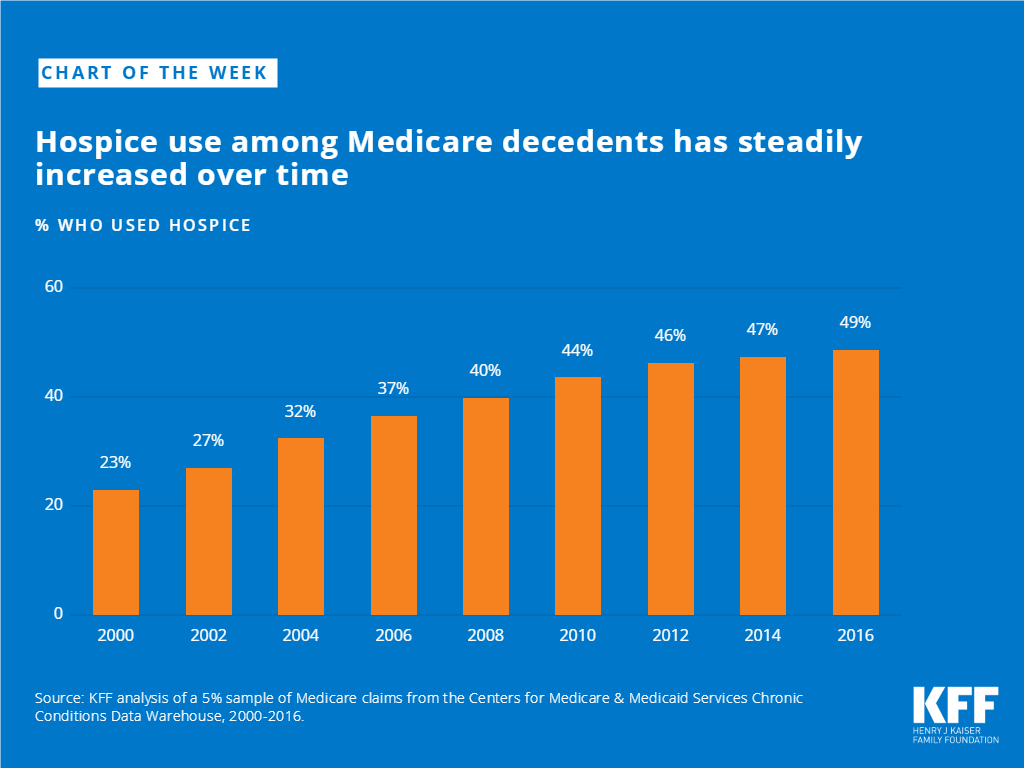
KFF analysis of a 5% sample of Medicare claims from the Centers for Medicare & Medicaid Services Chronic Conditions Data Warehouse, 2000-2016
Though Congress last year failed to repeal key Affordable Care Act requirements for non-group health insurance that people buy themselves, the Trump Administration and some states are promoting other types of plans through regulatory changes that would allow the sale of products that skirt many of the ACA’s requirements.
A new Kaiser Family Foundation brief examines four of those options and the tradeoffs involved if such loosely regulated markets take root as an alternative to the ACA-regulated market, particularly as the repeal of the individual mandate penalty takes effect next year. These four options are:
Each of the four plan options would create parallel insurance markets with different and more limited consumer protections, resulting in lower premiums but less coverage and financial protection for those who are able to enroll. In many cases, these plans also could bar or discourage people with pre-existing conditions from enrolling, leaving the ACA-regulated individual market with a pool of relatively sicker enrollees that would require further premium increases.
About half of people in the current ACA-regulated market (including the vast majority who sign up through the marketplace) receive tax credits that would shield them from such premiums increases, providing some stability in the ACA market. However, middle-income people who are not eligible for tax credits, and who have pre-existing conditions, will not have any meaningful new coverage options under any of these proposals and could find their ACA individual insurance that covers essential benefits and pre-existing conditions growing more expensive, potentially pricing them out of affordable coverage altogether.
President Trump has intensified national debate about immigration by implementing policies to enhance immigration enforcement and restrict legal immigration. Recent findings show that the climate surrounding these policies has significantly increased fear and uncertainty among immigrant families, broadly affecting families across different immigration statuses and locations. The effects extend to lawfully present immigrants, including lawful permanent residents or “green card” holders, and children in immigrant families, who are predominantly U.S.-born citizens. In particular, findings point to both short- and long-term negative consequences on the health and well-being of children in immigrant families.
Potential changes to public charge policies intended to reduce use of public programs by immigrant families, including their citizen children, could further increase strains on immigrant families and lead to losses in health coverage. To provide insight into the scope of potential impacts of continually evolving immigration policy on children, this data note provides nationwide and state-level estimates (Table 1) of citizen children living in immigrant families and the number currently covered by Medicaid/CHIP coverage.
NEW: Nearly 20 million children live in immigrant families that could be affected by evolving immigration policies
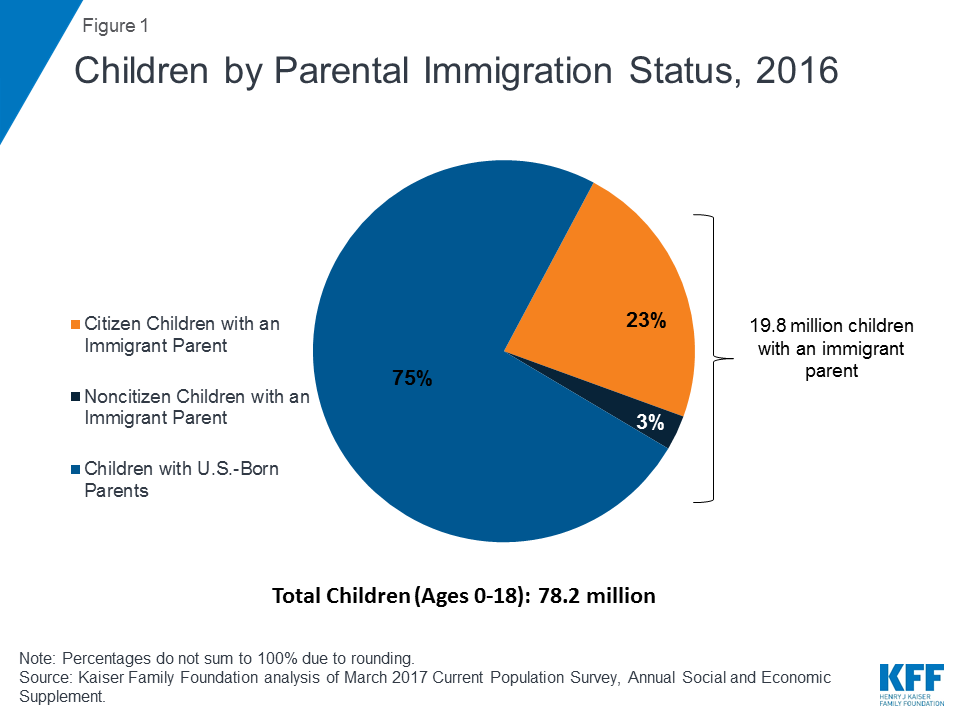
In 2016, nearly 20 million or one in four children had at least one immigrant parent, and nearly nine in ten (89% or 17.7 million) of these children were citizens (Figure 1). An immigrant parent is a foreign-born parent, including naturalized citizens, lawfully present immigrants, and undocumented immigrants. Over half of children with an immigrant parent live in California (23%), Texas (13%), New York (8%), and Florida (8%).
Over 8 million citizen children with an immigrant parent have Medicaid/CHIP coverage. Medicaid and CHIP provide these children access to preventive and primary care as well as care for chronic conditions. In addition, the coverage provides families financial protection from high medical costs. Recent findings indicate that growing fear and uncertainty among immigrant families is leading to decreased participation in Medicaid and CHIP. Moreover, potential forthcoming changes to public charge policies would likely lead to sharp declines in enrollment in Medicaid and CHIP as well as other programs among immigrant families, including their citizen children. Decreased participation in Medicaid and CHIP would increase the uninsured rate among immigrant families, negatively affecting the financial stability of families and the growth and healthy development of their children. Such coverage losses also would widen disparities in coverage citizen children in immigrant families already face compared to those with U.S.-born parents. Today, citizen children with an immigrant parent are more likely to be uninsured compared to those with U.S.-born parents (Figure 2).
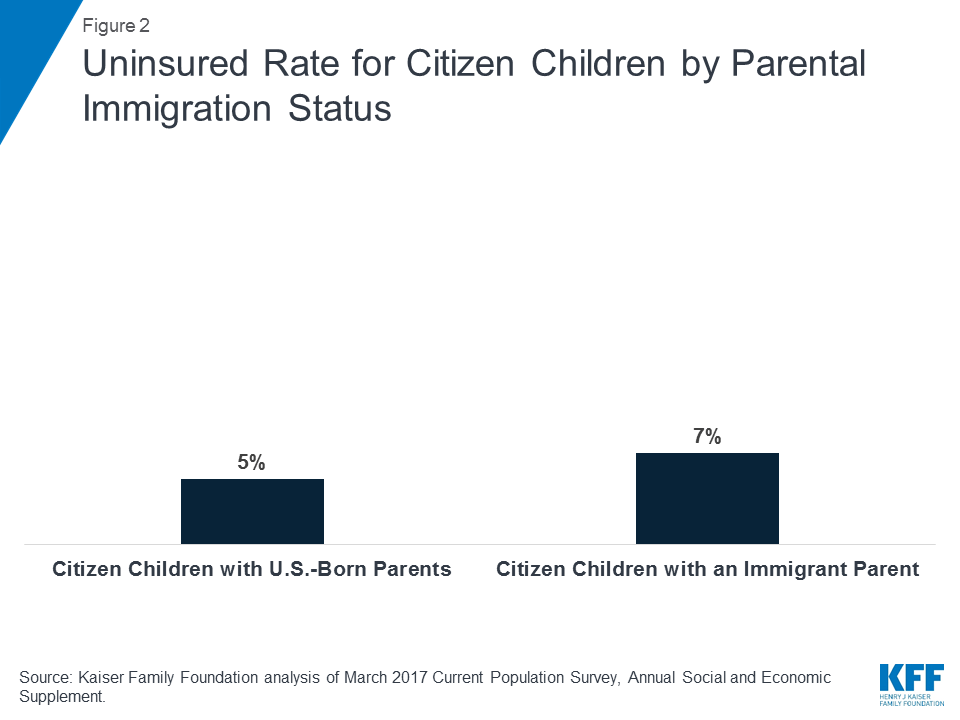
In sum, although changes in immigration policy may target specific groups of immigrants, they often have much farther-reaching effects. One group significantly affected by such changes is children living in immigrant families, who are predominantly U.S. citizens. The effects on these children may have long-term negative consequences on their health and well-being across their lifespan.
This data note was prepared by Samantha Artiga, with the Kaiser Family Foundation, and Anthony Damico, an independent consultant to the Kaiser Family Foundation.
| Table 1: Medicaid/CHIP Coverage for Citizen Children With an Immigrant Parent, 2016 | |||
| All Children | Citizen Children with an Immigrant Parent | ||
| Total | Total with Medicaid/CHIP Coverage | ||
| United States | 78,150,000 | 17,674,000 | 8,112,000 |
| Alabama | 1,155,000 | 95,000 | 49,000 |
| Alaska | 202,000 | 23,000 | NA |
| Arizona | 1,715,000 | 451,000 | 205,000 |
| Arkansas | 742,000 | 63,000 | 30,000 |
| California | 9,678,000 | 4,122,000 | 2,039,000 |
| Colorado | 1,318,000 | 217,000 | 108,000 |
| Connecticut | 804,000 | 171,000 | 81,000 |
| Delaware | 215,000 | 41,000 | 19,000 |
| DC | 128,000 | 23,000 | 7,000 |
| Florida | 4,450,000 | 1,329,000 | 519,000 |
| Georgia | 2,666,000 | 484,000 | 260,000 |
| Hawaii | 319,000 | 77,000 | 25,000 |
| Idaho | 473,000 | 66,000 | 34,000 |
| Illinois | 3,048,000 | 791,000 | 341,000 |
| Indiana | 1,694,000 | 104,000 | NA |
| Iowa | 756,000 | 82,000 | 48,000 |
| Kansas | 763,000 | 107,000 | 41,000 |
| Kentucky | 1,104,000 | 60,000 | NA |
| Louisiana | 1,176,000 | 63,000 | NA |
| Maine | 272,000 | 22,000 | NA |
| Maryland | 1,428,000 | 398,000 | 141,000 |
| Massachusetts | 1,480,000 | 414,000 | 157,000 |
| Michigan | 2,280,000 | 222,000 | 82,000 |
| Minnesota | 1,383,000 | 270,000 | 106,000 |
| Mississippi | 768,000 | 31,000 | NA |
| Missouri | 1,479,000 | 125,000 | NA |
| Montana | 241,000 | 12,000 | NA |
| Nebraska | 500,000 | 73,000 | 29,000 |
| Nevada | 729,000 | 240,000 | 87,000 |
| New Hampshire | 283,000 | 28,000 | 13,000 |
| New Jersey | 2,077,000 | 751,000 | 277,000 |
| New Mexico | 522,000 | 101,000 | 67,000 |
| New York | 4,397,000 | 1,485,000 | 704,000 |
| North Carolina | 2,450,000 | 404,000 | 219,000 |
| North Dakota | 188,000 | 12,000 | 3,000 |
| Ohio | 2,792,000 | 195,000 | 90,000 |
| Oklahoma | 1,023,000 | 149,000 | 97,000 |
| Oregon | 933,000 | 203,000 | 132,000 |
| Pennsylvania | 2,836,000 | 336,000 | 170,000 |
| Rhode Island | 217,000 | 52,000 | 27,000 |
| South Carolina | 1,183,000 | 113,000 | NA |
| South Dakota | 229,000 | 14,000 | NA |
| Tennessee | 1,550,000 | 172,000 | 68,000 |
| Texas | 7,731,000 | 2,353,000 | 1,135,000 |
| Utah | 963,000 | 123,000 | NA |
| Vermont | 131,000 | 9,000 | NA |
| Virginia | 2,013,000 | 438,000 | 152,000 |
| Washington | 1,721,000 | 455,000 | 240,000 |
| West Virginia | 398,000 | NA | NA |
| Wisconsin | 1,396,000 | 89,000 | NA |
| Wyoming | 153,000 | 9,000 | NA |
| NOTES: Children with an immigrant parent in a household with at least one immigrant parent. NA: insufficient sample size to report.SOURCE: Kaiser Family Foundation analysis of March 2017 Current Population Survey, Annual Social and Economic Supplement. | |||
Now in the fifth year of implementation, the Affordable Care Act (ACA) standards for non-group health insurance require health plans to provide major medical coverage for essential health benefits (EHB) with limits on deductibles and other cost sharing. In addition, ACA standards prohibit discrimination by non-group plans: pre-existing conditions cannot be excluded from coverage and eligibility and premiums cannot vary based on an individual’s health status. The ACA also created income-based subsidies to reduce premiums (premium tax credits, or APTC) and cost-sharing for eligible individuals who purchase non-group plans, called qualified health plans (QHPs), through the Marketplace. ACA-regulated non-group plans can also be offered outside of the Marketplace, but are not eligible for subsidies.
New: A look at the tradeoffs in costs and protections involved in four proposed health plan alternatives that would operate outside the ACA’s rules and regulations
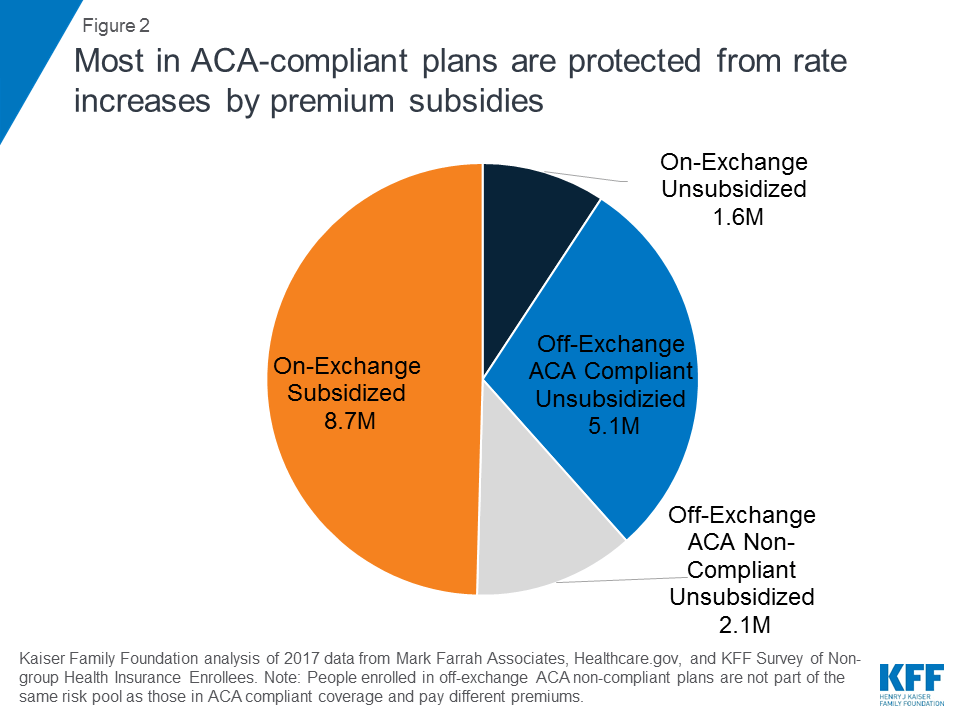
Individual market premiums were relatively stable during the first three years of ACA implementation, then rose substantially in each of 2017 and 2018. Last year, nearly 9 million subsidy-eligible consumers who purchased coverage through the Marketplace were shielded from these increases; but another nearly 7 million enrollees in ACA compliant plans, who do not receive subsidies, were not. Bipartisan Congressional efforts to stabilize individual market premiums – via reinsurance and other measures – were debated in the fall of 2017 and the spring of 2018, but not adopted. Meanwhile, opponents of the ACA at the federal and state level have proposed making alternative plan options available that would be cheaper, in terms of monthly premiums, for at least some people because plans would not be required to meet some or all standards for ACA-compliant plans. This brief explains state and federal proposals to create a market for more loosely-regulated health insurance plans outside of the ACA regulatory structure.
When ACA Marketplaces first opened in 2014, on average, the cost of the benchmark silver QHP was lower than many had predicted. Many insurers underpriced QHPs at the outset, either because they couldn’t accurately predict the cost of providing coverage to a new population under new ACA rules, or to aggressively compete for market share, or both. As a result, insurers offering ACA-compliant policies generally lost money in 2014-2016. In the fall of 2016, for the 2017 coverage year, most issuers implemented a substantial corrective premium increase for their benchmark QHP – on average, a 21% increase for a 40-year-old consumer. This increase, along with growing experience with new market rules, allowed many insurers to regain profitability in 2017, and, going forward, stabilization of QHP rates might otherwise have been expected.
Instead, though, a new wave of uncertainty arose last year as Congress debated repeal of the ACA and as the Trump Administration threatened administrative actions with the stated intent of undermining the program, including by ending reimbursement to insurers for required cost-sharing reductions (CSRs) that, by law, they must offer low-income enrollees in silver QHPs. The value of CSRs was estimated by CBO to be $9 billion for 2018. To compensate for the lost reimbursement, most insurers significantly increased 2018 premiums for silver level QHPs, through which cost sharing subsidies are delivered. Largely due to this so-called “silver load” pricing strategy, the average benchmark silver QHP premium for a 40-year-old rose another 33% for the 2018 coverage year. (Figure 1) Premiums for bronze and gold plans rose more slowly, but still substantially given uncertainty on a number of issues, including whether the ACA’s individual mandate would be enforced.
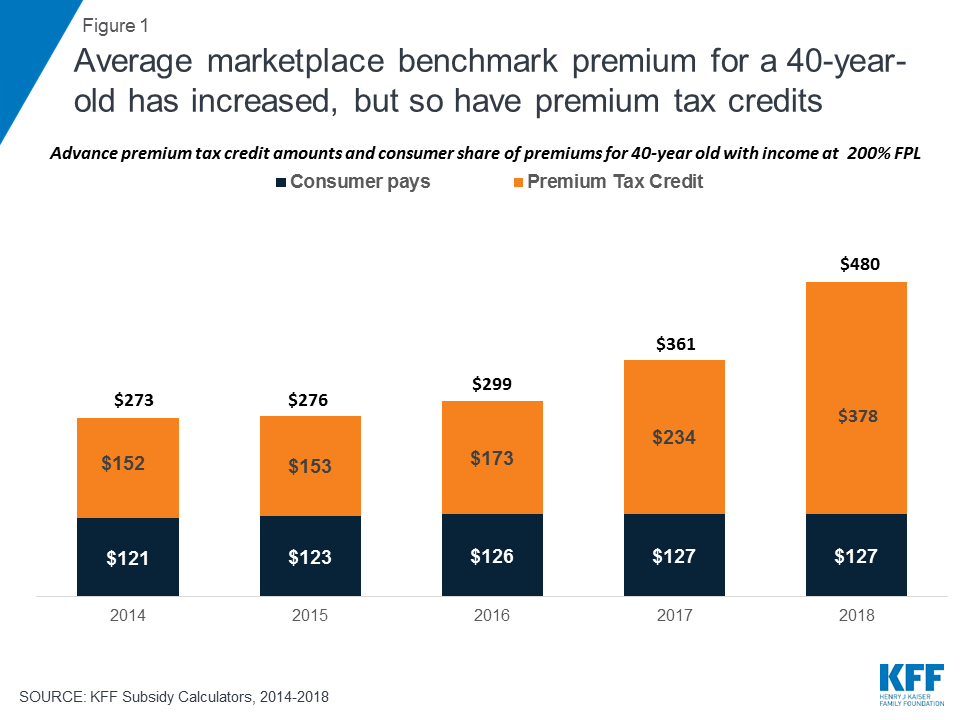
For consumers who are eligible for APTC and who buy the benchmark silver plan (or a less expensive plan) through the Marketplace, subsidies absorb annual premium increases and the net cost of coverage has remained relatively unchanged from 2014 through today. Roughly 85% of Marketplace participants in 2017 were eligible for APTC. (Figure 2) However, for the 15% of Marketplace participants who were not eligible for subsidies, and for another roughly 5 million individuals who bought ACA compliant plans outside of the Marketplace, these consecutive annual rate increases threatened to make coverage unaffordable. That threat was even greater in some areas, where 2018 QHP rate increases were much higher than the national average.
Looking ahead, another round of significant premium increases is possible for the 2019 coverage year. A new source of uncertainty arose when Congress voted to end the ACA’s individual mandate penalty, effective in 2019. The Congressional Budget Office (CBO) estimated repeal of the mandate would fuel adverse selection – as some younger, healthier consumers might be more likely to forego coverage – and average premiums in the non-group market would increase by about 10 percent in most years of the decade, on top of increases due to other factors such as health care cost growth.
ACA opponents have argued QHP premium increases reflect a failure of the federal law. As an alternative, some have proposed different kinds of health plan options to offer premium relief to consumers who need non-group coverage but who are not eligible for premium subsidies, primarily by relaxing rules governing required benefits, coverage of pre-existing conditions, and/or community rating. These include:
In 2018 the Trump Administration proposed a new draft regulation that would promote the sale of short-term, limited duration health insurance policies that offer less expensive coverage because they are not subject to ACA market rules.
Short-term limited-duration health insurance policies (STLD), sometimes referred to as limited-duration non-renewable policies, are designed to provide temporary health coverage for people who are uninsured or are losing their existing coverage but expect to become eligible for other, more permanent coverage in the near future. Historically, people who have used these policies include graduating students losing coverage through their parents or their school, people with a short interval between jobs, or newly hired employee subject to a waiting period before they are eligible for coverage from their job. Because these policies are not intended to provide long-term protection (they generally cannot be renewed when their term ends), they are lightly regulated by states and are exempt from many of the standards generally applicable to individual health insurance policies. They also are specifically exempt under the ACA from federal standards for individual health insurance coverage, including the essential health benefits, guaranteed availability and prohibitions against pre-existing condition exclusions and health-status rating. These differences can make them considerably less expensive (for those healthy enough to qualify to buy them) than ACA compliant plans.
STLDs are similar to major medical policies in that they typically cover both hospitalization and at least some outpatient medical services, but unlike ACA-compliant policies, they often have significant benefit and eligibility limitations. STLD policies often either exclude are have significant limitations on benefits for mental health and substance abuse, do not have coverage for maternity services, and have limited or no coverage for prescription drugs. Policies also generally have dollar limits on all benefits or specific benefits and may have deductibles and other cost sharing that is much higher than permitted in ACA-compliant plans. Insurers of STLD policies typically use medically underwriting, which means that they can turn down applicants with health problems or charge them higher premiums. Policies also exclude coverage for any benefits related to a preexisting health condition: a backstop for insurers in case a person with a health problem otherwise qualifies for coverage and seeks benefits. Because STLD policies are not renewable, people who become ill after their coverage begins are generally not able to qualify for a new policy when their coverage term ends.
Due to their lower premiums, some people have been purchasing STLD policies instead of ACA compliant plans. This has happened even though STLD policies are not considered minimum essential coverage, which means that people who purchase them do not satisfy the ACA mandate to have health insurance and may be subject to a tax penalty. In 2016, CMS expressed concern about these policies being sold as a type of “primary health insurance” and issued regulations shortening the maximum coverage period under federal law for STLD policies from less than 12 months to less than three months and prescribing a disclosure that must be provided to new applicants. The intent of the regulation was to limit sale of these policies to situations involving a short gap in coverage and to discourage their use a substitute for primary health insurance coverage. The rule took effect for policies issued to individuals on or after January 1, 2017. In February 2018, the Trump Administration issued a new proposed regulation to reinstate the “less than 12 months” maximum coverage term for STLD policies. The preamble to the proposed regulation specified that this would provide more affordable consumer choice for health coverage. For more information about STLD policies, see this issue brief.
Extending the coverage period for STLD policies back to just under a year is likely to make them a more attractive choice for healthier individuals concerned about the cost of ACA-compliant plans. This is particularly true beginning in 2019 when the individual mandate penalty ends and purchasers will no longer need to pay a penalty in addition to the premiums for these policies.
Under the ACA framework, STLD plans may provide a lower-cost alternative source of health coverage for people in good health. With ACA policies as a backup, people who purchase STLD policies and develop a health problem would not be able to renew their short-term policy at the end of its term, but would be able to elect an ACA-compliant plan during the next open enrollment.
It is possible, as one estimate concluded, that more healthy individual market participants may switch to short-term policies as a result. Such “adverse selection” would raise the average cost of covering remaining individuals in ACA-compliant plans, leading to further premium increases in those policies. For people with pre-existing conditions who do not qualify for subsidies, the rising cost of ACA-compliant coverage could challenge affordability, especially for people with pre-existing conditions who have incomes that make them ineligible for premium subsidies.
Another draft regulation proposed by the Trump Administration would permit small employers and self-employed individuals to buy a new type of association health plan coverage that does not have to meet all requirements applicable to other ACA-compliant small group and non-group health plans. While many types of health insurance are marketed though associations, including STLDs, hospital indemnity plans and cancer or other dread disease policies, current policy discussions about AHPs tend to focus on arrangements formed by groups of employers (called multiple employer welfare arrangements, or MEWAs) which could also offer group health insurance coverage to self-employed people without any employees (“sole proprietors”).
The U.S. Department of Labor recently proposed regulations under the Employee Retirement Income Security Act (ERISA) to expand the types of MEWAs that could offer health plans that would not be subject to certain ACA requirements. Under the draft regulation, AHPs – a type of MEWA – could offer health coverage to sole proprietors and to small businesses, but would be subject to large group health plan standards. Key ACA requirements for the non-group and small group market do not apply to large group health plans today, and so would not apply to AHP coverage sold to self-employed individuals or small employers. In particular, AHPs would not be required to cover essential health benefits; it would be possible under the proposed regulation for AHPs to offer policies that do not cover prescription drugs, for example.
Under the draft regulation, AHPs would be subject to a nondiscrimination standard that would prohibit basing eligibility or premiums on an enrollee’s health status. However, other ACA rating standards in the non-group and small group market would not apply; in particular, AHPs would be allowed to vary premiums by more than 3:1 for age and without limit based on gender, geography, and other factors such type of industry or occupation.
As a result, AHPs could provide self-employed individuals an alternative to individual health insurance that provides fewer benefits with more rating flexibility. As nearly one-third (31%) of individual market enrollees are self-employed, the impact of AHPs could be significant.
The draft regulation included other language related to state vs. federal regulatory authority over MEWAs, or AHPs. Currently, MEWAs are subject to a somewhat complex mix of regulatory provisions at the federal and state levels; the applicable standards vary depending on a number of things, including whether the MEWA is self-funded or provides benefits through insurance, whether the arrangement itself is considered to be sponsoring an employee benefit plan as defined in ERISA, the sizes of the employers participating in the arrangement, and how the states in which the arrangements operate approach MEWA regulation. The proposed rule generally leaves in place state authority over MEWAs/AHPs. However, the DOL requested comments on whether it should consider changes that would limit state regulation of self-funded AHPs to financial matters such as solvency and reserves, in effect, prohibiting states from regulating AHP rating and benefit design practices.
The degree of impact on individual health insurance markets will depend in part on the final rules, in particular whether the nondiscrimination provision is preserved and whether states retain current authority over AHPs.
In January 2018, pursuant to an executive order by Governor Otter, the Idaho Department of Insurance issued a bulletin outlining provisions of new individual health insurance products that insurance companies would be permitted to sell under state law. The new “State-Based Health Benefit Plans” would not have to comply with certain ACA requirements and, as a result, would likely be offered for premiums lower than those charged for ACA-compliant policies – at least for consumers who are younger and who don’t have pre-existing conditions.
State-Based Health Plans would be required to cover a package of health benefits and cost sharing that was less than that required for ACA-compliant plans. For example, certain essential health benefit categories, such as habilitation services and pediatric dental and vision, appear not to be required. In addition, ACA limits on cost sharing were not specified, and annual dollar limits on covered benefits could be applied. If consumers reach the annual dollar limit on coverage under a state-based plan, the insurer would be required to transfer their enrollment into an ACA-compliant plan.
In addition, state-based plans would not be allowed to deny applicants based on health status and could be sold year round, outside of Open Enrollment. However, State-Based plans could exclude coverage of pre-existing conditions for any individual who had experienced at least a 63-day break in coverage. These plans would also be permitted to vary premiums by a factor of 3:1 based on health status (prohibited by the ACA), and by 5:1 based on age (higher than the 3:1 ratio permitted by the ACA). In order to offer a State-Based Health Plan, insurers would also be required to offer at least one QHP through the Idaho Marketplace.
The bulletin required that state-based plans and exchange-certified plans must comprise a single risk pool, with a single index rate for all plans that does not account for differences in the health status of individuals who enroll, or are expected to enroll in a particular type of plan. However, the Academy of Actuaries noted that, because the two types of plans would not be competing under the same rules, “there would be, in effect, two risk pools – one for ACA coverage and one for state-based coverage. Premiums for ACA coverage would increase, threatening sustainability of the ACA market and its pre-existing condition protections.”
The Idaho State-Based Health Plan proposal is similar in many respects to an amendment offered by Senator Ted Cruz during the ACA repeal debate in 2017. The amendment, which was not enacted, would have allowed insurers that sell ACA-compliant marketplace plans to also offer other policies that could be medically underwritten and that would not have to meet other ACA standards. Although CBO did not estimate how the amendment would impact premiums or coverage, representatives of the insurance industry predicted that, “As healthy people move to the less-regulated plans, those with significant medical needs will have no choice but to stay in the comprehensive plans, and premiums will skyrocket for people with preexisting conditions. This would especially impact middle-income families that that are not eligible for a tax credit.”
The Idaho proposal appears to be not moving forward at this time. Recently, the director of the federal Center on Medicare and Medicaid Services (CMS) advised Idaho officials that these State-Based health plans would be in violation of federal law. Under the ACA, states do not have flexibility to authorize the sale of individual health insurance policies that do not meet federal minimum standards. In states that do not enforce federal minimum standards, the federal government is required to step in and enforce.
The CMS letter did generally express sympathy with Idaho’s approach, citing “damage caused by the [ACA],” and encouraged the state to pursue modified strategies to expand availability of more affordable plans that do not meet all ACA requirements. The letter specifically urged Idaho to consider promoting short-term policies as a legal alternative to ACA-compliant health plans, and it invited the State to develop other alternative strategies using ACA state waiver authority.
A new Iowa law enacted this month would permit the sale of health coverage by the state’s Farm Bureau. The Farm Bureau is not a licensed health insurer. Under the new law, Farm Bureau health plans would be deemed to not be insurance and explicitly would not be subject to state insurance regulation. By extension, Farm Bureau plans also would not have to meet federal ACA standards for health insurance as these apply only to policies sold by state licensed health insurers.
The new Iowa law applies no other standards for Farm Bureau health plans – for example, it does not establish minimum benefit requirements, rating requirements, or rules prohibiting discrimination based on pre-existing health conditions. Appeal rights guaranteed to health insurance policyholders also would not apply to Farm Bureau enrollees, nor would state insurance solvency and other financial regulations. The law does require the Farm Bureau to administer coverage through a state licensed third party administrator, or TPA (expected to be Wellmark, Iowa’s Blue Cross Blue Shield insurer.) However, use of a TPA does not extend federal or state insurance law to the underlying Farm Bureau health plan.
The Iowa law closely resembles a Tennessee state law, enacted in 1993, which authorized the sale of health coverage by the Farm Bureau and deemed such coverage not to be health insurance subject to state regulation. In Tennessee, it has been reported that roughly 25,000 residents purchase non-group Farm Bureau health plans that are medically underwritten. (By comparison, more than 228,000 residents have ACA-compliant individual policies through the Marketplace this year.) Farm Bureau plan premiums can be as much as two-thirds lower than for ACA-compliant plans because the underwritten policies can and do deny coverage to people with pre-existing conditions. Adverse selection results, with sicker residents confined to the ACA-regulated market. An analysis of risk scores for state insurance markets finds that Tennessee’s individual market has one of the highest risk scores in the nation.
Since 2014, Tennessee residents who buy underwritten Farm Bureau health coverage are not considered to have “minimum essential coverage” and so may owe a tax penalty under the ACA individual mandate. However, this disincentive to purchase Farm Bureau plans in Tennessee and Iowa will end in 2019 when repeal of the mandate penalty takes effect.
Each of these proposals follows a similar theme. Creating parallel insurance markets with different, lesser consumer protections, allows insurers to offer lower premiums and less coverage to people while they are healthy, leaving the ACA-regulated market with a sicker pool and higher premiums. Once repeal of the ACA individual mandate penalty takes effect in 2019, the net cost differential between regulated and less-regulated coverage will be even greater.
Premium subsidies in the ACA-regulated market will help to curb adverse selection, protecting people with lower incomes from the impact of higher premiums, and providing some continued stability in the reformed market. However, middle-income people who are not eligible for subsidies, and who have pre-existing conditions, will not have any meaningful new coverage choices under these proposals. Instead, the cost of health insurance that covers essential benefits and their pre-existing conditions will increase, potentially further pricing them out of affordable coverage altogether.
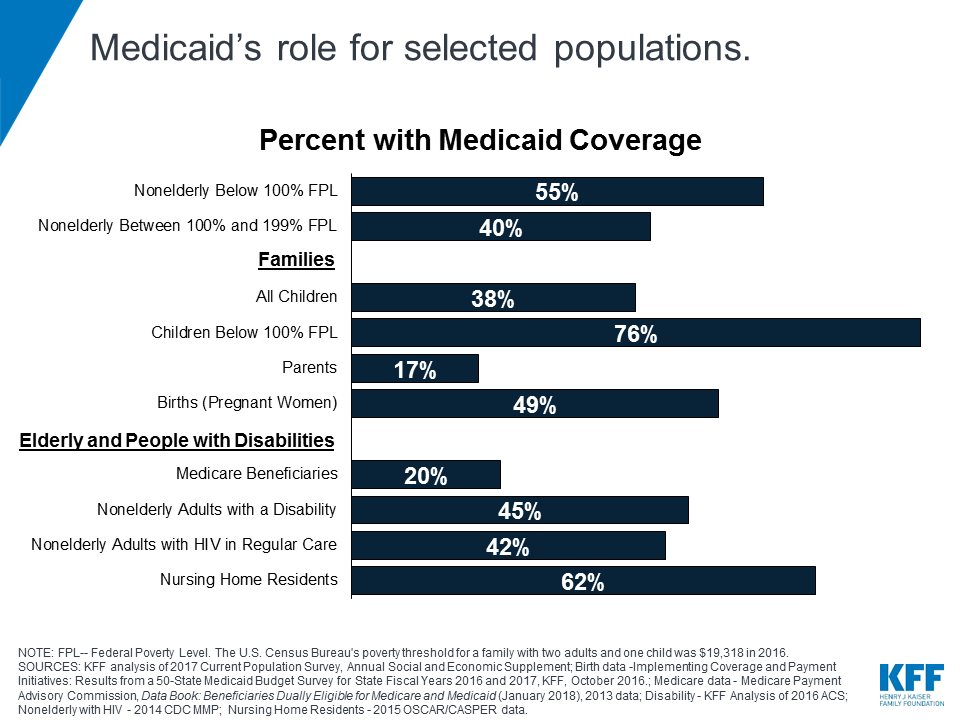
NOTE: FPL– Federal Poverty Level. The U.S. Census Bureau’s poverty threshold for a family with two adults and one child was $19,318 in 2016.
SOURCES: KFF analysis of 2017 Current Population Survey, Annual Social and Economic Supplement; Birth data -Implementing Coverage and Payment Initiatives: Results from a 50-State Medicaid Budget Survey for State Fiscal Years 2016 and 2017, KFF, October 2016.; Medicare data – Medicare Payment Advisory Commission, Data Book: Beneficiaries Dually Eligible for Medicare and Medicaid (January 2018), 2013 data; Disability – KFF Analysis of 2016 ACS; Nonelderly with HIV – 2014 CDC MMP; Nursing Home Residents – 2015 OSCAR/CASPER data.