News Release

KFF’s Kaiser Health News, Associated Press Win Online News Association Award for Investigative Data Journalism

Joint Investigation Examined How the Nation’s Decades-long Neglect of Public Health Infrastructure Hampered its Covid-19 Response

Published: Oct 18, 2021

The Online News Association has named KFF’s Kaiser Health News and The Associated Press winners of its 2021 University of Florida Award in Investigative Data Journalism for their joint project “Underfunded and Under Threat.” The award is one of the highest honors in data journalism.

The joint KHN-AP investigation revealed that public health departments around the country had become understaffed and poorly equipped to confront the worst pandemic in a century. Their analysis found that at least 38,000 state and local public health jobs disappeared since 2008, and spending for local public health departments dropped by 18% per capita since 2010.

The joint KHN-AP investigation revealed that public health departments around the country had become understaffed and poorly equipped to confront the worst pandemic in a century. Their analysis found that at least 38,000 state and local public health jobs disappeared since 2008, and spending for local public health departments dropped by 18% per capita since 2010.

Journalists from both news organizations drew upon more than a dozen data sources to assess hundreds of state and local health departments. Reporters interviewed more than 150 people, surveyed all 50 statehouses, filed dozens of records requests and sorted through legislation across the country.

Even during the height of the coronavirus crisis, many states spent little of their federal covid-19 relief funding on public health departments, and state legislatures continued to undermine the public health system with budget cuts.

KHN and AP also followed the story throughout the pandemic, showing how the politicization of public health measures prompted physical threats against public health workers, with the backlash triggering the largest exodus of public health leaders in American history and a massive legislative rollback of public health powers.

AP and KHN also routinely shared data and offered guidance to news organizations to help them localize the findings of the investigation for their communities. The award — one of many KHN has received over the years — honors work that effectively uses data to tell a story, presents that data well to users and has relevance and journalistic impact.

About KFF and KHN

KHN (Kaiser Health News) is a national newsroom that produces in-depth journalism about health issues. Together with Policy Analysis and Polling, KHN is one of the three major operating programs at KFF (Kaiser Family Foundation). KFF is an endowed nonprofit organization providing information on health issues to the nation.

About AP

The Associated Press is an independent global news organization dedicated to factual reporting. Founded in 1846, AP today remains the most trusted source of fast, accurate, unbiased news in all formats and the essential provider of the technology and services vital to the news business. More than half the world’s population sees AP journalism every day.
News Release

KFF’s Kaiser Health News and Hulu Host Panel Discussion, “Dopesick: The Opioid Crisis Beyond the Script”

Published: Oct 18, 2021

Hulu’s new miniseries “Dopesick” was built on journalism, and its creators hope it will spark a renewed public discussion about the nation’s opioid crisis, show executives said during a recent panel discussion hosted by KFF’s Kaiser Health News and Hulu.

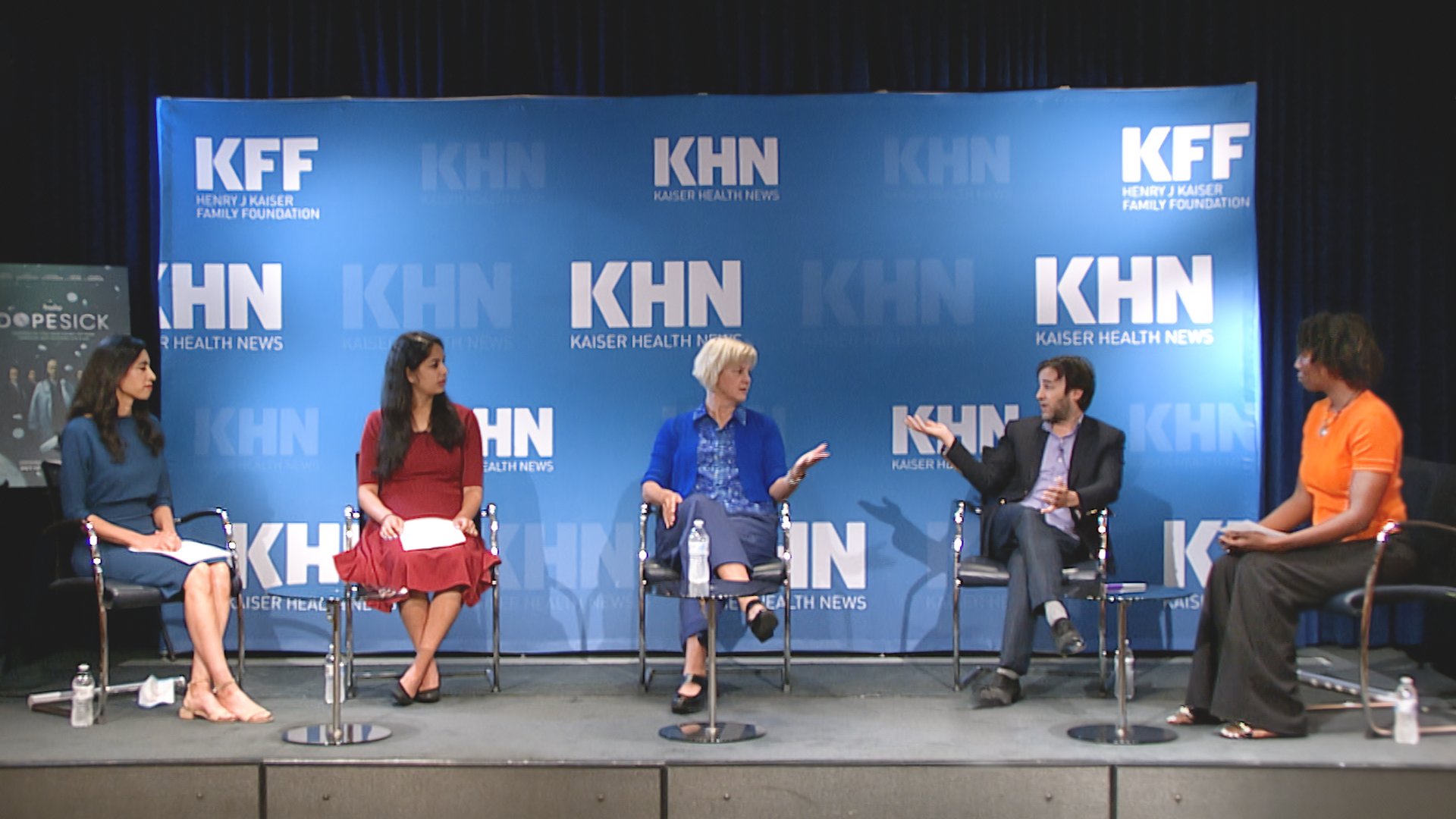
The event brought together the lead creative powers behind the show along with a journalist from KHN and a policy expert from KFF to unpack the making of “Dopesick” and what the show has to say about the origins of the opioid crisis. KFF’s journalists and policy experts have been tracking the devastating epidemic with on-the-ground stories as well as data-driven analyses for a number of years. The panelists brought their different lenses — creative, journalistic and policy — to focus on the devastating impact of opioids on ordinary Americans and the often ineffective efforts to combat this continuing public health emergency.

The panel discussion, moderated by Chaseedaw Giles, KHN’s digital strategy and audience engagement editor, featured executive producer, writer and showrunner Danny Strong; journalist Beth Macy, who authored the book on which the show is based; KHN correspondent Aneri Pattani, who has reported extensively on opioid policy, substance use and mental health; and KFF senior policy analyst Nirmita Panchal, whose analytical work focuses on mental health and substance use.

“What was unique about my collaboration with Beth is that the journalism side of the process never ended,” Strong said. “We would do interviews together, people would leak documents to us. … It was this unusual process in which we were writing a scripted drama and then simultaneously doing active investigative journalism.”

Macy, who was in the show’s writers’ room full time, said writers would incorporate into scripts revelations from newly released court filings in ongoing cases against Purdue Pharma, the company behind the drug OxyContin, which features prominently in the eight-episode miniseries.

“New documents were coming out all the time,” Macy said. “We would take turns — you go through this, I’ll go through this. And then we would all report back to Danny and decide what the best highlights were.”

In a 40-minute discussion, the panelists explored a wide range of topics about the show and the real-life opioid crisis it depicts, weaving in stories from people Pattani has interviewed for KHN radio and print pieces and findings from Panchal’s analyses. Topics included:

• How the show employed the tools of fiction, such as composite characters, to tell a larger truth

• The important role played by medication-assisted treatment, which combines medications with counseling and behavioral therapy in the treatment of opioid addiction

• The current state of the opioid crisis, marked by a record-high 93,000 deaths from drug overdoses in 2020; the expansion of the problem beyond largely rural, white communities; and the rise of highly addictive synthetic opioids like fentanyl

• The role of politics in the funding for, and availability of, different types of treatment

The economic fallout and social isolation of the COVID-19 pandemic have exacerbated the opioid epidemic, Panchal said. She noted that about 1 in 3 people now say they are experiencing anxiety and depression, compared to about 1 in 10 before the pandemic.

“The job loss, financial hardship, poor mental health — these are things that can often go hand in hand with substance use,” Panchal said.

Pattani noted that there are divisions among political leaders at all levels about how best to tackle the opioid crisis, with some pushing for more medication-assisted treatment, others favoring traditional rehab centers and some emphasizing a criminal justice approach to the problem.

Everyone is representing a district that has constituents affected by this,” she said. “I haven’t talked to a politician who says we don’t need to address the opioid epidemic, but I think they all disagree on how.”

“Dopesick” premiered on Hulu Oct. 13, with new installments of the miniseries available on Hulu every Wednesday. The panel discussion, recorded in KFF’s Washington, D.C., offices without a live audience due to COVID-19, can be viewed anytime on kff.org.

About KFF and KHN

KHN (Kaiser Health News) is a national newsroom that produces in-depth journalism about health issues. Together with Policy Analysis and Polling, KHN is one of the three major operating programs at KFF (Kaiser Family Foundation). KFF is an endowed nonprofit organization providing information on health issues to the nation.

About Hulu and “Dopesick”

From Executive Producer Danny Strong and starring and executive-produced by Michael Keaton, “Dopesick” examines how one company triggered the worst drug epidemic in American history. The series takes viewers to the epicenter of America’s struggle with opioid addiction, from the boardrooms of Big Pharma to a distressed Virginia mining community, to the hallways of the Drug Enforcement Administration. Defying all odds, heroes will emerge in an intense and thrilling ride to take down the craven corporate forces behind this national crisis and their allies. The limited series is inspired by The New York Times bestseller by Beth Macy.

The eight-episode series stars Michael Keaton, Peter Sarsgaard, Michael Stuhlbarg, Will Poulter and John Hoogenakker, with Kaitlyn Dever and Rosario Dawson. Guest stars include Phillipa Soo and Jake McDorman.

“Dopesick” is written by Emmy winner Danny Strong (“Empire,” “Recount,” “Game Change”) and directed by Oscar winner Barry Levinson (“Paterno,” “Rain Man”). Executive producers for “Dopesick” include Strong, John Goldwyn (“Dexter”), Keaton, Levinson, Warren Littlefield (“The Handmaid’s Tale,” “Fargo,” “The Old Man”), Beth Macy (“Dopesick”) and Karen Rosenfelt (“Twilight”).

Insurer Filings Suggest COVID-19 Pandemic Will Not Drive Health Spending In 2022

Authors: Giorlando Ramirez, Jared Ortaliza, Matt McGough, Nisha Kurani, Emma Wager, Venkatesh Satheeskumar, Krutika Amin, and Cynthia Cox
Published: Oct 18, 2021

This brief reviews final 2022 premium rate filings for Marketplace-participating individual market insurers in all 50 states and the District of Columbia. Although the ACA individual market represents a small share of the privately insured population, the rate filings for this market are detailed and publicly accessible, making them a useful source of information on how health insurers are thinking about their likely costs for the next year.

Most of the 311 rate filings reviewed,We find that most insurers expect spending and utilization to return to pre-pandemic levels in 2022 and do not expect COVID-19 to affect costs in the individual market. A majority of rate changes for 2022 are moderate, with most insurers posting premium increases or decreases of a few percentage points.

The brief is available on the Peterson-KFF Health System Tracker, an online information hub dedicated to monitoring and assessing the performance of the U.S. health system.

Poll Finding

KFF Health Tracking Poll – October 2021: Home And Community Based Services And Seniors’ Health Care Needs

Authors: Ashley Kirzinger, Audrey Kearney, Mellisha Stokes, Liz Hamel, and Mollyann Brodie
Published: Oct 15, 2021

Findings

Key Findings

  • The October KFF Health Tracking Poll finds one in five adults in the U.S. report receiving ongoing support for daily activities such as bathing, dressing, or remembering medications, and a similar share say they are providing those type of services for a close friend or family member. About one in five adults (18%) also say they or a family member need either new or additional support from paid nurses or aides beyond what they are currently getting. The most common reason why people haven’t gotten the support they need is cost. More than three-fourths of those who say they need more help (14% of all adults) say “not being able to afford the cost of the care” is a reason why they or their family member has not received the additional support from paid nurses or aides.
  • Many unpaid caregivers say providing support to friends or family members has caused them to worry or stress (77%), experience worsening of their own mental health (50%), financial strain due to inability to work (42%), or worsening of their own physical health (38%). Unpaid caregivers are more likely to be racial and ethnic minorities, those with lower education, and report lower levels of household income.
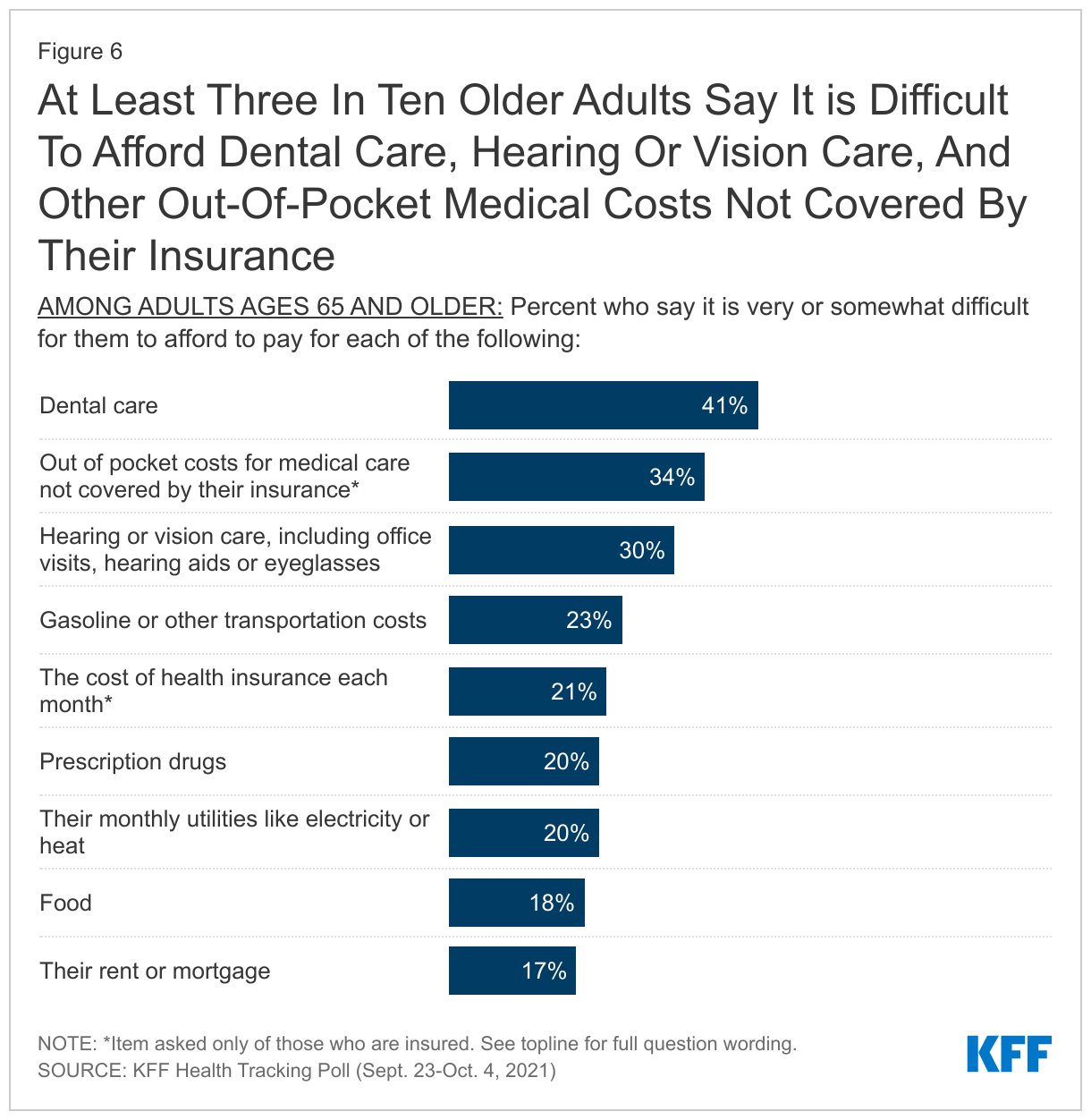
  • Significant shares of older adults in the U.S. report difficulty paying for various aspects of health care, especially services not generally covered by Medicare. Four in ten older adults (41%) report difficulty paying for dental care while three in ten report difficulty affording hearing or vision care (30%). Dental, vision, and hearing coverage are three benefits not generally covered by Medicare but are part of Democratic lawmakers’ proposals as part of the reconciliation spending package.
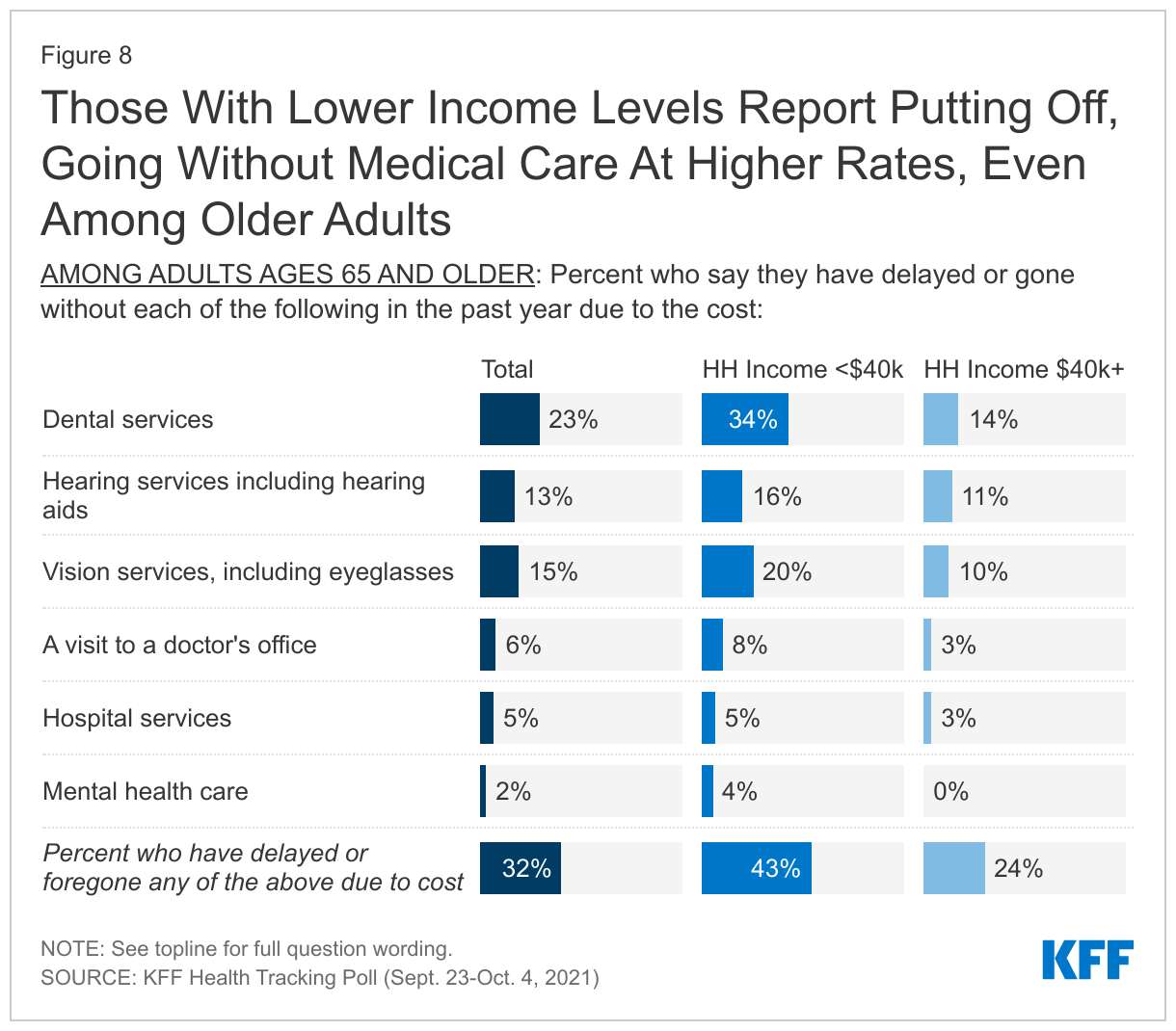
  • Many older adults who are eligible for Medicare also report putting off or foregoing medical care due to costs. While Medicare helps older adults pay for routine doctor visits and hospital stays, substantial shares of lower income older adults report putting off or foregoing services not covered by Medicare. Overall, more than four in ten older adults in households earning less than $40,000 annually report delaying or going without some form of medical care over the past year due to costs (compared to 24% of older adults with household incomes over $40,000), including dental care (34%), vision care (20%), and hearing services including hearing aids (16%).
  • With substantial shares of the public reporting financial strains associated with help with everyday activities for themselves or family members, and seniors reporting difficulty paying for some health care expenses, the latest KFF poll finds broad support for many of the proposals in the reconciliation package being currently discussed in Congress.

Home And Community Based Services

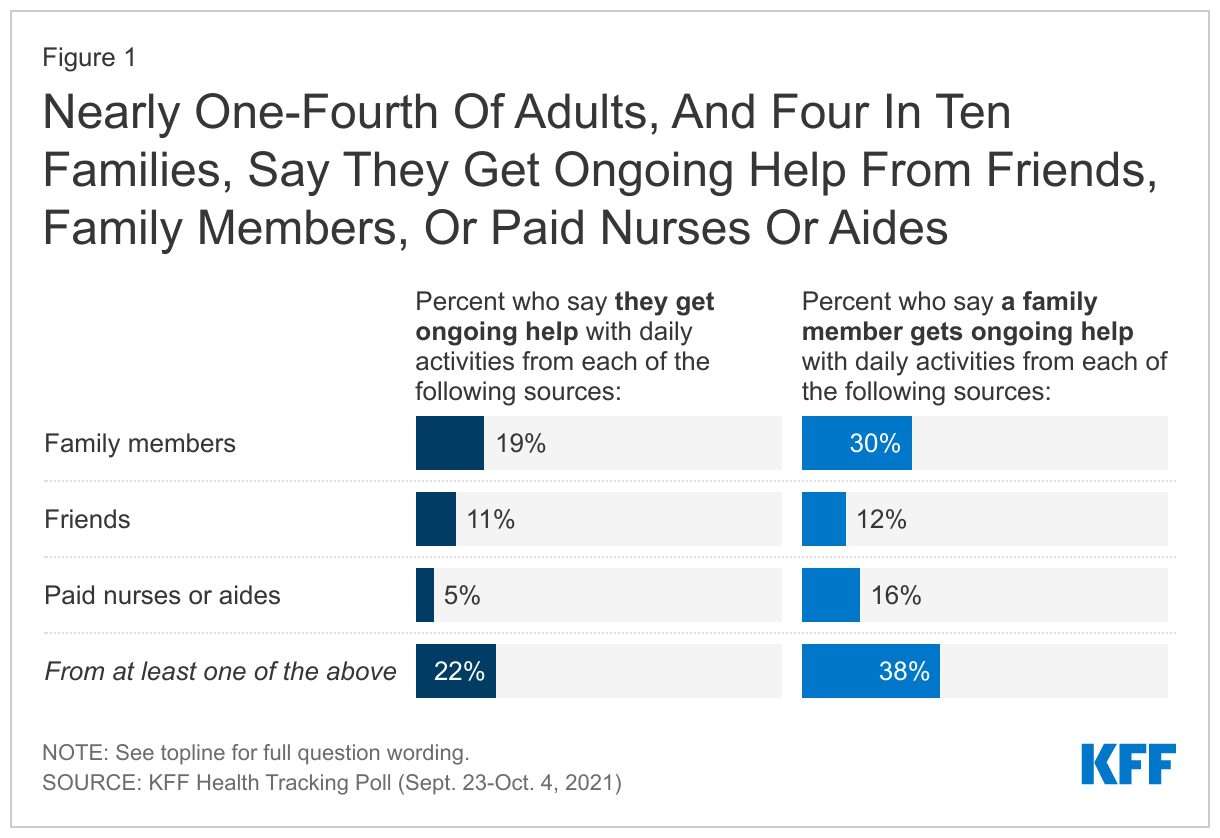
One in five adults, including 27% of adults 65 and older, say they are currently receiving ongoing support with everyday activities from either a family member (19%), a friend (11%), or paid nurses or aides (5%). Additionally, nearly four in ten (38%) adults say a family member gets ongoing help from at least one of these sources including another family member (30%), paid nurses or aides (16%) or  friends (12%).

Nearly One-Fourth Of Adults, And Four In Ten Families, Say They Get Ongoing Help From Friends, Family Members, Or Paid Nurses Or Aides

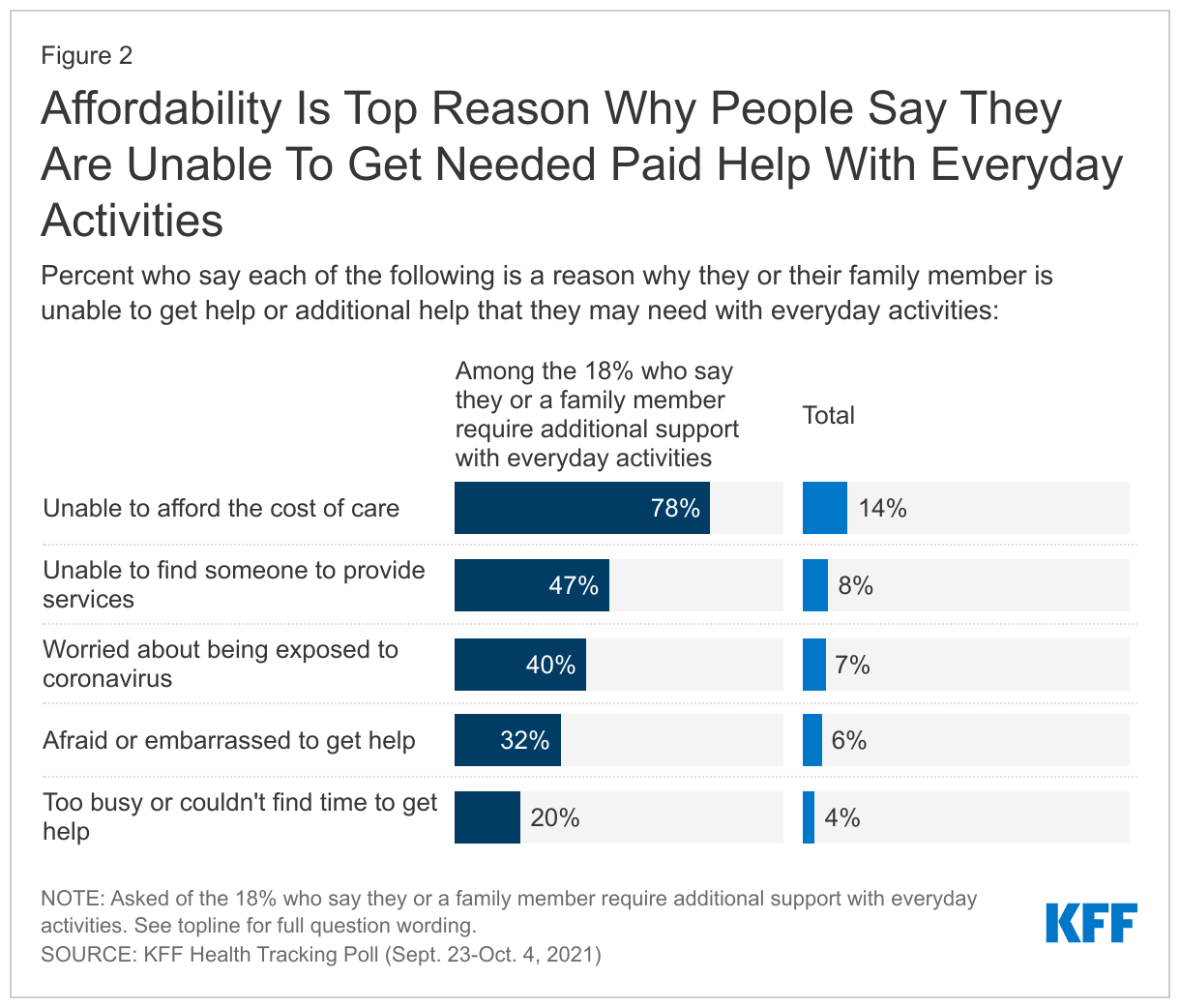
About one in five adults (18%) say they or a family member need either new or additional support from paid nurses or aides beyond what they are currently getting. The most common reason why people haven’t gotten the support they need is cost. More than three-fourths of those who say they need more help (14% of all adults) say “not being able to afford the cost of the care” is a reason why they or their family member has not received the additional support from paid nurses or aides. Other reasons include not being able to find someone to provide the services (47%, or 8% of all adults)1 , being worried about being exposed to coronavirus (40%, 7% of all adults), being afraid or embarrassed to get help (32%, 6%), or being too busy or unable to find the time to get help (20%, 4%).

Affordability Is Top Reason Why People Say They Are Unable To Get Needed Paid Help With Everyday Activities

With many reporting difficulty paying for cost of home and community based care, the poll also gauged support for Democratic proposals to increase funding to Medicaid to pay workers and expand home and community-based services (HCBS). Medicaid is the primary payer for long-term services and supports (LTSS), including home and community-based services (HCBS), that help seniors and people with disabilities with daily self-care and independent living needs. Majorities across partisans (79% total, 95% of Democrats, 76% of independents, 67% of Republicans) support increased funding to Medicaid to pay workers and expand home and community-based services (HCBS).

The toll On Unpaid Caregivers

With Congress discussing possible new tax credits to help with home and community based care, one in five adults (21%) say they are currently providing unpaid support with everyday activities to either a friend or family member, excluding the type of care young children need. Majorities across partisans also favor new tax credit to help people pay for such care (82% total, 94% of Democrats, 80% of independents, 73% of Republicans).

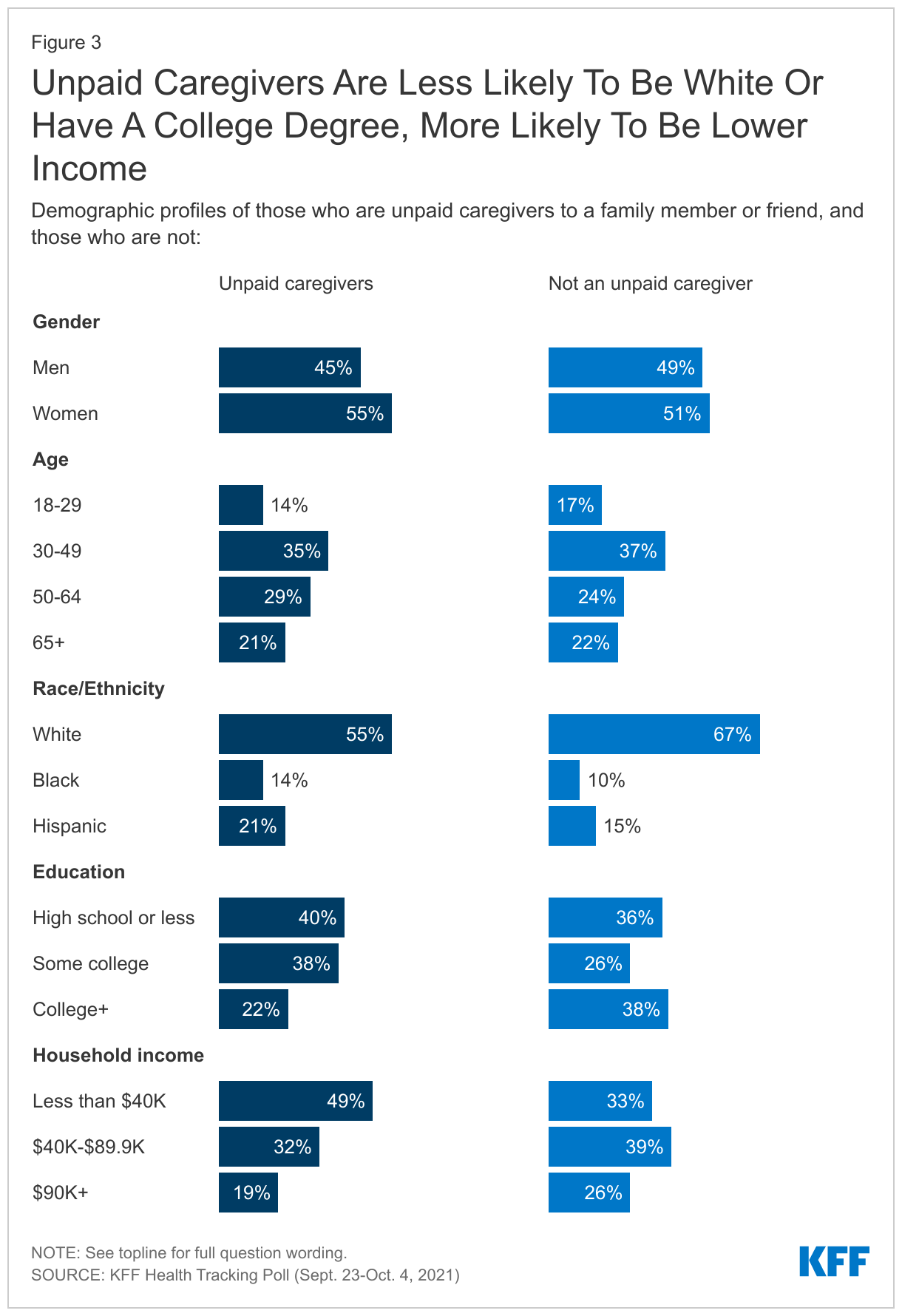
The KFF October Tracking Poll finds unpaid caregivers are more likely to be Black or Hispanic (14% and 21%) compared to those who are not unpaid caregivers (10% and 15%). About eight in ten unpaid caregivers to family and friends do not have a college degree, and about half have household incomes under $40,000.

Unpaid Caregivers Are Less Likely To Be White Or Have  A College Degree, More Likely To Be Lower Income

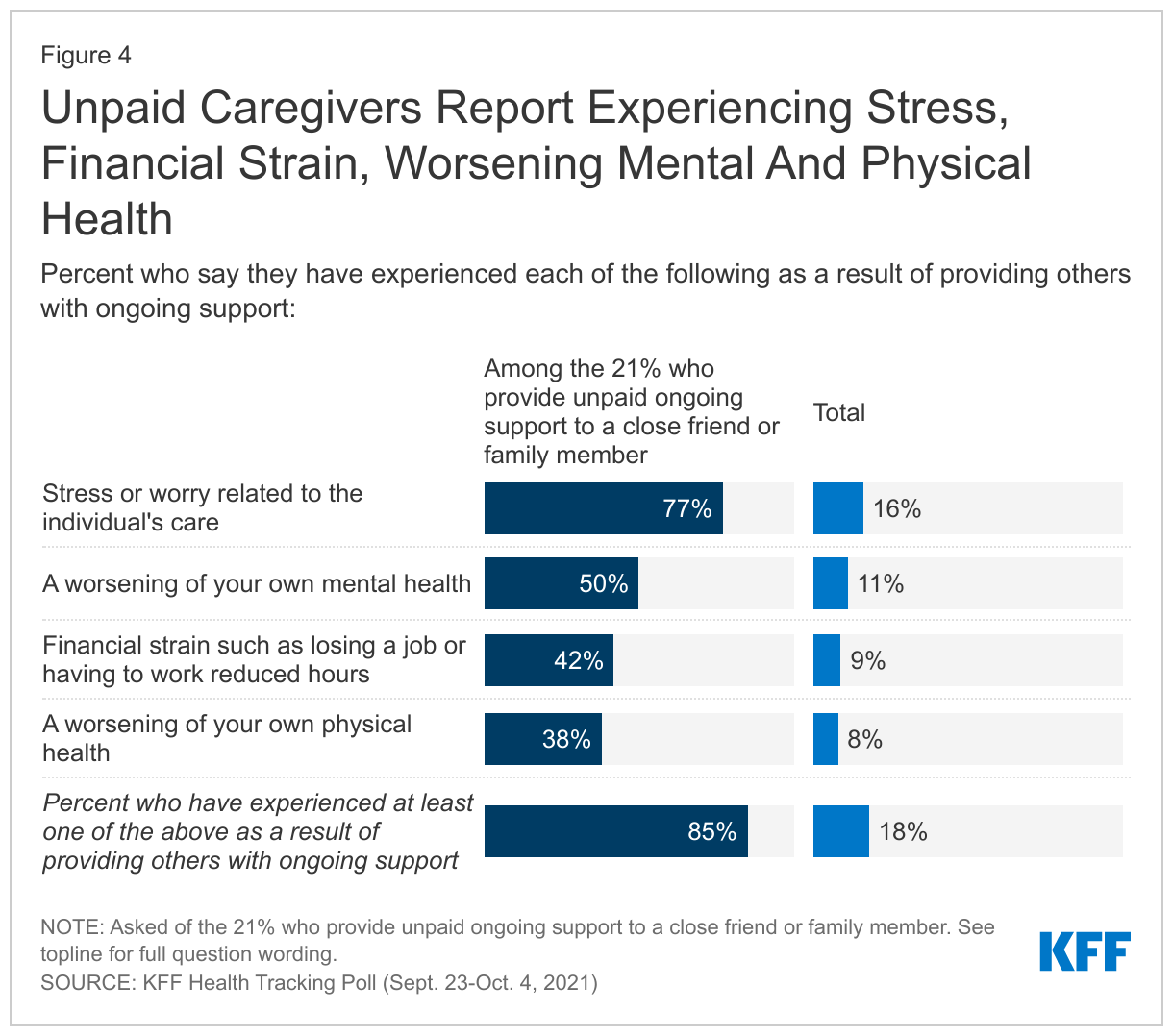
Consistent with recent focus groups conducted by KFF, the poll finds most unpaid caregivers (85%, 18% of all adults) report experiencing at least one of several negative outcomes due to their caregiving responsibilities. Over three-fourths of unpaid caregivers (16% of all adults) say they have experienced stress or worry related to the care of the individual they are caring for, with an additional half (11% of all adults) say they have experienced a worsening of their own mental health as a result of providing this ongoing support. About four in ten (9% of total) say they have experienced financial strain, such as losing a job or having to work reduced hours. A similar share (38% and 8% of total) also say they have experienced a worsening of their own physical health.

Unpaid Caregivers Report Experiencing Stress, Financial Strain, Worsening Mental And Physical Health

Expanding Medicare Benefits

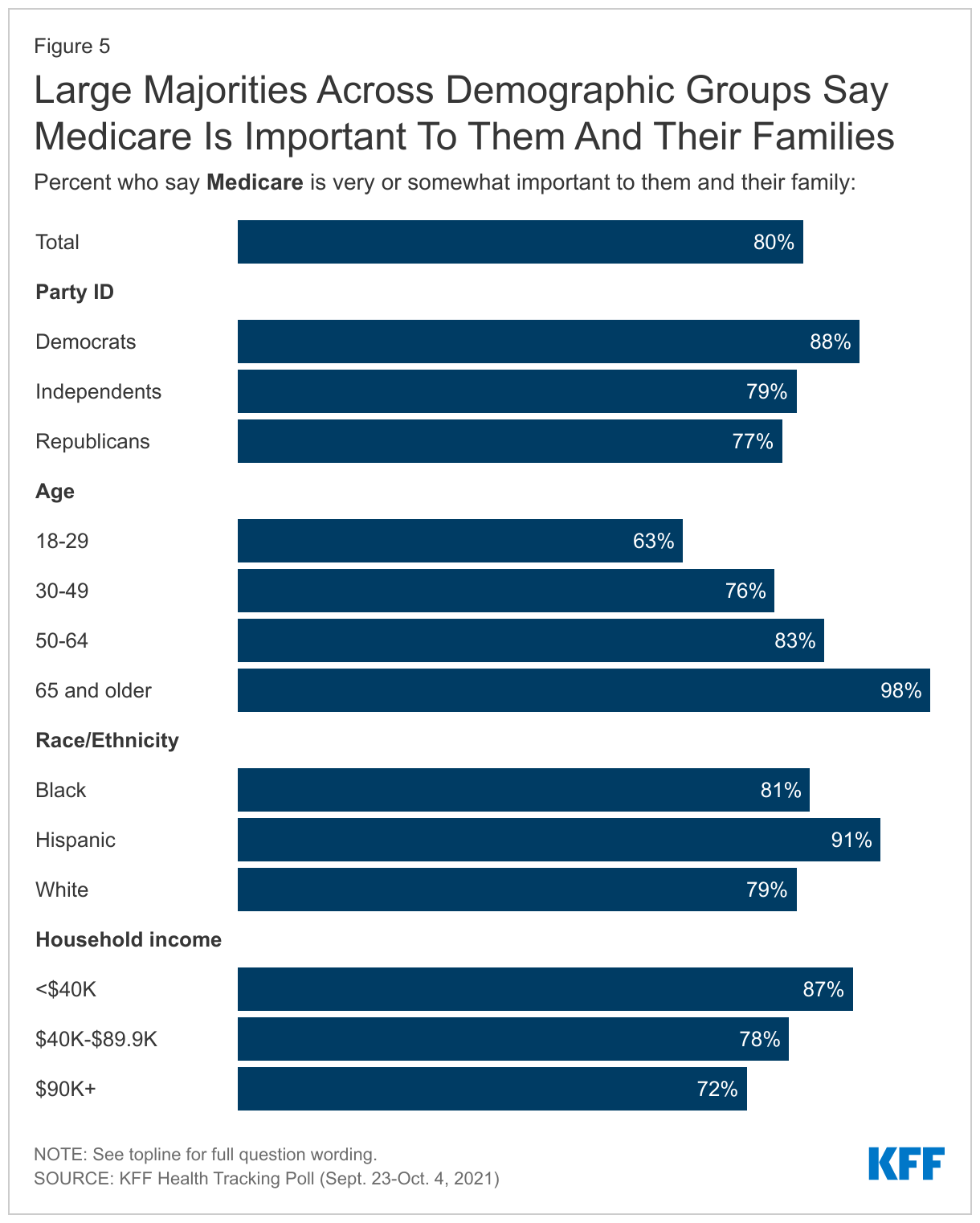
With Congress debating changes to the current Medicare program, eight in ten adults—and nearly all older adults—say Medicare is important to them and their family members. This includes at least seven in ten adults across partisanship, income groups, and racial and ethnic identity.

Large Majorities Across Demographic Groups Say Medicare Is Important To Them  And Their Families

Significant shares of older adults in the U.S. report difficulty paying for various aspects of health care, especially services not generally covered by Medicare.2  Four in ten older adults (41%) report difficulty paying for dental care while three in ten report difficulty affording hearing or vision care (30%). Two in ten report difficulty affording their prescription drugs. Additionally, one-third report difficulty affording their out-of-pocket health care costs and one in five report the same about their monthly health insurance costs – shares comparable to those who report difficulty affording other household expenses such as rent or mortgage, gasoline, monthly utilities, or food and groceries.

At Least Three In Ten Older Adults Say It is Difficult To Afford Dental Care, Hearing Or Vision Care, And Other Out-Of-Pocket Medical Costs Not Covered By Their Insurance

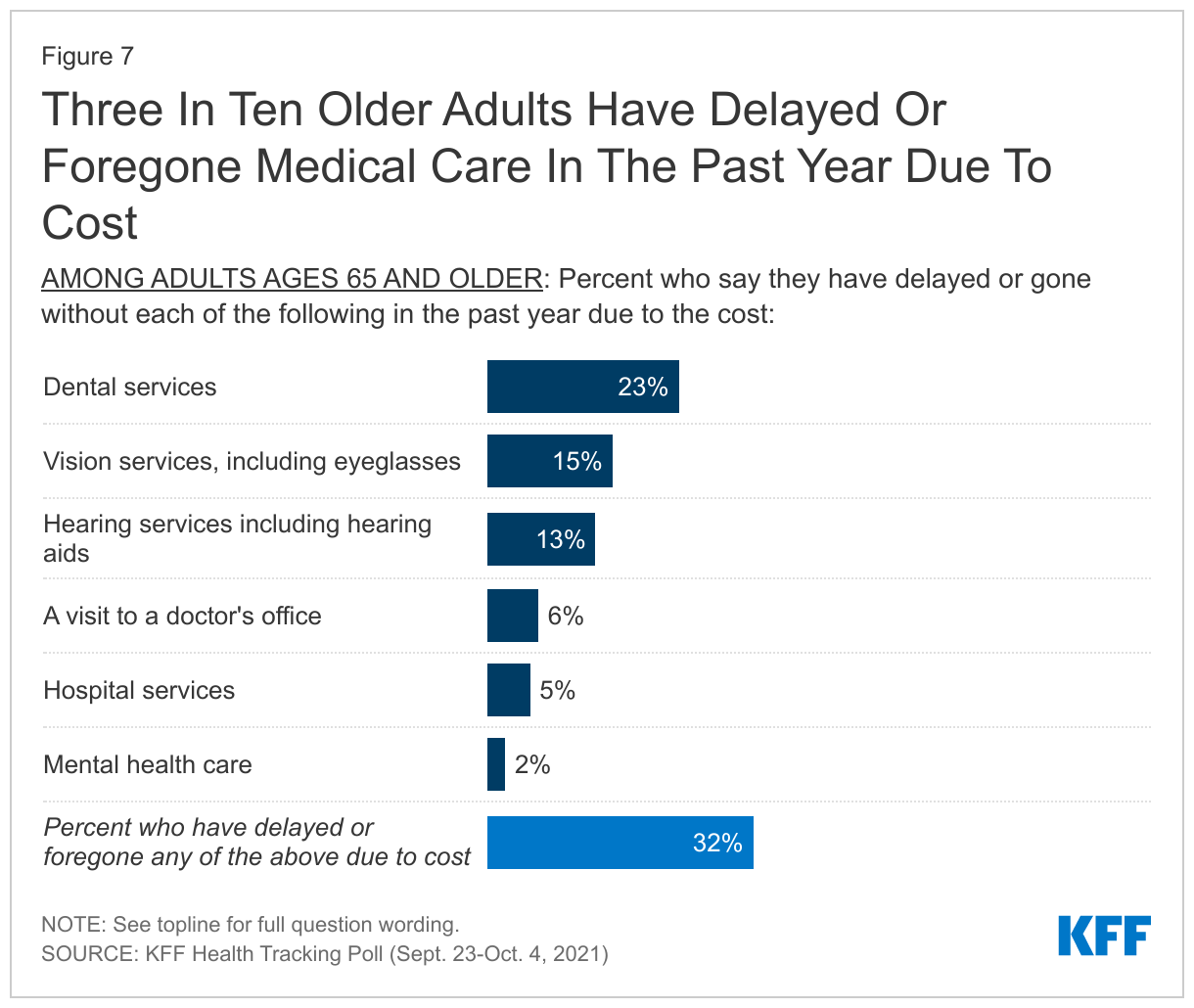
Dental services are the most common type of medical care that people have delayed or gone without with about with about one in four (23%) of adults ages 65 and older saying they have put off dental care in the past year due to cost. This is followed by vision services or eyeglasses (15%) and hearing aids (13%). Dental, vision, and hearing coverage are three benefits not generally covered by Medicare.

Few older adults report delaying or going without a doctor’s office visit (6%), hospital services (5%) or mental health care (2%) due to cost. Overall, three in ten adults 65 and older report delaying or going without certain medical care during the past year due to cost (32%).

Three In Ten Older Adults Have Delayed Or Foregone Medical Care In The Past Year Due To Cost

Even among older adults who are eligible for Medicare, those with lower incomes report delaying or going without care at higher rates. More than four in ten older adults in households earning less than $40,000 annually report delaying or going without some form of medical care over the past year due to costs (compared to 24% of older adults with household incomes over $40,000). While Medicare helps older adults pay for routine doctor visits and hospital stays, substantial shares of lower income older adults report putting off or foregoing dental care (34%), vision care (20%), and hearing services including hearing aids (16%) that are not generally covered by Medicare.3 

Those With Lower Income Levels Report Putting Off, Going Without Medical Care At Higher Rates, Even Among Older Adults

A large majority of the public (90%) favor expanding Medicare coverage to include dental, vision, and hearing coverage, including 97% of Democrats, 90% of independents, and 85% of Republicans. This proposal is also largely favored by adults 65 and older, including 96% of those in that age group who identify as Democrats or Democratic-leaning and 82% of their Republican counterparts. Proposals aimed at curbing the price individuals have to pay for their prescription drugs are favored by majorities of the public with at least eight in ten overall and at least three-fourths across partisans saying they favor each of the proposals asked about. Eighty-eight percent of adults favor limiting how much drug companies can increase the price for prescription drugs each year to not outpace the rate of inflation (including 93% of Democrats, 86% of independents, 89% of Republicans) and a similar share (85%) favor placing an annual limit on out-of-pocket prescription drug costs for people on Medicare (favored by 88% of Democrats, 85% of independents, 84% of Republicans). The proposed changes to Medicare drug negotiations as part of the reconciliation package poll findings were released earlier this week.

The Affordable Care Act

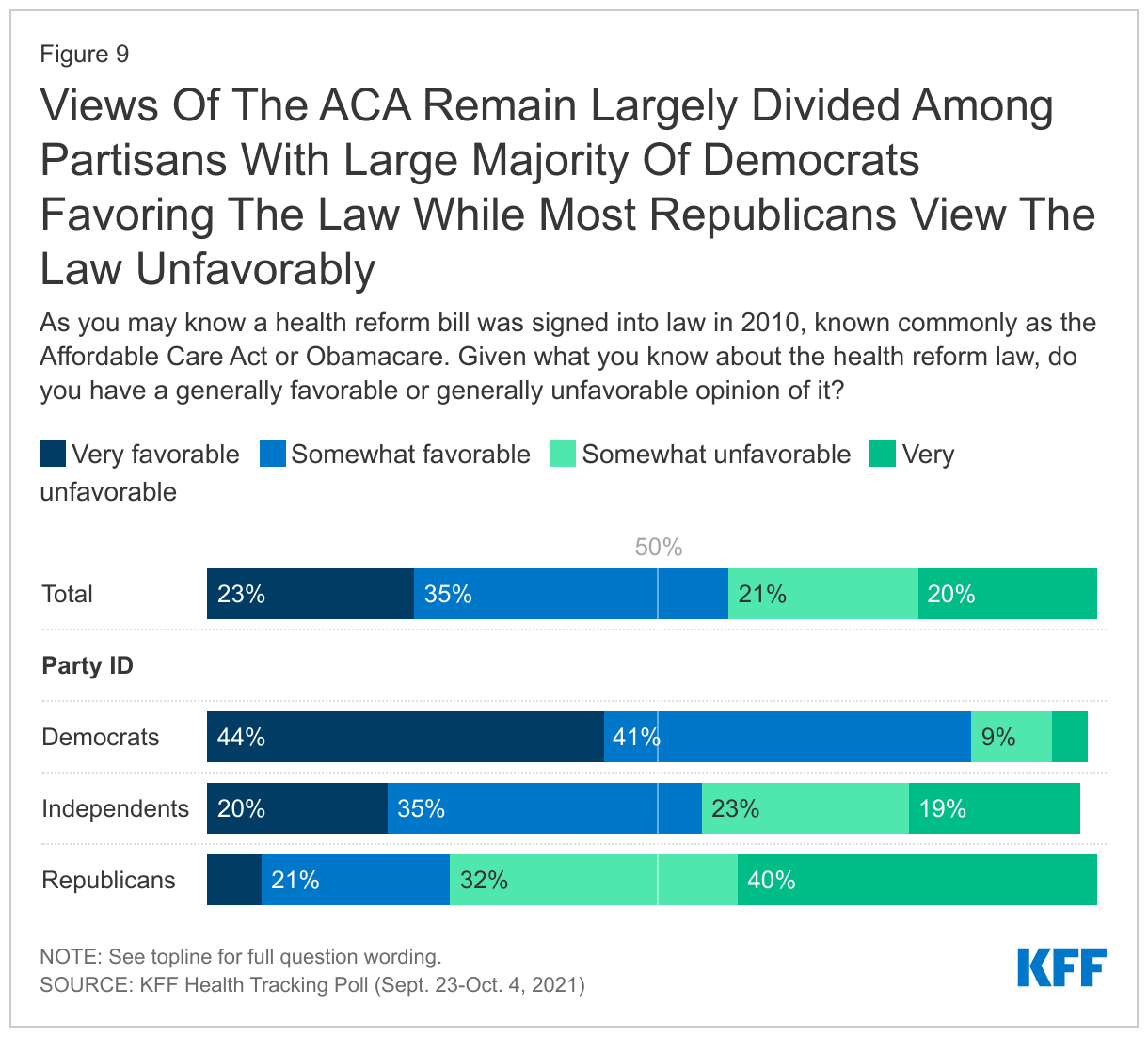
Views of the 2010 Affordable Care Act are still largely driven by party identification with nearly nine in ten Democrats saying they view the law favorably, while three-fourths of Republicans say they hold an unfavorable view. Independents are slightly more favorable than unfavorable with more than half saying they hold a positive opinion of the ACA. KFF has been polling on the ACA since its passage and since 2017 views have been more favorable than unfavorable but still sharply divided on party lines.

Views Of The ACA Remain Largely Divided Among Partisans With Large Majority Of Democrats Favoring The Law While Most Republicans View The Law Unfavorably

The COVID relief bill passed in early March 2021 providing additional financial help for people who buy their own health insurance coverage. Previous KFF polling found that a small minority of those likely eligible for additional financial help or coverage reporting going online to see if they qualify for a different or cheaper health insurance plan.

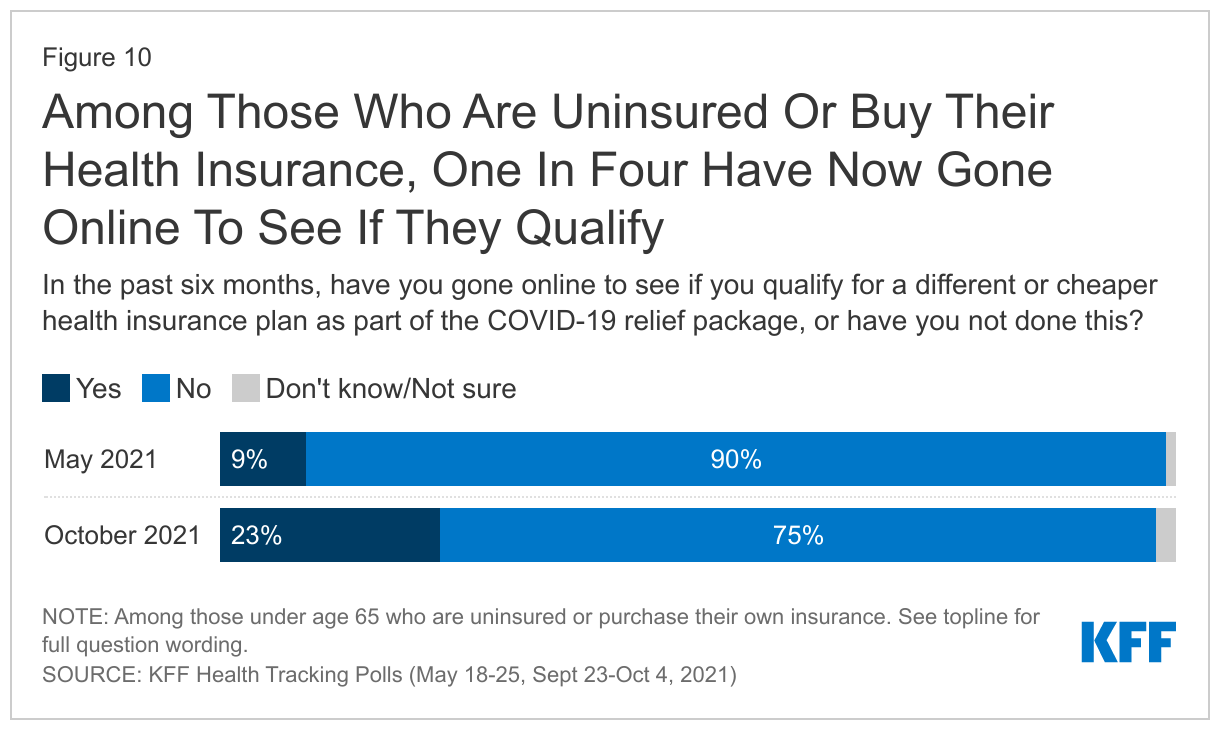
Among those under 65 years old, nine percent of those who are either uninsured or buy their own coverage reported going online in the in the two months before mid-May 2021 to see if they qualify for a different or cheaper health insurance plan or Medicaid as part of the COVID relief package. Four months later, the latest KFF polling finds that about one in four (23%) of those likely eligible for this assistance have gone online to see if they qualify, though majorities (75%) still have not.

Among Those Who Are Uninsured Or Buy Their Health Insurance, One In Four Have Now Gone Online To See If They Qualify

In addition, changes to health insurance coverage provided under the Affordable Care Act continue to be seen through a partisan lens, with overwhelming majorities of Democrats and smaller majorities of Republicans expressing support. Overall, eight in ten adults favor making permanent the financial help to low- and moderate- income Americans who buy their own health insurance coverage (94% of Democrats, 79% of independents, 63% of Republicans). Three in four favor the federal government stepping in to provide insurance options for lower income people living in states that haven’t expanded their Medicaid programs (94% of Democrats, 76% of independents) but this is supported by a small majority (54%) of Republicans.

While the poll finds broad support for many of the Democratic proposed changes to the country’s health care system including the ACA, Medicaid, and Medicare, the poll did not ask about the potential costs and savings associated with each provision, or the size and scope of Democrats’ broader legislative plan, which includes many provisions unrelated to health care.

Methodology

The KFF Health Tracking Poll was conducted in English and Spanish with a nationally representative sample of 1,146 U.S. adults aged 18 or older, including an oversample of 474 adults ages 65 and older. The survey was conducted online and via phone from September 23-October 4, 2021, combining sample from two online probability-based panels and telephone samples recruited from random digit dialing (RDD). Sampling, data collection, weighting and tabulation were managed by SSRS of Glen Mills, PA in close collaboration with Kaiser Family Foundation researchers. The KFF team developed the questionnaire, analyzed the data and contributed financing for the survey.

Panel surveys were conducted through two online panels: (1) The SSRS Opinion Panel, a representative probability-based panel of U.S. adults ages 18 and older, recruited using the SSRS Omnibus poll (a weekly dual-frame RDD telephone survey) and through address-based sampling (ABS) (n=939). (2) The IPSOS KnowledgePanel, a probability-based online panel of U.S. adults ages 18 and older recruited through ABS targeting panelist (n=85). In order to reach adults 65 and older, a group less likely to be reached through an online panel, as well as those who do not have access to the internet, 122 interviews were completed by telephone, (including 79 among those who had previously indicated they do not use the internet).

The combined online, cell phone, and landline sample was weighted to match the sample demographics to estimates for the national population. A multi-stage weighting process was used to adjust for the fact that not all survey respondents were selected with the same probabilities and to account for systematic non-response. In the first weighting stage, adjustments were made regarding the probabilities of selection to the two web panels, and for probability of selection and non-response to the telephone callback samples. Each of these surveys were probability samples of the U.S. adult population that were weighted to the Census Bureau’s March 2020 Current Population Survey (CPS), by gender, age, race/ethnicity, education, and Census region. The data were also weighted to match internet usage metrics based on the U.S. Census’s 2019 American Community Survey, civic engagement metrics based on the September 2019 CPS Volunteering and Civic Life Supplement, and to match party identification within age groups from previous KFF RDD samples.

All statistical tests of significance account for the effect of weighting.

The margin of sampling error including the design effect for the full sample is plus or minus 4 percentage points. Numbers of respondents and margins of sampling error for key subgroups are shown in the table below. For results based on other subgroups, the margin of sampling error may be higher. Sample sizes and margins of sampling error for other subgroups are available by request. Note that sampling error is only one of many potential sources of error in this or any other public opinion poll. Kaiser Family Foundation public opinion and survey research is a charter member of the Transparency Initiative of the American Association for Public Opinion Research.

GroupN (unweighted)M.O.S.E.
Total1,146± 4 percentage points
Age
18-64672± 5 percentage points
65+474± 7 percentage points
Party Identification
Democrats476± 6 percentage points
Republicans231± 8 percentage points
Independents322± 7 percentage points


Endnotes

  1. A shortage of direct care workers predated and has been intensified by the COVID-19 pandemic, characterized by low wages and limited opportunities for career advancement. The direct care workforce is disproportionately female and Black.  Debate in Congress to increase funding for Medicaid HCBS is aimed at strengthening the direct care workforce. ↩︎
  2. Freed, M., Ochieng, N., Sroczynski, N., Damico, A., Amin, K. July 28, 2021. “Medicare and Dental Coverage: A Closer Look” Available at https://modern.kff.org/medicare/issue-brief/medicare-and-dental-coverage-a-closer-look/. ↩︎
  3. Most Medicare beneficiaries enrolled in Medicare Advantage plans are offered dental, vision and hearing benefits although the coverage varies widely. More at https://modern.kff.org/medicare/issue-brief/medicare-advantage-2021-spotlight-first-look/. ↩︎

The Inequity Of The Medicaid Coverage Gap and Why It Is Hard To Fix It

Author: Larry Levitt
Published: Oct 14, 2021

In this column for the JAMA Health Forum, Larry Levitt explores why the Medicaid “coverage gap” still exists in 12 states that have not expanded their Medicaid programs under the Affordable Care Act, why it matters, and why eliminating it could prove challenging.

Limited Access to Paid Family Leave

Authors: Michelle Long and Usha Ranji
Published: Oct 14, 2021

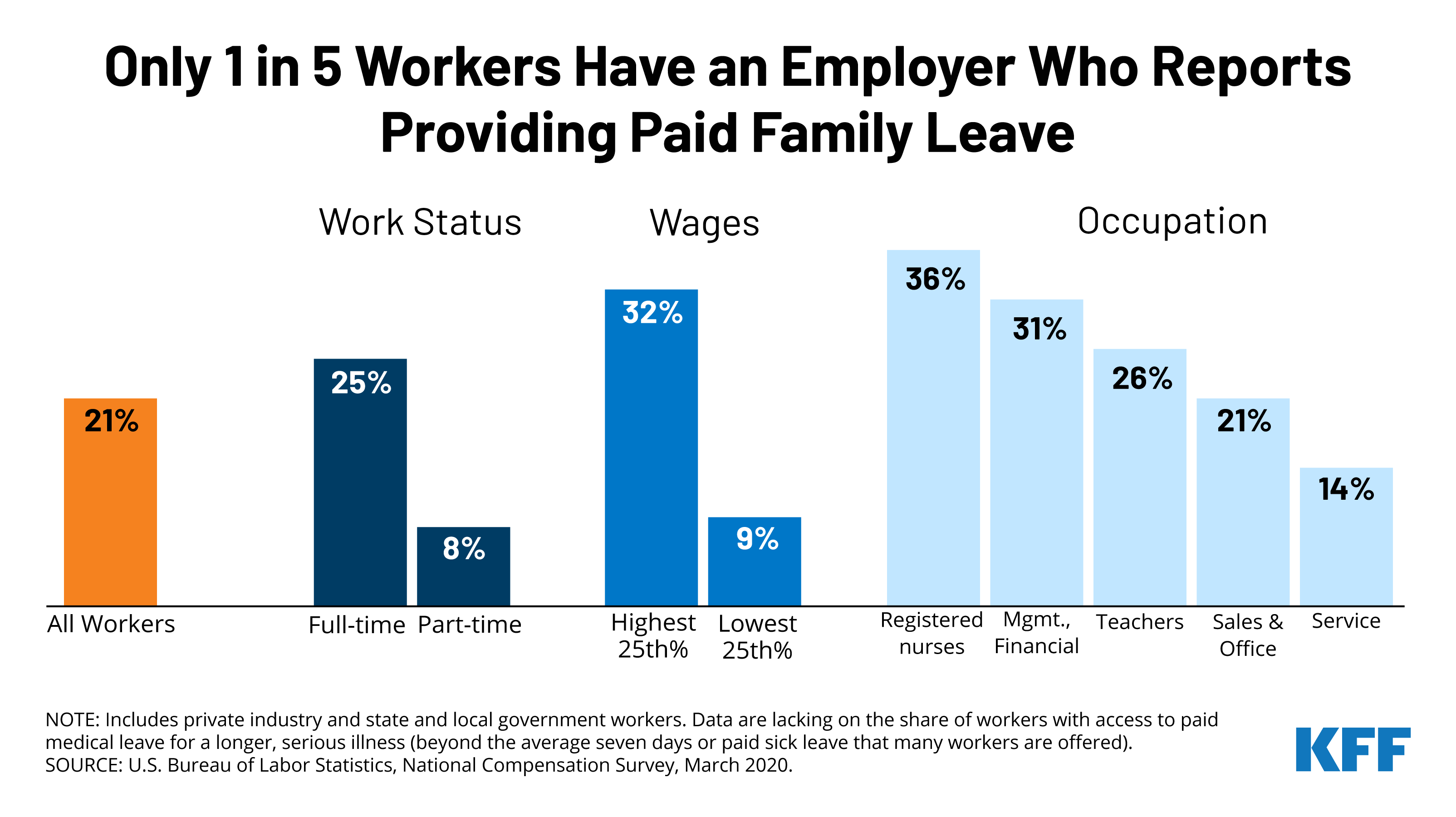
Most people will need to take time off work to care for themselves or their families at some point, but only one in five (21%) workers have access to paid family leave through their employer. That share is even lower for low-wage and part-time workers, and in certain occupations.

Congress is considering creating a universal paid family and medical leave program as part of the Build Back Better Act, which Democrats are looking to pass through the budget reconciliation process relying on Democratic votes. The proposal guarantees 12 weeks of paid family and medical leave annually to all workers in the United States for several qualifying reasons, including welcoming a new child, recovering from a serious illness, and caring for a seriously ill family member. It’s unclear how the program would be financed or whether more changes will be made as pressure to reduce the cost of the social spending package could limit the bill’s scope.

Source

Universal Paid Family and Medical Leave Under Consideration in Congress

News Release

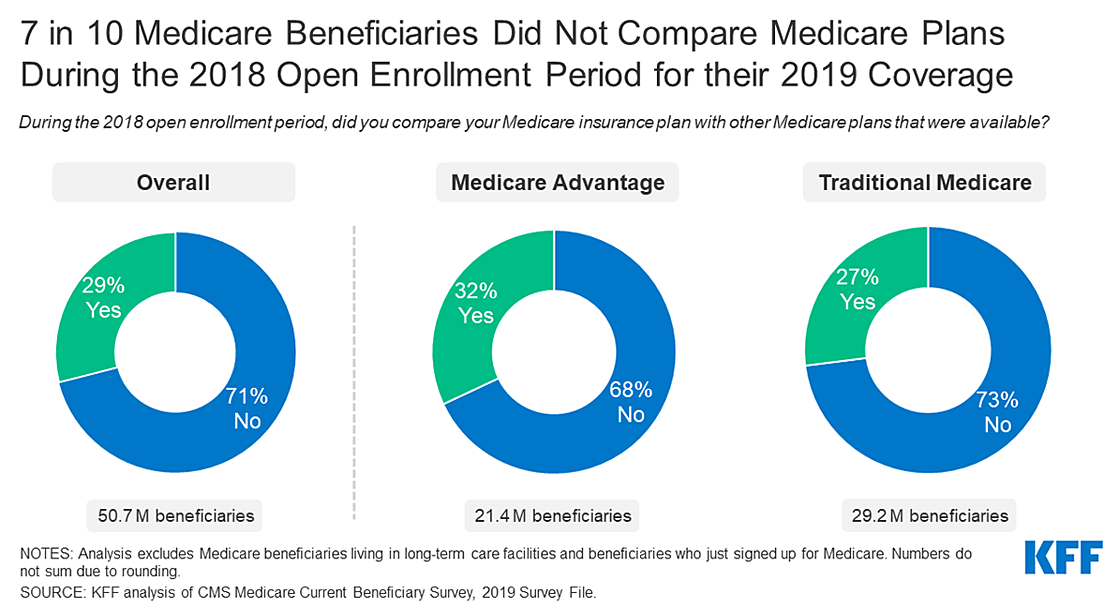
7 in 10 Medicare Beneficiaries Report That They Did Not Compare Their Coverage Options During a Recent Open Enrollment Period

Published: Oct 13, 2021

With the Medicare open enrollment period set to begin October 15, a new KFF analysis finds that 7 in 10 beneficiaries (71%) say that they didn’t compare their coverage options during a recent open enrollment season. Twenty-nine percent said they did compare Medicare plans.

But not shopping around can have a big impact on enrollees’ coverage and costs. The Centers for Medicare & Medicaid Services (CMS) recommends that beneficiaries review and compare Medicare plans each year.

The new analysis examines the share of Medicare beneficiaries who compared plans during the 2018 open enrollment period for coverage in 2019, the share who compared drug coverage in Medicare Advantage and stand-alone drug plans, and variation by demographic characteristics, based on an analysis of the 2019 Medicare Current Beneficiary Survey (the most recent year available).

Other key findings include:

• The share of beneficiaries who said they did not compare their options was higher among beneficiaries who are Black (74%) and Hispanic (79%), ages 85 and older (84%), with low incomes (85%), and those enrolled in both Medicare and Medicaid (87%).

• When it comes to Part D drug coverage, 81 percent of Medicare Advantage drug plan enrollees and 72 percent of Medicare stand-alone drug plan enrollees said they did not compare drug coverage offered by their current plan to other plans.

• Nearly half (47%) of all beneficiaries with Medicare said they had never visited the official Medicare website for information, 53 percent reported they had never called the 1-800-MEDICARE helpline and 31 percent said they did not read the Medicare & You handbook.

Medicare beneficiaries with traditional Medicare can compare and switch Medicare Part D stand-alone prescription drug plans or join a Medicare Advantage plan, the privately run alternative to traditional Medicare. At the same time, enrollees in Medicare Advantage can compare and switch Medicare Advantage plans or elect coverage under traditional Medicare with or without a stand-alone drug plan.

Coverage and costs vary widely among both Medicare Advantage plans and Part D prescription drug plans. Plans can change from one year to the next, as can beneficiaries’ health care needs, which could lead to unexpected and avoidable costs, and disruptions in care for beneficiaries who stay put and do not at least review their options annually.

For other Medicare-related data and analyses, including our Medicare Open Enrollment FAQs and our updated Overview of the Medicare Part D Prescription Drug Benefit, visit kff.org. The Medicare open enrollment period runs through December 7.

Poll Finding

The Public Weighs In On Medicare Drug Negotiations

Authors: Ashley Kirzinger, Audrey Kearney, Mellisha Stokes, Liz Hamel, and Mollyann Brodie
Published: Oct 12, 2021

Findings

Key Findings

  • With much attention on the public’s view on Medicare drug price negotiations, the latest KFF Tracking Poll finds large majorities support allowing the federal government to negotiate and this support holds steady even after the public is provided the arguments being presented by parties on both sides of the legislative debate (83% total, 95% of Democrats, 82% of independents, and 71% of Republicans).
  • Most adults – across partisans – don’t believe high drug prices are needed for drug companies to invest in new research instead agreeing that “even if U.S. prices were lower, drug companies would still make enough money to invest in the research needed to develop new drugs.” The results suggest that while hearing individual arguments may shift some views, the public still largely favors allowing Medicare drug negotiations when presented with the entirety of the public debate.
  • As the debate over how to address prescription drugs continues, less than half of the public say they have confidence in President Biden or either party in Congress to recommend the right thing for the country on prescription drug prices, but Democratic lawmakers fare better than Republican ones. Among interest groups, AARP garners a slight majority of adults saying they are confident in the organization’s ability to recommend the right thing for the country on prescription drug pricing while fewer (14%) have the same level of confidence in pharmaceutical companies.
  • While 85% of adults ages 65 and older report having some type of insurance that helps pay for prescription drugs, one in five older adults still report difficulty affording their prescription drugs, including 17% of older adults with some type of prescription drug coverage. The share who report difficulty affording prescription drugs increases to more than one in four among adults 65 and older who take four or more prescription drugs.

Public Favors Medicare Drug Negotiations

About eight in ten U.S. adults (83%) and adults 65 and older (78%) say they think the cost of prescription drugs is “unreasonable.” Lowering prescription drug prices in the U.S. has been a health care policy priority for decades and earlier this year, it topped the list of health care issues the public wanted Congress to tackle. One proposal aimed at lowering the cost of prescription drugs is to allow the federal government to negotiate the price of prescription drugs for people on Medicare and private insurance.

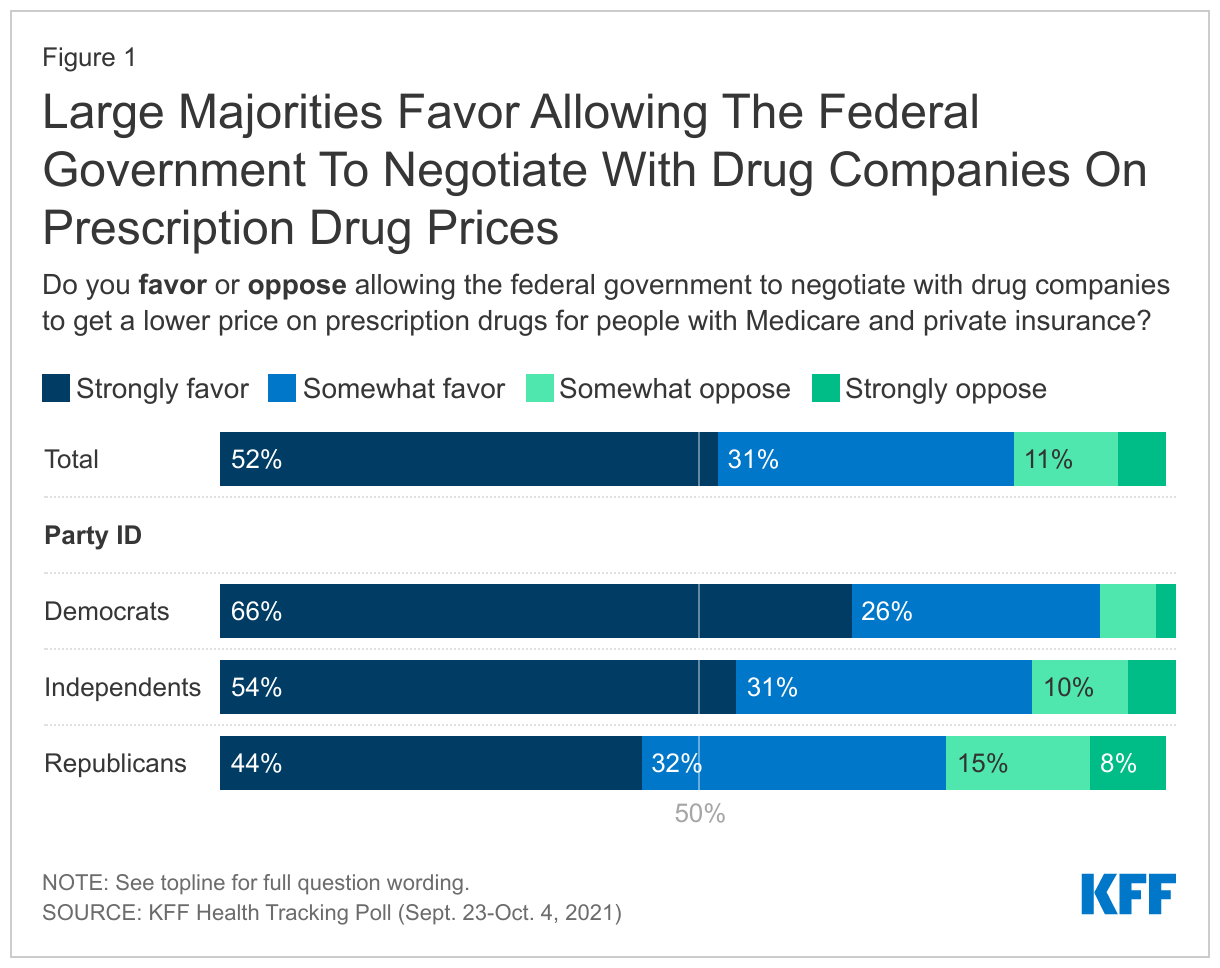
The Democrats’ budget reconciliation package includes a proposal to allow the federal government to negotiate prescription drug prices on behalf of Medicare beneficiaries and people enrolled in private plans. The proposal, which has been part of previous legislative proposals and previously estimated by The Congressional Budget Office (CBO) to result in about $450 billion in savings to Medicare1 , has met strong opposition from the pharmaceutical industry, as well as some lawmakers. Yet, the proposal is largely popular among the public across partisans as well as among seniors, the group most directly impacted by such legislation. Eight in ten adults (83%) say they either “strongly favor” or “somewhat favor” allowing the federal government to negotiate with drug companies as do 84% of older adults (65 and older), including the vast majority (93%) of those ages 65 and older who identify as either a Democrat or lean Democratic, and three-fourths (76%) of older adults who are Republican or lean Republican.

Large Majorities Favor Allowing The Federal Government To Negotiate With Drug Companies On Prescription Drug Prices

Previous KFF polls have found that some attitudes are malleable on this issue as the public hears arguments from either side of the debate around Medicare drug price negotiations. The latest poll finds that when the public are presented with the main arguments being made by advocates on both sides of the debate, the shift in opinion is modest and support for negotiation remains high. After gauging initial support allowing the federal government to negotiate prices with drug companies, the poll presented respondents with arguments both for and against the proposal.

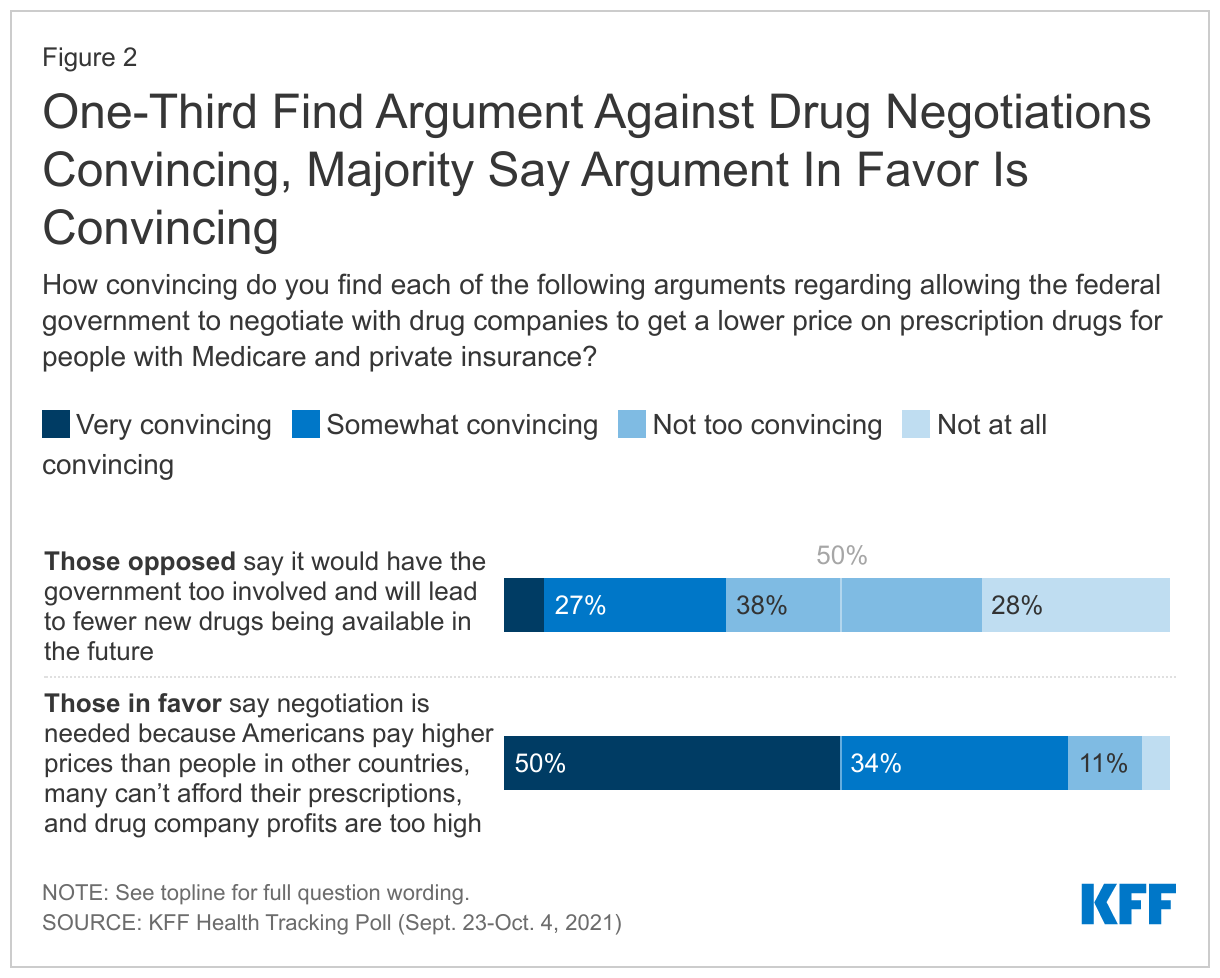
Argument against: People opposed to allowing the federal government to negotiate prices with drug companies say this would have the government too involved and will lead to fewer new drugs being available in the future.

Argument in favor: People in favor of allowing the federal government to negotiate prices with drug companies say this is needed because Americans pay higher prices than people in other countries, many can’t afford their prescriptions, and drug company profits are too high.

One-third of the public say the argument from those opposed to drug price negotiations is convincing compared to a large majority (84%) who say they found the argument from those in favor convincing.

One-Third Find Argument Against Drug Negotiations Convincing, Majority Say Argument In Favor Is Convincing

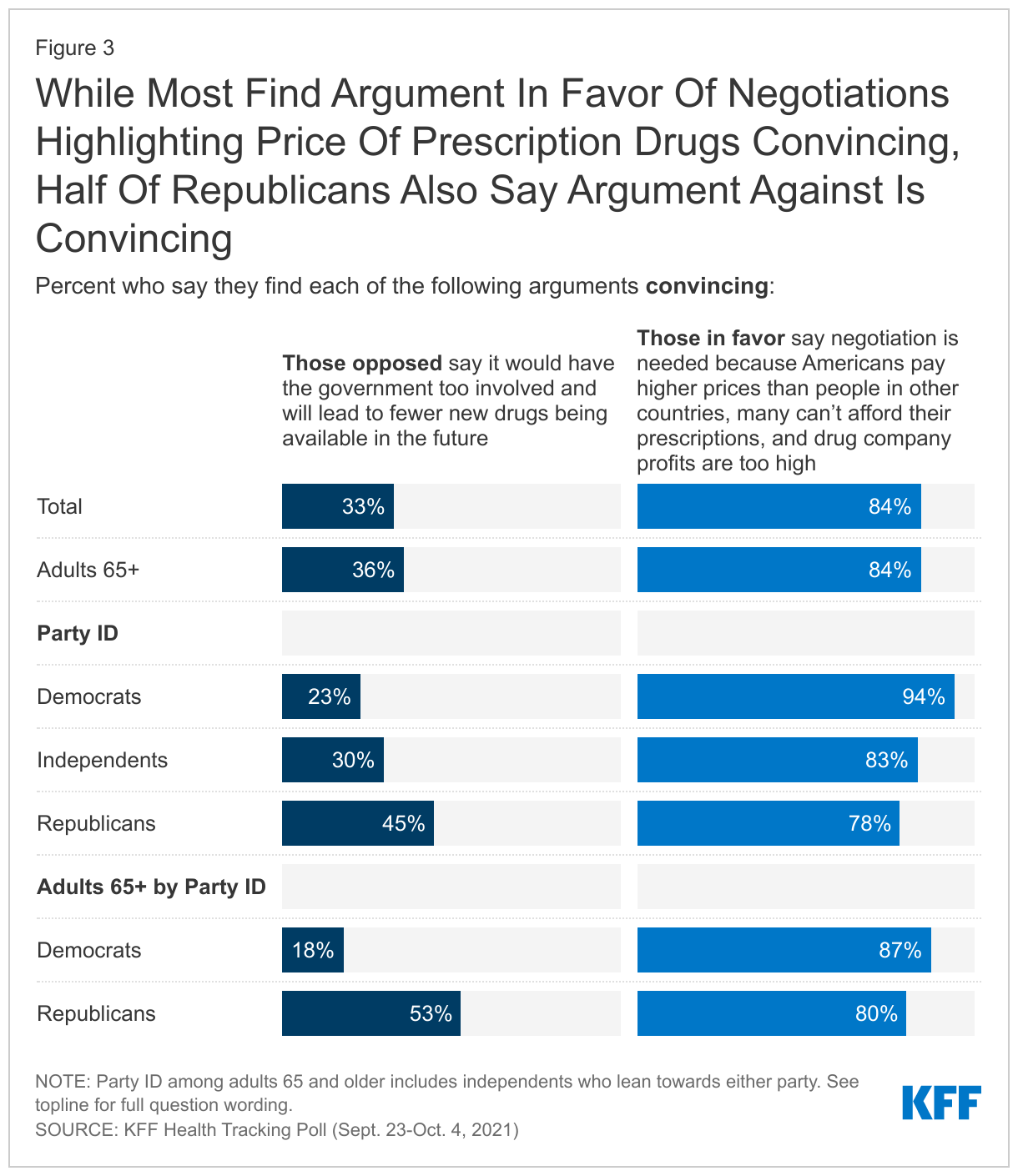
Majorities of all adults as well as those 65 and older, across partisans, say they found the argument in favor of drug negotiations convincing while a smaller share said the same about the argument against the drug negotiations. Nearly half (45%) of all Republicans said the argument from those opposed, which highlights the increased role of the government and the drug companies’ stance that this will lead to fewer drugs coming to market, is also convincing. More than half (53%) of adults 65 and older who are Republican or Republican-leaning say they found the argument against drug negotiations convincing, compared to 18% of Democrat or Democratic-leaning older adults.

While Most Find Argument In Favor Of Negotiations Highlighting  Price Of Prescription Drugs Convincing, Half Of Republicans Also Say Argument Against Is Convincing

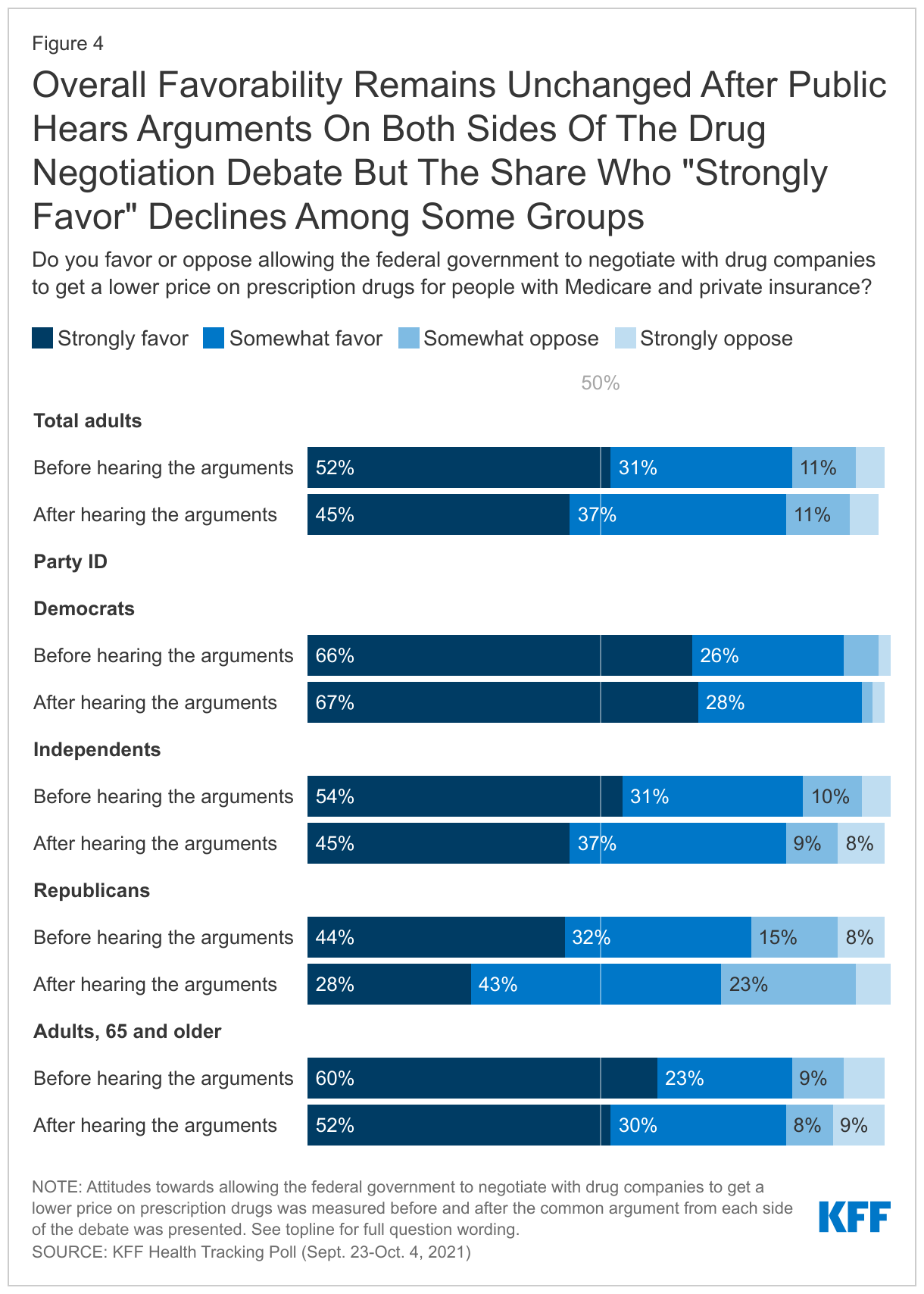
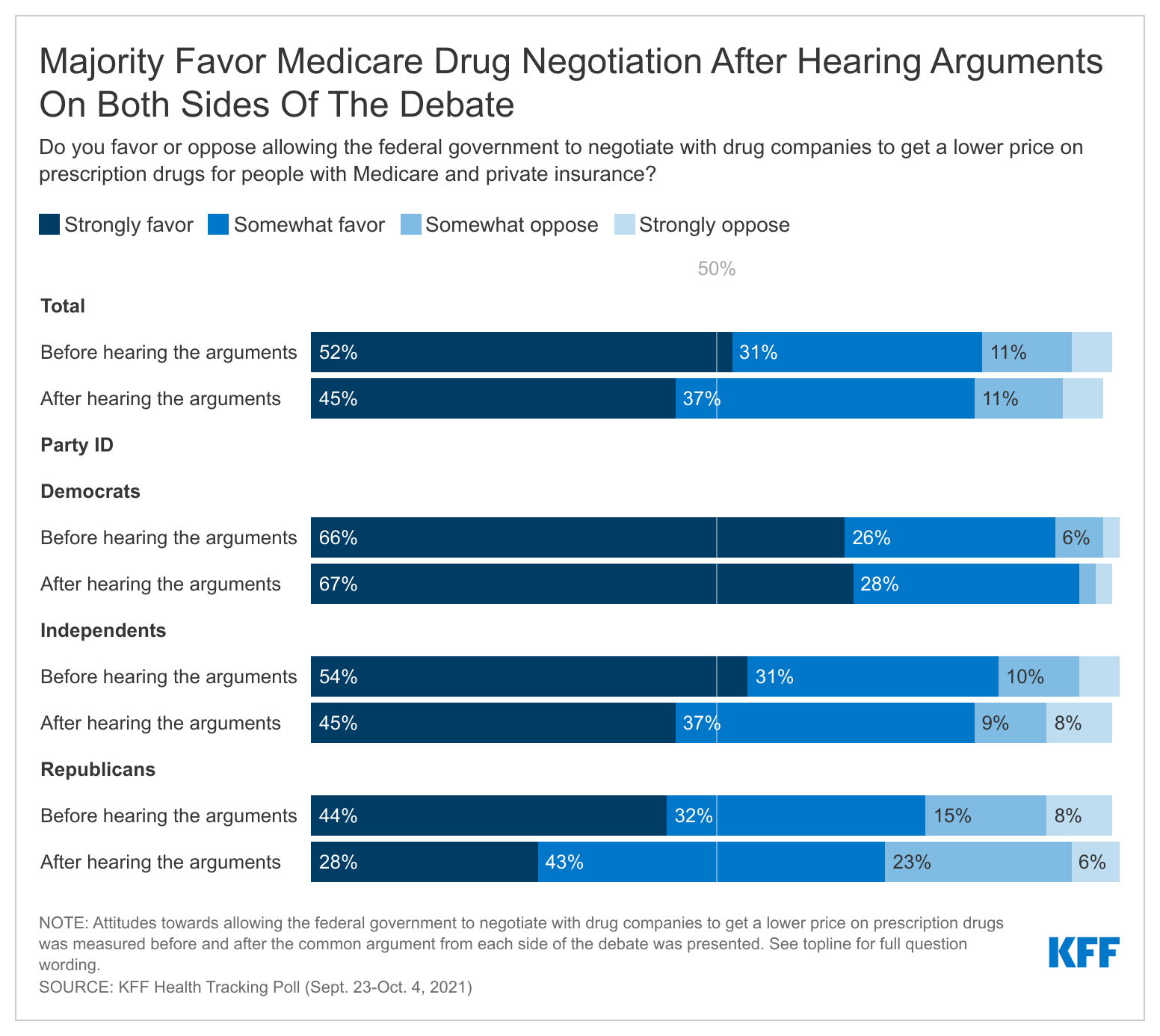
After hearing the arguments for and against the proposal to allow the federal government to negotiate prices with drug companies, attitudes remained relatively unchanged with a majority continuing to favor this proposal. While overall favorability stays the about same, there are some small shifts among groups especially in the share who “strongly favor” this proposal. For example, overall Republican support for drug negotiations decreases five percentage points but there is a large shift among those who say they “strongly favor” after hearing both arguments (44% to 28%). But even so, a majority of Republicans (71%) continue to support the proposal after hearing the arguments.

Overall Favorability Remains Unchanged After Public Hears Arguments On Both Sides Of The Drug Negotiation Debate But The Share Who "Strongly Favor" Declines Among Some Groups

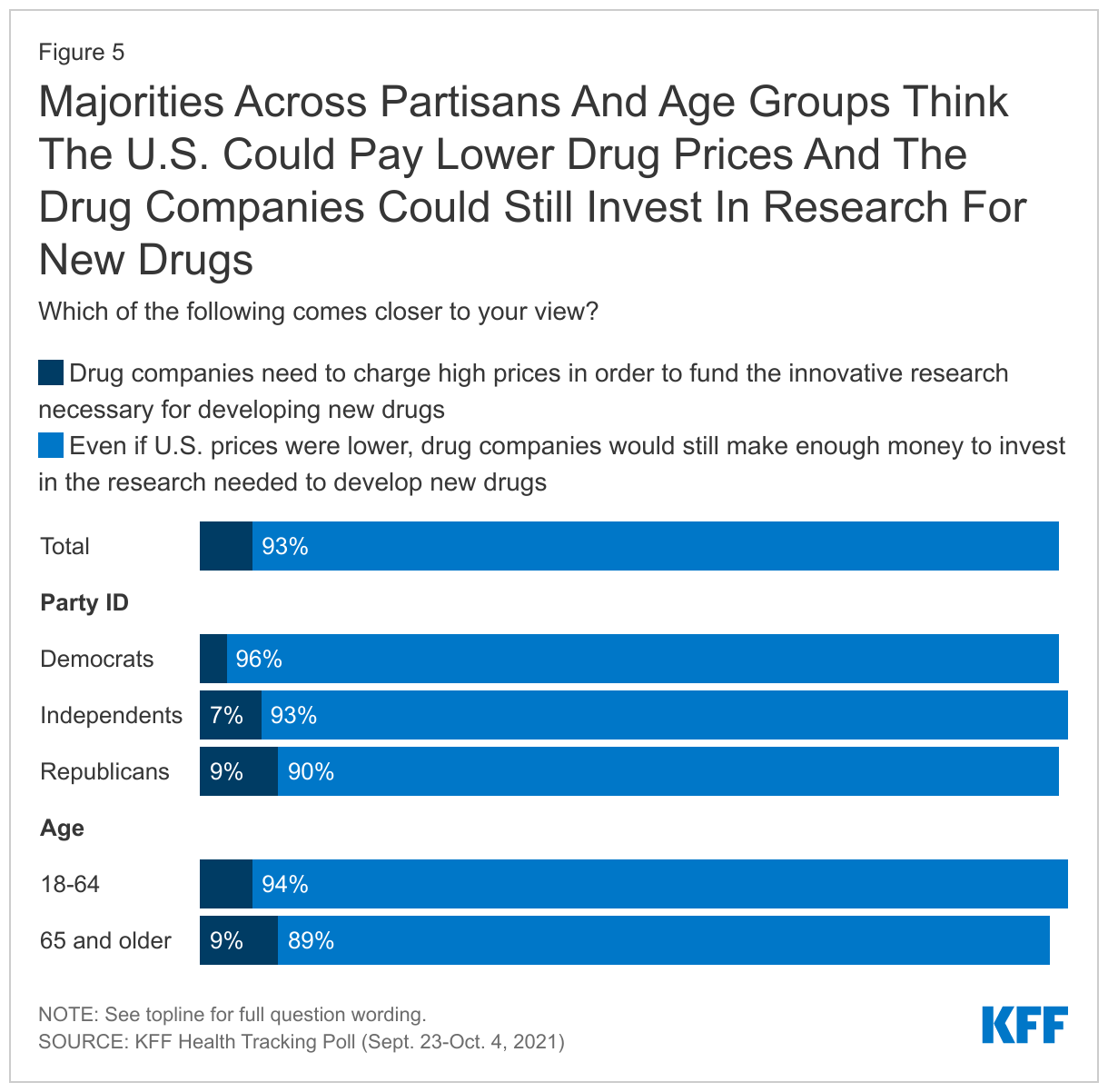
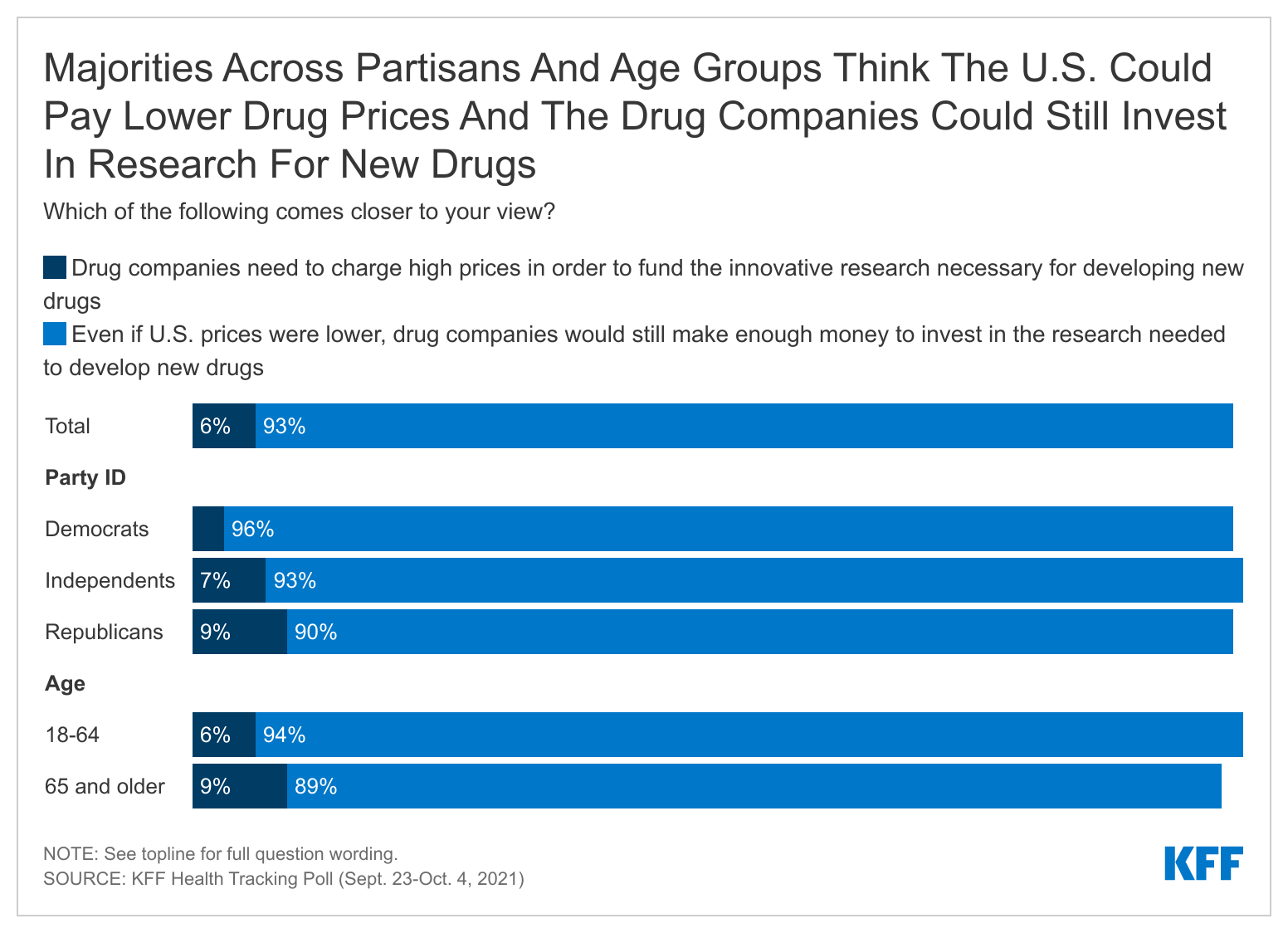
The pharmaceutical industry has argued that allowing the federal government to negotiate prescription drug prices will lead to less research and development of new prescription drugs. KFF polling finds few people (6%) saying they think “drug companies need to charge high prices in order to fund the innovative research necessary for developing new drugs” while a large majority (93%) say “that even if U.S. prices were lower, drug companies would still make enough money to invest in the research needed to develop new drugs” comes closer to their view. This view is consistent across partisanship and age groups.

Majorities Across Partisans And Age Groups Think The U.S. Could Pay Lower Drug Prices And The Drug Companies Could Still Invest In Research For New Drugs

Few Have Public’s Confidence To Recommend The Right Thing On Prescription Drug Pricing

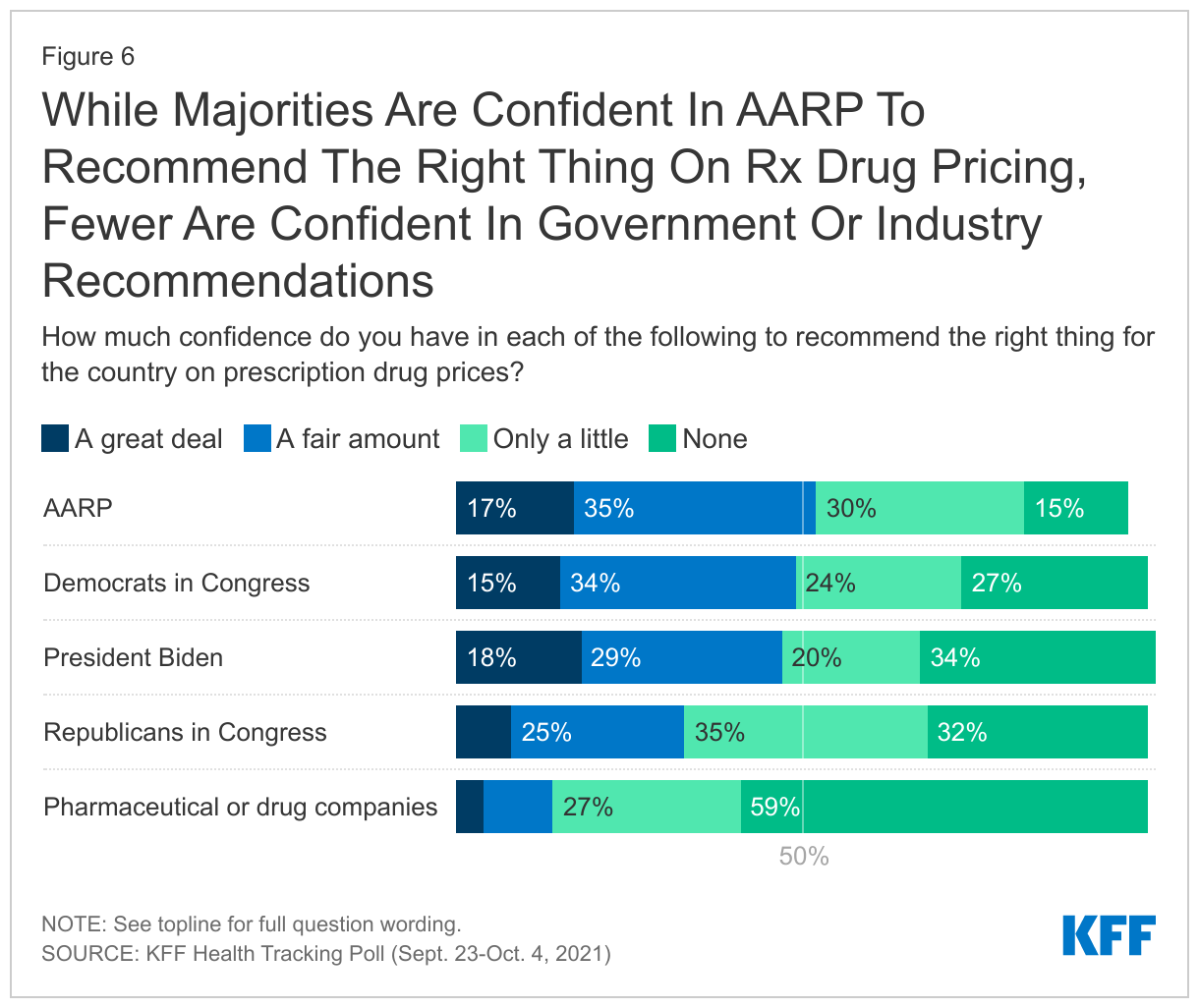
Neither President Biden nor members of either party in Congress has gained the full confidence of the public to do what’s right for the country on prescription drug pricing. Slightly less than half of the public say they have “a great deal” or “a fair amount” of confidence in President Biden (46%) or Democrats in Congress (48%) to recommend the right thing for the country on prescription drug prices. One-third of the public (33%) say they have at least a fair amount of confidence in Republicans in Congress and few are confident that pharmaceutical companies will recommend the right thing (14%).

A slight majority of adults are confident in AARP’s ability to recommend the right thing for the country on prescription drug pricing. AARP is a non-partisan interest group focusing on the issues that impact adults over the age of 50 that has strongly advocated for Medicare drug negotiations.

While Majorities Are Confident In AARP To Recommend The Right Thing On Rx Drug Pricing, Fewer Are Confident In Government Or Industry Recommendations

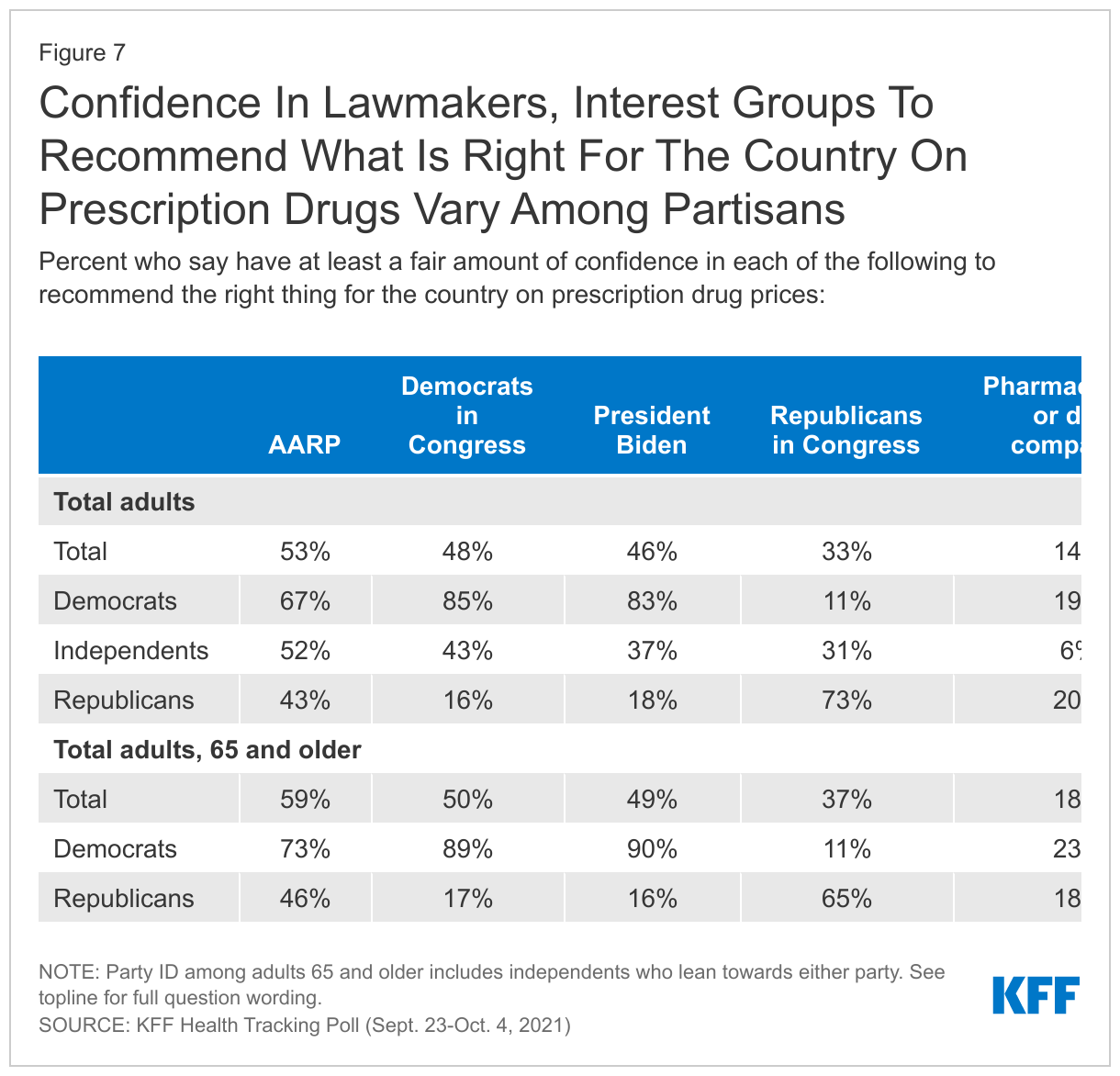
AARP also has the confidence of older adults with about six in ten adults 65 and older saying they have at least “a fair amount” of confidence in AARP to recommend what is right for the country on prescription drugs.

Confidence In Lawmakers, Interest Groups To Recommend What Is Right For The Country On Prescription Drugs Vary Among Partisans

One In Five Seniors Struggle Affording Prescription Drugs

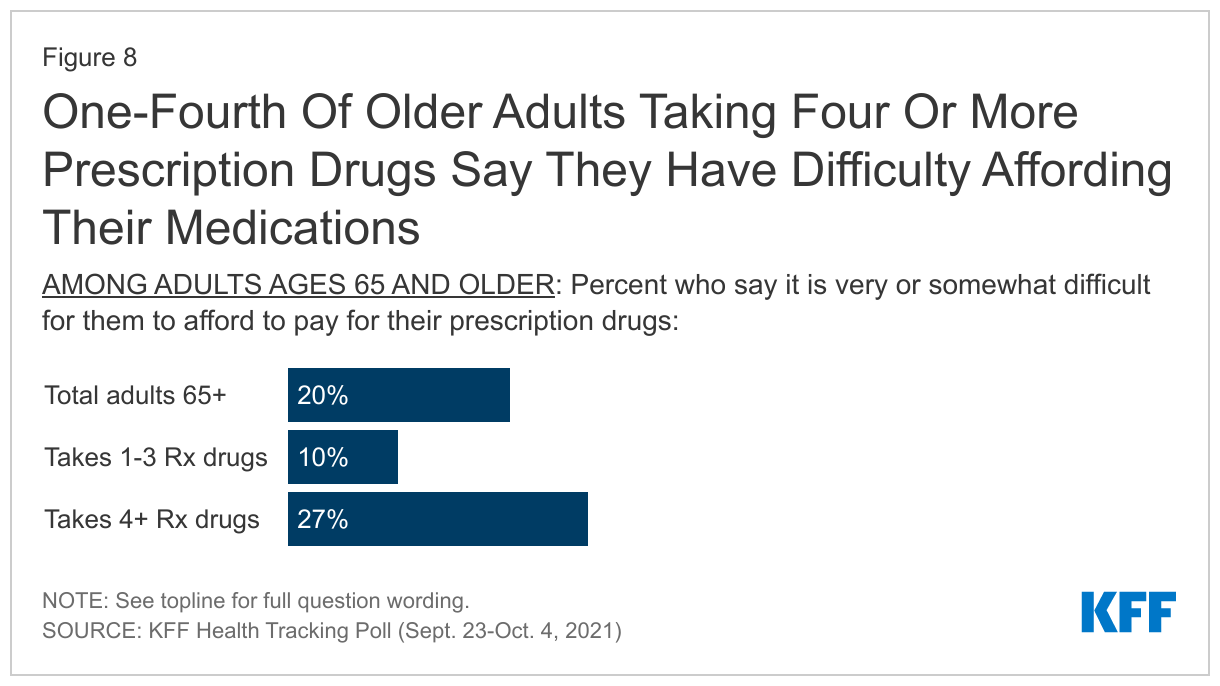
The latest KFF Health Tracking Poll finds that 85% of adults ages 65 and older report having some type of insurance that helps pay for prescription drugs. Even still, one in five older adults report difficulty affording their prescription drugs, including 17% of older adults with some type of prescription drug coverage. The share who report difficulty affording prescription drugs increases to more than one in four among adults 65 and older who take four or more prescription drugs.

One-Fourth Of Older Adults Taking Four Or More Prescription Drugs Say They Have Difficulty Affording Their Medications

Methodology

The KFF Health Tracking Poll was conducted in English and Spanish with a nationally representative sample of 1,146 U.S. adults aged 18 or older, including an oversample of 474 adults ages 65 and older. The survey was conducted online and via phone from September 23-October 4, 2021, combining sample from two online probability-based panels and telephone samples recruited from random digit dialing (RDD). Sampling, data collection, weighting and tabulation were managed by SSRS of Glen Mills, PA in close collaboration with Kaiser Family Foundation researchers. The KFF team developed the questionnaire, analyzed the data and contributed financing for the survey.

Panel surveys were conducted through two online panels: (1) The SSRS Opinion Panel, a representative probability-based panel of U.S. adults ages 18 and older, recruited using the SSRS Omnibus poll (a weekly dual-frame RDD telephone survey) and through address-based sampling (ABS) (n=939). (2) The IPSOS KnowledgePanel, a probability-based online panel of U.S. adults ages 18 and older recruited through ABS targeting panelist (n=85). In order to reach adults 65 and older, a group less likely to be reached through an online panel, as well as those who do not have access to the internet, 122 interviews were completed by telephone, (including 79 among those who had previously indicated they do not use the internet).

The combined online, cell phone, and landline sample was weighted to match the sample demographics to estimates for the national population. A multi-stage weighting process was used to adjust for the fact that not all survey respondents were selected with the same probabilities and to account for systematic non-response. In the first weighting stage, adjustments were made regarding the probabilities of selection to the two web panels, and for probability of selection and non-response to the telephone callback samples. Each of these surveys were probability samples of the U.S. adult population that were weighted to the Census Bureau’s March 2020 Current Population Survey (CPS), by gender, age, race/ethnicity, education, and Census region. The data were also weighted to match internet usage metrics based on the U.S. Census’s 2019 American Community Survey, civic engagement metrics based on the September 2019 CPS Volunteering and Civic Life Supplement, and to match party identification within age groups from previous KFF RDD samples.

All statistical tests of significance account for the effect of weighting.

The margin of sampling error including the design effect for the full sample is plus or minus 4 percentage points. Numbers of respondents and margins of sampling error for key subgroups are shown in the table below. For results based on other subgroups, the margin of sampling error may be higher. Sample sizes and margins of sampling error for other subgroups are available by request. Note that sampling error is only one of many potential sources of error in this or any other public opinion poll. Kaiser Family Foundation public opinion and survey research is a charter member of the Transparency Initiative of the American Association for Public Opinion Research.

GroupN (unweighted)M.O.S.E.
Total1,146± 4 percentage points
Age
18-64672± 5 percentage points
65+474± 7 percentage points
Party Identification
Democrats476± 6 percentage points
Republicans231± 8 percentage points
Independents322± 7 percentage points

Endnotes

  1. Cubanski, J., Neuman, T., and Freed, M. July 23, 2021. “What’s the latest on Medicare drug price negotiations? Available at https://modern.kff.org/medicare/issue-brief/whats-the-latest-on-medicare-drug-price-negotiations/ ↩︎
News Release

Large Majorities Across Parties Favor Allowing the Federal Government to Negotiate Drug Prices, Even After Hearing Common Arguments About It

Few Buy Argument that Drug Makers Have to Charge High Prices to Invest in Research into New Drugs

Published: Oct 12, 2021

Most of the Public Lacks Confidence that President Biden, Congressional Democrats or Republicans Will Do the Right Thing on Drug Prices

Allowing the federal government to negotiate with drug companies to lower drug prices for Medicare beneficiaries and people enrolled in private plans – a key cost-saving proposal in the Democrats’ massive reconciliation bill – is favored by large majorities across political partisans, even after they hear arguments from both sides, a new KFF Health Tracking Poll finds.

Initially 83% of the public say they favor allowing the federal government to negotiate with drug companies to lower drug prices on behalf of people enrolled in Medicare beneficiaries and private plans. This includes 91% of Democrats, 85% of independents, and 76% of Republicans, as well as majorities of seniors (84%), who would be most affected by such a provision.

To gauge the potential impact of a national debate over the proposal, the survey asked the public to assess a summary of key arguments being made for and against the plan. Those arguments do little to move the share of the public that favors or opposes the proposal, though affected the intensity of support among Republicans. While Republican support held steady (76% to 71%), the share who “strongly favor” it dipped (44% to 28%).

When asked specifically about each argument, most (84%) of the public, including three-quarters (78%) of Republicans, say the argument in favor – “this is needed because Americans pay higher prices than people in other countries, many can’t afford their prescriptions, and drug company profits are too high” – is convincing.

On the other side, a third (33%) say the argument against – “this would have the government too involved and will lead to fewer new drugs being available in the future” – is convincing. This includes nearly half (45%) of Republicans.

The public also rejects the argument that high prices are necessary for supporting research into new drugs.

When asked which comes closer to their view, 93%, including 90% of Republicans, say “that even if U.S. prices were lower, drug companies would still make enough money to invest in the research needed to develop new drugs”, while just 6% say that “drug companies need to charge high prices in order to fund the innovative research necessary for developing new drugs.”

The poll also reveals that the public does not have a lot of confidence in Washington to address the issue. Less than half the public say they have confidence in President Biden (46%) and Democrats in Congress (48%) to recommend the right thing on prescription drug prices, while a third say they have confidence in Republicans in Congress (33%).

Among key interest groups, more say they are confident in the recommendations of AARP (53%), which has strongly advocated for drug-price negotiations, than say so about drug companies (14%).

Additional findings from the KFF Health Tracking Poll will be released later this week.

Designed and analyzed by public opinion researchers at KFF, the KFF Health Tracking Poll was conducted from September 23-October 4 among a nationally representative sample of 1,146 adults including an oversample of adults, 65 and older (474). Interviews were conducted in English and Spanish online (1,024) and by telephone (122). The margin of sampling error is plus or minus 4 percentage points for the full sample. For results based on subgroups, the margin of sampling error may be higher.

News Release

In Focus Groups, Direct Care Workers and Unpaid Caregivers Describe Low-Wage, Physically-Challenging Work That is Often Mentally Overwhelming and Marked By Uncertainty

Published: Oct 8, 2021

In recent focus group interviews, 32 paid direct care workers and unpaid caregivers who assist seniors and people with disabilities with self-care and household activities describe daily work defined by low pay, physical demands and mental stress that has been made worse by the pandemic.

KFF conducted the four focus groups in July and August 2021 with 24 direct care workers and eight unpaid caregivers to help provide context for the ongoing debate in Congress about increasing federal funding for Medicaid home and community-based services (HCBS). Medicaid is the nation’s primary payer for such services. Among other uses, new funding could help raise wages for direct care workers, provide training opportunities and offer supports to family caregivers such as respite care and peer supports.

Key takeaways from the focus groups include:

  • These jobs are mentally demanding as well as physically taxing. Paid caregivers reported that the mental demands of their jobs had intensified during COVID-19. Among other things, they cited the fear of infecting their clients or bringing the virus home to infect their families. Unpaid family caregivers described the mental demands associated with caregiving as often “overwhelming.”
  • Uncertainty is a constant. A number of paid caregivers described regularly experiencing uncertainty about whether they would be able to leave work at the end of their shift due to staffing shortages and scheduling challenges that were exacerbated by the pandemic. (It is unclear how vaccination mandates might contribute to workforce shortages, as participants in the paid direct care worker groups were divided about whether to receive the COVID-19 vaccine.)
  • Caregivers feel there is a mismatch between their work and their wages. Paid direct care workers universally agreed that their wages are low and do not reflect the demands of their jobs. They described their financial situation as “getting by” and “living paycheck to paycheck.” Some participants in the unpaid caregiver group said the demands of caregiving made it impossible to have paid work.

The racially and geographically diverse group of focus group participants worked in a range of job types, both full- and part-time, and cared for people with a variety of disabilities and long-term care needs. The report presents key highlights from the focus groups including caregiver characteristics; physical and mental caregiving demands; the impact of workforce shortages; wages, finances, and opportunities for advancement; and what caregivers would like policymakers to know about their work. While these focus groups are not necessarily generalizable to all caregivers, they can provide insight into their experiences to help inform current policy debates.

The American Rescue Plan Act (ARPA), passed earlier this year, provides states with a one-year, 10 percentage point increase in federal Medicaid matching funds (FMAP) for HCBS. Congress is currently debating efforts to increase federal matching funds, without a time limit, for state spending on Medicaid HCBS as part of an overall budget reconciliation package, although the final funding amount remains in flux as policymakers weigh competing priorities.