Women's Health Policy

ABORTION IN THE U.S.

The Status of Abortion-related State Ballot Initiatives Since Dobbs

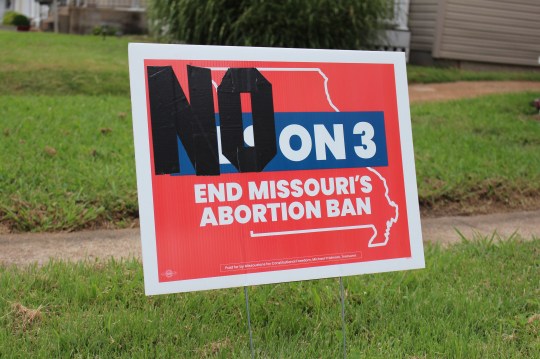
Since the Supreme Court’s Dobbs decision, overturning Roe v. Wade, voters in 17 states have weighed in on ballot measures regarding abortion — some more than once. In November 2026, voters in Idaho, Missouri, Nevada, and Virginia will weigh in on abortion measures that could change the legal status of abortion in their state. In addition, a measure in Colorado is in the process of collecting signatures.
CONTRACEPTIve care IN THE U.S.

SELECTED RESOURCES

Over-the-Counter Oral Contraceptive Pills

In July 2023, the FDA approved Opill, the first daily oral contraceptive pill to become available over the counter (OTC) without a doctor’s prescription. This issue brief provides an overview of OTC oral contraceptives and laws and policies related to insurance coverage.

featured

A promotional image for the the KFF Health Policy 101 Issues in Women’s Health chapter

Health Policy Issues in Women’s Health

Examine the core health coverage and access issues —shaped by federal and state policies—that affect women’s health today, including health coverage and costs, reproductive health services, maternal health, mental health, and intimate partner violence.

State Profiles for Women’s Health

Explore the latest national and state-specific data and policies on women’s health. Topics include health status, insurance and Medicaid coverage, use of preventive services, sexual health, maternal and infant health, and abortion policies. Many indicators provide state-level information for women of different racial and ethnic groups.

The essentials
  • Women’s Health Insurance Coverage

    This factsheet reviews major sources of coverage for women residing in the U.S., discusses the ACA's impact on coverage, and the coverage challenges that many women continue to face.
  • Medicaid Coverage for Women

    This data note presents key data points describing the current state of the Medicaid program as it affects women, including eligibility, reproductive health, chronic conditions, and more.
  • Dobbs: What are the Implications for Racial Disparities?

    This analysis examines the implications of the Dobbs decision and state restrictions on abortion coverage for racial disparities in access to care and health outcomes.
  • State Health Facts: Women's Health Indicators

    Information on women’s health status, utilization of services, health insurance coverage, family planning and childbirth, and abortion statistics and policies.
  • Key Facts on Abortion in the United States

    This report answers some key questions about abortion in the United States and presents data collected before the overturn of Roe v. Wade.

Stay informed.

Stay informed.

Filter

871-880 of 880 results

  • The Implications of the Most Recent Challenge to the ACA’s Preventive Care Requirement Could Affect Millions

    News Release

    A new brief explains the implications of the most recent legal challenge contesting the Affordable Care Act’s (ACA) requirement that most private insurance plans cover specific preventive care items and services—such as contraceptive services and supplies, and cancer screenings—at no cost to patients. In Braidwood Management v. Becerra, two Christian-owned businesses and six individuals in Texas have challenged the legality of the preventive care mandates on constitutional grounds. The plaintiffs are also challenging the requirement…

  • Analysis Reveals How Abortion Boosted Democratic Candidates in Tuesday’s Midterm Election

    News Release

    While inflation was clearly at the top of voters’ minds in this year’s midterm elections, the Supreme Court decision overturning Roe v. Wade played a significant role in motivating key voting blocs that likely contributed to the Democratic party’s stronger-than-expected performance, a new analysis of KFF’s supplemental questions on the Associated Press VoteCast survey of midterm voters. About four in ten (38%) voters overall said that the Supreme Court decision ending the constitutional right to an abortion had a…

  • Nov. 16 Web Briefing: Update on Women’s Health Policy

    Event Date:
    Event

    The Supreme Court, Congress, and state policymakers are currently debating issues that are central to women’s health and well-being. Watch the KFF Women’s Health Policy team web briefing to learn more about the status and implications of these debates, from abortion to paid leave.

  • New KFF Analyses on Women and Medicaid: State Family Planning Benefits and Contraceptive Provision

    News Release

    Medicaid, the state and federal health coverage program for low-income people, finances family planning services for millions of women across the nation. National statistics, however, can mask important state-level Medicaid policy and utilization differences. Two new KFF state-level analyses have just been posted that provide up-to-date coverage policies and practices as well as new data on contraceptive provision under Medicaid. Medicaid Coverage of Family Planning Benefits: Findings from a 2021 State Survey Based on findings…

  • Fewer than Half of Employed Women Say Their Employer Offers a Paid Parental Leave or Family and Medical Leave Benefit

    News Release

    A new KFF analysis finds that fewer than half of employed women ages 18-64 say their employer offers a paid parental leave benefit, such as maternity or paternity leave (43%) or family and medical leave (44%). Access to these workplace benefits varies widely by employment status, income, location, and level of education. Women who work full-time and have higher incomes are more likely than their part-time or low-income counterparts to say their employer offers any…

  • States Look to Bolster Maternal Health

    Feature

    Starting April 1, states have a new option to extend Medicaid postpartum coverage from 60 days to 12 months without having to seek a waiver.

  • A Look at Key Maternal and Infant Health Disparities Among Black People

    Feature

    Due to systemic and overt discrimination, Black people are disproportionately affected by high maternal and infant morbidities and mortality. In addition to legislation, addressing systemic discrimination, implicit bias and racism will be integral to achieving equity in maternal health outcomes.

  • Women who Give Birth Incur Nearly $19,000 in Additional Health Costs, Including $2,854 More that They Pay Out of Pocket

    News Release

    The health care costs associated with pregnancy and childbirth average almost $19,000, including $2,854 paid out-of-pocket, a new KFF analysis of large employers’ insurance claims finds. Unlike other analyses that examine costs of specific pregnancy-related services, such as a vaginal or cesarean delivery, this new analysis compares three years of health care claims for reproductive-aged women who gave birth to claims for women who had not given birth. The analysis finds women who give birth…

  • Abortion Access Rises as a Voting Issue and Motivator, Especially Among Democrats and Reproductive-Age Women, But Inflation Continues to Dominate as Americans Worry About Bills

    News Release

    Following the Supreme Court’s decision to end the constitutional right to an abortion, most voters (55%) now say access to abortion is “very important” to their vote in November’s midterm elections, up 9 percentage points since February prior to the decision, a new KFF Health Tracking Poll finds. This heightened interest is greatest among key voter groups who largely want to guarantee access to abortion, including Democratic voters (77% now say abortion access is very…