Women's Health Policy

ABORTION IN THE U.S.

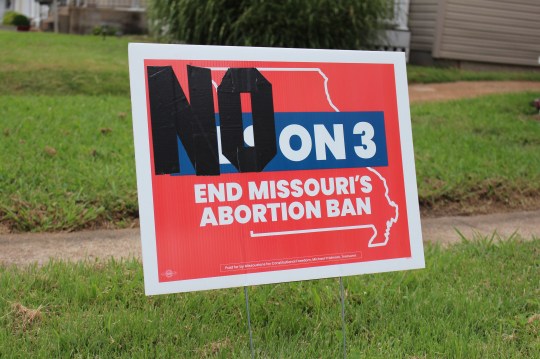
The Status of Abortion-related State Ballot Initiatives Since Dobbs

Since the Supreme Court’s Dobbs decision, overturning Roe v. Wade, voters in 17 states have weighed in on ballot measures regarding abortion — some more than once. In November 2026, voters in Idaho, Missouri, Nevada, and Virginia will weigh in on abortion measures that could change the legal status of abortion in their state. In addition, a measure in Colorado is in the process of collecting signatures.
CONTRACEPTIve care IN THE U.S.

SELECTED RESOURCES

Over-the-Counter Oral Contraceptive Pills

In July 2023, the FDA approved Opill, the first daily oral contraceptive pill to become available over the counter (OTC) without a doctor’s prescription. This issue brief provides an overview of OTC oral contraceptives and laws and policies related to insurance coverage.

featured

A promotional image for the the KFF Health Policy 101 Issues in Women’s Health chapter

Health Policy Issues in Women’s Health

Examine the core health coverage and access issues —shaped by federal and state policies—that affect women’s health today, including health coverage and costs, reproductive health services, maternal health, mental health, and intimate partner violence.

State Profiles for Women’s Health

Explore the latest national and state-specific data and policies on women’s health. Topics include health status, insurance and Medicaid coverage, use of preventive services, sexual health, maternal and infant health, and abortion policies. Many indicators provide state-level information for women of different racial and ethnic groups.

The essentials
  • Women’s Health Insurance Coverage

    This factsheet reviews major sources of coverage for women residing in the U.S., discusses the ACA's impact on coverage, and the coverage challenges that many women continue to face.
  • Medicaid Coverage for Women

    This data note presents key data points describing the current state of the Medicaid program as it affects women, including eligibility, reproductive health, chronic conditions, and more.
  • Dobbs: What are the Implications for Racial Disparities?

    This analysis examines the implications of the Dobbs decision and state restrictions on abortion coverage for racial disparities in access to care and health outcomes.
  • State Health Facts: Women's Health Indicators

    Information on women’s health status, utilization of services, health insurance coverage, family planning and childbirth, and abortion statistics and policies.
  • Key Facts on Abortion in the United States

    This report answers some key questions about abortion in the United States and presents data collected before the overturn of Roe v. Wade.

Stay informed.

Stay informed.

Filter

801-810 of 880 results

  • Women at Greatest Risk for Being Uninsured in 2012

    Feature

    Women at Greatest Risk for Being Uninsured, 2012 Download Source Kaiser Family Foundation and Urban Institute analysis of the March 2013 Current Population Survey, U.S. Bureau of the Census.   

  • Rates of Uninsured Women, by State

    Feature

    Rates of Uninsured Women, by State Download Source State-level figures based on Urban Institute and Kaiser Family Foundation estimates of pooled 2012 and 2013 Current Population Surveys, U.S. Bureau of the Census.   

  • A Guide to the Supreme Court’s Review of the Contraceptive Coverage Requirement

    Issue Brief

    This issue brief dissects the issues raised by the legal challenges to the Affordable Care Act’s requirement that private insurance plans include contraception as part of their coverage of preventive services for women. Over 40 for-profit corporations and over 40 nonprofit corporations have filed lawsuits claiming that the requirement to provide their employees with contraceptives violates their religious rights. On November 26, 2013, the Supreme Court agreed to hear two cases filed by for-profit corporations,…

  • Health Coverage and Expenses: Impact on Older Women’s Economic Well-Being

    Issue Brief

    In this article in the Journal of Women, Politics & Policy, researchers from the Kaiser Family Foundation examine how health issues that women face over the course of their lives, as well as policies that shape Medicare, Medicaid and other supplemental coverage, can affect retired women's economic well-being. They found that women's health care expenses were higher than men's; that older women paid for a greater share of their total spending out of pocket and that…

  • Women at Risk: A View from the Safety Net

    Video

    This video provides a snapshot of the Arlington (Va.) Free Clinic where, four times a month, medical personnel provide care and screenings exclusively to women. The video explores the hurdles that uninsured women face in accessing health care and the social issues, including work and family responsibilities, that create challenges for them. It is a companion to the report, “Putting Women’s Health Care Disparities On The Map: Examining Racial and Ethnic Disparities at the State…

  • A Gender Gap in Economic Security for Seniors

    From Drew Altman

    Following up on an earlier column for The Wall Street Journal's Think Tank on seniors and poverty, Drew Altman looks at why older women will be more at risk of economic insecurity than men in the future.

  • A Gender Gap in Economic Security for Seniors

    News Release

    Following up on an earlier column for The Wall Street Journal's Think Tank on seniors and poverty, Drew Altman looks at why older women will be more at risk of economic insecurity than men in the future. All previous columns by Drew Altman are available.

  • What Does Feminism Mean Today? A New Washington Post/Kaiser Survey Explores the Public’s Views

    News Release

    A new Washington Post/Kaiser Family Foundation survey explores what feminism means in today's America, providing a detailed look at the complex views that both women and men hold about the word and the social movement that bears its name. Featured in a series of articles and interactive features online at The Washington Post, the new survey finds almost half of the public, including six in 10 women, identify themselves as either a “strong feminist” or…