Women's Health Policy

ABORTION IN THE U.S.

The Status of Abortion-related State Ballot Initiatives Since Dobbs

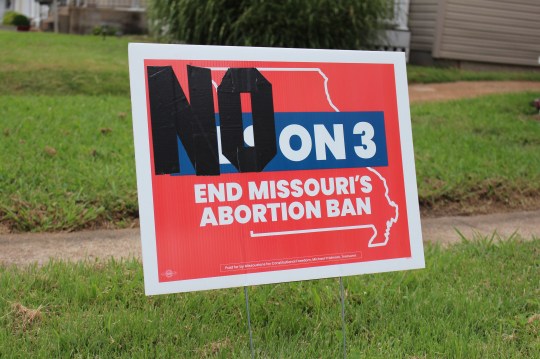
Since the Supreme Court’s Dobbs decision, overturning Roe v. Wade, voters in 17 states have weighed in on ballot measures regarding abortion — some more than once. In November 2026, voters in Idaho, Missouri, Nevada, and Virginia will weigh in on abortion measures that could change the legal status of abortion in their state. In addition, a measure in Colorado is in the process of collecting signatures.
CONTRACEPTIve care IN THE U.S.

SELECTED RESOURCES

Over-the-Counter Oral Contraceptive Pills

In July 2023, the FDA approved Opill, the first daily oral contraceptive pill to become available over the counter (OTC) without a doctor’s prescription. This issue brief provides an overview of OTC oral contraceptives and laws and policies related to insurance coverage.

featured

A promotional image for the the KFF Health Policy 101 Issues in Women’s Health chapter

Health Policy Issues in Women’s Health

Examine the core health coverage and access issues —shaped by federal and state policies—that affect women’s health today, including health coverage and costs, reproductive health services, maternal health, mental health, and intimate partner violence.

State Profiles for Women’s Health

Explore the latest national and state-specific data and policies on women’s health. Topics include health status, insurance and Medicaid coverage, use of preventive services, sexual health, maternal and infant health, and abortion policies. Many indicators provide state-level information for women of different racial and ethnic groups.

The essentials
  • Women’s Health Insurance Coverage

    This factsheet reviews major sources of coverage for women residing in the U.S., discusses the ACA's impact on coverage, and the coverage challenges that many women continue to face.
  • Medicaid Coverage for Women

    This data note presents key data points describing the current state of the Medicaid program as it affects women, including eligibility, reproductive health, chronic conditions, and more.
  • Dobbs: What are the Implications for Racial Disparities?

    This analysis examines the implications of the Dobbs decision and state restrictions on abortion coverage for racial disparities in access to care and health outcomes.
  • State Health Facts: Women's Health Indicators

    Information on women’s health status, utilization of services, health insurance coverage, family planning and childbirth, and abortion statistics and policies.
  • Key Facts on Abortion in the United States

    This report answers some key questions about abortion in the United States and presents data collected before the overturn of Roe v. Wade.

Stay informed.

Stay informed.

Filter

771-780 of 880 results

  • Women’s Access to Fertility Care

    Issue Brief

    This analysis presents findings from the 2026 KFF Women’s Health Survey on women's reported need for and use of fertility services.

  • Key Facts on Abortion in the United States

    Issue Brief

    This issue brief answers some key questions about abortion in the United States and presents data collected before and new data that has been published since the overturn of Roe v. Wade.

  • Today’s Topics In Health Disparities: What Might Health Reform Mean for Women of Color?

    Event Date:
    Event

    This December 16, 2009, Today's Topics In Health Disparities webcast examined aspects of the current Senate and House health reform bills that particularly impact women of color. Women tend to be greater users of the health care system than men, have higher rates of some chronic illnesses, and have unique reproductive health care needs. Women also tend to take the lead when it comes to obtaining health care for their family members. Provisions such as…

  • Condoms in the Schools

    Report

    Researchers, educators, lawyers, and public opinion experts address the health and value issues involved in the debate over whether condoms should be available in U.S. schools today. Individual papers discuss existing programs and research, funding and policy options, and legal considerations. This publication was produced as part of the Kaiser Forums program, an ongoing series of issue-specificbriefings at which policy makers, health experts, practitioners, and others discuss and debate controversial topics related to the Foundation's…

  • Sexual Activity on Daytime Soap Operas: A Content Analysis of Five Weeks of Television Programming

    Report

    This study, conducted for the Kaiser Family Foundation by Katharine E. Heintz-Knowles, Ph.D., University of Washington, presents a "snapshot" of the sexual content on soap operas today. Katharine Heintz-Knowles examined 97 hours of programming from theten nationally televised soap operas between May 27 and June 28, 1996. The study was presented on September 7, 1996 to producers and writers of soap operas and network executives at SOAP SUMMIT II, a day-long seminar produced by Population…

  • Survey on Public Knowledge and Attitudes on Contraception and Unplanned Pregnancy in the U.S., Canada and the Netherlands

    Poll Finding

    The three separate random-sample telephone surveys of adults ages 18 and older living in the United States, Canada, and the Netherlands, designed by the Henry J. Kaiser Family Foundation in association with Louis Harris and Associates, Inc and conducted in 1995. The surveys were conducted to assess differences in public knowledge, opinions, and practices related to pregnancy and birth control, hoping to help explain some of the variation in unplanned pregnancy rates between the U.S.…

  • Will 1999 Be The Year For Mifepristone (RU-486) And, An Update on Women’s Other Options for Very Early Abortion

    Fact Sheet

    While there has been much attention to the few abortions that occur late in pregnancy, there has been little focus on what options are available during the early weeks, even days, of pregnancy, when most women seek abortions. The drugs mifepristone (also known as RU-486) and misoprostol have been available in France, England, and Sweden for much of the last decade as an earlier medical alternative to surgical abortion. Since becoming available, an estimated one-half…