Women's Health Policy

ABORTION IN THE U.S.

The Status of Abortion-related State Ballot Initiatives Since Dobbs

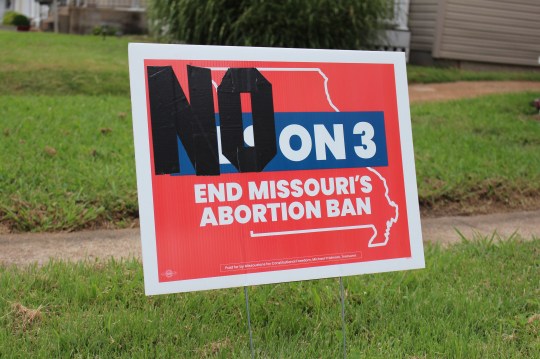
Since the Supreme Court’s Dobbs decision, overturning Roe v. Wade, voters in 17 states have weighed in on ballot measures regarding abortion — some more than once. In November 2026, voters in Idaho, Missouri, Nevada, and Virginia will weigh in on abortion measures that could change the legal status of abortion in their state. In addition, a measure in Colorado is in the process of collecting signatures.
CONTRACEPTIve care IN THE U.S.

SELECTED RESOURCES

Over-the-Counter Oral Contraceptive Pills

In July 2023, the FDA approved Opill, the first daily oral contraceptive pill to become available over the counter (OTC) without a doctor’s prescription. This issue brief provides an overview of OTC oral contraceptives and laws and policies related to insurance coverage.

featured

A promotional image for the the KFF Health Policy 101 Issues in Women’s Health chapter

Health Policy Issues in Women’s Health

Examine the core health coverage and access issues —shaped by federal and state policies—that affect women’s health today, including health coverage and costs, reproductive health services, maternal health, mental health, and intimate partner violence.

State Profiles for Women’s Health

Explore the latest national and state-specific data and policies on women’s health. Topics include health status, insurance and Medicaid coverage, use of preventive services, sexual health, maternal and infant health, and abortion policies. Many indicators provide state-level information for women of different racial and ethnic groups.

The essentials
  • Women’s Health Insurance Coverage

    This factsheet reviews major sources of coverage for women residing in the U.S., discusses the ACA's impact on coverage, and the coverage challenges that many women continue to face.
  • Medicaid Coverage for Women

    This data note presents key data points describing the current state of the Medicaid program as it affects women, including eligibility, reproductive health, chronic conditions, and more.
  • Dobbs: What are the Implications for Racial Disparities?

    This analysis examines the implications of the Dobbs decision and state restrictions on abortion coverage for racial disparities in access to care and health outcomes.
  • State Health Facts: Women's Health Indicators

    Information on women’s health status, utilization of services, health insurance coverage, family planning and childbirth, and abortion statistics and policies.
  • Key Facts on Abortion in the United States

    This report answers some key questions about abortion in the United States and presents data collected before the overturn of Roe v. Wade.

Stay informed.

Stay informed.

Filter

731-740 of 880 results

  • KFF Survey of Women Voters Dashboard

    Feature

    The KFF Survey of Women Voters examines differing motivations, attitudes, and experiences among women by race and ethnicity, age, and partisanship heading into the 2024 election nationally and in two battleground states, Arizona and Michigan.

  • Democratic Women are More Motivated to Vote in States with Potential Abortion Ballot Initiatives than in Other States

    News Release

    A new KFF poll of women voters reveals that the issue of abortion is boosting Democratic women’s eagerness to vote most in states with potential abortion-related ballot initiatives. As of mid-June, there are 10 states where voters may be deciding on abortion access in November, including 4 states where abortion is already set to appear on the ballot. In these states, more than half (53%) of Democratic women voters say that they are more motivated…

  • Harris v. Trump: Records and Positions on Reproductive Health

    Issue Brief

    This brief summarizes the positions, records, and potential priorities of the two major party candidates for the 2024 Presidential election on three major issues in women’s health policy – abortion, contraception, and maternal health.

  • Community Health Centers and Family Planning in an Era of Policy Uncertainty

    Report

    Community health centers play a major role in furnishing reproductive health care to women living in low-income and medically underserved communities. Along with independent freestanding family planning clinics including Planned Parenthood health centers (which also may receive Title X funding), and local public health agencies, community health centers are part of a publicly supported provider network that serve an estimated one in three low-income women. This report, an update of an earlier study conducted in…

  • New Survey: Women’s Health Coverage at All Time High; Affordability & Access Challenges Remain

    News Release

    A new nationally-representative survey of women from the Kaiser Family Foundation finds that coverage rates for women are at all-time highs and use of preventive services is on the rise, but many women still face a wide range of affordability and other access challenges. Conducted in the summer and fall of 2017, the survey provides a national overview of women’s health care coverage, access, affordability, and experiences among nonelderly women (ages 18 to 64) in the U.S. Highlights…

  • State and Federal Contraceptive Coverage Requirements: Implications for Women and Employers

    Issue Brief

    Before the ACA was passed, many states had enacted contraceptive equity laws that required plans to treat contraceptives in the same way they covered other services. In addition, since the ACA was passed, a number of states have enacted laws that basically codify in state legislation the ACA benefit rules. This issue brief provides an update on the status of the continuing litigation on the federal contraceptive requirement and explains the interplay between the federal…

  • Contraceptive Coverage Under the Affordable Care Act

    Event Date:
    Event

    The Affordable Care Act (ACA) has changed access to health coverage for millions of women across the nation, including a provision requiring most private health insurance plans to provide coverage for prescription contraceptives and services. On Thursday, April 16 at 9:30 a.m. ET, the Kaiser Family Foundation hosted a briefing to release a new report that examines how the ACA's contraceptive coverage provision is being interpreted by health insurance carriers and to discuss the implications for…

  • Medicaid and Family Planning: Background and Implications of the ACA

    Issue Brief

    This brief reviews the role of Medicaid in financing and enabling access to family planning services for low-income women; discusses how states have expanded access to these services with Medicaid; and highlights future programmatic challenges in the context of the health care delivery and coverage reforms resulting from the Affordable Care Act (ACA).