Women's Health Policy

ABORTION IN THE U.S.

Variability in Rebimbursement Rates for State-funded Abortion Services for Medicaid Enrollees: A 2026 Update

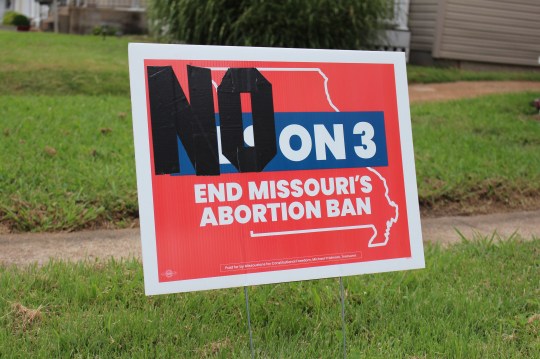
This analysis reveals that while more states have begun using their own funds to cover abortion services for Medicaid enrollees since the U.S. Supreme Court’s Dobbs decision, only a handful have significantly increased reimbursement rates for providers, potentially undermining access to care for low-income patients. After examining physician fee schedules for abortions provided to Medicaid enrollees since 2024, KFF finds that reimbursement rates vary dramatically across states, and that most states don't substantially increase payment rates for later-pregnancy procedures, despite their higher costs and complexity.

CONTRACEPTIve care IN THE U.S.

An Update on Medicaid, Title X and Planned Parenthood

This brief provides an update on Planned Parenthood clinic closures and participation in the Title X program amid substantial policy changes resulting in funding reductions. These changes include the One Big Beautiful Bill Act and the withholding of federal Title X funding to Planned Parenthood clinics.

SELECTED RESOURCES

Over-the-Counter Oral Contraceptive Pills

In July 2023, the FDA approved Opill, the first daily oral contraceptive pill to become available over the counter (OTC) without a doctor’s prescription. This issue brief provides an overview of OTC oral contraceptives and laws and policies related to insurance coverage.

featured

A promotional image for the the KFF Health Policy 101 Issues in Women’s Health chapter

Health Policy Issues in Women’s Health

Examine the core health coverage and access issues —shaped by federal and state policies—that affect women’s health today, including health coverage and costs, reproductive health services, maternal health, mental health, and intimate partner violence.

State Profiles for Women’s Health

Explore the latest national and state-specific data and policies on women’s health. Topics include health status, insurance and Medicaid coverage, use of preventive services, sexual health, maternal and infant health, and abortion policies. Many indicators provide state-level information for women of different racial and ethnic groups.

The essentials
  • Women’s Health Insurance Coverage

    This factsheet reviews major sources of coverage for women residing in the U.S., discusses the ACA's impact on coverage, and the coverage challenges that many women continue to face.
  • Medicaid Coverage for Women

    This data note presents key data points describing the current state of the Medicaid program as it affects women, including eligibility, reproductive health, chronic conditions, and more.
  • Dobbs: What are the Implications for Racial Disparities?

    This analysis examines the implications of the Dobbs decision and state restrictions on abortion coverage for racial disparities in access to care and health outcomes.
  • State Health Facts: Women's Health Indicators

    Information on women’s health status, utilization of services, health insurance coverage, family planning and childbirth, and abortion statistics and policies.
  • Key Facts on Abortion in the United States

    This report answers some key questions about abortion in the United States and presents data collected before the overturn of Roe v. Wade.

Stay informed.

Stay informed.

Filter

731 - 740 of 876 Results

  • Link to the Women’s Research and Education Institute

    Other Post

    Baby Boom to Generation X: Progress in Young Women's Health Baby Boom to Generation X: Progress in Young Women's Health, by Alina Salganicoff, Barbara Wentworth, and Liberty Greene of the Kaiser Family Foundation, a chapter from The American Woman 2003-2004, Daughters of a Revolution--Young Women Today, Cynthia Costello, Vanessa Wight, and Anne J. Stone, editors. The chapter explores the changes that have taken place in young women's health over the past twenty-five years. It discusses…

  • Capitol Hill Briefing Series on Women’s Health Policy

    Other Post

    Kaiser Family Foundation Capitol Hill Briefing Series on Women's Health Policy Women's health needs and economic circumstances make health coverage and access to care important throughout their lives. They are disproportionately affected by changes in policies that impact both the private and public sectors. To provide policymakers with up-to-date information and allow for an interchange of ideas with experts in the field, the Henry J. Kaiser Family Foundation, in partnership with Women's Policy, Inc., sponsors…

  • Sexual Activity on Daytime Soap Operas: A Content Analysis of Five Weeks of Television Programming

    Report

    This study, conducted for the Kaiser Family Foundation by Katharine E. Heintz-Knowles, Ph.D., University of Washington, presents a "snapshot" of the sexual content on soap operas today. Katharine Heintz-Knowles examined 97 hours of programming from theten nationally televised soap operas between May 27 and June 28, 1996. The study was presented on September 7, 1996 to producers and writers of soap operas and network executives at SOAP SUMMIT II, a day-long seminar produced by Population…

  • Poll Finds Most Americans Oppose the Trump Administration’s Changes to Restrict Title X Family Planning Funds from Clinics that also Provide or Refer for Abortion

    News Release

    A new KFF poll of the public’s views on reproductive health issues finds most Americans, including majorities of women of reproductive age, are concerned that access to women’s reproductive health and preventive care services may be limited by the Trump administration’s changes to Title X, the nation’s federal family planning program. The poll examines the public’s views of major regulatory changes to the Title X program, which funds nearly 4,000 clinics nationally to pay for…

  • Characteristics of clients who used services at Title X sites in 2017

    New Title X Regulations: Implications for Women and Family Planning Providers

    Issue Brief

    This brief reviews the Trump Administration’s new final Title X family planning regulations, compares them to the current program rules and discusses the implications of these changes for low-income women seeking family planning services and the providers that have been serving them with Title X support