Women's Health Policy

ABORTION IN THE U.S.

The Status of Abortion-related State Ballot Initiatives Since Dobbs

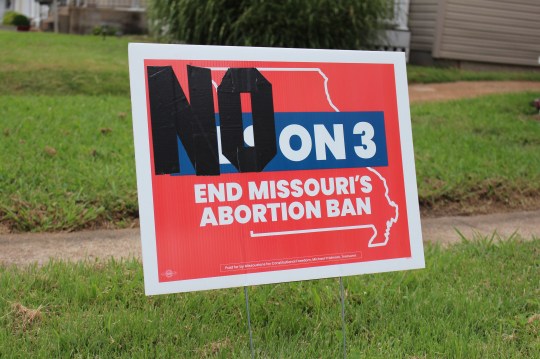
Since the Supreme Court’s Dobbs decision, overturning Roe v. Wade, voters in 17 states have weighed in on ballot measures regarding abortion — some more than once. In November 2026, voters in Idaho, Missouri, Nevada, and Virginia will weigh in on abortion measures that could change the legal status of abortion in their state. In addition, a measure in Colorado is in the process of collecting signatures.
CONTRACEPTIve care IN THE U.S.

SELECTED RESOURCES

Over-the-Counter Oral Contraceptive Pills

In July 2023, the FDA approved Opill, the first daily oral contraceptive pill to become available over the counter (OTC) without a doctor’s prescription. This issue brief provides an overview of OTC oral contraceptives and laws and policies related to insurance coverage.

featured

A promotional image for the the KFF Health Policy 101 Issues in Women’s Health chapter

Health Policy Issues in Women’s Health

Examine the core health coverage and access issues —shaped by federal and state policies—that affect women’s health today, including health coverage and costs, reproductive health services, maternal health, mental health, and intimate partner violence.

State Profiles for Women’s Health

Explore the latest national and state-specific data and policies on women’s health. Topics include health status, insurance and Medicaid coverage, use of preventive services, sexual health, maternal and infant health, and abortion policies. Many indicators provide state-level information for women of different racial and ethnic groups.

The essentials
  • Women’s Health Insurance Coverage

    This factsheet reviews major sources of coverage for women residing in the U.S., discusses the ACA's impact on coverage, and the coverage challenges that many women continue to face.
  • Medicaid Coverage for Women

    This data note presents key data points describing the current state of the Medicaid program as it affects women, including eligibility, reproductive health, chronic conditions, and more.
  • Dobbs: What are the Implications for Racial Disparities?

    This analysis examines the implications of the Dobbs decision and state restrictions on abortion coverage for racial disparities in access to care and health outcomes.
  • State Health Facts: Women's Health Indicators

    Information on women’s health status, utilization of services, health insurance coverage, family planning and childbirth, and abortion statistics and policies.
  • Key Facts on Abortion in the United States

    This report answers some key questions about abortion in the United States and presents data collected before the overturn of Roe v. Wade.

Stay informed.

Stay informed.

Filter

671-680 of 880 results

  • Health News Index – January/February 2000

    Poll Finding

    Health News Index January/February, 2000The January/February 2000 edition of the Kaiser Family Foundation/Harvard School of Public Health, Health News Index includes questions about major health stories covered in the news, including questions about the presidential candidate's health care proposals and their stands on abortion as well as a report on the declining rate of abortion. The survey is based on a national random sample of 1,006 Americans conducted February 4-8, 2000 which measures public knowledge…

  • Women’s Access to Care:  A State-Level Analysis of Key Health Policies

    Report

    Women's Access to Care: A State-Level Analysis of Key Health Policies State policies play a critical role in shaping women's access to health care. With authority over several important policy issues and the power to legislate, regulate, and enact programs that address women's needs, state policymakers have tackled several issues of importance to women. Women's Access to Care: A State-Level Analysis of Key Health Policies, prepared by the National Women's Law Center and Kaiser Family…

  • Promoting Access to Prenatal Care: Lessons from the California Experience (Issue Brief)

    Issue Brief

    Improving access to prenatal care has been a public policy priority in the United States for the past 15 years. This issue brief, prepared for the Kaiser Family Foundation by Paula Braveman, M.D. of the University of California, San Francisco and others, examines the impact of the Medicaid pregnancy-related expansions and reforms in California during the late 1980s and 1990s on the use of prenatal care.

  • SELF Event Chartpack

    Other Post

    This chartpack outlines the findings of the national survey conducted by the Kaiser Family Foundation in partnership with SELF Magazine, of women on their sexual health. The study focuses on women attitudes, knowledge, and experiences relating to all facets of sexual health.

  • It Takes Two: What Sexual Health Means for Men…And What That Means for Women

    Other Post

    Compared to women, men are less likely to think about their sexual health - let alone make regular visits to the doctor. However, new research from the Alan Guttmacher Institute shows that reproductive health services should be provided to men, for their own sake. There is also no dispute that men's sexual health directly affects women. On March 12, David Landry, Senior Research Associate at the Alan Guttmacher Institute, presented the findings of a new,…

  • The HPV Test: Coming Soon to a Doctor’s Office Near You? Is It Better than the Pap Smear for Detecting Cervical Cancer? – Agenda

    Other Post

    Are Schools Just Saying No The HPV Test: Coming Soon To A Doctor s Office Near You? Is It Better Than the Pap Smear for Detecting Cervical Cancer? Thursday, February 17, 9:30 - 11:30 a.m. Broadway Millennium Hotel 44th and Broadway, New York City 9:30 a.m.Registration 9:50 a.m.Welcome/Introductions Tina Hoff, Director of Public Health Information and Communications, Kaiser Family Foundation, will provide an overview of the most common sexually transmitted disease in the U.S. --…

  • Key Facts: Women and Medicare

    Report

    Medicare is a critical source of health insurance coverage for virtually all older women in the U.S. and for many younger women who have permanent disabilities. Today, 22 million women one in five adult women rely on Medicare for basic health insurance protection. In fact, women comprise 57% of the Medicare population. Medicare helps to make health care more affordable for older women at a time in their lives when they are most likely to…

  • agendaFIJune13.doc-20000613a-agendaFIJune13-doc

    Other Post

    If the FDA Approves Mifepristone . . . What Happens Next? Will Doctors Provide It? Do Women Want It?And, What Effect Will It Have on Abortion Politics? class=normal>Tuesday, June 13, 20009:30am - 11:30amBroadway Millennium Hotel, Rooms 304/30544th and Broadway, New York City 9:30 am Registration9:50 am Welcome/Introductions10:00 am News from the Frontlines: The Latest on Mifepristone What's Happening with the Food and Drug Administration?Sandra Arnold, Vice President for Corporate Affairs at the Population Council, will…

  • Health Reform: Implications for Women’s Access to Coverage and Care

    Issue Brief

    This issue brief, Health Reform: Implications for Women's Access to Coverage and Care, reviews how the Affordable Care Act is expected to affect access to care and affordability of health coverage for women. It also explains the provisions in the health reform law related to preventive screening services, reproductive health, maternity care and women on Medicare. The brief includes national and state-level estimates of the percentage of uninsured women ages 18-64 who are likely to…