Women's Health Policy

ABORTION IN THE U.S.

Variability in Rebimbursement Rates for State-funded Abortion Services for Medicaid Enrollees: A 2026 Update

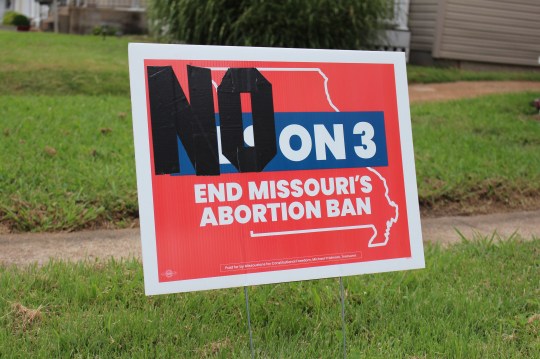
This analysis reveals that while more states have begun using their own funds to cover abortion services for Medicaid enrollees since the U.S. Supreme Court’s Dobbs decision, only a handful have significantly increased reimbursement rates for providers, potentially undermining access to care for low-income patients. After examining physician fee schedules for abortions provided to Medicaid enrollees since 2024, KFF finds that reimbursement rates vary dramatically across states, and that most states don't substantially increase payment rates for later-pregnancy procedures, despite their higher costs and complexity.

CONTRACEPTIve care IN THE U.S.

An Update on Medicaid, Title X and Planned Parenthood

This brief provides an update on Planned Parenthood clinic closures and participation in the Title X program amid substantial policy changes resulting in funding reductions. These changes include the One Big Beautiful Bill Act and the withholding of federal Title X funding to Planned Parenthood clinics.

SELECTED RESOURCES

Over-the-Counter Oral Contraceptive Pills

In July 2023, the FDA approved Opill, the first daily oral contraceptive pill to become available over the counter (OTC) without a doctor’s prescription. This issue brief provides an overview of OTC oral contraceptives and laws and policies related to insurance coverage.

featured

A promotional image for the the KFF Health Policy 101 Issues in Women’s Health chapter

Health Policy Issues in Women’s Health

Examine the core health coverage and access issues —shaped by federal and state policies—that affect women’s health today, including health coverage and costs, reproductive health services, maternal health, mental health, and intimate partner violence.

State Profiles for Women’s Health

Explore the latest national and state-specific data and policies on women’s health. Topics include health status, insurance and Medicaid coverage, use of preventive services, sexual health, maternal and infant health, and abortion policies. Many indicators provide state-level information for women of different racial and ethnic groups.

The essentials
  • Women’s Health Insurance Coverage

    This factsheet reviews major sources of coverage for women residing in the U.S., discusses the ACA's impact on coverage, and the coverage challenges that many women continue to face.
  • Medicaid Coverage for Women

    This data note presents key data points describing the current state of the Medicaid program as it affects women, including eligibility, reproductive health, chronic conditions, and more.
  • Dobbs: What are the Implications for Racial Disparities?

    This analysis examines the implications of the Dobbs decision and state restrictions on abortion coverage for racial disparities in access to care and health outcomes.
  • State Health Facts: Women's Health Indicators

    Information on women’s health status, utilization of services, health insurance coverage, family planning and childbirth, and abortion statistics and policies.
  • Key Facts on Abortion in the United States

    This report answers some key questions about abortion in the United States and presents data collected before the overturn of Roe v. Wade.

Stay informed.

Stay informed.

Filter

601 - 610 of 876 Results

  • Medicaid Coverage of Family Planning Benefits: Results from a State Survey

    Report

    This survey of states’ Medicaid family planning policies under fee-for-service finds wide coverage of most prescription contraceptives among 40 states and the District of Columbia (DC), but variable coverage of emergency contraceptives and other family planning-related services. It is the first published report on state coverage of family planning benefits since the passage of the Affordable Care Act (ACA).

  • Beyond the Numbers: Access to Reproductive Health Care for Low-Income Women in Five Communities

    Report

    This report summarizes the major findings from KFF and HMA case studies in five U.S. communities, highlighting cross-cutting themes and the degree to which low-income women in diverse communities face challenges in accessing reproductive and sexual health care, as well as promising initiatives established by community providers to address barriers and improve access to these basic services.

  • Lifetime experience of IPV among women

    HIV, Intimate Partner Violence (IPV), and Women: An Emerging Policy Landscape

    Issue Brief

    Intimate partner violence has been shown to be associated with increased risk for HIV among women, as well as poorer treatment outcomes for those already diagnosed. This brief reviews the link between IPV and HIV, key policy changes and initiatives that attempt to address these challenges.

  • Coverage of Gynecological Care and Contraception

    Fact Sheet

    Gynecological services are vital for women throughout their lifetimes. Pap smears, breast exams, counseling, and contraceptive care are important preventive services, but women often do not get these at levels recommended by experts. This fact sheet summarizes coverage of gynecological care and contraceptives. It focuses on women's use of services, types of providers, and types of insurance. Special emphasis is given to uninsured women and those with Medicaid coverage. Fact Sheet:

  • Speaker Biographies-20000418-bioseib-doc

    Other Post

    SPEAKER BIOGRAPHIES MOLLYANN BRODIE, PH.D. Mollyann Brodie is Vice President, Director of Public Opinion and Media Research at the Kaiser Family Foundation. She directs a variety of public knowledge and survey-related projects. Prior to joining the Foundation, Dr. Brodie was a Health Policy Fellow and Assistant Director of the Program on Public Opinion and Health at the Harvard School of Public Health, where she co-edited Volume IV of the series on The Future of American…

  • Access to Care for Low-Income Women: The Impact of Medicaid

    Other Post

    Health coverage is of critical importance to low-income women. This study was undertaken to assess how low-income women with Medicaid, private insurance, or no insurance vary with regard to personal characteristics, health status, and health utilization. Data are from a telephone interview survey of a representative cross-sectional sample of 5,200 low-income women in Minnesota, Oregon, Tennessee, Florida, and Texas. On the whole, low-income women were found to experience considerable barriers to care; however, uninsured low-income…

  • Health News Index – July/August 2001

    Poll Finding

    Health News Index July/August, 2001 The July/August 2001 edition of the Kaiser Family Foundation/Harvard School of Public Health, Health News Index includes questions about major health stories covered in the news, including stem cell research and patients rights legislation. The Health News Index is designed to help the news media and people in the health field gain a better understanding of which health stories Americans are following and what they understand about those health issues.…

  • Health News Index – November/December 2002

    Poll Finding

    Health News Index November/December, 2001 The Health News Index measures public attention to and knowledge about leading health stories covered in the news in October and November. The Health News Index is designed to help news media and people in the health field gain a better understanding of which health stories Americans are following and what they understand about those issues. Summary of Findings Topline/Survey

  • Perceptions and Reality: How Safe Is the Pill? The Role of the Media, Healthcare Providers, and the Pharmaceutical Industry in Shaping American Women’

    Fact Sheet

    Perceptions and Reality: How Safe Is the Pill? The Role of the Media, Healthcare Providers, and the Pharmaceutical Industry in Shaping American Women' A fact sheet, Q&A and resource list prepared for a media briefing that focused on public perceptions and knowledge of the safety of birth control pills compared with the real facts about the risks and benefits. In addition, the program addressed how new information about the health effects of contraception is communicated…

  • Teens on Sex: What They Say About the Media as an Information Source

    Other Post

    Teens on Sex: What They Say About the Media as an Information Source According to a new survey by the Kaiser Family Foundation, a third (34%) of teens say some teens have sex because television and movies make it seem "normal" for teens to be sexually active. But, many teens also say that television and movies, after their teachers, parents, and friends, are important sources of information for them on pregnancy and birth control. Nearly…