Women's Health Policy

ABORTION IN THE U.S.

KFF infographic explaining who regulates mifepristone, showing four entities and their roles: the U.S. Food and Drug Administration approves and regulates medications for safety and effectiveness; state legislatures pass laws that can restrict or protect access; courts rule on legal cases affecting regulation; and Congress can pass federal legislation influencing regulation.

Louisiana v. FDA: Access to Mifepristone Back at the Supreme Court

Louisiana sued the FDA in October 2025, claiming the FDA’s 2023 regulatory change eliminating the requirement that mifepristone be dispensed in-person—allowing it to be mailed or dispensed at retail pharmacies—harm the state's ability to enforce its abortion ban. This brief reviews the Louisiana v. FDA case and provides an overview of the other pending litigation involving mifepristone, as well as the mounting tension between states seeking to protect abortion and those banning the provision of abortion.

CONTRACEPTIve care IN THE U.S.

An Update on Medicaid, Title X and Planned Parenthood

This brief provides an update on Planned Parenthood clinic closures and participation in the Title X program amid substantial policy changes resulting in funding reductions. These changes include the One Big Beautiful Bill Act and the withholding of federal Title X funding to Planned Parenthood clinics.

SELECTED RESOURCES

Over-the-Counter Oral Contraceptive Pills

In July 2023, the FDA approved Opill, the first daily oral contraceptive pill to become available over the counter (OTC) without a doctor’s prescription. This issue brief provides an overview of OTC oral contraceptives and laws and policies related to insurance coverage.

featured

A promotional image for the the KFF Health Policy 101 Issues in Women’s Health chapter

Health Policy Issues in Women’s Health

Examine the core health coverage and access issues —shaped by federal and state policies—that affect women’s health today, including health coverage and costs, reproductive health services, maternal health, mental health, and intimate partner violence.

State Profiles for Women’s Health

Explore the latest national and state-specific data and policies on women’s health. Topics include health status, insurance and Medicaid coverage, use of preventive services, sexual health, maternal and infant health, and abortion policies. Many indicators provide state-level information for women of different racial and ethnic groups.

The essentials
  • Women’s Health Insurance Coverage

    This factsheet reviews major sources of coverage for women residing in the U.S., discusses the ACA's impact on coverage, and the coverage challenges that many women continue to face.
  • Medicaid Coverage for Women

    This data note presents key data points describing the current state of the Medicaid program as it affects women, including eligibility, reproductive health, chronic conditions, and more.
  • Dobbs: What are the Implications for Racial Disparities?

    This analysis examines the implications of the Dobbs decision and state restrictions on abortion coverage for racial disparities in access to care and health outcomes.
  • State Health Facts: Women's Health Indicators

    Information on women’s health status, utilization of services, health insurance coverage, family planning and childbirth, and abortion statistics and policies.
  • Key Facts on Abortion in the United States

    This report answers some key questions about abortion in the United States and presents data collected before the overturn of Roe v. Wade.

Stay informed.

Stay informed.

Filter

511 - 520 of 874 Results

  • Abortion Coverage Limitations in Medicaid and Private Insurance Plans

    Issue Brief

    This brief reviews current federal and state policies on Medicaid and insurance coverage of abortion services in the U.S. and presents national and state estimates on the availability of abortion coverage for people enrolled in private plans, Marketplace plans, and Medicaid.

  • Addressing Abortion Access through State Ballot Initiatives

    Issue Brief

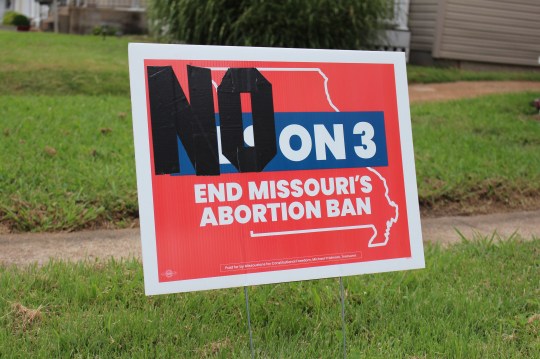
    This issue brief explains why constitutional amendment ballot measures have become so popular with advocates on both sides of the abortion issue, reviews the current initiatives that are in progress and may appear in on state ballots the next general election, and outlines the processes states have available to them to use to place initiatives on the ballot.

  • The Latest on Medication Abortion Access: The Court Awaits the FDA Review

    Quick Insights

    Despite for calls from Republican leaders and anti-abortion organizations for the FDA to act quickly, the Louisiana district court has given the FDA until October 7, 2026, one month before the midterms, to file a report with the status of its review and any updated timeframe for completion. In the meantime, clinicians may continue to mail mifepristone to pregnant patients seeking abortions regardless of where they live.

  • Supreme Court Leaves Mifepristone Access Unchanged – For Now

    Quick Insights

    In addition to ongoing litigation, last September the Trump administration FDA, after  requests from anti-abortion organizations and state attorneys general, initiated an internal review of mifepristone’s safety.  This adds uncertainty as the agency could revise dispensing rules independently of the courts. With the FDA commissioner’s resignation this week and no permanent leader in place, the timeline for completing the review remains unclear. 

  • Abortions Later in Pregnancy in a Post-Dobbs Era

    Issue Brief

    This brief explains why individuals may seek abortions later in pregnancy, how often these procedures occur, and the various laws which regulate access to abortions later in pregnancy across the country.

  • Abortion at SCOTUS: Dobbs v. Jackson Women’s Health

    Issue Brief

    This issue brief provides background on the legal challenges to the Mississippi law in the context of the Supreme Court abortion precedents, addresses the intersections with the litigation that has arisen from S.B. 8, the Texas 6-week abortion ban, and explains the potential outcomes and how they could impact access to abortion around the country.

  • Abortion Trends Before and After Dobbs

    Issue Brief

    This brief reviews the different sources of abortion data in the United States, the factors that have affected abortion rates across the U.S, before and after Roe v. Wade, and what we may see as the Trump administration, Republican majorities in the House and Senate, and a conservative federal judiciary shape policy in the coming years.

  • Legal Challenges to State Abortion Bans Since the Dobbs Decision

    Issue Brief

    This issue brief presents an overview of the legal challenges presented in state courts since the Dobbs ruling in June 2022 and highlights some of the novel strategies that are being used to defend access to abortion in states that have enacted abortion bans.

  • The Hyde Amendment and Coverage for Abortion Services Under Medicaid in the Post-Roe Era

    Issue Brief

    This brief details the federal programs that are affected by the Hyde Amendment and laws and regulations that have a similar goal, provides estimates on the share of women insured by Medicaid affected by the law, reviews the impact of the law on their access to abortion services, and discusses the potential effect if the law were to be repealed.