Women's Health Policy

ABORTION IN THE U.S.

The Status of Abortion-related State Ballot Initiatives Since Dobbs

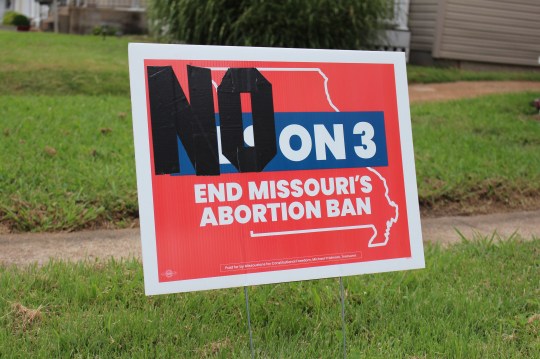
Since the Supreme Court’s Dobbs decision, overturning Roe v. Wade, voters in 17 states have weighed in on ballot measures regarding abortion — some more than once. In November 2026, voters in Idaho, Missouri, Nevada, and Virginia will weigh in on abortion measures that could change the legal status of abortion in their state. In addition, a measure in Colorado is in the process of collecting signatures.
CONTRACEPTIve care IN THE U.S.

SELECTED RESOURCES

Over-the-Counter Oral Contraceptive Pills

In July 2023, the FDA approved Opill, the first daily oral contraceptive pill to become available over the counter (OTC) without a doctor’s prescription. This issue brief provides an overview of OTC oral contraceptives and laws and policies related to insurance coverage.

featured

A promotional image for the the KFF Health Policy 101 Issues in Women’s Health chapter

Health Policy Issues in Women’s Health

Examine the core health coverage and access issues —shaped by federal and state policies—that affect women’s health today, including health coverage and costs, reproductive health services, maternal health, mental health, and intimate partner violence.

State Profiles for Women’s Health

Explore the latest national and state-specific data and policies on women’s health. Topics include health status, insurance and Medicaid coverage, use of preventive services, sexual health, maternal and infant health, and abortion policies. Many indicators provide state-level information for women of different racial and ethnic groups.

The essentials
  • Women’s Health Insurance Coverage

    This factsheet reviews major sources of coverage for women residing in the U.S., discusses the ACA's impact on coverage, and the coverage challenges that many women continue to face.
  • Medicaid Coverage for Women

    This data note presents key data points describing the current state of the Medicaid program as it affects women, including eligibility, reproductive health, chronic conditions, and more.
  • Dobbs: What are the Implications for Racial Disparities?

    This analysis examines the implications of the Dobbs decision and state restrictions on abortion coverage for racial disparities in access to care and health outcomes.
  • State Health Facts: Women's Health Indicators

    Information on women’s health status, utilization of services, health insurance coverage, family planning and childbirth, and abortion statistics and policies.
  • Key Facts on Abortion in the United States

    This report answers some key questions about abortion in the United States and presents data collected before the overturn of Roe v. Wade.

Stay informed.

Stay informed.

Filter

381-390 of 880 results

  • Abortion Coverage in the Premium Relief Act of 2017 (HR 4666)

    Issue Brief

    This issue brief reviews current federal and state policies on private insurance coverage of abortion services, and how the Premium Relief Act of 2017 would affect abortion coverage for women enrolled in the individual market and some small group plans.

  • New KFF Trackers Document State and Federal Reproductive Rights Litigation Across the Country

    News Release

    KFF has created two new trackers to follow swift-moving reproductive rights litigation in the state and federal courts. The tools, which are currently tracking the status of 21 state cases in 15 states and eight federal cases, will be updated regularly as the litigation proceeds. Major cases pending in federal and state courts could impact access to abortion and contraceptive care for millions across the US. In fact, a federal district court is considering a…

  • Leading up to the 50th Anniversary of the Now-Overturned Roe, New KFF Brief Presents an Analysis of Current Legal Challenges to State Abortion Bans

    News Release

    As the nation marks the 50th anniversary of the Supreme Court of the United States landmark Roe v. Wade decision, which the Supreme Court overturned, 14 states have active litigation challenging state abortion bans and restrictions. A new KFF brief explains how individuals and organizations suing to block the bans are framing their legal challenges based on different state constitutional protections and state laws now that the battleground over abortion rights rests with states. The…

  • New Analysis Reveals Gaps in Abortion Coverage for Employees with Employer-Sponsored Plans

    News Release

    New analysis of KFF’s 2019 Employer Benefits Survey finds that 10% of workers covered by employer-sponsored health insurance are employed at a firm that has asked their insurer or third party administrator to exclude abortion coverage from their health plan. Employer-sponsored coverage is the primary source of health benefits in the U.S., covering 153 million Americans. Four percent of covered workers are employed at firms that exclude coverage of abortion under any circumstance and 6%…

  • Analysis Examines the Affordable Care Act’s Impact on Nearly All Americans

    News Release

    A week after the 2020 elections, the Supreme Court is scheduled to hear arguments on a legal challenge, supported by the Trump administration, that seeks to overturn the Affordable Care Act, an outcome that would have major effects throughout the health care system as the law’s provisions have affected nearly all Americans in some way. A KFF analysis examines key provisions of the 2010 law that have changed the nation’s health care system, including what’s…

  • The Title X Network Has Largely Returned Under the Biden Administration 

    News Release

    A new KFF brief examines the return of grantees and clinic sites to the Title X network under the Biden Administration, which reversed Trump Administration regulations that prohibited Title X sites from providing abortion referrals and having co-located abortion services. For more than 50 years, the federal Title X program has provided family planning services to nearly four million people a year through a network of clinics. The program is part of the U.S. public…

  • Poll: Most Americans Encounter Health Misinformation, and Most Aren’t Sure Whether It’s True or False 

    News Release

    A new KFF survey reveals the broad reach of health misinformation, with at least four in 10 people saying that they’ve heard each of 10 specific false claims about COVID-19, reproductive health, and gun violence. Relatively small shares say that each of those false claims are “definitely true”, ranging from as few as 3% who definitively believe that COVID-19 vaccines have been proven to cause infertility to as many as 18% who definitively believe armed…