Women's Health Policy

ABORTION IN THE U.S.

Variability in Rebimbursement Rates for State-funded Abortion Services for Medicaid Enrollees: A 2026 Update

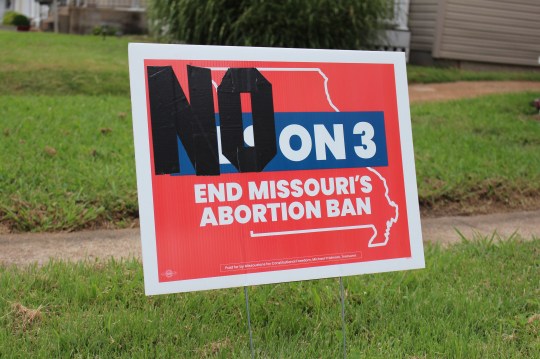
This analysis reveals that while more states have begun using their own funds to cover abortion services for Medicaid enrollees since the U.S. Supreme Court’s Dobbs decision, only a handful have significantly increased reimbursement rates for providers, potentially undermining access to care for low-income patients. After examining physician fee schedules for abortions provided to Medicaid enrollees since 2024, KFF finds that reimbursement rates vary dramatically across states, and that most states don't substantially increase payment rates for later-pregnancy procedures, despite their higher costs and complexity.

CONTRACEPTIve care IN THE U.S.

An Update on Medicaid, Title X and Planned Parenthood

This brief provides an update on Planned Parenthood clinic closures and participation in the Title X program amid substantial policy changes resulting in funding reductions. These changes include the One Big Beautiful Bill Act and the withholding of federal Title X funding to Planned Parenthood clinics.

SELECTED RESOURCES

Over-the-Counter Oral Contraceptive Pills

In July 2023, the FDA approved Opill, the first daily oral contraceptive pill to become available over the counter (OTC) without a doctor’s prescription. This issue brief provides an overview of OTC oral contraceptives and laws and policies related to insurance coverage.

featured

A promotional image for the the KFF Health Policy 101 Issues in Women’s Health chapter

Health Policy Issues in Women’s Health

Examine the core health coverage and access issues —shaped by federal and state policies—that affect women’s health today, including health coverage and costs, reproductive health services, maternal health, mental health, and intimate partner violence.

State Profiles for Women’s Health

Explore the latest national and state-specific data and policies on women’s health. Topics include health status, insurance and Medicaid coverage, use of preventive services, sexual health, maternal and infant health, and abortion policies. Many indicators provide state-level information for women of different racial and ethnic groups.

The essentials
  • Women’s Health Insurance Coverage

    This factsheet reviews major sources of coverage for women residing in the U.S., discusses the ACA's impact on coverage, and the coverage challenges that many women continue to face.
  • Medicaid Coverage for Women

    This data note presents key data points describing the current state of the Medicaid program as it affects women, including eligibility, reproductive health, chronic conditions, and more.
  • Dobbs: What are the Implications for Racial Disparities?

    This analysis examines the implications of the Dobbs decision and state restrictions on abortion coverage for racial disparities in access to care and health outcomes.
  • State Health Facts: Women's Health Indicators

    Information on women’s health status, utilization of services, health insurance coverage, family planning and childbirth, and abortion statistics and policies.
  • Key Facts on Abortion in the United States

    This report answers some key questions about abortion in the United States and presents data collected before the overturn of Roe v. Wade.

Stay informed.

Stay informed.

Filter

351 - 360 of 876 Results

  • Promoting Access to Prenatal Care: Lessons from the California Experience

    Other Post

    Improving access to prenatal care has been a public policy priority in the United States for the past 15 years. This report and issue brief, prepared for the Kaiser Family Foundation by Paula Braveman, M.D. of the University of California, San Francisco and others, examine the impact of the Medicaid pregnancy-related expansions and reforms in California during the late 1980s and 1990s on the use of prenatal care. Report Issue Brief

  • Women’s Health Care Providers’ Experiences with Emergency Contraception

    Poll Finding

    Women's Health Care Providers' Experiences with Emergency Contraception This survey snapshot is an update on women's health care providers' experiences with emergency contraception (EC). It provides information on prescribing practices and counseling for EC and views on increasing access to EC. Survey Snapshot: Women's Health Care Providers' Experiences with Emergency Contraception

  • Emergency Contraception: All Talk and No Action?

    Other Post

    Survey of Americans on Emergency Contraception The 1997 Kaiser Family Foundation Survey of Americans on Emergency Contraception examined public knowledge and attitudes regarding unplanned pregnancy and contraception, with a particular focus on emergency contraceptive pills. The survey, conducted by Princeton Survey Research Associates for Kaiser Family Foundation, consisted of telephone interviews with a nationally representative sample of 1000 women and 300 men aged 18 to 44 years old living in telephone households in the continental…

  • Documenting the Power of Television – A Survey of Regular E.R. Viewers about Emergency Contraception

    Poll Finding

    A national random sample telephone survey of 700 regular ER viewers before and after the April 10th episode, featuring a date rape victim who learns that she still has contraceptive options to help prevent pregnancy, even after having unprotected sex. While in the emergency room, she learns that if she takes a heavy dose of regular birth control pills within three days of unprotected sex, she can reduce her chance of becoming pregnant by 75%.…

  • Abortion

    Other Post

    : Fact Sheet Fact Sheet available in PDF format. Return to top : Fact SheetLibrary Index

  • Women, Work, and Family Health: A Balancing Act

    Issue Brief

    This issue brief examines women's roles in family health care decision-making and coordination, the effect of that involvement for women who work, and women's caregiving responsibilities. This analysis is based on data from the 2001 Kaiser Women's Health Survey, a nationally representative sample of nearly 4,000 women between the ages of 18 and 64. Issue brief (.pdf) News Release: Mothers Still Carry Primary Responsibility for Family Health -- Tradeoffs Between Caring for Children and Job Earnings…

  • National Survey of Women About Their Sexual Health

    Report

    A public education partnership with the Kaiser Family Foundation and SELF magazine, the : Take Charge of Your Sexual Health, shows that the stigma associated with STDs silences women, making it more difficult for them to get the information they need. Report:

  • Another Gender Gap?  Men’s Role in Preventing Pregnancy

    Report

    A chart pack, press release, and Q&A prepared for a briefing held in New York on March 19, 1997, co-sponsored by the Kaiser Family Foundation, the National Press Foundation and The Alan Guttmacher Institute. This briefing focused on men's role and responsibility in preventing pregnancy. A survey of men's and women's perceptions about men's role and responsibility when it comes to preventing unplanned pregnancy was released as part of this briefing and is also available,…

  • Survey on Public Knowledge and Attitudes on Contraception and Unplanned Pregnancy in the U.S., Canada and the Netherlands

    Other Post

    G. Emergency Contraceptive Pills, or Morning-After Pills G1. If a woman has just had sex and thinks she might become pregnant, is there anything that she could do in the next few days to prevent pregnancy, or not? Asked only in the U.S. USA18+ Yes, there is something 36% No, there is not anything 47% Too late to prevent pregnancy (Vol.) 1% Not sure/Refused 17% G2. Have you ever heard of morning-after pills, also called…