Women's Health Policy

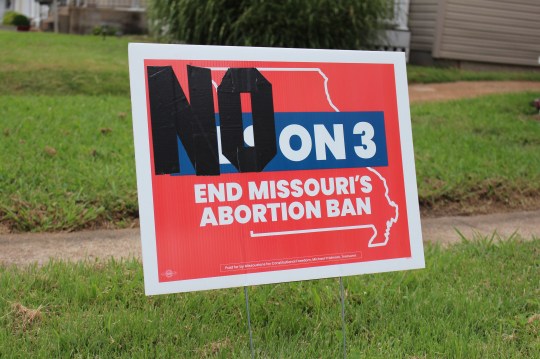
ABORTION IN THE U.S.

CONTRACEPTIve care IN THE U.S.

New and noteworthy

Over-the-Counter Oral Contraceptive Pills

In July 2023, the FDA approved Opill, the first daily oral contraceptive pill to become available over the counter (OTC) without a doctor’s prescription. This issue brief provides an overview of OTC oral contraceptives and laws and policies related to insurance coverage.

featured

A promotional image for the the KFF Health Policy 101 Issues in Women’s Health chapter

Health Policy Issues in Women’s Health

Examine the core health coverage and access issues —shaped by federal and state policies—that affect women’s health today, including health coverage and costs, reproductive health services, maternal health, mental health, and intimate partner violence.

State Profiles for Women’s Health

Explore the latest national and state-specific data and policies on women’s health. Topics include health status, insurance and Medicaid coverage, use of preventive services, sexual health, maternal and infant health, and abortion policies. Many indicators provide state-level information for women of different racial and ethnic groups.

The essentials
  • Women’s Health Insurance Coverage

    This factsheet reviews major sources of coverage for women residing in the U.S., discusses the ACA's impact on coverage, and the coverage challenges that many women continue to face.
  • Medicaid Coverage for Women

    This data note presents key data points describing the current state of the Medicaid program as it affects women, including eligibility, reproductive health, chronic conditions, and more.
  • Dobbs: What are the Implications for Racial Disparities?

    This analysis examines the implications of the Dobbs decision and state restrictions on abortion coverage for racial disparities in access to care and health outcomes.
  • State Health Facts: Women's Health Indicators

    Information on women’s health status, utilization of services, health insurance coverage, family planning and childbirth, and abortion statistics and policies.
  • Key Facts on Abortion in the United States

    This report answers some key questions about abortion in the United States and presents data collected before the overturn of Roe v. Wade.

Latest News

No Posts to Show

Subscribe to KFF Emails

Choose which emails are best for you.
Sign up here

Filter

341 - 350 of 869 Results

  • Key Facts: Women and Medicare

    Report

    Medicare is a critical source of health insurance coverage for virtually all older women in the U.S. and for many younger women who have permanent disabilities. Today, 22 million women one in five adult women rely on Medicare for basic health insurance protection. In fact, women comprise 57% of the Medicare population.

  • Emergency Contraception in California – Survey Report

    Report

    As the FDA continues to deliberate about whether emergency contraception will be made available "over-the-counter" without a prescription, a new Kaiser Family Foundation survey examines Californian's awareness of and experiences with emergency contraception, inlcuding findings on the state's "pharmacy access " program.

  • Emergency Contraception: Resources for Providers

    Other Post

    This publication is a resource manual for health care providers to increase awareness and access to emergency contraception to women by making available information about emergency contraception, and how to use this option.

  • Emergency Contraception: All Talk and No Action?

    Fact Sheet

    A fact sheet, Q&A and resource list prepared for a briefing held for journalists in New York City on December 18, 1997 in New York City as part of a joint program by The Alan Guttmacher Institute, The Kaiser Family Foundation and the National Press Foundation.

  • Women’s Experiences with Intimate Partner Violence

    Issue Brief

    This analysis provides data on women experiencing intimate partner violence (IPV) and reports on a range of health topics affecting women who experienced IPV in the past five years, including their health care needs and use, barriers, and mental health.

  • Coverage of Contraceptive Services: A Review of Health Insurance Plans in Five States

    Report

    The Patient Protection and Affordable Care Act (ACA) requires most private plans to provide coverage for women’s preventive health care, including all prescribed FDA-approved contraceptive services, without cost sharing. To better understand how this provision is being implemented by health plans, Kaiser Family Foundation (KFF) staff, with the Lewin Group, reviewed the insurance plan coverage policies for 12 prescribed contraceptive methods (excluding oral contraceptives). This report presents information from 20 different insurance carriers in five states (California, Georgia, Michigan, New Jersey, and Texas) about how they are applying reasonable medical management (RMM) techniques in their coverage of women’s contraceptive services. The different forms of female birth control reviewed in this report include the contraceptive ring, the patch, injections, implants, intrauterine devices (IUDs), and sterilization.

  • New Report Analyzes Health Insurance Coverage of Contraceptives

    News Release

    A new Kaiser Family Foundation report released today finds how health insurance carriers are interpreting and implementing the Affordable Care Act's contraceptive coverage requirement varies, limiting contraceptive options for some women.

  • Medicaid Family Planning Programs, 2012

    Feature

    medicaid-family-planning-programs-2012-womenshealth Download Source Guttmacher Institute, Medicaid Family Planning Eligibility Expansions, State Policies in Brief, November 2012…