Women's Health Policy

ABORTION IN THE U.S.

KFF infographic explaining who regulates mifepristone, showing four entities and their roles: the U.S. Food and Drug Administration approves and regulates medications for safety and effectiveness; state legislatures pass laws that can restrict or protect access; courts rule on legal cases affecting regulation; and Congress can pass federal legislation influencing regulation.

Louisiana v. FDA: Access to Mifepristone Back at the Supreme Court

Louisiana sued the FDA in October 2025, claiming the FDA’s 2023 regulatory change eliminating the requirement that mifepristone be dispensed in-person—allowing it to be mailed or dispensed at retail pharmacies—harm the state's ability to enforce its abortion ban. This brief reviews the Louisiana v. FDA case and provides an overview of the other pending litigation involving mifepristone, as well as the mounting tension between states seeking to protect abortion and those banning the provision of abortion.

CONTRACEPTIve care IN THE U.S.

An Update on Medicaid, Title X and Planned Parenthood

This brief provides an update on Planned Parenthood clinic closures and participation in the Title X program amid substantial policy changes resulting in funding reductions. These changes include the One Big Beautiful Bill Act and the withholding of federal Title X funding to Planned Parenthood clinics.

SELECTED RESOURCES

Over-the-Counter Oral Contraceptive Pills

In July 2023, the FDA approved Opill, the first daily oral contraceptive pill to become available over the counter (OTC) without a doctor’s prescription. This issue brief provides an overview of OTC oral contraceptives and laws and policies related to insurance coverage.

featured

A promotional image for the the KFF Health Policy 101 Issues in Women’s Health chapter

Health Policy Issues in Women’s Health

Examine the core health coverage and access issues —shaped by federal and state policies—that affect women’s health today, including health coverage and costs, reproductive health services, maternal health, mental health, and intimate partner violence.

State Profiles for Women’s Health

Explore the latest national and state-specific data and policies on women’s health. Topics include health status, insurance and Medicaid coverage, use of preventive services, sexual health, maternal and infant health, and abortion policies. Many indicators provide state-level information for women of different racial and ethnic groups.

The essentials
  • Women’s Health Insurance Coverage

    This factsheet reviews major sources of coverage for women residing in the U.S., discusses the ACA's impact on coverage, and the coverage challenges that many women continue to face.
  • Medicaid Coverage for Women

    This data note presents key data points describing the current state of the Medicaid program as it affects women, including eligibility, reproductive health, chronic conditions, and more.
  • Dobbs: What are the Implications for Racial Disparities?

    This analysis examines the implications of the Dobbs decision and state restrictions on abortion coverage for racial disparities in access to care and health outcomes.
  • State Health Facts: Women's Health Indicators

    Information on women’s health status, utilization of services, health insurance coverage, family planning and childbirth, and abortion statistics and policies.
  • Key Facts on Abortion in the United States

    This report answers some key questions about abortion in the United States and presents data collected before the overturn of Roe v. Wade.

Stay informed.

Stay informed.

Filter

331 - 340 of 875 Results

  • Contraception X Article: Out-of-Pocket Spending for Oral Contraceptives Among Women with Private Insurance Coverage After the Affordable Care Act

    Issue Brief

    In an article for Contraception X, KFF's Brittni Frederiksen, Matthew Rae, and Alina Salganicoff examine large employer plans to identify which types and brands of oral contraceptive pills have the largest shares of oral contraceptive users with out-of-pocket spending and which oral contraceptives have the highest average annual out-of-pocket costs after the ACA covered contraception under it's preventive services provisions.

  • Amid the Coronavirus Crisis, President Trump and Democratic Nominee Joe Biden Offer Widely Different Views on Health Care

    News Release

    President Trump and Democratic nominee Joe Biden hold widely divergent views on health issues, with the president’s record and response to the coronavirus pandemic likely to play a central role in November’s elections. A new KFF side-by-side comparison examines President Trump’s record and former Vice President Biden’s positions across a wide range of key health issues, including the response to the pandemic, the Affordable Care Act marketplace, Medicaid, Medicare, drug prices, reproductive health, HIV, mental…

  • Analysis Examines the Affordable Care Act’s Impact on Nearly All Americans

    News Release

    A week after the 2020 elections, the Supreme Court is scheduled to hear arguments on a legal challenge, supported by the Trump administration, that seeks to overturn the Affordable Care Act, an outcome that would have major effects throughout the health care system as the law’s provisions have affected nearly all Americans in some way. A KFF analysis examines key provisions of the 2010 law that have changed the nation’s health care system, including what’s…

  • A Reconfigured U.S. Supreme Court: Implications for Health Policy

    Issue Brief

    U.S. Supreme Court decisions shape health policy in important ways. The nomination of Judge Amy Coney Barrett, if confirmed, is expected to establish a solid 6:3 conservative majority that could affect case outcomes in several areas. This issue brief considers the potential implications of a reconfigured Court for health policy issues, including those already on the Court’s docket for the coming term and those that the Court may choose to consider in this term or…

  • Two Women’s Health Policy Issues to Monitor in 2021

    News Release

    With President-elect Joe Biden and a new Congress taking office next month, newly updated KFF briefs examine two women’s health policy issues awaiting federal policymakers in 2021. President-elect Biden campaigned on reversing the Trump Administration’s regulations for the Title X family planning program, which require complete financial and physical separation from abortion services, including referrals, for family planning providers funded by the program. The Current Status of the Title X Network and the Path Forward…

  • Health Reform: Implications for Women’s Access to Coverage and Care

    Issue Brief

    This issue brief, Health Reform: Implications for Women's Access to Coverage and Care, reviews how the Affordable Care Act is expected to affect access to care and affordability of health coverage for women. It also explains the provisions in the health reform law related to preventive screening services, reproductive health, maternity care and women on Medicare. The brief includes national and state-level estimates of the percentage of uninsured women ages 18-64 who are likely to…

  • New KFF Brief Examines Potential Abortion-Related Ballot Initiatives in 13 States

    News Release

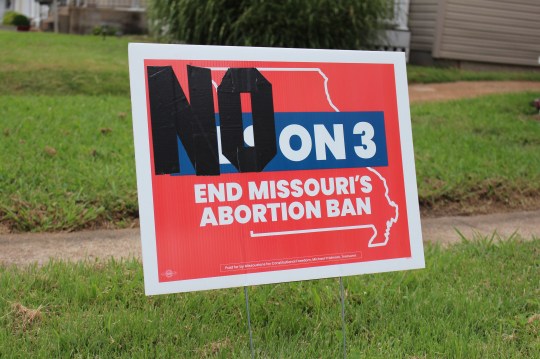
    Ahead of the 2024 general election, a new KFF brief examines abortion ballot initiatives in progress in 13 states. These 13 states could follow six other states that have voted on constitutional amendments to protect or restrict abortion since the Supreme Court’s Dobbs decision overturning Roe v. Wade in 2022. In those six states, the side favoring access to abortion prevailed. Citizen-led abortion ballot initiatives have captured nationwide attention and promise to be closely watched;…

  • What the Data Show: Abortions Later in Pregnancy 

    News Release

    Following recent news about former President Trump’s potential support for a national 16-week abortion ban, KFF examines the data about how often abortions later in pregnancy occur, exploring the potential reasons why, and detailing the various laws that regulate access to abortions later in pregnancy. The updated analysis considers 2021 CDC data, before the Dobbs decision, in a post-Dobbs policy landscape. The analysis shows that abortions at or after 21 weeks are uncommon and represent…