Women's Health Policy

ABORTION IN THE U.S.

The Status of Abortion-related State Ballot Initiatives Since Dobbs

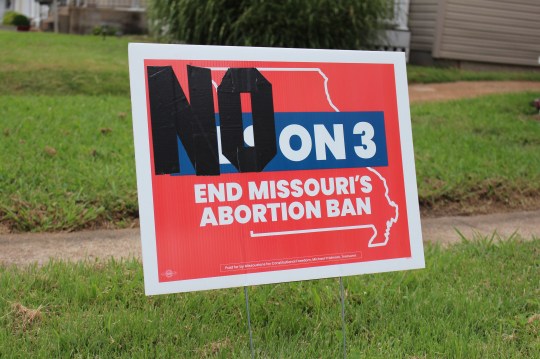
Since the Supreme Court’s Dobbs decision, overturning Roe v. Wade, voters in 17 states have weighed in on ballot measures regarding abortion — some more than once. In November 2026, voters in Idaho, Missouri, Nevada, and Virginia will weigh in on abortion measures that could change the legal status of abortion in their state. In addition, a measure in Colorado is in the process of collecting signatures.
CONTRACEPTIve care IN THE U.S.

SELECTED RESOURCES

Over-the-Counter Oral Contraceptive Pills

In July 2023, the FDA approved Opill, the first daily oral contraceptive pill to become available over the counter (OTC) without a doctor’s prescription. This issue brief provides an overview of OTC oral contraceptives and laws and policies related to insurance coverage.

featured

A promotional image for the the KFF Health Policy 101 Issues in Women’s Health chapter

Health Policy Issues in Women’s Health

Examine the core health coverage and access issues —shaped by federal and state policies—that affect women’s health today, including health coverage and costs, reproductive health services, maternal health, mental health, and intimate partner violence.

State Profiles for Women’s Health

Explore the latest national and state-specific data and policies on women’s health. Topics include health status, insurance and Medicaid coverage, use of preventive services, sexual health, maternal and infant health, and abortion policies. Many indicators provide state-level information for women of different racial and ethnic groups.

The essentials
  • Women’s Health Insurance Coverage

    This factsheet reviews major sources of coverage for women residing in the U.S., discusses the ACA's impact on coverage, and the coverage challenges that many women continue to face.
  • Medicaid Coverage for Women

    This data note presents key data points describing the current state of the Medicaid program as it affects women, including eligibility, reproductive health, chronic conditions, and more.
  • Dobbs: What are the Implications for Racial Disparities?

    This analysis examines the implications of the Dobbs decision and state restrictions on abortion coverage for racial disparities in access to care and health outcomes.
  • State Health Facts: Women's Health Indicators

    Information on women’s health status, utilization of services, health insurance coverage, family planning and childbirth, and abortion statistics and policies.
  • Key Facts on Abortion in the United States

    This report answers some key questions about abortion in the United States and presents data collected before the overturn of Roe v. Wade.

Stay informed.

Stay informed.

Filter

321-330 of 880 results

  • Health Insurance Coverage Of Low-Income Women

    Fact Sheet

    Low-income women's high rate of health problems and limited economic resources make access to health care and adequate health insurance coverage particularly important. Health coverage, whether through the private sector or publicly through Medicaid, has been demonstrated to improve access to care for low-income women. However, obtaining coverage is not easy or even possible for many women. Job-based insurance is not always an option for low-income women, despite their high workforce participation. Assistance is available…

  • Emergency Contraception: All Talk and No Action?

    Fact Sheet

    A fact sheet, Q&A and resource list prepared for a briefing held for journalists in New York City on December 18, 1997 in New York City as part of a joint program by The Alan Guttmacher Institute, The Kaiser Family Foundation and the National Press Foundation. This program focused on efforts to break through barriers to emergency contraception, as well as future opportunities for expanding access. New surveys conducted for the Kaiser Family Foundation of…

  • Many States Look to Strengthen Medicaid Coverage for Maternal Health in FY2022, According to New KFF Report

    News Release

    Medicaid funds more than four in ten births in the United States and more than half in several states. A new KFF report of results from a survey of 41 states and DC finds that on the whole, states offer broad coverage for basic pregnancy-related services. Most states also reported that they are working on ways to strengthen Medicaid coverage of maternity services and are trying to respond to concerns about coverage continuity and scope…

  • KFF Health Tracking Poll: Views on and Knowledge about Abortion in Wake of Leaked Supreme Court Opinion

    Feature

    This poll analyses the general public's understanding of abortion access and reproductive health following a leaked draft of the U.S Supreme Court opinion on Dobbs v. Jackson Women's Health Center. The poll also looks at how the aftermath of the leaked opinion may affect voting in the upcoming midterm election. This KFF poll also finds that there are significant knowledge gaps on the prevalence and the overall safety of abortions.

  • Out-of-Pocket Charges for Rape Kits and Services for Sexual Assault Survivors

    Issue Brief

    Although federal legislation intends to provide no-cost rape kits to all survivors of sexual violence, some survivors still face out-of-pocket charges for minimum standard rape kit services as well as other medical care that takes place following a sexual assault. This brief examines the policies that impact coverage of health care services for survivors of sexual assault and identifies gaps in those programs and coverage for their care, particularly for women with private health insurance.

  • Despite Efforts to Prevent Out-of-Pocket Costs for Rape Kits and Services by the Violence Against Women Act, Some Women Still Face Charges

    News Release

    In the United States, more than one in three women experience sexual violence in their lifetime. Despite the intent of Violence Against Women Act (VAWA) to protect survivors from out-of-pocket spending stemming from rape kit collection services also known as a medical forensic exam (MFE), many women face health care bills because they seek those critical services. A new KFF analysis of a sample of private insurance claims from large employers finds that two-thirds (66%)…

  • New Survey Examines the Provision of Family Planning Services by Community Health Centers

    News Release

    A new national survey conducted by the Kaiser Family Foundation and George Washington University finds few of the nation’s community health centers report they can handle a significant increase in patients. Less than one in five clinics report that they could increase their patient caseload by 25 percent or more in the next year. This finding suggests that community health centers may be challenged to fill the void if Planned Parenthood, the nation’s largest network of freestanding family…