Women's Health Policy

ABORTION IN THE U.S.

KFF infographic explaining who regulates mifepristone, showing four entities and their roles: the U.S. Food and Drug Administration approves and regulates medications for safety and effectiveness; state legislatures pass laws that can restrict or protect access; courts rule on legal cases affecting regulation; and Congress can pass federal legislation influencing regulation.

Louisiana v. FDA: Access to Mifepristone Back at the Supreme Court

Louisiana sued the FDA in October 2025, claiming the FDA’s 2023 regulatory change eliminating the requirement that mifepristone be dispensed in-person—allowing it to be mailed or dispensed at retail pharmacies—harm the state's ability to enforce its abortion ban. This brief reviews the Louisiana v. FDA case and provides an overview of the other pending litigation involving mifepristone, as well as the mounting tension between states seeking to protect abortion and those banning the provision of abortion.

CONTRACEPTIve care IN THE U.S.

An Update on Medicaid, Title X and Planned Parenthood

This brief provides an update on Planned Parenthood clinic closures and participation in the Title X program amid substantial policy changes resulting in funding reductions. These changes include the One Big Beautiful Bill Act and the withholding of federal Title X funding to Planned Parenthood clinics.

SELECTED RESOURCES

Over-the-Counter Oral Contraceptive Pills

In July 2023, the FDA approved Opill, the first daily oral contraceptive pill to become available over the counter (OTC) without a doctor’s prescription. This issue brief provides an overview of OTC oral contraceptives and laws and policies related to insurance coverage.

featured

A promotional image for the the KFF Health Policy 101 Issues in Women’s Health chapter

Health Policy Issues in Women’s Health

Examine the core health coverage and access issues —shaped by federal and state policies—that affect women’s health today, including health coverage and costs, reproductive health services, maternal health, mental health, and intimate partner violence.

State Profiles for Women’s Health

Explore the latest national and state-specific data and policies on women’s health. Topics include health status, insurance and Medicaid coverage, use of preventive services, sexual health, maternal and infant health, and abortion policies. Many indicators provide state-level information for women of different racial and ethnic groups.

The essentials
  • Women’s Health Insurance Coverage

    This factsheet reviews major sources of coverage for women residing in the U.S., discusses the ACA's impact on coverage, and the coverage challenges that many women continue to face.
  • Medicaid Coverage for Women

    This data note presents key data points describing the current state of the Medicaid program as it affects women, including eligibility, reproductive health, chronic conditions, and more.
  • Dobbs: What are the Implications for Racial Disparities?

    This analysis examines the implications of the Dobbs decision and state restrictions on abortion coverage for racial disparities in access to care and health outcomes.
  • State Health Facts: Women's Health Indicators

    Information on women’s health status, utilization of services, health insurance coverage, family planning and childbirth, and abortion statistics and policies.
  • Key Facts on Abortion in the United States

    This report answers some key questions about abortion in the United States and presents data collected before the overturn of Roe v. Wade.

Stay informed.

Stay informed.

Filter

221 - 230 of 875 Results

  • National Survey Results on Public Knowledge/Opinions and OB/GYN Practice/Attitudes on Emergency Contraceptives (“Morning-After Pills”) – Policy Brief

    Issue Brief

    EMERGENCY CONTRACEPTION: The Answer to America's Unplanned Pregnancy Problem? March, 1995 OVERVIEW For approximately 20 years, emergency contraceptive pills (ECPs), high-dose oral contraceptivesalso referred to as "morning-after pills," have been known to prevent pregnancy after unprotectedsex and available in the United States. Findings from a new Kaiser Family Foundation/LouisHarris and Associates, Inc. national public knowledge and opinion survey, however, indicate thatmost American women are uninformed or misinformed about the contraceptive alternative andfew have ever used…

  • New KFF Analyses on Women and Medicaid: State Family Planning Benefits and Contraceptive Provision

    News Release

    Medicaid, the state and federal health coverage program for low-income people, finances family planning services for millions of women across the nation. National statistics, however, can mask important state-level Medicaid policy and utilization differences. Two new KFF state-level analyses have just been posted that provide up-to-date coverage policies and practices as well as new data on contraceptive provision under Medicaid. Medicaid Coverage of Family Planning Benefits: Findings from a 2021 State Survey Based on findings…

  • State Variations in the Role of the Reproductive Health Safety Net for Contraceptive Care Among Medicaid Enrollees

    Issue Brief

    This KFF analysis uses 2023 T-MSIS Research Identifiable Files to look at where reproductive-age female Medicaid enrollees received their last contraceptive visit by state. Overall, more than four in 10 (43%) female Medicaid enrollees received their last contraceptive visit of 2023 at a safety net provider, which includes Planned Parenthood clinics, community health centers, state and local health departments, and Indian health services, but there is wide variation by state.

  • Health Policy 101 Introduction

    Feature

    Health Policy 101 is a comprehensive guide covering fundamental aspects of U.S. health policy and programs, including Medicare, Medicaid, the Affordable Care Act, employer-sponsored insurance, the uninsured population, health care costs and affordability, women's health issues, and health care politics. It includes overviews of private health insurance regulation, racial and ethnic disparities, public health, international comparison of health systems, U.S. global health policy, and the federal role in health policy. The chapters can be downloaded…

  • The Status of Abortion-related State Ballot Initiatives Since Dobbs

    Tracker

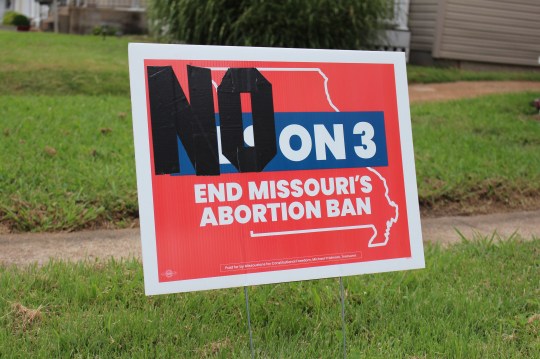
    Last updated on March 24, 2026 Since the Supreme Court’s Dobbs decision, overturning Roe v. Wade, voters in 17 states have weighed in on ballot measures regarding abortion-- some more than once. In November 2026, voters in Missouri, Nevada, and Virginia will weigh in on abortion measures that could change the legal status of abortion in their state. In addition, measures in Idaho and Nebraska are in the process of collecting signatures.   In 2024, 10 states voted on abortion measures that sought to affirm that the state constitution protects the right to abortion. Nebraska voted on two measures: one…
  • State Profiles for Womens Health

    Feature

    The KFF State Profiles for Women’s Health database offers the latest national and state data and policies on a broad range of state-level statistics and policies of importance to women including health status, insurance and Medicaid coverage, use of preventive services, contraceptive coverage, sexual health, maternal and infant health, and abortion policies. Many indicators also provide state-level information for women of different racial and ethnic groups.

  • Round 2 on the Legal Challenges to Contraceptive Coverage: Are Nonprofits “Substantially Burdened” by the “Accommodation”?

    Issue Brief

    The Affordable Care Act (ACA) requires most private health insurance plans to provide coverage for a broad range of preventive services including Food and Drug Administration (FDA) approved prescription contraceptives and services for women. Since the implementation of the ACA contraceptive coverage requirement in 2012, over 200 corporations have filed lawsuits claiming that including coverage for contraceptives or opting for an “accommodation” from the federal government violates their religious beliefs. This brief explains the legal…

  • Women’s Health Issues Journal: Medicaid and Women’s Health Coverage Two Years into the Affordable Care Act

    Issue Brief

    As Medicaid marks its 50th year, the program has unquestionably become the mainstay of health coverage for low-income women in the nation. Since its inception, its role for women has continued to evolve and expand, but the passage of the Affordable Care Act (ACA) swung open the doors for Medicaid to serve even more low-income women who lack access to private or employer-based insurance. This is because the ACA enabled states to finally eliminate Medicaid's…