Women's Health Policy

ABORTION IN THE U.S.

The Status of Abortion-related State Ballot Initiatives Since Dobbs

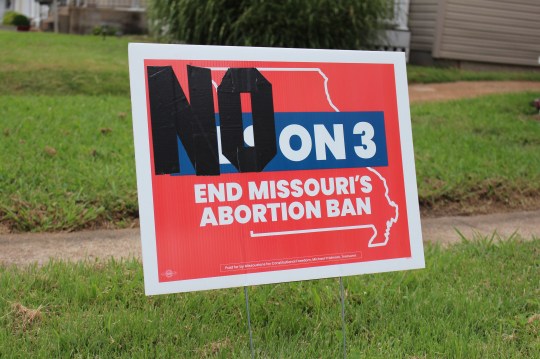
Since the Supreme Court’s Dobbs decision, overturning Roe v. Wade, voters in 17 states have weighed in on ballot measures regarding abortion — some more than once. In November 2026, voters in Idaho, Missouri, Nevada, and Virginia will weigh in on abortion measures that could change the legal status of abortion in their state. In addition, a measure in Colorado is in the process of collecting signatures.
CONTRACEPTIve care IN THE U.S.

SELECTED RESOURCES

Over-the-Counter Oral Contraceptive Pills

In July 2023, the FDA approved Opill, the first daily oral contraceptive pill to become available over the counter (OTC) without a doctor’s prescription. This issue brief provides an overview of OTC oral contraceptives and laws and policies related to insurance coverage.

featured

A promotional image for the the KFF Health Policy 101 Issues in Women’s Health chapter

Health Policy Issues in Women’s Health

Examine the core health coverage and access issues —shaped by federal and state policies—that affect women’s health today, including health coverage and costs, reproductive health services, maternal health, mental health, and intimate partner violence.

State Profiles for Women’s Health

Explore the latest national and state-specific data and policies on women’s health. Topics include health status, insurance and Medicaid coverage, use of preventive services, sexual health, maternal and infant health, and abortion policies. Many indicators provide state-level information for women of different racial and ethnic groups.

The essentials
  • Women’s Health Insurance Coverage

    This factsheet reviews major sources of coverage for women residing in the U.S., discusses the ACA's impact on coverage, and the coverage challenges that many women continue to face.
  • Medicaid Coverage for Women

    This data note presents key data points describing the current state of the Medicaid program as it affects women, including eligibility, reproductive health, chronic conditions, and more.
  • Dobbs: What are the Implications for Racial Disparities?

    This analysis examines the implications of the Dobbs decision and state restrictions on abortion coverage for racial disparities in access to care and health outcomes.
  • State Health Facts: Women's Health Indicators

    Information on women’s health status, utilization of services, health insurance coverage, family planning and childbirth, and abortion statistics and policies.
  • Key Facts on Abortion in the United States

    This report answers some key questions about abortion in the United States and presents data collected before the overturn of Roe v. Wade.

Stay informed.

Stay informed.

Filter

161-170 of 880 results

  • The Sunsetting of the Federal Planned Parenthood Medicaid Ban Shifts Decisions to States  

    Quick Insights

    “[Indiana, Oklahoma, and Nebraska] are the only states that took additional state-level action to exclude Planned Parenthood from Medicaid during the year the federal ban has been in effect. With the expiration of the national ban on Planned Parenthood Medicaid reimbursement and the Medina decision clearing the way for states to exclude Planned Parenthood from Medicaid, other states may follow suit.”

  • Out-of-Pocket Costs for Long-Acting Reversible Contraception Among Individuals Enrolled in Employer Sponsored Insurance Plans

    Perspective

    In this analysis, published in the journal Contraception, KFF’s Linda Li, Brittni Frederiksen, and Alina Salganicoff look at intrauterine device (IUD) and contraceptive implant insertion-related costs among privately insured individuals to better understand why patients are experiencing unexpected expenses for what should be fully covered contraceptive services under the ACA.

  • The Impact of Medicaid and Title X on Planned Parenthood

    Issue Brief

    This KFF analysis demonstrates the impact the exclusion of Planned Parenthood from Medicaid and the Title X funding freeze may have on low-income and uninsured individuals who get their family planning care at Planned Parenthood.

  • An Update on Medicaid, Title X and Planned Parenthood

    Issue Brief

    This brief provides an update on Planned Parenthood closures and participation in the Title X program in the midst of substantial policy changes leading to decreased funding for Planned Parenthood including the One Big Beautiful Bill Act and the withholding of federal Title X funding to Planned Parenthood clinics.

  • Key Facts: Women and HIV/AIDS

    Report

    Women comprise a growing share of new cases of AIDS in the United States. In 1986, women only represented 7% of new cases of AIDS. By 1999 that share had risen to nearly one quarter. Not only do women represent an increasing share of persons with AIDS, today they represent 30 percent of new HIV infections. Women of color, particularly African Americans, have been hardest hit among women. This report provides an overview of the…

  • Will Insurance Cover Over-the-Counter Contraceptive Pills? A Discussion of Coverage Options and Challenges

    Event Date:
    Event

    The U.S. Food and Drug Administration recently approved Opill—the first over-the-counter daily oral contraceptive pill in the United States. Beginning in early 2024, people will be able to purchase Opill without a prescription, expanding options for contraceptive access across the country. On September 15, 2023, a panel of experts joined Laurie Sobel, associate director for KFF’s Women’s Health Policy program, to explore approaches to covering over-the-counter oral contraception without a prescription. The panel discussed lessons…