Public Opinion

Caregivers in the U.S.

Experiences of Unpaid Caregivers in the U.S.

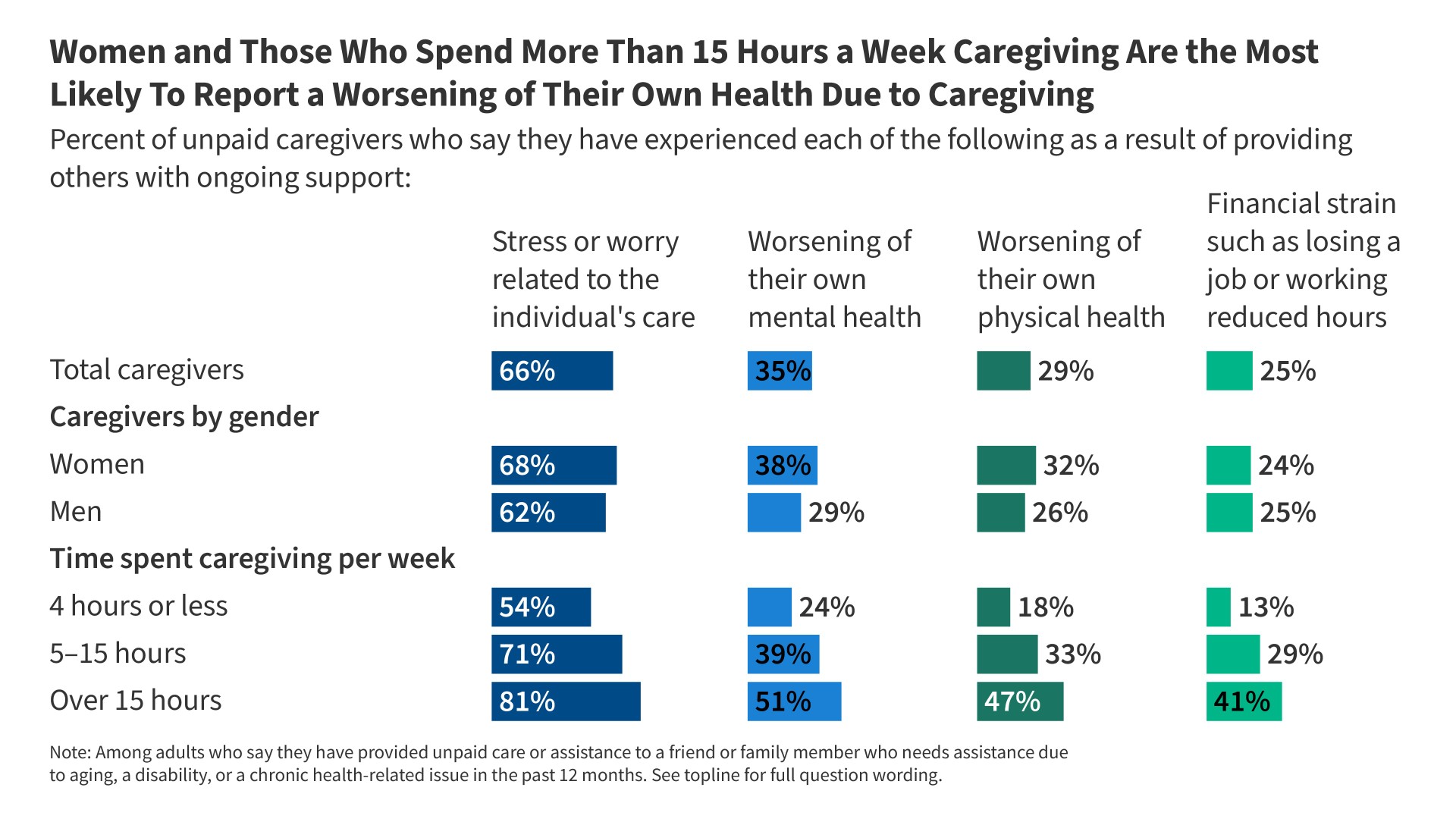
About 3 in 10 adults in the U.S. say they have provided unpaid care to a friend or family member who needs assistance due to aging, disability, or a chronic condition in the past 12 months. The median amount of time that such caregivers provide unpaid assistance is five hours per week, though the number of hours varies widely. Unpaid caregivers are disproportionately women. Read the news release.

HeaLTH in the Midterms

Health Care in the 2026 Midterm Election

This dashboard focuses on KFF’s analysis of the role health care costs and other health policy issues played in voters’ decisions in the 2026 midterm elections, including in key Senate races. It examines the role of rising health costs on voters’ decisions, views on the Trump administration’s health care policies, and opinions on the government’s role in health care amid discussions of Medicare for All.

Abortion on the Ballot in 2026: Polling Insights from Voters in Four States

This dashboard provides KFF’s analysis of the role abortion played in voters’ decisions in the 2026 midterm elections, with a focus on four states with abortion-related ballot measures: Idaho, Missouri, Nevada, and Virginia. It examines support for each of the measures across groups, including additional questions in Missouri.

What Do the Midterm Election Results Mean for Health Care? 

Event Date:

On November 5 at Noon ET, join KFF for a special post-election discussion and live “What the Health” podcast taping. Part of the discussion will focus on public opinion survey data on how voters weighed health care as they went to the polls nationally and in the four states with abortion-related ballot initiatives. 

Midterm Voters Give Democrats a Big Advantage to Handle Health Care

Quick Insights

KFF’s analysis of the 2026 Voter Poll by SSRS shows midterm voters gave Democrats a 19-percentage-point advantage on which party is better able to handle health care. Voters also gave Democrats a narrow edge on handling the economy (43% vs. 37%), a reversal from 2024, when Trump had a 10-point advantage over Harris. "In an election focused on affordability, Democrats’ messaging on health care costs appears to have resonated with voters and may have contributed to the party’s gains."

Health Information and Trust

About Half of Parents Mistakenly Believe Spacing Out Vaccines Is Healthier for Children; Half Say No Strong Evidence to Support Such a Claim

KFF Tracking Poll on Health Information and Trust: Fall 2026 Update on Vaccine Views

The latest KFF Tracking Poll on Health Information and Trust finds about half of parents mistakenly believe spacing out vaccines is healthier for children, while confidence in many long-standing childhood vaccines is high across partisans. These findings take on new relevance following President Trump’s recent executive order calling for changes in U.S. childhood vaccine recommendations, including splitting the measles, mumps, and rubella (MMR) vaccine—currently given as a single combined shot—into three separate vaccines across multiple visits.

Dashboard: Polling on Health Information and Trust

Drawing on KFF’s poll findings, this interactive dashboard tracks the public’s trusted sources for health information, attitudes toward vaccines, and use of news, social media, and AI for health-related information.

Health Tracking PollS

Democrats Hold a Nearly 2-to-1 Advantage Over Republicans on Handling the Cost of Health Care

Health Care Issues in the Lead-Up to the 2026 Midterm Election 

In the lead up to the midterms, health care costs remained tied with gas as voters’ top midterm concerns. Two-thirds of U.S. adults also favored Medicare-for-all, a new high in KFF Polling, but support shifts when competing claims from critics and proponents are heard.

Most Democratic Voters Want To Hear Candidates Discuss Health Costs and Future of Health Programs; More Republicans Focused on Fraud

Public Views on Fraud in Health Programs

As the 2026 midterms approach, health care costs remain voters’ top health priority, but fraud in government health programs, including Medicaid and Medicare, is resonating with Republican voters, 55% of whom say it’s extremely important for candidates to address.

Mifepristone and the Midterms

Amid an ongoing FDA re-review of mifepristone, awareness of the safety and prevalence of the abortion pill remains limited. This KFF poll also finds that the voters who say abortion policy is an important issue for 2026 midterm candidates to discuss are disproportionately Democrats.

MAHA and the Midterms

This KFF Health Tracking Poll finds that the cost of health care is a more prominent focus for Make America Healthy Again (MAHA) voters than issues like food and vaccine policy. Four in ten MAHA voters (42%) choose lowering health costs as the most important health priority, outranking other MAHA priorities.

the essentials

Health Tracking Poll

Our signature survey project provides up-to-date data on the public’s health care views, knowledge, and experiences.

Tracking the Public’s Views on the ACA

Tracking the Public’s Views on the ACA

This interactive tool tracks public opinion on the Affordable Care Act, from the inception of the law to the present, including trends based on party identification, income, age, gender, and race/ethnicity.

Health Information and Trust Tracking Poll

The Health Information and Trust Tracking Poll is part of KFF’s Health Information and Trust Initiative, which tracks health misinformation and analyzes its impact on the public.

Stay informed.

Stay informed.

Filter

601-610 of 1,871 results

  • Who Gets Unexpected Medical Bills?

    Feature

    Source Kaiser Health Tracking Poll – Late Summer 2018: The Election, Pre-Existing Conditions, and Surprises on Medical Bills

  • Kaiser Health Tracking Poll – Late Summer 2018: The Election, Pre-Existing Conditions, and Surprises on Medical Bills

    Feature

    The latest Kaiser Health Tracking Poll continues to find pre-existing conditions as a widespread concern with most Americans saying it is very important that the Affordable Care Act’s (ACA) protections for people with pre-existing conditions remain law. With health care costs continuing to be a major topic in the 2018 campaigns, the poll looks at the public’s experiences with unexpected medical bills and finds that this tops a list of possible problems people could face.…

  • Poll: The ACA’s Pre-Existing Condition Protections Remain Popular with the Public, including Republicans, As Legal Challenge Looms This Week

    News Release

    Public Not Confident in President Trump’s Calls on Drug Companies to Lower Prices As a federal court considers a challenge to the Affordable Care Act’s constitutionality, the public, including most Republicans, wants protections for people with pre-existing conditions preserved, the latest Kaiser Family Foundation tracking poll finds. Large majorities of Americans say it is “very important” to retain the ACA provisions that prevent insurance companies from denying coverage based on a person’s medical history (75%)…

  • KFF/Economist Survey: One in Five Americans Report Always or Often Feeling Lonely or Socially Isolated, Frequently With Physical, Mental, and Financial Consequences

    News Release

    One in five Americans (22%) say they always or often feel lonely or socially isolated, frequently with serious consequences, finds a new Kaiser Family Foundation/Economist three-country survey examining loneliness and social isolation. Americans who feel lonely or socially isolated often report negative impacts on their mental (58%) and physical (55%) health, their personal relationships (49%) and ability to do their job (33%). Some also say it has led them to think about harming themselves (31%) or committing…

  • New Chart Collection Examines the Public’s Malleable Views Around a National Health Plan and Expanding Access to Medicare

    News Release

    For many years, the Kaiser Family Foundation has been tracking public opinion on the idea of national health plan. Since the 2016 Democratic presidential primary and Sen. Bernie Sanders’ rallying cry for “Medicare-for-all,” our polls have shown a modest increase in support for the idea of a national health plan, and broad support for proposals that expand Medicare. At the same time, our polls also show that support can quickly erode when people hear further…

  • Loneliness and Social Isolation in the United States, the United Kingdom, and Japan: An International Survey

    Report

    To understand more about how people view the issue of loneliness and social isolation, the Kaiser Family Foundation, in partnership with The Economist, conducted a cross-country survey of adults in the United States, the United Kingdom, and Japan. The survey included additional interviews with individuals who report always or often feeling lonely, left out, isolated or that they lack companionship to better understand the personal characteristics and life circumstances associated with these feelings, the reported…

  • One Year After the Storm: Texas Gulf Coast Residents’ Views and Experiences with Hurricane Harvey Recovery

    Report

    The Kaiser Family Foundation/Episcopal Health Foundation Harvey Anniversary Survey examines the views, experiences, and long-term recovery needs of vulnerable Gulf Coast Texans who were affected by Hurricane Harvey. This survey – a follow-up to a survey conducted by the partners 3 months after the storm – measures residents’ challenges with housing, financial assistance, health care, and mental health, as well as views on priorities and preparedness moving forward. It finds many challenges are especially salient…

  • Survey: One Year after Hurricane Harvey, 3 in 10 Affected Texas Gulf Coast Residents Say Their Lives Remain Disrupted

    News Release

    Nearly a year after Hurricane Harvey swamped the Texas Gulf Coast, a growing share of affected residents say their lives are back on track, but three in 10 (30%) say their lives remain disrupted, finds a new Kaiser Family Foundation/Episcopal Health Foundation survey of residents in 24 hard-hit Texas counties. Overall the new survey finds 70 percent of affected residents say their lives are largely or almost back to normal, up from 56 percent three…

  • Four in 10 Women Voters Age 18-44 Are “More Enthusiastic” to Vote in Mid-Terms This Year, Almost Three Times Higher than the Last Mid-Term

    News Release

    With the 2018 primary election season concluding in August and the general congressional mid-term election season ramping up, Kaiser Family Foundation polling finds younger women (ages 18-44) voters are more enthusiastic about voting this year than in previous mid-term elections. In a new data note about KFF’s June Health Tracking Poll that is focused on women voters’ influence in this year’s elections and beyond, the 39 percent of younger women voters expressing “more enthusiasm” is…

  • Data Note: How Women Voters Could Influence the 2018 Elections and Beyond

    Feature

    This analysis on the recent June 2018 Kaiser Health Tracking Poll examines the public’s attitudes, with a focus on views of women ages 18-44, toward several key women’s issues including workplace protections, reproductive health, and the #MeToo Movement – as well as the role that these issues may play in the 2018 midterm elections.