Public Opinion

Health Information and Trust

Dashboard: Polling on Health Information and Trust

Drawing on KFF’s poll findings, this interactive dashboard tracks the public’s trusted sources for health information, attitudes toward vaccines, and use of news, social media, and AI for health-related information.

THE MIDTERMS

Most Democratic Voters Want To Hear Candidates Discuss Health Costs and Future of Health Programs; More Republicans Focused on Fraud

KFF Health Tracking Poll: Public Views on Fraud in Government Health Programs

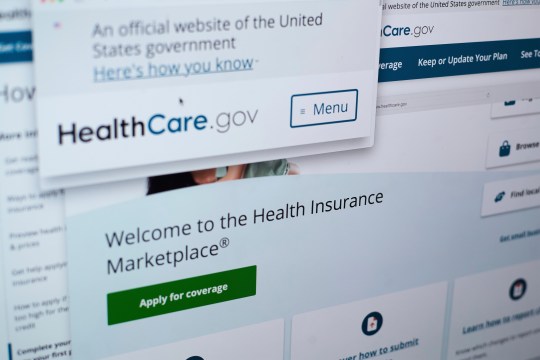
As the 2026 midterms approach, health care costs remain voters’ top health priority, but fraud in government health programs, including Medicaid and Medicare, is resonating with Republican voters, 55% of whom say it’s extremely important for candidates to address. Most voters say there is at least “some” fraud in government health programs, but larger shares say there is fraud in the tax system, defense, and foreign aid, while the smallest share sees fraud in the ACA Marketplaces.

Recent Polls

KFF Health Tracking Poll: Mifepristone and the Midterms

Amid an ongoing FDA re-review of mifepristone, awareness of the safety and prevalence of the abortion pill remains limited. This KFF poll also finds that the voters who say abortion policy is an important issue for 2026 midterm candidates to discuss are disproportionately Democrats.

Ebola Response and Pandemic Preparedness

Much of the public has yet to form an opinion on the U.S. government’s response to the Ebola outbreak in the Democratic Republic of the Congo, this poll finds. Four in ten adults say the U.S. is less prepared for a pandemic now than it was in 2020.

KFF/New York Times Survey of Immigrants

KFF-New York Times Survey: Immigrants Report Rising Fear, Negative Economic and Health Impacts, and Changing Political Views During the First Year of President Trump’s Second Term

The 2025 Survey of Immigrants, a partnership between KFF and The New York Times, takes an in-depth look at the experiences of immigrants during the first year of President Trump’s second term, including their worries related to increased immigration enforcement, their health and economic wellbeing, and the political views and preferences of immigrant voters. The survey paints a portrait of families under strain — where fear of detention and economic instability are negatively impacting immigrants’ health and reshaping immigrant families’ daily lives and views of U.S. political parties.

Read the News Release | Explore The New York Times’ Reporting

the essentials

Health Tracking Poll

Our signature survey project provides up-to-date data on the public’s health care views, knowledge, and experiences.

Tracking the Public’s Views on the ACA

Tracking the Public’s Views on the ACA

This interactive tool tracks public opinion on the Affordable Care Act, from the inception of the law to the present, including trends based on party identification, income, age, gender, and race/ethnicity.

Health Information and Trust Tracking Poll

The Health Information and Trust Tracking Poll is part of KFF’s Health Information and Trust Initiative, which tracks health misinformation and analyzes its impact on the public.

Polls in Health Policy

This chapter of our digital “textbook” explores why surveys are essential for understanding health policy issues. 

Stay informed.

Stay informed.

Filter

1,601 - 1,610 of 1,854 Results

  • The Wide Circle of Caregiving

    Poll Finding

    The Kaiser Family Foundation helped conduct a national survey of over 1,000 informal caregivers in 1998 to assess the policy issues involved with this new, growing role for many family members and friends. Nearly one of every four adults (23 percent) is an informal caregiver, and, as the American population ages, it is likely families will take on an even greater responsibility to keep their loved ones at home and in communities. The Foundation is…

  • Survey Snapshot: The Impact of TV’s Health Content: A Case Study of ER Viewers

    Poll Finding

    Survey Snapshot: The Impact of TV's Health Content: A Case Study of ER Viewers Working with a writer/producer of the NBC drama, ER, to get advance information about upcoming episodes, researchers at the Kaiser Family Foundation conducted 10 separate national random-sample telephone surveys of regular viewers to determine the impact of entertainment media as an information source on health and health policy. Survey Snapshot

  • Health News Index – May/June 2002

    Poll Finding

    Health News Index May/June, 2002 The Health News Index measures public attention to and knowledge about leading health stories covered in the news in April and May, including discussions in Congress about a Medicare prescription drug benefit and warnings by medical researchers about possible harmful side effects of newer prescription drugs compared to older, similarly effective drugs. The Health News Index is designed to help news media and people in the health field gain a…

  • Survey on Health Care

    Other Post

    NPR/Kaiser Family Foundation/Harvard Kennedy School of Government Survey on Health Care A survey by NPR, the Kaiser Family Foundation, and Harvard s Kennedy School of Government finds that many Americans have real problems when it comes to accessing and paying for health care, and even if they haven't yet faced a problem, many worry about getting and paying for care in the future. The survey also shows that, while people think helping seniors with the…

  • New NPR/Kaiser Family Foundation/Harvard Kennedy School of Government Survey on Health Care

    Poll Finding

    A new survey by NPR, the Kaiser Family Foundation, and Harvard s Kennedy School of Government finds that many Americans have real problems when it comes to accessing and paying for health care, and even if they haven't yet faced a problem, many worry about getting and paying for care in the future. The survey also shows that, while people think helping seniors with the cost of prescription drugs should be a priority, most seniors…

  • NPR/Kaiser Family Foundation/Harvard Kennedy School of Government Survey on Health Care – Chart Pack

    Poll Finding

    New NPR/Kaiser Family Foundation/Harvard Kennedy School of Government Survey on Health Care A new survey by NPR, the Kaiser Family Foundation, and Harvard s Kennedy School of Government finds that many Americans have real problems when it comes to accessing and paying for health care, and even if they haven't yet faced a problem, many worry about getting and paying for care in the future. The survey also shows that, while people think helping seniors…

  • NPR/Kaiser Family Foundation/Harvard Kennedy School of Government Survey on Health Care – Summary of Findings

    Poll Finding

    New NPR/Kaiser Family Foundation/Harvard Kennedy School of Government Survey on Health Care A new survey by NPR, the Kaiser Family Foundation, and Harvard s Kennedy School of Government finds that many Americans have real problems when it comes to accessing and paying for health care, and even if they haven't yet faced a problem, many worry about getting and paying for care in the future. The survey also shows that, while people think helping seniors…

  • National Survey of Physicians

    Poll Finding

    The Kaiser Family Foundation's biennial , conducted from March 26 through October 11, 2001, is based on a nationally representative random sample of 2,608 physicians whose major professional activity is direct patient care. The survey was released in four parts. ToplinePart I: Doctors on Disparities in Medical CarePart II: Doctors and Prescription DrugsPart III: Doctors on Their ProfessionPart IV: Doctors, Payors, and Low-Income Patients

  • National Survey of Physicians Part IV: Doctors, Payors, and Low-Income Patients

    Poll Finding

    As part of the Kaiser Family Foundation's National Survey of Physicians, this portion of the survey examines differences in provider payment rates from different payors, such as Medicaid, Medicare, and private insurers, and explores providers experiences with these different payors and with providing treatment for uninsured and low-income patients. Highlights and Chart Pack

  • National Survey of Physicians Part III: Doctors on Their Profession

    Poll Finding

      As part of the Kaiser Family Foundation's biennial National Survey of Physicians, the Foundation examined doctors views of their profession. The survey found that most physicians say the overall morale of physicians has decreased in the last five years. The majority of doctors say that managed care has negatively affected the way they practice medicine and doctors are more likely now than they were in 1999 to view managed care negatively. Doctors do believe…