Public Opinion

Caregivers in the U.S.

Experiences of Unpaid Caregivers in the U.S.

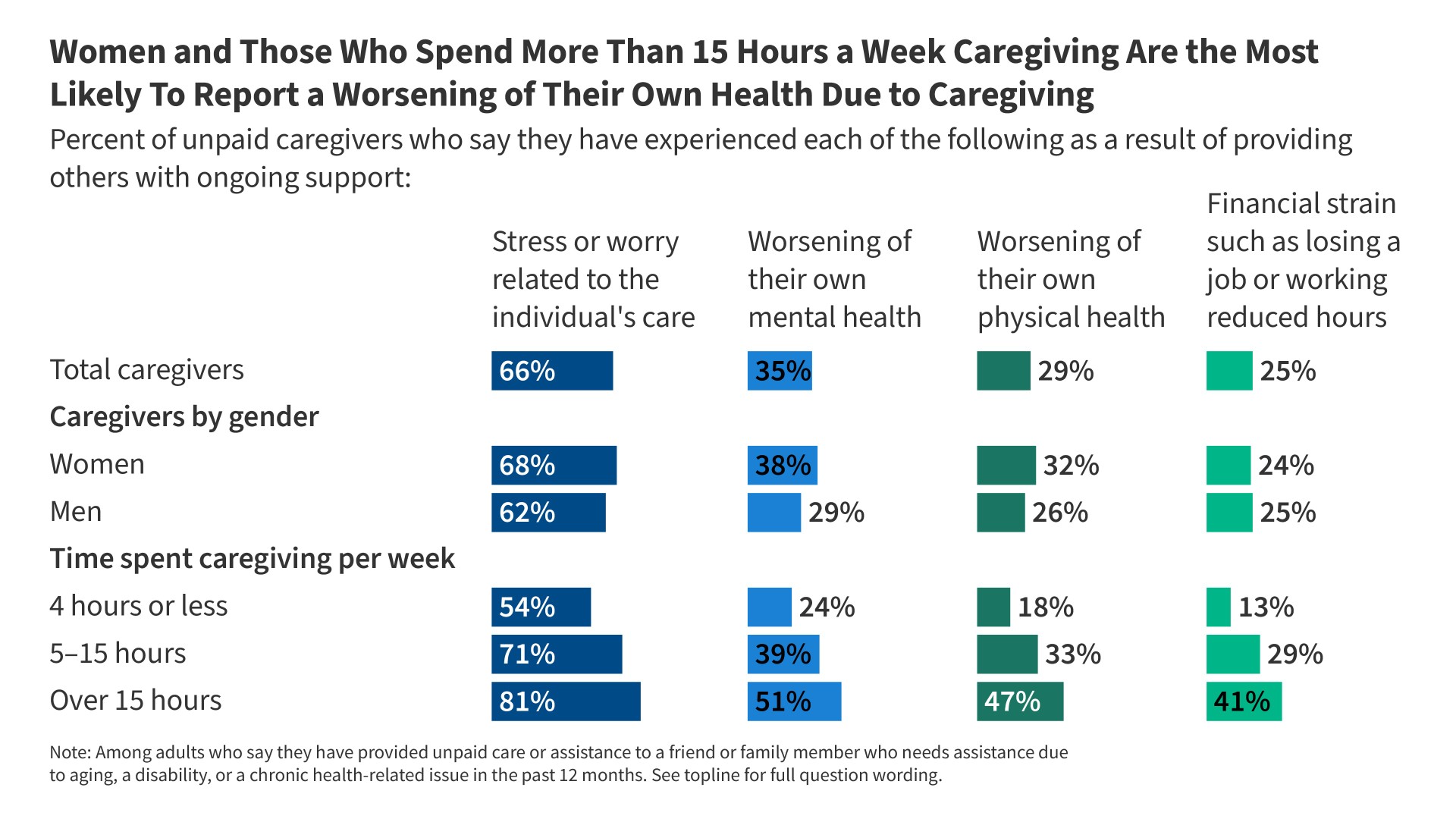
About 3 in 10 adults in the U.S. say they have provided unpaid care to a friend or family member who needs assistance due to aging, disability, or a chronic condition in the past 12 months. The median amount of time that such caregivers provide unpaid assistance is five hours per week, though the number of hours varies widely. Unpaid caregivers are disproportionately women. Read the news release.

HeaLTH in the Midterms

Health Care in the 2026 Midterm Election

This dashboard focuses on KFF’s analysis of the role health care costs and other health policy issues played in voters’ decisions in the 2026 midterm elections, including in key Senate races. It examines the role of rising health costs on voters’ decisions, views on the Trump administration’s health care policies, and opinions on the government’s role in health care amid discussions of Medicare for All.

Abortion on the Ballot in 2026: Polling Insights from Voters in Four States

This dashboard provides KFF’s analysis of the role abortion played in voters’ decisions in the 2026 midterm elections, with a focus on four states with abortion-related ballot measures: Idaho, Missouri, Nevada, and Virginia. It examines support for each of the measures across groups, including additional questions in Missouri.

What Do the Midterm Election Results Mean for Health Care? 

Event Date:

On November 5 at Noon ET, join KFF for a special post-election discussion and live “What the Health” podcast taping. Part of the discussion will focus on public opinion survey data on how voters weighed health care as they went to the polls nationally and in the four states with abortion-related ballot initiatives. 

Midterm Voters Give Democrats a Big Advantage to Handle Health Care

Quick Insights

KFF’s analysis of the 2026 Voter Poll by SSRS shows midterm voters gave Democrats a 19-percentage-point advantage on which party is better able to handle health care. Voters also gave Democrats a narrow edge on handling the economy (43% vs. 37%), a reversal from 2024, when Trump had a 10-point advantage over Harris. "In an election focused on affordability, Democrats’ messaging on health care costs appears to have resonated with voters and may have contributed to the party’s gains."

Health Information and Trust

About Half of Parents Mistakenly Believe Spacing Out Vaccines Is Healthier for Children; Half Say No Strong Evidence to Support Such a Claim

KFF Tracking Poll on Health Information and Trust: Fall 2026 Update on Vaccine Views

The latest KFF Tracking Poll on Health Information and Trust finds about half of parents mistakenly believe spacing out vaccines is healthier for children, while confidence in many long-standing childhood vaccines is high across partisans. These findings take on new relevance following President Trump’s recent executive order calling for changes in U.S. childhood vaccine recommendations, including splitting the measles, mumps, and rubella (MMR) vaccine—currently given as a single combined shot—into three separate vaccines across multiple visits.

Dashboard: Polling on Health Information and Trust

Drawing on KFF’s poll findings, this interactive dashboard tracks the public’s trusted sources for health information, attitudes toward vaccines, and use of news, social media, and AI for health-related information.

Health Tracking PollS

Democrats Hold a Nearly 2-to-1 Advantage Over Republicans on Handling the Cost of Health Care

Health Care Issues in the Lead-Up to the 2026 Midterm Election 

In the lead up to the midterms, health care costs remained tied with gas as voters’ top midterm concerns. Two-thirds of U.S. adults also favored Medicare-for-all, a new high in KFF Polling, but support shifts when competing claims from critics and proponents are heard.

Most Democratic Voters Want To Hear Candidates Discuss Health Costs and Future of Health Programs; More Republicans Focused on Fraud

Public Views on Fraud in Health Programs

As the 2026 midterms approach, health care costs remain voters’ top health priority, but fraud in government health programs, including Medicaid and Medicare, is resonating with Republican voters, 55% of whom say it’s extremely important for candidates to address.

Mifepristone and the Midterms

Amid an ongoing FDA re-review of mifepristone, awareness of the safety and prevalence of the abortion pill remains limited. This KFF poll also finds that the voters who say abortion policy is an important issue for 2026 midterm candidates to discuss are disproportionately Democrats.

MAHA and the Midterms

This KFF Health Tracking Poll finds that the cost of health care is a more prominent focus for Make America Healthy Again (MAHA) voters than issues like food and vaccine policy. Four in ten MAHA voters (42%) choose lowering health costs as the most important health priority, outranking other MAHA priorities.

the essentials

Health Tracking Poll

Our signature survey project provides up-to-date data on the public’s health care views, knowledge, and experiences.

Tracking the Public’s Views on the ACA

Tracking the Public’s Views on the ACA

This interactive tool tracks public opinion on the Affordable Care Act, from the inception of the law to the present, including trends based on party identification, income, age, gender, and race/ethnicity.

Health Information and Trust Tracking Poll

The Health Information and Trust Tracking Poll is part of KFF’s Health Information and Trust Initiative, which tracks health misinformation and analyzes its impact on the public.

Stay informed.

Stay informed.

Filter

1,491-1,500 of 1,871 results

  • 2003 Health Insurance Survey – Toplines

    Poll Finding

    The 2003 Kaiser Family Foundation Health Insurance Survey examines the public's level of satisfaction with their insurance coverage, their expectations of health insurance, the role of costs and other factors in health insurance decision-making, and attitudes toward employer-sponsored coverage. It also explores people's opinions about several alternative health insurance plans that are currently under consideration and explores how they might respond to these new options. Survey Toplines (.pdf)

  • 2003 Health Insurance Survey

    Poll Finding

    The 2003 Kaiser Family Foundation Health Insurance Survey examines the public's level of satisfaction with their insurance coverage, their expectations of health insurance, the role of costs and other factors in health insurance decision-making, and attitudes toward employer-sponsored coverage. It also explores people's opinions about several alternative health insurance plans that are currently under consideration and explores how they might respond to these new options. Summary and Chartpack Toplines

  • Assessing Public Education Programming on HIV/AIDS: A National Survey of African Americans — Toplines

    Poll Finding

    A new national survey of African Americans reviews aspects of the Rap It Up and KNOW HIV/AIDS campaigns, which are ongoing HIV/AIDS public education partnerships conducted by the Kaiser Family Foundation with Black Entertainment Television (BET) and Viacom, Inc., respectively. The survey seeks to look at the reach and impact of the campaigns. Rap It Up is the single largest public education effort on HIV/AIDS and related issues directed toward the African American community. Toplines…

  • Assessing Public Education Programming on HIV/AIDS: A National Survey of African Americans- Survey

    Poll Finding

    Assessing Public Education Programming on HIV/AIDS: A National Survey of African Americans A new national survey of African Americans reviews aspects of the Rap It Up and KNOW HIV/AIDS campaigns, which are ongoing HIV/AIDS public education partnerships conducted by the Kaiser Family Foundation with Black Entertainment Television (BET) and Viacom, Inc., respectively. The survey seeks to look at the reach and impact of the campaigns. Rap It Up is the single largest public education effort…

  • Survey of African Americans About HIV/AIDS Media Campaigns

    Poll Finding

    A new national survey of African Americans reviews aspects of the Rap It Up and KNOW HIV/AIDS campaigns, which are ongoing HIV/AIDS public education partnerships conducted by the Kaiser Family Foundation with Black Entertainment Television (BET) and Viacom, Inc., respectively. The survey seeks to look at the reach and impact of the campaigns. Rap It Up is the single largest public education effort on HIV/AIDS and related issues directed toward the African American community. Assessing…

  • Views of the New Medicare Drug Law – Chartpack on People with Disabilities

    Report

    This comprehensive survey of people on Medicare, conducted in June and July 2004, assesses their attitudes toward the new Medicare drug law. This chartpack, issued in September 2004, presents additional analysis on the survey data, focusing on the views of people under age 65 with physical and/or mental disabilities. Supplemental Chartpack (.pdf)

  • Immigration in America – Summary

    Poll Finding

    A project by National Public Radio, the Kaiser Family Foundation, and Harvard University's Kennedy School of Government examines the public's views on immigration in America. The survey reviews native-born Americans' and immigrants' attitudes towards legal immigration; how immigration affects the American culture and economy; attitudes towards illegal immigration and government regulations; and how immigrants' views differ from those of non-immigrants. Summary (.pdf)

  • Immigration in America

    Poll Finding

    A project by National Public Radio, the Kaiser Family Foundation, and Harvard University's Kennedy School of Government examines the public's views on immigration in America. The survey reviews native-born Americans' and immigrants' attitudes towards legal immigration; how immigration affects the American culture and economy; attitudes towards illegal immigration and government regulations; and how immigrants' views differ from those of non-immigrants. Summary Toplines

  • Immigration in America – Toplines

    Poll Finding

    A project by National Public Radio, the Kaiser Family Foundation, and Harvard University's Kennedy School of Government examines the public's views on immigration in America. The survey reviews native-born Americans' and immigrants' attitudes towards legal immigration; how immigration affects the American culture and economy; attitudes towards illegal immigration and government regulations; and how immigrants' views differ from those of non-immigrants. Survey Toplines (.pdf)