Public Opinion

Caregivers in the U.S.

Experiences of Unpaid Caregivers in the U.S.

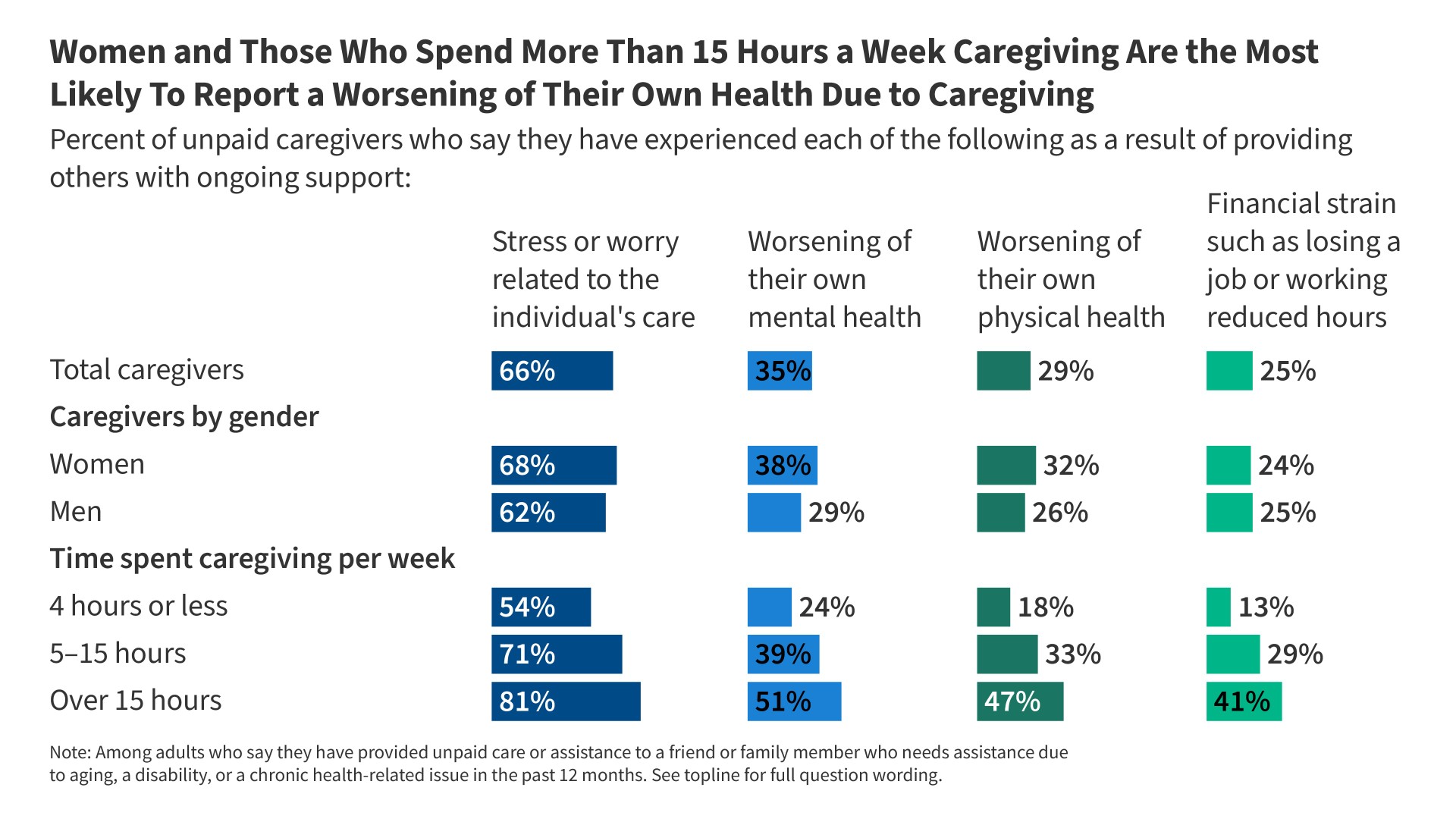
About 3 in 10 adults in the U.S. say they have provided unpaid care to a friend or family member who needs assistance due to aging, disability, or a chronic condition in the past 12 months. The median amount of time that such caregivers provide unpaid assistance is five hours per week, though the number of hours varies widely. Unpaid caregivers are disproportionately women. Read the news release.

HeaLTH in the Midterms

Health Care in the 2026 Midterm Election

This dashboard focuses on KFF’s analysis of the role health care costs and other health policy issues played in voters’ decisions in the 2026 midterm elections, including in key Senate races. It examines the role of rising health costs on voters’ decisions, views on the Trump administration’s health care policies, and opinions on the government’s role in health care amid discussions of Medicare for All.

Abortion on the Ballot in 2026: Polling Insights from Voters in Four States

This dashboard provides KFF’s analysis of the role abortion played in voters’ decisions in the 2026 midterm elections, with a focus on four states with abortion-related ballot measures: Idaho, Missouri, Nevada, and Virginia. It examines support for each of the measures across groups, including additional questions in Missouri.

What Do the Midterm Election Results Mean for Health Care? 

Event Date:

On November 5 at Noon ET, join KFF for a special post-election discussion and live “What the Health” podcast taping. Part of the discussion will focus on public opinion survey data on how voters weighed health care as they went to the polls nationally and in the four states with abortion-related ballot initiatives. 

Midterm Voters Give Democrats a Big Advantage to Handle Health Care

Quick Insights

KFF’s analysis of the 2026 Voter Poll by SSRS shows midterm voters gave Democrats a 19-percentage-point advantage on which party is better able to handle health care. Voters also gave Democrats a narrow edge on handling the economy (43% vs. 37%), a reversal from 2024, when Trump had a 10-point advantage over Harris. "In an election focused on affordability, Democrats’ messaging on health care costs appears to have resonated with voters and may have contributed to the party’s gains."

Health Information and Trust

About Half of Parents Mistakenly Believe Spacing Out Vaccines Is Healthier for Children; Half Say No Strong Evidence to Support Such a Claim

KFF Tracking Poll on Health Information and Trust: Fall 2026 Update on Vaccine Views

The latest KFF Tracking Poll on Health Information and Trust finds about half of parents mistakenly believe spacing out vaccines is healthier for children, while confidence in many long-standing childhood vaccines is high across partisans. These findings take on new relevance following President Trump’s recent executive order calling for changes in U.S. childhood vaccine recommendations, including splitting the measles, mumps, and rubella (MMR) vaccine—currently given as a single combined shot—into three separate vaccines across multiple visits.

Dashboard: Polling on Health Information and Trust

Drawing on KFF’s poll findings, this interactive dashboard tracks the public’s trusted sources for health information, attitudes toward vaccines, and use of news, social media, and AI for health-related information.

Health Tracking PollS

Democrats Hold a Nearly 2-to-1 Advantage Over Republicans on Handling the Cost of Health Care

Health Care Issues in the Lead-Up to the 2026 Midterm Election 

In the lead up to the midterms, health care costs remained tied with gas as voters’ top midterm concerns. Two-thirds of U.S. adults also favored Medicare-for-all, a new high in KFF Polling, but support shifts when competing claims from critics and proponents are heard.

Most Democratic Voters Want To Hear Candidates Discuss Health Costs and Future of Health Programs; More Republicans Focused on Fraud

Public Views on Fraud in Health Programs

As the 2026 midterms approach, health care costs remain voters’ top health priority, but fraud in government health programs, including Medicaid and Medicare, is resonating with Republican voters, 55% of whom say it’s extremely important for candidates to address.

Mifepristone and the Midterms

Amid an ongoing FDA re-review of mifepristone, awareness of the safety and prevalence of the abortion pill remains limited. This KFF poll also finds that the voters who say abortion policy is an important issue for 2026 midterm candidates to discuss are disproportionately Democrats.

MAHA and the Midterms

This KFF Health Tracking Poll finds that the cost of health care is a more prominent focus for Make America Healthy Again (MAHA) voters than issues like food and vaccine policy. Four in ten MAHA voters (42%) choose lowering health costs as the most important health priority, outranking other MAHA priorities.

the essentials

Health Tracking Poll

Our signature survey project provides up-to-date data on the public’s health care views, knowledge, and experiences.

Tracking the Public’s Views on the ACA

Tracking the Public’s Views on the ACA

This interactive tool tracks public opinion on the Affordable Care Act, from the inception of the law to the present, including trends based on party identification, income, age, gender, and race/ethnicity.

Health Information and Trust Tracking Poll

The Health Information and Trust Tracking Poll is part of KFF’s Health Information and Trust Initiative, which tracks health misinformation and analyzes its impact on the public.

Stay informed.

Stay informed.

Filter

141-150 of 1,871 results

  • Amid Growing Measles Outbreak, More Americans Are Encountering False Claims About the Measles Vaccine, and Many Aren’t Sure What to Believe

    News Release

    With health officials reporting 800 measles cases in multiple states already this year, most of the public – and most parents – report hearing at least one false claim about measles or the vaccine for it, and many of them aren’t sure what to believe, the latest KFF Tracking Poll on Health Information and Trust finds. The poll gauges whether the public has heard, and whether they believe, three false statements related to measles circulating…

  • KFF Tracking Poll on Health Information and Trust: The Public’s Views on Measles Outbreaks and Misinformation

    Feature

    This poll looks at awareness and concern over the outbreak of measles in the U.S. and finds that a growing share of adults is encountering false claims about the measles vaccines, but many are uncertain whether these claims are true or false. Parents who lean toward believing the false claims are less likely to say they keep their children up to date on routine vaccinations.

  • Fluoride Bans and Food Safety Doubts — The Monitor

    Feature

    This Monitor covers how fears about fluoride as a neurotoxin are impacting public health and how trust in food safety is eroding following the USDA's disbandment of two food safety panels. It also discusses approaches to addressing false information and the accuracy of AI chatbots compared to search engines.

  • Bird Flu Knowledge, Misleading Claims About Measles Prevention, and Health Content Restrictions — The Monitor

    Feature

    This volume features findings on beliefs about bird flu from KFF’s latest Tracking Poll on Health Information and Trust, as well as the false promotion of vitamin A as a preventative for measles. The Monitor also shares developments in content moderation on social media and how a study about mental health after gender-affirming care is misrepresented to make false claims about health care for transgender and non-binary people. Additionally, this volume explores when people prefer…

  • Poll: Most Republicans Do Not Trust CDC On Bird Flu

    News Release

    As bird flu continues to circulate among animals in the U.S. with some human cases, about six in 10 (58%) people overall have at least “a fair amount” of trust in the Centers for Disease Control and Prevention (CDC) to provide reliable information about bird flu, though only 21% have a “great deal of trust,” the latest KFF Tracking Poll on Health Information and Trust finds.As the White House withdraws the nomination of Dr. David Weldon to…

  • KFF Tracking Poll on Health Information and Trust: Bird Flu

    Feature

    As bird flu continues to spread among animals in the U.S., KFF's Tracking Poll on Health Information and Trust finds that the public is more concerned about its impact on food prices than potential health impacts. Trust in the CDC to provide information on bird flu is also divided along partisan lines, and a large share of the public is uncertain about public health agencies' recommendations for preventing infection.

  • KFF Health Tracking Poll February 2025: The Public’s Views on Potential Changes to Medicaid

    Feature

    Amid discussion of changes to the Medicaid program, most of the public say that Medicaid is important to their local communities. About two in ten favor cuts to Medicaid spending. Support for Medicaid cuts remain low even among typically conservative groups such as Republicans, Trump voters, and those living in rural communities. The poll also gauges the impact of arguments for and against Medicaid work requirements and reductions to federal spending on ACA expansion.