Public Opinion

Health Information and Trust

Dashboard: Polling on Health Information and Trust

Drawing on KFF’s poll findings, this interactive dashboard tracks the public’s trusted sources for health information, attitudes toward vaccines, and use of news, social media, and AI for health-related information.

THE MIDTERMS

Most Democratic Voters Want To Hear Candidates Discuss Health Costs and Future of Health Programs; More Republicans Focused on Fraud

KFF Health Tracking Poll: Public Views on Fraud in Government Health Programs

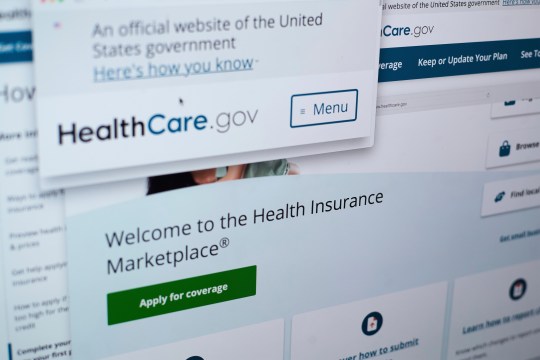
As the 2026 midterms approach, health care costs remain voters’ top health priority, but fraud in government health programs, including Medicaid and Medicare, is resonating with Republican voters, 55% of whom say it’s extremely important for candidates to address. Most voters say there is at least “some” fraud in government health programs, but larger shares say there is fraud in the tax system, defense, and foreign aid, while the smallest share sees fraud in the ACA Marketplaces.

Recent Polls

KFF Health Tracking Poll: Mifepristone and the Midterms

Amid an ongoing FDA re-review of mifepristone, awareness of the safety and prevalence of the abortion pill remains limited. This KFF poll also finds that the voters who say abortion policy is an important issue for 2026 midterm candidates to discuss are disproportionately Democrats.

Ebola Response and Pandemic Preparedness

Much of the public has yet to form an opinion on the U.S. government’s response to the Ebola outbreak in the Democratic Republic of the Congo, this poll finds. Four in ten adults say the U.S. is less prepared for a pandemic now than it was in 2020.

KFF/New York Times Survey of Immigrants

KFF-New York Times Survey: Immigrants Report Rising Fear, Negative Economic and Health Impacts, and Changing Political Views During the First Year of President Trump’s Second Term

The 2025 Survey of Immigrants, a partnership between KFF and The New York Times, takes an in-depth look at the experiences of immigrants during the first year of President Trump’s second term, including their worries related to increased immigration enforcement, their health and economic wellbeing, and the political views and preferences of immigrant voters. The survey paints a portrait of families under strain — where fear of detention and economic instability are negatively impacting immigrants’ health and reshaping immigrant families’ daily lives and views of U.S. political parties.

Read the News Release | Explore The New York Times’ Reporting

the essentials

Health Tracking Poll

Our signature survey project provides up-to-date data on the public’s health care views, knowledge, and experiences.

Tracking the Public’s Views on the ACA

Tracking the Public’s Views on the ACA

This interactive tool tracks public opinion on the Affordable Care Act, from the inception of the law to the present, including trends based on party identification, income, age, gender, and race/ethnicity.

Health Information and Trust Tracking Poll

The Health Information and Trust Tracking Poll is part of KFF’s Health Information and Trust Initiative, which tracks health misinformation and analyzes its impact on the public.

Polls in Health Policy

This chapter of our digital “textbook” explores why surveys are essential for understanding health policy issues. 

Stay informed.

Stay informed.

Filter

1,241 - 1,250 of 1,854 Results

  • Pulling It Together: America Has Gone Quiet on HIV/AIDS

    Other Post

    Kaiser has had a focus on HIV/AIDS since we remade the Foundation in the early nineties. It cuts across all of our program activities, from policy analysis, to our large scale media campaigns in the U.S. and around the world, to our web initiatives, to our public opinion research program. We have just completed a major survey of the American people on HIV/AIDS and global health. As new health priorities take shape in Washington, one…

  • Survey of AHCJ Members, March 2009

    Poll Finding

    A survey of members of the Association of Health Care Journalists about the future of health care journalism reports the tremendous turmoil and huge cutbacks that are roiling the news business have created increasingly challenging conditions with staff cutbacks, less time for reporting, fewer resources for training, and more pressure to produce short, quick-hit stories. But even in the face of these difficult circumstances, AHCJ members have a cautiously optimistic view of the direction in…

  • The Future of Health Care Journalism

    Event Date:
    Event

    A new report examining the state of health care journalism and a survey of the members of the Association of Health Care Journalists (AHCJ) were released at a Washington, D.C., discussion about the future of health care journalism. The survey and report detail how the financial pressures on the media industry and the fierce competition to break news on new and expanding platforms on the Internet are affecting the quality of health reporting. The difficulties…

  • The State of Health Journalism in the U.S., March 2009

    Report

    This report provides a snapshot of the current state of health journalism in the U.S. today. It is based on a literature review of more than 100 published pieces of research on health journalism; on a survey of members of the Association of Health Care Journalists (AHCJ), conducted by the Foundation and AHCJ; and on informal one-on-one interviews conducted by the author of this report with more than 50 journalists who work (or worked) for…

  • Pulling it Together: What Will Health Reform Do For Me?

    Perspective

    There is one poll number that may be more important to watch than any other if we have a big debate about health reform: The percentage of Americans who think that they or their families would be better off if the president and the Congress enacted major health reform legislation. It's a number that signals whether people think that health reform legislation will actually help them with the problems they are having in the current…

  • Kaiser Health Tracking Poll — February 2009

    Poll Finding

    The first Kaiser Health Tracking Poll of 2009 finds the public is increasingly worried about the affordability and availability of care, with many postponing or skipping treatments due to cost in the past year and a notable minority forced into serious financial straits due to medical bills. Slightly more than half (53%) of Americans say their household cut back on health care due to cost concerns in the past 12 months. The most common actions…

  • Key Findings: Kaiser Health Tracking Poll — February 2009

    Poll Finding

    This document contains the key findings from the February 2009 Kaiser Health Tracking Poll. The survey was conducted February 3 through February 12, 2009, among a nationally representative random sample of 1,204 adults ages 18 and older. Telephone interviews conducted by landline (903) and cell phone (301, including 123 who had no landline telephone) were carried out in English and Spanish. The margin of sampling error for the total sample is plus or minus 3…

  • Toplines: Kaiser Health Tracking Poll — February 2009

    Poll Finding

    This document contains the full toplines from the February 2009 Kaiser Health Tracking Poll. The survey was conducted February 3 through February 12, 2009, among a nationally representative random sample of 1,204 adults ages 18 and older. Telephone interviews conducted by landline (903) and cell phone (301, including 123 who had no landline telephone) were carried out in English and Spanish. The margin of sampling error for the total sample is plus or minus 3…

  • Chartpack: Kaiser Health Tracking Poll — February 2009

    Poll Finding

    This document contains findings presented in charts from the February 2009 Kaiser Health Tracking Poll. The survey was conducted February 3 through February 12, 2009, among a nationally representative random sample of 1,204 adults ages 18 and older. Telephone interviews conducted by landline (903) and cell phone (301, including 123 who had no landline telephone) were carried out in English and Spanish. The margin of sampling error for the total sample is plus or minus…

  • Next Steps in Covering Uninsured Children: Findings from the Kaiser Survey of Children’s Health Coverage

    Issue Brief

    This issue brief provides key findings from the Kaiser Survey of Children's Health Coverage, including that many low- and middle-income working families with an uninsured child do not have access to employer-sponsored health insurance. The telephone survey of parents that was conducted in 2007 to learn more about children’s access to coverage and care and the health care cost-related pressures facing their families. Issue Brief (.pdf)