Public Opinion

Caregivers in the U.S.

Experiences of Unpaid Caregivers in the U.S.

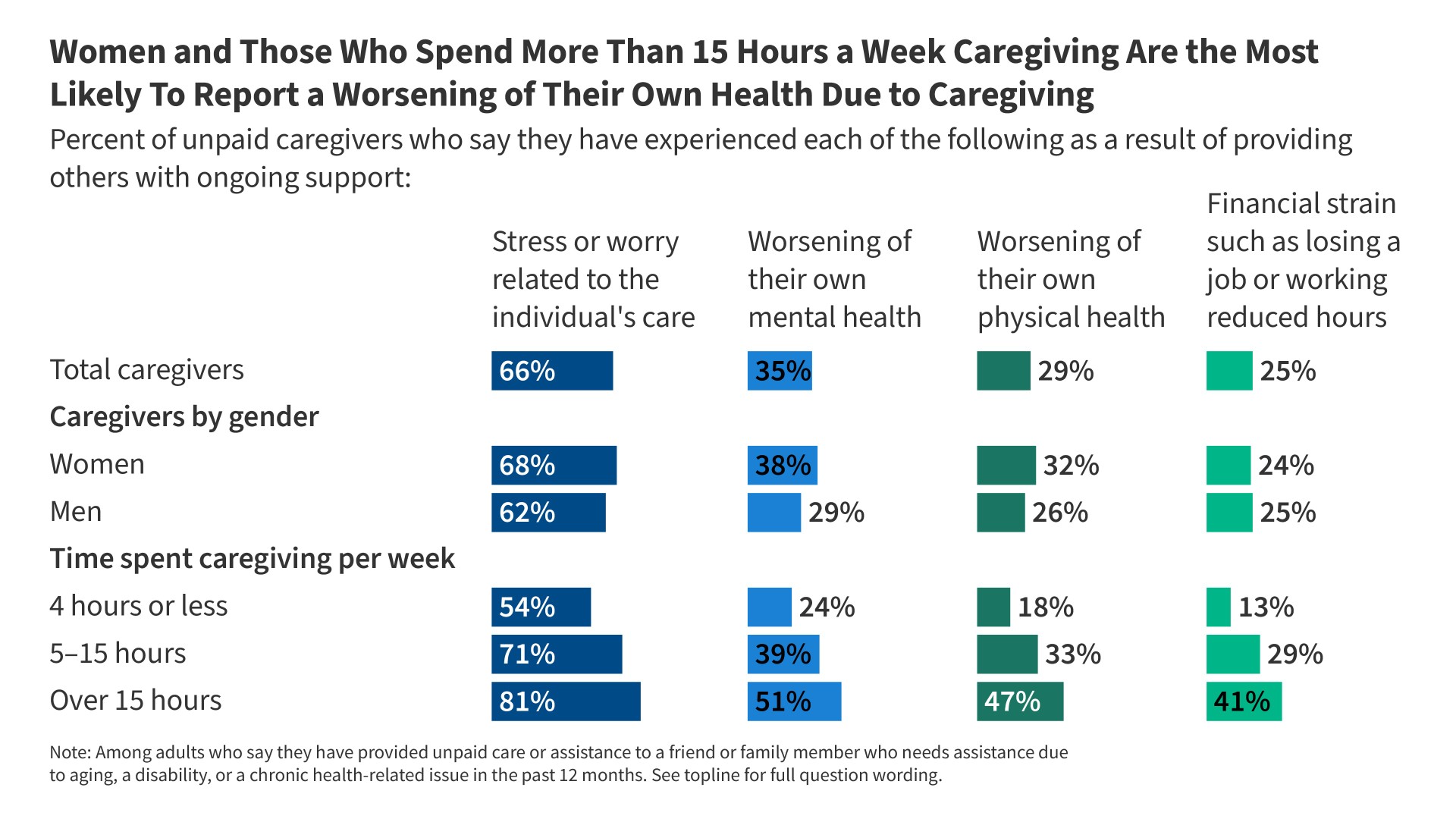
About 3 in 10 adults in the U.S. say they have provided unpaid care to a friend or family member who needs assistance due to aging, disability, or a chronic condition in the past 12 months. The median amount of time that such caregivers provide unpaid assistance is five hours per week, though the number of hours varies widely. Unpaid caregivers are disproportionately women. Read the news release.

HeaLTH in the Midterms

Health Care in the 2026 Midterm Election

This dashboard focuses on KFF’s analysis of the role health care costs and other health policy issues played in voters’ decisions in the 2026 midterm elections, including in key Senate races. It examines the role of rising health costs on voters’ decisions, views on the Trump administration’s health care policies, and opinions on the government’s role in health care amid discussions of Medicare for All.

Abortion on the Ballot in 2026: Polling Insights from Voters in Four States

This dashboard provides KFF’s analysis of the role abortion played in voters’ decisions in the 2026 midterm elections, with a focus on four states with abortion-related ballot measures: Idaho, Missouri, Nevada, and Virginia. It examines support for each of the measures across groups, including additional questions in Missouri.

What Do the Midterm Election Results Mean for Health Care? 

Event Date:

On November 5 at Noon ET, join KFF for a special post-election discussion and live “What the Health” podcast taping. Part of the discussion will focus on public opinion survey data on how voters weighed health care as they went to the polls nationally and in the four states with abortion-related ballot initiatives. 

Midterm Voters Give Democrats a Big Advantage to Handle Health Care

Quick Insights

KFF’s analysis of the 2026 Voter Poll by SSRS shows midterm voters gave Democrats a 19-percentage-point advantage on which party is better able to handle health care. Voters also gave Democrats a narrow edge on handling the economy (43% vs. 37%), a reversal from 2024, when Trump had a 10-point advantage over Harris. "In an election focused on affordability, Democrats’ messaging on health care costs appears to have resonated with voters and may have contributed to the party’s gains."

Health Information and Trust

About Half of Parents Mistakenly Believe Spacing Out Vaccines Is Healthier for Children; Half Say No Strong Evidence to Support Such a Claim

KFF Tracking Poll on Health Information and Trust: Fall 2026 Update on Vaccine Views

The latest KFF Tracking Poll on Health Information and Trust finds about half of parents mistakenly believe spacing out vaccines is healthier for children, while confidence in many long-standing childhood vaccines is high across partisans. These findings take on new relevance following President Trump’s recent executive order calling for changes in U.S. childhood vaccine recommendations, including splitting the measles, mumps, and rubella (MMR) vaccine—currently given as a single combined shot—into three separate vaccines across multiple visits.

Dashboard: Polling on Health Information and Trust

Drawing on KFF’s poll findings, this interactive dashboard tracks the public’s trusted sources for health information, attitudes toward vaccines, and use of news, social media, and AI for health-related information.

Health Tracking PollS

Democrats Hold a Nearly 2-to-1 Advantage Over Republicans on Handling the Cost of Health Care

Health Care Issues in the Lead-Up to the 2026 Midterm Election 

In the lead up to the midterms, health care costs remained tied with gas as voters’ top midterm concerns. Two-thirds of U.S. adults also favored Medicare-for-all, a new high in KFF Polling, but support shifts when competing claims from critics and proponents are heard.

Most Democratic Voters Want To Hear Candidates Discuss Health Costs and Future of Health Programs; More Republicans Focused on Fraud

Public Views on Fraud in Health Programs

As the 2026 midterms approach, health care costs remain voters’ top health priority, but fraud in government health programs, including Medicaid and Medicare, is resonating with Republican voters, 55% of whom say it’s extremely important for candidates to address.

Mifepristone and the Midterms

Amid an ongoing FDA re-review of mifepristone, awareness of the safety and prevalence of the abortion pill remains limited. This KFF poll also finds that the voters who say abortion policy is an important issue for 2026 midterm candidates to discuss are disproportionately Democrats.

MAHA and the Midterms

This KFF Health Tracking Poll finds that the cost of health care is a more prominent focus for Make America Healthy Again (MAHA) voters than issues like food and vaccine policy. Four in ten MAHA voters (42%) choose lowering health costs as the most important health priority, outranking other MAHA priorities.

the essentials

Health Tracking Poll

Our signature survey project provides up-to-date data on the public’s health care views, knowledge, and experiences.

Tracking the Public’s Views on the ACA

Tracking the Public’s Views on the ACA

This interactive tool tracks public opinion on the Affordable Care Act, from the inception of the law to the present, including trends based on party identification, income, age, gender, and race/ethnicity.

Health Information and Trust Tracking Poll

The Health Information and Trust Tracking Poll is part of KFF’s Health Information and Trust Initiative, which tracks health misinformation and analyzes its impact on the public.

Stay informed.

Stay informed.

Filter

1,061-1,070 of 1,871 results

  • Kaiser Poll Finds Bipartisan Support For Spending On Global Health

    News Release

    Public Believes Much Aid Is Lost To Corruption MENLO PARK, Calif. – Two-thirds of Americans say that the U.S. is spending too little or about the right amount on global health with one in five saying spending is too high, according to a new Kaiser Family Foundation survey on the public's views of global health issues. Americans overall are divided on whether or not more spending by the U.S. and other major donors would lead to meaningful progress in…

  • Pulling it Together: What We Know about Making the Case to the Public for Global Health

    From Drew Altman

    Former Senate Majority Leader Bill Frist, who is a member of our Board, recently published a column making the case very effectively for continued investments in global health.  Today we released our latest national survey on attitudes towards global health, which uncovered important nuances about the argument for foreign aid and global health. When it comes to helping other countries with health, younger people are much more likely to be supportive than older people.  Perhaps…

  • Kaiser Health Tracking Poll — May 2012

    Feature

    The May Health Tracking Poll focuses on the public's perceptions and reactions to women's reproductive health reemerging as a heated issue in policy debates and news and its potential impact on the upcoming presidential election. Three in ten women (31 percent) overall believe that there is currently a "wide-scale effort to limit women's reproductive health choices and services, such as abortion, family planning, and contraception" in the U.S. A larger share (45 percent) say there…

  • Public Opinion on Gender Rating

    Perspective

    With the Republican presidential primaries wrapping up, a barrage of new television commercials, radio ads, and fundraising emails has marked the start of the general election campaign. The Affordable Care Act (ACA) continues to be a mainstay election topic for candidates from both major parties. While Republicans focus on advocating repeal of the 2010 health care law, President Barack Obama and the Democratic Party have concentrated on the benefits of the law. And one lesser…

  • 2012 Survey of Americans on the U.S. Role in Global Health

    Report

    The 2012 Survey of Americans on the U.S. Role in Global Health is the fourth in a series that aims to examine the American public’s views, knowledge and opinions of U.S. efforts to improve health for people in developing countries.

  • April Kaiser Health Tracking Poll: Core Views on ACA Remain Stable After Oral Arguments

    Perspective

    The increased public attention to the Affordable Care Act (ACA) generated by the Supreme Court’s consideration of the law did not meaningfully change the public’s opinion of the law overall or of the specific provision at the heart of the legal case against it, the individual mandate. Forty-two percent say they have a favorable opinion of the law this month and 43 percent have an unfavorable one, a division virtually unchanged from March. Similarly, the…

  • Pulling It Together: The Falloff in Utilization: “There’s Something Happening, Here, What It Is Ain’t Exactly Clear”

    Perspective

    For as long as I have been in the field, we have seen cycles in health care costs. Per capita health spending would rise, then moderate, then rise gain. My colleague Larry Levitt and I documented this in The Sad History of Health Care Costs and my friend Dr. Jim Mongan called it “the peaks and valleys” of health care costs. We have never been sure whether the "valleys" were the result of government actions, such…

  • The Role of High-Income Seniors in Medicare Reforms: The Public’s Perspective

    Feature

    Medicare remains in the spotlight as policymakers and presidential candidates look for ways to rein in Medicare spending. One facet of the debate has centered on whether seniors with higher incomes should pay more for their coverage under Medicare. Based on data from the February 2012 Health Tracking Poll, this data note examines at what income level the public sees seniors as 'wealthy,' and finds that the answer has a lot to do with how…

  • Kaiser Health Tracking Poll — April 2012

    Feature

    The April poll gauged Americans' opinions of the Affordable Care Act (ACA) in the wake of the Supreme Court oral arguments in the legal challenges to the health reform law in March. The increased public attention to the Affordable Care Act generated by the Supreme Court's consideration of the law did not meaningfully change the public's opinion of the law overall or of the specific provision at the heart of critics' legal case against it,…

  • KFF Data Note: A Snapshot of Public Opinion on the Individual Mandate

    Perspective

    This week, the Supreme Court hears arguments on several challenges to the Patient Protection and Affordable Care Act (ACA), including the provision that requires individuals to purchase health insurance as of 2014, known as the individual mandate. For the two years since the law’s passage, and during the debate leading up to it, this provision has been one of the most controversial aspects of the law. As the lawyers, policymakers, ACA opponents and supporters focus…