Medicare

Medicare Open Enrollment

Part D Premiums and Cost Sharing in 2027

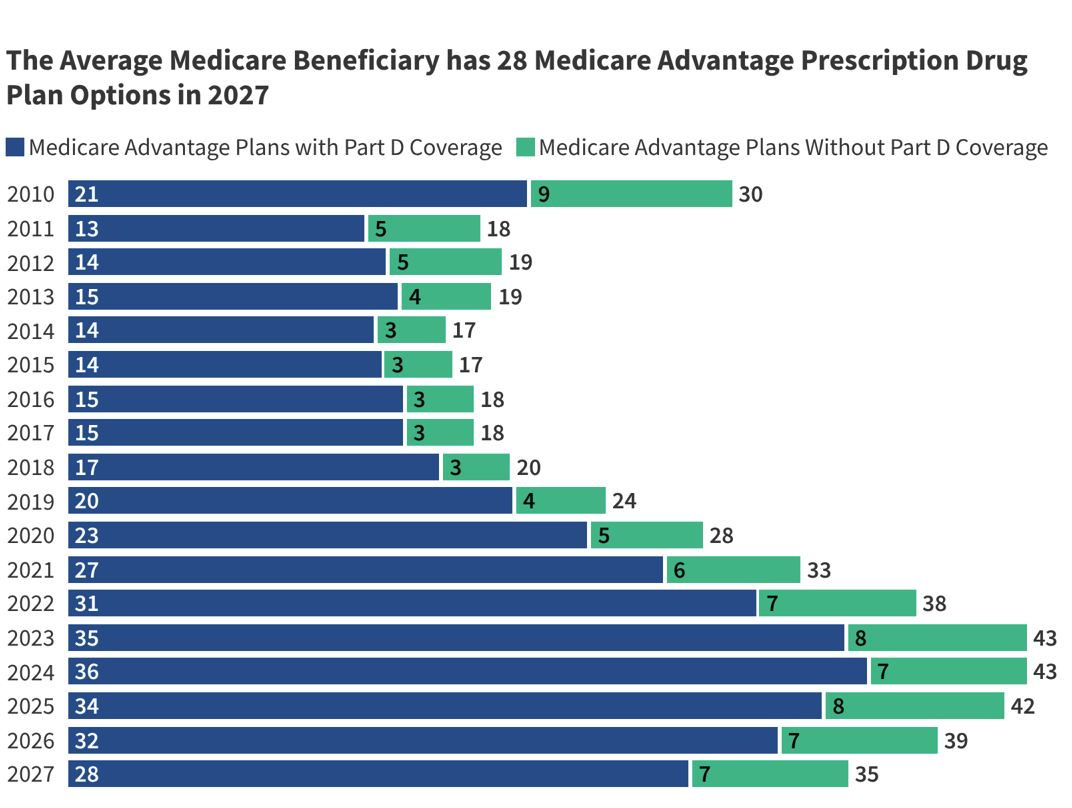
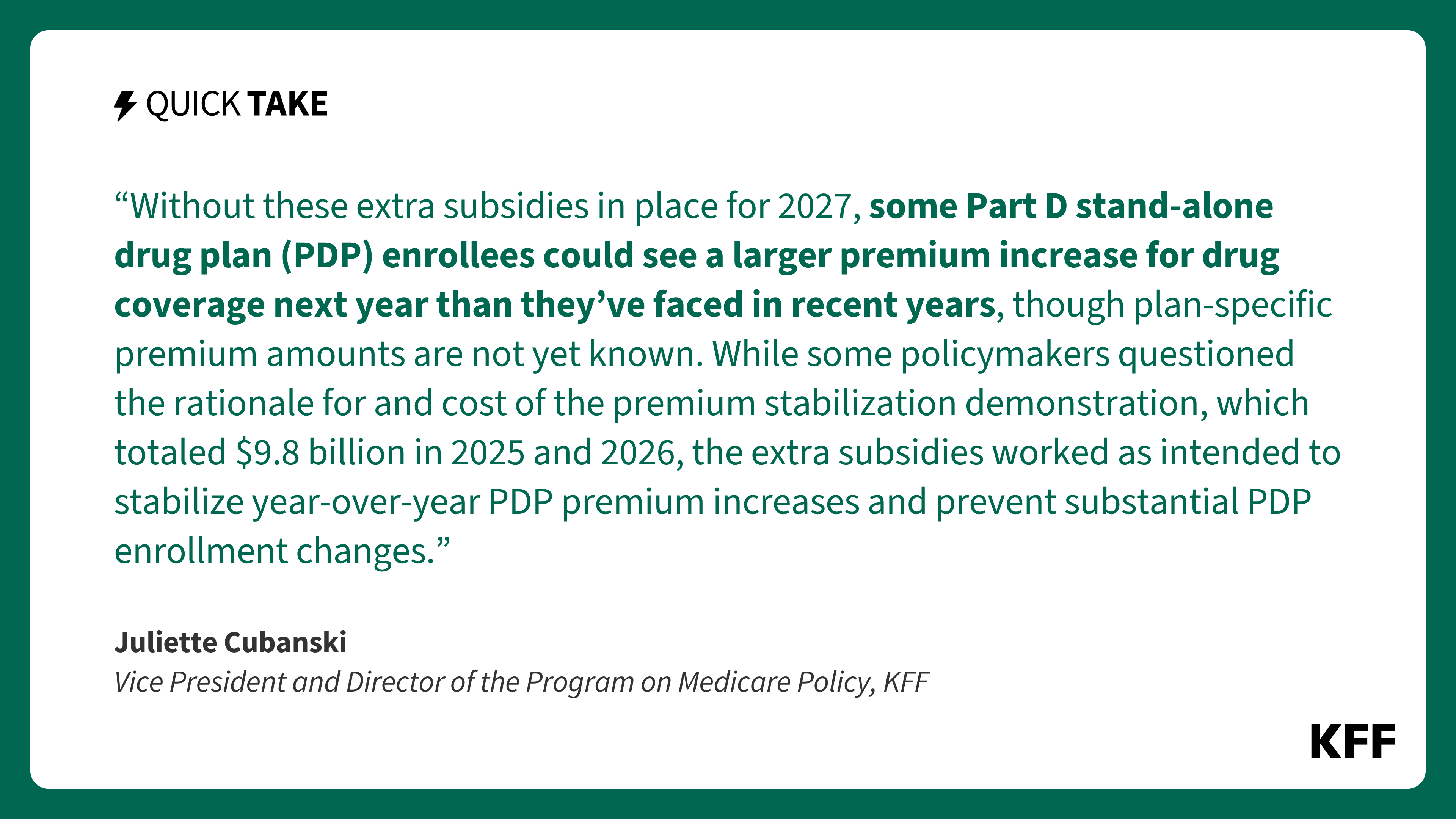
The average monthly premium for Medicare Part D coverage in stand-alone prescription drug plans (PDPs) will increase to $51 in 2027, up 50% from $34 in 2026, if current enrollees don’t switch into lower-premium plans during the open enrollment period. That is more than five times higher than the drug coverage premium in Medicare Advantage plans that offer Part D coverage, which is projected to average $9 per month in 2027. Most Part D enrollees also will face a deductible of several hundred dollars for drug coverage in 2027.
Also: Many Medicare Part D Stand-Alone Drug Plan Enrollees Will See Modest Premium Increases for 2027

Medicare Open Enrollment and Coverage Options: Key Questions and Answers

Each year, Medicare beneficiaries have an opportunity to make changes to how they receive their Medicare coverage during the nearly 8-week annual open enrollment period, which runs from October 15 through December 7. This brief answers key questions about the Medicare open enrollment period and Medicare coverage options.

NEW AND NOTEWORTHY

How Much Do People With Medicare Pay For Coverage?

This brief provides an overview of the costs faced by Medicare beneficiaries in traditional Medicare, Medicare Advantage, and Medicare Part D, including premiums, deductibles, copays, and coinsurance, focusing on costs in 2026.

What’s in a Name? From Today’s Medicare to Medicare for All

KFF’s Larry Levitt explains how proposals to create Medicare-for-All promise more generous benefits than the existing Medicare program, with no premiums or cost-sharing, but could end up looking more like Medicare if it became the subject of a serious national debate about the tradeoffs involved to implement it.

Medigap

Medigap Guaranteed Issue Requirements: An Overview of Federal and State Rules

This issue brief analyzes federal and state rules related to guaranteed issue requirements for Medigap policies and how they impact beneficiaries’ access to Medigap, including the implications for Medicare beneficiaries with pre-existing medical conditions and those under age 65 with long-term disabilities.

Data Visualization

The Facts About Medicare Spending

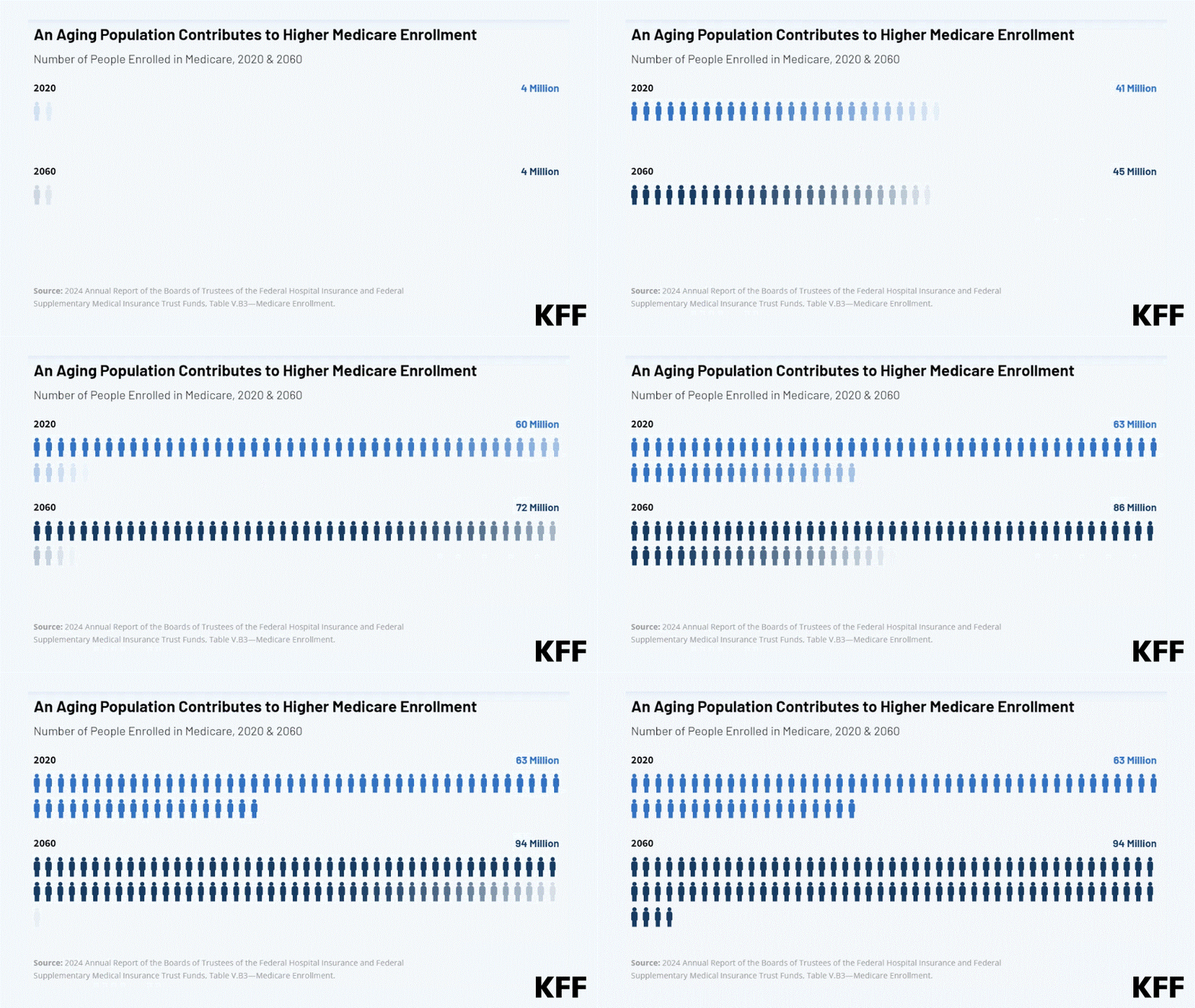
This interactive provides the facts on Medicare spending. Medicare, which serves 67 million people and accounts for 12 percent of the federal budget and 21 percent of national health spending, is often the focus of discussions about health expenditures, health care affordability and the sustainability of federal health programs. Explore data on enrollment growth, Medicare spending trends overall and per person, growth in Medicare spending relative to private insurance, spending on benefits and Medicare Advantage, Part A trust fund solvency challenges, and growth in out-of-pocket spending by beneficiaries.

Read More

Stay informed.

Stay informed.

Filter

731-740 of 1,627 results

  • Private Contracts Between Doctors and Medicare Patients: Key Questions and Implications of Proposed Policy Changes

    Issue Brief

    Changes in Medicare’s private contracting laws could have significant implications for beneficiaries, doctors, and the Medicare program. This brief summarizes the three options that physicians and practitioners currently have for charging Medicare patients, explains how private contracting works in Medicare under current law, and reviews current proposals on changes to private contracting in Medicare, as well as their implications for patients, physicians, and the Medicare program.

  • Turning the Spotlight on Medicare Advantage for 2017

    News Release

    Medicare Advantage plans, which consist primarily of HMOs and PPOs, now cover almost 18 million people – nearly one-third of all Medicare beneficiaries.  Medicare Advantage plans have been in the news lately because the proposed merger between Aetna and Humana, which together account for one-quarter of all Medicare Advantage enrollees, could further consolidate the Medicare Advantage market. A Kaiser Family Foundation analysis, featuring the latest publicly available data on the 2017 Medicare marketplace, examines new…

  • Medicare Advantage Plans in 2017: Short-term Outlook is Stable

    Issue Brief

    This issue brief analyzes the number and variety of Medicare Advantage plan choices available to beneficiaries in 2017. It describes trends in number of Medicare Advantage plans and plan quality ratings, and new information on plan premiums, out-of-pocket expense limits, and other plan features. This spotlight is part of a series of spotlights tracking key changes in the Medicare Advantage program.

  • What Might a Repeal of the Affordable Care Act Mean for Medicare?

    News Release

    As Republican policymakers consider how to repeal and replace the Affordable Care Act (ACA), they are likely to face a number of decisions about whether to retain any of the law’s changes to Medicare. Repealing the ACA has potential implications for Medicare spending, beneficiaries, and other stakeholders, according to a new Kaiser Family Foundation brief. A full repeal of the ACA would undo all of the law’s changes to Medicare and would increase Medicare spending,…

  • How the Republican Health Agenda Could Play Out

    From Drew Altman

    In this Wall Street Journal Think Tank column Drew Altman discusses how Republicans will assume ownership of health care’s policy and political problems as they assume control, and how that may affect their plans for the Affordable Care Act, Medicaid and Medicare.

  • Paying a Visit to the Doctor: Current Financial Protections for Medicare Patients When Receiving Physician Services

    Issue Brief

    This issue brief explains provisions in current law that shield beneficiaries from unexpected and confusing charges when they see physicians and practitioners—namely, the participating provider program, limitation on balance billing, and conditions on private contracting for doctors who opt out of Medicare or join “concierge” practices. It also analyzes the implications of modifying these provisions for beneficiaries, providers, and the Medicare program.

  • The Bigger Story, and Agenda, Behind GOP Changes to Obamacare, Medicare and Medicaid

    From Drew Altman

    This column was published as a Wall Street Journal Think Tank column on November 21, 2016. Early media coverage of the Republican health-care agenda has concentrated on plans to repeal and then replace the Affordable Care Act. The larger story is GOP preparations for a health policy trifecta: to fundamentally change the ACA, Medicaid and Medicare–all three of health care’s major programs–and in the process, fundamentally alter the direction of the federal role in health and core elements…

  • Payment and Delivery System Reform in Medicare: A Primer on Medical Homes, Accountable Care Organizations, and Bundled Payments

    Report

    This primer providers an overview of certain delivery system reform models that are being examined in traditional Medicare, and explains model goals, financial incentives, potential beneficiary implications, and results so far with respect to Medicare spending and care quality. The primer discusses accountable care organizations, medical homes and bundled payments.