Medicare

Medicare Open Enrollment

Part D Premiums and Cost Sharing in 2027

The average monthly premium for Medicare Part D coverage in stand-alone prescription drug plans (PDPs) will increase to $51 in 2027, up 50% from $34 in 2026, if current enrollees don’t switch into lower-premium plans during the open enrollment period. That is more than five times higher than the drug coverage premium in Medicare Advantage plans that offer Part D coverage, which is projected to average $9 per month in 2027. Most Part D enrollees also will face a deductible of several hundred dollars for drug coverage in 2027.
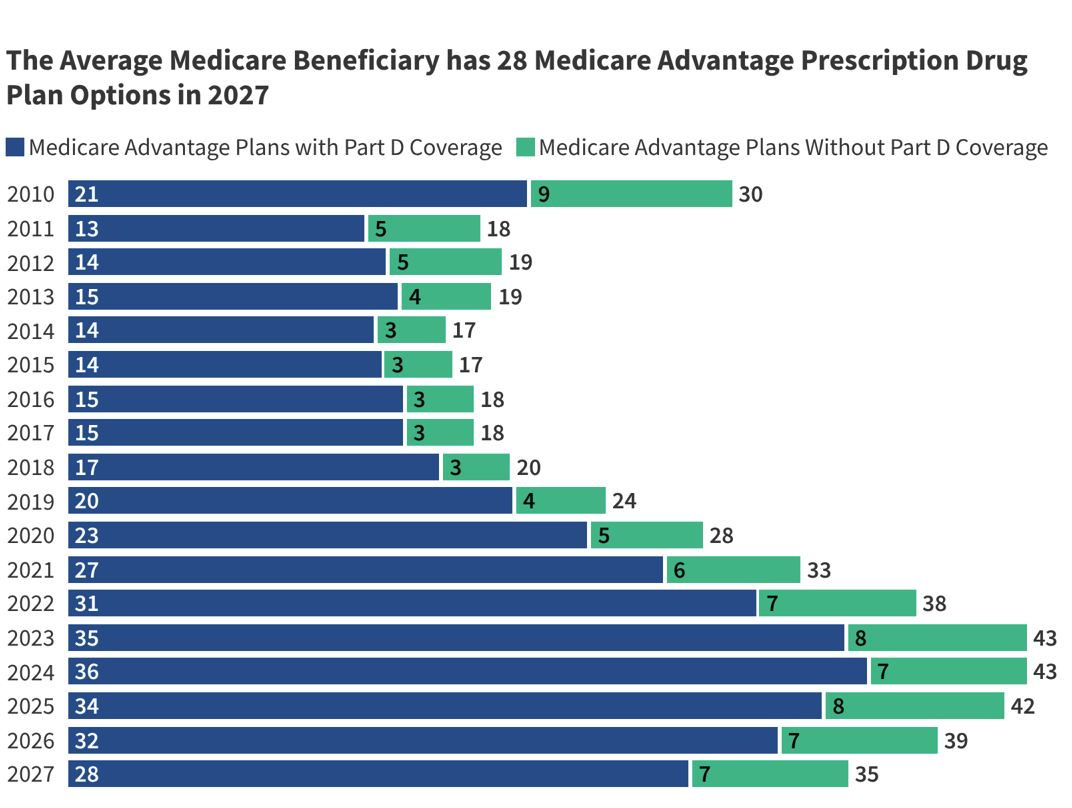
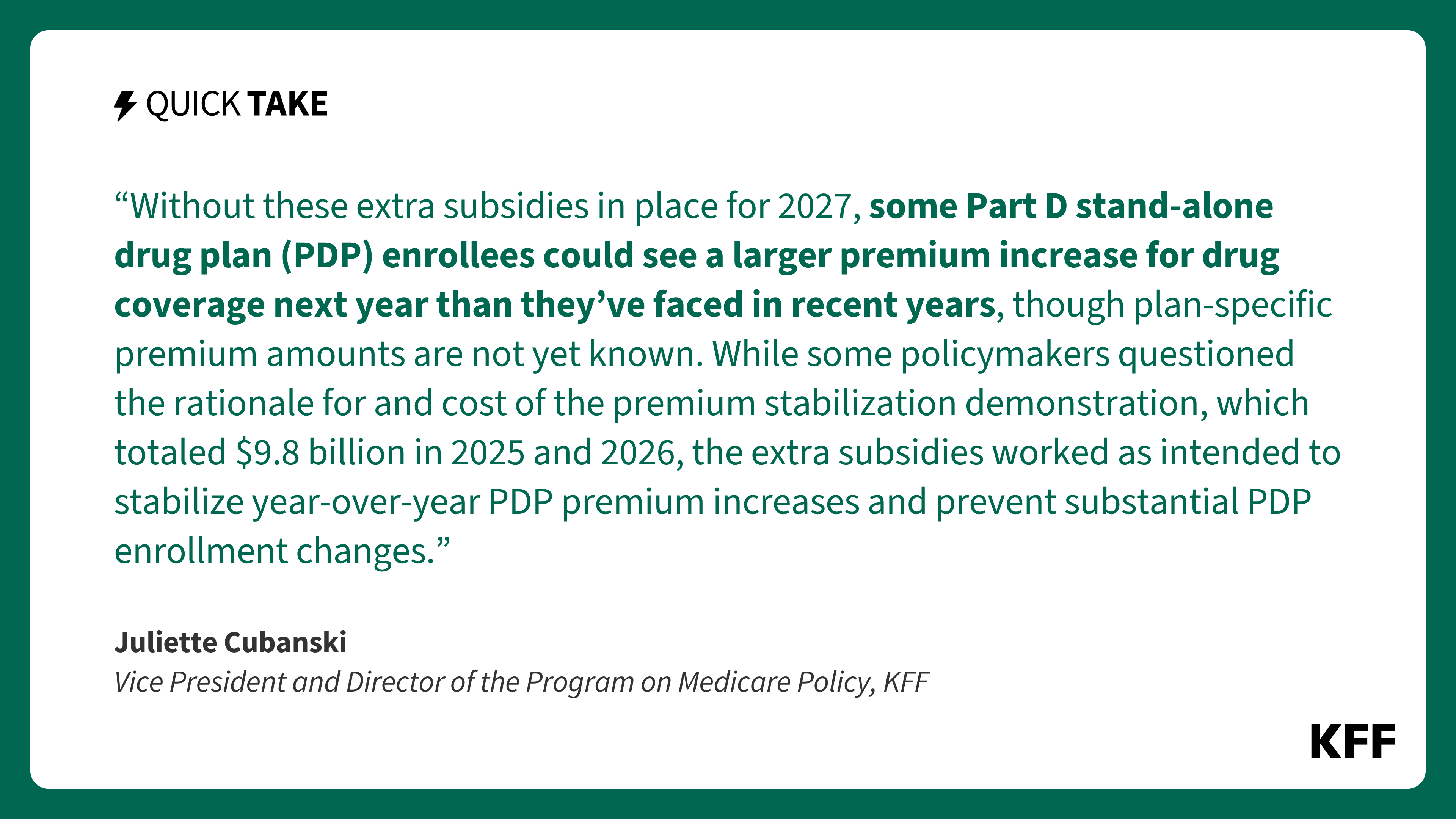
Also: Many Medicare Part D Stand-Alone Drug Plan Enrollees Will See Modest Premium Increases for 2027

Medicare Open Enrollment and Coverage Options: Key Questions and Answers

Each year, Medicare beneficiaries have an opportunity to make changes to how they receive their Medicare coverage during the nearly 8-week annual open enrollment period, which runs from October 15 through December 7. This brief answers key questions about the Medicare open enrollment period and Medicare coverage options.

NEW AND NOTEWORTHY

How Much Do People With Medicare Pay For Coverage?

This brief provides an overview of the costs faced by Medicare beneficiaries in traditional Medicare, Medicare Advantage, and Medicare Part D, including premiums, deductibles, copays, and coinsurance, focusing on costs in 2026.

What’s in a Name? From Today’s Medicare to Medicare for All

KFF’s Larry Levitt explains how proposals to create Medicare-for-All promise more generous benefits than the existing Medicare program, with no premiums or cost-sharing, but could end up looking more like Medicare if it became the subject of a serious national debate about the tradeoffs involved to implement it.

Medigap

Medigap Guaranteed Issue Requirements: An Overview of Federal and State Rules

This issue brief analyzes federal and state rules related to guaranteed issue requirements for Medigap policies and how they impact beneficiaries’ access to Medigap, including the implications for Medicare beneficiaries with pre-existing medical conditions and those under age 65 with long-term disabilities.

Data Visualization

The Facts About Medicare Spending

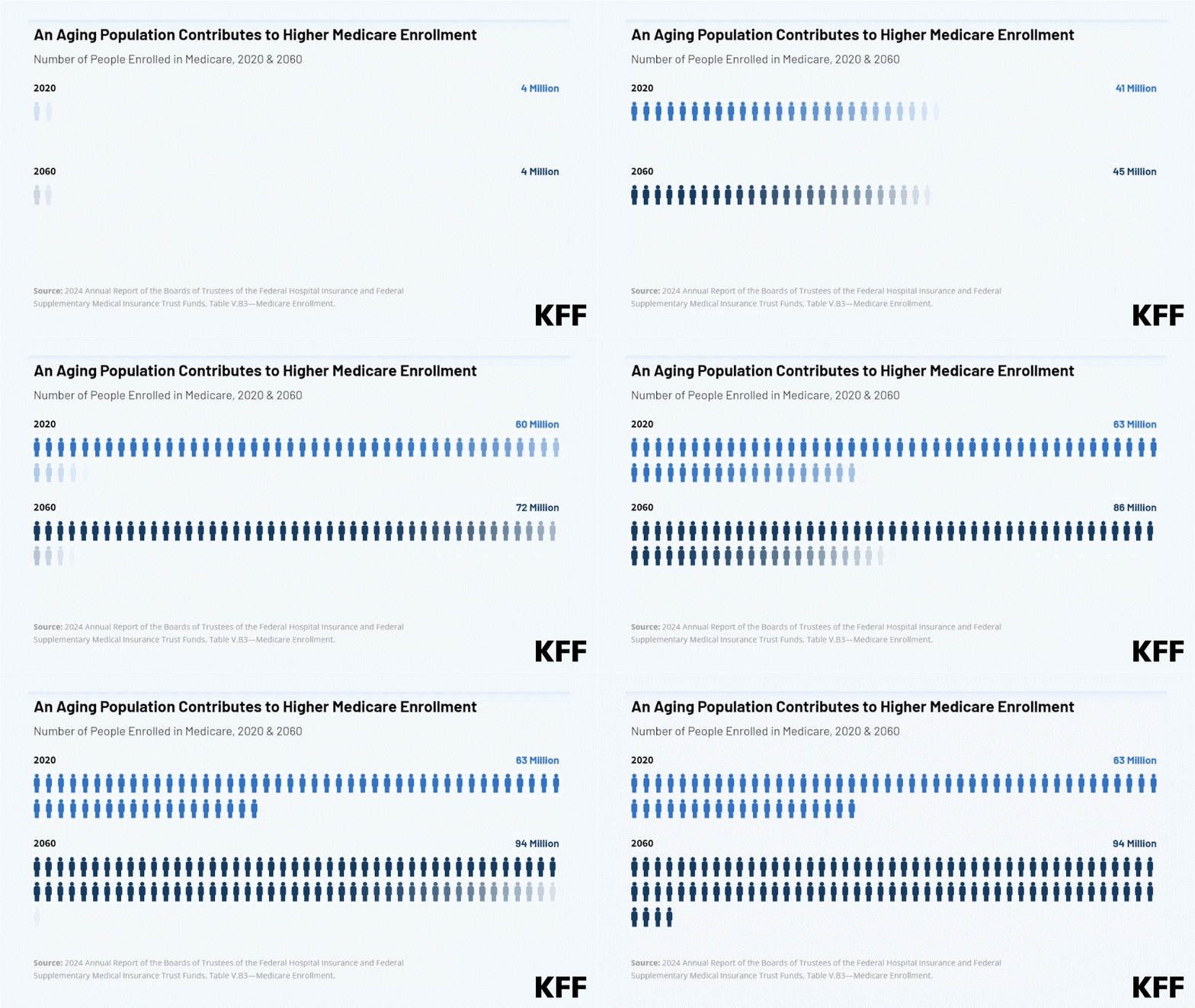
This interactive provides the facts on Medicare spending. Medicare, which serves 67 million people and accounts for 12 percent of the federal budget and 21 percent of national health spending, is often the focus of discussions about health expenditures, health care affordability and the sustainability of federal health programs. Explore data on enrollment growth, Medicare spending trends overall and per person, growth in Medicare spending relative to private insurance, spending on benefits and Medicare Advantage, Part A trust fund solvency challenges, and growth in out-of-pocket spending by beneficiaries.

Read More

Stay informed.

Stay informed.

Filter

581-590 of 1,627 results

  • Analysis Estimates Up To 2 Million Uninsured People Could Require COVID-19 Hospitalization

    News Release

    Patients Could Still Be on the Hook for Outpatient Costs, Costs If They Test Negative, and Cost Sharing A new KFF analysis estimates that between 670,000 and 2 million uninsured people around the country eventually could be hospitalized with COVID-19, the respiratory disease caused by the novel coronavirus. Reimbursing hospitals for those treatments could cost between $13.9 billion and $41.8 billion. Trump administration has indicated that it plans to reimburse hospitals for the care of…

  • Problems Getting Care Due to Cost or Paying Medical Bills Among Medicare Beneficiaries

    Issue Brief

    There is ongoing discussion as to whether Congress should waive COVID-19 treatment costs. To inform these discussions, this analysis examines the extent of health care cost-related problems among Medicare beneficiaries. The analysis is based on a composite measure of cost-related burdens that includes problems getting care due to cost, delays seeking care due to cost, and problems paying medical bills among people with Medicare.

  • Examining Medicare Part D Policies for Extended Supplies of Medication

    Issue Brief

    Medicare Part D plan sponsors, which provide drug coverage to 45 million older adults and people with disabilities, have the option to relax their ‘refill too soon’ restrictions in response to the COVID-19 pandemic, as part of efforts to ensure adequate access to medications in disasters or emergencies. This analysis examines the share of Part D enrollees who currently have access to extended supplies of generic, brand-name, and specialty-tier drugs covered by their plan in…

  • How Much Could Medicare Beneficiaries Pay For a Hospital Stay Related to COVID-19?

    Issue Brief

    As the coronavirus continues to spread, the number of people on Medicare admitted to the hospital for COVID-19 related illness is expected to rise. We analyze how much Medicare beneficiaries could pay out-of-pocket for an inpatient hospital admission under traditional Medicare (assuming no supplemental coverage) or Medicare Advantage plans.

  • Questions about Prescription Drug Importation? KFF Has Answers

    News Release

    With lowering prescription drug costs a top priority for Americans, the Trump Administration, presidential candidates, members of Congress, and several states are proposing to allow the importation of drugs from abroad, chiefly Canada. The idea of allowing drugs to be imported from Canada and other countries is popular with Americans across the political spectrum, but has yet to be implemented due to concerns about safety, and strong opposition from the drug industry. A new KFF…