Medicare

NEW AND NOTEWORTHY

Decoding Medicare Advantage Coding Intensity

Federal payments to Medicare Advantage plans, and adjustments for health status, have come under increased scrutiny. This brief answers key questions about coding intensity, recent steps taken by CMS, the effects on beneficiaries, and other proposals to improve payment accuracy.

Data Visualization

The Facts About Medicare Spending

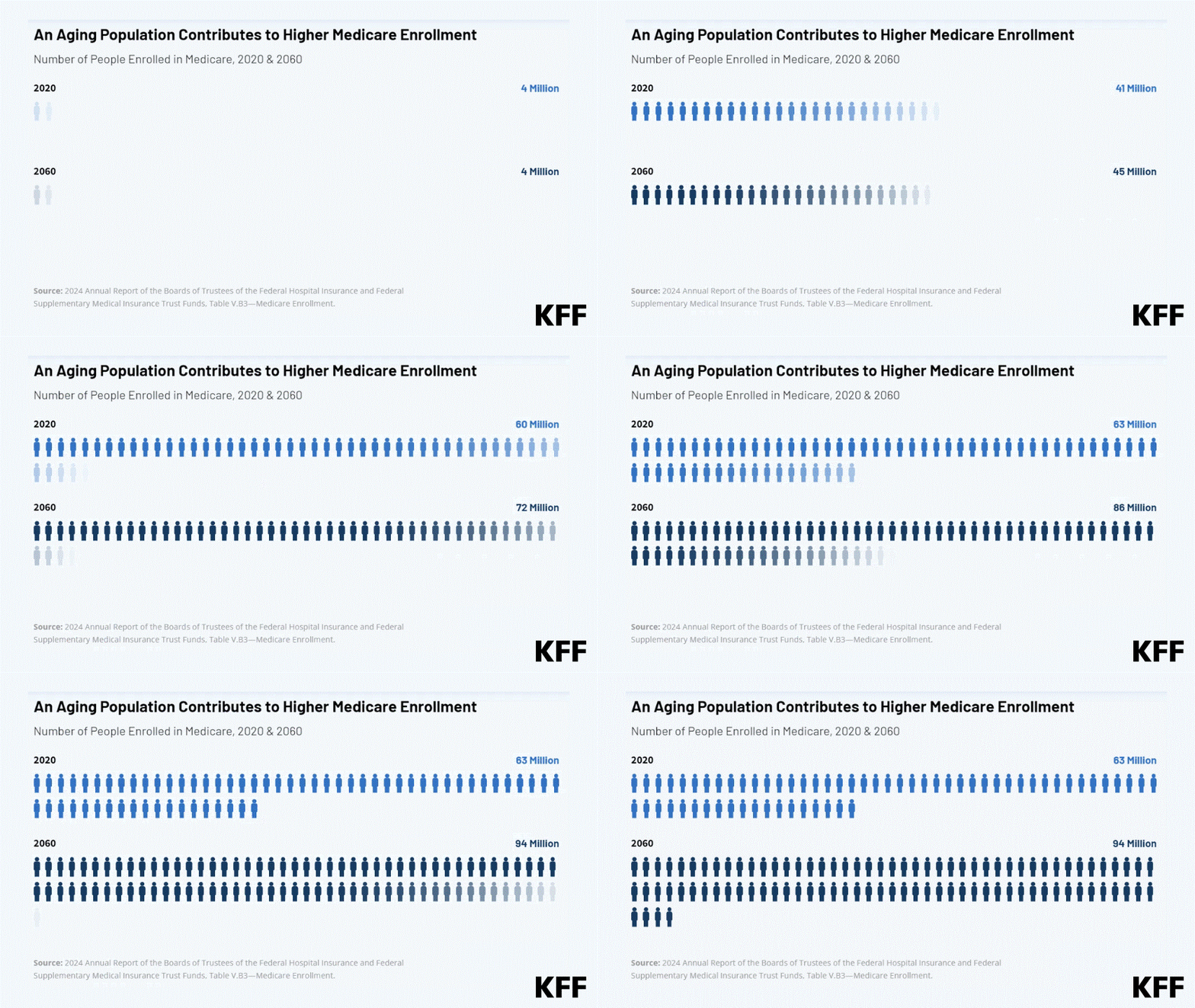
This interactive provides the facts on Medicare spending. Medicare, which serves 67 million people and accounts for 12 percent of the federal budget and 21 percent of national health spending, is often the focus of discussions about health expenditures, health care affordability and the sustainability of federal health programs. Explore data on enrollment growth, Medicare spending trends overall and per person, growth in Medicare spending relative to private insurance, spending on benefits and Medicare Advantage, Part A trust fund solvency challenges, and growth in out-of-pocket spending by beneficiaries.

Read More

Stay informed.

Stay informed.

Filter

1,531 - 1,540 of 1,613 Results

  • A Record 3,834 Medicare Advantage Plans Will be Available in 2022, Up 8 Percent From 2021, While the Number of Medicare Part D Stand-Alone Plans is Decreasing Mainly Due to Firm Consolidations

    News Release

    A record 3,834 Medicare Advantage plans will be available across the country as alternatives to traditional Medicare for 2022, a new KFF analysis finds. That’s an increase of 8 percent from 2021, and the largest number of plans available in more than a decade. At the same time, the number of Medicare Part D stand-alone prescription drug plans that will be offered in 2022 is decreasing by 23 percent to 766 plans, primarily the result…

  • Unpacking the Prescription Drug Provisions of the Build Back Better Act

    Event Date:
    Event

    As the Build Back Better Act shifts from the House to the Senate, there’s considerable interest in provisions that would lower the cost of prescription drugs. The House-passed bill would allow the federal government to negotiate prices for some high-cost drugs in Medicare, and set a hard cap on out-of-pocket drug spending for Medicare Part D enrollees.  For people with Medicare and private insurance, the legislation would limit annual increases in drug prices and cap…

  • Many Medicare Beneficiaries Face High Out-of-Pocket Costs for Dental and Hearing Care, Whether in Traditional Medicare or Medicare Advantage

    News Release

    Many Medicare beneficiaries face high annual out-of-pocket costs for dental and hearing care -- services that generally aren’t covered in traditional Medicare, but typically are covered by Medicare Advantage plans though the scope and value of these benefits vary, finds a new KFF analysis. The analysis shows that, among beneficiaries who used each type of service, average annual out-of-pocket spending was $914 for hearing care and $874 for dental care in 2018, but considerably less…

  • Large Majorities Across Parties Favor Allowing the Federal Government to Negotiate Drug Prices, Even After Hearing Common Arguments About It

    News Release

    Most of the Public Lacks Confidence that President Biden, Congressional Democrats or Republicans Will Do the Right Thing on Drug Prices Allowing the federal government to negotiate with drug companies to lower drug prices for Medicare beneficiaries and people enrolled in private plans – a key cost-saving proposal in the Democrats’ massive reconciliation bill – is favored by large majorities across political partisans, even after they hear arguments from both sides, a new KFF Health…

  • 7 in 10 Medicare Beneficiaries Report That They Did Not Compare Their Coverage Options During a Recent Open Enrollment Period

    News Release

    With the Medicare open enrollment period set to begin October 15, a new KFF analysis finds that 7 in 10 beneficiaries (71%) say that they didn’t compare their coverage options during a recent open enrollment season. Twenty-nine percent said they did compare Medicare plans. But not shopping around can have a big impact on enrollees’ coverage and costs. The Centers for Medicare & Medicaid Services (CMS) recommends that beneficiaries review and compare Medicare plans each…

  • Does Education Narrow the Gap in Wealth Among Older Adults, by Race and Ethnicity?

    Issue Brief

    This analysis of per capita income and assets among older adults in 2019 shows that differences in median per capita income among White, Black, and Hispanic adults ages 65 and older are narrower when comparing people with similar levels of education, although among college graduates, the gap in income continues to be wide between Hispanic and White seniors. The gaps in savings and home equity remain wide, and are particularly striking among seniors with less…

  • Health Insurer Financial Performance Through September 2020

    Issue Brief

    In this brief, we analyze third quarter data from 2018 to 2020 to examine how insurance markets performed financially through the end of September. Average margins remained relatively high compared to the same point in recent years, suggesting many insurers remained profitable even as non-COVID-related care returned in the summer and fall.

  • What Percent of New Medicare Beneficiaries Are Enrolling in Medicare Advantage?

    Issue Brief

    The analysis examines enrollment in Medicare Advantage plans during beneficiaries’ first year on Medicare and finds that less than one-third or 29% enrolled in these private health plans, including HMOs or PPOs. The majority of people new to Medicare are choosing traditional Medicare in the year they first go on Medicare. The study looks at how these findings vary across age, Medicaid status, states, and counties.