Medicare

Medicare Open Enrollment

Part D Premiums and Cost Sharing in 2027

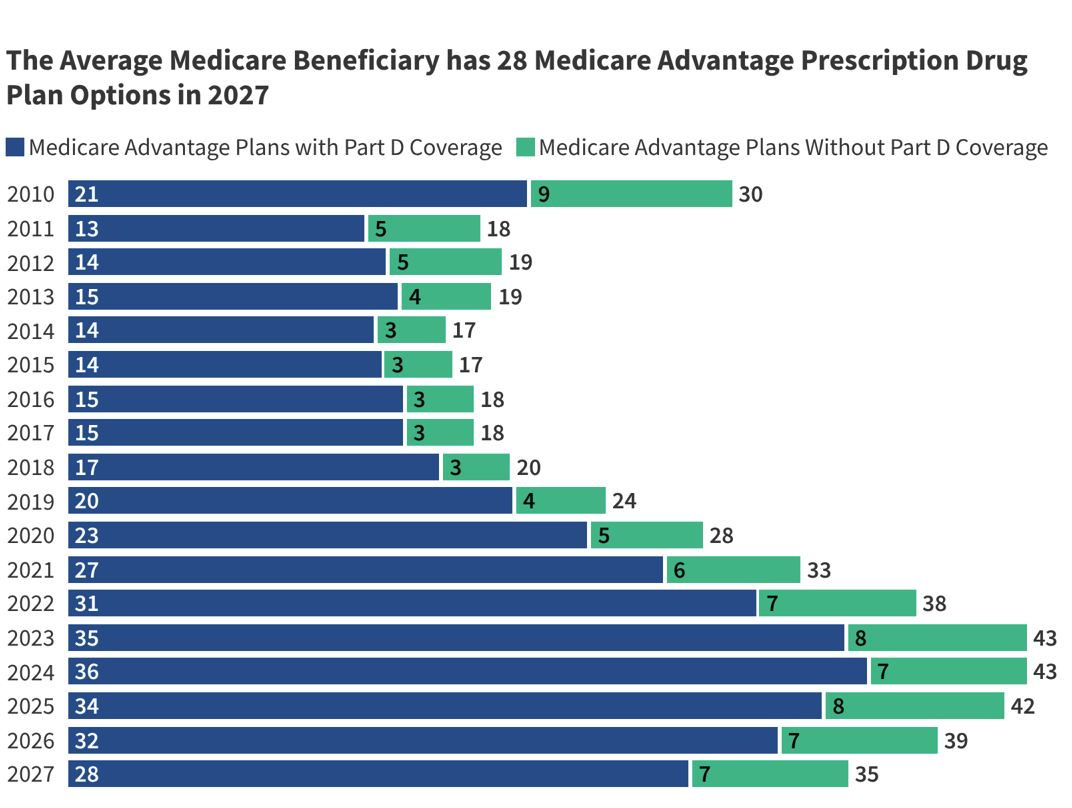
The average monthly premium for Medicare Part D coverage in stand-alone prescription drug plans (PDPs) will increase to $51 in 2027, up 50% from $34 in 2026, if current enrollees don’t switch into lower-premium plans during the open enrollment period. That is more than five times higher than the drug coverage premium in Medicare Advantage plans that offer Part D coverage, which is projected to average $9 per month in 2027. Most Part D enrollees also will face a deductible of several hundred dollars for drug coverage in 2027.
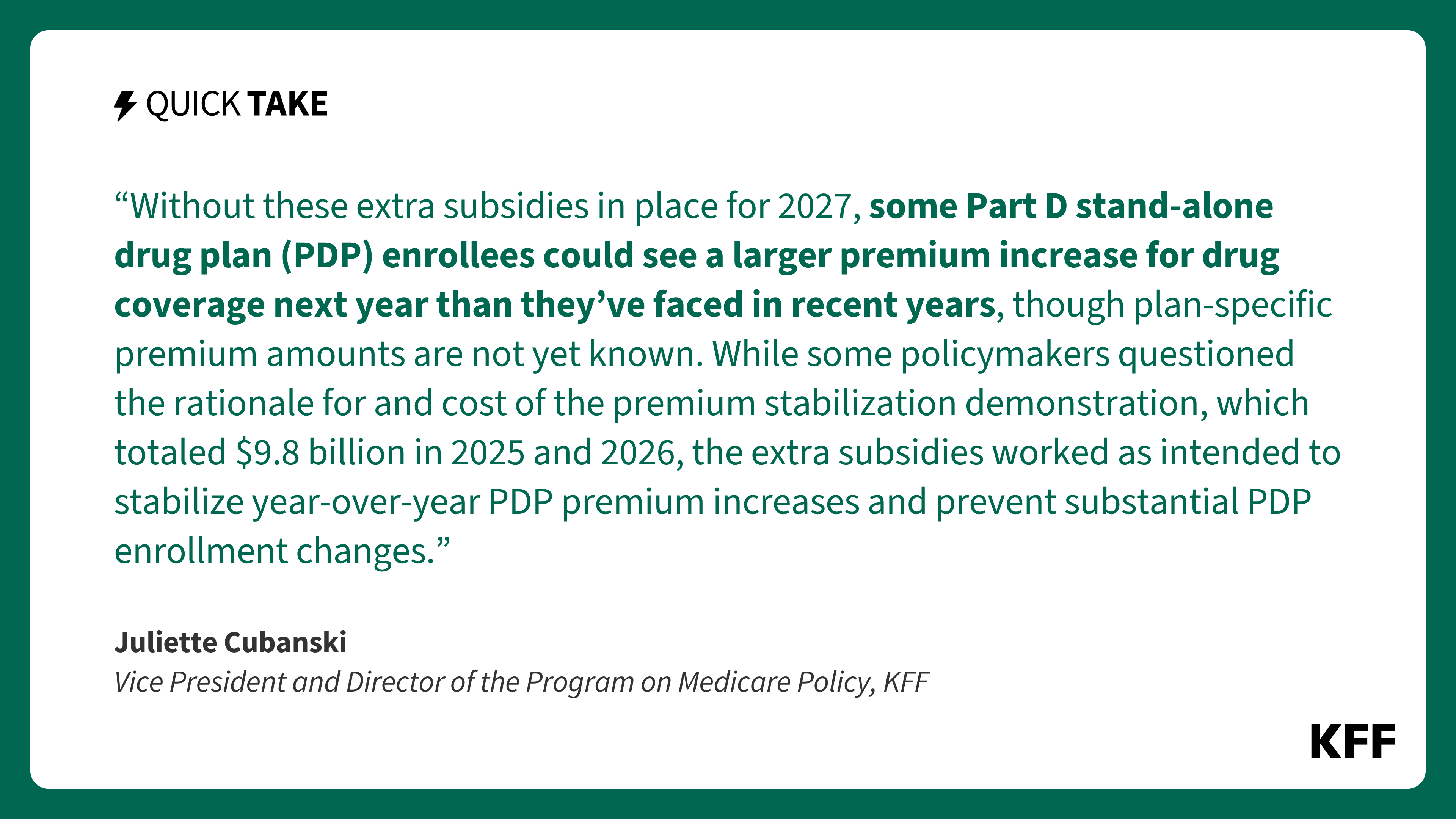
Also: Many Medicare Part D Stand-Alone Drug Plan Enrollees Will See Modest Premium Increases for 2027

Medicare Open Enrollment and Coverage Options: Key Questions and Answers

Each year, Medicare beneficiaries have an opportunity to make changes to how they receive their Medicare coverage during the nearly 8-week annual open enrollment period, which runs from October 15 through December 7. This brief answers key questions about the Medicare open enrollment period and Medicare coverage options.

NEW AND NOTEWORTHY

How Much Do People With Medicare Pay For Coverage?

This brief provides an overview of the costs faced by Medicare beneficiaries in traditional Medicare, Medicare Advantage, and Medicare Part D, including premiums, deductibles, copays, and coinsurance, focusing on costs in 2026.

What’s in a Name? From Today’s Medicare to Medicare for All

KFF’s Larry Levitt explains how proposals to create Medicare-for-All promise more generous benefits than the existing Medicare program, with no premiums or cost-sharing, but could end up looking more like Medicare if it became the subject of a serious national debate about the tradeoffs involved to implement it.

Medigap

Medigap Guaranteed Issue Requirements: An Overview of Federal and State Rules

This issue brief analyzes federal and state rules related to guaranteed issue requirements for Medigap policies and how they impact beneficiaries’ access to Medigap, including the implications for Medicare beneficiaries with pre-existing medical conditions and those under age 65 with long-term disabilities.

Data Visualization

The Facts About Medicare Spending

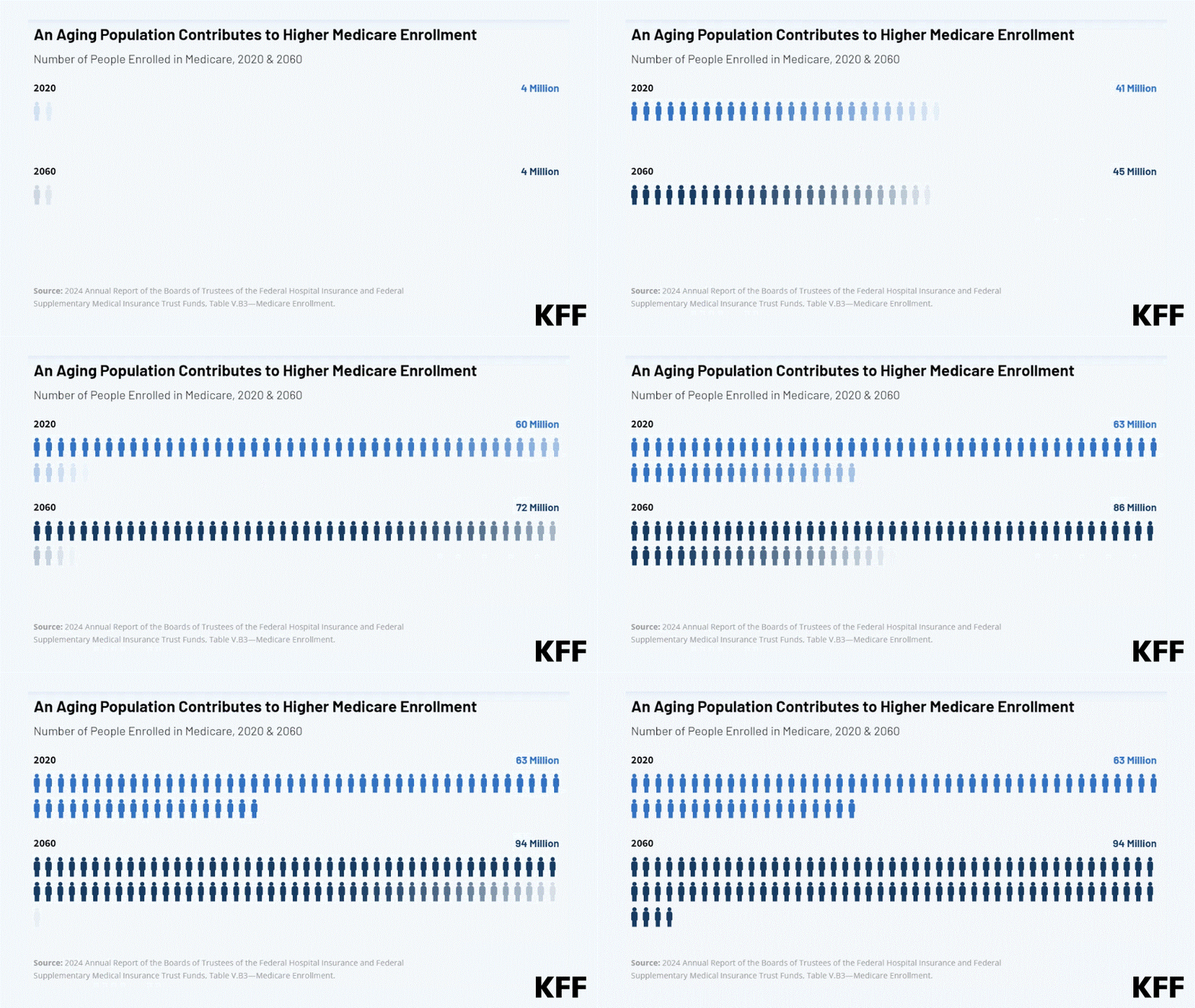
This interactive provides the facts on Medicare spending. Medicare, which serves 67 million people and accounts for 12 percent of the federal budget and 21 percent of national health spending, is often the focus of discussions about health expenditures, health care affordability and the sustainability of federal health programs. Explore data on enrollment growth, Medicare spending trends overall and per person, growth in Medicare spending relative to private insurance, spending on benefits and Medicare Advantage, Part A trust fund solvency challenges, and growth in out-of-pocket spending by beneficiaries.

Read More

Stay informed.

Stay informed.

Filter

1,521-1,530 of 1,627 results

  • Improving Prescription Drug Coverage: Opportunities and Challenges for Reform

    Event Date:
    Event

    Tricia Neuman, Vice President and Director of the Medicare Policy Project, testified before the Senate Finance Committee on prescription drug coverage under Medicare. The statement reviews existing sources of prescription drug coverage for Medicare beneficiaries and the importance of such coverage for this population. It reviews current approaches for improving prescription drug coverage, identifying significant areas of common ground, as well as the key decisions and challenges facing policymakers in designing a Medicare drug benefit.

  • Medicaid’s Role for Low-Income Medicare Beneficiaries

    Fact Sheet

    Medicaid's Role for Low-Income Medicare Beneficiaries An overview that identifies low-income Medicare beneficiaries (dual eligibles), how Medicaid can provide care for them, and the challenges to accessing care. Fact Sheet

  • Prescription Drug Coverage for the Medicare Population

    Report

    Diane Rowland, executive director of the Commission, testified to the Subcommittee on Health of the U.S. House Committee on Energy and Commerce about providing prescription drugs to seniors. Her testimony includes discussion of Medicaid's role in providing outpatient drug coverage. Testimony Chart Pack

  • Post-Election Survey: The Public and the Health Care Agenda for the New Administration and Congress

    Poll Finding

    This Kaiser Family Foundation-Harvard School of Public Health survey, conducted immediately after the 2000 Presidential election, finds that health care issues ranked near the top of voters priorities for spending the surplus. Medicare ranked among the top three priorities, along with education and Social Security, and ahead of paying off the national debt and cutting taxes. Education ranked first. The survey also found that voters support patients rights legislation and some action to help the…

  • Health News Index – September/October 2000

    Poll Finding

    Health News Index September/October, 2000 The September/October 2000 edition of the Kaiser Family Foundation/HarvardSchool of Public Health, Health News Index includes questions about how closely the public is following and how well they understand major health stories covered in the news during September, including stories about presidential candidates Al Gore and George W. Bush's prescription drug proposals. Every two months, Kaiser/Harvard issues a new index report. HNI September-October 2000 Topline/Survey MEDIA ADVISORY Download

  • Prescription Drugs: Results from a National Survey

    Fact Sheet

    Prescription drugs have become an integral part of medical practice - they help keep people healthy and save lives. But rising prescription drug costs have placed a growing burden on consumers, employers, and public programs. The issue of drug coverage for seniors under Medicare has moved to center stage in the Presidential election. Findings from The NewsHour with Jim Lehrer/Kaiser Family Foundation/Harvard School of Public Health "National Survey on Prescription Drugs," a Public Opinion Update…

  • Health Issues in the 2000 Presidential Election

    Other Post

    A Comparison of Proposals This report presents basic, nonpartisan information to help readers compare the leading presidential candidates' proposals on health care issues, including health coverage for the uninsured, managed care and patients' rights, Medicare reform, prescription drug coverage for seniors, and long-term care. Part of a joint effort of the League of Women Voters and the Kaiser Family Foundation to educate and engage the public on key health policy issues, this side-by-side comparison is…

  • Family Circle/Kaiser Family Foundation National Survey on Health Care & Other Elder Care Issues

    Poll Finding

    As part of a joint project with Family Circle, this national survey examines the knowledge and experiences of 806 adults with a parent 65 and older in an effort to understand their role in helping their aging parents. The survey found that half check in on their parent with regular phone calls or visits, over four in ten visit or see their parent at least once a week, and more than a quarter help their…

  • Health News Index – July/August 2000

    Poll Finding

    Health News Index July/August, 2000 The July/August 2000 edition of the Kaiser Family Foundation/HarvardSchool of Public Health, Health News Index includes questions about major health stories covered in the news, including questions about the Supreme Court's recent decisions and House action on proposals for providing drug coverage to seniors. The Health News Index is designed to help the news media and people in the health field gain a better understanding of which health stories in…