Medicare

Medicare Open Enrollment

Part D Premiums and Cost Sharing in 2027

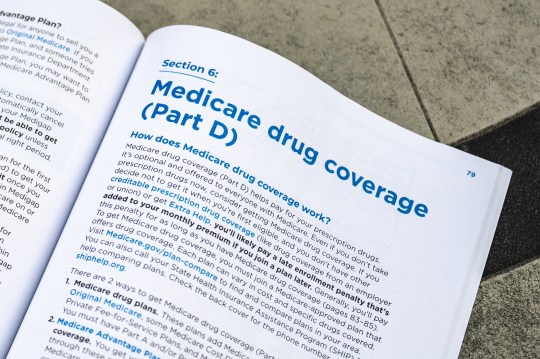
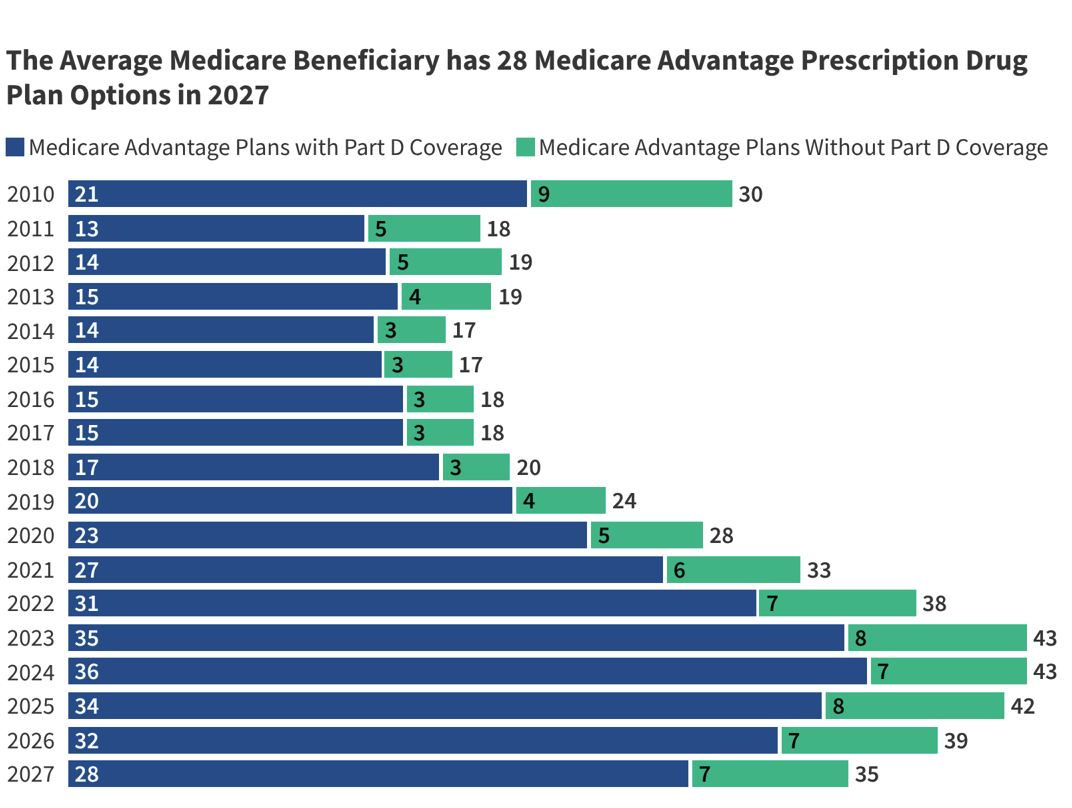
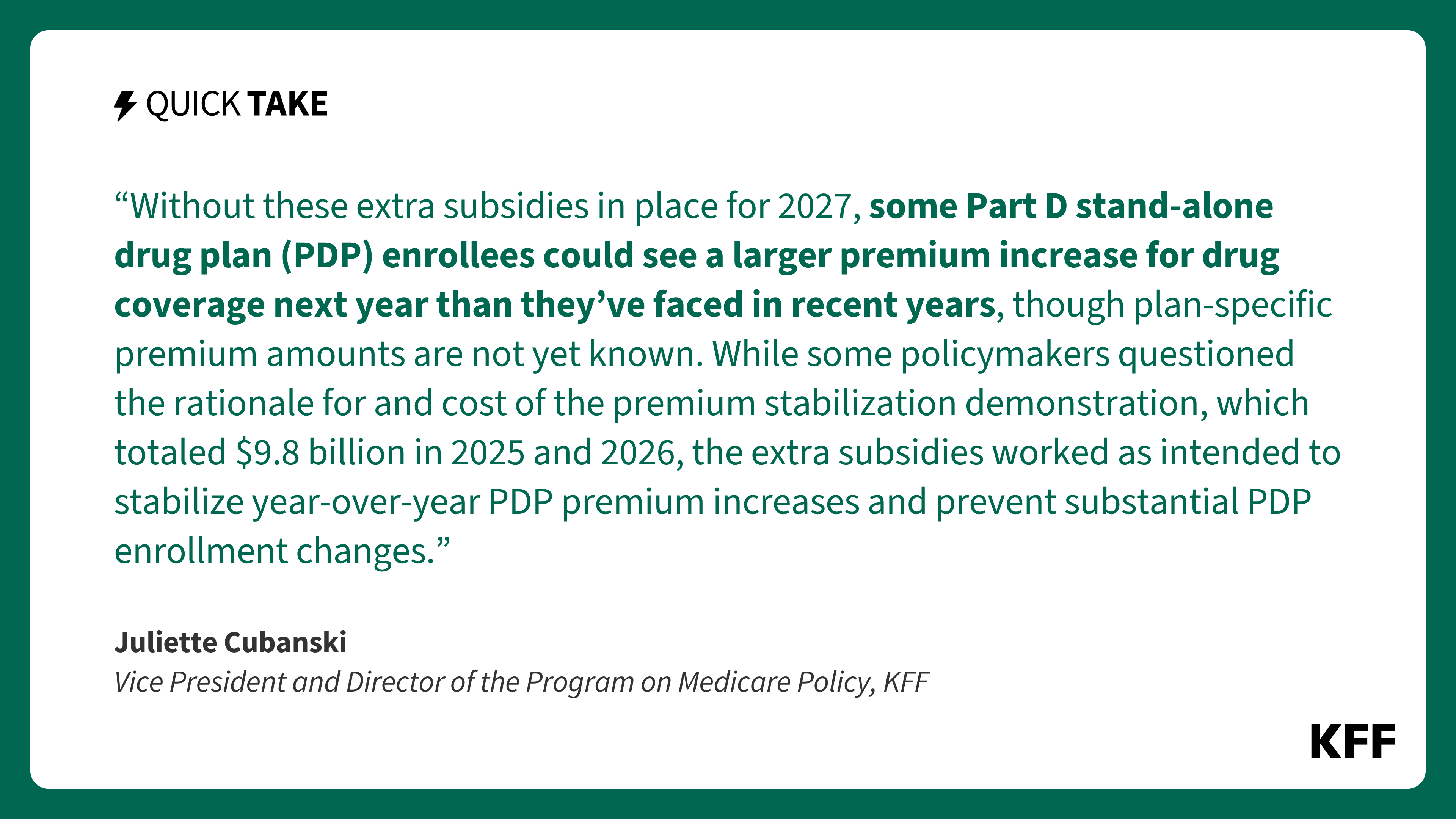
The average monthly premium for Medicare Part D coverage in stand-alone prescription drug plans (PDPs) will increase to $51 in 2027, up 50% from $34 in 2026, if current enrollees don’t switch into lower-premium plans during the open enrollment period. That is more than five times higher than the drug coverage premium in Medicare Advantage plans that offer Part D coverage, which is projected to average $9 per month in 2027. Most Part D enrollees also will face a deductible of several hundred dollars for drug coverage in 2027.
Also: Many Medicare Part D Stand-Alone Drug Plan Enrollees Will See Modest Premium Increases for 2027

Medicare Open Enrollment and Coverage Options: Key Questions and Answers

Each year, Medicare beneficiaries have an opportunity to make changes to how they receive their Medicare coverage during the nearly 8-week annual open enrollment period, which runs from October 15 through December 7. This brief answers key questions about the Medicare open enrollment period and Medicare coverage options.

NEW AND NOTEWORTHY

How Much Do People With Medicare Pay For Coverage?

This brief provides an overview of the costs faced by Medicare beneficiaries in traditional Medicare, Medicare Advantage, and Medicare Part D, including premiums, deductibles, copays, and coinsurance, focusing on costs in 2026.

What’s in a Name? From Today’s Medicare to Medicare for All

KFF’s Larry Levitt explains how proposals to create Medicare-for-All promise more generous benefits than the existing Medicare program, with no premiums or cost-sharing, but could end up looking more like Medicare if it became the subject of a serious national debate about the tradeoffs involved to implement it.

Medigap

Medigap Guaranteed Issue Requirements: An Overview of Federal and State Rules

This issue brief analyzes federal and state rules related to guaranteed issue requirements for Medigap policies and how they impact beneficiaries’ access to Medigap, including the implications for Medicare beneficiaries with pre-existing medical conditions and those under age 65 with long-term disabilities.

Data Visualization

The Facts About Medicare Spending

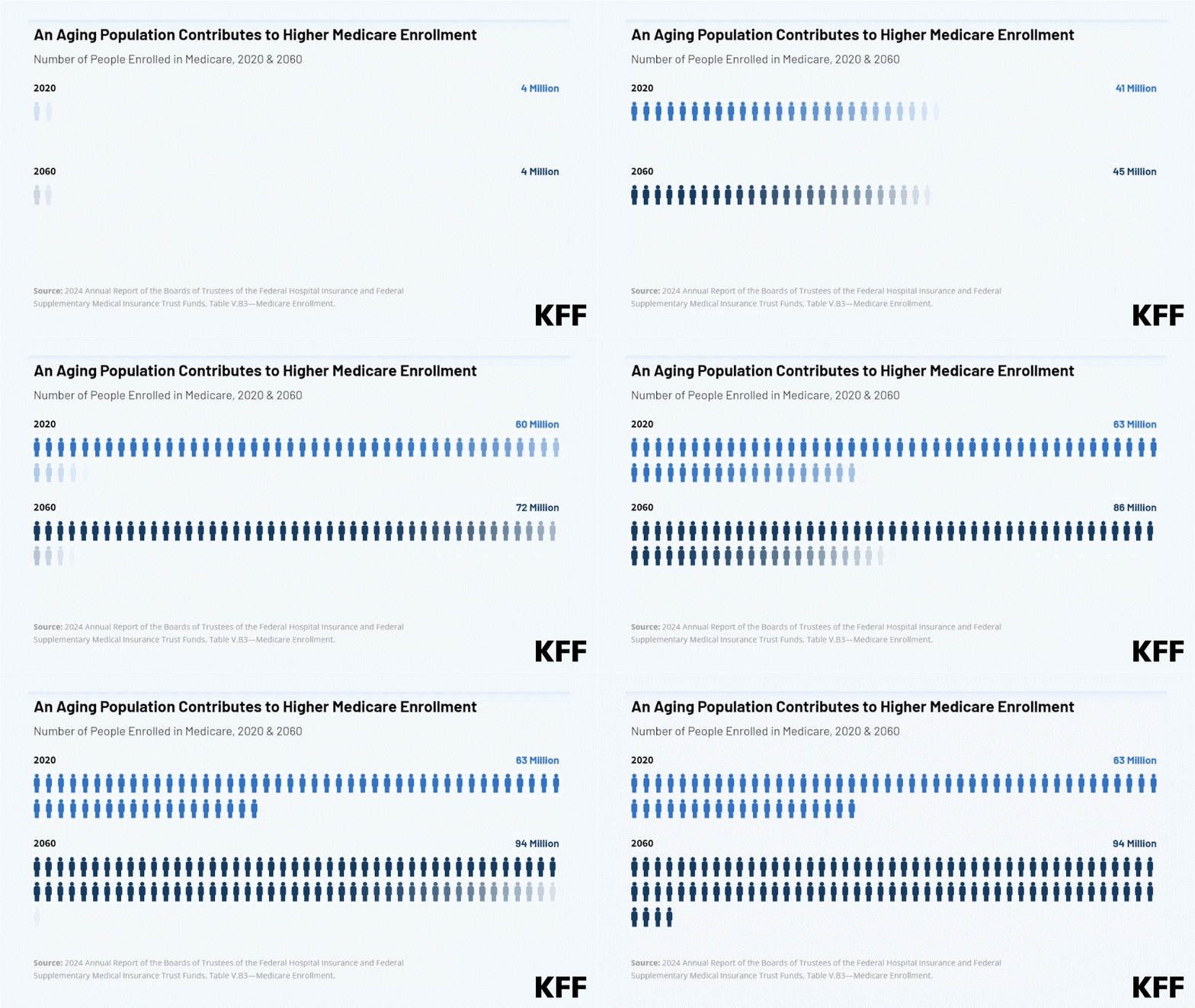
This interactive provides the facts on Medicare spending. Medicare, which serves 67 million people and accounts for 12 percent of the federal budget and 21 percent of national health spending, is often the focus of discussions about health expenditures, health care affordability and the sustainability of federal health programs. Explore data on enrollment growth, Medicare spending trends overall and per person, growth in Medicare spending relative to private insurance, spending on benefits and Medicare Advantage, Part A trust fund solvency challenges, and growth in out-of-pocket spending by beneficiaries.

Read More

Stay informed.

Stay informed.

Filter

1,511-1,520 of 1,627 results

  • Medicare and Prescription Drug Focus Groups

    Report

    Summary Report This report, : Summary Report, produced jointly by the bipartisan team of Bill McInturff of Public Opinion Strategies and Geoff Garin of Peter D. Hart Research Associates, presents key findings from a series of eight focus groups on the Medicare program and the current debate over prescription drug coverage and Medicare reform. These groups, conducted in four cities with both elderly and non-elderly participants in June 2001, explored attitudes about Medicare and how…

  • Women and Medicare

    Fact Sheet

    Medicare is a critical source of health insurance coverage for virtually all older women in the U.S. and for many younger women who have permanent disabilities. Because women have longer life expectancies than men, more than half (57%) of the people covered by the program are women. In 1999, there were 21 million women on Medicare 19 million ages 65 and over and another 2 million women under age 65 with disabilities who received Social…

  • Federal Budget Chartbook 2001

    Report

    A new chart book examines Fiscal Year 2002 budget proposals by President Bush and Congress, focusing on their impact on health programs. It provides both an examination of how health care programs fit into the overall U.S. budget and a review of past budget trends and future projections for government health care programs. Chartbook

  • Targeting Medicare Drug Benefits: Costs and Issues

    Report

    This report, written by Marilyn Moon and Matthew Storeygard of the Urban Institute, estimates the potential cost of targeting drug benefits to low-income Medicare beneficiaries and those with catastrophic drug expenses and discusses some of the key programmatic issues that could arise under this approach. The authors predict that a targeted and comprehensive drug benefit would likely help more than half of the 11.3 million low-income beneficiaries who lack drug coverage through Medicaid or an…

  • Medicaid’s Disabled Population and Managed Care

    Fact Sheet

    Medicaid's Disabled Population and Managed Care This fact sheet highlights the key facts about the Medicaid managed care programs that serve persons with disabilities. It describes the Medicaid disabled population and the role managed care plays in serving them. It also provides information on enrollment in managed care, program features, and issues such as quality assurance, rate setting, and benefits. Fact Sheet

  • Medicaid’s Role for the Disabled Population Under Age 65

    Fact Sheet

    Medicaid's Role for the Disabled Population Under Age 65 Defines the non-elderly disabled and summarizes Medicaid's role in their health care coverage. Includes a description of enrollment requirements, benefits, spending and managed care concerns for the population. Fact Sheet

  • Making Medicare Work Better

    Report

    This report by the Institute for Medicare Practice at Mount Sinai School of Medicine takes a hard look at the operational challenges facing Medicare and considers incremental, structural changes to improve the management of the Medicare program from the standpoint of beneficiaries and providers. Based on interviews with key experts and Medicare stakeholders including representatives of beneficiaries, hospitals, physicians and other providers of care, as well as current and former Congressional and Administration staff, the…

  • President Bush’s Budget:  An Overview of Health Programs

    Other Post

    President Bush's Budget: An Overview of Health Programs A new Foundation presentation provides an overview of President Bush s federal budget proposal for Fiscal Year 2002, focusing on its impact on health programs. The budget largely keeps pace with expected growth in Medicare and Medicaid, creates a prescription drug block grant to states for low-income seniors, proposes decreased funding for some public health programs, and would provide either limited or no growth for central programs…

  • Health News Index March/April, 2001

    Poll Finding

    Health News Index March/April, 2001   The March/April, 2001 edition of the Kaiser Family Foundation/HarvardSchool of Public Health Health News Index includes questions about major health stories covered in the news, including questions about the financial future of Social Security and Medicare. The Health News Index is designed to help the news media and people in the health field gain a better understanding of which health stories Americans are following and what they understand about…