Medicare

Medicare Open Enrollment

Part D Premiums and Cost Sharing in 2027

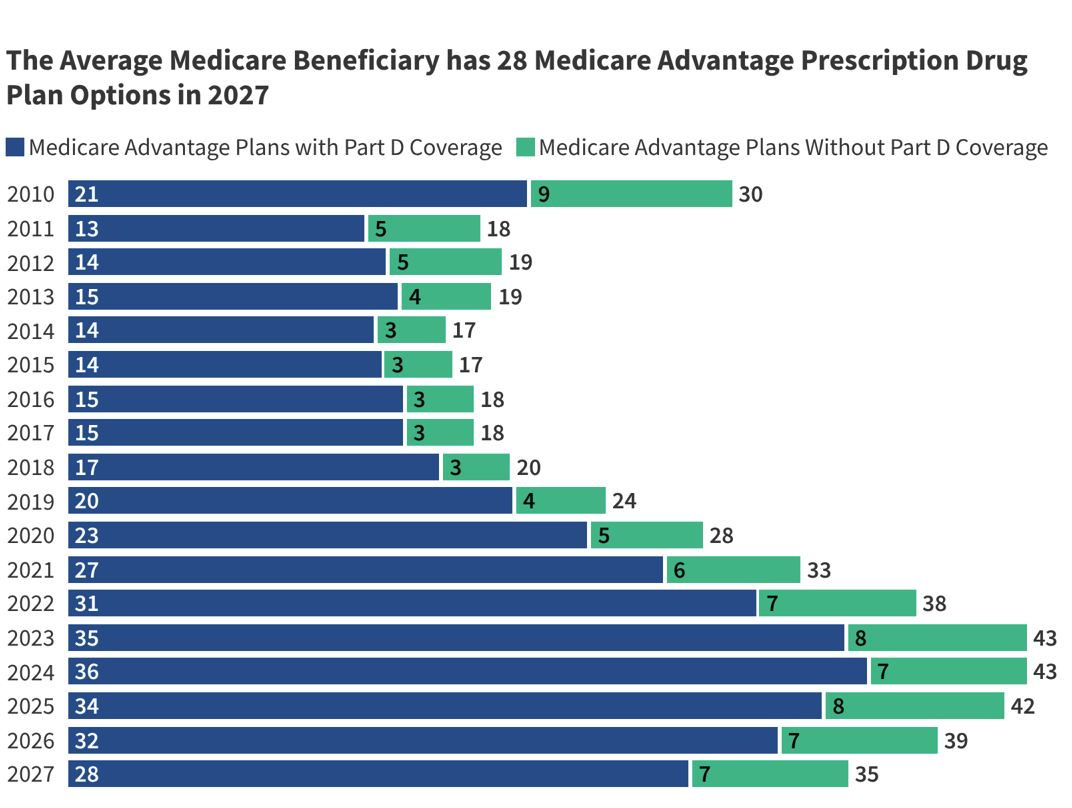
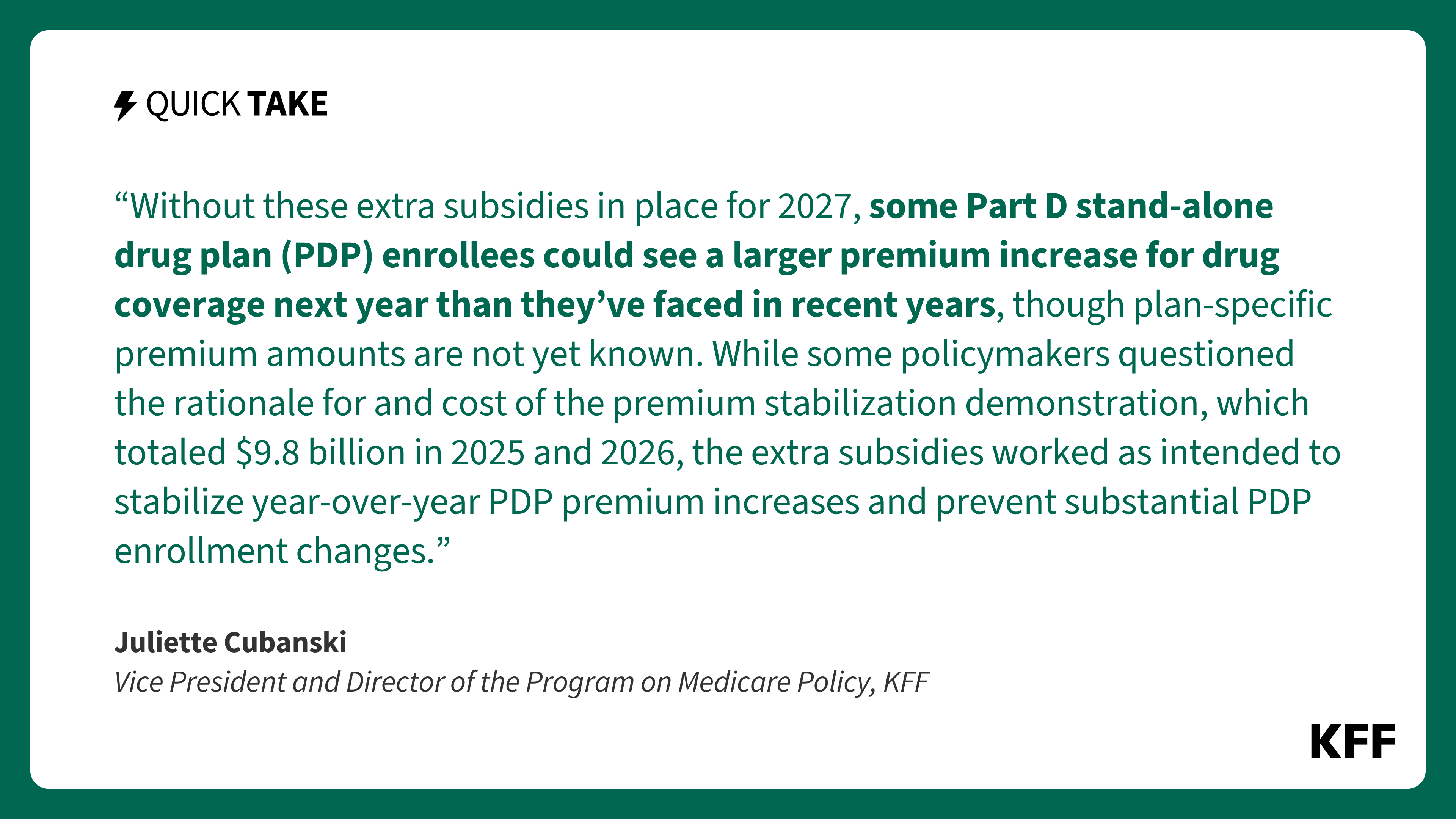
The average monthly premium for Medicare Part D coverage in stand-alone prescription drug plans (PDPs) will increase to $51 in 2027, up 50% from $34 in 2026, if current enrollees don’t switch into lower-premium plans during the open enrollment period. That is more than five times higher than the drug coverage premium in Medicare Advantage plans that offer Part D coverage, which is projected to average $9 per month in 2027. Most Part D enrollees also will face a deductible of several hundred dollars for drug coverage in 2027.
Also: Many Medicare Part D Stand-Alone Drug Plan Enrollees Will See Modest Premium Increases for 2027

Medicare Open Enrollment and Coverage Options: Key Questions and Answers

Each year, Medicare beneficiaries have an opportunity to make changes to how they receive their Medicare coverage during the nearly 8-week annual open enrollment period, which runs from October 15 through December 7. This brief answers key questions about the Medicare open enrollment period and Medicare coverage options.

NEW AND NOTEWORTHY

How Much Do People With Medicare Pay For Coverage?

This brief provides an overview of the costs faced by Medicare beneficiaries in traditional Medicare, Medicare Advantage, and Medicare Part D, including premiums, deductibles, copays, and coinsurance, focusing on costs in 2026.

What’s in a Name? From Today’s Medicare to Medicare for All

KFF’s Larry Levitt explains how proposals to create Medicare-for-All promise more generous benefits than the existing Medicare program, with no premiums or cost-sharing, but could end up looking more like Medicare if it became the subject of a serious national debate about the tradeoffs involved to implement it.

Medigap

Medigap Guaranteed Issue Requirements: An Overview of Federal and State Rules

This issue brief analyzes federal and state rules related to guaranteed issue requirements for Medigap policies and how they impact beneficiaries’ access to Medigap, including the implications for Medicare beneficiaries with pre-existing medical conditions and those under age 65 with long-term disabilities.

Data Visualization

The Facts About Medicare Spending

This interactive provides the facts on Medicare spending. Medicare, which serves 67 million people and accounts for 12 percent of the federal budget and 21 percent of national health spending, is often the focus of discussions about health expenditures, health care affordability and the sustainability of federal health programs. Explore data on enrollment growth, Medicare spending trends overall and per person, growth in Medicare spending relative to private insurance, spending on benefits and Medicare Advantage, Part A trust fund solvency challenges, and growth in out-of-pocket spending by beneficiaries.

Read More

Stay informed.

Stay informed.

Filter

1,431-1,440 of 1,627 results

  • Visualizing Health Policy: Medicaid and Medicare at 50: Trends and Challenges

    Other Post

    These Visualizing Health Policy infographics commemorate the 50th anniversary of the Medicaid and Medicare programs. This infographic provides details about the reach and demographics of the programs, as well as the Federal and total US health-care spending associated with them. This infographic illustrates trends and challenges going forward. Together, Medicaid and Medicare provide health insurance coverage for more than 3 in 10 Americans. Medicaid serves a notable share of children, nursing home residents, and Americans younger than 65…

  • Medicare And Medicaid At 50

    Poll Finding

    Medicare and Medicaid were signed into law by President Lyndon Johnson on July 30, 1965 in a bipartisan effort to provide health insurance coverage for low-income, disabled, and elderly Americans. In their 50 year history, each of these programs has come to play a key role in providing health coverage to millions of Americans today and make up a significant component of federal and state budgets. As major programs both in size and scope, their…

  • With Medicare and Medicaid Getting High Marks from the Public and Beneficiaries, Majorities Favor Status Quo over Major Structural Changes Such As Premium Supports or Block Grants

    News Release

    Among Medicare Changes, Strongest and Broadest Support Is for Negotiating Drug Prices People With Medicare, Medicaid and Employer Plans Give Their Coverage Similar Ratings, But Some Report Affordability and Physician Access Problems Fifty years after President Lyndon Johnson signed the law creating the Medicare and Medicaid programs, a new Kaiser Family Foundation poll finds a majority of the public and the vast majority of program beneficiaries view the two programs positively. Likely as a result,…

  • Public Strongly Favors End-of-Life Conversations Between Doctors and Patients, With About Eight in 10 Saying Medicare and Other Insurers Should Cover These Visits

    News Release

    Six in 10 Oppose 'Cadillac Plan Tax' on High-Cost Health Plans Set to Take Effect in 2018, But Cost Savings Argument Can Change Some Opinions Views on the Affordable Care Act Remain Divided: 45% Unfavorable, 41% Favorable As the Centers for Medicare & Medicaid Services prepares to finalize a plan to pay physicians for discussing end-of-life treatment options with Medicare patients, the latest Kaiser Health Tracking Poll finds an overwhelming majority supports such coverage. The…

  • Amid Merger Talk, a Look at Health Insurers’ Medicare Business

    News Release

    With recent news about possible health insurance company mergers, Drew Altman looks beyond the impact on Wall Street to how mergers could affect Medicare beneficiaries in his latest column for The Wall Street Journal's Think Tank. All previous columns by Drew Altman are available.

  • Independent Payment Advisory Board (IPAB) Process: A Timeline

    Feature

    IPAB Timeline Download Source Kaiser Family Foundation, “The Independent Payment Advisory Board: A New Approach to Controlling Medicare Spending,” 2011, https://www.kff.org/health-reform/issue-brief/the-independent-payment-advisory-board-a-new/.

  • Modifying Medicare’s Benefit Design: What’s the Impact on Beneficiaries and Spending?

    Report

    This report examines an approach to reforming Medicare that has been a focus of Congressional hearings and featured in several broader debt reduction and entitlement reform proposals, and was included in the June 2016 House Republican health plan. The analysis models four different options for modifying Medicare's benefit design, all of which include a single deductible, modified cost-sharing requirements, a new cost-sharing limit, and a prohibition on first-dollar Medigap coverage. The analysis models the expected…

  • Modifying Traditional Medicare’s Benefit Design Could Reduce Federal Spending But With Cost Tradeoffs Between Beneficiaries and The Federal Government

    News Release

    Revamping traditional Medicare’s benefit design and restricting “first-dollar” supplemental coverage could reduce federal spending, simplify cost sharing, protect against high medical costs, decrease out-of-pocket spending for many beneficiaries, and provide more help to those with low incomes -- but would be unlikely to achieve all of these goals simultaneously.