Medicare

Medicare Open Enrollment

Part D Premiums and Cost Sharing in 2027

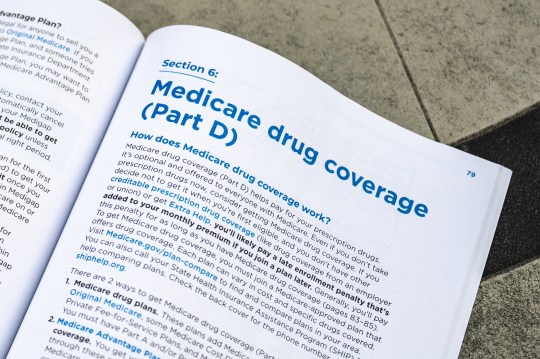
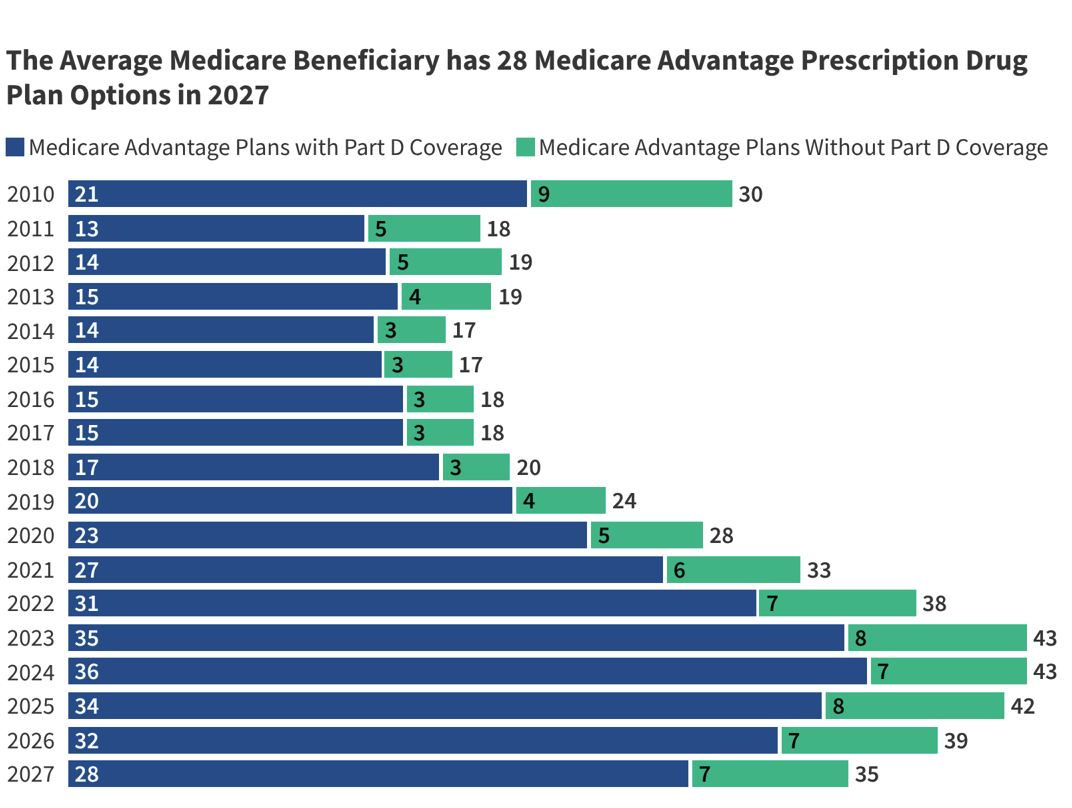
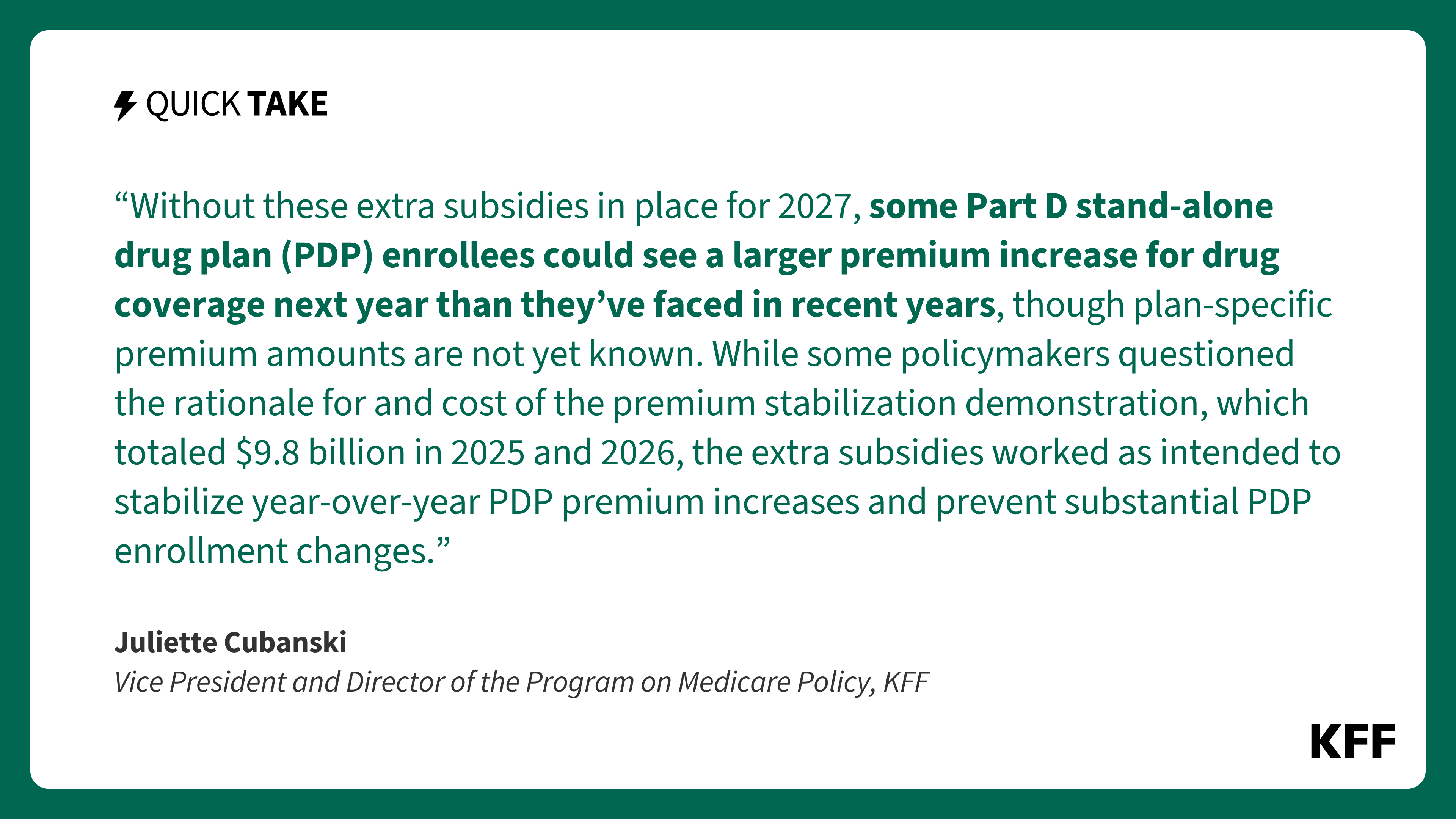
The average monthly premium for Medicare Part D coverage in stand-alone prescription drug plans (PDPs) will increase to $51 in 2027, up 50% from $34 in 2026, if current enrollees don’t switch into lower-premium plans during the open enrollment period. That is more than five times higher than the drug coverage premium in Medicare Advantage plans that offer Part D coverage, which is projected to average $9 per month in 2027. Most Part D enrollees also will face a deductible of several hundred dollars for drug coverage in 2027.
Also: Many Medicare Part D Stand-Alone Drug Plan Enrollees Will See Modest Premium Increases for 2027

Medicare Open Enrollment and Coverage Options: Key Questions and Answers

Each year, Medicare beneficiaries have an opportunity to make changes to how they receive their Medicare coverage during the nearly 8-week annual open enrollment period, which runs from October 15 through December 7. This brief answers key questions about the Medicare open enrollment period and Medicare coverage options.

NEW AND NOTEWORTHY

How Much Do People With Medicare Pay For Coverage?

This brief provides an overview of the costs faced by Medicare beneficiaries in traditional Medicare, Medicare Advantage, and Medicare Part D, including premiums, deductibles, copays, and coinsurance, focusing on costs in 2026.

What’s in a Name? From Today’s Medicare to Medicare for All

KFF’s Larry Levitt explains how proposals to create Medicare-for-All promise more generous benefits than the existing Medicare program, with no premiums or cost-sharing, but could end up looking more like Medicare if it became the subject of a serious national debate about the tradeoffs involved to implement it.

Medigap

Medigap Guaranteed Issue Requirements: An Overview of Federal and State Rules

This issue brief analyzes federal and state rules related to guaranteed issue requirements for Medigap policies and how they impact beneficiaries’ access to Medigap, including the implications for Medicare beneficiaries with pre-existing medical conditions and those under age 65 with long-term disabilities.

Data Visualization

The Facts About Medicare Spending

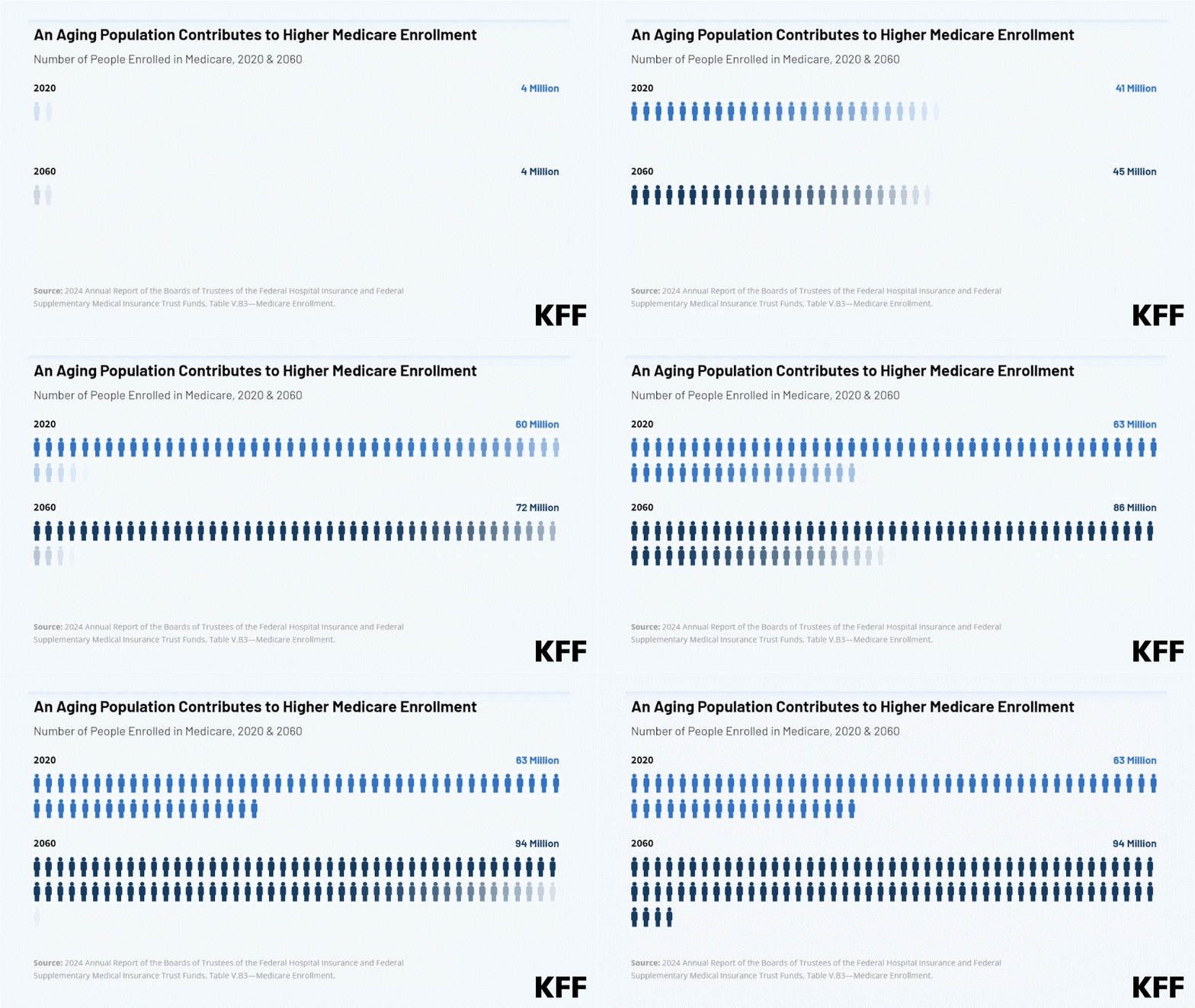
This interactive provides the facts on Medicare spending. Medicare, which serves 67 million people and accounts for 12 percent of the federal budget and 21 percent of national health spending, is often the focus of discussions about health expenditures, health care affordability and the sustainability of federal health programs. Explore data on enrollment growth, Medicare spending trends overall and per person, growth in Medicare spending relative to private insurance, spending on benefits and Medicare Advantage, Part A trust fund solvency challenges, and growth in out-of-pocket spending by beneficiaries.

Read More

Stay informed.

Stay informed.

Filter

1,431-1,440 of 1,627 results

  • The Kaiser Family Foundation/Harvard School of Public Health Medicare Prescription Drug Survey – Toplines

    Poll Finding

    These toplines are part of a survey by the Kaiser Family Foundation and Harvard School of Public Health that examines public opinion on the Medicare prescription drug debate. The survey, a follow-up to a broader, more comprehensive survey released in June 2003 about the Medicare program and proposed changes, finds that a majority of seniors want Congress to pass Medicare prescription drug legislation this year, but most worry that they will still pay too much…

  • How States Are Responding to the Challenge of Financing Health Care for Retirees

    Report

    State governments are an important source of health insurance coverage for retired state employees. Confronted with rising health care costs, budget deficits, and an overall downturn in the economy, this report describes how states are responding to the challenge of financing health care for retirees who tend to be sicker and more costly to cover than active workers. This study, based on survey responses from 43 states and the District of Columbia, captures information on…

  • A Prescription Drug Benefit in Medicare: Implications for Medicaid and Low-Income Medicare Beneficiaries

    Issue Brief

    The Senate and House of Representatives each approved legislation in June of 2003 that would establish outpatient prescription drug coverage for Medicare beneficiaries as part of Medicare program reform. Among the key differences in the House and Senate bills that still must be addressed are the treatment of Medicaid beneficiaries and the structure of low-income subsidy programs. The way in which these issues are resolved will have major implications for Medicaid beneficiaries, other low-income individuals,…

  • Low-Income Medicare Beneficiaries: How the House and Senate Prescription Drug Bills Address Their Drug Needs

    Report

    The House and Senate versions of a Medicare prescription drug bill treat the drug costs of those dually-eligible for Medicare and Medicaid and other low-income Medicare beneficiaries quite differently. The Kaiser Commission on Medicaid and the Uninsured cosponsored a policy briefing on the key issues in the two bills that would impact low-income beneficiaries and released a brief and background report on the topic. A Prescription Drug Benefit in Medicare: Implications for Medicaid and Low-Income…

  • Medicaid Matters For Low Income Medicare Beneficiaries: A Video

    Event Date:
    Event

    In this video, Mildred Benham, a 68 year-old dual enrollee who lives in Bloomington, Illinois, describes the role Medicaid plays in providing services that Medicare does not, such as prescription drugs and personal care. Mildred is a typical dual enrollee in that she has multiple conditions, such as fibrosis of the lungs, rheumatoid arthritis, high blood pressure, and cataracts. To control her conditions, she takes 12 prescriptions a day. Because of her physical limitations, Medicaid…

  • Kaiser Family Foundation/ Harvard School of Public Health Medicare Prescription Drug Survey

    Report

    A new survey by the Kaiser Family Foundation and Harvard School of Public Health examines public opinion on the current Medicare prescription drug debate. The survey, a follow-up to a broader, more comprehensive survey released in June 2003 about the Medicare program and proposed changes, finds that a majority of seniors want Congress to pass Medicare prescription drug legislation this year, but most worry that they will still pay too much for drugs even if…

  • A Medicare Prescription Drug Benefit: Implications for Medicaid and Low-Income People

    Report

    The Senate and House of Representatives each approved legislation in June of 2003 that would establish outpatient prescription drug coverage for Medicare beneficiaries as part of Medicare program reform. Among the key differences in the House and Senate bills that still must be addressed are the treatment of Medicaid beneficiaries and the structure of low-income subsidy programs. The way in which these issues are resolved will have major implications for Medicaid beneficiaries, other low-income individuals,…

  • The Role of Health Coverage for People with Disabilities: Findings from 12 Focus Groups with People with Disabilities

    Report

    This report presents findings from focus groups conducted with people with a range of disabilities in an effort to understand the challenges they face and their experiences in the health-care system. To capture variations in experiences by source of health insurance, the groups include people covered under Medicare, Medicaid, and private insurance, as well as those no health insurance at all. The report highlights the ways in which various sources of insurance are working for…

  • A Side-by-Side Comparison of the Prescription Drug Coverage Provisions of S.1 and H.R. 1

    Report

    This document, prepared by Health Policy Alternatives, Inc., provides a detailed side-by-side comparison of the prescription drug provisions of the House and Senate Medicare proposals, as passed on June 27, 2003. Along with these provisions, the side-by-side compares the major provisions relating to the role of private health plans in Medicare. This document includes a more in-depth description of the bills, which were previously summarized in publication #6095, which is also available on the Foundation?s…

  • How Do Patterns of Prescription Drug Coverage and Use Differ for White, African American, and Latino Medicare Beneficiaries Under 65 and 65+

    Report

    This chartpack provides a snapshot of racial/ethnic differences in Medicare beneficiaries? prescription drug coverage, use, and spending. It examines patterns separately for beneficiaries under age 65 and 65+. The summary discusses the relevance of the key findings to the current policy debates about prescription drug coverage. Chartpack (.pdf)