Medicare

Medicare Open Enrollment

Part D Premiums and Cost Sharing in 2027

The average monthly premium for Medicare Part D coverage in stand-alone prescription drug plans (PDPs) will increase to $51 in 2027, up 50% from $34 in 2026, if current enrollees don’t switch into lower-premium plans during the open enrollment period. That is more than five times higher than the drug coverage premium in Medicare Advantage plans that offer Part D coverage, which is projected to average $9 per month in 2027. Most Part D enrollees also will face a deductible of several hundred dollars for drug coverage in 2027.
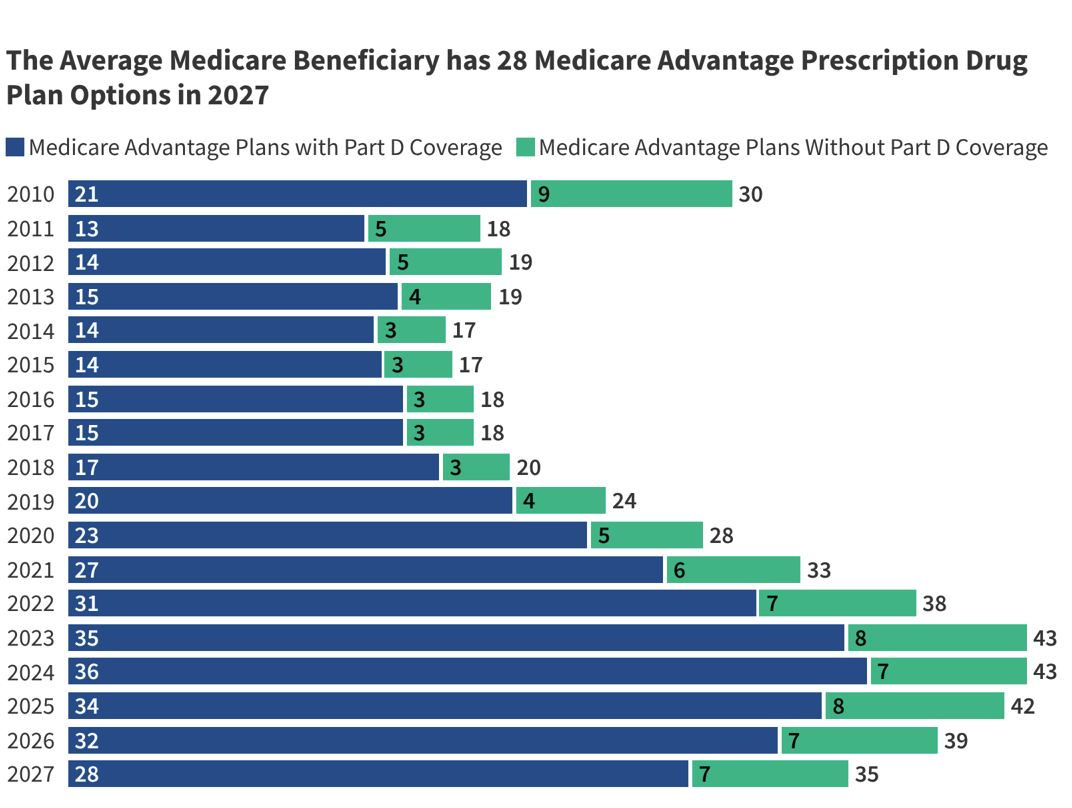
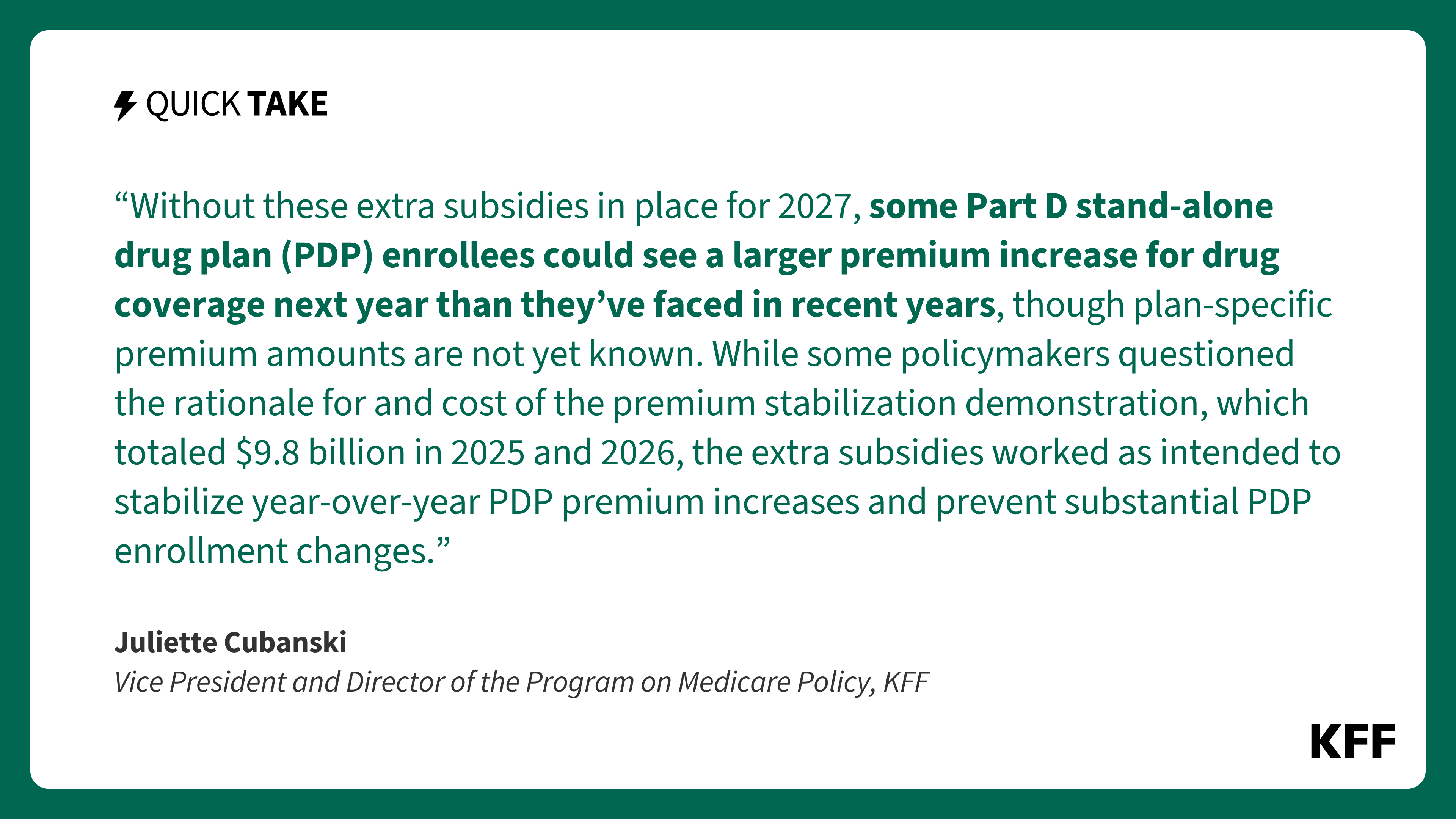
Also: Many Medicare Part D Stand-Alone Drug Plan Enrollees Will See Modest Premium Increases for 2027

Medicare Open Enrollment and Coverage Options: Key Questions and Answers

Each year, Medicare beneficiaries have an opportunity to make changes to how they receive their Medicare coverage during the nearly 8-week annual open enrollment period, which runs from October 15 through December 7. This brief answers key questions about the Medicare open enrollment period and Medicare coverage options.

NEW AND NOTEWORTHY

How Much Do People With Medicare Pay For Coverage?

This brief provides an overview of the costs faced by Medicare beneficiaries in traditional Medicare, Medicare Advantage, and Medicare Part D, including premiums, deductibles, copays, and coinsurance, focusing on costs in 2026.

What’s in a Name? From Today’s Medicare to Medicare for All

KFF’s Larry Levitt explains how proposals to create Medicare-for-All promise more generous benefits than the existing Medicare program, with no premiums or cost-sharing, but could end up looking more like Medicare if it became the subject of a serious national debate about the tradeoffs involved to implement it.

Medigap

Medigap Guaranteed Issue Requirements: An Overview of Federal and State Rules

This issue brief analyzes federal and state rules related to guaranteed issue requirements for Medigap policies and how they impact beneficiaries’ access to Medigap, including the implications for Medicare beneficiaries with pre-existing medical conditions and those under age 65 with long-term disabilities.

Data Visualization

The Facts About Medicare Spending

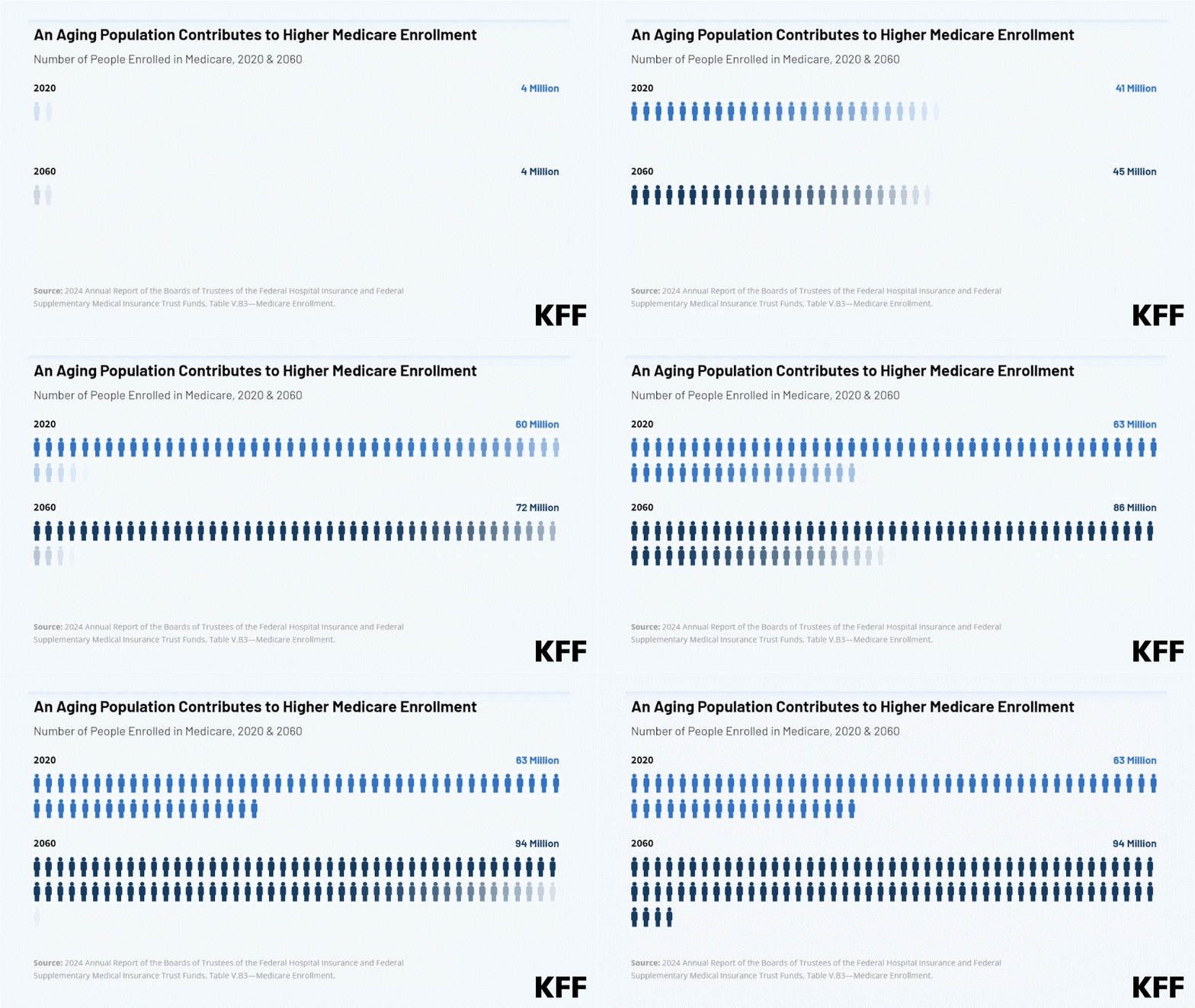
This interactive provides the facts on Medicare spending. Medicare, which serves 67 million people and accounts for 12 percent of the federal budget and 21 percent of national health spending, is often the focus of discussions about health expenditures, health care affordability and the sustainability of federal health programs. Explore data on enrollment growth, Medicare spending trends overall and per person, growth in Medicare spending relative to private insurance, spending on benefits and Medicare Advantage, Part A trust fund solvency challenges, and growth in out-of-pocket spending by beneficiaries.

Read More

Stay informed.

Stay informed.

Filter

1,301-1,310 of 1,627 results

  • Toplines: December 2005 Kaiser Health Poll Report

    Poll Finding

    Toplines: December 2005 Kaiser Health Poll Report These toplines provide the complete survey questions and responses to the December 2005 Kaiser Health Poll Report Survey, a bimonthly survey designed to provide key tracking information on public opinion about health care topics. The survey includes a series of questions on seniors' views of the new Medicare prescription drug benefit. Survey Toplines (.pdf)

  • Kaiser Health Poll Report Survey – Selected Findings on Seniors’ Views of the Medicare Prescription Drug Benefit

    Poll Finding

    Kaiser Health Poll Report Survey – Selected Findings on Seniors' Views of the Medicare Prescription Drug Benefit This February 2006 Kaiser Family Foundation tracking poll finds that 45% of seniors say they have enrolled or plan to enroll in a drug plan, 29% say they do not intend to enroll in a drug plan and another 23% say they are uncertain. The majority of those who do not plan to enroll say they have another…

  • Resources on Dual Eligibles and Issues Related to Their Transition to the New Medicare Drug Benefit

    Event Date:
    Event

    With the new Medicare prescription drug benefit available as of January 1, 2006, over 6 million low-income seniors and people with disabilities who are enrolled in both Medicaid and Medicare—also known as dual eligibles—have been transitioned from Medicaid drug coverage to new Medicare drug plans. While there are many policy issues related to the overall establishment of the new drug benefit, the mandatory transition of dual eligibles has created a special set of challenges for…

  • Insights on Transitioning From Medicaid to the New Medicare Prescription Drug Benefit

    Report

    The Kaiser Commission on Medicaid and the Uninsured convened a focus group of state Medicaid officials in November 2005 to discuss the impact of the new Medicare drug program on states and Medicaid enrollees. State insights on the transition of dual eligibles and some beneficiary experiences are discussed in new material and an audio briefing. Podcast: December 19, 2005 Conference Call Briefing (Downloadable Audio File) Presentations from the December 19, 2005 Conference Call Briefing (.pdf)…

  • An Implementation Perspective on Part D, the Medicare Prescription Drug Program

    Report

    This focus group of 12 state Medicaid officials conducted in November 2005 explores the current status and likely results of the Part D dual eligible transition efforts as well as other Part D-related issues of particular importance to states. It includes discussion of the transition of dual eligibles from Medicaid to Medicare drug coverage, evaluating Part D plan options, states’ role in the low-income subsidy program, the fiscal implications of Part D to states, and…

  • Prospects for Retiree Health Benefits as Medicare Drug Coverage Begins – Report

    Report

    Prospects for Retiree Health Benefits as Medicare Drug Coverage Begins:Findings from the Kaiser/Hewitt 2005 Survey on Retiree Health Benefits - Report This report assesses how large businesses that provide retiree health benefits to their workers are responding to the new Medicare drug benefit in 2006, their plans for the future, and the way these responses affect retirees. It also looks at the rising costs and changing benefits of retiree health coverage overall in 2005. Full…

  • Prospects for Retiree Health Benefits as Medicare Drug Coverage Begins

    Poll Finding

    Findings from the Kaiser/Hewitt 2005 Survey on Retiree Health Benefits The 2005 Kaiser/Hewitt survey of large businesses that provide retiree health benefits to their workers assesses their responses to the new Medicare drug benefit in 2006, their plans for the future, and the way these changes affect retirees. It also looks at the rising costs and changing benefits of retiree health coverage overall in 2005. News Release Report Chartpack Materials from the December 7, 2005…

  • Prospects for Retiree Health Benefits as Medicare Drug Coverage Begins – Chartpack

    Report

    Prospects for Retiree Health Benefits as Medicare Drug Coverage Begins:Findings from the Kaiser/Hewitt 2005 Survey on Retiree Health Benefits - Chartpack This chartpack presents key data from the 2005 Kaiser/Hewitt survey of large businesses that provide retiree health benefits to their workers. Chartpack (.pdf)

  • A Profile of African Americans, Latinos, and Whites with Medicare:

    Report

    This chartpack highlights demographic data about African Americans, Hispanics and whites with Medicare to highlight potential implications for outreach efforts under the new Medicare drug benefit. The information is being used in a series of November 2005 briefings at the start of the first open-enrollment period for the new benefit. Chartpack (.pdf)