Medicare

Medicare Open Enrollment

Part D Premiums and Cost Sharing in 2027

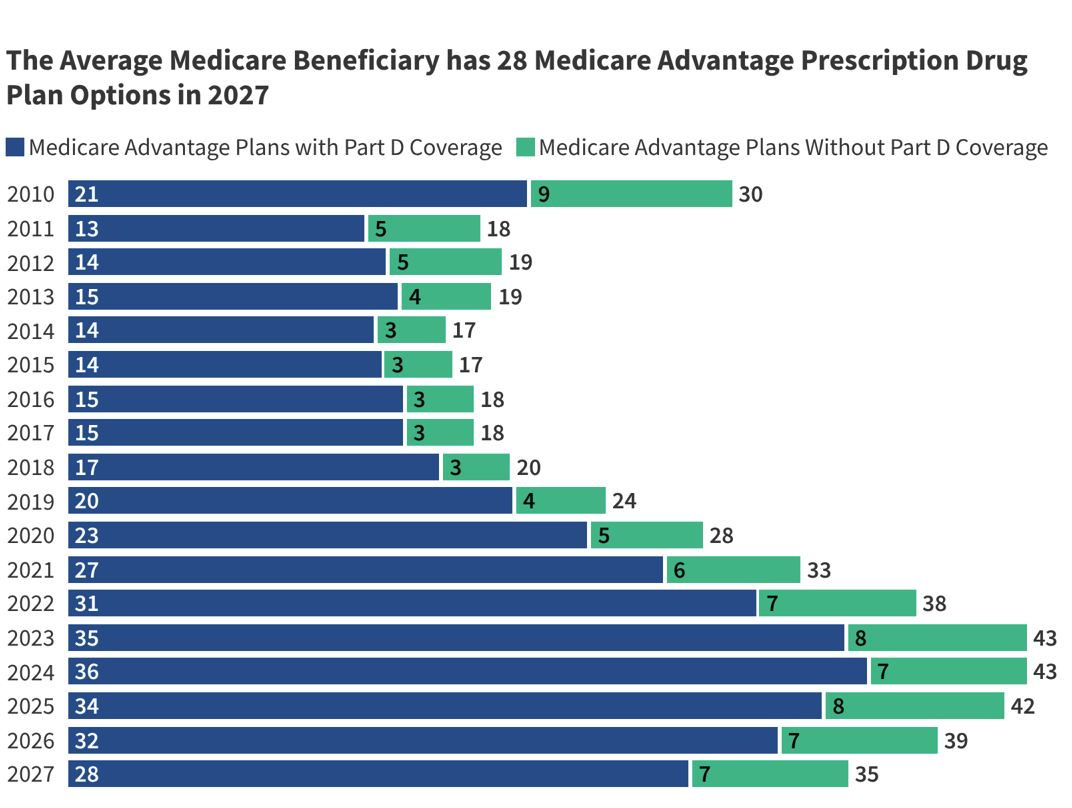
The average monthly premium for Medicare Part D coverage in stand-alone prescription drug plans (PDPs) will increase to $51 in 2027, up 50% from $34 in 2026, if current enrollees don’t switch into lower-premium plans during the open enrollment period. That is more than five times higher than the drug coverage premium in Medicare Advantage plans that offer Part D coverage, which is projected to average $9 per month in 2027. Most Part D enrollees also will face a deductible of several hundred dollars for drug coverage in 2027.
Also: Many Medicare Part D Stand-Alone Drug Plan Enrollees Will See Modest Premium Increases for 2027

Medicare Open Enrollment and Coverage Options: Key Questions and Answers

Each year, Medicare beneficiaries have an opportunity to make changes to how they receive their Medicare coverage during the nearly 8-week annual open enrollment period, which runs from October 15 through December 7. This brief answers key questions about the Medicare open enrollment period and Medicare coverage options.

NEW AND NOTEWORTHY

How Much Do People With Medicare Pay For Coverage?

This brief provides an overview of the costs faced by Medicare beneficiaries in traditional Medicare, Medicare Advantage, and Medicare Part D, including premiums, deductibles, copays, and coinsurance, focusing on costs in 2026.

What’s in a Name? From Today’s Medicare to Medicare for All

KFF’s Larry Levitt explains how proposals to create Medicare-for-All promise more generous benefits than the existing Medicare program, with no premiums or cost-sharing, but could end up looking more like Medicare if it became the subject of a serious national debate about the tradeoffs involved to implement it.

Medigap

Medigap Guaranteed Issue Requirements: An Overview of Federal and State Rules

This issue brief analyzes federal and state rules related to guaranteed issue requirements for Medigap policies and how they impact beneficiaries’ access to Medigap, including the implications for Medicare beneficiaries with pre-existing medical conditions and those under age 65 with long-term disabilities.

Data Visualization

The Facts About Medicare Spending

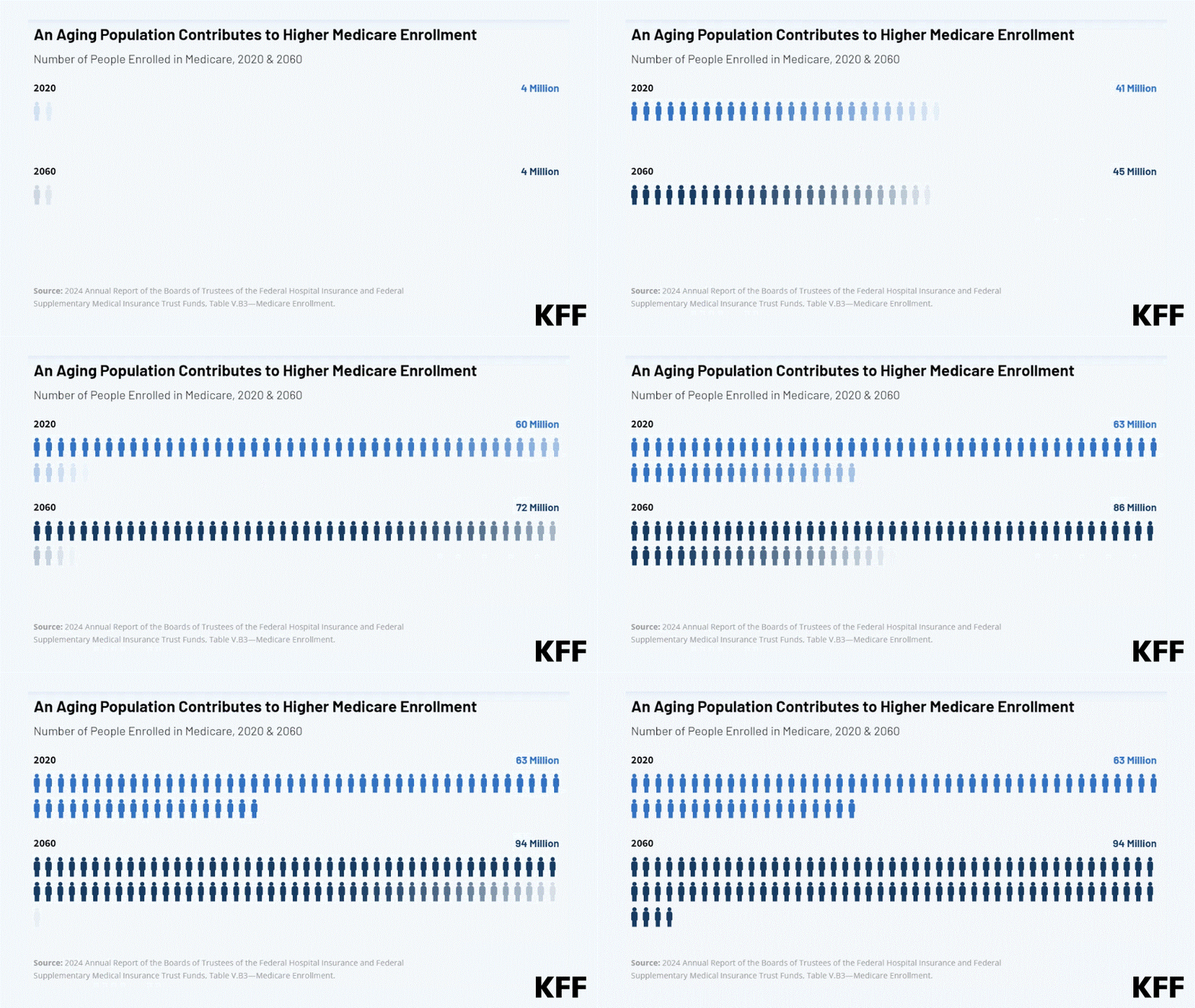
This interactive provides the facts on Medicare spending. Medicare, which serves 67 million people and accounts for 12 percent of the federal budget and 21 percent of national health spending, is often the focus of discussions about health expenditures, health care affordability and the sustainability of federal health programs. Explore data on enrollment growth, Medicare spending trends overall and per person, growth in Medicare spending relative to private insurance, spending on benefits and Medicare Advantage, Part A trust fund solvency challenges, and growth in out-of-pocket spending by beneficiaries.

Read More

Stay informed.

Stay informed.

Filter

1,281-1,290 of 1,627 results

  • Toward Making Medicare Work for Low-Income Beneficiaries: A Baseline Comparison of the Part D Low-Income Subsidy and Medicare Savings Programs Eligibility and Enrollment Rules

    Report

    Toward Making Medicare Work for Low-Income Beneficiaries: A Baseline Comparison of the Part D Low-Income Subsidy and Medicare Savings Programs Eligibility and Enrollment Rules This report examines how the low-income provisions of the Medicare drug benefit interact with state-level assistance provided through the Medicare Savings Program. The Medicare drug benefit provides additional help with premiums and cost-sharing requirements for eligible, low-income beneficiaries. The Social Security Administration oversees enrollment in this program. Separately, each state runs…

  • Premiums and Cost Sharing Features in Medicare’s New Prescription Drug Program, 2006

    Issue Brief

    Premiums and Cost-Sharing Features in Medicare's New Prescription Drug Program, 2006 When Congress created the Medicare drug benefit in 2003, it also sought to generate more private plan options for senior and disabled beneficiaries in Medicare, with increased payments to attract sponsors and to support added benefits attractive to enrollees, especially in rural and other areas that previously had few such plans. The effects of these changes and additional payments are particularly visible this year,…

  • Dual Eligibles and Medicare Part D

    Issue Brief

    This snapshot summarizes the latest information and policy issues about the enrollment of dual eligibles into the Medicare prescription drug benefit. Issue Brief (.pdf)

  • Observations on the Initial Implementation of the Medicare Prescription Drug Program:  Perspectives of State Medicaid Directors Through a Focus Group Discussion

    Report

    Observations on the Initial Implementation of the Medicare Prescription Drug Program: Perspectives of State Medicaid Directors Through a Focus Group Discussion Medicaid directors express the need to continue to focus on the interaction between Medicaid and the Medicare prescription drug benefit and to address the key system and coordination issues that remain, particularly with the potential disruptions that could occur in January 2007 when new Medicare drug plan contracts and recalculated benchmarks for the low-income…

  • Transitions 2006

    Video

    On January 1, 2006, the six million Americans who are covered by both Medicare and Medicaid saw a change in how their prescription drugs are covered. The dual eligible population was transitioned from Medicaid into the Medicare prescription drug benefit. As a group, these beneficiaries are poorer and sicker than those on Medicare. Consequently, they have more extensive health and prescription drug needs than most Medicare beneficiaries.

  • The Stability of Medicaid Coverage for Low-Income Dually Eligible Medicare Beneficiaries

    Report

    This report examines the stability of dual eligibility for the seven million Americans who rely on Medicaid to fill the gaps in their Medicare coverage and its implications for Medicare's new prescription drug benefits. The analysis focuses on the duration of dual eligibility, the rates of gain and loss of Medicaid coverage and sources of Medicare supplementation preceding and following periods of Medicaid enrollment. The paper analyzes data from the Medicare Current Beneficiaries Surveys from…

  • Voices of Beneficiaries: Early Experiences with the Medicare Drug Benefit

    Report

    The Medicare Modernization Act established a voluntary prescription drug benefit for Medicare’s elderly and disabled beneficiaries provided by private plans that is open to all beneficiaries. This paper focuses on the decision-making process and the factors that influence decisions about Medicare drug plans, as well as beneficiaries’ early experiences and future concerns related to their prescription drug coverage. It is based on in-depth interviews held in March 2006 with diverse beneficiaries in four cities: Baltimore;…

  • Kaiser Health Poll Report Survey: Seniors’ Early Experiences with the Medicare Prescription Drug Benefit

    Poll Finding

    Kaiser Health Poll Report Survey: Seniors' Early Experiences with the Medicare Prescription Drug Benefit This April 2006 tracking poll finds that most seniors enrolled in a Medicare drug plan are satisfied with their plan and are not having trouble getting the drugs they need. Most seniors enrolled in plans reported filling at least one prescription, and the vast majority of them -- more than 8 in 10 -- reported no problems getting their prescriptions filled.…