Medicare

NEW AND NOTEWORTHY

What to Know About Medicare Coverage of Telehealth

Congress has repeatedly extended pandemic-era flexibilities around Medicare coverage of telehealth, but most such flexibilities remain temporary. This brief answers key questions about the current scope of Medicare telehealth coverage, including both temporary and permanent changes adopted through legislation and regulation, and future policy considerations.

Changes to the Medicare Advantage Program Enhance Some Consumer Protections But Roll Back Others

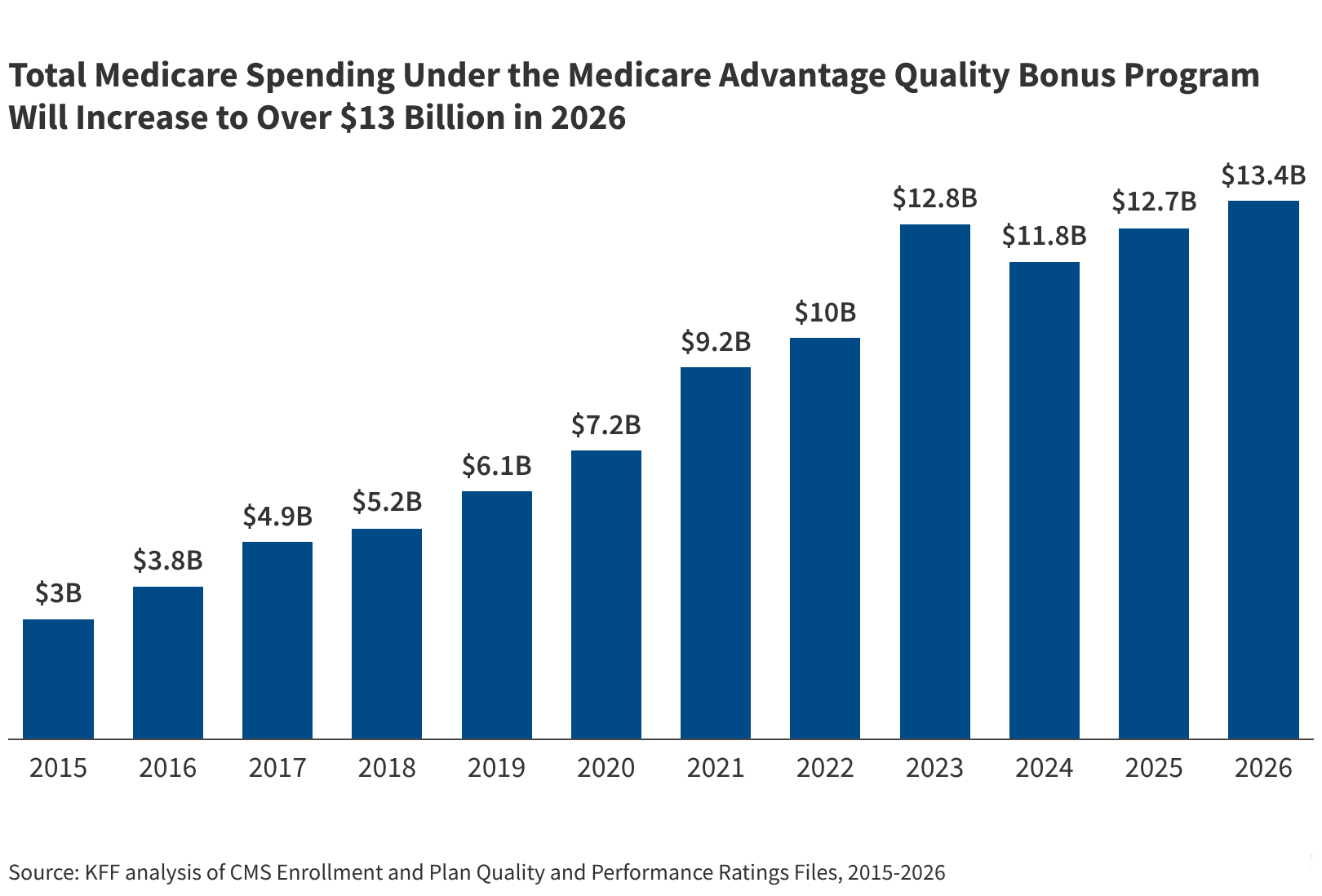
CMS recently finalized policies as part of the 2027 Medicare Advantage final rule that both enhance consumer protections and roll back changes to the Medicare Advantage program that were intended to protect consumers. These changes have gotten less attention than payment issues and changes to the star ratings system, which also affect plan payments, but could have implications for Medicare beneficiaries.

Examining the Potential Impact of Medicare’s New WISeR Model

A federal initiative to establish new prior authorization requirements in traditional Medicare, called the Wasteful and Inappropriate Service Reduction (WISeR) model, is likely to have only modest impact in its first year.

State Profiles for Dual-Eligible Individuals

This data collection draws on Medicare and Medicaid administrative data to present national and state-level information on people who are covered by both Medicare and Medicaid, referred to as dual-eligible individuals (also known as dually-enrolled beneficiaries).

Data Visualization

The Facts About Medicare Spending

This interactive provides the facts on Medicare spending. Medicare, which serves 67 million people and accounts for 12 percent of the federal budget and 21 percent of national health spending, is often the focus of discussions about health expenditures, health care affordability and the sustainability of federal health programs. u003cbru003eu003cbru003eExplore data on enrollment growth, Medicare spending trends overall and per person, growth in Medicare spending relative to private insurance, spending on benefits and Medicare Advantage, Part A trust fund solvency challenges, and growth in out-of-pocket spending by beneficiaries.u003cbru003eu003cbru003eu003ca href=u0022https://www.kff.org/medicare/issue-brief/faqs-on-medicare-financing-and-trust-fund-solvency/u0022 data-type=u0022linku0022 data-id=u0022https://www.kff.org/medicare/issue-brief/faqs-on-medicare-financing-and-trust-fund-solvency/u0022u003eRelated:u003ca href=u0022https://www.kff.org/medicare/issue-brief/faqs-on-medicare-financing-and-trust-fund-solvency/u0022u003e FAQs on Medicare Financing and Trust Fund Solvencyu003c/au003eu003c/au003e

Read More

Subscribe to KFF Emails

Choose which emails are best for you.
Sign up here

Filter

1,261 - 1,270 of 1,596 Results

  • Issues Facing Medicaid and CHIP

    Event Date:
    Event

    Cindy Mann, senior fellow of the Commission, testified to the Senate Subcommittee on Public Health of the Health, Education, Labor and Pensions Committee on how to sustain and expand health care coverage for low-income children and families, and disabled and elderly people in these challenging times. TESTIMONY Download

  • A Medicare Buy-In for the Near Elderly: Design Issues and Potential Effects on Coverage

    Report

    This report examines a Medicare-based approach to reducing the ranks of the uninsured that would permit early retirees between the ages of 62 and 65 to purchase coverage under Medicare. The paper begins with an overview of the challenges of insuring the near-elderly and explores the potential effects of a Medicare buy-in on coverage of this population. The authors conclude that, unless premiums for such coverage were low or tied to enrollees' income, this approach…

  • Prescription Drug Coverage for Medicare Beneficiaries: A Side-by-Side Comparison of Selected Proposals

    Report

    Updated, July 31, 2002 This document, prepared by Health Policy Alternatives, Inc., provides a side-by-side comparison of five major federal proposals to provide outpatient prescription drug coverage to Medicare beneficiaries, introduced as of July 31, 2002: H.R. 4954, The Medicare Modernization and Prescription Drug Act of 2002 (passed by the House of Representatives on June 28, 2002); H.R. 5019, The Medicare Rx Drug Benefit and Discount Act of 2002 (Rep. Rangel/House Democratic proposal); S. 2625,…

  • Medicare’s Disabled Beneficiaries: The Forgotten Population in the Debate Over Drug Benefits

    Report

    About 5 million Americans under age 65 qualify for Medicare coverage because they are totally and permanently disabled. They are more likely than the elderly to live in poverty, to be in poor health, and to experience difficulties living independently and performing basic daily tasks. A new study from The Commonwealth Fund and the Henry J. Kaiser Family Foundation, reports that the disabled have few options other than Medicaid for obtaining prescription coverage. In ,…

  • The Medicare Program: Servicios De Salud Administrados Por Medicare

    Fact Sheet

    Panorama General: Medicare proporciona servicios de salud a casi 39 millones de norteamericanos, incluyendo aproximadamente a 34 millones de ancianos y a 5 millones de discapacitados. La gran mayoria de estas personas cubren sus gastos medicos directamente mediante el programa tradicional de "pago por servicio," mientras que el 15 porciento restante (mas de 5 millone de beneficiarios) estan cubiertos bajo algun plan de servicio medico contratado con Medicare, principalmente las organizaciones de administracion de la…

  • Medicare Beneficiaries and HMOs: A Case Study of the Tampa-St. Petersburg Market

    Report

    This case study of the evolution of Medicare managed care in Tampa-St. Petersburg, Florida, is one of four in a series being prepared by Mathematica Policy Research, Inc., for the Kaiser Family Foundation to examine the growth and impact of Medicare managed care. The Medicare risk (HMO) program has developed at different rates and with different degrees of success across the country. The four unique market areas selected for the project include two with high…

  • Medicaid’s Role for Low-Income Medicare Beneficiaries

    Fact Sheet

    Medicaid's Role for Low-Income Medicare Beneficiaries An overview that identifies low-income Medicare beneficiaries (dual eligibles), how Medicaid can provide care for them, and the challenges to accessing care. Fact Sheet

  • New NPR/Kaiser Family Foundation/Harvard Kennedy School of Government Survey on Health Care

    Poll Finding

    A new survey by NPR, the Kaiser Family Foundation, and Harvard s Kennedy School of Government finds that many Americans have real problems when it comes to accessing and paying for health care, and even if they haven't yet faced a problem, many worry about getting and paying for care in the future. The survey also shows that, while people think helping seniors with the cost of prescription drugs should be a priority, most seniors…

  • Kaiser Health Poll Report – October 2002

    Poll Finding

    A broad and informative bimonthly report, the new Kaiser Health Poll Report provides key tracking information, including historical trends and in-depth analysis of public opinion about hot health care topics. The current Featured Topic contains additional trends in public knowledge and attention to news about seniors and prescription drugs, as well as public opinion about who should be covered by a Medicare prescription drug benefit and what constitutes a good plan. Report Topline & Methodology