Medicare

Medicare Open Enrollment

Part D Premiums and Cost Sharing in 2027

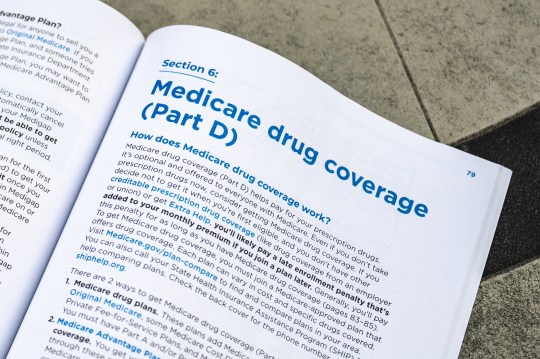
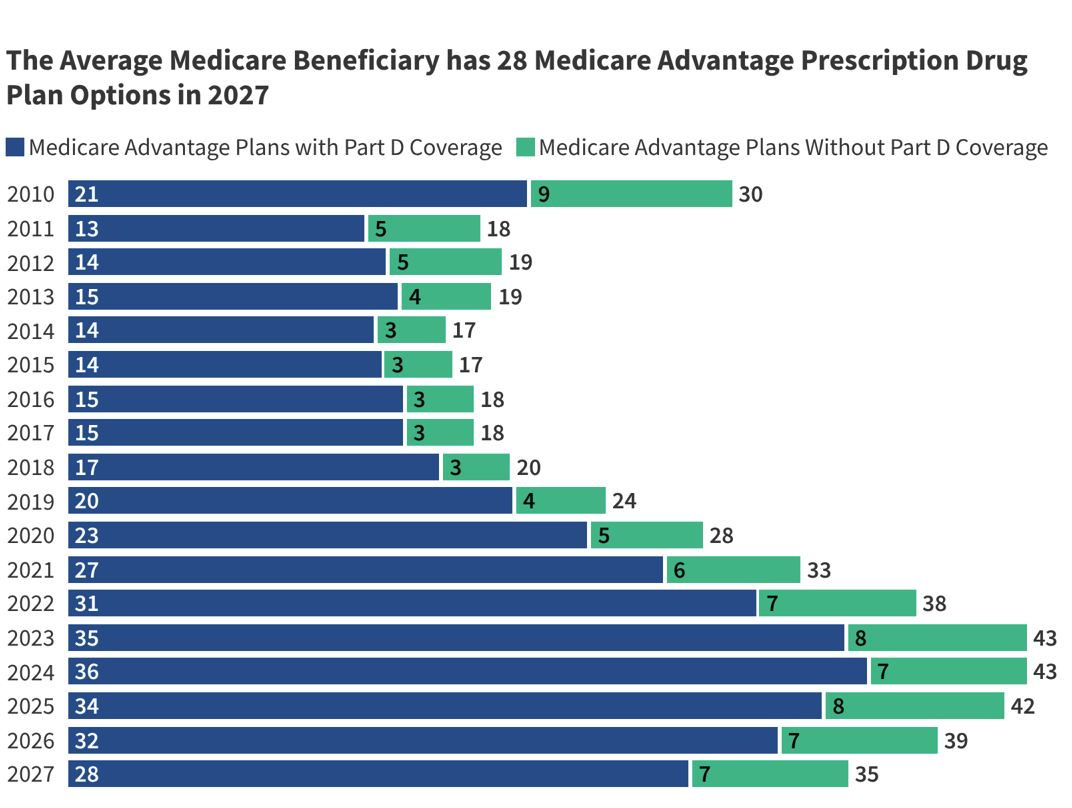
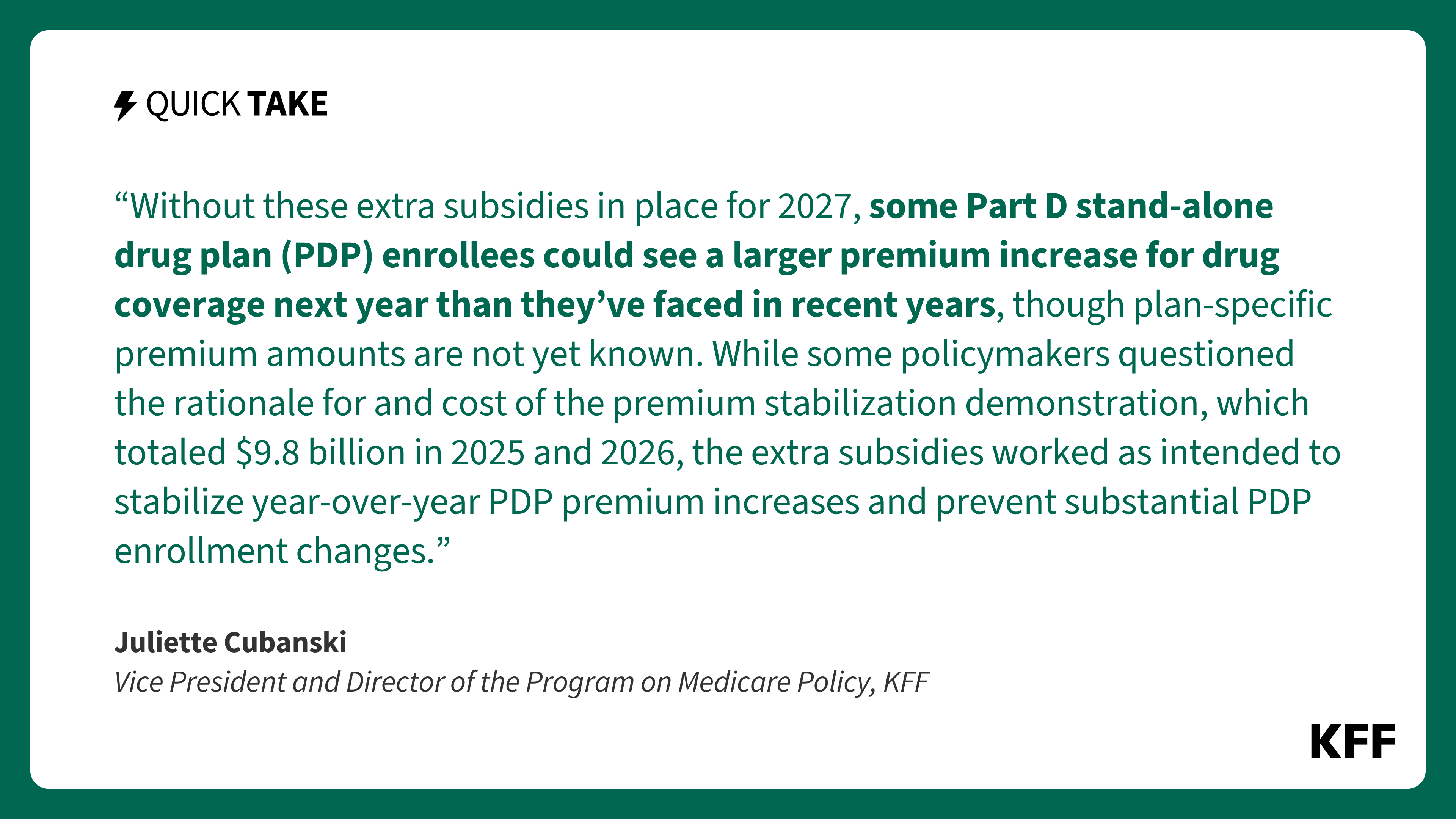
The average monthly premium for Medicare Part D coverage in stand-alone prescription drug plans (PDPs) will increase to $51 in 2027, up 50% from $34 in 2026, if current enrollees don’t switch into lower-premium plans during the open enrollment period. That is more than five times higher than the drug coverage premium in Medicare Advantage plans that offer Part D coverage, which is projected to average $9 per month in 2027. Most Part D enrollees also will face a deductible of several hundred dollars for drug coverage in 2027.
Also: Many Medicare Part D Stand-Alone Drug Plan Enrollees Will See Modest Premium Increases for 2027

Medicare Open Enrollment and Coverage Options: Key Questions and Answers

Each year, Medicare beneficiaries have an opportunity to make changes to how they receive their Medicare coverage during the nearly 8-week annual open enrollment period, which runs from October 15 through December 7. This brief answers key questions about the Medicare open enrollment period and Medicare coverage options.

NEW AND NOTEWORTHY

How Much Do People With Medicare Pay For Coverage?

This brief provides an overview of the costs faced by Medicare beneficiaries in traditional Medicare, Medicare Advantage, and Medicare Part D, including premiums, deductibles, copays, and coinsurance, focusing on costs in 2026.

What’s in a Name? From Today’s Medicare to Medicare for All

KFF’s Larry Levitt explains how proposals to create Medicare-for-All promise more generous benefits than the existing Medicare program, with no premiums or cost-sharing, but could end up looking more like Medicare if it became the subject of a serious national debate about the tradeoffs involved to implement it.

Medigap

Medigap Guaranteed Issue Requirements: An Overview of Federal and State Rules

This issue brief analyzes federal and state rules related to guaranteed issue requirements for Medigap policies and how they impact beneficiaries’ access to Medigap, including the implications for Medicare beneficiaries with pre-existing medical conditions and those under age 65 with long-term disabilities.

Data Visualization

The Facts About Medicare Spending

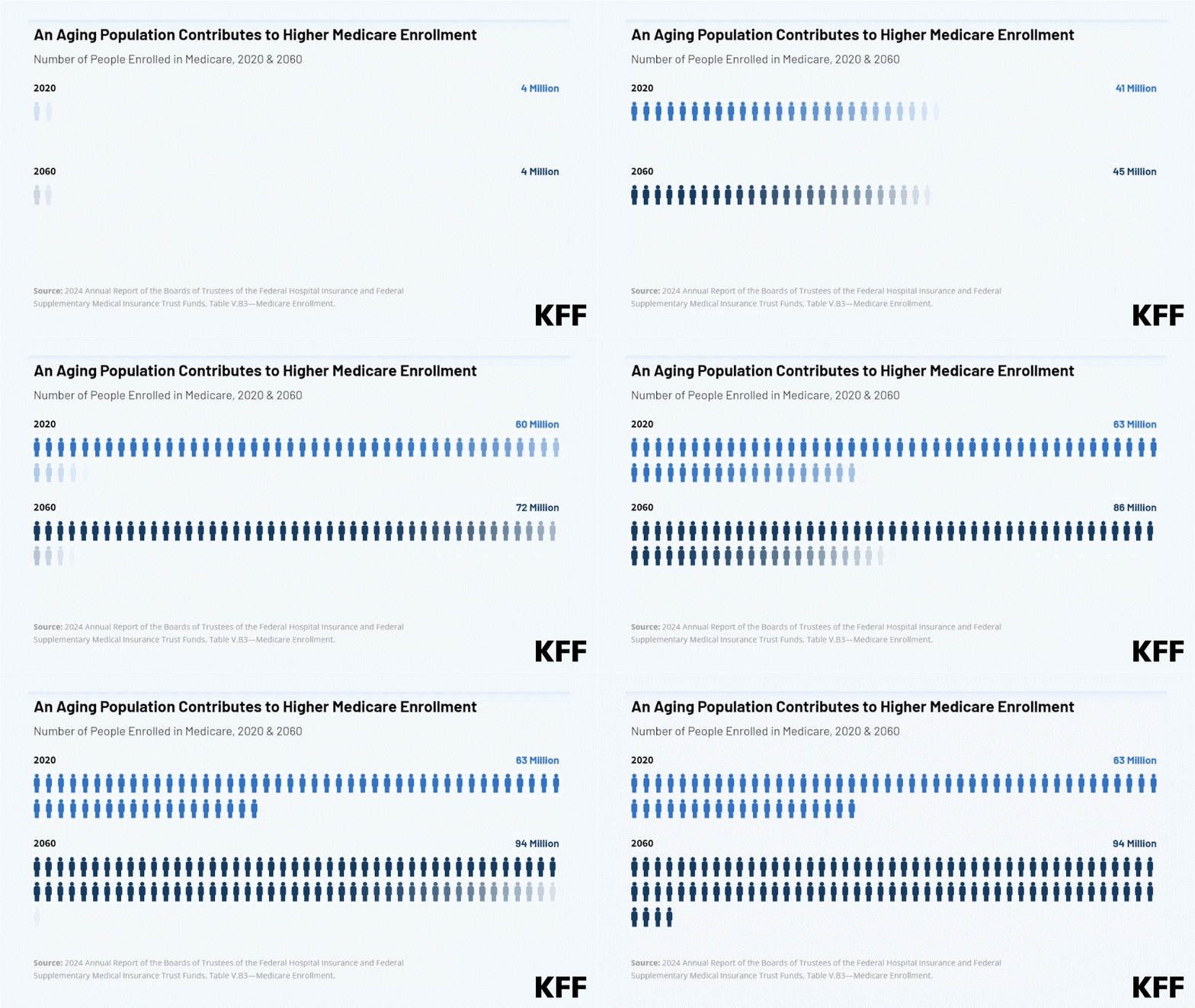
This interactive provides the facts on Medicare spending. Medicare, which serves 67 million people and accounts for 12 percent of the federal budget and 21 percent of national health spending, is often the focus of discussions about health expenditures, health care affordability and the sustainability of federal health programs. Explore data on enrollment growth, Medicare spending trends overall and per person, growth in Medicare spending relative to private insurance, spending on benefits and Medicare Advantage, Part A trust fund solvency challenges, and growth in out-of-pocket spending by beneficiaries.

Read More

Stay informed.

Stay informed.

Filter

1,131-1,140 of 1,627 results

  • Tracking Medicare Health and Prescription Drug Plans Report—May 2010

    Report

    This brief presents current monthly data on Medicare Advantage plan participation, enrollment and penetration. It also summarizes recent activities by the Centers for Medicare and Medicaid Services (CMS), participating health plans, and the research community pertaining to the Medicare Advantage program and prescription drug plans that began serving the Medicare population in January 2006. The report was prepared by researchers at Mathematica Policy Research Inc. May 2010 Report (.pdf) Previous Tracking Reports

  • Summary of Key Changes to Medicare in 2010 Health Reform Law   

    Issue Brief

    Summary of Key Changes to Medicare in 2010 Health Reform Law . This brief provides a detailed look at the improvements in Medicare benefits, changes to payments for providers and Medicare Advantage plans, various demonstration projects and other Medicare provisions in the law. It includes a timeline of key dates for implementing the Medicare-related provisions in the law.

  • Explaining Health Reform: Medicare and the New Independent Payment Advisory Board

    Issue Brief

    This brief describes how the new board created under the 2010 health reform law is expected to limit the growth in Medicare spending over time. Starting in 2014, if projected per capita Medicare spending exceeds targets set in the law, the board must recommend ways to reduce Medicare spending, while maintaining quality and access to care for beneficiaries. The board’s recommendations automatically take effect the next year unless Congress adopts an alternative plan to achieve…

  • Explaining Health Reform: Key Changes in the Medicare Advantage Program

    Issue Brief

    This brief examines the changes in the 2010 health reform law affecting the Medicare Advantage program, which gives beneficiaries the option of enrolling in private insurance plans for their Medicare benefits, instead of the traditional fee-for-service program. The reform law will gradually reduce Medicare payments to these plans to bring the average payment closer to the costs of traditional fee-for-service Medicare, while rewarding plans with high-quality ratings. The brief also describes new benefit requirements for…

  • Pulling it Together: When Premiums Go Up 39%

    Perspective

    Our group that works on health care cost issues just updated an analysis that sheds light on what’s really happening to people in the individual health insurance market, the issue Secretary Sebelius, a former Kansas insurance commissioner, and others have put in the spotlight by calling on Anthem and other insurance companies to account for their proposed high premium increases. The analysis shows that people buying health insurance on their own in the individual market…

  • Explaining Health Care Reform: Key Changes to the Medicare Part D Drug Benefit Coverage Gap

    Issue Brief

    On March 23, 2010, President Obama signed the Patient Protection and Affordable Care Act into law. The health reform law, as modified by the Health Care and Education Reconciliation Act of 2010 which passed the House of Representatives on March 21, 2010 and is under consideration in the Senate, makes several key changes to the Medicare Part D drug benefit to reduce Part D enrollees’ out-of-pocket liability when they reach the coverage gap, known as…

  • Pulling it Together: An Actuarial Rorschach Test

    Perspective

    Drew Altman, Larry Levitt, Gary Claxton My colleagues have worked on this column with me and I invited them to join me as authors. As with pretty much every other discussion of health care going back to the days of Roosevelt, the great reform debate of 2009 (and now 2010) has been distilled into an ideological battle over the role of government. A government-sponsored "public option" has been off the table for a while now,…

  • Medicare Health and Prescription Drug Plans Report

    Other Post

    Medicare Health and Prescription Drug Plans Monthly Tracking Reports These briefs present monthly data on Medicare Advantage participation, enrollment and penetration. They also summarize recent activities by the Centers for Medicare and Medicaid Services (CMS), participating health plans, and the research community pertaining to the Medicare Advantage program and prescription drug plans that began serving the Medicare population in January 2006. The reports were prepared by researchers at Mathematica Policy Research Inc. April 2010 Report…

  • Medicare Advantage 2010 Data Spotlight: Benefits and Cost-Sharing

    Issue Brief

    This data spotlight examines trends in benefits and cost-sharing for Medicare Advantage plans in 2010, including the wide variations found across plans and the rapid increase in cost sharing requirements for some benefits, including stays in skilled nursing facilities. It also examines the annual limits on out-of-pocket spending set by most Medicare Advantage plans and the availability of coverage for drugs in the Medicare drug benefit's coverage gap, or "doughnut hole." This data spotlight is…