Medicaid

new and noteworthy

Medicaid work requirements

Medicaid and the Road Ahead: Spending Cuts, Work Requirements and What’s Next for States, Providers and Families

Event Date:

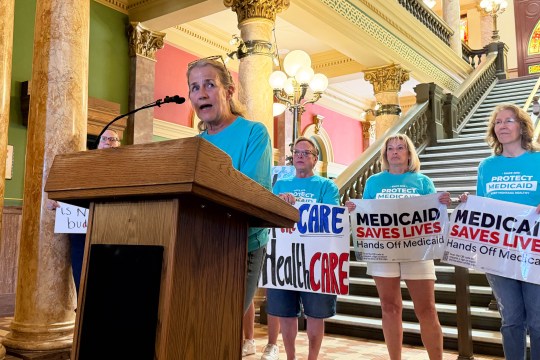
Passed last year, President Trump’s One Big Beautiful Bill Act made significant changes to Medicaid—the primary insurance provider for health and long-term care for people with low incomes. These changes are expected to lead to coverage loss for many current enrollees and will reduce funding for Medicaid, placing new financial pressures on states and health care providers. On July 23, KFF and States Newsroom hosted an event focused on the impacts of work requirements and other federal policy changes on states, health care systems, and people.

understanding medicaid

Medicaid Financing

Medicaid represents $1 out of every $5 spent on health care in the U.S. and is the major source of financing for states to provide health coverage and long-term care. This brief examines key questions about Medicaid financing and how it works.

Medicaid Program Integrity

This brief explains what is known about improper payments and fraud and abuse in Medicaid and describes ongoing state and federal actions to address program integrity.

Medicaid and Provider Taxes

All states except Alaska cover some state Medicaid costs with taxes on health care providers. This brief uses data from KFF’s 2024-2025 survey of Medicaid directors to describe current practices and the federal rules governing them.

Medicaid and Hospitals

Absorbing reductions in Medicaid spending could be challenging for hospitals, particularly for those that are financially vulnerable. This brief provides data on the reach of Medicaid across hospitals, patients, and charity care.

Medicaid Home Care

This issue brief provides an overview of what Medicaid home care (also known as “home- and community-based services”) is, who is covered, and what services were available in 2025.

Dual Eligibles

Stay informed.

Stay informed.

Filter

331 - 340 of 2,736 Results

  • Medicaid 1115 Waiver Watch: Round-up of Key Themes at the End of the Biden Administration

    Issue Brief

    Section 1115 Medicaid demonstration waivers offer states an avenue to test new approaches in Medicaid that differ from what is required by federal statute, so long as the approach is likely to “promote the objectives of the Medicaid program.” Waivers generally reflect priorities identified by states as well as changing priorities from one presidential administration to another. The Biden administration encouraged states to propose waivers that expand coverage, reduce health disparities, advance whole-person care, and…

  • Could Trump Walk Away from Unpopular Health Proposals?

    From Drew Altman

    In a new column, KFF President and CEO Drew Altman discusses what President Trump’s decision to pull back the broad freeze in federal grant funding might portend for his response to future policies in health that prove controversial or unpopular.

  • Medicaid Section 1115 Waivers: The Basics

    Issue Brief

    Section 1115 Medicaid demonstration waivers offer states an avenue to test new approaches in Medicaid that differ from what is required by federal statute. Nearly all states have at least one active Section 1115 waiver and some states have multiple 1115 waivers. This brief explains what Section 1115 waivers are and how they are used, summarizes key waiver requirements, and outlines the application and approval process.

  • Medicaid: What to Watch in 2025

    Issue Brief

    In 2025, many issues are at play that could affect Medicaid coverage, financing, and access to care.

  • KFF Health Tracking Poll: Public Weighs Health Care Spending and Other Priorities for Incoming Administration

    Feature

    With the incoming Trump administration and Republican-led Congress looking to ways to reduce federal spending, this Poll finds that the Medicare and Medicaid programs remain broadly popular, and more people favor more spending on those programs than less spending. Among potential actions on health, the public sees price transparency and limiting chemicals in food as top priorities. Few say so about cuts to Medicaid and restrictions on abortion.

  • As Congress Looks to Reduce Federal Spending, Medicare and Medicaid Remain Broadly Popular, and At Least Twice as Many People Want to Increase Spending Rather Than Cut It

    News Release

    With the incoming Trump administration and Republican-led Congress looking to ways to reduce federal spending, a new KFF Health Tracking Poll finds that the Medicare and Medicaid programs remain broadly popular, and more people favor more spending on those programs than less spending. About eight in 10 Americans overall view Medicare (82%) and Medicaid (77%) favorably. This includes majorities across partisans, including most Republicans (75% view Medicare favorably and 63% view Medicaid favorably). About half…

  • Affordable Care Act Marketplace and Medicaid Expansion Enrollment Reached a Combined 44 Million in 2024  

    News Release

    A new KFF analysis finds that there were 44 million people enrolled in health coverage through the Affordable Care Act’s Marketplaces and its expansion of the Medicaid program in 2024. That represents about 1 in every 6 people under age 65, or 16.4%.   There was significant variation in ACA enrollment across states, ranging from about 1 in 4 nonelderly people in Louisiana, Oregon, Florida, and New York to fewer than 1 in 10 in…