Medicaid

Medicaid work requirements

Medicaid and the Road Ahead: Spending Cuts, Work Requirements and What’s Next for States, Providers and Families

Event Date:

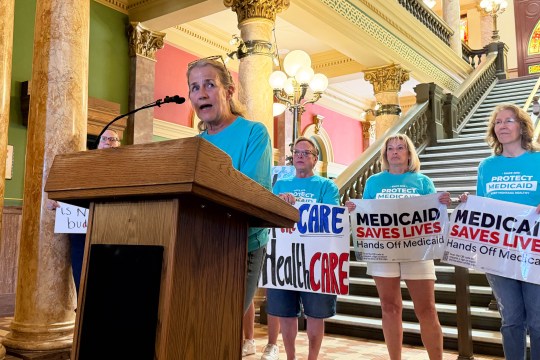
Passed last year, President Trump’s One Big Beautiful Bill Act made significant changes to Medicaid—the primary insurance provider for health and long-term care for people with low incomes. These changes are expected to lead to coverage loss for many current enrollees and will reduce funding for Medicaid, placing new financial pressures on states and health care providers. On July 23, KFF and States Newsroom hosted an event focused on the impacts of work requirements and other federal policy changes on states, health care systems, and people.

new and noteworthy

understanding medicaid

Medicaid Financing

Medicaid represents $1 out of every $5 spent on health care in the U.S. and is the major source of financing for states to provide health coverage and long-term care. This brief examines key questions about Medicaid financing and how it works.

Medicaid Program Integrity

This brief explains what is known about improper payments and fraud and abuse in Medicaid and describes ongoing state and federal actions to address program integrity.

Medicaid and Provider Taxes

All states except Alaska cover some state Medicaid costs with taxes on health care providers. This brief uses data from KFF’s 2024-2025 survey of Medicaid directors to describe current practices and the federal rules governing them.

Medicaid and Hospitals

Absorbing reductions in Medicaid spending could be challenging for hospitals, particularly for those that are financially vulnerable. This brief provides data on the reach of Medicaid across hospitals, patients, and charity care.

Medicaid Home Care

This issue brief provides an overview of what Medicaid home care (also known as “home- and community-based services”) is, who is covered, and what services were available in 2025.

Dual Eligibles

Stay informed.

Stay informed.

Filter

2,541 - 2,550 of 2,731 Results

  • Trends in State Medicaid Programs: Looking Back and Looking Ahead

    Issue Brief

    For 15 years, KCMU and HMA have conducted annual surveys of Medicaid programs across the country. The NAMD has formally collaborated on this project since 2014. This brief provides a look back at the enrollment and spending trends as well as the multitude of policy actions taken by states across key areas: eligibility and application processes; provider rates and taxes; benefits, pharmacy and long-term care since as well as highlighting more recent data on managed…

  • Uncompensated Hospital Care Fell by $6 Billion Nationally in 2014, Primarily in Medicaid Expansion States; However Many Hospitals Worry About Future Changes in Medicaid Supplemental Payments

    News Release

    The Affordable Care Act’s coverage expansions have benefited hospitals financially, helping to produce an overall decline nationwide in uncompensated care from $34.9 billion to $28.9 billion in 2014, according to a new analysis by the Kaiser Family Foundation. Nearly all of the decline occurred in Medicaid expansion states, where uncompensated care costs were $10.8 billion in 2014 – down $5.7 billion, or 35 percent, from 2013, the year before ACA coverage expansions took full effect. The…

  • A First Look at North Carolina’s Section 1115 Medicaid Waiver’s Healthy Opportunities Pilots

    Issue Brief

    Medicaid funds typically cannot be used to pay for non-medical interventions that target the social determinants of health. However, in October 2018, CMS approved North Carolina’s Section 1115 waiver which provides financing for a new pilot program, called “Healthy Opportunities Pilots,” to cover evidence-based non-medical services that address specific social needs linked to health/health outcomes. The pilots will address housing instability, transportation insecurity, food insecurity, and interpersonal violence and toxic stress for a limited number…

  • Disability and Technical Issues Were Key Barriers to Meeting Arkansas’ Medicaid Work and Reporting Requirements in 2018

    Issue Brief

    This issue brief analyzes the impact of the four measures intended to safeguard coverage for people with disabilities and others who should not have been subject to the work and reporting requirements. It draws on data newly available from Arkansas’ 2018 annual waiver report to CMS and monthly data released by the state while the requirements were in effect. The data reveal that few people used these safeguard measures relative to the number of people…

  • Medicaid Financial Eligibility for Seniors and People with Disabilities: Findings from a 50-State Survey

    Issue Brief

    This brief presents the latest information on Medicaid financial eligibility criteria and state adoption of major coverage pathways related to old age and disability. The findings are based on a survey of the 50 states and the District of Columbia that asked questions related to financial eligibility and policy choices related to mandatory and optional eligibility pathways. The brief also analyzes the likelihood of adopting optional pathways given a state’s ACA expansion status.

  • Utilization and Spending Trends in Medicaid Outpatient Prescription Drugs, 2014-2017

    Issue Brief

    Although the outpatient drug benefit accounts for only 6% of total Medicaid spending, drug spending has increased by double digits in recent years, and is expected to grow faster than most other Medicaid services in the next 10 years. This issue brief examines drug spending and utilization from 2014 through 2017 by drug group, brand and generic status, and biologic status to understand the causes for this increase in spending.

  • Analysis Finds that Medications for Hepatitis C and HIV/AIDS Are the Costliest Group of Outpatient Prescription Drugs for Medicaid, While Diabetes Drugs Have Posted the Sharpest Rise in Costs 

    News Release

    Antiviral medications, including those that treat hepatitis C and HIV/AIDS, cost the Medicaid program more money (before rebates) than any other group of outpatient prescription drugs for each year from 2014 to 2017, according to a new KFF analysis. The analysis of utilization and spending trends finds that antivirals accounted for more than 13 percent of the $63.6 billion in Medicaid outpatient drug spending pre-rebates in 2017 -- a level disproportionate to their utilization and…

  • “Partial Medicaid Expansion” with ACA Enhanced Matching Funds: Implications for Financing and Coverage

    Issue Brief

    The Affordable Care Act (ACA) provides enhanced federal matching funds to states that expand Medicaid to nonelderly adults up to 138% of the federal poverty level (FPL, $17,236/year for an individual in 2019). The ACA enhanced match (93% in 2019, and 90% in 2020 and thereafter) is substantially higher than states’ traditional Medicaid matching rate. A few states have sought Section 1115 demonstration waiver authority from the Centers for Medicare and Medicaid Services (CMS) to…

  • “Partial” Medicaid Expansions Could Limit States’ Spending But Cover Fewer People at a Higher Federal Cost Compared to Traditional ACA Expansions

    News Release

    If states were able to receive enhanced Affordable Care Act matching funds for “partial” expansions of Medicaid, fewer people would get health coverage and the federal government would spend more, compared to a traditional expansion under the law, KFF explains in a new brief. The explainer describes how a partial expansion would differ from a traditional ACA Medicaid expansion and summarizes some of the expected effects. It also documents which states have sought federal approval…