Medicaid

Medicaid work requirements

Nebraska Renewal Outcomes Among Individuals Subject to Medicaid Work Requirements

Early Medicaid Work Requirement Insights From Nebraska

This brief describes the verification process for Medicaid work requirements in Nebraska and examines early data on outcomes for individuals subject to work requirements. Among Medicaid enrollees renewing coverage under Nebraska's work requirements, 93% met the requirements or qualified for an exemption —while 7% lost coverage.

Tracking Implementation of the 2025 Reconciliation Law: Medicaid Work Requirements

KFF’s interactive tracks key data and policies that will affect how states implement Medicaid work requirements, which are required under the 2025 budget reconciliation law starting in January 2027. The tracker includes state-level data on Medicaid enrollment and renewal outcomes as well as current state enrollment and renewal policies. The Congressional Budget Office estimates that the 2025 reconciliation law will increase the number of people who are uninsured in 2034 by 10 million. Coverage losses from Medicaid work requirements account for over half, or 5.3 million, of the increase in the number of uninsured.

new and noteworthy

understanding medicaid

Medicaid Financing

Medicaid represents $1 out of every $5 spent on health care in the U.S. and is the major source of financing for states to provide health coverage and long-term care. This brief examines key questions about Medicaid financing and how it works.

Medicaid Program Integrity

This brief explains what is known about improper payments and fraud and abuse in Medicaid and describes ongoing state and federal actions to address program integrity.

Medicaid and Provider Taxes

All states except Alaska cover some state Medicaid costs with taxes on health care providers. This brief describes states’ current provider taxes and explores how rules governing provider taxes are changing.

Medicaid and Hospitals

Absorbing reductions in Medicaid spending could be challenging for hospitals, particularly for those that are financially vulnerable. This brief provides data on the reach of Medicaid across hospitals, patients, and charity care.

Medicaid Home Care

This issue brief provides an overview of what Medicaid home care (also known as “home- and community-based services”) is, who is covered, and what services were available in 2025.

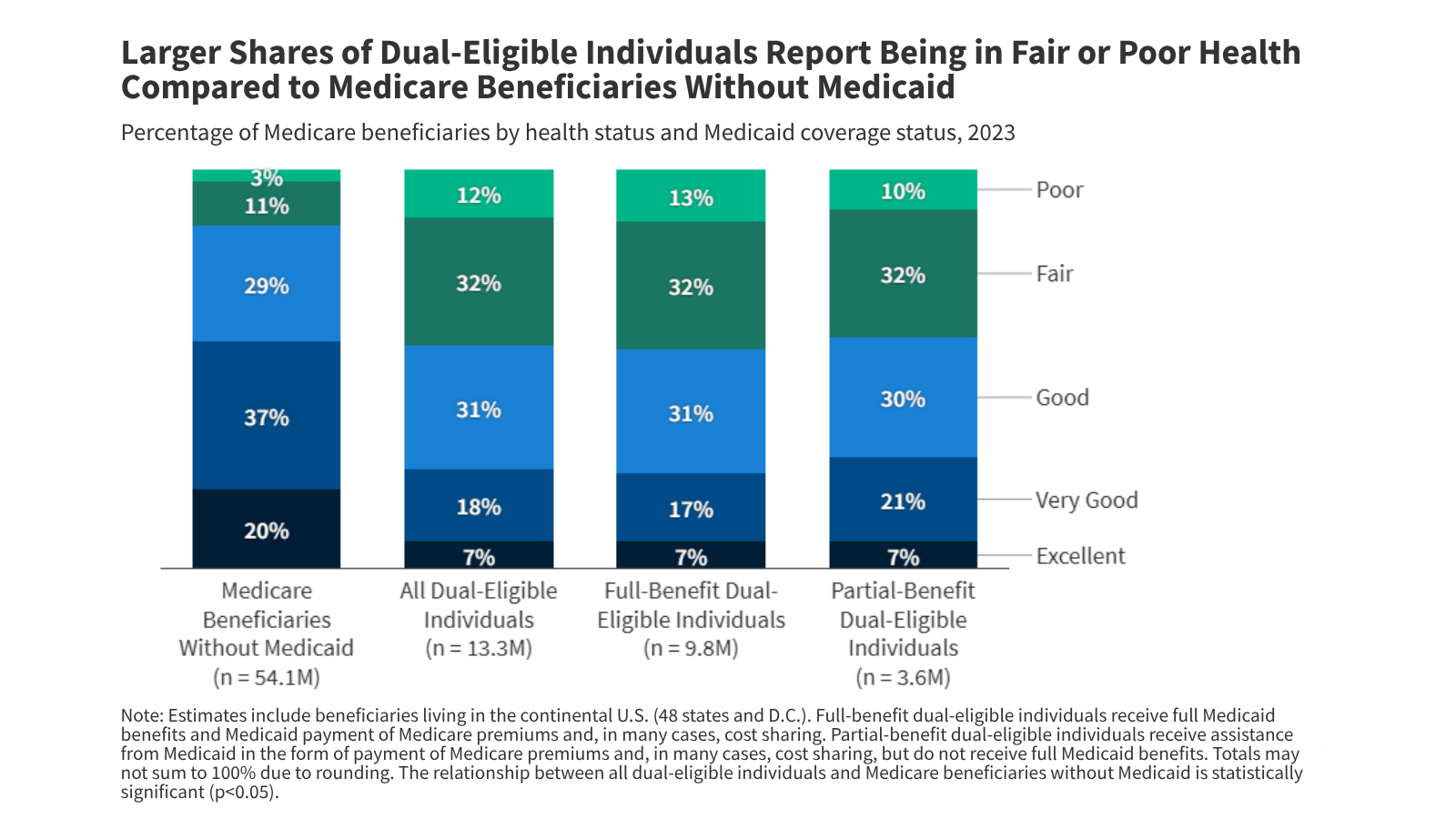
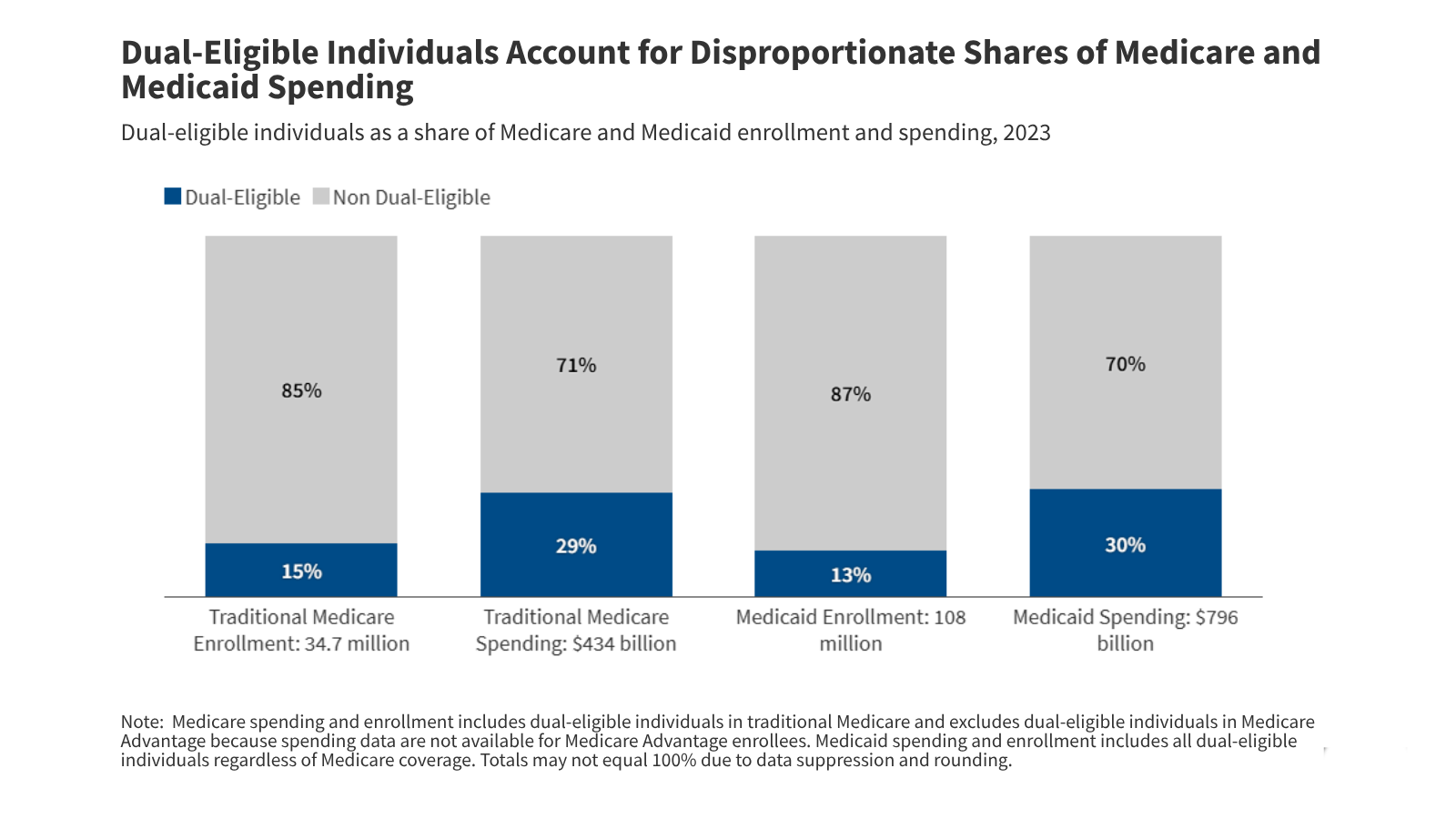
Dual Eligibles

Stay informed.

Stay informed.

Filter

2,261-2,270 of 2,742 results

  • States’ Role in Administering the New Part D Low-Income Subsidy Program: A Conference Call Discussion

    Other Post

    States' Role in Administering the New Part D Low-Income Subsidy Program: A Conference Call Discussion The Medicare Modernization Act (MMA) created a major new subsidy program for an estimated 14 million low-income Medicare beneficiaries that will provide assistance with their cost-sharing obligations under the Part D drug benefit. The MMA requires state Medicaid agencies, along with the Social Security Administration (SSA), to accept applications for the new low-income subsidy. MMA also specifies that people who…

  • Medicaid Disease Management: Issues and Promises

    Issue Brief

    This issue paper presents information from nine states that have developed and implemented disease management programs for adult Medicaid enrollees with chronic conditions such as asthma, diabetes, and congestive heart failure, or who are trying to manage these populations through capitated managed care. It examines the motivations, goals, strategies and impact of these state efforts, in addition to describing the details of their initiatives. Issue Paper (.pdf)

  • Papers on Issues For People With Medicare Raised By Proposed Drug Benefit Regulations

    Issue Brief

    Papers on Issues For People With Medicare Raised By Proposed Drug Benefit Regulations The Kaiser Family Foundation has commissioned a series of papers to explore key issues that may be of concern for Medicare beneficiaries as the new Medicare drug benefit is implemented. These papers focus on specific areas of potential concern for people with Medicare. In addition, the Foundation also has produced a timeline of upcoming important dates leading up to the implementation of…

  • Building an On-Ramp to Children’s Health Coverage:  A Report on California’s Express Lane Eligibility Program

    Report

    Building an On-Ramp to Children's Health Coverage: A Report on California's Express Lane Eligibility Program This report documents the results from California’s Express Lane Eligibility (ELE) initiative through the school lunch program (now one year into implementation), which has been piloted in 72 schools in 5 school districts in the state. ELE is an enrollment strategy that targets large numbers of uninsured children, who are eligible for the federal-state programs Medicaid and SCHIP, where they…

  • Health Care and the 2004 Elections

    Other Post

    ** Update: For information on health care and the 2008 election, visit www.health08.org. ** Health care issues continue to be important for many Americans and a vital part of the policy debates in Washington and around the country. During an election season, candidates propose and debate their solutions for the pressing policy issues facing their constituents. The 2004 election season is no different and the Kaiser Family Foundation is issuing informational materials on some of…

  • Medicaid and Other Public Programs for Low-Income Childless Adults:  An Overview of Coverage in Eight States

    Report

    Medicaid and Other Public Programs for Low-Income Childless Adults: An Overview of Coverage in Eight States This report profiles childless adult programs in eight state-level jurisdictions: the District of Columbia, Maine, Massachusetts, Minnesota, New York, Oregon, Pennsylvania, and Washington. Report (.pdf) Background State Reports prepared by the Economic and Social Research Institute

  • Tennessee’s New “Medically Necessary” Standard:  Uncovering the Insured?

    Issue Brief

    Tennessee's New "Medically Necessary" Standard: Uncovering the Insured? This policy brief describes a new standard passed by Tennessee’s legislature for determining whether an item or service is “medically necessary” under the state’s Medicaid program, TennCare. The brief concludes with some questions regarding the implications of the new standard for the populations that Medicaid covers nationally, especially low-income children under age 21, individuals with disabilities, and the elderly, as well as the providers who treat them.…