Medicaid

Medicaid work requirements

Medicaid and the Road Ahead: Spending Cuts, Work Requirements and What’s Next for States, Providers and Families

Event Date:

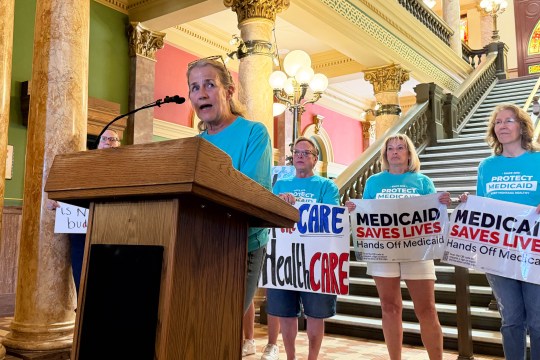
Passed last year, President Trump’s One Big Beautiful Bill Act made significant changes to Medicaid—the primary insurance provider for health and long-term care for people with low incomes. These changes are expected to lead to coverage loss for many current enrollees and will reduce funding for Medicaid, placing new financial pressures on states and health care providers. On July 23, KFF and States Newsroom hosted an event focused on the impacts of work requirements and other federal policy changes on states, health care systems, and people.

new and noteworthy

understanding medicaid

Medicaid Financing

Medicaid represents $1 out of every $5 spent on health care in the U.S. and is the major source of financing for states to provide health coverage and long-term care. This brief examines key questions about Medicaid financing and how it works.

Medicaid Program Integrity

This brief explains what is known about improper payments and fraud and abuse in Medicaid and describes ongoing state and federal actions to address program integrity.

Medicaid and Provider Taxes

All states except Alaska cover some state Medicaid costs with taxes on health care providers. This brief uses data from KFF’s 2024-2025 survey of Medicaid directors to describe current practices and the federal rules governing them.

Medicaid and Hospitals

Absorbing reductions in Medicaid spending could be challenging for hospitals, particularly for those that are financially vulnerable. This brief provides data on the reach of Medicaid across hospitals, patients, and charity care.

Medicaid Home Care

This issue brief provides an overview of what Medicaid home care (also known as “home- and community-based services”) is, who is covered, and what services were available in 2025.

Dual Eligibles

Stay informed.

Stay informed.

Filter

2,211 - 2,220 of 2,731 Results

  • Medicaid Moving Forward

    Issue Brief

    Medicaid is the nation’s main public health insurance program for people with low incomes, and it is the single largest source of health coverage in the U.S., covering nearly 70 million Americans. Medicaid also finances 16% of total personal health spending in the nation. States design and administer their own Medicaid programs within federal requirements, and states and the federal government finance the program jointly. As a major payer, Medicaid is a core source of…

  • A Profile of Community Health Center Patients: Implications for Policy

    Issue Brief

    Community health centers are a key source of primary care in underserved areas. Their role will grow as coverage expands under the ACA. To sharpen understanding of the health center patient population, this brief compares them to the low-income population overall, using the Health Center Patient Survey and National Health Interview Survey. The pre-ACA profile of health center patients that emerges sets the stage for measuring change and highlights important implications of states’ Medicaid expansion…

  • How the Republican Health Agenda Could Play Out

    From Drew Altman

    In this Wall Street Journal Think Tank column Drew Altman discusses how Republicans will assume ownership of health care’s policy and political problems as they assume control, and how that may affect their plans for the Affordable Care Act, Medicaid and Medicare.

  • What’s at Stake in a Potential Repeal of the ACA Medicaid Expansion?

    News Release

    President-elect Trump and Republican leaders in Congress have vowed to repeal the Affordable Care Act (ACA) and replace it with an alternative plan. There are now 32 states (including DC) that have adopted the ACA’s Medicaid expansion. While the details of a repeal-and-replace plan are not yet available to assess its impact, a new brief reveals what’s potentially at stake for Medicaid in the debate by examining the changes in health coverage and financing that…

  • Linking Medicaid and Supportive Housing: Opportunities and On-the-Ground Examples

    Issue Brief

    There is evidence that supportive housing can contribute to improved outcomes for people experiencing homelessness or at risk of homelessness. It can also advance community integration of seniors and people with disabilities. Medicaid does not pay for room and board, but it can pay for many housing-related services for Medicaid beneficiaries. This issue brief discusses how Medicaid can support integrated strategies and profiles three initiatives that illustrate different approaches to linking Medicaid and supportive housing.

  • New Interactive Map with Local Data: Estimated 2016 ACA Marketplace Enrollment by Congressional District

    News Release

    As the 115th U.S. Congress deliberates the future of the Affordable Care Act, also known as Obamacare, a new interactive map from the Kaiser Family Foundation provides estimates of the number of people in each congressional district who enrolled in a 2016 ACA marketplace health plan and the political party of each district’s representative as of January. The analysis also includes maps charting by state the total number of people enrolled under the ACA Medicaid…

  • Community Health Centers: Recent Growth and the Role of the ACA

    Issue Brief

    This brief draws on federal data and our 2016 survey of health centers to provide a 2015 profile of health centers, analyze recent changes in patient coverage and service capacity, and compare health centers in Medicaid expansion and non-expansion states. It also considers the implications of a repeal of the ACA for health centers and the low-income communities they serve.

  • Most State Medicaid Programs Cover Prescription Contraceptives, While Coverage of Over-the-Counter Contraceptives Varies

    News Release

    A new Kaiser Family Foundation survey of states’ Medicaid family planning policies under fee-for-service finds wide coverage of most prescription contraceptives among 40 states and the District of Columbia (DC), but variable coverage of emergency contraceptives and other family planning-related services. It is the first published report on state coverage of family planning benefits since the passage of the Affordable Care Act (ACA). The states surveyed all cover daily oral contraceptives, and most also cover…

  • Snapshot of Where Hillary Clinton and Donald Trump Stand on Seven Health Care Issues

    Issue Brief

    Where do the 2016 Presidential candidates, Hillary Clinton and Donald Trump, stand on key health care issues? This snapshot outlines the candidates' positions and policy statements on issues such as health insurance, the ACA, Medicaid, Medicare, the opioid epidemic, prescription drug costs, women's reproductive health, and Zika.