new and noteworthy

Donor Government Funding for HIV in Low- and Middle-Income Countries in 2025

This report provides an analysis of donor government funding to address the HIV response in low- and middle-income countries in 2025, the latest year available, as well as trends over time. It includes both bilateral funding from donors and their multilateral contributions to the Global Fund to Fight AIDS, Tuberculosis and Malaria (Global Fund), UNITAID, and Joint United Nations Programme on HIV/AIDS (UNAIDS).

selected resources

Global Health Aid Cuts

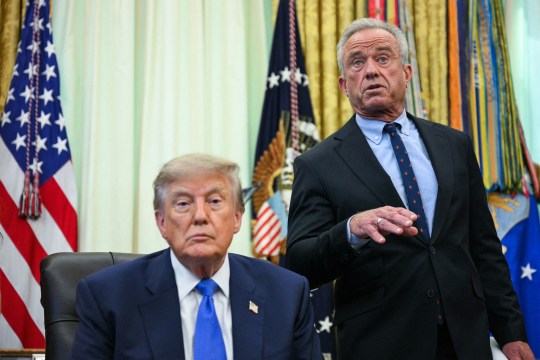
This collection of resources chronicles what recent Trump administration global health aid cuts mean for the future of global health programs and the people who rely on them.

A promotional image for the the KFF Health Policy 101 U.S. Government and Global Health

The U.S. Government and Global Health

In this Health Policy 101 chapter, investigate the U.S. role in global health, including the major initiatives the United States supports, funding levels, and agencies involved in implementing program area efforts.

the essentials

Global Health Trackers

U.S. Global Health Budget Tracker

This tracker provides regularly updated information on U.S. government funding for global health. It includes historical trends and tracks funding levels for U.S. global health efforts through bilateral and multilateral contributions and by program area and agency.

Stay informed.

Stay informed.

Filter

101 - 110 of 659 Results

  • Child and Teen Firearm Mortality in the U.S. and Peer Countries

    Issue Brief

    Firearms were responsible for 20 percent of all child and teen deaths in the U.S. for both 2020 and 2021, compared to an average of less than 2 percent in similarly large and wealthy nations. This puts the U.S. far ahead of peer nations in child and teen firearm deaths.

  • Poll: Two Thirds Believe Dissolving USAID Will Lead to More Illness and Death Globally, While Nearly Half Say It Would Significantly Reduce the Budget Deficit and Fund Domestic Programs

    News Release

    As the Trump administration works to dissolve the U.S. Agency for International Development (USAID), a new KFF poll finds that two-thirds (67%) of the public believe these actions will increase illness and death in low-income countries, and a similar majority (62%) believe it will result in more humanitarian crises around the world.At the same time, nearly half of the public believe the dissolution of USAID will significantly reduce the U.S. budget deficit (47%) and allow…

  • 10 Things to Know About U.S. Funding for Global Health

    Issue Brief

    This KFF brief provides key facts about U.S. funding for global health, including the range of efforts the U.S. supports, U.S. agencies/departments involved in global health activities, funding trends, and more.

  • Assessing PEPFAR’s Health Spillover Effects Beyond HIV: An Update

    Issue Brief

    This analysis updates prior work that assessed the association between PEPFAR investments and several health indicators, beyond HIV. It finds that PEPFAR continues to be associated with significant improvement in these broader health gains, suggesting a spillover effect beyond the program's HIV focus.

  • An image of text is an excerpt from Josh Michaud's quick take which reads, "The outbreak is also a kind of test case for how well the U.S. is positioned to respond to global disease threats under the Trump administration. Since early last year, the administration has pulled back U.S. engagement on global health, which has included completing a withdrawal from membership in the World Health Organization (WHO).."

    The Hantavirus Outbreak Is a Test Case for the U.S. Public Health Response

    Quick Insights

    The outbreak is also a kind of test case for how well the U.S. is positioned to respond to global disease threats under the Trump administration. Since early last year, the administration has pulled back U.S. engagement on global health, which has included completing a withdrawal from membership in the World Health Organization (WHO)...

  • What is happening to USAID?

    Quick Insights

    The more important question, though, is not whether USAID sits in the State Department or remains independent, but what functions it does and does not perform (and will be kept), and more broadly, as a result, what the United States role in the world is.

  • Poll: 4 in 10 Americans Report Losing Their Jobs or Work-Related Income Due to the Coronavirus Crisis, Including More Than Half of Part-Time Workers

    News Release

    Americans, Regardless of Partisan Identity, Prioritize Slowing Coronavirus’ Spread over Restarting the Economy With coronavirus cases rising and businesses shutting down, four in 10 (39%) U.S. residents say they already have lost a job or income due to the crisis, the latest KFF Health Tracking Poll finds. This includes most part-time workers (54%), as well as nearly half of parents with children under age 18 (47%) and those paid hourly or by the job (45%).…

  • How Many Adults Are at Risk of Serious Illness If Infected with Coronavirus? Updated Data

    Issue Brief

    About four in ten adults (37.6%) ages 18 and older in the U.S. (92.6 million people) have a higher risk of developing serious illness if they become infected with the novel coronavirus, due to their older age (65 and older) or health condition. The share who have a higher risk varies across the country. An estimated 5.1 million of these adults are uninsured.

  • Donor Government Funding for HIV in Low- and Middle-Income Countries in 2020

    Report

    This report provides an analysis of donor government funding to address the HIV response in low- and middle-income countries in 2020, the latest year available, as well as trends over time. It includes both bilateral funding from donors and their multilateral contributions to the Global Fund to Fight AIDS, Tuberculosis and Malaria (Global Fund), UNITAID, and Joint United Nations Programme on HIV/AIDS (UNAIDS).

  • Donor Government Funding for HIV in Low- and Middle-Income Countries in 2024

    Report

    This report provides an analysis of donor government funding to address the HIV response in low- and middle-income countries in 2024, the latest year available, as well as trends over time. It includes both bilateral funding from donors and their multilateral contributions to the Global Fund to Fight AIDS, Tuberculosis and Malaria (Global Fund), UNITAID, and Joint United Nations Programme on HIV/AIDS (UNAIDS).

