
Donor Government Funding for HIV in Low- and Middle-Income Countries in 2025
Overview
This report, Donor Government Funding for HIV in Low- and Middle-Income Countries in 2025, tracks funding levels of the donor governments that collectively provide the bulk of international assistance for AIDS through bilateral programs and contributions to multilateral organizations. The new report, produced as a partnership between KFF and UNAIDS, provides the latest data available on donor funding disbursements based on data provided by governments. It includes their bilateral assistance to low- and middle-income countries and contributions to the Global Fund to Fight AIDS, Tuberculosis and Malaria as well as UNITAID.
Key Findings
Donor government funding for the HIV response in low-and middle-income countries fell substantially in 2025, its largest drop since the donor government funding scale-up to address HIV began, with funding dipping to pre-2008 levels. The decline was driven by reductions in disbursements from the United States, the largest donor to HIV in the world; aggregate funding from all other donors remained flat (even after adjusting for exchange rate fluctuations). This report, which focuses on both bilateral and multilateral funding for HIV provided by donor governments, provides the first analysis of the extent of this decline, comparing funding levels in 2025 to 2024 and examining broader funding trends over the past 15 years. Key findings are as follows:
- Donor government funding for HIV decreased by US$2.1 billion, or 25%, in 2025 compared to the prior year. Disbursements totaled US$6.2 billion in 2025 compared to US$8.3 billion in 2024. This was the lowest level of donor government support since 2007 (US$5.0 billion).1, 2, 3
- Both bilateral and multilateral funding from donor governments decreased. Bilateral funding declined by US$1.5 billion (26%) and multilateral funding declined by US$581 million (23%).
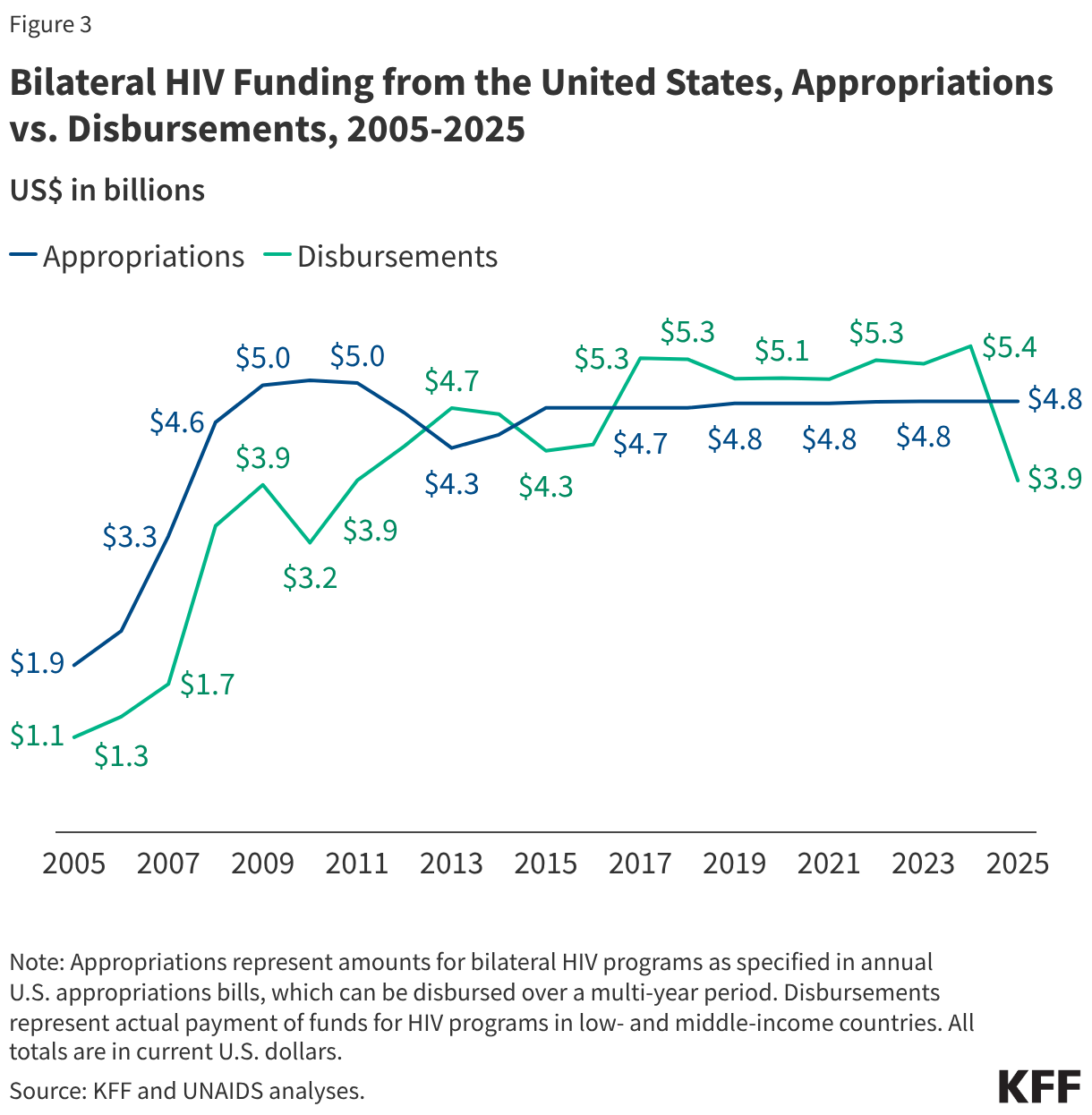
- U.S. disbursements for HIV were US$2.1 billion less in 2025 compared to 2024 (US$4.6 billion compared to US$6.7 billion). The U.S. declines were due to significant changes made by the current U.S. administration to foreign assistance programs, including global health and HIV. At the same time, the U.S. Congress has continued to appropriate funding for HIV at steady levels, meaning that additional funding remains in the U.S. pipeline, although the extent to which those funds will be fully spent remains uncertain.
- While HIV funding provided by all other donor governments was flat in 2025, the longer trend shows a decline, resulting in the U.S. shouldering an increasing share of the funding burden. Excluding the U.S., funding from all other donor governments totaled US$1.6 billion in 2025 compared to US$3.2 billion in 2011, a decrease of nearly 50%, largely due to declining bilateral support from other donor governments. As a result, the U.S. share of total donor government funding for HIV rose from 59% in 2011 to 74% in 2025 making it increasingly vulnerable to changes in U.S. support as was seen in 2025.
- Future funding prospects are uncertain. The Organisation for Economic Co-operation and Development (OECD) Development Assistance Committee (DAC), which reported a 23% decrease in official development assistance (ODA) in 2025, has projected ODA will decrease again in 2026. Whether donor governments provide additional funding for HIV in the future, the significant reductions in 2025 have already affected the HIV response. While the U.S., the world’s largest donor for HIV, has begun to speed up obligations – agreements that will result in disbursements in the future, and the U.S. Congress has continued to appropriate funding at prior year levels, the America First Global Health Strategy calls for a significant reduction in funding to countries over a five-year period. As such, the extent to which all appropriated U.S. funds will be spent remains uncertain. In addition, the longer trend shows that funding from most other donor governments is on the decline, having already decreased by 50% since 2011.
Report
Introduction
This report provides the latest available data on donor government resources provided to address HIV in low- and middle-income countries, reporting on disbursements made in 2025. It is part of a collaborative tracking effort between UNAIDS and KFF that began almost 20 years ago, just as new global initiatives were being launched to address the epidemic. The analysis includes data from all 34 members of the Organisation for Economic Co-operation and Development (OECD)’s Development Assistance Committee (DAC), as well as non-DAC members who report data to the DAC. Data are collected directly from donor governments, UNAIDS, the Global Fund, and Unitaid, and supplemented with data from the DAC. Of the 34 DAC members, fifteen provide 98% of total disbursements for HIV; data for these donors are presented individually. For the remaining 19 DAC members, data are provided in aggregate. All totals are presented in current U.S. dollars (amounts are not adjusted for inflation). Totals include both bilateral and multilateral assistance. Multilateral assistance for HIV includes disbursements by donors to the Global Fund and Unitaid, adjusted for an estimated HIV share, and to UNAIDS. Overall trend data are provided for the 2002 to 2025 period). Disaggregated data on bilateral and multilateral amounts are provided starting in 2011 (see methodology for more detail).
The data for 2025 represent one of the first assessments of the financial impact of major changes made by the United States starting last year, including a freezing and then canceling of numerous global HIV projects, eliminating the U.S. Agency for International Development (USAID), and introducing a new approach, the America First Global Health Strategy, with plans to significantly scale-down U.S. support for countries over the next few years.
Findings
Total Funding
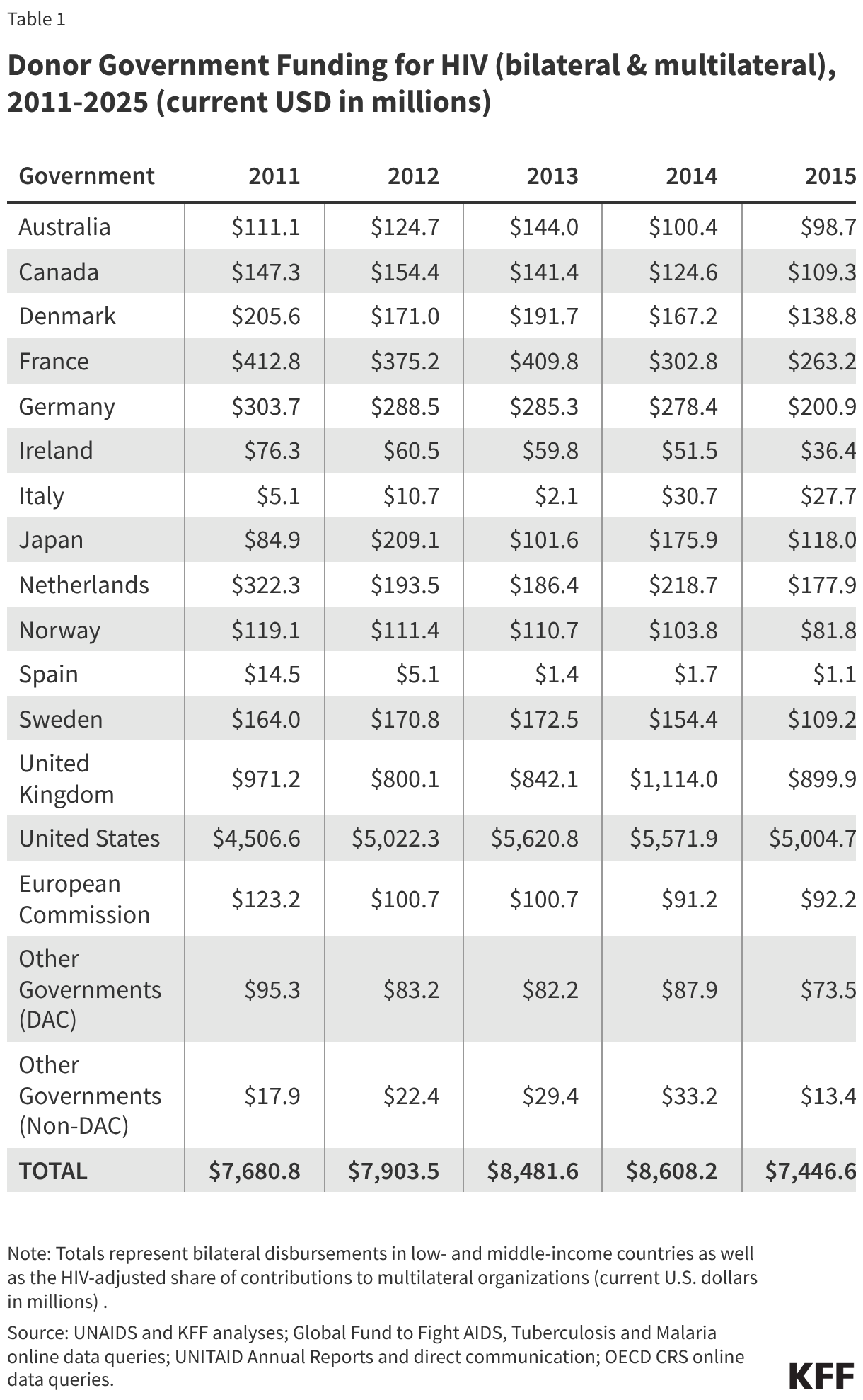
In 2025, donor government funding for HIV through bilateral and multilateral channels totaled US$6.2 billion in current USD.4 This is a decrease of US$2.1 billion (25%) compared to 2024 (US$6.2 in 2025 compared to US$8.3 billion in 2024), marking the largest drop since the donor government funding scale-up began and the lowest level of funding since 2007 ($5.0 billion) (See Figure 1 and Table 1). Donor governments accounted for more than one-third of the UNAIDS estimated US$17.6 billion made available from all sources to address HIV in 2025, an 18% decline compared to the total resources available in 2024.5,6
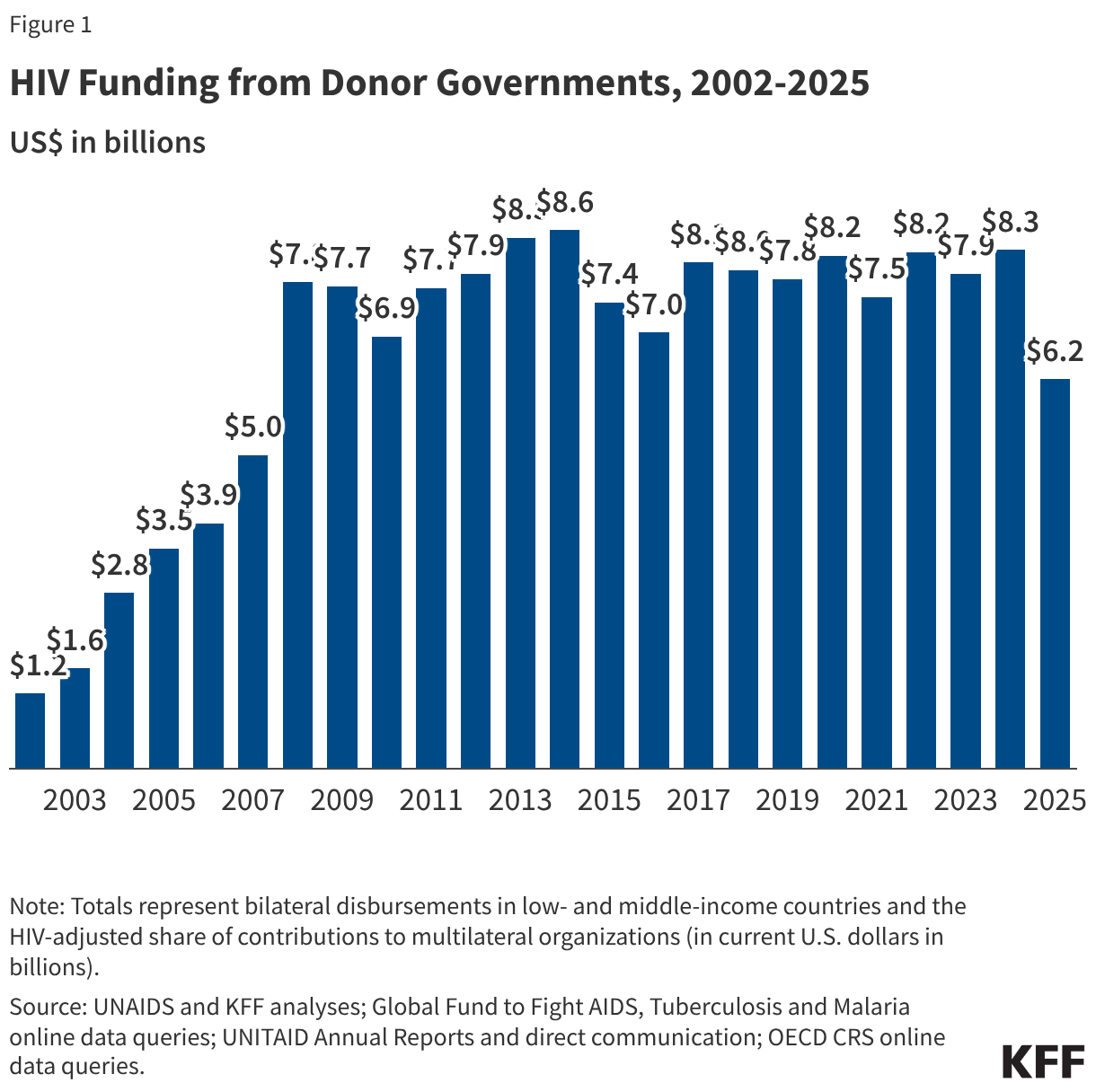
The decrease in 2025 was due to a decline in disbursements, or payouts, by the United States following the current administration’s actions that fundamentally altered U.S. foreign assistance programs. Collectively, these actions temporarily halted, and then slowed, U.S. HIV disbursements in 2025. Although, these declines in U.S. HIV disbursements were not as steep as overall decreases in U.S. development assistance as reported by the OECD DAC.7 At the same time, the U.S. Congress has continued to appropriate funding for HIV at steady levels, meaning that additional funding remains in the U.S. pipeline and could be spent in the future. Still, the extent to which the administration will spend these funds is unknown and the administration’s America First Global Health Strategy calls for significant scale-down in U.S. funding for countries in the future, including an estimated $7.3 billion decline over the next five years, compared to the prior five-year period.
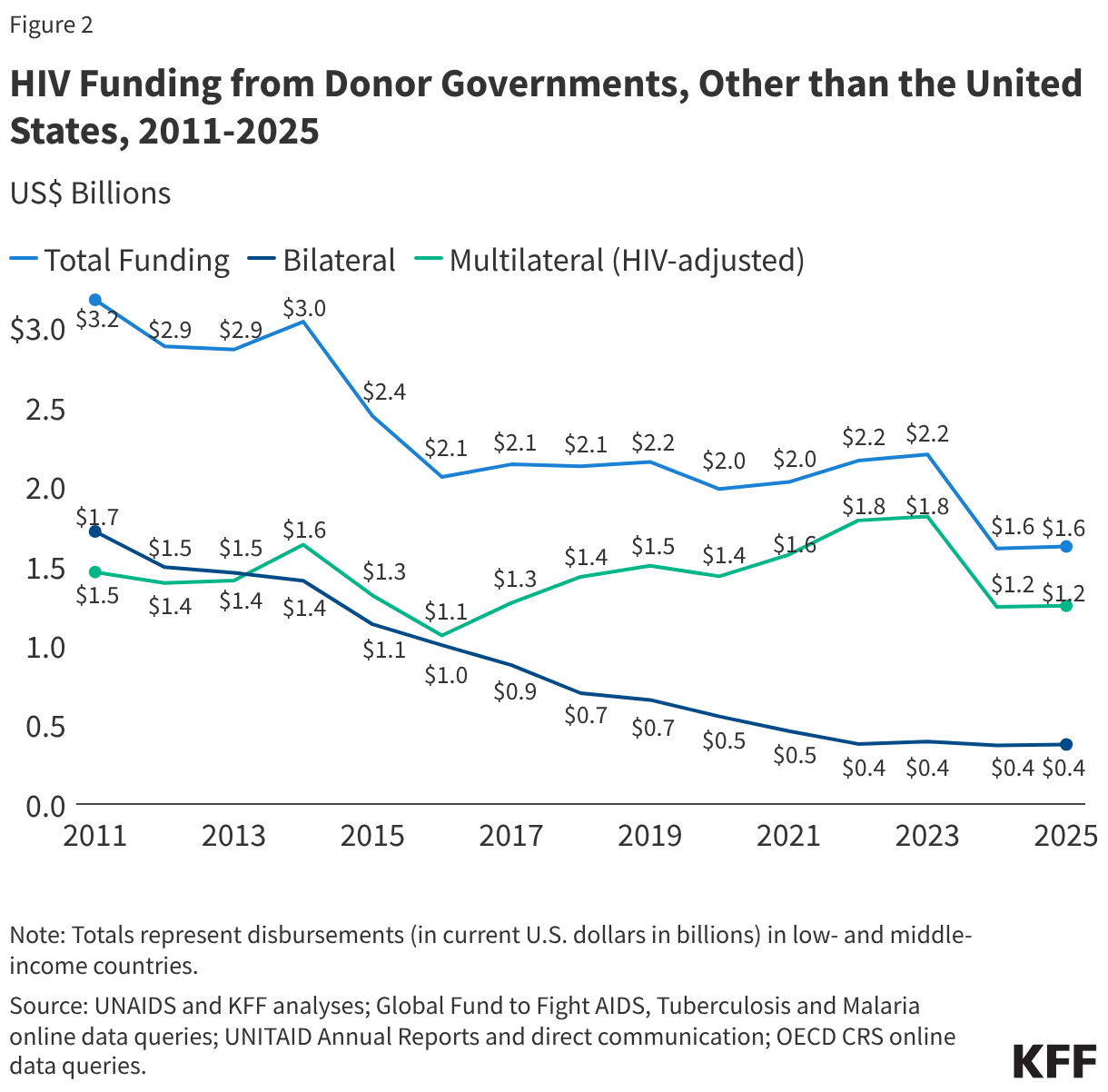
Although there were some fluctuations by other donors, in the aggregate, their HIV funding remained flat in 2025 (US$1.6) compared to 2024. Still, when the U.S. is removed, the longer trend shows that funding for HIV provided by other donor governments has been on the decline and is significantly below funding provided in 2011 (US$3.2 billion), a decrease of nearly 50%, largely due to declining bilateral support from other donor governments (See Figure 2).8
Despite the decline, the United States continued to be the largest donor to HIV efforts, providing US$4.6 billion and accounting for 74% of total donor government funding in 2025.9 The second largest donor was France (US$280 million, 4%), followed by the U.K. (US$213 million, 3%), Japan (US$202 million, 3%), and Germany (US$200 million, 3%).10,11
Bilateral Disbursements
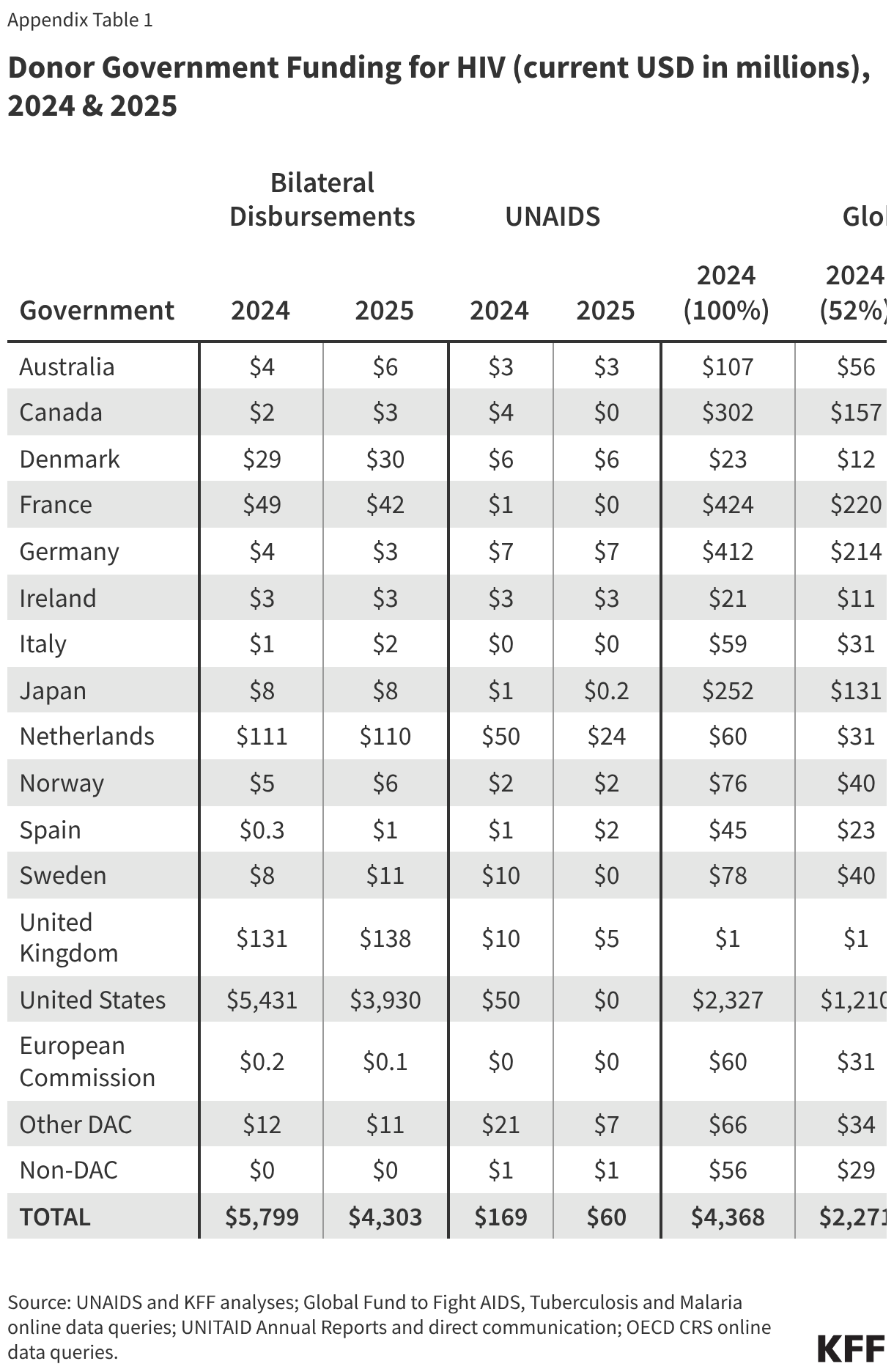
Bilateral disbursements for HIV – that is, funding disbursed by a donor on behalf of a recipient country or region – totaled US$4.3 billion in 2025, a decrease of US$1.5 billion (-26%) compared to 2024 (US$5.8 billion). The decline was due to decreased bilateral funding by the U.S., which disbursed US$3.9 billion in 2025, a decline of US$1.5 billion (28%) compared to 2024 (US$5.4 billion). As noted above, while the U.S. Congress has continued to appropriate funding for HIV, and the administration could choose to disburse additional funds in the future, the extent to which this will occur is unknown (See Figure 3).12,13
When the U.S. is removed, bilateral disbursements from all other donor governments totaled US$373 million in 2025, a slight increase compared to 2024 (US$368 million). Almost all other donor governments either increased slightly (Australia, Canada, Italy, Norway, Spain, and Sweden), or remained flat (Denmark, Ireland, Japan, the Netherlands, and the U.K.); bilateral funding from France and Germany declined. These trends were the same after accounting for exchange rate fluctuations.
Looking more broadly, bilateral funding from these donor governments (excluding the U.S.) declined by US$1.3 billion, or 78%, between 2011 (US$1.7 billion) and 2025 (US$373 million) (See Figure 2).
Multilateral Contributions
Multilateral contributions from donor governments to the Global Fund, Unitaid, and UNAIDS for HIV – funding disbursed by donor governments to these organizations which in turn use some (Global Fund and Unitaid) or all (UNAIDS) of that funding for HIV – totaled US$1.9 billion in 2025 (after adjusting for an HIV share to account for the fact that the Global Fund and Unitaid address other areas). This represents a decrease of US$581 million (23%) compared to 2024 (US$2.5 billion).14,15 While contributions to the Global Fund accounted for most of this decline - decreasing by US$470 million (21%) between 2025 (US$1.8 billion) and 2024 (US$2.3 billion), funding for UNAIDS was reduced by US$109 million (65%) in 2025 (US$60 million) compared to 2024 (US$169 million) as several donor governments eliminated or significantly reduced support; contributions to Unitaid were flat (US$57 million in 2025 compared to US$59 million in 2024).
The decrease in 2025 multilateral disbursements was primarily driven by the U.S., which provided US$672 million in 2025, a decline of nearly half ($588 million or 47%) the amount provided in 2024 (US$1.3 billion). This decline was due in part to the timing of U.S. payments to the Global Fund (per U.S. policy requirements, U.S. contributions cannot exceed 33% of total contributions to the Global Fund, resulting in significant year-to-year differences depending on the amounts other donors have provided),16 but also to a reduction in U.S. payments to the Global Fund last year, even where they were matched by other donor contributions. The U.S. also eliminated its support to UNAIDS in 2025 (U.S. funding totaled US$50 million in 2024). As with bilateral support, appropriated funds remain and the administration could choose to provide this funding in the future (See Figure 4).17
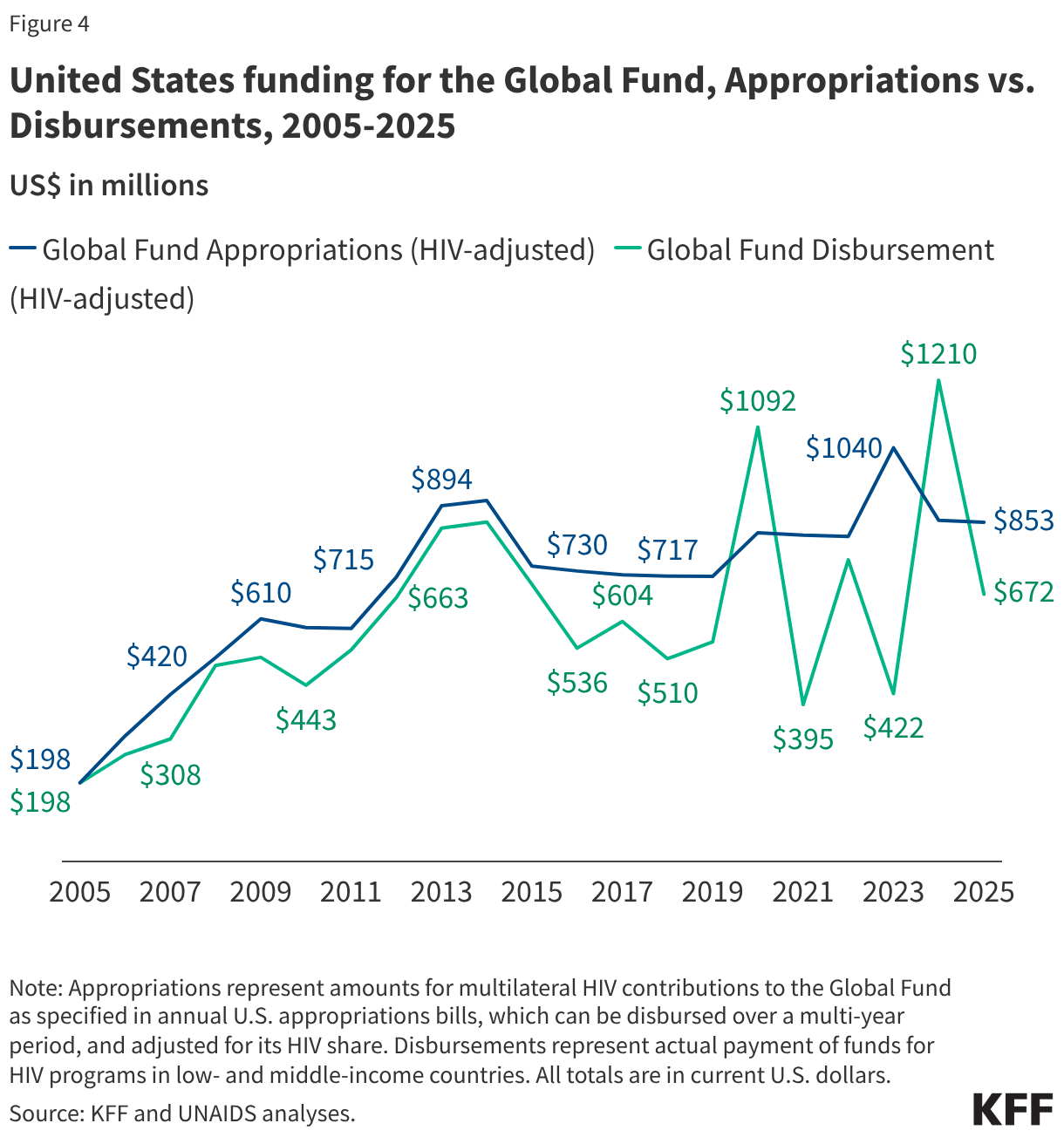
While there were fluctuations among some of the other donor governments, these changes were largely due to the timing of payments to the Global Fund that coincide with pledge periods and donor decisions about when to fulfill pledges. When the U.S. is removed, multilateral funding from all other donor governments totaled US$1.2 billion in 2025, matching the prior year level.
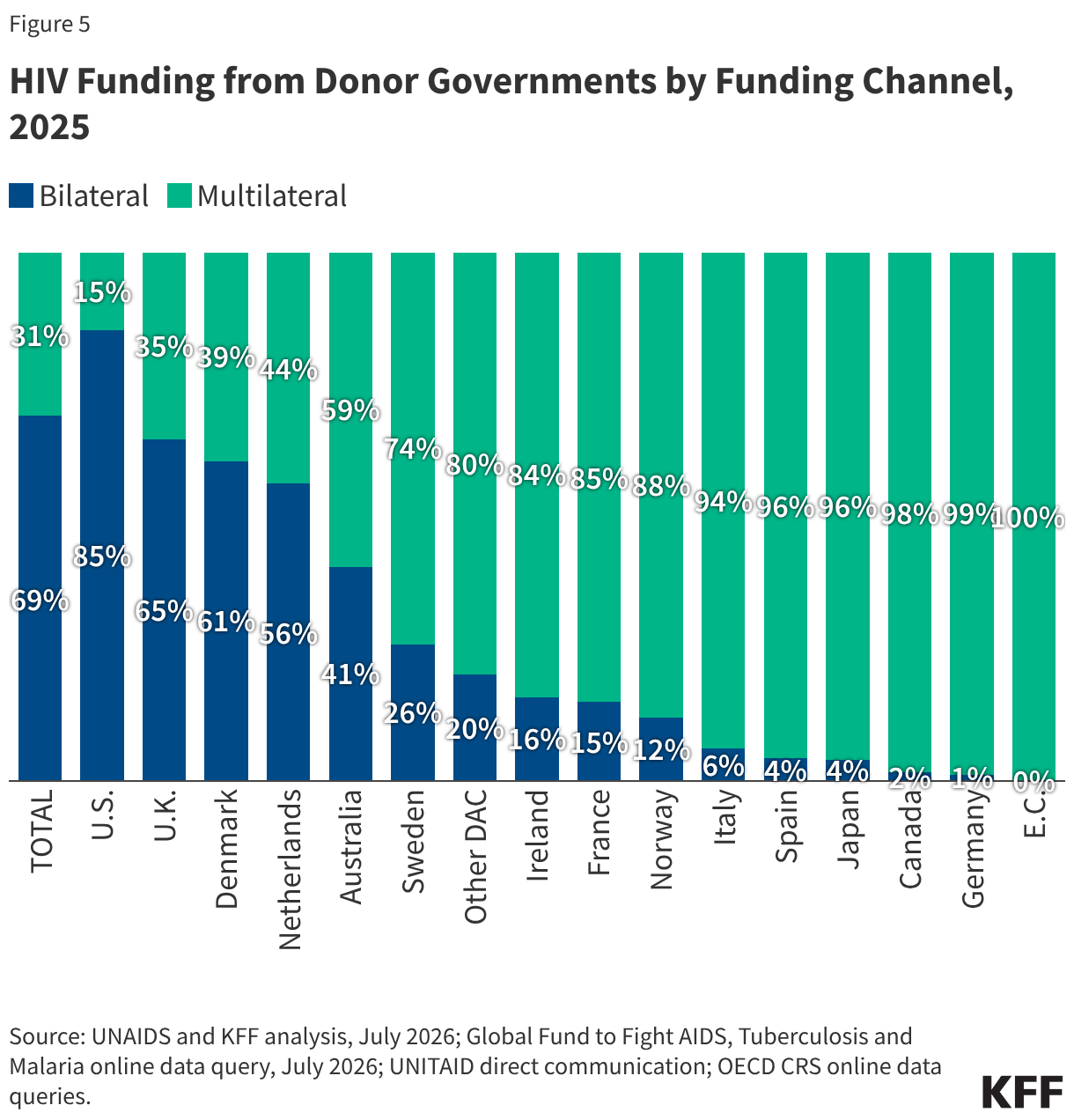
Most donor governments (eleven of the fifteen profiled in 2025) provide the majority of their HIV funding through multilateral organizations. Only Denmark, the Netherlands, the U.K., and the U.S. provide a larger share bilaterally (See Figure 5). While the U.K. provided most of its HIV funding bilaterally in 2025 (and 2024), this was entirely due to the timing of payments to the Global Fund. The U.K. fulfilled almost its entire pledge to the Global Fund for 2023-2025 in 2023 resulting in significantly lower levels of multilateral funding in both 2024 and 2025. In fact, between 2019-2023, most HIV funding from the U.K. was provided through multilateral channels.
Fair Share
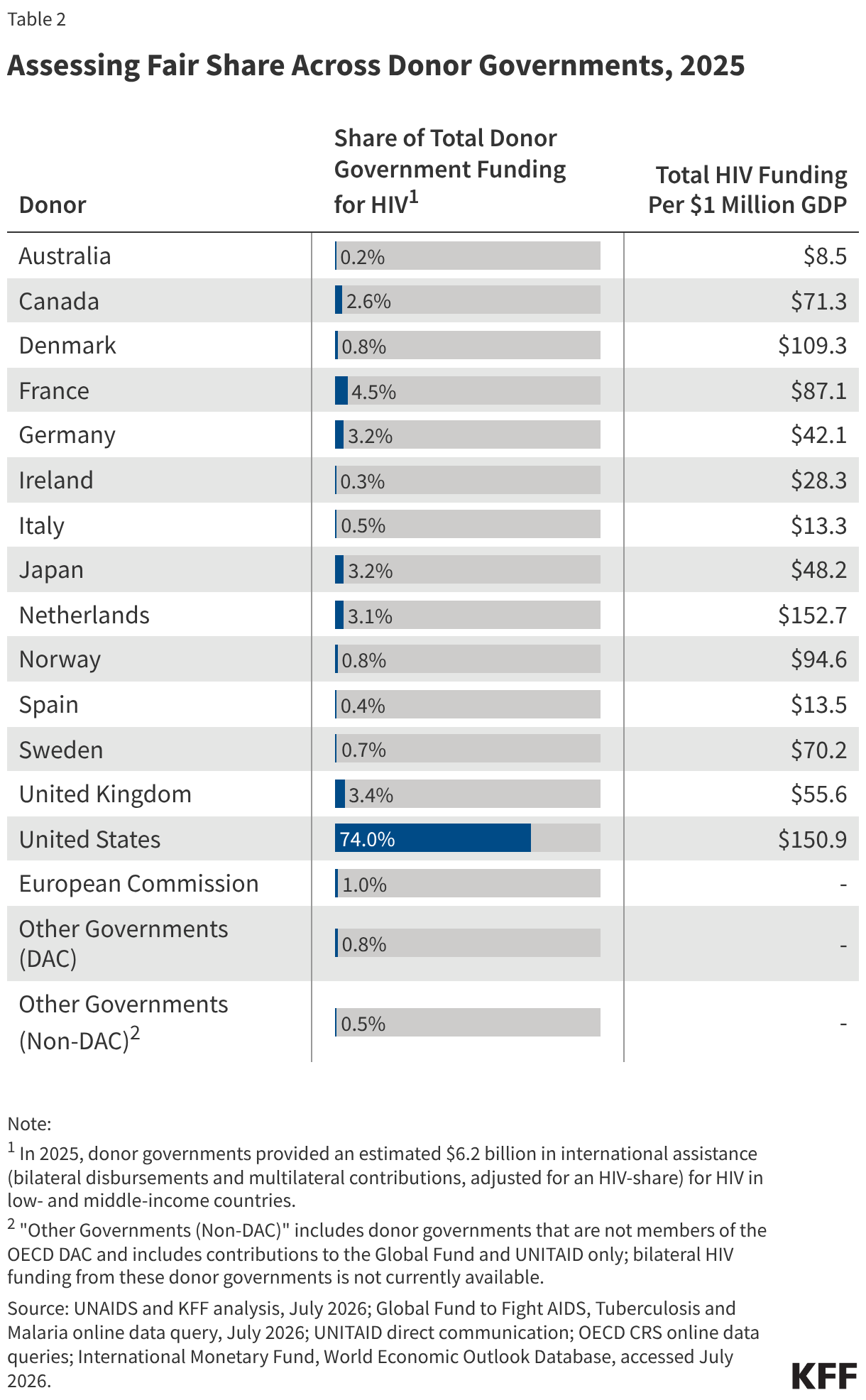
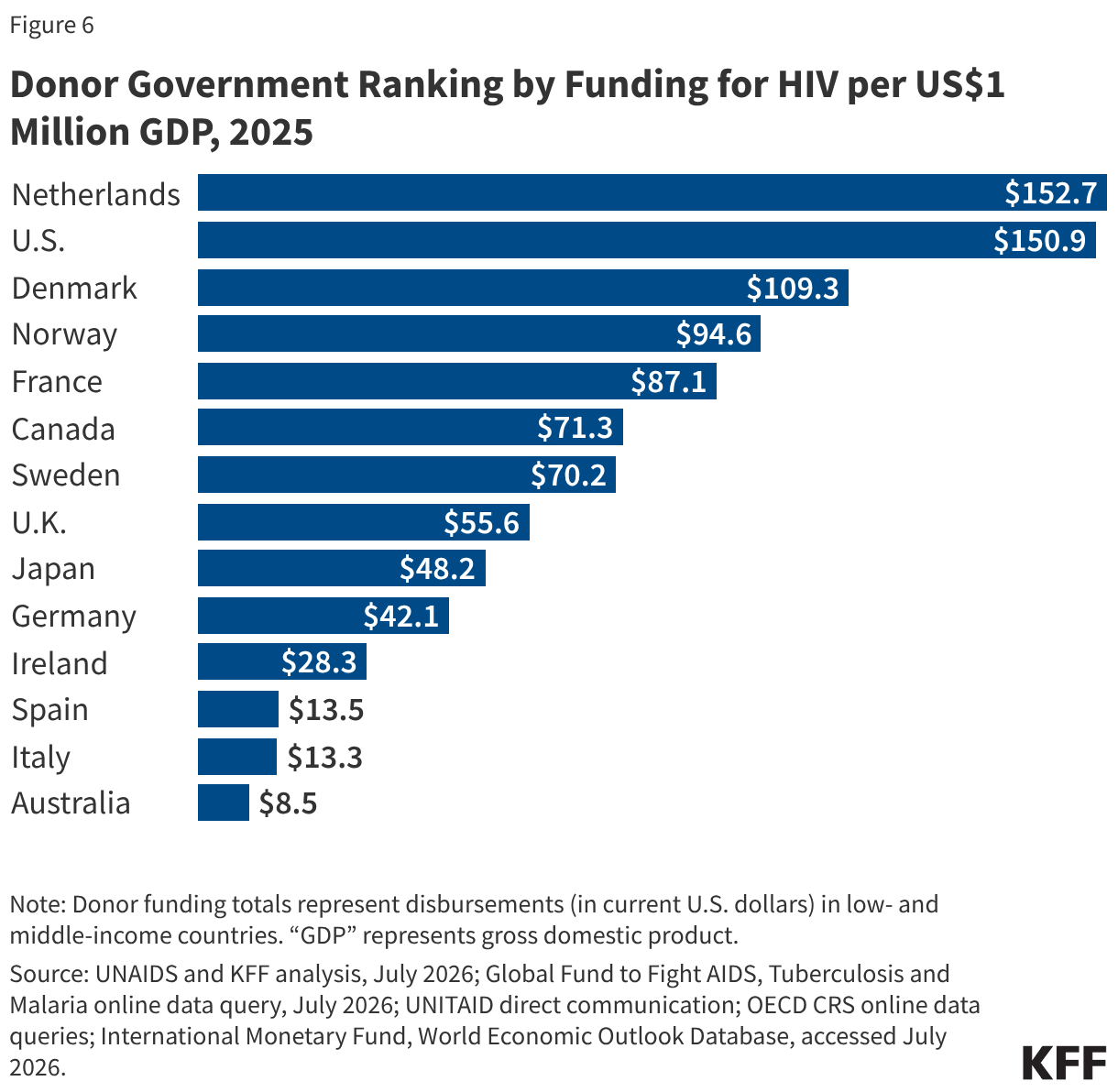
There are different ways to measure donor government contributions to HIV, relative to one another. While the U.S. government provides the largest amount of funding for HIV, for example, it also has the largest economy in the world. To assess relative contributions, or “fair share”, two measures were used: ranking by overall funding amount and ranking by funding for HIV per US$1 million GDP, to adjust for the size of donor economies (See Table 2):
- Rank by share of total donor government funding for HIV: By this measure, the U.S. ranked first in 2025, followed by France, the U.K., Japan, and Germany. The U.S. has ranked #1 in absolute funding amounts since tracking efforts began.
- Rank by funding for HIV per US$1 million GDP: By this measure, the Netherlands ranks first, followed by the U.S., Denmark, Norway, and France (See Figure 6).18
Looking Forward
Future funding prospects are uncertain. While the current administration could choose to disburse additional funds, the extent to which they will do so is unclear. Moreover, the stated strategy of the administration is to reduce, and in some cases eliminate, U.S. funding to countries as these countries take on an increasing level of financial and operational responsibility. More broadly, the OECD DAC reported a 23% decrease in official development assistance (ODA) in 2025 and is projecting further decreases in 2026; while largely driven by the U.S., other donor governments have also reduced their development assistance.
This work was supported in part by the Joint United Nations Programme on HIV and AIDS (UNAIDS) and the Bill & Melinda Gates Foundation. KFF maintains full editorial control over all of its policy analysis, polling, and journalism activities.
Adam Wexler, Jen Kates, and Stephanie Oum are with KFF. Joint United Nations Programme on HIV and AIDS (UNAIDS).
Methods
This project represents a collaboration between the Joint United Nations Programme on HIV/AIDS (UNAIDS) and KFF. Data provided in this report were collected and analyzed by UNAIDS and KFF.
Totals presented in this analysis include both bilateral funding for HIV in low- and middle-income countries, core contributions to UNAIDS, and the estimated share of donor government contributions to the Global Fund and Unitaid that are used for HIV. Amounts are based on analysis of data from the 34 donor government members of the Organisation for Economic Co-operation and Development (OECD) Development Assistance Committee (DAC) in 2024 who had reported Official Development Assistance (ODA). Bilateral and multilateral data were collected from multiple sources. Disaggregated bilateral and multilateral data are only available starting from 2011.
Data on gross domestic product (GDP) were obtained from the International Monetary Fund’s World Economic Outlook Database and represent current price data for 2025 (see: https://data.imf.org/en/datasets/IMF.RES:WEO).
Bilateral Funding:
Bilateral funding is defined as any earmarked (HIV-designated) amount, including earmarked non-core (“multi-bi”) contributions to multilateral organizations, such as UNAIDS. Data included in this report represent funding assistance for HIV prevention, care, treatment and support activities, but do not include funding for international HIV research conducted in donor countries (which is not considered in estimates of resource needs for service delivery of HIV-related activities).
The research team collected the latest bilateral funding data directly from twelve governments: Australia, Canada, Denmark, France, Germany, Ireland, Japan, the Netherlands, Norway, Sweden, the United Kingdom, and the United States during the first half of 2026, representing the fiscal year 2025 period. Direct data collection from these donors was desirable because they represent the preponderance of donor government assistance for HIV and the latest official statistics – from the Organisation for Economic Co-operation and Development (OECD) Creditor Reporting System (CRS) (see: http://www.oecd.org/dac/stats/data) – are from 2024 and do not include all forms of international assistance (e.g., certain funding streams provided by donors, such as HIV components of mixed-purpose grants to non-governmental organizations). Bilateral estimates for Ireland and Japan for 2025 were not available at the time of publication. Prior year bilateral totals for these two donor governments were used as preliminary estimates that will be updated once data are available. Data for all other member governments of the OECD DAC – Austria, Belgium, the Czech Republic, the European Commission, Estonia, Finland, Greece, Hungary, Iceland, Italy, Korea, Lithuania, Luxembourg, New Zealand, Poland, Portugal, the Slovak Republic, Slovenia, Spain, and Switzerland – which collectively accounted for less than 5 percent of bilateral disbursements in each of the past several years, were obtained from the OECD CRS database and are from calendar year 2024.
In 2025, France provided data revising prior year amounts to account for “set-aside” funding (adjusted for an HIV-share) that supports Global Fund related activities. While this funding is considered part of France’s pledge to the Global Fund, it is not counted by the Global Fund as a direct contribution and is instead included under bilateral totals in this analysis. Due to this update, amounts presented in this report will differ from prior reports. The U.K. provided a revised estimate for bilateral funding in 2024 following the release of the previous report “Donor Government Funding for HIV in Low- and Middle-Income Countries in 2024”. The 2024 total for the U.K. has been adjusted in this report.
Where donor governments were members of the European Union (EU), the research team ensured that no double-counting of funds occurred between EU Member State reported amounts and European Commission (EC) reported amounts for international HIV assistance. Figures obtained directly using this approach should be considered as the upper bound estimation of financial flows in support of HIV-related activities.
Reflecting deliberate strategies of integrating HIV activities into other activity sectors, some donors use policy markers to attribute portions of mixed-purpose projects to HIV. This is done, for example, by the Netherlands and the U.K. The bilateral figures submitted by the UK Foreign, Commonwealth & Development Office (FCDO) for the financial year 2025/26 are based on an existing FCDO ‘HIV policy marker’. Denmark also attributes percentages of multipurpose projects to HIV. Canada breaks its mixed-purpose projects into components by percentage. Germany, Norway, and Sweden provided data much more conservatively, consistent with DAC constructs and purpose codes. Apart from targeted HIV/AIDS programs, bilateral health programs mainly focusing on health systems strengthening are also designed to contribute to the HIV response in partner countries.
Bilateral assistance data represent disbursements. A disbursement is the actual release of funds to, or the purchase of goods or services for, a recipient. Disbursements in any given year may include disbursements of funds committed in prior years and in some cases, not all funds committed during a government fiscal year are disbursed in that year. In addition, a disbursement by a government does not necessarily mean that the funds were provided to a country or other intended end-user.
Amounts presented are for the fiscal year period, which varies by country. The U.S. fiscal year runs from October 1-September 30. The fiscal years for Canada, Japan, and the U.K. are April 1-March 31. The Australian fiscal year runs from July 1-June 30. The European Commission, Denmark, France, Germany, Italy, Ireland, the Netherlands, Norway, and Sweden use the calendar year. The OECD uses the calendar year, so data collected from the CRS for other donor governments reflect January 1-December 31. Most UN agencies use the calendar year, and their budgets are biennial.
All data are expressed in current US dollars (USD), unless otherwise noted. Where data were provided by governments in their currencies, they were adjusted by average daily exchange rates to obtain a USD equivalent, based on foreign exchange rate historical data available from the U.S. Federal Reserve (see: http://www.federalreserve.gov/) or the OECD.
Funding totals presented in this analysis should be considered preliminary estimates based on data provided and validated by representatives of the donor governments who were contacted directly.
Multilateral Funding:
Multilateral funding includes core contributions to UNAIDS, as well as contributions to the Global Fund (see: http://www.theglobalfund.org/en/) and Unitaid (see: http://www.unitaid.org/#end). All Global Fund contributions were adjusted to represent 52% of the donor’s core contribution, reflecting the Fund’s reported grant approvals for HIV-related projects to date and includes funding for HIV/TB activities. Unitaid contributions were adjusted to represent 48% of the donor’s core contribution, reflecting Unitaid reported attribution for HIV-related projects.
Data obtained from UNAIDS, the Global Fund, and Unitaid were already adjusted to represent a USD equivalent based on date of receipts.
UNAIDS core contributions reflect amounts received in 2025. In 2024, the Netherlands provided two core contributions to UNAIDS; the first payment was provided for the 2024 contribution, while the second was a prepayment of the 2025 contribution. Global Fund and Unitaid contributions from all governments correspond to amounts received during the 2025 calendar year, regardless of which contributor’s fiscal year such disbursements pertain to.
In addition to contributions supporting the Global Fund’s and Unitaid’s core activities, some donor governments provided significant funding to these multilateral organizations for COVID-related efforts between 2020-2023. These COVID-specific contributions were not included in totals in this analysis. The U.S., for example, provided almost US$1.9 billion in such funding to the Global Fund during 2022. Other than contributions provided by governments to the Global Fund and Unitaid, un-earmarked general contributions to United Nations entities, most of which are membership contributions set by treaty or other formal agreement (e.g., the World Bank’s International Development Association or United Nations country membership assessments), are not identified as part of a donor government’s HIV assistance even if the multilateral organization in turn directs some of these funds to HIV. Rather, these would be considered as HIV funding provided by the multilateral organization, as in the case of the World Bank’s efforts, and are not considered for purposes of this report.
Appendix
Endnotes
- Donor government disbursements are a subset of overall international assistance for HIV in low-and-middle-income countries, which also includes funding provided by other multilateral institutions, UN agencies, and foundations. ↩︎
- UNAIDS estimates that US$17.6 billion was available for HIV from all sources (domestic resources, donor governments, multilaterals, and philanthropic organizations) in 2025, an 18% decline compared to 2024. In addition, while the amounts presented in this analysis include donor contributions to multilateral organizations, the UNAIDS estimate of total available resources for HIV includes the actual disbursements made by multilateral organizations in 2025 rather than the donor government contributions to these entities. ↩︎
- Between 2020-2023, some donor governments provided COVID-specific emergency contributions to the Global Fund and UNITAID in addition to their contributions for core activities. For the purposes of this report, these COVID-specific amounts have been excluded as they cannot be attributed to a specific area, such as HIV. ↩︎
- Donor government disbursements are a subset of overall international assistance for HIV in low-and-middle-income countries, which also includes funding provided by other multilateral institutions, UN agencies, and foundations. ↩︎
- UNAIDS, direct communication, July 2026. ↩︎
- UNAIDS estimates that US$17.6 billion was available for HIV from all sources (domestic resources, donor governments, multilaterals, and philanthropic organizations) in 2025, an 18% decline compared to 2024. In addition, while the amounts presented in this analysis include donor contributions to multilateral organizations, the UNAIDS estimate of total available resources for HIV includes the actual disbursements made by multilateral organizations in 2025 rather than the donor government contributions to these entities. ↩︎
- OECD, “A historic decline in foreign aid: Preliminary 2025 ODA data”, April 2026. ↩︎
- Between 2020-2023, some donor governments provided COVID-specific emergency contributions to the Global Fund and UNITAID in addition to their contributions for core activities. For the purposes of this report, these COVID-specific amounts have been excluded as they cannot be attributed to a specific area, such as HIV. ↩︎
- U.S. totals represent funding amounts provided through regular appropriations only. In 2021, the U.S. Congress appropriated additional emergency supplemental funding for bilateral HIV activities and for the Global Fund to address the impacts of the COVID-19 pandemic. These emergency supplemental funding amounts are not included in overall U.S. totals. ↩︎
- In 2025, France provided data revising prior year amounts to account for “set-aside” funding (adjusted for an HIV-share) that supports Global Fund related activities. While this funding is considered part of France’s pledge to the Global Fund, it is not counted by the Global Fund as a direct contribution and is instead included under bilateral totals in this analysis. Due to this update, amounts presented in this report will differ from prior reports. ↩︎
- Total HIV funding from the Netherlands in 2024 includes two core contributions to UNAIDS; the first payment was provided for the 2024 contribution, while the second was a prepayment of the 2025 contribution. ↩︎
- KFF, “The U.S. President’s Emergency Plan for AIDS Relief (PEPFAR)”, May 2026. ↩︎
- U.S. totals represent funding amounts provided through regular appropriations only. In 2021, the U.S. Congress appropriated additional emergency supplemental funding for bilateral HIV activities and for the Global Fund to address the impacts of the COVID-19 pandemic. These emergency supplemental funding amounts are not included in overall U.S. totals. ↩︎
- Between 2020-2023, some donor governments provided COVID-specific emergency contributions to the Global Fund and UNITAID in addition to their contributions for core activities. For the purposes of this report, these COVID-specific amounts have been excluded as they cannot be attributed to a specific area, such as HIV. ↩︎
- In 2025, 52% of the Global Fund’s disbursements and 48% of UNITAID’s disbursements were directed to HIV activities. These percentages were applied to the full donor government contributions to these multilateral organizations to calculate the “HIV-share” (see Methodology for additional details). ↩︎
- The U.S. has had a long-standing legislative requirement that total U.S. contributions to the Global Fund could not exceed 33% of all contributions (see “KFF – The U.S. & The Global Fund to Fight AIDS, Tuberculosis and Malaria”), which results in year-to-year fluctuations in U.S. payouts to the Global Fund depending on when other donors provide funds. However, this requirement technically expired in March when the authorization legislation ended (see “KFF - PEPFAR Reauthorization: Side-by-Side of Legislation Over Time”). ↩︎
- U.S. totals represent funding amounts provided through regular appropriations only. In 2021, the U.S. Congress appropriated additional emergency supplemental funding for bilateral HIV activities and for the Global Fund to address the impacts of the COVID-19 pandemic. These emergency supplemental funding amounts are not included in overall U.S. totals. ↩︎
- GDP estimates are from the International Monetary Fund’s (IMF) World Economic Outlook (WEO) Database (accessed July 2026). ↩︎
