Retiree Health Benefits At the Crossroads

Authors: Frank McArdle, Tricia Neuman, and Jennifer Huang
Published: Apr 14, 2014

Introduction

Retiree health benefit plans are an important source of supplemental coverage for roughly 15 million Medicare beneficiaries and a primary source of coverage for more than two million pre-65 retirees in the public and private sectors.1   But the state of retiree health coverage is at a critical juncture after decades of change, with still more to come on the horizon.  The share of employers sponsoring retiree health coverage has declined and employers that continue to offer coverage are redesigning their plans on a virtually annual basis in response to rising health care costs.  Ongoing concerns about costs, coupled with changes in Medicare, notably the addition of prescription drug coverage, and more recent changes made by the Affordable Care Act of 2010 (ACA), have triggered a major reassessment by employers of whether and in what form they should continue to offer retiree health benefits.  Further, a number of policy proposals are under consideration that could have a significant impact on retiree health benefits and costs.

This report reviews the role of retiree health coverage for early and Medicare-eligible retirees, examines changes underway, and considers the outlook for the future.  Specifically, the report:

  • Presents an overview of retiree health benefits including the extent of such coverage for both pre-65 and Medicare eligible retirees, the manner in which it is provided, and the efforts by large employers to control retiree health costs;
  • Discusses the implications of recent legislation, examining the aftermath of the Medicare Modernization Act’s Part D prescription drug benefit as well as the more recent  provisions of the Affordable Care Act (ACA) that directly or indirectly affect employer-provided coverage for pre-65 and Medicare-eligible retirees (e.g., the provision that makes available new federal/state marketplaces and the provision that closes the Part D doughnut hole);
  • Describes emerging strategies employers are adopting or considering to limit their retiree health costs, including changes in the arrangements for providing prescription drug coverage for Medicare-eligible retirees and shifts toward the use of defined contribution approaches and offering non-group coverage, including coverage made available through private exchanges; and
  • Reviews current policy proposals under consideration that could affect the future of retiree health coverage, such as proposals to raise the age of Medicare eligibility, modify the benefit design and cost-sharing rules under traditional Medicare, impose a new surcharge on retiree health plans, and prohibit first dollar coverage.

The report concludes that under continuing pressure from rising costs, retiree health strategies of employers are now undergoing accelerated transitions and that the direction and pace of future changes will also be very sensitive to shifts in public policy.  Several major trends stand out in particular, namely, growing interest in shifting to a defined contribution approach and in facilitating access to non-group coverage for Medicare-eligible retirees, and consideration by employers of using new federal/state marketplaces as a possible pathway to non-group coverage for their pre-65 retiree population.  In general, most employers do not appear to be dropping coverage altogether, but the prevalence of retiree health coverage is expected to decline incrementally over time, assuming employers follow through on their interest in dropping coverage as reported in surveys.

Together these trends suggest that retiree health coverage is likely to be structured differently and play a smaller macro role in the future, but for the millions of workers and current and future retirees who do have employer-sponsored retiree coverage, changes that could weaken the prospects of their retirement security warrant close attention.

Report: Overview Of Health Benefits For Pre-65 And Medicare-eligible Retirees

Over time, the share of large employers (with 200 or more employees) offering retiree health benefits has declined, and employers that continue to offer benefits have made changes to manage their costs, often by shifting costs directly or indirectly to their retirees.  Since 1988, the percentage of large firms  offering retiree health coverage has dropped by more than half from 66 percent in 1988 to 28 percent in 2013, according to the 2013 Kaiser/HRET Survey of Employer-Sponsored Health Benefits (Figure 1).  The biggest drop occurred between 1988 and 1991, after the Financial Accounting Standards Board required private sector employers to account for the costs of health benefits for current and future retirees.  But ever since, there has been a more or less steady erosion in the percentage of firms offering retiree health coverage, dropping from roughly 40 percent of large employers in the mid-to late 1990s, to 28 percent of firms in 2013.  Some firms elected to stop offering benefits (usually to future retirees first) while newer firms, and firms in the service and technology sectors, for example, never established the financial commitment to provide health benefits to their retirees. As a result of these changes, fewer than one in five workers today are employed by firms offering retiree health benefits.2 

Figure 1: The share of large firms (200 or more workers) offering retiree health benefits to active workers has declined, 1988-2013

Large firms have always been much more likely than smaller firms to offer retiree health benefits to at least some of their former employees (Figure 2).  Retiree health coverage is more typically offered to state and local government employees, and more often offered to employees in certain industries (such as finance) than to workers in the wholesale or retail industries, according to the KFF/HRET 2013 survey.  Retiree health coverage is also more common among firms that pay higher wages, and more common among large unionized than non-unionized firms. 
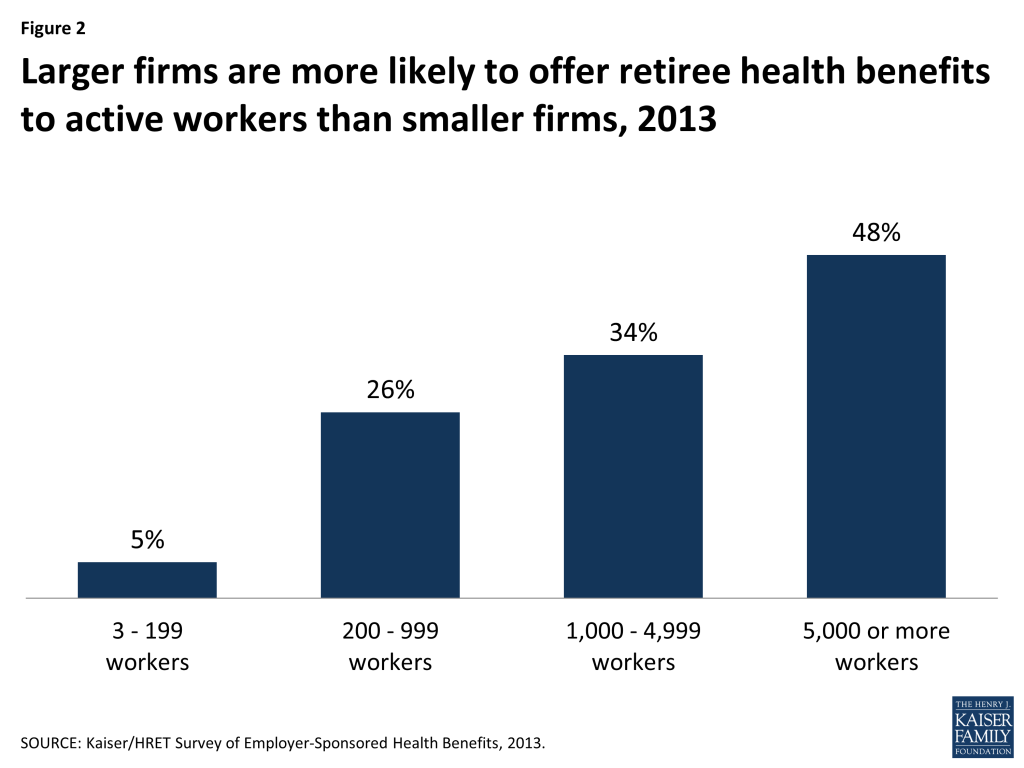
Figure 2: Larger firms are more likely to offer retiree health benefits to active workers than smaller firms, 2013

Coverage for Pre-65 Retirees

Employer-sponsored retiree health plans have historically played a vital role in contributing to retirement security for retirees who were too young to qualify for Medicare.  In 2012, 45 percent of retirees ages 55 to 64 had health benefits from a former employer (Figure 3), reflecting a small decline from 2009, when 50 percent of early retirees had retiree health benefits.3  Prior to the availability of health marketplaces, insurance reforms, and subsidies provided by the Affordable Care Act (ACA), pre-65 retirees without access to employer-sponsored retiree health coverage or coverage from spouse had few good coverage options, as the availability of coverage for pre-65 retirees in the individual health insurance marketplace was unreliable, expensive, and subject to underwriting and potential denial of coverage.  Though the cost of coverage for pre-65 retirees is substantially higher than for Medicare-eligible retirees, firms have been more likely to offer health benefits to pre-65 retirees.  Among all large firms offering retiree health benefits, 90 percent of firms offered coverage to retirees under the age of 65, compared to 67 percent of firms offering coverage to Medicare-age retirees, according to the KFF/HRET 2013 employer survey.4 
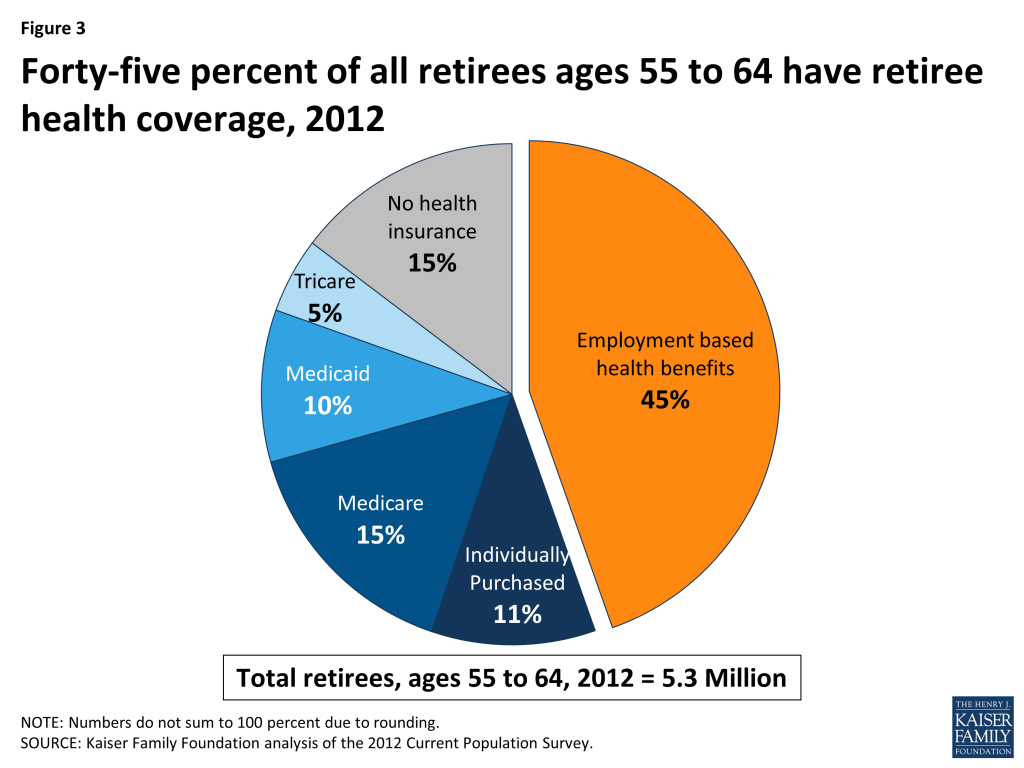
Figure 3: Forty-five percent of all retirees ages 55 to 64 have retiree health coverage, 2012

Large employers typically self-insure the benefits for pre-65 retirees and contract with health insurers to make available their provider network and administer the benefits and claims payments on a national basis.  The employer may either combine the pre-65 retirees along with the active employees in the same risk pool, or break out the retirees in a separate risk pool.  Most recently, as discussed further below, some employers that previously included active employees and retirees in the same plan have taken steps to create a separate legal plan for retirees only, as retiree-only plans are exempt from some of the more costly requirements of the ACA.

Employers offering pre-65 coverage typically offer the retirees the same health plan options that are available to active employees that, for large employers, would typically consist of a choice among several options, e.g., a PPO, an HMO, and (less frequently) a traditional indemnity plan.  Such coverage is typically comprehensive and more generous than what Medicare currently provides, in that employer plans typically include a limit on out-of-pocket costs and provide a prescription drug benefit with no coverage gap.  Often the employer will contract with a separate pharmaceutical benefit manager (PBM) to provide the prescription drug coverage (known as a “carve-out”), although sometimes the same insurer providing the medical benefits will also arrange to provide the prescription drug benefits (known as a “carve-in”).

A minority of large employers have changed their retiree health plans over the years in a move toward an account-based plan. With this approach, for example, an employer might credit employees between the ages of 40 and 55 with a fixed amount each year in a health reimbursement account (HRA), which the employees can then use to make their premium contributions to the health plan after they retire from the organization.  Alternatively, an employer might offer employees high-deductible health plans as active workers and consider the eligible health savings account (HSA) as a vehicle that employees may use to accumulate funds that the employee can use toward retiree health expenses whether or not the employer actually sponsors a retiree health plan.  HSA funds may not be used by pre-65 retirees to pay for retiree health plan premiums, but Medicare-eligible retirees can use HSA account balances to pay their Medicare premiums and premiums for retiree health plans (but not individually-purchased Medicare supplemental insurance policies, known as Medigap). The number of employers offering account-based health plans to active employers continues to grow, as does enrollment in such plans.

Premiums

The cost of providing retiree coverage to pre-65 retirees tends to be much higher than the cost of providing supplemental coverage to Medicare-eligible coverage because coverage for pre-Medicare retirees is primary rather than secondary.  The average health benefit cost per retiree is roughly twice as much for pre-65 retirees as it is for Medicare-eligible retirees.  According to data from Mercer’s National Survey of Employer-Sponsored Health Benefits, the average annual health benefit cost per retiree was $11,961 for pre-Medicare retirees and $4,716 for Medicare-eligible retirees, among employers with 500 or more employees who provided cost information for both 2011 and 2012.5    Another survey, the 18th annual Towers Watson/National Business Group on Health Employer Survey on Purchasing Value in Health Care,6  reported the average cost for pre-65 retirees in 2013 (employer and retiree combined) was $9,064 for retiree-only coverage, and $4,583 for Medicare-eligible retirees. Typically, retirees are required to make a contribution toward the total premium, and in some instances, retirees pay 100 percent of the cost.  According to the aforementioned Mercer survey, pre-65 retirees paid the full premium in 39 percent of the large employer plans (500 or more employees) offering retiree health benefits; employers paid the full amount in 12 percent of large employer plans.  Among the remaining 49 percent of firms where the cost was shared, the average retiree contribution was 37 percent for pre-65 retirees.  The results were similar among employers offering benefits to Medicare-eligible retirees.7 

Coverage for Medicare-Eligible Retirees

For retirees on Medicare, generally age 65 and older, employer-sponsored retiree health is the primary source of supplemental coverage (Figure 4).  In 2010, nearly one-third (31%) of all Medicare beneficiaries had employment-based supplemental retiree health coverage.  Another 4 percent were covered by an employer plan as an active worker, which means the employer plan was the primary payer.
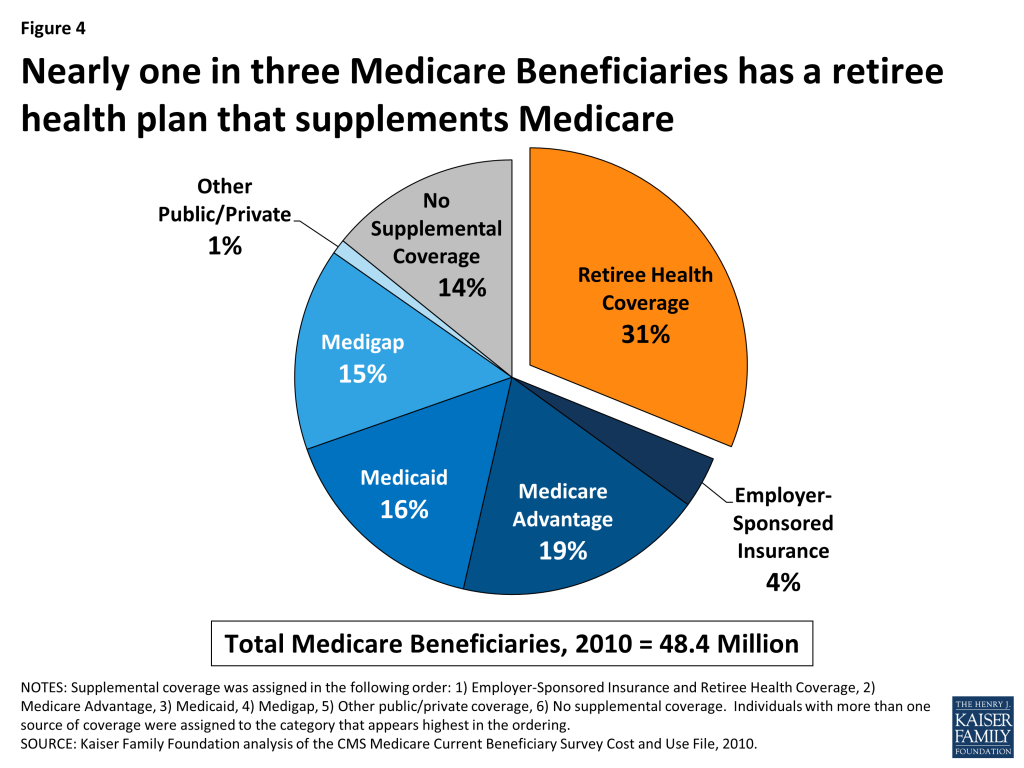
Figure 4: Nearly one in three Medicare Beneficiaries has a retiree health plan that supplements Medicare

In general, Medicare beneficiaries with employer-sponsored retiree health benefits tend to have higher incomes than others on Medicare, are more likely to be white than black or Hispanic, and in relatively good health (Figure 5).  The prevalence of retiree health coverage also varies geographically.  Medicare beneficiaries living in the New England region are more likely than those in the South Atlantic and West North Central regions to have retiree coverage.  The share of Medicare beneficiaries with retiree health benefits ranges from a high of 38 percent  in the New England region (CT, MA, ME, NH, RI, VT) to a low of 28 percent  in the South Atlantic region (DC, DE, FL, GA, MD, NC, SC, VA, WV) and the West North Central region (IA, KS, MN, MO, ND, NE, SD) (see Appendix Table 1 for the share of Medicare beneficiaries by region).
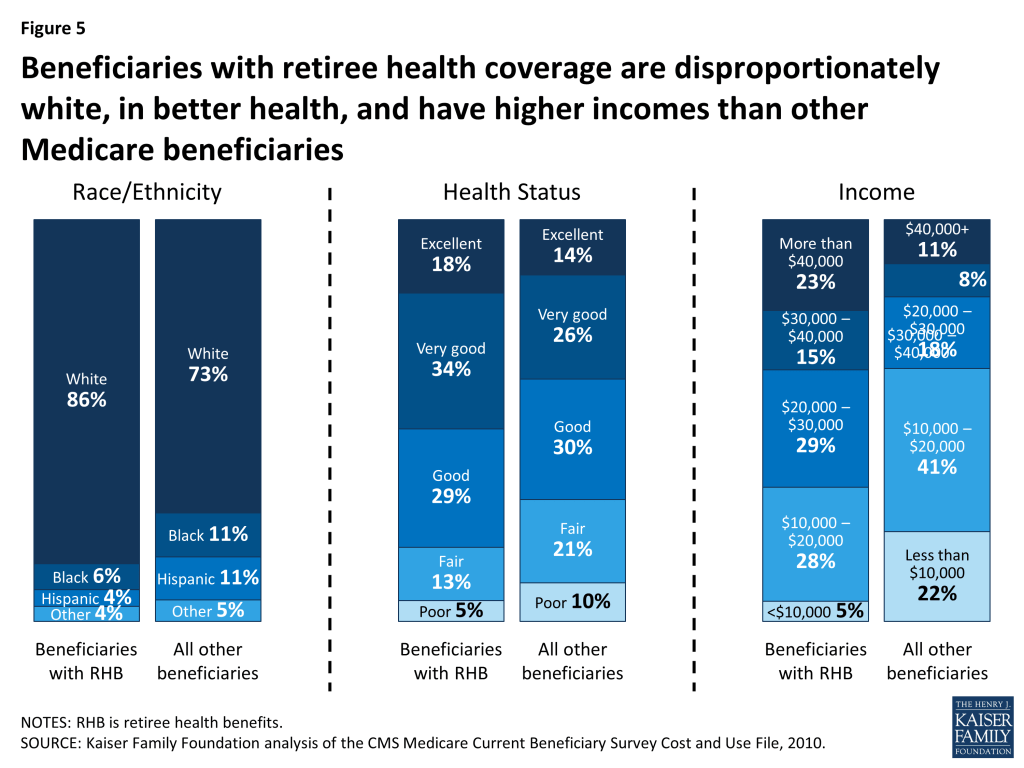
Figure 5: Beneficiaries with retiree health coverage are disproportionately white, in better health, and have higher incomes than other Medicare beneficiaries

Employer-provided retiree health coverage fills significant financial gaps for Medicare-eligible retirees.  Medicare has relatively high cost-sharing requirements, and unlike typical employer plans, has no limit on out-of-pocket spending for services covered under Part A or Part B.  Until 2006, Medicare did not cover outpatient prescription drugs, and even today, the Medicare drug benefit includes a coverage gap, or “doughnut hole” that will be phased down by 2020.  Employer-sponsored retiree health plans help minimize the financial exposure of Medicare-eligible retirees by paying a portion of Medicare’s cost-sharing requirements, and in some instances, by paying for items that are not otherwise covered by Medicare (e.g., eyeglasses).  By one calculation, a 65-year-old couple with Medicare retiring in 2013 without employer-sponsored retiree health coverage is estimated to need $220,000 to cover medical expenses throughout retirement, in addition to costs they may incur for over-the-counter medications, dental services, and long-term care.8 

Employers use a variety of approaches to provide health benefits to Medicare-eligible retirees, as described below.

Self-Insured Employer Plans Supplement Medicare Benefits.  The most common arrangement is where an employer sponsors a group plan that supplements Medicare, such as a preferred provider organization (PPO) or an indemnity plan, with a more generous package of medical and prescription drug benefits than traditional fee-for-service Medicare.  For example, retiree health plans typically have a limit on out-of-pocket spending, unlike traditional Medicare, and will cover a larger share of retiree expenses for covered services that exceed the out-of-pocket limit.  These plans are secondary to Medicare, which means that Medicare is the primary payer for each medical claim, and the employer plan will pay its portion of the claim after Medicare benefits are awarded.  Typically the employer plan will coordinate with Medicare benefits using a “carve-out” approach, i.e., the employer plan calculates what it would pay toward the claim and then reduces its payment by the amount that Medicare pays.

Prescription Drug Coverage.  With respect to prescription drugs, employer plans typically provide prescription drug coverage in conjunction with other medical benefits, and often these benefits are more generous than the standard Part D benefit (e.g., no coverage gap).  Employers have the option to provide prescription drug benefits directly through an  employer plan and receive a federal retiree drug subsidy (RDS) payment for offering qualified prescription drug coverage (that is, coverage that is at least equivalent to the Part D standard benefit).  Alternatively, the employer may contract with a Medicare Part D prescription drug plan (PDP) on a group basis to provide prescription drug coverage to Medicare-eligible retirees, for which the employer pays a negotiated premium in addition to what the PDP receives from Medicare under Part D.  Often the Part D plans receive a waiver from the Centers for Medicare and Medicaid Services (CMS) to provide coverage exclusively to the employer group and the employer plan separately supplements the Part D plan benefits, a combination known more technically as Medicare Part D Employer Group Waiver Plans (EGWP) plus Wrap.  Under these arrangements, employers contract with a Medicare Part D plan to provide benefits solely to the employer’s retirees, based on the standard benefit design, and the employer offers a secondary plan that supplements the first (waiver) plan to provide more generous drug coverage.9 

Medicare Advantage Plans.  Employers also have the option to contract with a Medicare Advantage plan (such as an HMO or PPO) on a group basis to provide supplemental benefits to its retirees, in conjunction with Medicare-covered benefits provided under that plan.  With this approach, the employer plan negotiates with the managed care organization to define the supplemental benefits that are provided to their retirees.  The managed care plan receives a capitated payment from Medicare for each retiree as well as the incremental additional employer plan premium for the negotiated supplemental benefits.  The Centers for Medicare and Medicaid Services (CMS) established a federal waiver process to give employer plans greater flexibility to contract with Medicare Advantage plans by allowing such plans to limit enrollment to beneficiaries in the employer group and making it easier for an employer plan sponsor that wants to adopt a uniform strategy for covering retirees on a national basis.

Employers electing this option have benefitted from relatively high Medicare payments to group plans, which has helped to reduce the cost of providing extra benefits for their retirees, according to the Medicare Payment Advisory Commission (MedPAC).10 ,11   While employer-sponsored Medicare Advantage plans are subject to the same benchmarks as other Medicare Advantage plans, and are not eligible to receive bonus payments, they tend to receive higher federal payments than non-employer plans.  This is because employer plans have an incentive to submit bids closer to  the benchmark, while non-group plans have an incentive to bid below the benchmark.12   According to MedPAC, the average bid among employer group Medicare Advantage plans in 2014 was substantially higher than the average bid submitted by non-employer plans (95 percent and 86 percent of their benchmarks, respectively, weighted by projected enrollment), and as a result, average Medicare payments to employer-sponsored Medicare Advantage plans in 2014 are higher than for other Medicare Advantage plans.13 

Once the employer contracts with the Medicare Advantage plan to provide benefits, the Medicare Advantage organization interacts directly with the enrolled retirees and with federal authorities, handles the administration and compliance responsibilities, and collects applicable Medicare payments.  Today, 2.5 million Medicare beneficiaries are covered under group-based Medicare Advantage plans, up from 1.7 million in 2008 (Figure 6).14 
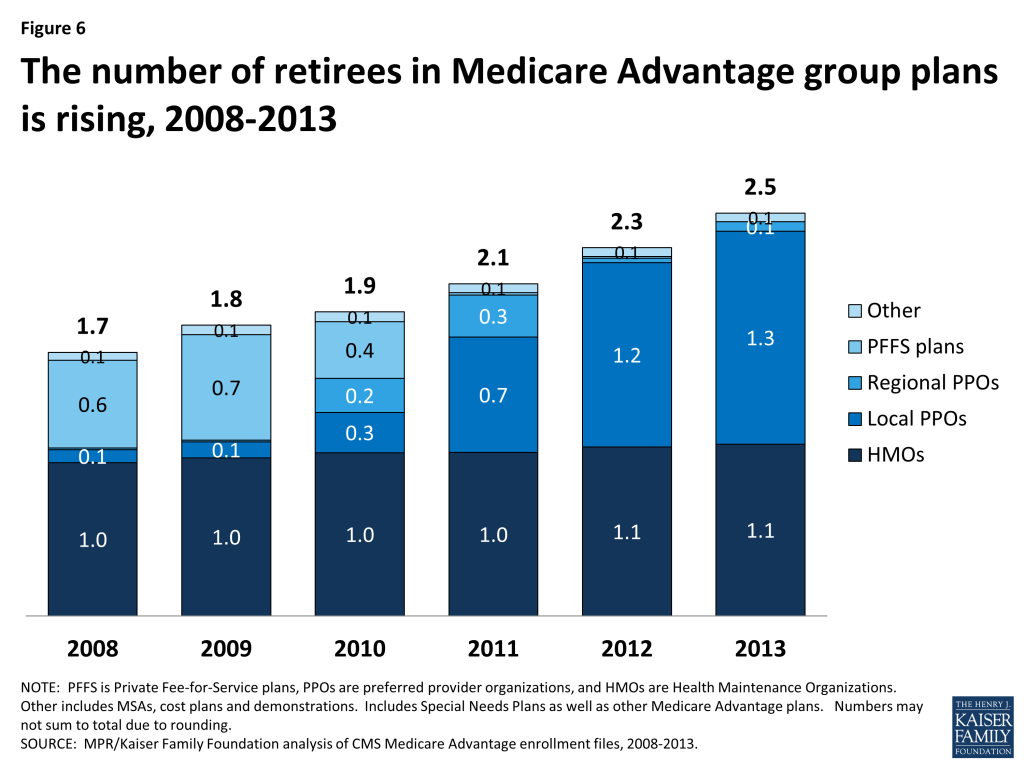
Figure 6: The number of retirees in Medicare Advantage group plans is rising, 2008-2013

The Administration in its FY2014 and FY2015 budgets has proposed to align payments for group plans with other Medicare Advantage plans for an estimated savings to Medicare of nearly $4 billion over 10 years .15 ,16   Similarly, in its 2014 report to Congress, MedPAC recommended a change in payment policy that would essentially reduce Medicare payments to employer group plans by basing them on the bids submitted by non-group plans, similar to the way it is done for Part D.  It is unclear how these proposed changes in payment policy would affect future enrollment.  Similarly, it is unclear what the effects would be of other recently-proposed rules from CMS that would make policy changes to the Medicare Advantage and Part D regulations without differentiating employer group plans.17 

Health Reimbursement Accounts and Private Exchanges.  A newer trend, discussed in greater detail below, is where an employer facilitates retiree access to Medicare Advantage, a Medicare Part D or Medigap plans offered through a private exchange on a non-group basis.  Employers electing this approach typically make a defined financial contribution to a health reimbursement account (HRA) that is used by retirees to pay premiums in the plan selected by the retiree.  Depending on the plan, the HRA may also be used to pay for out-of-pocket medical expenses.  For these arrangements, employers may contract with a third party administrator or facilitator known as a “private exchange” to provide support and assistance to retirees in choosing from among a broad array of non-group plans of different types, plan designs, and costs.

Premiums

Typically, retirees are required to make a contribution toward the total premium, and in some instances, retirees pay 100 percent of the cost.  According to Mercer’s National Survey of Employer-Sponsored Health Benefits, retirees ages 65 and older paid the full premium in 40 percent of the large employer plans offering retiree health benefits.  Conversely, large-employers paid the full amount in 14 percent of plans reported in the Mercer survey.  Among the remaining 46 percent of plans where the cost was shared, the average retiree contribution was 38 percent for Medicare-eligible retirees.  The results were similar among employers offering benefits to pre-Medicare retirees.18 

Strategies Used by Employer to Constrain Retiree Health Costs

Surveys conducted by the Kaiser Family Foundation and others have documented a trend among employers providing retiree health coverage of modifying their programs in an ongoing attempt to control retiree health costs.19   In addition to outright terminations of coverage, key changes reported by employers over the years include:

  • Capping the employer’s contribution (or limiting the amount of the employer share of the total cost) for retiree health benefits;
  • Tightening eligibility requirements, e.g., raising minimum age and service requirements;
  • Raising retirees’ premiums and cost sharing, including changes that essentially eliminated first-dollar coverage for retirees;
  • Eliminating coverage for future retirees, typically first for new hires, in some cases for current employees and, far less frequently for current retirees; and
  • Optimizing savings from Medicare prescription drug coverage.

Yet despite such efforts, retiree health costs remain a significant concern for the dwindling number of employers that continue to offer this coverage for current workers and, failing that, for those covering a closed group of retirees with grandfathered coverage.  For additional changes under consideration by employers, see the “Emerging Strategies for Employers Offering Retiree Health Coverage” section on page 12.


Report: Implications Of Recent Legislation For Retiree Health Coverage

Changes for Pre-65 Retirees

The Affordable Care Act of 2010

The ACA includes numerous provisions that directly or indirectly affect retiree health plans for pre-65 retirees, including, for example, the creation of the temporary Early Retiree Reinsurance Program and creation of a new marketplace where pre-Medicare retirees can for the first time obtain health coverage on a guaranteed issue basis with no pre-existing condition exclusions and on relatively favorable financial terms without having an employer directly sponsor a retiree health plan.  A discussion of these ACA provisions follows.

Early Retiree Reinsurance Program

The ACA established the Early Retiree Reinsurance Program (ERRP) as a temporary program with $5 billion in total funding from its start on June 1, 2010, until the program was scheduled to end no later than January 1, 2014.  Noting the decline in the availability of group health coverage for retirees age 55 to 64, the intent of ERRP was to try and stabilize coverage by providing financial assistance to plan sponsors offering retiree health benefits by reimbursing for 80 percent of claims between $15,000 and $90,000 for early retirees ages 55 to 64 and their spouses, surviving spouses, and dependents.

The demand for such assistance quickly outpaced the available funding.  Due to the overwhelming response from public and private employers and union plans, the program ceased accepting applications on May 6, 2011. Six months later, on December 13, 2011, CMS announced in the Federal Register that based on the projected availability of ERRP funding, it exercised its authority to deny ERRP reimbursement requests, in their entirety, that include claims incurred after December 31, 2011.20   ERRP payments must be used to reduce the costs of plan participants or plan sponsors, and may not be used as general revenue.  In a Federal Register notice of March 21, 2012, CMS formalized its expectation that a sponsor will use ERRP reimbursement funds as soon as possible, but not later than December 31, 2014.21   Even though the ERRP was intended to be temporary, the fact that claims for reimbursement so quickly exceeded funds available under this program illustrates the pent-up pressures among employers to seek financial relief from rising retiree health costs and underscores their continuing  interest in pursuing alternative  ways of loweringtheir retiree health costs as discussed further below under “Emerging Strategies for Employers Offering Retiree Health Coverage.”

Insurance Reforms, New Marketplaces and Premium and Cost-Sharing Subsidies

Effective January 1, 2014, new health care marketplaces (public exchanges) have become available in every state, either as federally-facilitated marketplaces or as marketplaces established by the states themselves.  These new marketplaces have created another potential avenue through which pre-65 retirees can obtain coverage with or without financial support from the employer.  Previously, there was no reliable individual insurance market for pre-65 retirees, and employer-provided health benefits enabled pre-65 retirees to retire with the confidence of having continued health coverage in retirement.  Now, access to coverage for pre-65 retirees is guaranteed whether or not the employer provides a health plan, the benefits are comprehensive, the limits on age rating are favorable to retirees, and premium credits and cost sharing federal subsidies may be available to certain retirees who qualify based on income and  do not receive an employer contribution..

Excise Tax on High-Cost Health Plans

The ACA established, effective in 2018, a non-deductible excise tax on high-cost employer-sponsored plans, which, for active employees and retirees ages 65 and older, is equal to 40 percent of the value of health coverage in excess of $10,200 for self-only coverage and $27,500 for family coverage. (This tax is sometimes referred to unofficially as the tax on so-called “Cadillac” health plans.)  The law allows a higher threshold before the tax kicks in for qualified retirees, defined as any individual who is receiving coverage by reason of being a retiree, has attained age 55, and is not Medicare-eligible.  For pre-65 retirees, the excise tax applies to coverage in excess of $11,850 for self-only coverage and $30,950 for family coverage.  In determining the applicable cost of employer-sponsored coverage to retired employees, the plan may elect to treat pre-65 retirees and retirees ages 65 and older as being “similarly-situated beneficiaries,” meaning that the costs for both groups can be blended together.  Since the cost of retiree coverage for Medicare-eligible retirees is considerably less than for pre-65 retirees, such blending would usually lower the average cost of the retiree plan for purposes of determining whether there is any taxable excess.  Regulations setting forth how all this will work have yet to be issued.  And although the tax is not effective for several years, many plan sponsors are generally projecting where their costs will be in 2018 and have already been making adjustments to scale back benefits so that they will not be subject to the tax.22   In addition, this tax has generally been reflected in the accounting of these benefits in financial statements since the passage of the ACA. With respect to retiree health plans, this pressure may be especially strong where the employer offers pre-65 coverage but does not also offer coverage for Medicare-eligible retirees that can be used to reduce the average cost.

Exemption for Retiree-Only Plans

Retiree-only plans are generally not subject to many of the ACA requirements for group health plans and market reforms. This is based on what had been a long-standing exemption for such plans under ERISA and the Internal Revenue Code.  A group health plan is considered to be retiree-only plan if it has  fewer than two participants who are active employees, and typically such plans are reviewed with legal counsel to ensure that the plan is governed by separate plan documents, summary plan description, administration and required reporting (e.g., Form 5500) with no commingling of assets.  Because of this significant exemption, retiree-only plans are not required to comply with some of the more costly requirements of the ACA, e.g., extending medical plan eligibility to adult children up to age 26, no annual or lifetime dollar limits on essential health benefits, covering preventive health services with no patient cost sharing, the four-page uniform summary of benefits and coverage, as well as certain other provisions.23   The exemption also applies to nonfederal government retiree-only plans.24   As a result of the new ACA requirements and the exemption for retiree-only plans, many employers that had included retirees in the same plan with active employees had a financial incentive to create a separate legal plan for retirees and avoid the ACA cost increases with respect to the retirees. That change would allow the employer to continue providing the same coverage to retirees as was provided prior to the ACA.  For example, under a retiree-only plan, employers who did not previously offer coverage to retirees with adult children under age 26 would not be required to comply with the ACA requirement to provide coverage for these children.

The exemption is also important because it allows stand-alone health reimbursement arrangements (HRAs) for retiree-only plans, which can be used to pay retiree premiums for group or individual health insurance coverage.  Without the retiree-only exemption, stand-alone HRAs would violate the ACA’s ban on annual dollar limits and face other regulatory restrictions. (Under current rules, without the retiree-only exemption, HRAs must be integrated with a group health plan and cannot be used to pay premiums for individual health insurance coverage or coverage through a federal or state exchange.)

However, if an HRA is used to pay for federal/state health exchange coverage for a pre-65 retiree, that retiree is not eligible for federal premium credits or cost sharing subsidies because the HRA for this purpose is considered to be employer-sponsored coverage that bars the retiree from receiving federal subsidies.  The same issue does not apply to Medicare-eligible retirees because they are not generally permitted to purchase coverage in a new exchange, and are ineligible for premium and cost-sharing subsidies.

Dedicated New Fees

The ACA also assesses two new sets of temporary, dedicated fees, one of which is relatively small and the second of which is considered substantial by large employers. The first is a temporary fee to fund the Patient Centered Outcomes Research Institute (PCORI), assessed at $1 per covered life in the first year it is in effect (plan years ending on or after October 1, 2012), $2 per covered life in the second year, and indexed thereafter until the fee sunsets in plan years ending before October 1, 2019.  The fee applies to coverage provided to retirees, including retiree-only plans.25   The second is a temporary fee in the form of a transitional reinsurance fee payable by insured and self-insured group health plans offering “major medical coverage” in calendar years 2014 through 2016, funds intended to help stabilize premiums in the ACA reformed individual market.  The fee is $63 per covered life in 2014.  The fee applies to pre-65 coverage, even if the plan is a retiree-only plan,26  but does not apply to coverage for Medicare-eligible retirees because, based on the Medicare Secondary Payer rules, Medicare is the primary payer.

In addition, the ACA assesses a new, permanent fee beginning in 2014.  The fee is called the Health Insurance Industry Tax and is intended to help fund premium tax subsidies for low-income individuals and families who purchase health insurance through the health insurance marketplaces.  The fee is expected to collect $8 billion in 2014 and increasing annually up to $14.3 billion in 2018 with increases in the fee thereafter tied to the rate of premium growth. The fee applies to insured (but not self-insured) group health plans, Medicare Advantage plans and Part D plans; Medigap plans purchased by individuals (without subsidies from former employers or unions) are not subject to the fee.  As with the PCORI fee and the reinsurance fee, there is nothing in the ACA or in the regulations that prevents plans from increasing premiums to recover the amount of the fee.

Changes for Medicare-Eligible Retirees

The Medicare Modernization Act of 2003

Historically, retiree health plans filled what had been until 2006 a major gap in traditional Medicare coverage, namely, the absence of prescription drug coverage.  The Medicare Modernization Act of 2003 (MMA) established a voluntary outpatient prescription drug benefit, known as Part D, that went into effect in 2006.  All 52 million elderly and disabled beneficiaries now have access to the Medicare drug benefit through private plans approved by the federal government, either stand-alone prescription drug plans (PDPs) or Medicare Advantage prescription drug (MA-PD) plans (mainly HMOs and PPOs) that cover all Medicare benefits including drugs. Part D sponsors offer plans with either a defined standard benefit27  or an alternative equal in value (“actuarially equivalent”), and can also offer plans with enhanced benefits.

The MMA included provisions to encourage employers to maintain prescription drug coverage for their retirees, in conjunction with other medical benefits.  As noted earlier, the law provides federal subsidies to sponsors of certain qualified prescription drug plans (employer plans that offer drug benefits that are at least as good as the standard Medicare benefit).  The federal subsidies equal 28 percent of allowable drug costs, which for most employers amounted to a retiree drug subsidy (RDS) payment of $500 to $600 per retiree.28   In addition, until recently, the law allowed plan sponsors to exclude the federal RDS payment from income and still deduct the full cost of retiree health benefits, in effect allowing employers to take a larger tax deduction than under the general tax rule, whereby taxpayers generally may not deduct costs that are reimbursed.  The subsidy and favorable tax treatment were designed to discourage employers from dropping prescription drug coverage from their retiree health benefits and to minimize any disruption in drug coverage for retirees in employer-sponsored plans.

Initially, the vast majority of employers offering retiree health benefits to Medicare-eligible retirees chose to maintain drug coverage and accept the RDS.  In 2006, 7.2 million Medicare beneficiaries with employer-sponsored retiree health benefits had claims reimbursed under the RDS – a figure that has dropped steadily since then, and is projected to drop sharply in the future, as described below.29 

The Affordable Care Act of 2010

The ACA, though mainly designed to improve coverage for individuals younger than age 65 and not yet on Medicare, included changes to Medicare that are expected to affect employer-sponsored coverage for Medicare-eligible retirees.  On the one hand, improvements in Medicare benefits, particularly provisions that close the “doughnut hole,” are expected to reduce out-of-pocket expenses for Medicare beneficiaries and consequently the costs of employer-provided retiree health plans that supplement Medicare.30   But on the other hand, certain other changes, notably the change in the tax treatment of the RDS, may accelerate changes in employer-sponsored coverage for Medicare-eligible retirees.

Closing the Medicare Part D “Doughnut Hole”

From a retiree health perspective, the most significant improvements in Medicare concern the Medicare Part D prescription drug benefits. Specifically, the ACA gradually phases in coverage in the Medicare Part D “doughnut hole,” eventually reducing what beneficiaries pay in the gap from 100 percent of total drug costs in 2010 to 25 percent in 2020 for both brand and generic drugs, at which point the enrollee would qualify for catastrophic drug coverage.  Beginning in 2011, pharmaceutical manufacturers were required to provide a 50 percent discount off negotiated prices on brand-name drugs and biologics for Part D enrollees with spending in the coverage gap.  In 2011, the coinsurance for generic drugs began to phase down, and in 2013, the coinsurance for brand-name drugs began phasing in.  The ACA also reduces the catastrophic coverage threshold between 2014 and 2019, which provides relief to enrollees with high drug costs.  Together, these improvements provide a substantial reduction in the cost of providing drug coverage to retirees for employers who contract with PDP or MA-PD plans.  The financial attractiveness of employer plans using the RDS, however, was reduced in part by changes in the tax treatment of the RDS also included in the ACA.

Repealing the Retiree Drug Subsidy (RDS) Preferential Tax Treatment

The ACA repealed the provision that allowed plan sponsors to disregard the RDS payment for purposes of determining whether a deduction is allowable for subsidized costs, effective in 2013.  Plan sponsors will be able to continue to exclude RDS payments from gross income, but will be subject to the normal rules disallowing a deduction for expenses for which the sponsors are reimbursed, in effect, making the RDS payment taxable. Even though the change was not effective until 2013, accounting rules required certain employers to record an accounting charge in their 2010 financial results to reflect the impact of the change in RDS tax status.

Employers who take the RDS do not benefit from the improvements in Medicare drug benefits in that RDS claims are ineligible for the 50 percent brand-name drug discount. Furthermore, RDS plans do not receive the financial benefits that flow to other Part D plans from the closing of the doughnut hole.  Although RDS plans are at least actuarially equivalent to Medicare drug coverage, the RDS payment is in lieu of Part D plan coverage. Retirees in an RDS plan only receive the employer drug coverage and do not receive Part D plan benefits. The formula for calculating the RDS payment to the employer plan sponsor was not changed under the ACA. It remains based on the percentage of the retiree’s drug costs under the employer plan, not on what Part D pays. In 2014, for each RDS plan, subsidy payments to a plan sponsor for each qualifying covered retiree will generally equal 28 percent of allowable retiree costs under the employer plan between $310 and $6,350. The cost thresholds are indexed but the 28 percent remains fixed. So closing the doughnut hole does not result in a higher RDS subsidy even though the doughnut hole will be closing over time for other Part D drug plan participants.31 

The number of Medicare beneficiaries with claims reimbursed under the RDS dropped from 7.2 million in 2006 to 6.8 million in 2010, even before the ACA was enacted, and has continued to decline since then to 5.6 million beneficiaries in 2012 (Figure 7).  The Medicare Trustees project an even sharper decline starting in 2013, when just 3.2 million Medicare beneficiaries are expected to have RDS claims, falling to just 0.8 million by 2016.32 
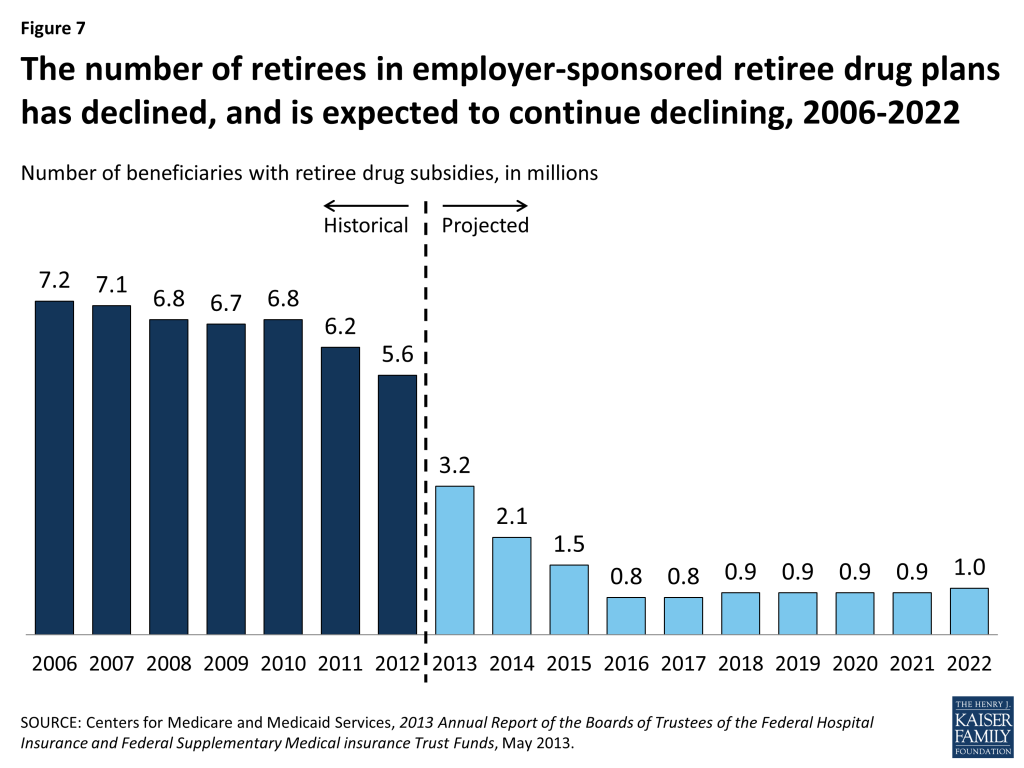
Figure 7: The number of retirees in employer-sponsored retiree drug plans has declined, and is expected to continue declining, 2006-2022

The expected drop in employers taking the RDS is due to several factors, in addition to the change in tax treatment that took effect in 2013.  For some employers, the operational and administrative hassles associated with the subsidy program made alternative approaches more attractive, such as contracting with a Medicare PDP to administer additional prescription drug coverage to their retirees.33   Part D insurers have become more sophisticated in the administration of the employer group waiver programs, making it easier for employers to take advantage of new subsidies in the Part D program (e.g., pharmaceutical rebates and the closing of the doughnut hole). Employers, especially those with caps on their financial contribution toward retiree health benefits, have understood that over time, as the cap was hit and the retiree’s share of the total cost increased, the plan would eventually cease to satisfy the test of offering drug benefits that were actuarially equivalent to Medicare, which is required to qualify for the RDS.  Public employers had their own set of reasons to shift away from the RDS.  A new set of accounting rules (Statements 43 and 45) issued by the Government Accounting Standards Board (GASB) applied to state and local governments (including public universities and colleges) on a phased-in basis beginning in December 2006. These rules prohibit public entities from reflecting any accounting savings associated with the RDS 28% subsidy, although the rules do allow the accounting savings to be reflected for other Part D coordination approaches (e.g., supplemental/wraparound PDP coverage).  These GASB accounting rules led public entities to more strongly consider alternative Medicare Part D coordination approaches as a way of managing costs well before the enactment of the ACA.34 

Reducing Medicare Payments to Medicare Advantage Plans

In response to well-documented concerns about overpayments to plans, the ACA phases in reductions in future payments to Medicare Advantage plans.  Although the provision does not specifically target group plans, group plans are nonetheless affected by the reduced payments to plans in the same manner as other Medicare Advantage plans.

A relatively small share of all Medicare beneficiaries with Medicare Advantage coverage — about 18 percent — are covered by group Medicare Advantage plans.  Group enrollment rose by 9.4 percent in 2013, at about the same rate as the 9.8 percent growth in individual enrollment.  The phase down in payments could discourage employers from maintaining or considering new arrangements with Medicare Advantage plans to provide benefits to retirees – although the number of retirees in Medicare Advantage group plans has continued to rise.  Employers have for the past decade been somewhat hesitant to build their retiree health strategy around Medicare Advantage plans after building strategies around what were then called Medicare Risk HMOs in the past, only to experience subsequent dislocations when health insurers withdrew from many markets after legislated reductions in Medicare payment rates.  Thus, employers currently sponsoring or considering sponsoring group Medicare Advantage plans will be assessing the potential effects on employer costs of future Medicare Advantage payments and the extent to which health insurers may withdraw plans from selected markets, as some already have said they are.35   In addition, employers will be watching the future of the Administration proposal to modify payments to employer group waiver plans as part of its FY 2015 Budget, although the provision was previously proposed in the FY 2014 Budget and not enacted into law.

Report: Emerging Strategies For Employers Offering Retiree Health Coverage

Employers are moving forward with more alternative strategies for their early retirees and Medicare-eligible retirees, as they continue seeking to manage costs and watch for future developments in federal policy.  In addition to ongoing changes in eligibility, benefit design, premiums, and cost-sharing, employers are moving in new directions, some of which entail incremental changes in the way the group prescription drug benefits are offered and others of which entail a more substantial break from the past by shifting to non-group coverage for medical and drug coverage.

Strategies for Pre-65 Retirees

Employers offering coverage to pre-65 retirees are focusing on strategies to avoid or minimize the impact of the excise tax on high cost plans included in the ACA (discussed above).  Although the tax applies to plans for active employees, as well as pre-65 and Medicare-eligible retirees, there is a focus on pre-65 coverage because of its relatively higher cost.  And even though the tax takes effect under the ACA in 2018, employers must begin to account for any material impact the tax may have on their retiree health programs in today’s financial statements.

According to the 2013 Aon Hewitt retiree health survey, some of the most common strategies employers are considering to mitigate the effects of the excise tax include: (1) lowering the cost of the plan through plan design changes, e.g., higher deductibles, coinsurance and copays, or using a high deductible health plan that may be Health Savings Account (HSA) eligible, favored by 29 percent of large employers; (2) using a defined contribution approach to support pre-65 retirees obtaining coverage through the federal/state marketplaces, favored by 22 percent, and (3) eliminating pre-65 coverage, favored by 13 percent.  In terms of the longer-term future, employer sponsors of pre-65 coverage in the same survey expressed a roughly three way split in terms of favoring using a defined contribution strategy with federal/state marketplaces (34%), making no change in strategy (33%), and eliminating pre-65 coverage (30%).36 

Public Exchanges and Marketplaces

With the advent of the federally-assisted and state ACA marketplaces, a number of benefit consultants and e-brokers are offering employers the service of facilitating coverage in the ACA marketplaces for employees and retirees not covered under the employer’s health plan, e.g., part-time employees working fewer than 30 hours, and pre-65 retirees, if the employer does not offer a retiree health plan.37   A number of employers have already announced or are seriously considering providing their pre-65 retirees a defined contribution that can be used to purchase coverage in the federal/state ACA marketplaces.  Observers predict this will be a major trend going forward and in some cases see the ACA marketplaces as further displacing employer-provided coverage for pre-65 retirees.38  In a recent survey of 595 employers by Towers Watson and the National Business Group on Health, conducted between November 2013 and January 2014, nearly two-thirds of those that offer access to a retiree health plan today say they are likely to eliminate those programs in the next few years and steer their pre-Medicare retiree population to the public exchanges.39 

A separate question may be how many pre-65 retirees with employer coverage might themselves choose to decline employer retiree coverage and enroll in a federal/state marketplace.  According to a survey by the National Business Group on Health, more than one-fourth (26%) of large employers felt that some pre-65 retirees might opt to join exchanges.40   Some actuaries are forecasting that pre-65 retiree participation rates in employer-sponsored plans will likely decline in the future, given favorable age rating in marketplace plans and in particular for employer plans with: (1) capped or lower employer contributions toward premiums; (2) covered populations with lower income retirees, due to federal premium subsidies available in the health care marketplaces; and (3) excise taxes on high-cost plans passed through to retirees.41   In particular, with respect to the 40 percent of retiree health plans wherein some surveys indicate retirees pay the full cost of premiums, individual health insurance coverage in the federal/state marketplace could well be cheaper (though potentially less generous) than the employer plan.

Private Exchanges

As an alternative to the federal/state marketplaces, employers may also consider offering group coverage through private exchanges for pre-65 retirees.  In the last few years, a growing number of benefit consultants and insurers have launched — or soon plan to launch — a private exchange through which active employees purchase coverage.  These exchanges are similar in concept to the private Medicare exchanges (described below) except that the active employees typically have access to insured or self-insured group products rather than non-group medical plans.  Like the exchanges set up for Medicare-eligible retirees, these private exchanges can be single carrier or multi-carrier, and the employer contribution is usually in the form of a defined contribution amount, which can be used toward buying more generous or less expensive coverage available through the private exchange.  Employers continue to offer the coverage, but it is outsourced through the private exchange, so the employer spends less on administration.  The defined contribution approach results in more predictable costs for employers.  Employees may or may not be exposed to greater cost increases in the future, depending on the rate of future increases in premiums and the share of that increase paid by the employer.  The hope is that particularly in the case of multi-carrier exchanges, greater competition among insurers may help lower the future rates of increase.  While these newer exchanges are typically not dedicated to pre-65 retirees, some of them will accept the employer’s pre-65 retirees along with the active employees.

Strategies for Medicare-Eligible Retirees

Employers offering retiree health coverage to Medicare-eligible retirees are also exploring alternative strategies to take the best advantage of the improvements in Medicare drug coverage, or transitioning to non-group arrangements for retirees to obtain medical and drug coverage.

Medicare Part D Group Waiver Plan (EGWP) plus Wrap

For employers choosing to continue offering retiree health plans on a group basis, the changes in the tax treatment provisions of the RDS coupled with the improvement in Medicare drug benefits have prompted many employers to replace their RDS strategy for Medicare-eligible retirees with what is called a Medicare Part D Employer Group Waiver Plan (EGWP). The most common EGWP strategy – EGWP + Wrap – consists of two separate but integrated plans.  The primary plan is the EGWP – a Medicare Part D plan offered by contract solely to the employer’s retirees – with the standard Medicare Part D plan design and the coverage gap.  The secondary plan is an employer group plan that supplements or “wraps around” the EGWP so that the combination of the two benefits basically replicates the drug benefits that had previously been available to retirees under the RDS.  Both plans may be (and often are) self-insured.  The 2013 Trustees report estimates that the proportion of Medicare beneficiaries in these employer-sponsored plans will increase from about 9 percent in 2012 to about 20 percent in 2016 and beyond.  The Trustees expect that such plans will offer additional benefits beyond the standard Part D benefit package.42 

To reap the financial benefit of the 50 percent manufacturer discount on brand name drugs, under EGWP + Wrap, any brand drug coverage in the coverage gap is provided by the supplemental “wrap” plan, not the Part D plan.  Recent CMS guidance clarifies, however, that the 50 percent manufacturer discount is also available if the employer chooses to contract for an “enhanced” EGWP design for its retirees that may provide drug benefits close to the previous RDS plan design but without a separate wrap-around plan.  This effectively simplifies the administration of EGWP and results in reduced cost for the plan sponsor, as it avoids the need to split the drug benefit between a Part D plan that does not cover brand drugs in the coverage gap and a wrap plan that does.43   Surveyed employers appear to be still favoring the EGWP + Wrap over this relatively newer enhanced EGWP approach, at least for the time being.44 

The shift to EGWP+Wrap could bring savings to employers while largely preserving drug benefits for retirees.45   Because drug benefits can be preserved, the EGWP + Wrap approach could be appealing for both salaried and collectively bargained plans.  Further, it may appeal to both public and private-sector employers as a strategy for reducing the retiree health obligations reported on their financial statements relative to the financial obligation reported under the RDS.

Private Exchanges for Medicare-Eligible Retirees

The strategy of transitioning from an employer-based retiree group health plan to using the non-group market for Medicare-eligible retirees is attracting interest among employers that offer retiree health benefits.46 , 47   Employers adopting this strategy often engage a third party that provides an administrative coordinator or “exchange” platform that provides a variety of functions.  This shift by employers to facilitate coverage for retirees through a private exchange is not new, though this approach has garnered a lot more attention in the media as more and more well-known companies have recently announced they are moving in this direction.  Among the early adopters of this strategy were certain large U.S. manufacturers, e.g., automobile manufacturers Chrysler, Ford, and General Motors, which employed this strategy for their Medicare-eligible salaried former employees.

This private exchange strategy originated with Medicare-eligible retirees because of the widespread availability of traditional Medicare along with other options for Medicare-eligible retirees to obtain coverage as individuals, such as a combination of traditional Medicare plus Medigap, or a federally-funded Medicare managed care plan, or (since 2006) a Medicare Part D PDP.   This strategy appeals to employers as a way of offering retirees a choice of health plans while controlling the employer’s future retiree health care costs and limiting their reported liabilities because of the shift to a defined contribution approach for funding these benefits and the consulting cost and administrative savings to the employer that may flow from the outsourcing to the private exchange.

Companies embarking on this approach typically use the third party coordinator or facilitator (the private exchange) to help retirees understand the choices available in the non-group market and facilitate the enrollment of the retiree in the plan of his/her choice.  The exchange typically handles the administration, the billing and member services, with licensed benefit advisors, a call center, and online tools to assist retirees in plan selection.  In many instances, the employer contributes a fixed defined contribution using a tax-effective health reimbursement arrangement (HRA) that is favorable for both the employer and the retiree and reimburses retirees for premiums and/or out-of-pocket expenses.  The private exchange platform then helps apply that monetary contribution toward the individual retiree’s choices.  According to a recent Aon Hewitt survey of employers, the revenue for the exchange platform mainly comes from the commission built into the health plan premiums.48 

For retirees, the employer’s shift to a private exchange often means a wider range of plan choices for Medicare-eligible retirees along with decision support provided by the exchange.  How the shift affects retirees’ costs will vary depending on the existing retiree health plan.  On the one hand, premiums paid by retirees could be more attractive, especially in situations where retirees were expected to pay a large share of the premium or if the employer’s contribution to the retiree plan had been capped and the cap was hit or about to be hit, at which point any increases in retiree costs would be fully borne by the retiree.  On the other hand, the defined contribution amount that the employer offers toward the exchange may or may not increase in line with medical inflation, if it increases at all, in which case retirees in the exchanges may be paying more than what they previously contributed.  The hope is that the availability of multiple plan options will give retirees more flexibility in managing these costs by seeking lower-cost alternatives in the private exchange.  In addition, private exchanges offer retirees access to benefits beyond just medical services, e.g., dental, vision, life, and other forms of voluntary insurance.

Two general types of private exchanges exist.  The first is a multi-carrier model, where the exchange entity makes available to retirees a choice of health insurance options offered by multiple insurers.  The second is a single-carrier model, where the medical plan options available are generally those offered by a single insurer. Thus far, employers tend to prefer the multi-carrier approach.

The number of private exchanges available to employers offering retiree health benefits is expanding, which may reflect growing interest among employers.  By some tallies, there are now more than 100 private exchanges,49  though most of  these are intended  for active employees and not retiree populations The proliferation of these private exchanges and the different options for employers available through them has given rise to the Private Exchange Evaluation Collaborative — a joint effort among the Employers Health Coalition, the Midwest Business Group on Health, the Northeast Business Group on Health, the Pacific Business Group on Health, and PricewaterhouseCoopers — to create  a comprehensive database of information that employers can use to analyze the various exchanges for active employees and retired groups.50   According to recent reports posted by the sponsors of these private exchanges for Medicare-eligible retirees:

  • Towers Watson operates the largest private Medicare exchange, called OneExchange, serving more than 500,000 retirees51  after acquiring Extend Health in 2012.  Towers Watson has more than 250 organizations as clients, and offers plan choices from more than 80 national/regional insurance carriers.
  • Aon Hewitt operates a private exchange for Medicare-eligible retirees, called Aon Hewitt Navigators, which serves more than 300,000 Medicare-eligible retirees.  It too describes on its website how it partners with over 80 leading insurance companies.52 
  • Mercer recently announced that 19 employers with a total of 35,000 retirees have chosen Mercer’s Medicare solution.53 
  • Buck Consultants, a Xerox Company, announced the launch of RightOpt®, a private health insurance exchange that includes a retiree exchange platform, My Medicare Advocate®, which serves 19 employers with 50,000 retirees.54 

These private exchanges often provide more choices to retirees than would otherwise be offered under an employer-sponsored retiree health structure, but fewer plans than are currently offered to all Medicare beneficiaries in an area, outside the private exchange.55   The more narrow selection of available MA and PDP plans on private exchanges could be viewed as a positive by those who view the existing number of plans as overwhelming, but as a shortcoming to others for potentially not showing retirees that there may be some better plans out there.  In addition, depending on the arrangement, the employer’s contribution to the health reimbursement account may sometimes only be available to the retiree for premium payments to plans that the retiree enrolls in through the private exchange, and not for use with other plans that the retiree may enroll in through the CMS site or directly with the insurers.  The employer may want to ensure, for example, that the retiree receiving the employer-provided defined contribution has the benefit of the decision support tools and the full range of customer support for which the employer has contracted with the private exchange, rather than leaving the retiree to his/her own devices. The exchange may, for example, provide enrollees with advocacy services if the retiree later needs help with an insurance issue.

In addition to using private exchanges for Medicare-eligible retirees, some employers may ultimately envision going one step further, and paying an insurer to assume full responsibility for their retiree health obligations, thus eliminating the employer’s ongoing payments for these benefits which instead would get paid by the insurance company.56 

Report: The Current Policy Debate: Implications For Retiree Health

A number of proposals have been and are under discussion that could have important implications for employers that offer retiree health coverage and the retirees enrolled in them, including changes that would potentially impact the costs associated with coverage of both pre-65 and Medicare-eligible retirees.   As  noted earlier, the ACA includes a number of changes  affecting employers and current and future retirees; thus, a significant change to the ACA (or outright repeal) could have far reaching effects;  for example, outright repeal would, among other things, likely close the existing pathway to coverage for potentially millions of pre-65 retirees who are expected to eventually receive coverage through the federal/state marketplaces in the future.

Most of the other major policy proposals  that would affect retiree health coverage are made  within the context of changes to Medicare,  so their most direct impact would be on retiree health benefits for  Medicare-eligible retirees.

Medicare Proposals and Retiree Health

With ongoing concern about the rise in federal spending and concern about Medicare spending specifically, a number of proposals have been put forward to reduce Medicare spending that could have significant implications for beneficiaries with retiree health coverage, and for employers sponsoring retiree health plans.  While such proposals are many and varied, this section highlights four general proposals that directly affect employer-sponsored retiree health plans.

Raising the Medicare Eligibility Age to 67

One proposal that has been consistently discussed over the years as a way of reducing spending is to gradually raise the Medicare eligibility age to 67.  Under an option described by CBO, the Medicare eligibility age would increase by two months every year, beginning with beneficiaries born in 1951 (who will turn 65 in 2016), with projected net federal savings of $19 billion between 2014 and 2023.57 

Beyond the effects on the federal budget, raising the Medicare age of eligibility would also have cost implications for beneficiaries, employers and other payers.58   Increasing the Medicare age would directly increase costs for retiree health plans, principally because the retiree health plan would be primary, rather than the secondary payer for two more years of retiree eligibility.  In an earlier study, Kaiser Family Foundation (KFF) and Actuarial Research Corporation (ARC) modeled the effects of raising the Medicare eligibility in a single year (2014), finding that employer retiree plan costs were estimated to increase by $4.5 billion in 2014 if the Medicare eligibility age is raised to 67.59   In addition, public and private employers offering retiree health benefits would be required to account for the higher costs in their financial statements as soon as  the change is enacted.  Employers would likely consider a variety of steps to lessen the added costs, which would likely mean higher out-of-pocket costs for these retirees.  In addition, the loss of Medicare benefits for retirees ages 65 and 66 could make the federal/state marketplaces a more tempting employer strategy for their early retirees.

Changing Cost Sharing Under Medicare Part A and B

Medicare cost sharing changes could also have significant cost repercussions for some retiree health plans; but the amount of any increase and who bears the brunt of that cost will vary widely depending on the specific Medicare proposal – and there are many variations — the design of the retiree health plan (both the cost sharing provisions like deductibles and coinsurance and how the plan coordinates with Medicare) and the level and form of the employer contribution.  In addition, retiree plans vary so widely that it will be hard for lawmakers to know in advance who exactly will be affected and how big the impact will be for specific groups.  But in general, if the employer plan is going to cover the same things as it did before, and Medicare is now paying relatively less, the employer plan is going to pick up the difference.  Beyond that, it gets complex and the impact varies with the proposal.

CBO described an option others have considered and endorsed that would have replaced the current benefit structure with a $550 combined Medicare Part A/B deductible, 20 percent coinsurance for nearly all services, and a $5,500 spending limit.60   CBO estimated that if those changes took effect on January 1, 2015, and the various dollar thresholds were indexed to average fee for-service Medicare costs per enrollee, that approach would reduce federal outlays by $52 billion between 2015 and 2023.61 

As with other changes to Medicare, the benefit redesign could have implications for employers and other payers.  According to a KFF/ARC analysis of the option described by CBO, total costs associated with employer-sponsored retiree coverage (employer and retiree share) would increase by $1.2 billion in 2013, and nine out of ten beneficiaries (87%) with retiree coverage would see an increase in out-of-pocket (cost-sharing and premium) spending in 2013.62   Even with a new $5,500 limit on out-of-pocket costs, employers’ costs would rise unless they reduced their wrap-around coverage because of other new cost-sharing requirements imposed on beneficiaries, such as an across-the-board 20 percent coinsurance on all Medicare-covered services.  If the Medicare spending limit were set at $7,500 rather than $5,500, the total costs for retiree coverage would rise by more than three times as much, to an estimated $3.8 billion.63   If employers do not make conforming changes in their benefit design to limit their costs, they would be required to book the additional costs on their financial statements.  Or, if a cap on the employer’s obligation is already in place, costs would be shifted to their retirees.

Imposing a Surcharge on Retiree Health Plan Coverage

Another proposal that emerged during recent debt reduction discussions would have imposed a surcharge on supplemental coverage, either Medicare supplemental insurance policies (Medigap) policies, employer-sponsored retiree health plans, or both.64 ,65   Sponsors of these proposals observe that individuals with first dollar or near first dollar coverage tend to use more Medicare-covered services, which in turn leads to higher Medicare spending.  A premium surcharge would discourage individuals from obtaining supplemental coverage and/or indirectly recoup the additional costs to Medicare that result from such coverage.

A surcharge on employer-sponsored retiree health coverage may achieve savings for Medicare, but also raise costs for Medicare-eligible retirees who choose to retain their employer-sponsored benefits, assuming employers pass through the additional cost associated with the surcharge to their retirees.  With a surcharge, retirees with lower incomes might be more inclined to forego supplemental coverage than higher income retirees, depending on the additional expense.   Retirees who forego supplemental coverage as a result of the surcharge would save on premiums, but would potentially be exposed to higher costs for their medical care, and as a result, may forgo needed services due to costs.  To the extent the proposal is limited to plans that provide first-dollar coverage, the proposal may have less of an impact on Medicare utilization and savings, or on retirees, in that employer-sponsored retiree plans do not generally provide first dollar coverage, in contrast to the most popular individual Medigap plans (C and F).66    A further consideration relates to administrative feasibility. Retiree health plan premiums vary by economic sector and by eligible retiree groups, e.g., grandfathered, current actives, new hires, salaried or bargained, and if bargained, which bargaining agreement.  It is not unusual for the same large employer to sponsor multiple retiree plans, with different premium contribution requirements for different groups of retirees. For these reasons, proposals that impose a surcharge on supplemental coverage that is tied to the Medicare Part B premium, rather than the premium of a given retiree health plan, may be easier for Medicare to administer.

Prohibiting First Dollar Supplemental Coverage

As an alternative to a surcharge, some have proposed to establish requirements for supplemental coverage, for example, by prohibiting first-dollar coverage. Under this approach, future legislation could potentially limit the amount of the Medicare cost sharing that the retiree health plan could cover by mandating certain benefit design parameters of the employer sponsored plan, e.g., the retiree plan might be required to have at least a certain deductible, and/or the out-of-pocket spending limit could not be below a certain dollar amount.67 

Such an approach would be a fundamental shift in policy, by stipulating the design of what are otherwise voluntary employer-provided retiree benefits and in some cases collectively bargained arrangements that cannot easily be altered.  As CBO has noted, “regulations on retiree coverage would be more complex to administer than those on Medigap insurance.” 68 

Conclusion

Retiree health strategies of employers are undergoing accelerated change, and several major trends in particular stand out for the future.  A marked and growing interest in shifting to a defined contribution approach for both pre-65 and post-65 retiree coverage is fueled by the employers desire to manage future costs.  Increasing interest in moving from group coverage to non-group coverage is a trend that is particularly strong with respect to Medicare-eligible retirees for whom employers can facilitate access to non-group coverage through private exchanges.  And while the jury is still very much out, the new federal/state marketplaces are gaining at least the consideration by employers as a possible pathway through which the employer’s pre-65 retiree population might gain access to non-group coverage.

While eliminating retiree coverage is not the prevailing strategy expressed by employers, the number of employers offering retiree health coverage will continue to decline in the future as incremental numbers of employers may follow through on their interest in doing so as reported in surveys.

The pace of employer changes in strategy is very sensitive to changes in public policy, whether these would be as potential changes in the ACA or as potential reforms to Medicare.  The immediate impact of any of the various proposals for Medicare redesign would depend on the nature of the proposals and on whether they would apply to current retirees or only to future retirees.  If they would apply to future retirees, then potential budget savings would be lower; if they applied to current retirees, there would be more problems and disruption for retirees, and the flexibility for the employer plan may be limited, either by collective bargaining agreements, or by the state law for a public employer plan.  Most private employers typically do reserve the right to change the health plans, but as a practical matter, in many cases they have been more reluctant to change the plans for current retirees than for recent or new retirees.  In terms of future retirees, one would expect the employer plan to respond in ways that reflect the Medicare changes, including by making changes in the retiree plan design, or the employer contribution to the plan, or in the way the plan coordinates with Medicare, or adopt an approach that we have noted above is a growing trend, namely, providing the retiree with a defined contribution amount that the retiree can use to purchase an individual Medicare or Medigap plan, as opposed to the employer group plan.

Over the next few decades, these trends suggest that employer-sponsored supplemental coverage is likely to be structured differently and play a smaller macro role in retirement security than it has in the past and than it does today.  Relatively fewer workers will have such coverage available in the future, to be sure.  But for workers and current and future retirees who do have employer-sponsored retiree coverage, changes resulting from rising costs and/or shifts in public policy that could weaken the prospects of retirement security warrant close attention.

Endnotes

  1. The Henry J. Kaiser Family Foundation analysis of the Medicare Current Beneficiary Survey 2010 Cost and Use File, and 2012 Current Population Survey. ↩︎
  2. Paul Fronstin and Nevin Adams, “Employment-Based Retiree Health Benefits: Trends in Access and Coverage, 1997‒2010,” Employee Benefit Research Institute (EBRI) Issue Brief, October 2012.  http://www.ebri.org/pdf/briefspdf/EBRI_IB_10-2012_No377_RetHlth.pdf. EBRI estimates 25 percent of the 8.5 million non-working retirees ages 45 to 64 had retiree health benefits, based analysis of the 2010 Survey of Income and Program Participation (SIPP); this produces an estimated 2.1 million retirees.  This number is similar to the number of 55 to 64-year old non-working retirees with retiree health benefits (2.4 million), based on the Kaiser Family Foundation’s analysis of the 2012 Current Population Survey (CPS).  Neither the EBRI analysis nor the Kaiser Familiy Foundation analysis includes the spouses of retirees. ↩︎
  3. The Henry J. Kaiser Family Foundation analysis of the 2008-2012 Current Population Survey. ↩︎
  4. The Henry J. Kaiser Family Foundation, 2013 Employer Health Benefits Survey, August 2013. https://modern.kff.org/private-insurance/report/2013-employer-health-benefits/. ↩︎
  5. Mercer, Mercer’s National Survey of Employer-Sponsored Health Benefits, MTEBC, February 2013. http://benefitcommunications.com/upload/downloads/Mercer_Survey_2013.pdf. ↩︎
  6. Towers Watson, Reshaping Health Care: Best Performers Leading the Way, Towers Watson/National Business Group on Health Employer Survey on Purchasing Value in Health Care, 2013. http://www.towerswatson.com/en-US/Insights/IC-Types/Survey-Research-Results/2013/03/Towers-Watson-NBGH-Employer-Survey-on-Value-in-Purchasing-Health-Care. ↩︎
  7. Mercer, Mercer’s National Survey of Employer-Sponsored Health Benefits, MTEBC, February 2013. http://benefitcommunications.com/upload/downloads/Mercer_Survey_2013.pdf. ↩︎
  8. Fidelity Benefits Consulting, “Retiree health costs fall,” Fidelity Viewpoints, May 15, 2013. https://www.fidelity.com/viewpoints/retirees-medical-expenses.  “Based on a hypothetical couple retiring at age 65 years or older, with average (82 male, 85 female) life expectancies. Estimates are calculated for ‘average’ retirees, but may be more or less depending on actual health status, area of residence, and longevity. Assumes individuals do not have employer-provided retiree health care coverage, but do qualify for Medicare. The calculation takes into account cost sharing provisions (such as deductibles and coinsurance) associated with Medicare Part A and Part B (inpatient and outpatient medical insurance). It also considers Medicare Part D (prescription drug coverage) premiums and out-of-pocket costs, as well as certain services excluded by Medicare. The estimate does not include other health-related expenses, such as over-the-counter medications, most dental services and long-term care.” ↩︎
  9. Centers for Medicare and Medicaid Services, 2013 Annual Report of the Boards of Trustees of the Federal Hospital Insurance and Federal Supplementary Medical Insurance Trust Funds, May 2013.  http://downloads.cms.gov/files/TR2013.pdf. ↩︎
  10. Carlos Zarabozo and Scott Harrison, “Payment Policy and the Growth of Medicare Advantage,” Health Affairs, January 2009.  http://content.healthaffairs.org/content/28/1/w55.full.pdf+html. ↩︎
  11. Medicare Payment Advisory Commission, Report to the Congress: Medicare Payment Policy, March 2014. http://www.medpac.gov/documents/Mar14_entirereport.pdf. ↩︎
  12. Non-group Medicare Advantage plans receive a percentage of the difference between the bid and the benchmark in the form of a rebate, and can use the rebate to provide extra benefits or lower cost-sharing to enrollees. ↩︎
  13. Medicare Payment Advisory Commission, Report to the Congress: Medicare Payment Policy, March 2014, Table 13-4. http://www.medpac.gov/documents/Mar14_entirereport.pdf. ↩︎
  14. Marsha Gold, Gretchen Jacobson, Anthony Damico, and Tricia Neuman, “Medicare Advantage 2013 Spotlight: Enrollment Market Update,” The Henry J. Kaiser Family Foundation, June 2013. https://modern.kff.org/medicare/issue-brief/medicare-advantage-2013-spotlight-enrollment-market-update/. ↩︎
  15. Gretchen Jacobson, “Medicare and the Federal Budget: Comparison of Medicare Provisions in Recent Federal Debt and Deficit Reduction Proposals,” The Henry J. Kaiser Family Foundation, January 2014.  https://modern.kff.org/medicare/issue-brief/medicare-and-the-federal-budget-comparison-of-medicare-provisions-in-recent-federal-debt-and-deficit-reduction-proposals/. ↩︎
  16. Office of Management and Budget, Fiscal Year 2014 Budget of the U.S. Government, April 10, 2013. http://www.whitehouse.gov/sites/default/files/omb/budget/fy2014/assets/budget.pdf. For the FY 2015 proposal, see http://www.hhs.gov/budget/fy2015/fy-2015-budget-in-brief.pdf. ↩︎
  17. U.S. Department of Health and Human Services, Centers for Medicare and Medicaid Services, “Medicare Program; Contract Year 2015 Policy and Technical Changes to the Medicare Advantage and the Medicare Prescription Drug Benefit Programs,” Federal Register, Vol. 79, No. 7, January 10, 2014.  https://federalregister.gov/a/2013-31497. ↩︎
  18. Mercer, Mercer’s National Survey of Employer-Sponsored Health Benefits, MTEBC, February 2013. http://benefitcommunications.com/upload/downloads/Mercer_Survey_2013.pdf. ↩︎
  19. The Henry J. Kaiser Family Foundation, Retiree Health Benefits Examined: Findings from the Kaiser/Hewitt 2006 Survey on Retiree Health Benefits, December 2006.  https://modern.kff.org/health-costs/report/retiree-health-benefits-examined-findings-from-the/. ↩︎
  20. U.S. Department of Health and Human Services, Centers for Medicare and Medicaid Services, “Early Retiree Reinsurance Program,” Federal Register, Vol. 76, No. 239, December 13, 2011. https://federalregister.gov/a/2011-31920. ↩︎
  21. U.S. Department of Health and Human Services, Centers for Medicare and Medicaid Services, “Early Retiree Reinsurance Program,” Federal Register, Vol. 77, No. 55, March 21, 2012. https://federalregister.gov/a/2012-6728. ↩︎
  22. “‘Every employer plan since the passage of the health care law has been working to make sure their health care cost trends keep their plans under the ‘Cadillac tax,’ Steve Wojcik of the National Business Group on Health, a nonprofit that represents large employers, told CBSNews.com.” Cited in CBS News, “How Obamacare will change employer-provided insurance,” November 7, 2013. http://www.cbsnews.com/8301-250_162-57611192/how-obamacare-will-change-employer-provided-insurance/. ↩︎
  23. Proskauer Rose LLP, “Health Care Reform Mandates: Applicability To Retiree-Only Plans, Non-Grandfathered Plans With Current Employees, And Grandfathered Health Plans,” 2010.  http://www.proskauer.com/files/uploads/Documents/Applicability-of-PPACA-to-Health-Plans.pdf. ↩︎
  24. Towers Watson, “Health Care Reform: Overview and Implications,” A presentation to New York Business Group on Health (NYBGH), July 15, 2010.  http://www.nebgh.org/pdf/presentations/071510smithstone.pdf. ↩︎
  25. Groom Law Group, “PCORI and Reinsurance Fees – Keeping them Straight,” Benefits Brief, June 18, 2013. http://www.groom.com/media/publication/1267_PCORI_and_Reinsurance_Fees.pdf. ↩︎
  26. Towers Watson, “Transitional Reinsurance Fee — HHS Issues Final Regulation,” Health Care Reform Bulletin, March 7, 2013.  http://www.towerswatson.com/en-CA/Insights/Newsletters/Americas/health-care-reform-bulletin/2013/Transitional-Reinsurance-Fee-HHS-Issues-Final-Regulation. ↩︎
  27. The standard benefit in 2014 has a $310 deductible and 25% coinsurance up to an initial coverage limit of $2,850 in total drug costs, followed by a coverage gap.  During the gap, enrollees are responsible for a larger share of their total drug costs than in the initial coverage period, until their total out-of-pocket spending reaches $4,550.  Thereafter, enrollees pay either 5% of total drug costs or $2.55/$6.35 for each generic and brand-name drug, respectively.  The standard benefit amounts increase annually by the Part D per capita spending growth rate.  For more information, see the Henry J. Kaiser Family Foundation, “The Medicare Prescription Drug Benefit Fact Sheet,” November 19, 2013. https://modern.kff.org/medicare/fact-sheet/the-medicare-prescription-drug-benefit-fact-sheet/. ↩︎
  28. Dale H. Yamamoto, Fundamentals of Retiree Group Benefits, ACTEX Publications, 2006. ↩︎
  29. Centers for Medicare and Medicaid Services, 2013 Annual Report of the Boards of Trustees of the Federal Hospital Insurance and Federal Supplementary Medical Insurance Trust Funds, May 2013. http://downloads.cms.gov/files/TR2013.pdf. ↩︎
  30. The Henry J. Kaiser Family Foundation, “Summary of Key Changes to Medicare in 2010 Health Reform Law,” April 2010. https://modern.kff.org/health-reform/issue-brief/summary-of-key-changes-to-medicare-in/. ↩︎
  31. Centers for Medicare and Medicaid Services, 2013 Annual Report of the Boards of Trustees of the Federal Hospital Insurance and Federal Supplementary Medical Insurance Trust Funds, May 2013. http://downloads.cms.gov/files/TR2013.pdf. ↩︎
  32. Ibid. ↩︎
  33. The Henry J. Kaiser Family Foundation, Retiree Health Benefits Examined: Findings from the Kaiser/Hewitt 2006 Survey on Retiree Health Benefits, December 2006.  https://modern.kff.org/health-costs/report/retiree-health-benefits-examined-findings-from-the/. ↩︎
  34. Frank McArdle, Susan Kornetsky, Allen Steinberg and Noel Thomas, The Retiree Health Care Challenge, prepared by Hewitt Associates for the TIAA-CREF Institute Symposium, Seeking Remedies to the Retiree Health Care Challenge, November 2006.  https://www.tiaa-crefinstitute.org/public/pdf/institute/pdf/110106.pdf. ↩︎
  35. Matt Dunning, “Large health insurers plan to make cuts to their Medicare Advantage programs,” Business Insurance, August 25, 2013.  http://www.businessinsurance.com/article/20130825/NEWS03/308259985. ↩︎
  36. Aon Hewitt, “Retiree Health Care Design and Strategy in a Post-Reform Environment: Prescription for Change,” 2013 Retiree Health Care Survey, 2013.  http://www.aon.com/human-capital-consulting/thought-leadership/healthcare/2013_Retiree_Health_Care_Survey.jsp. ↩︎
  37. Towers Watson, for example, announced in August 2013 that it had entered  a web broker entity agreement with CMS through which Towers Watson “can help employers provide health insurance education and enrollment services to part-time and seasonal employees, retirees and their dependents by supporting them as they evaluate and purchase individual health plans on the federally run exchange. Towers Watson’s exchange platform will seamlessly integrate with federal eligibility systems so that it can assist individuals every step of the way as they shop for and enroll in subsidized coverage through the federal exchange.”  Towers Watson, “Towers Watson Signs Agreement with Federal Government to Facilitate Public Exchange Enrollments,” August 9, 2013. http://www.towerswatson.com/en/Press/2013/08/Towers-Watson-Signs-Agreement-With-Federal-Government-to-Facilitate-Public-Exchange-Enrollments. Similarly, eHealth, Inc. is partnering with Aon Hewitt to provide enrollment services to employees of Aon Hewitt’s clients who choose to enroll in individual health insurance coverage. eHealthInsurance, “eHealth, Inc. Partners with Aon Hewitt to Help Employees Enroll in Individual Health Insurance,” Press Release, June 20, 2013.   http://news.ehealthinsurance.com/news/ehealth-inc-partners-with-aon-hewitt-to-help-employees-enroll-in-individual-health-insurance. ↩︎
  38. Paul Fronstin and Nevin Adams, “Employment-Based Retiree Health Benefits: Trends in Access and Coverage, 1997‒2010,” Employee Benefit Research Institute (EBRI) Issue Brief, October 2012.  http://www.ebri.org/pdf/briefspdf/EBRI_IB_10-2012_No377_RetHlth.pdf. ↩︎
  39. Towers Watson, The New Health Care Imperative: Driving Performance, Connecting to Value, Towers Watson/National Business Group on Health Employer Survey on Purchasing Value in Health Care, March 6, 2014. http://www.towerswatson.com/en/Insights/IC-Types/Survey-Research-Results/2014/03/towers-watson-nbgh-employer-survey-on-purchasing-value-in-health-care. ↩︎
  40. National Business Group on Health,  “Large U.S. Employers Project a 7% Increase in Health Care Benefit Costs in 2014, National Business Group on Health Survey Finds,” media release, August 28, 2013. http://www.businessgrouphealth.org/pressroom/pressRelease.cfm?ID=214. ↩︎
  41. Dale H. Yamamoto, FSA, “Retiree Medical Issues Post-Health Care Reform,” Society of Actuaries 2011 Annual Meeting & Exhibit, Session 59, October 16-19, 2011.  http://www.soa.org/Professional-Development/Presentations-Archive/2011/2011-Annual-Meeting—Exhibit.aspx. ↩︎
  42. Centers for Medicare and Medicaid Services, 2013 Annual Report of the Boards of Trustees of the Federal Hospital Insurance and Federal Supplementary Medical Insurance Trust Funds, May 2013. http://downloads.cms.gov/files/TR2013.pdf. ↩︎
  43. Louise Kertesz, “Drug benefit reviewed by employers due to tax change,” Business Insurance, May 6, 2012. http://www.businessinsurance.com/article/20120506/NEWS03/120509908#full_story. ↩︎
  44. Aon Hewitt, “Retiree Health Care Design and Strategy in a Post-Reform Environment: Prescription for Change,” 2013 Retiree Health Care Survey, 2013.  http://www.aon.com/human-capital-consulting/thought-leadership/healthcare/2013_Retiree_Health_Care_Survey.jsp. ↩︎
  45. According to an analysis by PricewaterhouseCoopers, this approach could reduce employers’ pre-tax cash cost by 20 percent or more, relative to the RDS program.  See PricewaterhouseCoopers, “EGWP + Wrap Drug Plans Present Savings Opportunities for Employers,” September 3, 2010. http://www.equityplanner.pwc.com/HRS/EquityPlanner/EPv1.nsf/10a76c5ebfac5dc685257528007b434e/ db6d377288d91df8852577970069211a?OpenDocument. ↩︎
  46. Aon Hewitt, “Retiree Health Care Design and Strategy in a Post-Reform Environment: Prescription for Change,” 2013 Retiree Health Care Survey, 2013.  http://www.aon.com/human-capital-consulting/thought-leadership/healthcare/2013_Retiree_Health_Care_Survey.jsp. ↩︎
  47. National Business Group on Health, “Employers Plan Aggressive Response to Shifting Health Care Landscape, Towers Watson/National Business Group on Health Survey Finds,” March 7, 2013 http://www.businessgrouphealth.org/pressroom/pressRelease.cfm?ID=208. ↩︎
  48. Aon Hewitt, “Retiree Health Care Design and Strategy in a Post-Reform Environment: Prescription for Change,” 2013 Retiree Health Care Survey, 2013.  http://www.aon.com/human-capital-consulting/thought-leadership/healthcare/2013_Retiree_Health_Care_Survey.jsp. ↩︎
  49. Matt Dunning, “PwC teams with employer groups to evaluate private health exchanges,” Business Insurance, October 25, 2013. http://www.businessinsurance.com/article/20131025/NEWS03/131029852?tags=58|376|278|79|74#. ↩︎
  50. Ibid. ↩︎
  51. Towers Watson, “Towers Watson Announces OneExchange, a Health Benefit Solution for Full-Time and Part-Time Employees, and Pre-65 and Medicare Retirees,” January 31, 2013. http://www.towerswatson.com/en-US/Press/2013/01/Towers-Watson-Announces-OneExchange-Health-Benefit-Solution-FT-PT-Employees-Pre-65-Medicare-Retirees. ↩︎
  52. See AON, “Q4 2013 Aon plc Earnings Conference Call,” Edited Transcript, January 31, 2014. http://ir.aon.com/phoenix.zhtml?c=105697&p=quarterlyearnings13. ↩︎
  53. Mercer offers its Medicare solution through either Optum’s myCustomHealthTM private exchange platform or UnitedHealthcare’s Connector Model for retirees. Mercer, “Mercer Signs Up 52 Employers For Its Private Exchange Platforms, Including Petco And Kinder Morgan,” October 15, 2013. http://www.mercer.com/private-exchange-clients. ↩︎
  54. Personal communication between Frank McArdle and Edward Gadowski, Media Relations Manager at Buck Consultants, February 27, 2014. ↩︎
  55. Steve Zaleznick and Peter Barth, Comparing Two Leading Private Online Exchanges to Government Plan Finders Shows Gaps, June 3, 2013.  http://www.healthpocket.com/healthcare-research/infostat/comparing-two-leading-private-online-exchanges-to-government-plan-finders-shows-gaps#.UoErnm8o6pr. ↩︎
  56. Towers Watson, “Towers Watson Launches Turnkey Retiree Medical Exit Solution,” March 24, 2014. http://www.towerswatson.com/en/Press/2014/03/towers-watson-launches-turnkey-retiree-medical-exit-solution. ↩︎
  57. Congressional Budget Office, Options for Reducing the Deficit: 2014 to 2023, November 2013. http://www.cbo.gov/sites/default/files/cbofiles/attachments/44715-OptionsForReducingDeficit.pdf. ↩︎
  58. Tricia Neuman, Juliette Cubanski, Daniel Waldo, Franklin Eppig, and James Mays, Raising the Age of Medicare Eligibility: A Fresh Look Following Implementation of Health Reform, The Henry J. Kaiser Family Foundation, July 2011. https://modern.kff.org/medicare/report/raising-the-age-of-medicare-eligibility/. ↩︎
  59. Ibid. ↩︎
  60.     Congressional Budget Office, Options for Reducing the Deficit: 2014 to 2023, November 2013. http://www.cbo.gov/sites/default/files/cbofiles/attachments/44715-OptionsForReducingDeficit.pdf. ↩︎
  61. Ibid. ↩︎
  62. Juliette Cubanski, Tricia Neuman, Zachary Levinson, Monica Brenner, and James Mays, Restructuring Medicare’s Benefit Design: Implications for Beneficiaries and Spending, The Henry J. Kaiser Family Foundation, November 2011.  https://modern.kff.org/medicare/report/restructuring-medicares-benefit-design/. ↩︎
  63. The study did not address any steps that could be taken to potentially have a lower spending limit without producing significant employer plan savings. Nor have  the proposals specifically said it but in theory, at least, lawmakers could just not count toward the Medicare beneficiary’s cost sharing limit any payments made by the retiree health plan using a concept analogous to the so-called True Out of Pocket Limit under Medicare Part D. If such an approach were adopted, many fewer retirees would hit the annual cost sharing limit. For retiree health plans supplementing traditional Medicare, that would reduce any potential retiree health plan savings that would otherwise potentially offset the added cost from the unified Part A/B deductible and the new coinsurance. ↩︎
  64. Jonathan Gruber, for example, has proposed an excise tax of up to 45% on Medigap premiums and on employer-sponsored retiree coverage for Medicare-eligible retirees, in “Proposal 3: Restructuring Cost Sharing and Supplemental Insurance for Medicare,” 15 Ways to Rethink the Federal Budget, The Hamilton Project, Brookings Institution, February 2013. http://www.hamiltonproject.org/files/downloads_and_links/THP_15WaysFedBudget_Prop3.pdf. ↩︎
  65. Medicare Payment Advisory Commission, Report to the Congress: Medicare and the Health Care Delivery System, June 2012. http://www.medpac.gov/documents/Jun12_EntireReport.pdf. ↩︎
  66. As CBO, in discussing the surcharge on first-dollar Medigap option, also acknowledges. Congressional Budget Office, Options for Reducing the Deficit: 2014 to 2023, November 2013. http://www.cbo.gov/sites/default/files/cbofiles/attachments/44715-OptionsForReducingDeficit.pdf. ↩︎
  67. See for example the recommendations of the Bipartisan Policy Center as summarized by Sheila Burke, “Health Cost Containment Initiative – Medicare Benefit Modernization Proposals,” Streamlining Cost Sharing in Medicare: The Impact on Beneficiaries, Alliance for Health Reform Briefing, July 22, 2013. http://www.allhealth.org/briefingmaterials/burkepresentation_qe.pdf. ↩︎
  68. Congressional Budget Office, Options for Reducing the Deficit: 2014 to 2023, November 2013. http://www.cbo.gov/sites/default/files/cbofiles/attachments/44715-OptionsForReducingDeficit.pdf. ↩︎

Budget Tracker: Status of U.S. Funding for Key Global Health Accounts

Published: Apr 10, 2014

This resource provides information on the status of U.S. funding for key global health programs throughout the budget and appropriations process. It includes a detailed breakdown of each major account as presented in the President’s budget request and in relevant appropriations bills as they proceed through Congress.

It is an element of the Foundation’s broader interactive U.S. global health policy tracker.

Fiscal Year 2015 Budget Tracker (.pdf)

Previous Versions:

Fiscal Year 2014 Budget Tracker (.pdf)

Fiscal Year 2013 Budget Tracker (.pdf)

Fiscal Year 2012 Budget Tracker (.pdf)

Fiscal Year 2011 Budget Tracker (.pdf)

Fiscal Year 2010 Budget Tracker (.pdf)

News Release

April 22 Event: The Challenge of Donor Coordination in Global Health – What’s At Stake?

Published: Apr 9, 2014

Multiple donors currently provide aid to low- and middle-income countries on global health issues – in some cases, close to 20 donors are providing aid to address the same global health challenge in the same country. Are they coordinated, and how does coordination impact effectiveness of aid? Do recipient countries know which donors are working in their countries on which issues? Does civil society know? Are these resources being used in the best way possible? The proliferation of donors has created challenges for negotiating, coordinating and delivering effective programs that strengthen country ownership, support civil society, and uphold other established principles for development assistance.

Building on a recent series of reports examining the current landscape of global health donors and recipient countries on HIV, TB, malaria, and family planning/reproductive health, the Kaiser Family Foundation is hosting a panel of experts to discuss these issues, including the role of the U.S. government in addressing coordination, at 9:30 a.m. on Tuesday, April 22. The panelists will include Ariel Pablos-Méndez, assistant administrator for global health at USAID; Shu-Shu Tekle-Haimanot, senior specialist governance for the Global Fund to Fight AIDS, Tuberculosis and Malaria; Matthew Kavanagh, senior policy analyst at Health Global Access Project; and Josh Michaud, associate director for global health policy at the Kaiser Family Foundation. Jen Kates, the Foundation’s vice president and director of global health and HIV policy, will provide opening remarks and moderate the panel discussion.

WHEN:

Tuesday, April 22, 9:30 a.m. ET (Registration and breakfast at 9:00 a.m.)

WHERE:

Barbara Jordan Conference CenterKaiser Family Foundation Offices1330 G Street, NWWashington, D.C.(one block west of Metro Center)

RSVP:

Please register online to attend this event in person.

The Kaiser Family Foundation, a leader in health policy analysis, health journalism and communication, is dedicated to filling the need for trusted, independent information on the major health issues facing our nation and its people. The Foundation is a non-profit private operating foundation, based in Menlo Park, California.

News Release

Those Long Lines To Enroll In The ACA

Published: Apr 8, 2014

In the latest post from the series Policy Insights, Kaiser Family Foundation President and CEO Drew Altman discusses the need for community based outreach to enroll the long term uninsured.

All previous Policy Insights posts are archived online.

The Kaiser Family Foundation, a leader in health policy analysis, health journalism and communication, is dedicated to filling the need for trusted, independent information on the major health issues facing our nation and its people. The Foundation is a non-profit private operating foundation, based in Menlo Park, California.

The Affordable Care Act’s Impact on Medicaid Eligibility, Enrollment, and Benefits for People with Disabilities

Author: MaryBeth Musumeci
Published: Apr 8, 2014

Medicaid is an important source of health insurance coverage for people with disabilities.  This issue brief explains how Medicaid eligibility and benefits for people with disabilities are affected by the Affordable Care Act (ACA) rules as of 2014.  Marketplace rules are discussed to the extent that they relate to Medicaid eligibility determinations for people with disabilities.

Issue Brief

Executive Summary

Medicaid is an important source of health insurance coverage for people with disabilities.  This issue brief explains how Medicaid eligibility and benefits for people with disabilities are affected by the Affordable Care Act (ACA) rules as of 2014.  Marketplace rules are discussed to the extent that they relate to Medicaid eligibility determinations for people with disabilities.

Medicaid Eligibility Pathways for People with Disabilities

In states that implement the ACA’s Medicaid expansion, more people with disabilities may qualify for Medicaid based solely on their low income status, which enables them to enroll in coverage as quickly as possible, without waiting for a disability determination.  As of 2014, the ACA expands Medicaid eligibility up to 138% of the federal poverty level (FPL, $16,104 for an individual in 2014), although implementation of the expansion is effectively a state option.  In states that are not implementing the ACA’s Medicaid expansion, people with disabilities can qualify for Medicaid based solely on their low income status if they fit into a coverage group, such as parents and other caretaker relatives, pregnant women, or children, and meet the state’s income limit associated with that group.

People with disabilities can qualify for Medicaid at somewhat higher incomes, up to state-established ceilings, if they also meet disability-related eligibility criteria.  Eligibility determinations for disability-related coverage groups continue to be based on existing rules and are not affected by the ACA’s 2014 eligibility and enrollment changes.

People with disabilities who qualify for Medicaid based solely on their low income status can enroll in coverage on that basis and start receiving benefits while their disability-related Medicaid eligibility is being determined.  In addition, people with disabilities who do not qualify for Medicaid based solely on their low-income status can enroll in Marketplace coverage with subsidies, if eligible, while their disability-related Medicaid eligibility is being determined.

Medicaid Benefits Packages for People with Disabilities

States must provide alternative benefit plan (ABP) coverage to adults newly eligible for Medicaid.  A state’s new adult ABP may not necessarily include all Medicaid state plan benefits, although states can choose an ABP that does so.

In states that do not fully align their new adult ABP with their state plan benefits, a beneficiary’s eligibility pathway determines the contents of her benefits package. Certain populations, including many people with disabilities, must have access to Medicaid state plan benefits, even if they are eligible for Medicaid through the new adult expansion group.In addition, beneficiaries who qualify for Medicaid in both the new adult expansion group (which offers ABP benefits) and a disability-related coverage group (which offers state plan benefits) can choose to enroll in the disability-related coverage group so that they can access the benefits package that best meets their needs. 

Identifying Applicants with Disabilities

A key function of the application form is to identify people who may be exempt from ABP enrollment or who may be eligible for Medicaid in a disability-related coverage group because these characteristics can affect the benefits package that a beneficiary receives.  Because some people may be reluctant to self-identify as having a disability, it will be important for applicants to understand that answering the disability screening questions can affect the contents of their benefits package.  For people applying for coverage through a Marketplace that assesses potential Medicaid eligibility (rather than determining final Medicaid eligibility), there are additional application questions that can affect the type of Medicaid eligibility determination and consequently the benefits package that they receive

Eligibility Renewals

As of 2014, there are new streamlined renewal and reconsideration procedures for poverty-related coverage groups that states also can opt to apply to disability-related coverage groups.

Application Accessibility and Assistance

State Medicaid agencies must ensure that their services are accessible to people with disabilities.  For example, state Medicaid agencies must provide auxiliary aids and services at no cost to applicants and beneficiaries; provide information and assistance with the application process in a way that is accessible to people with disabilities; and use accessible applications, forms, and notices.  Marketplaces are similarly prohibited from discriminating on the basis of disability and must ensure that their services are accessible to people with disabilities.

Looking Ahead

The ACA’s Medicaid eligibility and enrollment changes may affect people with disabilities.  The 2014 rules seek to allow people with disabilities to enroll in coverage as quickly as possible (either in Medicaid based solely on their low income or in a Marketplace QHP with APTC, where eligible), even while their Medicaid eligibility in a disability-related coverage group is being determined.   The 2014 rules also seek to ensure that people who qualify in a disability-related Medicaid coverage group or who are medically frail can access the most appropriate benefits package for their needs.  As these rules are implemented, it will be important to continue to assess how eligibility and benefits for people with disabilities are affected by the new streamlined eligibility, enrollment and renewal procedures, coordination between state Medicaid agencies and the Marketplaces,  application screening questions, and the extent to which states align their new adult ABPs with state plan benefits.

Introduction

The Affordable Care Act (ACA) makes several changes to Medicaid eligibility and enrollment rules that may affect people with disabilities.  While the ACA’s adult coverage expansion is effectively a state option, other changes apply to all state Medicaid programs as of 2014, including simplified eligibility determination procedures with a new income counting methodology and increased reliance on electronic data matching; modernizations to the application and renewal processes; and coordination with other insurance affordability programs, including the new Marketplaces that offer qualified health plans (QHPs) and administer advance payment of premium tax credits (APTC) and cost-sharing reductions.

The Centers for Medicare and Medicaid Services (CMS) has finalized regulations1  that implement many of the ACA’s changes.  The Department of Health and Human Services (HHS) also has released the single streamlined application that the Secretary was required to develop for use in all insurance affordability programs beginning in 2014.2   This issue brief explains Medicaid eligibility and benefits rules as they pertain to people with disabilities, including relevant changes as of 2014.  Provisions of the Marketplace rules are discussed briefly to the extent that they relate to Medicaid eligibility determinations for people with disabilities.3 

Background:  Medicaid’s Role for People with Disabilities

While Medicaid often is regarded as a source of health insurance for people with low incomes, the program also provides important primary or supplemental coverage for people with disabilities.  This is true in part because health insurance typically is offered as an employment benefit, making it inaccessible to people with disabilities who are unable to work entirely or to work full-time.  In addition, the type and scope of benefits offered by Medicaid include many services essential to people with disabilities that are frequently not covered by private insurance at all or are covered insufficiently to meet the needs of people with disabilities.  For example, Medicaid is the primary payer for long-term services and supports, including nursing facility and home and community-based services (HCBS) (Figure 1).

Figure 1: Medicaid is the Primary Payer for Long-Term Services and Supports (LTSS), FY 2011

Consequently, the Medicaid population includes a greater prevalence of people with disabilities than the population with private health insurance.  As compared to people with private insurance, Medicaid beneficiaries are more likely to be in fair or poor health, to have a chronic condition, and to be unable to work or have a limited ability to work due to their health status (Figure 2).

Figure 2: Medicaid Enrollees are Sicker and More Disabled Than the Privately-Insured

Over 9.6 million of the nearly 66 million Medicaid beneficiaries in the United States (15%) in 2010 qualify for coverage based upon a disability.4   This figure likely under-represents the total number of Medicaid beneficiaries with disabilities, as some people who qualify for Medicaid based solely upon their low income status (and therefore do not need to establish eligibility based upon a disability) nevertheless may have disabling health conditions.

Medicaid Eligibility Pathways for People with Disabilities

In states that implement the ACA’s Medicaid expansion, more people with disabilities may qualify for Medicaid based solely on their low income status, which enables them to enroll in coverage as quickly as possible, without waiting for a disability determination.  The ACA expands Medicaid eligibility up to 138% of the federal poverty level (FPL, $16,104 per year for an individual in 2014) for nearly all non-pregnant adults under age 65, as of 2014.5    Implementation of the ACA’s Medicaid expansion is effectively a state option due to the Supreme Court’s ruling on its constitutionality.6   Twenty-six states (including DC) are implementing the ACA’s Medicaid expansion in 2014, and several other states continue to consider implementation.7 

In states that are not implementing the ACA’s Medicaid expansion, people with disabilities can qualify for Medicaid based solely on their low income status if they fit into a coverage group, such as parents and other caretaker relatives, pregnant women, or children, and meet the state’s income limit associated with that group.  Financial eligibility limits for these groups remain low and vary across the non-expansion states.8   In all states as of 2014, financial eligibility for parent/caretaker relatives, pregnant women, children, and the new adult expansion group is determined based on the modified adjusted gross income (MAGI) financial methodology, as defined in the Internal Revenue Code. 9   The MAGI methodology involves a single income disregard of 5 FPL percentage points and no asset test.  To account for the MAGI methodology’s elimination of other income disregards that states previously used, states converted their pre-2014 Medicaid income limits to MAGI-equivalent limits for their poverty-related coverage groups.

People with disabilities can qualify for Medicaid at somewhat higher incomes, up to state-established ceilings, if they also meet disability-related eligibility criteria.10   Some disability-related coverage groups are mandatory for states that choose to participate in the Medicaid program, while others are offered at state option. For example, many states have expanded coverage to people with disabilities who require an institutional level of care at relatively higher incomes than the limits associated with the poverty-related coverage groups.  The following general summary is not an exhaustive description of the various Medicaid eligibility pathways for people with disabilities:

  • States generally must provide Medicaid to people who receive Supplemental Security Income (SSI) benefits.11   To be eligible for SSI, beneficiaries must have low incomes, limited assets and a significant disability that impairs their ability to work at a substantial gainful level.12   States also have the option to provide Medicaid to certain other related groups, including people with disabilities whose income exceeds the SSI limits but is still below the federal poverty level (FPL, $11,670 per year for an individual in 2014).13 
  • Several Medicaid coverage groups require beneficiaries to meet an institutional level of care in addition to financial eligibility requirements.  These include people who receive care in institutional settings, such as nursing facilities and intermediate care facilities for people with intellectual and developmental disabilities, and people who qualify for home and community-based waiver services.  States also can opt to cover children with significant disabilities who would require an institutional level of care if services were not provided at home, based only on the child’s own income, if any, rather than total family income (known as the TEFRA or Katie Beckett option).  Establishing Medicaid eligibility in these groups requires an income (and sometimes asset) test as well as an assessment of the extent of a person’s medical needs and functional limitations.  The financial eligibility limits associated with these coverage groups are generally significantly higher than those associated with the poverty-related coverage groups.  For example, states may opt to cover people who meet an institutional level of care with income up to 300% of the maximum monthly SSI federal benefit rate ($25,956 per year for an individual in 2014).
  • The § 1915(i) state plan option allows states to offer Medicaid HCBS to people who meet needs-based criteria that are less stringent than those required to qualify for an institutional level of care.  This option permits states to offer HCBS as Medicaid state plan benefits instead of through a waiver to people with incomes up to 150% FPL ($17,505 per year for an individual in 2014) who are already receiving Medicaid.  As amended by the ACA, § 1915(i) also creates a new eligibility pathway that permits states to provide full Medicaid benefits, including state plan HCBS, to people who are not otherwise eligible for Medicaid, within certain financial eligibility limits set by the state.14 
  • States also can opt to provide Medicaid to people who are considered “medically needy” because they have high out-of-pocket unreimbursed medical expenses even though their income otherwise exceeds Medicaid eligibility limits.15   These beneficiaries are permitted to “spend down” to the Medicaid financial eligibility level by subtracting incurred medical expenses from their countable income over an accounting period of one to six months.  Once the net result is below the state’s medically needy income level, the person is eligible for Medicaid for the remainder of the accounting period.  The ability to establish Medicaid eligibility via a spend down is especially important for people in nursing facilities and people with disabilities living in the community who incur high health care costs.

Medicaid eligibility determinations for disability-related coverage groups continue to be based on pre-existing rules and are not affected by the ACA’s 2014 eligibility and enrollment changes.  Specifically, people who are eligible for Medicaid on a basis that does not require the determination of income by the state Medicaid agency (such as SSI beneficiaries); people who qualify for Medicaid on the basis of blindness or disability; and people whose eligibility is based on their need for institutional or home and community-based long-term care services are exempt from the use of the MAGI financial methodology.16   The groups subject to and exempt from MAGI-based Medicaid financial eligibility determinations are summarized in Figure 3.

Figure 3: New Medicaid Eligibility Categories Under the ACA

Access to Coverage While Awaiting a Medicaid Disability Determination

People with disabilities who qualify for Medicaid based solely on their low income status can enroll in coverage on that basis and start receiving benefits while they are waiting for the completion of a disability-based Medicaid eligibility determination.17   Applicants always will have their Medicaid eligibility assessed solely on the basis of income as the first step in the eligibility determination process.  This can be helpful to beneficiaries because it likely takes less time to determine whether someone’s countable income is below 138% FPL (or the MAGI-equivalent income limit in states that do not implement the ACA’s Medicaid expansion) than to evaluate the medical and functional criteria necessary to determine whether someone is eligible for Medicaid based upon a disability.  States still have 90 days to make disability-related Medicaid eligibility determinations (and 45 days for non-disability based determinations), although interim final regulations also require state Medicaid agencies to establish timeliness and performance standards to ensure that all eligibility determinations are made “promptly and without undue delay,”18  as the ACA envisions an eligibility determination system that is highly reliant on electronic data matching and makes decisions in as close to “real time” as possible.

In addition, people with disabilities who do not qualify for Medicaid based solely on their low-income status can enroll in Marketplace QHP coverage with APTC, if eligible, while their disability-related Medicaid eligibility is being determined.  If a person is ineligible for Medicaid in a poverty-related group but appears eligible (based on information provided in an application or renewal form) or requests a Medicaid eligibility determination in a disability-related group, the state Medicaid agency must simultaneously (1) assess the person’s potential eligibility for other insurance affordability programs, such as Marketplace subsidies, and (2) determine the person’s eligibility for Medicaid in disability-related coverage groups.19   If the state Medicaid agency finds that such a person is potentially eligible for Marketplace subsidies, the state Medicaid agency must electronically transfer the person’s application to the Marketplace without waiting for the disability-related Medicaid eligibility determination to be completed.20   The person can then enroll in Marketplace coverage, if eligible, while her disability-related Medicaid application is pending.21   If she is ultimately determined eligible for Medicaid in a disability-related coverage group, she will then enroll in Medicaid and disenroll from Marketplace coverage.  In these cases, such individuals are not liable to repay any APTC for Marketplace coverage received in the interim.22   Figure 4 illustrates the Medicaid eligibility determination process that state Medicaid agencies must follow as of 2014.

Figure 4: State Medicaid Agency Application Processing Flowchart as of January 2014

Medicaid Benefits Packages for People with Disabilities

Alternative Benefit Plans for Newly Eligible Adults

Under the ACA, states must provide alternative benefit plan (ABP) coverage to people who are newly eligible for Medicaid in the adult expansion group.  Since 2006, states have had the option to provide an ABP (formerly called benchmark benefits) to certain Medicaid populations, instead of the state plan benefits package, although few states had done so.  An ABP is a set of covered services based on one of three commercial insurance plans or determined appropriate by the HHS Secretary.   States also have the option to implement different ABPs targeted to different subpopulations, such as beneficiaries in different geographic areas or beneficiaries with particular medical needs.23 

A state’s ABP for newly eligible adults must include the ten categories of essential health benefits (EHB) required by the ACA,24  provide parity in coverage between physical and mental health services,25  and offer certain preventive services; it may not necessarily include all of the benefits offered in the Medicaid state plan.26   ABP coverage of the essential health benefits cannot be based on a design that discriminates on the basis of disability.27  However, the regulations do not define how such disability-based discrimination will be identified and enforced.

ABP Exemptions and Access to State Plan Benefits

Certain populations, including many people with disabilities, cannot be required to enroll in an ABP and instead must have access to Medicaid state plan benefits, even if they are eligible for Medicaid through the new adult expansion group.28    ABP-exempt groups include many people with disabilities, such as:

  • people who are blind or have disabilities (regardless of whether they qualify for SSI);
  • children with disabilities eligible under the Katie Beckett state plan option;
  • people dually eligible for Medicare and Medicaid;
  • people who are terminally ill and receiving hospice care;
  • people who live in institutions and receive only a personal needs allowance;
  • people who are medically frail and people with special medical needs (as of 2014, the definition of “medically frail” beneficiaries is expanded to include people with chronic substance use disorders);29 
  • people with developmental disabilities and seniors who qualify for nursing facility or equivalent institutional services or home and community-based waiver services;
  • women receiving treatment for breast or cervical cancer;
  • people who qualify for Medicaid based upon TB infection; and
  • people who qualify for Medicaid as medically needy based upon a spend down.

People who are exempt from mandatory ABP enrollment receive Medicaid state plan benefits, including certain mandatory federal benefits and any optional benefits that the state elects to cover.30   In addition to Medicaid state plan benefits, people with disabilities who qualify for home and community-based waiver services receive additional benefits that can be targeted to their health needs, are not available to other Medicaid beneficiaries, and can include services that are not strictly medical in nature.  Medicaid-funded HCBS are important because they provide necessary supports that enable people with disabilities to live independently in the community as an alternative to institutional care.31 

Alignment of New Adult ABPs with State Plan Benefits

States can choose to offer an ABP to their new adult expansion group that contains the same benefits as their state plan.32   This can be accomplished by electing “Secretary-approved coverage” as the state’s ABP benchmark.  As of 2014, the definition of “Secretary-approved coverage” is expanded so that those ABPs can include any Medicaid state plan benefit, including HCBS available under the § 1915(i) state plan option, § 1915(j) self-directed personal assistance services, and § 1915(k) Community First Choice attendant services and supports.33   To fully align the benefits between an ABP and the state plan, states must determine which state plan benefits (such as HCBS) must be added to the ABP and which ABP benefits (such as behavioral health and preventive services) must be added to the state plan.

In states that do not fully align their new adult ABP with their state plan benefits, a beneficiary’s eligibility pathway determines the contents of her benefits package.  This is significant because Medicaid state plan benefits typically include at least some HCBS that are important to people with disabilities, such as home health services and at state option, personal care services.  The state’s new adult ABP may not necessarily include the same types and amounts of HCBS as the state plan.  On the other hand, Medicaid state plan benefits may not cover behavioral health and/or preventive services to the same extent as the new adult ABP, due to the mental health parity and EHB requirements that apply to ABPs.

Beneficiary Choice of Eligibility Pathway and Benefits Package When ABP and State Plan Do Not Align

Beneficiaries who qualify for Medicaid in both the new adult expansion group (which receives ABP benefits) and a disability-related coverage group (which receives state plan benefits) can choose to enroll in the disability-related coverage group so that they can access the benefits package that best meets their needs.34    This rule is designed to ensure that people with disabilities can obtain Medicaid state plan benefits, such as HCBS, that may not be included in the new adult ABP in states that do not align benefits packages.  This rule also preserves a pathway for people with disabilities to access Medicaid home and community-based waiver services, which may not be available or available to the same extent in either the state plan or the new adult ABP.  Once a beneficiary is determined eligible in a disability-related coverage group, she will be enrolled in that group and will no longer be eligible for Medicaid in a poverty-related group, unless and until her circumstances change.35   However, beneficiaries who are eligible for Medicaid based solely on their low income cannot be required to provide any additional information needed to determine their Medicaid eligibility in a disability-related coverage group.36   This preserves a beneficiary’s right to remain in the new adult coverage group and receive the ABP if that benefits package is preferable, instead of transferring to a disability-related coverage group and receiving state plan benefits.

Identification of Applicants with Disabilities

A key function of the application form is to identify people who may be exempt from ABP enrollment as medically frail or who may be eligible for Medicaid in a disability-related coverage group because these characteristics can affect the benefits package that a beneficiary receives.  Applicants may be so identified based on information collected in the single streamlined application developed by the HHS Secretary or a renewal form or otherwise available to the state.  To collect any additional information needed to determine disability-related Medicaid eligibility, the state Medicaid agency can either use the single streamlined application along with supplemental forms or an application specifically designed for disability-related eligibility determinations so long as the burden on applicants is minimized.37 

Because some people may be reluctant to self-identify as having a disability, it will be important for applicants to understand that answering the disability screening questions can affect the contents of their benefits package.  As described below, states must provide information to applicants and beneficiaries about the different Medicaid coverage groups and associated benefits packages so that people can make an informed decision about whether to seek coverage in a disability-related group with a benefits package that may better meet their needs.  The online version of the single streamlined application contains two questions designed to identify people with disabilities:  applicants are asked whether they have a physical disability or mental health condition that limits their ability to work, attend school, or take care of their daily needs; and whether they need help with activities of daily living (such as bathing, dressing, and using the bathroom) or live in a medical facility or nursing home.38   Depending upon the effectiveness of these questions, additional screening questions about the extent of an applicant’s functional limitations might help to identify people who may qualify for Medicaid based on a disability or meet an ABP exemption even though they do not perceive themselves as having a disability.

For people applying for coverage through a Marketplace that assesses potential Medicaid eligibility (rather than determining final Medicaid eligibility), there are additional application questions that can affect the type of Medicaid eligibility determination that they receive and consequently their benefits package.  First, when a Marketplace assesses someone as potentially ineligible for Medicaid, applicants are then asked whether they want to have their application sent to the state Medicaid agency for an actual Medicaid eligibility determination or whether they want to withdraw their Medicaid application.39   It is important for applicants to understand that a decision to withdraw their Medicaid application deprives them of the right to appeal the Medicaid eligibility denial40  and the key differences (e.g., benefits, cost sharing) between Medicaid and Marketplace coverage so that they can make an informed choice about whether to pursue a final Medicaid eligibility determination (including in disability-related coverage groups).  Second, applicants are asked whether they want the state Medicaid agency to determine their Medicaid eligibility based on disability, blindness or recurring medical bills and needs.41   It is important for applicants to understand that they have the right to request this determination and that doing so can affect their ability to access Medicaid state plan benefits, such as HCBS, that may not be included in the state’s new adult ABP.

Eligibility Renewals

As of 2014, there are new streamlined renewal and reconsideration procedures for poverty-related (MAGI) coverage groups that states also can opt to apply to disability-related (non-MAGI) coverage groups.42   Specifically, state Medicaid agencies are prohibited from requiring in-person interviews for MAGI-eligible beneficiaries; must send a pre-populated renewal form to MAGI-eligible beneficiaries; and must reconsider the eligibility of MAGI-related beneficiaries without requiring the submission of a new application if a person whose benefits have been terminated for lack of response to a renewal form subsequently returns the renewal form within 90 days of the date of termination.43   For both MAGI and non-MAGI groups, the state Medicaid agency must renew eligibility for benefits if possible based on the information available to the agency without requiring additional information from the beneficiary.44   Medicaid eligibility must be renewed once every 12 months for MAGI-related groups and at least every 12 months for non-MAGI groups.45 

Application Accessibility and Assistance

State Medicaid agencies have the option to certify application counselors, including staff and volunteers from state-designated organizations, to help applicants and beneficiaries with the application and eligibility renewal process.46   These application counselors are available to all beneficiaries, not just those with disabilities.  However, CMS has proposed that application counselor programs must ensure equal access to people with disabilities, such as by providing auxiliary aids and services (described below).47    Applicants and beneficiaries also may designate an individual or organization to act on their behalf as an authorized representative to apply for and renew eligibility and handle other communications with the state Medicaid agency. 48 

State Medicaid agencies must ensure that their services are accessible to people with disabilities.  Specifically, state Medicaid agencies must comply with two major federal civil rights laws that protect people with disabilities, the Americans with Disabilities Act (ADA) and Section 504 of the Rehabilitation Act.  The ADA generally prohibits disability-based discrimination by state and local governmental entities and places of public accommodation, and Section 504 does the same for recipients of federal funds.

While the applicability of the ADA and Section 504 to state Medicaid agencies is not new, CMS has explicitly confirmed that state Medicaid agencies must provide auxiliary aids and services at no cost to applicants and beneficiaries as part of their ADA and Section 504 obligations.49   CMS also proposed but has not yet finalized a provision requiring applicants and beneficiaries to be informed about the availability of and how to access auxiliary aids and services.50   Auxiliary aids and services can include, as appropriate, qualified interpreters, a variety of assistive technology devices, and the provision of materials in alternative formats to ensure effective communication and accessibility for people with hearing, visual, and other disabilities.51 

The ADA and Section 504 also require state Medicaid agencies to:

  • provide information about eligibility requirements, available Medicaid services, and the rights and responsibilities of applicants and beneficiaries in a way that is accessible to people with disabilities.52    This information must be provided to all applicants and anyone who requests it, not just people with disabilities.  Information must be available in paper and electronic forms, including online, and orally as appropriate, and must be provided in plain language.
  • provide assistance to people seeking help with the application or renewal process in a manner that is accessible to people with disabilities.53   This assistance must be provided to anyone, not just people with disabilities, and must be available in person, by phone, and online.  State Medicaid agencies also must allow applicants and beneficiaries to have a person of their choice assist them with the application and renewal process.
  • use applications, supplemental forms, renewal forms and notices that are accessible to people with disabilities.54   CMS intends to issue future guidance with specific accessibility standards after consulting with states and other stakeholders.

Marketplaces similarly are prohibited from discriminating on the basis of disability and must ensure that their services are accessible to people with disabilities.55   Like state Medicaid agencies, Marketplaces must provide auxiliary aids and services to people with disabilities and inform applicants and enrollees about the availability of such services and how to access them in accordance with the ADA and Section 504.56   A Marketplace’s obligation to ensure that its services are accessible to people with disabilities extends to its call center; website; consumer assistance functions, including navigators; outreach and education activities; and all applications, forms, and notices.57   Marketplaces also must consult regularly with various groups such as advocates for enrolling hard to reach populations, including people with mental health or substance use disorders.58   HHS plans to issue specific Marketplace accessibility standards in future guidance.

Looking Ahead

The ACA’s Medicaid eligibility and enrollment changes can affect applicants and beneficiaries with disabilities.  The 2014 rules seek to allow people with disabilities to enroll in coverage as quickly as possible (either in Medicaid based solely on their low income or in a Marketplace QHP with APTC, where eligible), even while their Medicaid eligibility in a disability-related coverage group is being determined.   The 2014 rules also seek to ensure that people who qualify in a disability-related Medicaid coverage group or who are medically frail can access the most appropriate benefits package for their needs.  As the ACA’s 2014 eligibility and enrollment rules are implemented, it will be important to continue to assess how eligibility determinations and benefits for people with disabilities are affected by the new streamlined eligibility, enrollment and renewal procedures, coordination between state Medicaid agencies and the Marketplaces, the application screening questions, and the extent to which states align their new adult ABPs with state plan benefits.

Endnotes

  1. 77 Fed. Reg. 17144-17217 (March 23, 2012) (some provisions relating to safeguarding information, timeliness and performance standards, and coordination with other insurance affordability programs were issued in interim final form); 78 Fed. Reg. 42160-42322 (July 15, 2013) (notice of proposed rule-making which also covers Medicaid premiums and cost-sharing, notices, fair hearings, and the Medicaid and Marketplace eligibility appeals process, some provisions of which have not yet been finalized), available at http://www.gpo.gov/fdsys/pkg/FR-2013-07-15/pdf/2013-16271.pdf;  78 Fed. Reg. 4594-4724 (Jan. 22, 2013), available at http://www.gpo.gov/fdsys/pkg/FR-2013-01-22/pdf/2013-00659.pdf;   see also 77 Fed. Reg. 18310-18475 (March 27, 2012) (HHS’s final regulations regarding eligibility for cost-sharing reductions, APTC, and Marketplace QHP enrollment), available at http://www.gpo.gov/fdsys/pkg/FR-2012-03-23/pdf/2012-6560.pdf; 77 Fed. Reg. 30377-30400 (May 23, 2012) (Treasury Department’s final regulations regarding premium tax credits), available at http://www.gpo.gov/fdsys/pkg/FR-2012-05-23/pdf/2012-12421.pdf. ↩︎
  2. Available at http://www.cms.gov/CCIIO/Resources/Forms-Reports-and-Other-Resources/index.html.  For more information, see Kaiser Commission on Medicaid and the Uninsured, The Single Streamlined Application under the Affordable Care Act:  Key Elements of the Proposed Application and Current Medicaid and CHIP Applications (Feb. 2013), available at http://modern.kff.org/medicaid/report/the-single-streamlined-application-under-the-affordable-care-act-key-elements-of-the-proposed-application-and-current-medicaid-and-chip-applications/. ↩︎
  3. For additional background, see Kaiser Commission on Medicaid and the Uninsured, Medicaid Eligibility, Enrollment Simplification, and Coordination under the Affordable Care Act:  A Summary of CMS’s March 23, 2012 Final Rule (Dec. 2012), available at http://modern.kff.org/medicaid/issue-brief/medicaid-eligibility-enrollment-simplification-and-coordination-under-the-affordable-care-act-a-summary-of-cmss-march-23-2012-final-rule/. ↩︎
  4. Kaiser Commission on Medicaid and the Uninsured and Urban Institute estimates based on data from FY 2010 MSIS (2013) (because 2010 data were unavailable, 2009 MSIS data were used for Colorado, Idaho, Missouri, and West Virginia), available at http://modern.kff.org/medicaid/state-indicator/distribution-by-enrollment-group/. ↩︎
  5. The ACA expands Medicaid eligibility to 133%FPL and includes an income disregard of 5 FPL percentage points, effectively making the income limit 138% FPL.  ACA § 2002(a), adding 42 U.S.C. § 1396a(e)(14)(I).    CMS’s July 2013 regulations change how the income disregard is applied when determining financial eligibility under the MAGI methodology, which could affect the coverage group and benefits package that beneficiaries receive.  Specifically, the July 2013 regulations apply the 5% FPL disregard to the eligibility group with the highest income standard under which a person may be determined eligible for Medicaid using MAGI methods.  42 C.F.R. § 435.603(d)(4).  CMS explains that applying the 5% disregard only when an applicant would otherwise be ineligible for Medicaid based on MAGI will account for situations in which a person in a Medicaid expansion state should be considered newly eligible and therefore qualifies for enhanced federal matching funds as a member of the new adult coverage group.  78 Fed. Reg. 4594, 4625-4626 (Jan. 22, 2013).    This policy also can impact the benefits package available to beneficiaries, because as explained in the text,  newly eligible adults will receive an alternative benefit plan  which may differ from Medicaid state plan benefits.    The ACA also provides that the federal government will cover all of the states’ costs of the coverage expansion to 138% FPL from 2014 through 2016, gradually decreasing to 90% in 2020 and thereafter.  The federal matching rate for the ACA’s Medicaid expansion exceeds the states’ regular federal matching rates, which range from 50% to over 73% in 2013, depending upon a state’s per capita personal income relative to the national average.  Kaiser Commission on Medicaid and the Uninsured, Medicaid:  A Primer:  Key Information on the Nation’s Health Coverage Program for Low-Income People (March 2013), available at http://modern.kff.org/medicaid/issue-brief/medicaid-a-primer/;  see generally Kaiser Commission on Medicaid and the Uninsured, Medicaid Financing: An Overview of the Federal Medicaid Matching Rate (FMAP) (Sept. 2012), available at http://modern.kff.org/health-reform/issue-brief/medicaid-financing-an-overview-of-the-federal/.  The ACA also provides states with a state plan option to cover non-elderly individuals who are not otherwise eligible for Medicaid with incomes above 138% FPL, up to a maximum income limit set by the state, beginning in January 2014. 42 C.F.R. § 435.218. ↩︎
  6. The Supreme Court’s ruling on the constitutionality of the ACA maintains the Medicaid expansion but limits the Secretary’s authority to enforce it.  If a state does not implement the expansion, the Secretary cannot withhold existing federal program funds.  Kaiser Commission on Medicaid and the Uninsured, Implementing the ACA’s Medicaid-Related Health Reform Provisions After the Supreme Court’s Decision (Aug. 2012), available at  http://modern.kff.org/health-reform/issue-brief/implementing-the-acas-medicaid-related-health-reform/. ↩︎
  7. Kaiser Commission on Medicaid and the Uninsured, Status of State Action on the Medicaid Expansion Decision, 2014, available at http://modern.kff.org/medicaid/state-indicator/state-activity-around-expanding-medicaid-under-the-affordable-care-act/. ↩︎
  8. Kaiser Commission on Medicaid & the Uninsured, Where are States Today?  Medicaid and CHIP Eligibility Levels for Children and Non-Disabled Adults as of January 1, 2014 (Jan. 13, 2014), available at https://modern.kff.org/medicaid/fact-sheet/where-are-states-today-medicaid-and-chip/. ↩︎
  9. 42 C.F.R. §§ 435.110, 435.116, 435.118, 435.119, 435.603. ↩︎
  10. See generally Kaiser Commission on Medicaid and the Uninsured, Medicaid Financial Eligibility:  Primary Pathways for the Elderly and People with Disabilities (Feb. 2010), available at http://modern.kff.org/medicaid/issue-brief/medicaid-financial-eligibility-primary-pathways-for-the-elderly-and-people-with-disabilities/. ↩︎
  11. States that elect the § 209(b) option are permitted to use definitions of disability or financial eligibility standards that are more restrictive than the federal SSI rules, so long as the state’s rules are not more restrictive than those in effect in January 1972.  Section 209(b) states must allow SSI beneficiaries to establish Medicaid eligibility through a spend-down by deducting unreimbursed out-of-pocket medical expenses from their countable income.  Section 209(b) states also must provide Medicaid to children who receive SSI and who meet the state’s financial eligibility rules for the AFDC program as of July 16, 1996. ↩︎
  12. The SSI eligibility determination process is administered by the Social Security Administration (SSA).  Medical documentation of a qualifying disability is required, which can be a barrier for applicants who do not have consistent relationships with treatment providers, such as people who are uninsured or people who are homeless, although SSA does have authority to order consultative examinations in cases that lack sufficient medical documentation.  See generally Kaiser Commission on Medicaid and the Uninsured, Medicaid Coverage and Care for the Homeless Population:  Key Lessons to Consider for the 2014 Medicaid Expansion (Sept. 2012), available at http://modern.kff.org/health-reform/report/medicaid-coverage-and-care-for-the-homeless/.  In addition, establishing eligibility for SSI can take a long time, therefore delaying receipt of Medicaid on this basis.  Overall, 30.1% of SSI applications were approved in 2009.  Social Security Administration, SSI Annual Statistical Report, 2010 (Aug. 2011), Table 69, available at https://www.socialsecurity.gov/policy/docs/statcomps/ssi_asr/2010/sect10.html.  In cases involving medical determinations (as opposed to decisions based on financial or other non-medical eligibility criteria) in 2009, 32.9% of SSI claims were approved upon initial application, and 62.9% of SSI claims proceeding to appeals were ultimately approved after an administrative hearing or higher level of appeal.  Id. at Tables 70, 72.  As of April 2012, the number of months from the time a hearing is requested until the hearing is held ranged from 4 to 17, with 131 out of 170 hearing offices reporting wait times in the range of 9 to 13 months and an average of over 11 months across all hearing offices.  Social Security Administration, NETSTAT Report (April 2012), available at http://www.ssa.gov/appeals/DataSets/01_NetStat_Report.html. ↩︎
  13. See generally Kaiser Commission on Medicaid and the Uninsured, Medicaid Financial Eligibility:  Primary Pathways for the Elderly and People with Disabilities (Feb. 2010), available at http://modern.kff.org/medicaid/issue-brief/medicaid-financial-eligibility-primary-pathways-for-the-elderly-and-people-with-disabilities/. ↩︎
  14. 42 U.S.C. § 1396n(i); 77 Fed. Reg. 26361-26406 (May 3, 2012). ↩︎
  15. Kaiser Commission on Medicaid and the Uninsured, The Medicaid Medically Needy Program:  Spending and Enrollment Update (Dec. 2012), available at http://modern.kff.org/medicaid/issue-brief/the-medicaid-medically-needy-program-spending-and/. ↩︎
  16. 42 C.F.R. § 435.603(j).  CMS’s January 2013 rule proposed applying the MAGI financial eligibility methodology to the optional Medicaid coverage group for people with tuberculosis as of January 2014 and solicited public comment on whether this group should instead be exempt from MAGI methods and continue to have financial eligibility determined using existing Medicaid rules applicable to people with disabilities.  Proposed 42 C.F.R. § 435.215.  This proposal has not yet been finalized.  In addition, CMS proposed to clarify that the exemption from the MAGI financial methodology for people who request coverage for LTSS applies to eligibility determinations for coverage groups for which meeting a level of care is required or for groups that offer long-term care services that are not available to beneficiaries eligible for Medicaid in a MAGI-related group; it does not apply when a beneficiary is eligible for Medicaid in a MAGI-related group that covers long-term care services, simply because the beneficiary requests such services.  Proposed 42 C.F.R. § 435.603(j)(4).  This provision has not yet been finalized. ↩︎
  17. 42 C.F.R. § 435.911(c)(1). ↩︎
  18. Timeliness standards govern the maximum period within which an individual applicant is entitled to a decision about her eligibility, while performance standards are used to assess the overall efficiency, timeliness, and accuracy of eligibility determinations across a pool of applicants. ↩︎
  19. 42 C.F.R. §§ 435.911(c)(3), (d); 435.1200(e)(2). ↩︎
  20. The preamble, but not the final Medicaid eligibility regulations themselves, provides that the written agreement between the state Medicaid agency and the Marketplace should include the parties’ respective responsibilities specifically for identifying and transferring applications for people who are potentially eligible for Medicaid in disability-related (non-MAGI) coverage groups.  Compare 42 C.F.R. § 431.10(c) with 77 Fed. Reg. 17189. ↩︎
  21. 45 C.F.R. § 155.345(g). ↩︎
  22. Noted in the preamble to HHS’s Marketplace eligibility regulations.   77 Fed. Reg. 18379 (based on HHS’s interpretation of proposed Treasury regulation 26 C.F.R. § 1.36B-2(c)(2)). ↩︎
  23. 42 C.F.R. § 440.347(c); 78 Fed. Reg. 42200-42201. ↩︎
  24. State Medicaid agencies will define “habilitative services” for their Medicaid ABPs if those services are missing from the base benchmark plan.   42 C.F.R § § 440.345(d); 440.347.  Habilitative services are one of these ten categories of essential health benefits but typically are not included in the private health insurance plans on which states can base their ABPs. ↩︎
  25. 42 C.F.R. § 440.345(c). ↩︎
  26. See Kaiser Family Foundation, Explaining Health Reform:  Benefits and Cost-Sharing for Adult Medicaid Beneficiaries (Aug. 2010), available at http://modern.kff.org/health-reform/issue-brief/explaining-health-reform-benefits-and-cost-sharing-for-adult-medicaid-beneficiaries/; see also 42 C.F.R. §440.330(d); CMS, Frequently Asked Questions on Essential Health Benefits Bulletin, available at http://cciio.cms.gov/resources/files/Files2/02172012/ehb-faq-508.pdf. ↩︎
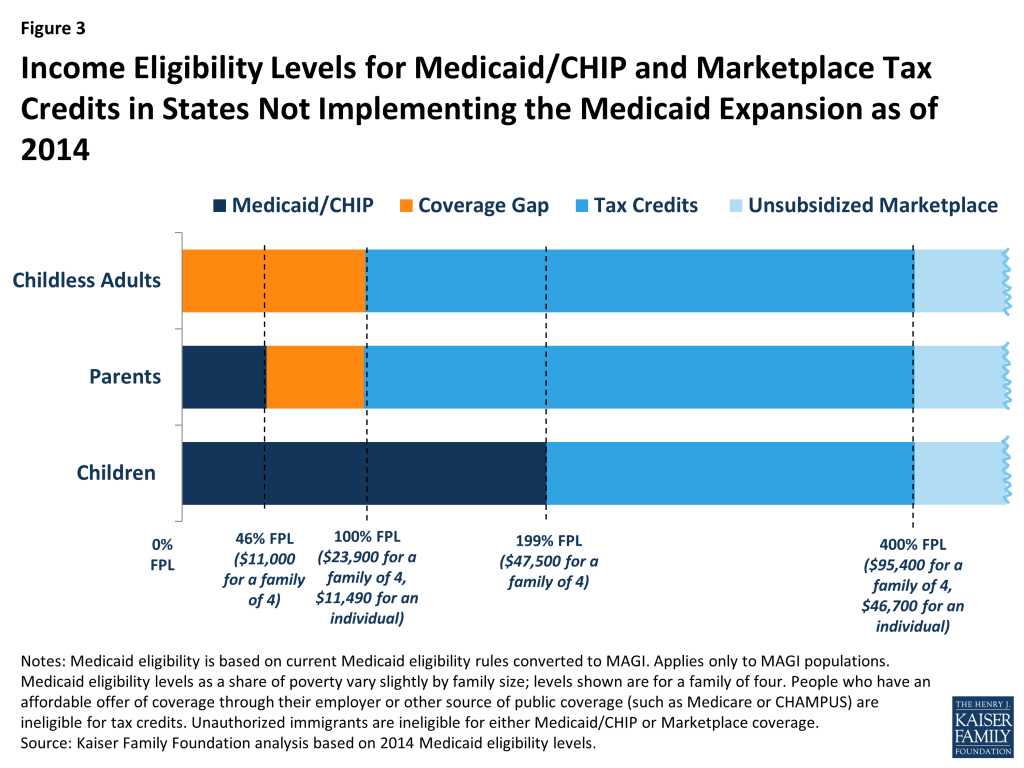
  27. 42 C.F.R. § 440.347(e).   ↩︎
  28. 42 U.S.C. § 1396a(k)(1).  Technically, beneficiaries in the new adult expansion group who meet an ABP exemption “must be given the option of an Alternative Benefit Plan that includes all benefits available under the approved State plan” instead of being required to receive the ABP that the state has selected for the expansion group.  42 C.F.R. § 440.315. ↩︎
  29. 42 C.F.R. § 440.315(f).  Prior to the July 2013 regulations, a state’s definition of people with special medical needs must include at minimum the following groups:  children under 19 who are eligible for SSI, eligible under the Katie Becket option, in foster care or another out-of-home placement, receiving foster care or adoption assistance, or receiving services through a family-centered, community-based, coordinated care system receiving maternal and child health funds; children with serious emotional disturbances; individuals with disabling mental disorders; individuals with serious and complex medical conditions; and individuals with physical and/or mental disabilities that significantly impair their ability to perform one or more activities of daily living. ↩︎
  30. For more information, see Kaiser Commission on Medicaid and the Uninsured, Medicaid Enrollment and Expenditures By Federal Core Requirements and State Options (Jan. 2012 update), available at http://modern.kff.org/medicaid/issue-brief/medicaid-enrollment-and-expenditures-by-federal-core/. ↩︎
  31. States provide these services to comply with the U.S. Supreme Court’s Olmstead decision, which held that unjustified institutionalization of people with disabilities violates the Americans with Disabilities Act.  Olmstead v. L.C., 527 U.S. 581 (1999), available at http://www.law.cornell.edu/supct/html/98-536.ZS.html.  In addition, HCBS often are less expensive than equivalent institutional care.  However, states can set enrollment caps on the number of people eligible for home and community-based waiver services, resulting in waiting lists for waiver services that vary widely among states and disability groups.   Kaiser Commission on Medicaid and the Uninsured, Medicaid Home and Community-Based Services Programs:  2009 Data Update (Dec. 2012), available at http://modern.kff.org/medicaid/report/medicaid-home-and-community-based-service-programs/. ↩︎
  32. The process for doing so is summarized at 78 Fed. Reg. 42238. ↩︎
  33. 42 C.F.R. § 440.330(d). ↩︎
  34. 42 C.F.R. § 435.911(c)(2). ↩︎
  35. 42 C.F.R. § 435.911(c)(2). ↩︎
  36. Although not explicit in the regulation text, this policy is indicated in CMS’s response to public comments. 77 Fed. Reg. 17167. ↩︎
  37. 42 C.F.R. § 435.907(c).   While CMS’s response to public comments indicates that supplemental application forms must meet Secretarial guidelines and will be available for public review, the text of the final regulations requires that supplemental forms and MAGI-exempt applications only be submitted to the Secretary.  Compare 77 Fed. Reg. 17163-17164 with 42 C.F.R. § 435.907(c).  Under the ACA, people may apply for Medicaid online, by phone, by mail, by other commonly available electronic means, or in person.  If a state Medicaid agency chooses to use supplemental forms to determine non-MAGI eligibility, CMS’s response to the public comments received on the proposed regulations indicates that these forms also should be accepted by all of the above means “to the extent practical.” ↩︎
  38. CMS, Attachment A:  List of Items in the Online Application to Support Eligibility Determinations for Enrollment through the Health Insurance Marketplace and for Medicaid and the Children’s Health Insurance Program at 29 (revised April 23, 2013).  The paper application asks whether applicants have a physical, mental or emotional health condition that causes limitations in activities (like bathing, dressing, daily chores, etc.) or live in a medical facility or nursing home.  Health Insurance Marketplace, Application for Health Coverage & Help Paying Costs (Short Form) at 1. ↩︎
  39. CMS, Attachment A:  List of Items in the Online Application to Support Eligibility Determinations for Enrollment through the Health Insurance Marketplace and for Medicaid and the Children’s Health Insurance Program at 55 (revised April 23, 2013). ↩︎
  40. However, Medicaid applications must be reinstated if an applicant, who withdrew her Medicaid application in order to access Marketplace coverage (in a Marketplace that assesses potential Medicaid eligibility), subsequently appeals a decision related to her Marketplace coverage and the Marketplace appeals entity determines that she is potentially eligible for Medicaid.  42 C.F.R. § 435.907(h); 45 C.F.R. § 155.302(b)(4)(i)(A). ↩︎
  41. CMS, Attachment A:  List of Items in the Online Application to Support Eligibility Determinations for Enrollment through the Health Insurance Marketplace and for Medicaid and the Children’s Health Insurance Program at 55 (revised April 23, 2013).  Marketplaces also must notify applicants of the opportunity to request a full Medicaid eligibility determination, including eligibility for disability-related coverage groups 45 C.F.R. § 155.345(c). ↩︎
  42. 42 C.F.R. § 435.916(b). ↩︎
  43. 42 C.F.R. § 435.916(a)(3). ↩︎
  44. 42 C.F.R. §435.916(a)(2), (b). ↩︎
  45. 42 C.F.R. § 435.916(a)(1), (b).  When renewing eligibility, CMS’s final regulations confirm the long-standing policy that the state Medicaid agency must consider a person’s eligibility in all coverage groups before deciding that she is no longer eligible for Medicaid.  42 C.F.R. § 435.916(f).  In addition, if a person is determined ineligible for Medicaid upon renewal, the state Medicaid agency must promptly and without undue delay determine potential eligibility for other insurance affordability programs and electronically transfer the person’s account to the Marketplace.  42 C.F.R. § 435.1200(e). ↩︎
  46. 42 C.F.R. § 435.908.  Specifically, assistance includes “providing information on insurance affordability programs and coverage options, helping individuals complete an application or renewal, working with the individual to provide required documentation, submitting applications and renewals to the agency, interacting with the agency on the status of such applications and renewals, assisting individuals with responding to any requests from the agency, and managing their case between the eligibility determination and regularly scheduled renewals.”  42 C.F.R. § 435.908(c)(2).  Application assisters may be certified to provide one, some or all of the permitted activities.  Id.  For more information about the importance of application assistance, see Kaiser Commission on Medicaid and the Uninsured, Webinar:  Translating the Medicaid Expansion into Increased Coverage:  The Role of Application Assistance (March 20, 2013), available at http://modern.kff.org/medicaid/webinar_medicaid_expansion.cfm. ↩︎
  47. 78 Fed. Reg. 4594, 4605-4606 (Jan. 22, 2013).  The January 2013 proposed regulations also provide that Marketplace application counselors must provide reasonable accommodations for people with disabilities if they are providing in-person assistance.  Proposed 45 C.F.R. § 155.255(b)(7). ↩︎
  48. 42 C.F.R. § 435.923; see also 45 C.F.R. § 155.227. ↩︎
  49. 42 C.F.R. § 435.905. ↩︎
  50. Proposed 42 C.F.R. § 435.905(b)(3). ↩︎
  51. See, e.g., 28 C.F.R. § 35.104 (defining auxiliary aids and services under ADA Title II, which applies to state and local governmental entities). ↩︎
  52. 42 C.F.R. § § 435.905, 435.1200(f)(2).  While CMS has not yet finalized its proposed provisions regarding the accessibility of the appeals process, CMS notes that notices and fair hearings must comply with the ADA.  78 Fed. Reg. 42164.  See also proposed 42 C.F.R. § 431.206(e) (notices); proposed 42 C.F.R. § 431.205(e) (fair hearings).  In addition to the accessibility requirement for notices generally, CMS also specifically proposed that certain types of notices be accessible, including notices of eligibility determinations (proposed 42 C.F.R. § 435.917(a)(2)), notices of the reasonable opportunity period when the agency is unable to promptly verify citizenship or immigration status (proposed 42 C.F.R. § 435.956(g)), and notices of premium and cost sharing requirements (proposed 42 C.F.R. § 447.57(b)). ↩︎
  53. 42 C.F.R. § 435.908. ↩︎
  54. 42 C.F.R. § § 435.907(g), 435.916(g). ↩︎
  55. 45 C.F.R. § 155.120(c). ↩︎
  56. 45 C.F.R. § 155.205. ↩︎
  57. 45 C.F.R. § § 155.205, 155.210(e)(5), 155.230(b). ↩︎
  58. 45 C.F.R. § 155.130(c). ↩︎

The Uninsured at the Starting Line in Missouri: Missouri findings from the 2013 Kaiser Survey of Low-Income Americans and the ACA

Authors: Rachel Licata and Rachel Garfield
Published: Apr 7, 2014

This report provides new data to help policymakers further understand early challenges in implementing the Affordable Care Act (ACA) in Missouri and highlight the health insurance and health care needs of those who may remain uninsured. The report is part of an ongoing series of comprehensive surveys nationally and in select states that will provide data on these groups’ experience with health coverage, current patterns of care, and family finances. The Missouri report, based on the baseline 2013 Kaiser Survey of Low-Income Americans and the ACA, provides a snapshot of health insurance coverage, health care use and barriers to care, and financial security among insured and uninsured adults in Missouri across the income spectrum at the starting line of ACA implementation.

Executive Summary

The 2010 Affordable Care Act (ACA) has the potential to reach many of the 47 million Americans who lack insurance coverage, including over 800,000 in Missouri, as well as millions of insured people who face financial strain or coverage limits related to health insurance. In January 2014, the major coverage provisions of the ACA went into full effect. These provisions include the creation of new Health Insurance Marketplaces where low and moderate income families can receive premium tax credits to purchase coverage and, in states that opted to expand their Medicaid programs, the expansion of Medicaid eligibility to adults with incomes at or below 138% of the federal poverty level (FPL). The marketplace in Missouri is federally facilitated, as the state opted not to run its own. In addition, as of March 2014, Missouri had not expanded its Medicaid program, leaving many uninsured adults below poverty in Missouri who would have been newly-eligible for Medicaid without a coverage option.

Though ACA implementation is underway in Missouri and across the country and people are already enrolling in coverage, policymakers continue to need information on the uninsured population. Reports of difficulties in enrolling in coverage, continued confusion and lack of information about the law point to challenges in the early stages of implementation, and information about the population targeted for coverage expansion can inform efforts to address these difficulties. In addition, because Missouri could still opt to expand its Medicaid program, it is important to have detailed data on the population that could benefit from such a coverage expansion. Specifically, information on poor and moderate–income adults’ experiences with health coverage, current patterns of care, and family situations can provide insight into some of the challenges that are arising in the first months of coverage and highlight the potential impact of gaining coverage on poor and moderate- income adults.

This report, based on findings from the 2013 Kaiser Survey of Low-Income Americans and the ACA, provides a snapshot of health insurance coverage, health care use and barriers to care, and financial security among insured and uninsured Missouri adults across the income spectrum at the starting line of ACA implementation. The survey, conducted between July and September 2013, is a nationally representative survey that also includes a state-representative sample of over 1,800 nonelderly (age 19-64) adults in Missouri. It was designed to focus on the low- and moderate-income populations in the state and includes over-samples of people in the income range for financial assistance under the ACA (< 138% FPL for Medicaid and 139-400% FPL for Marketplaces), as well as a comparison group with incomes over 400% FPL. Since many uninsured adults with incomes below 100% FPL are left in a coverage gap in Missouri, our analysis focused on poor adults (<100% FPL) and moderate-income adults (100%-400% FPL) who will be eligible for premium subsidies. The survey includes adults with employer coverage, nongroup, Medicaid, and other sources of coverage, as well as those with no health insurance. The Missouri component of the survey and report on its findings complements a report on similar findings for the nation.1 

This survey and report provides new data to help policymakers further understand early challenges in implementing health reform and highlight the health insurance and health care needs of those who may remain uninsured. This survey also provides a baseline for future assessment of the impact of the ACA in Missouri on health coverage, access, and financial security of poor and moderate-income individuals. Detailed information on the survey design, sample, and analysis can be found in the Methods section at the end of the full report.

Background: The Challenge of Expanding Health Coverage in Missouri

Prior to implementation of the ACA, 834,000 Missourians—16% of the state’s nonelderly population—were without health insurance coverage. Because publicly-financed coverage has already been expanded to most low-income children and Medicare covers nearly all of the elderly, the vast majority of uninsured people in Missouri and across the country are nonelderly adults.2  The main barrier that people have faced in obtaining health insurance coverage is cost: health coverage is expensive, and few people can afford to buy it on their own. While most Americans traditionally obtain health insurance coverage as a fringe benefit through an employer, not all workers are offered employer coverage. Medicaid covers many low-income children, but eligibility for parents was limited before the ACA and nonexistent for childless adults, leaving many adults without affordable coverage. As of January 2014, Medicaid eligibility for adults in Missouri is limited to parents with incomes below 23% of poverty, or about $5,500 a year for a family of four.3  Adults without dependent children are ineligible regardless of their income.4 

Barriers to coverage are reflected in the characteristics of the uninsured population in Missouri. Uninsured Missouri adults are more likely to be poor than Missourians with private health insurance (including employer coverage and nongroup coverage), while adults with Medicaid coverage are particularly poor (reflecting eligibility limits). Though the majority of uninsured adults are in a family with either a full- or part-time worker, uninsured Missouri adults are less likely than privately insured adults to be in families with either a full- or part-time worker. The unique demographics of the state population also play a role in shaping the profile of uninsured Missourians. Missouri’s population resides in both rural and urban settings. The rural population is very low-income, leaving a large percentage of that population uninsured. The population in Missouri’s two major cities is very diverse with a majority of the population in St. Louis identifying as a race other than White.5  These geography and demographic differences have implications for outreach efforts as well as access to care as many uninsured adults in Missouri will likely remain uninsured in 2014 without a Medicaid expansion.

I. Patterns of Coverage and the Need for Assistance

Examining patterns of coverage and the reasons the uninsured lack coverage can inform both outreach avenues and potential barriers to outreach and enrollment. Key survey findings on access to coverage include:

For many currently uninsured adults in Missouri, lack of coverage is a long-term issue. While some people experience short spells of uninsurance due to job changes, income fluctuations, or renewal issues, for many uninsured Missouri adults, lack of coverage is a chronic issue. The survey shows that 43% of uninsured adults report being uninsured for 5 years or more, including 14% of the uninsured who report that they have never had coverage in their lifetime.

Many uninsured adults in Missouri report trying to obtain insurance coverage in the past, but most did not have access to affordable coverage. Prior to the ACA, Missouri’s uninsured reported difficulty gaining insurance coverage due to the high cost of coverage and limits on Medicaid eligibility for adults. More than eight in ten (83%) uninsured adults report no access to employer insurance, and the majority of people who had access to coverage through an employer report that the coverage offered to them is not affordable. One-third of uninsured Missouri adults (34%) reported trying to sign up for Medicaid in the past five years, and the majority of them were unsuccessful because they were told they were ineligible. And one in four uninsured Missouri adults (25%) reported trying to obtain nongroup coverage in the past five years, with most not purchasing a plan because the policy they were offered was too expensive.

Health insurance coverage is not always stable. For most insured adults in Missouri, coverage is continuous throughout the year and over time, but a sizable number have a gap or change in coverage. When accounting for both insured Missourians with a gap in their coverage and uninsured Missourians who recently lost coverage, the survey indicates that 11% of adults in Missouri, or almost 400,000 people, lose or gain coverage over the course of a year. In addition to those who lose or gain coverage over the course of a year, 320,000 continuously insured adults report having a change in their health insurance plan. The most common reasons for a change in coverage appear to be related to employment. Last, a small number of insured Missouri adults report challenges in either renewing or keeping their coverage, another indication of instability in coverage throughout the year.

Informing Missouri’s ACA Implementation: Many of the barriers to coverage that Missouri’s uninsured reported facing in the past are addressed by the ACA’s provisions to expand Medicaid and provide premium tax credits for Marketplace coverage. However, since Missouri has not expanded Medicaid coverage at this time, many uninsured adults will be left in a coverage gap and will remain uninsured. In addition to limited coverage options, some uninsured adults may continue to face financial and other barriers to coverage. Missourians targeted by the ACA have varying levels of experience with the insurance system. A large share of uninsured adults in Missouri has been outside the insurance system for quite some time, and the long-term uninsured may require targeted outreach and education efforts to link them to the health care system and help them navigate their new health insurance. In addition, people who have attempted to obtain coverage in the past may be unaware that rules and costs have changed under the ACA; outreach and education will be needed to inform people that financial assistance is available to offset the cost of private coverage.

While there has been much focus on enrolling currently uninsured people into coverage, survey findings demonstrate that people will continue to move around within the insurance system throughout the year as their income or job situations change. Thus, implementation is not a “one shot” effort that will be done once open enrollment ends in March 2014, but rather will require a continuous effort to enroll and keep people in coverage. Also, if Missouri decides to later expand Medicaid, a second round of outreach and enrollment strategies will be needed to inform uninsured adults of this policy change.

II. What to Look for in Enrolling in New Coverage

While many currently uninsured adults in Missouri have limited experience in signing up for and using health coverage, the past successes and challenges of insured poor and moderate-income adults can inform the experiences of those seeking coverage under the ACA. Key survey findings related to plan enrollment and plan choice are:

While many adults in Missouri report facing no difficulty in applying for Medicaid coverage prior to the ACA, some encountered difficulties in the process of applying for public coverage in the past. Missouri adults who currently have Medicaid or who have attempted to enroll in the past five years reported little difficulty in taking steps to enroll in Medicaid, with almost half (49%) saying the entire process was very or somewhat easy. However, the rest found at least one aspect of the process – finding out how to apply, filling out the application, assembling the required paperwork, or submitting the application – to be somewhat or very difficult. The most commonly-reported difficulty assembling the required paperwork, which 37% of Missourians who applied or enrolled said was somewhat or very difficult.

When adults with Medicaid or private insurance have a choice of plan, they do not always prioritize costs over other plan features in making that choice, and many find some aspect of the plan choice process to be a challenge.  Adults chose health plans for various reasons, with 38% of those who had and made a choice of plan reporting that they chose their plan because it covered a wide range of benefits or a specific benefit that they need, 27% because their costs would be low, and 19% because the plan had a broad selection of providers or included their doctor. In choosing a plan, even if they have limited options, Missourians may face challenges in comparing costs, services, and provider networks, as these factors have typically varied greatly across plans in the past. In general, insured adults in Missouri report that they did not have difficulty in comparing their plan choices, but about a third found some aspect of plan choice—comparing services, comparing costs, and comparing providers— to be difficult.

Overall, adults in Missouri with employer coverage, nongroup, or Medicaid report satisfaction with their current coverage but also report gaps in covered services and problems when using their coverage. Most (84%) insured adults in Missouri rate their pre-ACA coverage as excellent or good, but they also report gaps in services that are covered by their current insurance. One in six (17%) insured adults in Missouri report needing a service that is not covered by their current plan, typically ancillary services, such as dental, vision care, and chiropractor services. Many insured adults in Missouri reported experiencing a problem with their current insurance plan covering a specific benefit, either because they were denied coverage for a service they thought was covered (23%) or their out-of-pocket costs for a service were higher than they expected (38%).

Informing ACA Implementation. The ACA includes provisions to simplify the Medicaid application and enrollment process for coverage. The ACA also requires plans in the Marketplace to provide detailed, standardized plan information for people to compare coverage options. Uninsured Missouri adults applying for coverage after these new processes are implemented should encounter fewer challenges in navigating enrollment and plan choice than applicants have in the past. However, in evaluating the success of plan enrollment, it is important to bear in mind that, even prior to the ACA, insured adults faced some challenges in comparing and selecting insurance coverage. While provisions in the ACA could address these challenges, some are inherent to the complexity of insurance coverage. It is also important to remember that people place utility on a range of factors related to insurance, including scope of services and provider networks. Assessments of whether people are choosing the optimal plan for themselves and their family will need to consider the multiple priorities that people balance in plan selection. Last, while the ACA aims to ensure coverage of at least a basic set of essential health benefits (EHB), many of the ancillary services that people report needing coverage for—such as dental services—are not included in the EHB. Newly-insured Missourians may be surprised to learn that some ancillary services are not included in their plan, and education efforts will be needed to help Missourians understand their coverage.

III. Gaining Coverage, Getting Care

As uninsured adults in Missouri gain coverage, there are likely to be changes in how often they seek care, what type of care they seek, and where they seek care. By comparing their current interactions with the health care system to their insured counterparts, the survey can provide insight into likely changes. It can also highlight potential ongoing unmet need among those who remain uninsured. Key findings in this area include:

A large segment of the uninsured in Missouri has little or no connection to the health care system. Many uninsured adults report few connections to the health care system. Only 55% of uninsured adults report that they have a usual source of care, or a place to go when they are sick or need advice about their health, and only 36% of uninsured adults say they have a regular doctor, about half of the rate of insured adults in Missouri. This lack of a connection to the health care system leads many uninsured adults to go without care. Six in ten uninsured adults in Missouri (60%) reported at least one health care visits in the past year, compared to 93% of Medicaid beneficiaries and 87% of adults with employer coverage.

Many uninsured Missourians have health needs, many of which are unmet or only met with difficulty. Uninsured adults are less likely than their insured counterparts to report receiving care for an ongoing health condition. When uninsured individuals do receive care, they sometimes receive free or reduced-cost care, though the majority who use services do not. More than half (56%) of the uninsured and more than half (54%) of Medicaid beneficiaries in Missouri report needing but postponing care, compared to 27% of adults with employer coverage. The most common reason for postponing care among the uninsured is cost, as the uninsured have no coverage to help them with the cost of care.

Many uninsured Missourians report limited options for receiving health care when they need it. Uninsured adults in Missouri are less likely than their insured counterparts to receive care in a private physician’s office when they do get care. Uninsured adults are about half as likely to report choosing their usual source of care because a preferred physician (26%) as compared to 49% of adults with Medicaid and 56% of adults with employer coverage.

Informing ACA Implementation: The survey findings reinforce conclusions based on prior research: having health insurance affects the way that people interact with the health care system, and people without insurance have poorer access to services than those with coverage. Thus, gaining coverage could connect many currently uninsured Missouri adults to the health care system. Given the health profile of Missouri’s currently uninsured population, there is likely to be some pent-up demand for health care services among the newly-covered. However, outreach may be needed to link the newly-insured to a regular provider and help them establish a pattern of regular preventive care. In particular, some individuals who have relied on emergency rooms or urgent care centers as their usual source of care may require help in establishing new patterns of care and navigating the primary care system. While Missouri’s uninsured may have more options for where to receive their care once they obtain coverage under the ACA, many uninsured adults will remain uninsured so safety net providers such as clinics and hospitals that already see a large share of uninsured adults may continue to play an important role in serving this population. Last, while coverage gains may reduce cost barriers to care, it will be important to monitor whether other barriers to care among the poor and moderate-income population—such as transportation or wait times for appointments—continue to pose a challenge for access.

IV. Health Coverage and Financial Security

In addition to facilitating access to health care, health insurance serves primarily to protect people from high, unexpected medical costs. However, for poor families in Missouri, health costs can still be a burden, even if they have insurance. Understanding these issues can help policymakers monitor ongoing financial barriers to health services.

Health care costs pose a challenge for poor and moderate-income families in Missouri, even if they have insurance coverage. Even among those with insurance, health care costs can be a burden, particularly for poor and moderate-income adults. Over three in ten (36%) poor and moderate-income adults in Missouri who are covered by employer coverage report that their share of the premium is somewhat hard or very hard for them to afford, and 62% of moderate-income adults in Missouri with nongroup coverage report difficulty paying their premiums. Health care costs translate to medical debt for many poor adults, and these medical bills can cause serious financial strain. Notable shares of poor insured adults also report that they lack confidence in their ability to afford health care, given their current finances and health insurance situation.

Poor families face fragile financial circumstances. Poor and moderate-income adults in Missouri across coverage groups report not being financially secure. However, adults who are poor and uninsured or covered by Medicaid are particularly vulnerable to financial insecurity even outside of health care. General financial insecurity translates to concrete financial difficulties in making ends meet. Uninsured adults and those enrolled in Medicaid are more likely than privately-insured adults to have difficulty paying for other necessities, such as food, housing, or utilities, with 49% of the uninsured and 61% of those on Medicaid reporting such difficulty compared to 20% of those with employer coverage and 25% of those with nongroup coverage. While poor adults across the coverage spectrum report high rates of difficulty paying for necessities, those with employer coverage report the lowest rates in this income group. These individuals may have stronger or more stable ties to employment than their counterparts with other or no insurance coverage. Higher rates of financial insecurity among Medicaid enrollees may reflect Medicaid eligibility rules, which targeted very vulnerable adults.

Informing ACA Implementation: Both insured and uninsured poor adults in Missouri struggle with medical bills and debt, and assistance with premium costs and, for some, cost-sharing, and limits on out-of-pocket costs under the ACA have the potential to ameliorate the financial issues associated with the cost of health care. Many uninsured poor adults will continue to face medical bills and debt as they are likely to remain uninsured without a Medicaid expansion. However, given survey findings that many poor insured Missourians continue to face financial challenges related to health care, it will be important to track whether there are ongoing financial barriers as people enroll in coverage and seek care. While insurance coverage can provide financial protection in the event of illness or injury, it is not curative of all of the financial burdens faced by poor families. Given their overall situation, health insurance alone may not lift poor Missourians out of poverty, and many poor Missouri adults may continue to face financial challenges even after gaining coverage.


Report: Introduction

In January 2014, the major coverage provisions of the 2010 Affordable Care Act (ACA) went into full effect in Missouri and across the country. These provisions include the creation of a new Health Insurance Marketplace where moderate income families can receive premium tax credits to purchase coverage and, in states that opted to expand their Medicaid program, the expansion of Medicaid eligibility to low-income adults. In Missouri, the federal government is operating the Marketplace, as the state opted not to run its own. In addition, as of March 2014, Missouri had not expanded its Medicaid program, known as MO HealthNet, leaving many poor uninsured adults in Missouri who would have been newly-eligible for Medicaid without a coverage option (referred to as the coverage gap). However, there is no deadline for states to opt to expand Medicaid, and Missouri may choose to do so at a later date, expanding the potential of the ACA to reach many of the 800,000 uninsured Missourians.

Though ACA implementation is underway and people are already enrolling in coverage, policymakers continue to need information on the uninsured population. Reports of difficulties in enrolling in coverage, continued confusion and lack of information about the law point to challenges in the early stages of implementation, and information about the population targeted for coverage expansion can inform efforts to address these difficulties. In addition, because Missouri could still opt to expand its Medicaid program, it is important to have detailed data on the population that could benefit from such a coverage expansion. Specifically, information on poor and moderate–income adults’ experiences with health coverage, current patterns of care, and family situations can provide insight into some of the challenges that are arising in the first months of coverage and highlight the potential impact of gaining coverage on poor and moderate- income adults.

Based on findings from the 2013 Kaiser Survey of Low-Income Americans and the ACA, this report provides a snapshot of health insurance coverage, health care use and barriers to care, and financial security among insured and uninsured adults in Missouri at the starting line of ACA implementation and discusses how these findings can inform early implementation. The survey, conducted between July and September 2013, is a nationally representative survey that also includes a state-representative sample of over 1,800 nonelderly (ages 19-64) adults in Missouri. It was designed to focus on people targeted for financial assistance under the ACA and includes nonelderly adults with low incomes (< 138% FPL, or about $27,000 for a family of three in 2014) or moderate incomes (139-400% FPL, between approximately $27,000 and $79,000 for a family of three), as well as a comparison group with incomes over 400% FPL. Since Missouri has not expanded Medicaid coverage to adults with incomes <138% of FPL, we chose to present the findings among adults with incomes <100% FPL (most of whom will fall into the “gap population” that is ineligible for subsidies or coverage), or about $20,000 for a family of three in 2014, 100%-400% FPL (Marketplace subsidy eligible), and >400% FPL to better reflect coverage eligibility of uninsured Missouri adults.

The survey includes adults with employer coverage, nongroup, Medicaid, and other sources of coverage, as well as those with no health insurance. The Missouri component of the survey and report on its findings complements a report on similar findings for the nation.6  This survey and report provides new data to help policymakers further understand early challenges in implementing health reform and assist outreach and enrollment workers, health plans, and providers and health systems. The survey also provides a baseline for future assessment of the impact of the ACA on health coverage, access, and the financial security of poor and moderate-income individuals in Missouri. A detailed explanation of the methods underlying the survey and analysis is available in the Methods section of the report.

Report: Background: The Challenge Of Expanding Health Coverage In Missouri

Lack of insurance coverage has been a longstanding policy challenge both nationwide and in Missouri. Not having health insurance has well-documented adverse effects on people’s use of health care, health status, and mortality, as the uninsured are more likely to delay or forgo needed care leading to more severe health problems.7  Lack of insurance coverage also has implications for people’s personal finances, providers’ revenue streams, and system-wide financing.8 ,9 ,10 Because public coverage has been extended to many children and Medicare covers nearly all of the elderly, the vast majority of uninsured people are non-elderly adults.

Missouri is home to over 800,000 uninsured nonelderly individuals, or 16% of the nonelderly population in the state.11  While the uninsured rate is lower than the national rate of 18%, the state’s uninsured population faces unique challenges. Primary care access is an issue for many state residents – over one in three people in Missouri live in a primary care Health professional shortage area (HPSA), limiting access to health care services.12  Missouri also has a substantial rural population, about 37% of the state.13  The rural population faces higher poverty rates than the urban population, and many rural families have limited access to employer coverage.14  The rural population also faces unique health care access issues: almost all rural counties are HPSAs, and lack of access to hospital and specialty services forces many rural residents to travel long distances to obtain care.15  Despite a significant rural population, a large percentage of the uninsured population in Missouri resides in two of the largest metro areas – St. Louis and Kansas City.16  Additionally, in St. Louis, over half of the city’s residents and over 40% of residents in Kansas City identify as a race other than White.17  Missouri is also surrounded by four states that have expanded Medicaid, creating a geographic inequality of health coverage.18 

Medicaid provides health care coverage to may poor and low-income individuals. However, historically eligibility for Medicaid was restricted to specific categories of poor and low-income individuals, such as children, their parents, pregnant women, the elderly, or individuals with disabilities. In many states, including Missouri, adults without dependent children were ineligible regardless of their income. All states previously expanded eligibility for children to higher levels than adults through Medicaid and the Children’s Health Insurance Program (CHIP), and in Missouri, children with family incomes up to 305% of poverty (about $71,800 for a family of four) are eligible for Medicaid or CHIP. As was the case before the ACA, undocumented immigrants remain ineligible to enroll in Medicaid and recent lawfully residing immigrants are subject to certain Medicaid eligibility restrictions.19  As of January 2014, Medicaid eligibility for adults in Missouri was limited to parents with incomes below 23% of poverty, or about $5,500 a year for a family of four.20  Adults without dependent children remain ineligible regardless of their income.21 

The uninsured rely on safety net providers to receive needed health care services. The health care safety net in Missouri’s second largest city, St. Louis, has suffered major provider losses in the past. The city and the state have countered these losses and preserved funding through an 1115 Medicaid waiver.22  The waiver program previously provided funding to safety net providers such as health centers and clinics.23  Today, the waiver program, now known as Gateway to Better Health, provides primary and specialty care services to uninsured adults who reside within the City and County limits.24  Eligibility for the waiver includes nonelderly uninsured adults ages 19-64 who are not eligible for Medicaid or Medicare, who are a patient at a participating health center, have incomes below 100% of poverty. The latest model of the waiver, extended to 2015, is designed to provide coverage to uninsured adults until they are able to enroll in coverage expansions under the ACA. 25  From 2012-2013, Gateway provided coverage to more than 28,000 uninsured adults in the St. Louis area who received 47,000 primary and dental visits as well as more than 28,000 specialty and diagnostic care visits.26  The program also provided care that prevented at least 50,000 emergency room visits in 2012.

Health Reform in Missouri

To address the challenge of the uninsured, the Affordable Care Act (ACA) includes an expansion of Medicaid and the creation of new Health Insurance Marketplaces. With the Supreme Court ruling in June 2012, the Medicaid expansion became optional for states, and as of March 2014, Missouri had opted not to expand its Medicaid program. This decision has created a “coverage gap” among poor adults. Under the ACA, people with incomes between 100% and 400% of poverty may be eligible for premium tax credits when they purchase coverage in a Marketplace. Because the ACA envisioned low-income people receiving coverage through Medicaid, people below poverty are not eligible for Marketplace subsidies. Thus, some adults in Missouri will fall into a “coverage gap” of earning too much to qualify for Medicaid but not enough to qualify for premium tax credits. People in the coverage gap are ineligible for financial assistance under the ACA, while people with higher incomes will be eligible for tax credits to purchase coverage.

In Missouri, about 23% of the uninsured fall into a coverage gap of earning too much money to qualify for Medicaid, but not enough to qualify for premium tax credits in the marketplace.27  These individuals have incomes below 100% of poverty. A small number of uninsured adult parents (4% of the uninsured in the state)28  are eligible for Medicaid in Missouri under existing eligibility pathways in place before the ACA. Not all eligible individuals are enrolled in Medicaid due to lack of knowledge about their eligibility and additional enrollment barriers. While the uninsured poor can purchase unsubsidized coverage in the Marketplace, they are unlikely to find coverage that is affordable.

In Missouri, the federal government is operating the Marketplace. Missouri voters passed a ballot measure blocking an Executive Order to establish a state-based Marketplace, so Missouri defaulted to a federally facilitated Marketplace.29  Voters also passed a ballot measure in 2012 prohibiting state officials from providing assistance toward establishing or operating a state-based Marketplace, and Missouri has also returned almost all of its Marketplace grant funding.30 

While the state is not operating its own Marketplace or expanding Medicaid, there is some state activity around the ACA. Changes to the Medicaid enrollment process occurred in 2014, regardless of expansion decisions. Missouri must make Medicaid determinations based on new modified adjusted gross income (MAGI) eligibility levels. As of December 2013, Missouri’s MAGI conversation was in progress.31  The ACA also established a streamlined enrollment process for all states that allows people to use one single application for Marketplace or Medicaid coverage. Individuals are able to apply for coverage through HealthCare.gov, the state Medicaid/CHIP website, in person, on the phone, or through the mail. In addition, Medicaid eligibility determinations will now use verification based on existing data sources such as Social Security Administration data, rather than requiring families to provide paper documentation.32 

Governor Jay Nixon (D), who supported state expansion of Medicaid, continues to support the expansion.33  While the legislature opposes the Medicaid expansion, efforts are currently underway in the legislature to find alternative ways to cover the uninsured and expand Medicaid, such as placing work requirements on Medicaid recipients or requiring monthly premiums.34  However, a recent report from the Missouri Department of Economic Development (state agency) indicated that expanding Medicaid would create 24,000 jobs in the state and bring in $9.9 billion in new wages and $402 million in state revenue over eight years.35 

The impact of the expansion will also be greatest among those with the highest need. Additional research has also indicated that if Missouri expanded Medicaid, the most dramatic impact would be in rural areas – 31% of the uninsured population would gain coverage compared to 26% in St. Louis and 27% in Kansas City (Missouri’s two largest cities).36  Many advocates in the state, including the Missouri Hospital Association, continue to push lawmakers to adopt the Medicaid expansion.

Based on past evaluations of coverage expansions, targeted outreach and enrollment strategies are essential for reaching eligible populations. In Missouri, prior to open enrollment, the state legislature passed legislation creating extensive requirements for outreach and enrollment workers, also known as navigators, who receive federal funding to enroll people in coverage.37  These requirements, also passed in several other states, were considered prohibitive and were subsequently challenged in court. The regulation was recently struck down by a federal judge in January 2014.38  Regardless of the ruling, in February 2014, the Missouri State Senate passed legislation that requires navigators to pass exams, secure bonds, and pass background checks.39  Despite a lack of funding, advocates and organizations in the state are actively trying to enroll those who are eligible for coverage. Cover Missouri, a coalition led by the Missouri Foundation for Health, organized enrollment events throughout the state to reach and enroll Missourians in Medicaid or a Marketplace plan.40 

The federally-facilitated Marketplace (FFM) for Missouri began accepting applications for coverage on October 1, 2013 through HealthCare.gov. Numerous issues with the website were initially experienced by individuals attempting to gain coverage, but many of those issues have since been resolved.41  The FFM also makes assessments of Medicaid eligibility based on pre-ACA levels, but the state makes the final determination after receiving the information.

As of February 1, 2014, over 50,000 Missourians have selected a health plan in the Marketplace, and about 27,000 were determined eligible for Medicaid and CHIP through the Marketplace.42  Additionally, over 6,000 people were determined eligible for Medicaid or CHIP at application through the state Medicaid agency.43  However, recent reports indicate a backlog of Medicaid determinations by the state from HealthCare.gov. The state Medicaid agency reported a sharp decline in Medicaid enrollment in 2014 due to the improving economy in Missouri, yet recent reports indicate that enrollment has dropped due to a back log in renewals and new applications.44  The state recently transitioned to accepting online applications, and the state reports the delays in eligibility determinations are due to the new systems.45  Enrollment for Medicaid coverage is continuous throughout the year and does not end with open enrollment (March 31, 2014).

A Profile of The Uninsured in Missouri

Barriers to coverage in the past and state demographics are reflected in the characteristics of the uninsured population in Missouri. For example, 41% of uninsured adults are poor (that is, living below the poverty line) and generally not eligible for coverage expansions, in contrast to 6% of adults with employer coverage (Figure 1 and Appendix Table A1). Adults with Medicaid are the most likely of any coverage group to be poor, reflecting the fact that adult income eligibility is limited. Further, the majority of uninsured Missourians live in families where they or their spouse are working (62%) (Figure 2).  However, not surprisingly, uninsured adults in Missouri are less likely than adults with employer coverage or nongroup to be in a working family.

Figure 1: Income Distribution Among Adults in Missouri, By Insurance Coverage
Figure 2: Family Work Status Among Adults in Missouri, By Insurance Coverage

Uninsured adults in Missouri also differ from insured adults with regards to demographic characteristics, often reflecting an association with income or work status. Uninsured adults are likely to be younger than insured adults, as younger adults have lower incomes and looser ties to employment than older adults. Seven in ten (70%) uninsured adults are ages 19-44 compared to 52% of adults with employer coverage and 56% with Medicaid (Appendix Table A1). There also are significant racial and ethnic differences in health coverage among nonelderly adults, primarily reflecting differences in income by race/ethnicity. For example, uninsured adults are more likely to be Black, Non-Hispanic (14%) than adults with employer coverage (6%) but less likely than adults with Medicaid (23%).

As efforts continue to reach, educate, and enroll individuals into health coverage under the ACA, it is important to remember who the ACA aims to help and how their characteristics and previous interactions with the health system may inform efforts to connect with them. The demographics of the uninsured also highlight the population who is likely to remain uninsured without a Medicaid expansion and will likely continue to need services provided by the safety net.

Report: I. Patterns Of Coverage And The Need For Assistance

Coverage Dynamics among the Insured and Uninsured

Health insurance coverage is dynamic, and every year thousands of Missourians gain, lose, or change their health coverage. However, for most uninsured adults in Missouri, lack of coverage is a long-term issue that spans many years. Many uninsured adults in Missouri reported trying to obtain coverage in the past but were unsuccessful due to barriers such as ineligibility for public coverage or high costs of private coverage. Under the ACA, some uninsured are projected to gain coverage as those barriers are removed, but some may continue to experience gaps or changes in coverage.

For most currently uninsured adults in Missouri, lack of coverage is a long-term issue.

While some people lack health insurance coverage during short periods of unemployment or job transitions, for many uninsured adults in Missouri, lack of coverage is a chronic problem. The survey shows that a large share of uninsured adults in Missouri have been without insurance for a very long period of time: 43% reported being uninsured for 5 years or more, including 14% of the uninsured who reported that they have never had coverage in their lifetime (Figure 3). Of note, almost one in five (18%) poor uninsured adults (<100% FPL) reported never having coverage in their lifetime, and these adults will likely remain uninsured without a Medicaid expansion (see Appendix Table A2). The length of time adults have been uninsured does not differ significantly by income in Missouri.

Figure 3: Length of Time without Coverage, Among Currently Uninsured Adults in Missouri

It is important for policymakers in Missouri implementing coverage expansions on the Marketplace and considering a Medicaid expansion to be aware that people targeted by the ACA have varying levels of experience with the insurance system. While some previously had coverage, a substantial share of uninsured adults in Missouri has been outside the insurance system for quite some time. The long-term uninsured may require targeted outreach and education efforts to link them to the health care system and help them navigate their new health insurance.

Many uninsured adults in Missouri report trying to obtain insurance coverage in the past, but most did not have access to affordable coverage.

The uninsured report a desire to obtain coverage, but prior to implementation of the ACA in Missouri, options for coverage—particularly for the poor or moderate-income—were limited. The vast majority of uninsured adults in Missouri do not have access to employer coverage. More than eight in ten (83%) uninsured adults in Missouri report no access to employer coverage, either because no one in their family is working for an employer, their or their spouse’s employer does not offer coverage, or they are ineligible for that coverage (Table 1). For example, 47% of uninsured adults in Missouri are in a family without an employer, meaning both they and their spouse (if married) are either not working or are working but are self-employed. Over a quarter (26%) of uninsured adults are in a family that has an employer who does not offer coverage to any workers, and one in ten (10%) are in a family that works for an employer who offers coverage but they are ineligible for that coverage. Most are ineligible because they work part-time or are in a waiting period. About one in six (17%) uninsured adults in Missouri does have access to coverage through an employer, but the majority report that the coverage offered to them is not affordable. Notably, lack of access to employer coverage is particularly high among poor uninsured adults (91%), a group that generally will not be eligible for financial assistance in gaining coverage under the ACA.

Table 1: Access to Employer Health Coverage Among Uninsured Adults in Missouri
 All By Income
 <100% FPL100-400% FPL
 % %%
No Access to ESI83% 91%76%
No one in family has an employer*47% 58%37%*
Firm doesn’t offer coverage26% 25%27%
Not eligible for coverage10% 12%
Access to ESI17% 9%24%^
Cannot afford premium13%17%
Don’t think need coverage 
Some other reason 
Notes: Don’t Know and Refused responses not shown, they account for less than 4% of the uninsured population.*Individuals who are self-employed without other employment are treated as not having an employer.”–“: Estimates with relative standard errors greater than 30% are not provided.^ Estimate statistically significantly different from <100% FPL at the 95% confidence level.SOURCE: 2013 Kaiser Survey of Low-Income Americans and the ACA.

Similarly, poor and moderate-income adults reported limited access to coverage through Medicaid. While the state had expanded eligibility to children through Medicaid and the Children’s Health Insurance Program, Medicaid eligibility for adults remains very limited (see Background for more detail). In addition, some individuals who were eligible for Medicaid remained uninsured because they were not aware that they were eligible for coverage or they faced application or enrollment barriers.

The gaps in Medicaid eligibility for adults and difficulties with the enrollment process posed barriers for many low-income adults seeking coverage. One-third of uninsured adults in Missouri (34%) reported trying to sign up for Medicaid in the past five years (Figure 4 and Appendix Table A2). The majority of adults in Missouri who tried to sign up for Medicaid were unsuccessful, and among those, most (22% of the uninsured) were unable to sign up because they were told they were ineligible (Figure 4). Notably, results are similar when looking at just poor uninsured Missourian adults. Most of the adults who were told they were ineligible will likely remain ineligible for public coverage, barring a change in their income, as Missouri has not yet expanded Medicaid under the ACA.

Figure 4: Uninsured Adults’ Attempts to Enroll in Medicaid or Nongroup Coverage in the Past 5 Years

Prior to the ACA, there were also barriers to obtaining coverage on the nongroup, or individual, market. This type of coverage was not guaranteed in Missouri, and insurance companies could charge higher premiums for sicker or older individuals, making coverage unaffordable for many uninsured adults.46  Uninsured Missourians also report trying to obtain nongroup coverage. One in four uninsured adults in Missouri (25%) reported trying to obtain nongroup coverage in the past five years. Most of these Missourians (17% of the uninsured) did not purchase a plan because the policy they were offered was too expensive (Figure 4). Overall, almost half of uninsured adults reported trying to sign up for either Medicaid or nongroup coverage in the past five years (data not shown).

Some of the barriers to coverage that the uninsured have reported facing in the past are addressed by the ACA. Large employers (>50 workers) face penalties if they do not offer affordable coverage to their workers,47  and thousands of uninsured families are now able to purchase coverage in the Marketplace and receive premium tax credits to reduce the cost. Insurers are no longer able to deny coverage based on health status and are limited in what they charge people based on age, location, and tobacco use status. However, some uninsured adults may continue to face barriers to coverage. Missouri chose not expand Medicaid in January 2014, leaving many of these barriers in place for poor uninsured adults. Further, as was the case before the ACA, undocumented immigrants remain ineligible to enroll in Medicaid or Marketplace coverage, and recent lawfully residing immigrants are subject to certain Medicaid eligibility restrictions. Less than 2 percent of the uninsured in Missouri are undocumented immigrants (data not shown).

For those who are eligible for assistance in the Marketplace, education efforts regarding new coverage options are important, as three in four uninsured adults (76%) in the income range for premium tax credits reported knowing only a little or nothing at all about the Marketplace.48  People who have attempted to obtain coverage in the past may be unaware that rules and costs have changed under the ACA. Outreach and education will be needed to inform people that eligibility rules have changed and that financial assistance is available to offset the cost of coverage.

Health coverage is not always stable.

For most insured adults in Missouri, coverage is continuous throughout the year and over time. However, when accounting for both insured people with a gap in their coverage and uninsured people who recently lost coverage, the survey indicates that sizeable shares of adults in Missouri lose or gain coverage over the course of a year.

Among Missouri adults who were insured at the time of the survey, 8% reported being uninsured at some point in the past year (see Table 2), and those who had a gap in coverage were uninsured for over half the year (6.9 months) on average (data not shown). Further, some currently uninsured adults had coverage at some point within the past year. Among uninsured adults in Missouri, nearly one in four (23%) reported having lost coverage within the last year. Among both those with a gap in coverage or who recently lost coverage, the majority reported that they most recently had employer coverage (data not shown).

In addition to those who lose or gain coverage over the course of a year, many adults in Missouri who have coverage throughout the entire year have a change in their health insurance plan. Among adults with insurance coverage, 11% had coverage for the entire year but reported that they had a change in their coverage (Table 2). Coverage changes may be due to a number of different factors including changes in employment, changes in eligibility for public programs, or simply a change in plan or insurance carrier. The most common reasons for a change in coverage appear to be related to changes in employment or changes in plans during open enrollment, as most Missourians with a coverage change reported changing from an employer plan to another employer plan.

Table 2: Coverage Dynamics Among Insured and Uninsured Adults In Missouri, by Income and Current Coverage
 All By Income By Current Coverage
 <100% FPL100-400% FPL>400% FPL EmployerNongroupMedicaid
 % %%% %%%
Insured Adults100% 100%100%100% 100%100%100%
Gap in Coverage in Past Year8% 21%8%^ 5%23%*
Changed Coverage During Year11% 8%13%10% 13%6%*
Same Coverage for Full Year81% 71%79%85%^ 82%75%72%*
Uninsured Adults100% 100%100%100% 100%100%100%
Uninsured Full Year76% 79%73% NANANA
Lost Coverage Within Past Year23% 20%27% NANANA
NOTES: Don’t Know and Refused responses not shown. Excludes people covered by other sources, such as Medicare, VA/CHAMPUS, or other state programs.* Estimate statistically significantly different from employer estimate at the 95% confidence level.^ Estimate statistically significantly different from <100% estimate at the 95% confidence level.”–“: Estimates with relative standard errors greater than 30% are not provided.^ Estimate is statistically significantly different from <138% FPL estimate at the 95% confidence level.SOURCE: 2013 Kaiser Survey of Low-Income Americans and the ACA.

Last, a small number of insured adults in Missouri reported challenges in either renewing or keeping their coverage, another indication of instability in coverage throughout the year. Reflecting eligibility rules, adults with Medicaid are the most likely to report a challenge (17%) compared to adults with other insurance types (Figure 5). Medicaid eligibility is closely tied to income, and adults’ income may fluctuate throughout the year; adults must report changes in income that may affect their eligibility throughout the year, and poor and moderate-income people are very likely to have part-time or seasonal work that leads to income fluctuations over the course of a year. In addition, adults must renew their Medicaid coverage either in person, by phone, or online annually.

Figure 5: Difficulty Renewing or Keeping Health Coverage Among Currently Insured Adults in Missouri, by Income and by Insurance Coverage

The survey findings on changes in insurance coverage during the year have implications for implementation of health reform in Missouri. While there has been much focus on enrolling currently uninsured people into Marketplace coverage, survey findings demonstrate that people will continue to move around within the insurance system throughout the year. Many people lose or gain employer coverage over the course of a year due to changing economic conditions and the delicate relationship between employment and health insurance. Further, there is some churning in insurance coverage resulting from Medicaid income eligibility limits: as adults’ income fluctuates, they may gain or lose Medicaid eligibility. Adults may also experience gaps in Medicaid coverage due to renewal requirements.

Gaps in coverage can cause people to postpone or forgo health care or accumulate medical bills,49  and changes in insurance plans may disrupt continuity of treatment. The ACA envisioned having insurance options available across the income spectrum to help people have coverage continuously throughout the year. However, poor adults in the state are likely to continue to experience gaps in coverage as they fall in and out of the coverage gap. Renewal simplifications for Medicaid coverage enacted as part of the ACA may address issues in coverage disruptions: whereas previously all adults in Missouri had to submit a paper form and documentation of income for Medicaid renewal, provisions under the ACA provide new options for them to renew on-line or by phone and use pre-populated forms when possible to reduce the need for paper documentation.50  However, even after implementation, adults are likely to experience coverage changes due to job changes or income fluctuation.


Report: Ii. What To Look For In Enrolling In New Coverage

How Poor and Moderate-Income Adults in Missouri Sign Up For and View Their Coverage

While many currently uninsured adults in Missouri have limited experience in signing up for and using health coverage, past successes and challenges of insured poor and moderate-income adults can inform the experiences of those seeking coverage under the ACA. A majority of insured Missourians do not experience problems choosing, enrolling in, and using their coverage, and this pattern holds true for both those in Medicaid and private insurance. Still, based on the experience of their insured counterparts, the uninsured population in Missouri that is being targeted by the ACA coverage expansions is likely to encounter some barriers in the process of choosing and enrolling in coverage. While the ACA aims to make the process smoother, it is likely that some challenges inherent in the complexity of health coverage will require concerted efforts to address.

While many adults in Missouri reported facing no difficulty in applying for Medicaid coverage prior to the ACA, some encountered difficulties in the process of applying for public coverage in the past.

In comparison to the process for gaining coverage through an employer—which is typically facilitated by the firm or a representative and may require limited action on the part of the insured—applying for publicly-financed coverage typically requires proactive steps to gain coverage. Adults in Missouri who currently have Medicaid or who have attempted to enroll in the past five years reported little difficulty in enrolling in Medicaid. Almost half of adults (49%) who applied to Medicaid said the entire process was very or somewhat easy. However, the rest found at least one aspect of the process – finding out how to apply, filling out the application, assembling the required paperwork, or submitting the application – to be somewhat or very difficult. The most commonly reported difficulty was assembling the required paperwork, which over a third (37%) of Missourians who enrolled or applied said was somewhat or very difficult (Figure 6 and Appendix Table A3).

Figure 6: Views of Medicaid Enrollment Process Among Adults Who Signed Up or Attempted to Sign Up for Medicaid

In recent years, Missouri, along with many other states, has made strides towards providing individuals multiple avenues to enroll in coverage, including through online applications to facilitate access to coverage and ease administrative burdens.51  However, more than half of Missourian adults (51%) who applied to Medicaid in the past five years reported that they did so through traditional routes—that is, in person at a state or county government office—and only 9% reported using an online application (Figure 7).

Figure 7: Mode of Application Among Adults in Missouri Who Signed Up or Attempted to Sign Up for Medicaid

The ACA includes provisions to further simplify the application, enrollment, and renewal process for coverage in all states, regardless of whether they expand their Medicaid programs under the ACA. These requirements include the adoption of a single streamlined application that is available online, by phone, and on paper and that screens for all health coverage options; electronic transfers of accounts between agencies to facilitate transitions across health coverage programs; and reliance on trusted sources of electronic data, rather than requesting paper documentation, to verify eligibility criteria.52   As of late 2013, Missouri and other states were still in the process of implementing many of these changes and coordinating enrollment processes with the Marketplace.53  Once simplified enrollment processes are fully implemented, it is possible that people applying for MO Health Net will experience a smoother application and enrollment process than applicants have in the past.

When adults with Medicaid or private insurance plan have a choice of plan, they do not always prioritize costs over other plan features in making that choice, and many find some aspect of the plan choice process to be a challenge.

As Missourians gain coverage, many will have the option to select an insurance plan. People may chose a particular plan for a variety of reasons, including low cost, choice of providers, recommendations from friends and family, or coverage of a particular benefit. Among the 49% of insured adults in Missouri who had a choice of plans,54  a plurality (38%) reported that they chose their plan because it covered a wide range of benefits or a specific benefit that they need, roughly three in ten (27%) because their costs would be low, and 19% because of its provider network (Figure 8 and Appendix Table A4).

Figure 8: Main Reason for Choosing Health Plan, Among Insured Adults Who Had a Choice

In choosing a plan, Missourians may face challenges in comparing costs, services, and provider networks across plans, as these factors typically varied greatly across plans in the past. In general, insured adults in Missouri reported that they did not have difficulty in comparing their plan choices, but 34% found some aspect of plan choice—comparing services, comparing costs, and comparing providers— to be difficult (Figure 9 and Appendix Table A4). Insured adults in Missouri were least likely to report difficulty comparing costs (versus providers or services) across plans (18%).

Figure 9: Views of Plan Selection Process Among Adults in Missouri Who Chose a Health Plan

As enrollment numbers for particular plans are released and policymakers in Missouri begin to assess plan choice among new enrollees, these findings can inform evaluations of plan choice under the ACA. While the ACA requires health plans in the Marketplaces to provide a standard set of benefits and provide detailed information about what services are covered, which could make it easier for individuals to select a plan, it is important to bear in mind that, even before the ACA, insured adults faced some challenges in comparing and selecting insurance coverage. While provisions in the ACA could address these challenges, some are inherent to the complexity of insurance coverage.

Further, contrary to expectations that people may opt for the lowest cost plan,55  survey findings indicate that Missourians place value on a range of factors related to insurance, including scope of services and provider networks. Thus, assessments of whether people are choosing the optimal plan for themselves and their families will need to consider the multiple priorities that people balance in plan selection.

Overall, insured adults in Missouri reported satisfaction with their current coverage but also reported gaps in covered services and problems when using their coverage.

Most insured adults in Missouri reported high levels of satisfaction with their current coverage, but they also reported gaps in services that are covered by their current insurance. Eighty-four percent of insured adults in Missouri rate their coverage as excellent or good (Figure 10). Adults with employer coverage gave plans high ratings, with 87% grading their plans as excellent or good. Adults with Medicaid or nongroup coverage were less likely to give their plans high ratings, but over three-quarters in each coverage group (77% and 75%, respectively) rated their plans as excellent or good.

Figure 10: Rating of Health Insurance Coverage among Insured Adults in Missouri, by Type of Coverage

Despite the high ratings, notable shares of insured adults in Missouri reported a problem with their plan. Specifically, one in six (17%) insured adults reported needing a service that is not covered by their current plan (Figure 11 and Appendix Table A5). People with Medicaid coverage (44%) are more likely to report that their plan does not cover certain services compared to those with employer coverage (12%). The most frequently reported services people say they need but lack coverage for are ancillary services, such as dental, vision care, and chiropractor services. In private health coverage, these ancillary services are often covered under stand-alone private insurance policies that must be purchased separately from health coverage, and in Medicaid, most are not federally-required benefits, but rather are covered at state option. Lack of coverage for adult dental services in Medicaid—the most frequently reported service needed but excluded from coverage—has been a longstanding issue facing beneficiaries and providers, despite a particularly high need among the low-income population.56 

Figure 11: Problems with Current Coverage Among Insured Adults in Missouri, by Type of Coverage

Insured adults in Missouri also reported experiencing other problems with their insurance plans. Many insured adults reported facing a problem with their current insurance plan covering a specific benefit, either because they were denied coverage for a service they thought was covered (23%) or their out-of-pocket costs for a service were higher than they expected (38%). Some of these services may be over-the-counter products, which are excluded from the majority of insurance plans but which people may believe their plans should cover. Reports of these difficulties varied by insurance coverage. Missouri adults with Medicaid coverage (38%) were more likely than those with employer coverage (20%) to report they were surprised that their plan would not cover a service they believed was covered. Adults with Medicaid coverage have particularly high health needs, which could explain why they reported relatively high rates of problems. Adults with Medicaid (22%) were less likely to report facing higher costs than expected than privately insured adults (40% among those employer coverage and 46% among those with nongroup). This pattern most likely reflects the nominal out of pocket costs Medicaid beneficiaries are required to pay compared to the high cost-sharing of many private plans.

Among the goals of the ACA was ensuring that the coverage people gained provided at least a basic level of coverage and that the Marketplaces helped people navigate their insurance coverage. Thus, new coverage must include a set of essential health benefits (EHB), and participating plans in the Missouri Marketplace must report information on claims payment policies, cost-sharing requirements, out-of-network policies, and enrollee rights in plain language. These provisions may address some of the problems that insured adults in Missouri have experienced with their coverage in the past. However, many of the services that people report needing coverage for—such as dental services—are not included in the EHB. Many newly-insured Missourians may be surprised to learn that some ancillary services are not included in their plan, and education efforts will be needed to make sure people understand their coverage. In addition, some uninsured people who gain coverage may need help with plan selection, having not navigated the process before. Despite these possible challenges, most insured people—even those who reported difficulties—are overall satisfied with their coverage.


Report: Iii. Gaining Coverage, Getting Care

How New Insurance Coverage Could Change How Missourians Use Health Care

Uninsured adults in Missouri generally do not seek or receive health care services at the same rate as insured adults, even when they have a need for care. Many uninsured adults have substantial health care needs that are not monitored by a physician. Cost is the main reason uninsured Missourians do not receive care when needed, and many lack a regular provider to facilitate follow-up or ongoing care. When uninsured adults do receive care, they often have limited options. As coverage expands under the ACA, uninsured adults are likely to get care more frequently and establish relationships with providers, yet many uninsured adults will remain without a coverage option and continue to have unmet needs for care.

A large segment of the uninsured in Missouri has little or no connection to the health care system.

While some uninsured adults in Missouri did report receiving health care services, most reported few connections to the health care system. Slightly more than half of uninsured adults in Missouri (55%) report that they have a usual source of care, or a place to go when sick or need advice about their health (not counting the emergency room). Having a usual source of care is an indicator of being linked in to the health care system and having regular access to services. In comparison, nearly all insured adults in Missouri —86% of those with employer coverage, 79% of those with nongroup coverage, and 84% of those with Medicaid coverage— have a usual source of care (Figure 12). In addition, uninsured adults in Missouri are less likely to have a regular doctor at their usual source of care, with 36% of uninsured adults reported having a regular doctor, about half the rate of insured adults. Notably, poor uninsured adults in Missouri, those that will likely remain uninsured under the ACA, are the least likely to have a usual source of care or a regular physician (Table 3).

Figure 12: Share of Adults in Missouri with a Usual Source of Care or Regular Provider, by Insurance Coverage
Table 3: Share of Adults in Missouri with Usual Source of Care or Regular Provider, by Income and Coverage
 Uninsured Insured
 EmployerNongroupMedicaid
Has a usual source of care^     
All55%86%*79%*84%*
By Income
<100% FPL49%62%84%*
100-400% FPL59%87%*76%*82%*
>400% FPL88%
Has a regular provider at usual source of care1     
All36%78%*65%*73%*
By Income
<100% FPL24%54%*72%*
100-400% FPL42%77%*60%74%*
>400% FPL83%
NOTES: Don’t Know and Refused responses not shown.”–“: Estimates with relative standard errors greater than 30% are not provided.^4% of adults who report the emergency room as their regular source of care are reclassified as not having a usual source of care. Excludes people covered by other sources, such as Medicare, VA/CHAMPUS, or other state programs.*Estimate is statistically significantly different from uninsured estimate at the 95% confidence level.SOURCE: 2013 Kaiser Survey of Low-Income Americans and the ACA.

This lack of a connection to the health care system leads many uninsured adults in Missouri to go without care. Six in ten uninsured adults in Missouri (60%) reported a health care visit—including hospital visits, doctor’s office or clinic visits, mental health services, or trips to the emergency room— in the past year, compared to 93% of Medicaid beneficiaries, 87% of adults with employer coverage, and 78% of adults with nongroup (Figure 13). This pattern holds across all income groups. Of particular concern is the lack of preventive visits among uninsured adults in Missouri. Three in ten (28%) of uninsured adults reported a preventive visit with a physician in the last year, compared to 75% of adults with employer coverage and 73% of adults with Medicaid (data not shown).

Figure 13: Receipt of Health Care Services by Missouri Adults in the Last Year, by Insurance Coverage and Income

The survey findings reinforce conclusions based on prior research: having health insurance affects the way that people interact with the health care system, and people without insurance have poorer access to services than those with coverage.57 ,58 ,59  Thus, gaining coverage is likely to connect many currently uninsured adults in Missouri to the health care system. However, outreach may be needed to link the newly-insured to a regular provider and help them establish a pattern of regular preventive care. In addition, resources may be needed to reach out to the remaining uninsured in Missouri—including those who are in the coverage gap —to link them to the health care system and help them obtain preventive and acute health care services despite not having health insurance coverage.

Many uninsured Missourians have health needs, many of which are unmet or are being met with difficulty.

Missourians who lack health insurance still have health care needs. Nearly four in ten (38%) uninsured adults reported an ongoing health condition, compared to 21% with nongroup, and 67% with Medicaid (Figure 14). The lower percentage of adults with nongroup coverage reporting an ongoing health condition, compared to those with Medicaid or employer coverage, may reflect the ability of insurance companies to deny coverage to people with pre-existing health conditions prior to the ACA.60  In contrast, Medicaid beneficiaries are most likely to report having an ongoing health condition of all coverage groups, which reflects Medicaid’s role in caring for people with substantial health needs, such as individuals with disabilities or people who become impoverished due to high health care expenses. These findings hold across income groups (Table 4).

Figure 14: Share of Adults in Missouri with an Ongoing Health Condition, by Insurance Coverage
Table 4: Health Status of Missouri Adults, by Income and Coverage
UninsuredInsured
Employer CoverageNongroupMedicaid
Fair or Poor Overall HealthAll31%10%*52%*
By Income
<100% FPL37%57%*
100-400% FPL27%14%*
Fair or Poor Mental HealthAll19%7%*40%*
By Income
<100% FPL23%41%*
100-400% FPL16%9%37%*
Have ongoing health condition that needs to be monitored regularly or needs regular careAll38%41%21%*67%*
By Income
<100% FPL31%27%70%*
100-400% FPL41%38%16%*63%*
Take prescription medication on regular basis^All30%49%*37%74%*
By Income
<100% FPL21%29%73%*
100-400% FPL34%47%*34%77%*
NOTES: Don’t Know and Refused responses not shown. Excludes people covered by other sources, such as Medicare, VA/CHAMPUS, or other state programs.”–“: Estimates with relative standard errors greater than 30% are not provided.^Excludes birth control.*Estimate statistically significantly different from uninsured estimate at the 95% confidence level.SOURCE: 2013 Kaiser Survey of Low-Income Americans and the ACA.

While uninsured Missourians with an ongoing health condition are more likely than those without to report receiving services (Figure 15), they are still less likely than their insured counterparts to receive care. While less than half (48%) of uninsured adults without an ongoing health condition say they received health care services in the last year, more than three-quarters (79%) of uninsured adults with a health condition received health care services. However, this rate is still lower than adults who have a health condition and have employer coverage, nongroup coverage, or Medicaid, nearly all of whom (99%, 98%, and 98%, respectively) reported receiving medical services over the course of the year.

Figure 15: Receipt of Health Care Services by Missouri Adults in the Last Year, by Insurance Coverage and Health Status

When uninsured Missourians do receive care, they sometimes receive free or reduced-cost care, though the majority does not. Among adults in Missouri who reported that they received a health care service in the past year, 37% of uninsured adults in Missouri reported receiving free or reduced cost care, versus just 3% of those with employer coverage (Figure 16). Notably, 36% of adults with Medicaid who received services reported that they received free or reduced cost care. They may have done so during a period of uninsurance in the previous year or may associate the fact that they pay little or no costs when they see a provider as receiving “free or reduced cost” care. Uninsured adults in Missouri who received care were much more likely than their insured counterparts to be asked to pay up front for care: almost one-third (32%) reported being asked to pay for the full cost of medical care (not counting copayments) before they could see the doctor or provider, compared to just 11% of those with employer coverage and 18% of adults with Medicaid.  Again, adults with employer coverage or Medicaid may have experienced these issues during a period in the past year when they lacked coverage or when using a service not covered by their insurance.

Figure 16: Paying for Health Care Services by Missouri Adults in the Last Year, by Insurance Coverage

Although some uninsured and insured adults in Missouri reported receiving free or reduced cost health care services, a larger share reported an unmet need for care. More than half (56%) of the uninsured and Medicaid (54%) beneficiaries in Missouri reported needing but postponing care, compared to 27% of adults with employer coverage and 25% with nongroup, and this pattern holds across income groups (Figure 17).

Figure 17: Share of Adults in Missouri with an Unmet Need for Care, by Insurance Coverage

The most common reason for postponing care among uninsured Missourians is cost (89%). Adults with employer coverage (57%) or Medicaid (59%) are less likely to report cost as a reason for postponing care because presumably their insurance pays most or all of that cost (Figure 18). However, adults with employer coverage or Medicaid may report postponing care due to cost if their health insurance does not cover a specific treatment that they need. Appointment availability was also reported as a significant reason for postponing care. Almost half of adults with Medicaid (49%) reported postponing care because they could not get an appointment soon enough compared to 28% of adults with employer coverage, and 16% of uninsured adults. Adults with employer coverage were twice as likely as uninsured adults to report the office not being open when they could get there as a reason for postponing. Many physicians do not have hours outside of the normal workday, so some working adults may need to take time off to get care.

Figure 18: Reasons for Postponing Needed Care Among Adults in Missouri, by Insurance Coverage

Adults with Medicaid were more likely than uninsured adults to report that they postponed care because they had difficulty traveling to the doctor’s office or clinic or that they could not get an appointment soon enough. These issues may reflect problems with provider participation in Medicaid, limits on Medicaid coverage of transportation services, or transportation barriers unique to the low-income population (such as not having a car). Poor and moderate-income adults may also experience access challenges due to difficulty getting time off from work or obtaining childcare for the time when they are at the provider.

Given the health profile of currently uninsured adults in Missouri, there is likely to be some pent-up demand for health care services among the newly-covered. Health systems may see increases in adults seeking care and will need to prepare for the newly insured. As people gain coverage under the ACA, the cost barriers to health care services will be reduced, but other barriers such as transportation or wait times for appointments may remain. Low rates and low provider participation, may pose a challenge for newly-insured individuals’ ability to find a provider to treat them.61 ,62  In addition, it is important to bear in mind continuing access barriers among the population that remains uninsured under the ACA. As resources and attention shift to the newly-insured population, individuals left out of coverage expansions (such as poor adults) will continue to have health needs. The ACA included funds to expand service capacity in medically underserved areas, including expansion of community health centers, nurse-managed health centers, and school-based clinics. To meet the health care needs of both insured and uninsured individuals, it is important that these systems develop flexible treatment times and new models of care to accommodate people’s availability and expand capacity in areas where poor and moderate-income individuals reside or seek care.

Many uninsured Missourians reported limited options for receiving health care when they need it.

Uninsured adults in Missouri are less likely than their insured counterparts to receive care in a private physician’s office, but a physician’s office is the primary location for receiving care. Four in ten (40%) uninsured Missouri adults who have a regular source of care reported that it is a physician’s office or HMO, compared to over three-quarters (79%) of adults with employer coverage and 60% of adults with Medicaid (Figure 19). Almost one in three (28%) of uninsured adults in Missouri who have a regular source of care reported clinics or health centers as their usual source of care, almost three times as high as adults with employer coverage (10%). Notably, 12% of uninsured adults in Missouri reported the emergency room as their usual source of care – substantially higher than adults with private insurance, but lower than the rate for uninsured adults nationwide (data not shown).63 

Figure 19: Type of Place Used for Usual Source of Care for Adults in Missouri, by Insurance Coverage

Uninsured and Medicaid adults in Missouri are more likely than other adults to report that they have limited options for their usual source of care. Among people with a usual source of care, 31% of the uninsured reported that they chose their usual source of care because it is affordable, compared to 4% with employer coverage (Figure 20). Adults with employer coverage are more likely to choose a site of care based on the ability to see their preferred provider compared to uninsured adults. Most of those who say they chose their usual source of care based on cost chose to go to a clinic or health center, reflecting the fact that these providers often have a mission to serve low-income populations and offer services with sliding scale fees.64 

Figure 20: Reason for Choosing Usual Source of Care for Missouri Adults, by Insurance Coverage

Based on the experience of their insured counterparts, the uninsured in Missouri may have more options for where to receive their care once they obtain coverage under the ACA. Specifically, as people gain insurance coverage, they may be less likely than those without coverage to choose a usual provider based on cost; thus, they may feel they have more options for where to receive their care. However, the large rural population and lack of providers may continue to limit the ability of insured and uninsured adults to receive care. While physicians are the leading source of care for adults in Missouri, clinics and health centers may play an important role in serving the poor and moderate-income population even once they gain insurance. They will also continue to serve an important role in caring for the remaining uninsured population, particularly those left out of coverage expansions. Providers and hospitals will also likely serve as an important resource for educating the uninsured and enrolling those who are eligible for coverage. Many of these providers offer services at reduced or sliding scale cost and will be the only option for people who have no insurance to help cover the cost of their care. Last, some Missourians who have relied on emergency rooms or urgent care centers as their usual source of care may require help in establishing new patterns of care and navigating the primary care system.


Report: Iv. Health Coverage And Financial Security

How the ACA Might Affect Poor and Moderate- Income Missourians’ Financial Situation

Poor and moderate-income families in Missouri face multiple financial challenges on a daily basis, but a major challenge is the cost of health care. Insurance provides some financial protection for many poor adults in Missouri, but many still struggle to pay their share of premiums or other costs associated with care. Poor and moderate-income adults without coverage are particularly vulnerable, facing even more financial strain than their insured counterparts. Both insured and uninsured adults in Missouri struggle with medical bills and debt. Coverage expansions, assistance with premium costs, and limits on out-of-pocket costs under the ACA have the potential to ameliorate the financial issues associated with the cost of health care, but many uninsured adults, primarily poor adults, will be left without any assistance.

Health care costs pose a challenge for poor and moderate-income families in Missouri, even if they have insurance coverage.

Health care accounts for a major budget item for low-income families, and affordability is a concern for many. Even among those with insurance, the cost of insurance itself can be a burden. Three in four adults in Missouri with employer coverage (76%) say they pay at least some part of their premium (data not shown), and adults with nongroup coverage pay premiums directly to insurers themselves. Of adults in Missouri who pay at least some portion of their premium, those with nongroup coverage are more likely to report difficulty paying these costs compared to adults with employer coverage (Figure 21). Since most adults with employer coverage share the cost of the premium with their employer, it is not surprising that rates of difficulty are higher among those with nongroup coverage, who pay the entire cost themselves. Higher income (>400%) adults are less likely than poor and moderate income adults with employer coverage to report difficulty with premiums.

Figure 21: Difficulty Affording Health Insurance Premiums for Adults in Missouri, by Insurance Coverage and Income

Health care costs translate to medical debt for many poor adults. While almost half (48%) uninsured adults in Missouri have outstanding medical bills, many insured Missouri adults also reported high rates of medical bills that are unpaid or being paid off over time (Figure 22). For example, 31% of adults with employer coverage and 42% of adults with Medicaid coverage reported having medical debt. The share of Medicaid adults with medical debt is not significantly different from the share of uninsured adults. The high level of debt among adults with Medicaid is likely indicative of the population eligible in Missouri – either extremely low-income parents or adults with disabilities and high medical expenses. Missouri’s Medicaid program allows for aged, blind, and disabled beneficiaries with high out of pocket costs to spend down their assets to qualify for coverage.65 

Figure 22: Medical Debt and Problems with Medical Bills Among Adults in Missouri, by Insurance Coverage

People may report medical debt but not have a problem paying that debt. However, when asked directly whether they had problems paying medical bills in the past year, notable shares of uninsured adults (26%) and adults with Medicaid (25%) reported that they did (Figure 22).  In many cases, the problems people had paying medical bills were severe. Many reported that medical bills caused them to either use up all or most of their savings, have difficulty paying for necessities, borrow money, or be contacted by a collection agency.

In addition to many poor adults in Missouri reporting that they experienced financial strain or difficulty with health care costs, many live with worry about their ability to afford costs in the future. The vast majority of uninsured Missouri adults across all income groups reported that they lack confidence that they can afford either the cost of care for services they typically require (Figure 23) or the cost of care should they face a major illness (Figure 24). While not surprising, this finding indicates that uninsured adults in Missouri are aware of the high cost of health care services, as even those with moderate or high incomes do not believe they can afford these costs.

Figure 23: Lack of Confidence Among Missouri Adults in Affording Usual Health Care Costs, by Insurance Coverage and Income
Figure 24 – Lack of Confidence Among Missouri Adults in Affording Major Illness, by Insurance Coverage and Income

One role of insurance coverage is to protect people against these costs, particularly unexpected costs related to major illnesses or accidents. However, notable shares of poor insured Missouri adults reported that they lack confidence in their ability to afford health care, given their current finances and health insurance situations. Four in ten adults with Medicaid coverage reported lack of confidence in affording usual costs and over half reported lack of confidence in affording costs for a major illness; these findings appears to be driven by higher need among Medicaid beneficiaries (as those with disabilities reported particularly high rates) or worry about keeping coverage (as those who had problems with renewal also reported high rates) (data not shown). Of particular note is the finding that 50% of poor adults in Missouri with employer coverage do not feel confident that they could afford costs related to a major illness given their coverage and financial situation. Lack of confidence may reflect worry about affording out-of-pocket costs or concerns over limits on coverage.

Affordability provisions in the ACA may ameliorate some of the challenges that poor insured Missourians face in affording care. Under the law, qualified health plans must cover preventive services with no cost sharing and are prohibited from placing annual or lifetime caps on the dollar value of insurance coverage. In addition, plans may not exclude coverage for pre-existing conditions, which often were excluded from nongroup plans in the past and may have led to high out-of-pocket costs for insured individuals. Last, Missourians who purchase coverage through the Missouri Marketplace and have incomes up to 400% FPL receive tax credits to help them pay for their premiums, and those with incomes up to 250% FPL also receive subsidies to help with cost sharing under their plans. However, given survey findings that many poor insured people continue to face financial challenges related to health care, people may perceive even limited out-of-pocket costs to be unaffordable. It will be important to track whether there are ongoing financial barriers as people enroll in coverage and seek care. Further, many poor uninsured adults in the state will remain ineligible for financial assistance and are likely to continue to face financial hardship due to health care costs.

Poor families face fragile financial circumstances.

As discussed above, poor Missouri adults across coverage groups experience difficulty or worry about paying for health care. These challenges translate to expenses in other areas as well, and poor and moderate-income adults across coverage groups reported not being financially secure. However, adults in Missouri who are poor and uninsured or covered by Medicaid are particularly vulnerable to financial insecurity even outside of health care.  Among those with incomes <100% FPL, almost seven in ten uninsured adults (69%) reported that they feel generally financially insecure (Figure 25). Notably, there are no significant differences across coverage groups among poor adults, as adults with Medicaid reported the same rates of financial insecurity and over half of adults with employer coverage also reported insecurity (51%). This pattern may reflect the tenuous financial situation of adults with incomes below 100% FPL, regardless of insurance.

Figure 25 – Overall Financial Insecurity of Missouri Adults, by Insurance Coverage and Income


General financial insecurity translates to concrete financial difficulties in making ends meet. Uninsured adults and those on Medicaid are more likely than privately-insured adults (those with employer coverage or nongroup) to have difficulty paying for other necessities, such as food, housing, or utilities, with 49% and 61%, respectively, reporting such difficulty, compared to 20% of those with employer coverage and 25% of those with nongroup coverage (Table 5). While poor adults (<100% FPL) in Missouri across the coverage spectrum reported high rates of difficulty paying for necessities, those with employer coverage reported the lowest rates in this income group. These individuals may have the stronger or more stable ties to employment than their counterparts with other or no insurance coverage. A similar pattern holds for people’s ability to get ahead financially, either saving money or paying off debt.

Table 5: Financial Difficulty Among Adults in Missouri, by Income and Coverage
 Uninsured Insured
 EmployerNongroupMedicaid
Has difficulty paying for necessities           
All49%20%*25%*61%*
By Income
<100% FPL59%37%*68%
100-400% FPL45%28%*29%47%
Has difficulty saving money     
All87%49%*60%*88%
By Income
<100% FPL85%80%93%
100-400% FPL87%60%*66%76%
Has difficulty paying off debt
All58%32%*26%*55%
By Income
<100% FPL64%50%64%
100-400% FPL56%40%*37%*
Taken on debt or took money out of savings to pay bills
All54%46%50%45%
By Income
<100% FPL58%44%43%*
100-400% FPL52%53%54%49%
Changed living situation or postponed marriage/children for financial reasons
All40%13%*46%
By Income
<100% FPL53%42%52%
100-400% FPL33%18%*34%
Notes: “–“: Estimates with relative standard errors greater than 30% are not provided. Excludes people covered by other sources, such as Medicare, VA/CHAMPUS, or other state programs.*Estimate statistically significantly different from uninsured estimate at the 95% confidence level.SOURCE: 2013 Kaiser Survey of Low-Income Americans and the ACA.

Similarly high levels of adults across income and coverage groups reported that they have taken on debt or taken money out of their savings to pay bills in the past year or report changing their living situation or postponing marriage or children for financial reasons (Table 5).

Though it is not surprising that many poor families are in a precarious financial situation, it is notable that poor adults who lack insurance coverage or who were covered by Medicaid before the ACA are more financially unstable than their privately-insured counterparts. This finding is of particular concern given that slightly less than half of uninsured adults in Missouri, those below poverty, are left out of the coverage expansions and will likely remain uninsured. In Missouri, Medicaid coverage for adults is targeted to those with the greatest need, and this role is reflected in the fact that they face similar financial challenges as their uninsured counterparts. While insurance coverage can provide financial protection in the event of illness or injury, it is not curative of all of the financial burdens faced by poor families. Given their overall situation, health insurance alone may not lift poor people out of poverty, and many poor adults may continue to face financial challenges even after gaining coverage. However, gains in coverage under the ACA may address some of the consequences of financial instability among moderate-income families, and linking adults with other support systems may help address the broader financial challenges that they face.


Conclusion & Policy Implications

Conclusion & Policy Implications

The survey findings related to: i) patterns of insurance coverage, ii) the process of enrolling in and choosing health coverage, iii) interactions with the health care system, iv) financial security, and v) readiness for ACA coverage expansions have implications for early implementation of the ACA in Missouri and for ongoing state debate over whether to expand Medicaid coverage. Uninsured adults in Missouri are generally in low-income, working families and have lacked insurance coverage for quite some time. Many have substantial health care needs but have only loose ties to the health system. Below, we summarize how this pre-ACA baseline data can inform outreach and enrollment, plan selection and scope of coverage, and providers and health systems and discuss the issues the uninsured will face without an expansion.

Reaching Eligible Uninsured Adults

Outreach and enrollment will be an ongoing process.While there is much focus on the initial push to enroll people in coverage under the ACA, enrollment is not a “one shot” effort that will be completed in the first few months of implementation. The survey findings reveal that thousands of Missourians lose and gain coverage throughout the year because of job changes, income fluctuations, or problems at renewal. Thus, implementing the ACA will require ongoing efforts to enroll and keep people in coverage, and efforts to promote coverage stability are important. Many uninsured adults will fall into a coverage gap without a Medicaid expansion, but if the state later decides to implement an expansion, another round of outreach and enrollment will be necessary to reach those left out by the initial open enrollment period.

Some eligible uninsured adults in Missouri have little or no connection to pre-ACA health or social services systems and may be hard to reach. Many people targeted for Marketplace coverage are not currently connected to the health care system, have been outside the health insurance system for quite some time, or are not linked to social services programs. The survey shows over four in ten uninsured adults have lacked coverage for five years or longer, most do not have a regular source of care, and many have no health care visits over the course of a year. While state efforts to limit the availability of outreach workers may have initially reduced enrollment efforts, continued efforts by advocates and established navigators will likely increase enrollment through the end of the first open enrollment period. Additional campaigns and coordination between HealthCare.gov and the state Medicaid agency will be necessary to bring more people into coverage.

Many eligible uninsured adults in Missouri have experience with pre-ACA health care, health insurance, or social services systems, but there is great need for continued education about new coverage options. Some people targeted for Marketplace coverage have experience with the health care system and health insurance but may be unaware that availability of coverage and costs have changed under the ACA. Despite news coverage of the ACA, notable shares reported in the survey that they were unaware of new coverage options at the start of open enrollment. Further, many reported pre-ACA experiences of trying to get coverage and encountering barriers. It will be important for outreach messages to emphasize how coverage options have changed in order to reach out to people who have tried to apply for coverage in the past. Education efforts will also be necessary to inform poor uninsured adults ineligible for coverage of their options.

Not all uninsured adults in Missouri have access to coverage expansions under the ACA, and many may remain uninsured and continue to experience issues accessing and paying for care. Because Missouri did not expand Medicaid in January 2014, about half of uninsured adults are left in a coverage gap of earning too much to qualify for Medicaid but not enough to qualify for premium tax credits in the Marketplace. The survey shows that poor uninsured adults have few options for coverage because they do not have access to employer coverage and nongroup coverage is unaffordable. Poor uninsured adults also reported high levels of financial insecurity and financial barriers to care as compared to their insured counterparts. As policymakers continue to debate an expansion of Medicaid, it is important to recognize the impact of coverage and the lack of options available to poor uninsured adults.

Connecting People to Suitable Coverage

In addition to technical issues with HealthCare.gov, it will be important to monitor whether other challenges in enrolling in health coverage that existed prior to the ACA are addressed by ACA simplification provisions. The federal government has made strides in addressing many of the website glitches that plagued early enrollment efforts under the ACA, and they continue to focus attention on addressing these technical issues. However, there are other challenges to enrolling in coverage and picking a plan that policymakers may still need to address. Survey results indicate that, before the ACA, some insured Missourians reported challenges assembling the required paperwork for Medicaid. Adults also reported challenges with the next stage of enrollment: comparing plan information to choose a plan. Despite the decision not to expand Medicaid in Missouri, the state must comply with the new enrollment simplification rules. The ACA also provides for enrollment assistance for people applying to both Marketplace coverage and Medicaid, but the state has a limited range of entities to provide one-on-one assistance with applications. While it is still early to evaluate the success or challenges of these efforts, it will be important to track implementation of these simplifications to ensure that challenges that some people faced in the past do not carry over to ACA enrollment.

Early assessments of plan choice under the ACA may account for the fact that cost is only one factor in Missourians’ preferences for health coverage. Much focus in early coverage of ACA enrollment has been on the premiums and deductibles that people will face under their new coverage. These features provide concrete measures that people can examine, and certainly costs are a key concern for new enrollees. However, the survey shows that Missourians also value other aspects of their coverage, such as benefits and networks, sometimes even more than low out-of-pocket costs. Future evaluations of coverage, therefore, may consider how well new plans are meeting the full range of priorities and preferences for health coverage, and future changes to plan offerings under the law may consider the broad range of people’s priorities for their coverage.

Even once Missourians have insurance, they may face issues with their plans covering the range and scope of services they need. Survey findings reveal that the vast majority of enrollees in various types of coverage reported being satisfied with their plan, but notable shares reported a problem with their scope of coverage. Many adults on Medicaid reported needing coverage for dental services that are not included in their plan, and Missourians with private coverage also reported gaps in ancillary services. In addition, while people gaining coverage in the Marketplace will receive coverage for essential health benefits, it will be important to assess whether the scope of coverage Missourians have under the law meets their needs and work to educate people about both what is and what is not included in their coverage.

While the ACA could ameliorate the financial burden of health care for many, affordability of health services may remain a challenge. In addition to the goal of facilitating access to health care services, a goal of coverage expansions is to provide financial protection from medical expenses. As survey findings show, even among Missourians who have insurance, health care costs can be a challenge. Though less likely than their uninsured counterparts to have difficulties with medical costs, poor insured adults in Missouri reported challenges in paying premiums, copayments, out-of-pocket costs for uncovered services, and other health care expenses. In addition, all poor families, regardless of insurance coverage, face financial hardship in making ends meet. While affordability provisions in the ACA may address some of the challenges that poor and moderate-income insured individuals face in affording medical care, it will be important to track ongoing financial barriers and financial instability even among those who have coverage. Early evaluation of premiums for plans in the Marketplace indicates that, for a 40-year old at 250% FPL, subsidized premiums in Missouri for the second-lowest cost silver plan ($193/month) and the lowest-cost bronze plan ($108/month) are at the median of plans analyzed across states.66  Ongoing efforts may assess people’s other out-of-pocket costs and affordability of these expenses. Further, it will be important to monitor ongoing financial barriers among the poorest adults in the state, most of whom are left out of coverage expansions.

Adapting the Health System and Patterns of Care to Meet New Needs

Based on demonstrated need and barriers to care among the uninsured in Missouri prior to the ACA, health care providers may see increases in Missouri adults seeking care. Ultimately, the goal of coverage expansions under the ACA is to help people access needed health care services. Thus, once people gain coverage, providers and health systems will need to be prepared to serve newly insured people. Survey findings reinforce conclusions from prior research that gaining health coverage is likely to alter the way that people interact with the health system. Compared to their insured counterparts, uninsured Missouri adults face barriers to care, despite many having a demonstrated need. Some uninsured Missouri adults have ongoing health conditions yet still are not receiving regular care, and others have postponed preventive or other services, primarily due to cost. These findings indicate that there is likely to be some pent-up demand for health care services among Missouri’s newly-covered. However, survey findings indicate that barriers to seeking care, such as difficulty traveling to a provider’s office, may continue to persist among insured adults, particularly Medicaid beneficiaries. Outreach and education may be needed to link the newly-insured to a regular provider and help them establish a pattern of regular preventive care. In addition, efforts to ensure access to care for those who do have Medicaid coverage will be important to continue.

Changes in insurance coverage may lead people to use new or different providers, but clinics and health centers will continue to serve Missouri’s vulnerable populations. Many are concerned about shifting patterns of care under the ACA, as changes where people receive care may alter revenue streams for providers. The effect of changing revenue streams for different types of providers is unclear at this point. Based on the survey findings, uninsured Missourians are likely to have more options for where to receive their care once they obtain coverage under the ACA. Compared to their insured counterparts, prior to the ACA, they were more likely to seek care in clinics and to report that finances drove their decisions about where to seek care. As people gain Marketplace coverage, they may shift their service locations to more closely resemble that of people who had Medicaid or private coverage prior to the ACA, respectively. Clinics and health centers are likely to continue to see a substantial share of the low-income population, and these providers also may continue to see high levels of the uninsured, particularly in rural areas.

As implementation unfolds, Missouri providers may continue to be on the front lines of not only service delivery but also outreach and enrollment. Providers are one avenue that policymakers are using to reach out to uninsured adults who may be eligible for coverage expansions under the ACA. Survey findings indicate that emergency rooms and hospitals may be promising avenues for reaching eligible individuals who have episodic interactions with the health system, and community health centers can reach a share of the uninsured that use them for ongoing care.

Moving Forward in ACA Implementation

As of January 2014, about 54,000 Missourians had enrolled in coverage, and about 83% of these people were eligible for financial assistance.67  However, this only represents about 8% of the population eligible for Marketplace coverage. 68  Recent developments in the state indicate that lawmakers are open the possibility of an expansion, possibly in a non-traditional manner. As more states, such as Arkansas, move forward with an expansion through a waiver, Missouri may consider that option. The health care community in Missouri supports an expansion and will likely continue to lobby for this change within the state. The uninsured reported a desire to gain coverage, particularly Medicaid, in the past five years, so the desire to enroll in coverage exists among the uninsured. As the open enrollment period comes to a close and many are left without coverage, the needs of the remaining uninsured may rise to the top of the policy agenda.

As enrollment in new coverage options grows and people begin to use their coverage, survey findings point to several issues that can inform ongoing efforts to implement the ACA. Future reports using the 2013 Kaiser Survey of Low-Income Americans and the ACA will continue to delve into these issues and provide state-specific findings, and future surveys can assess whether and how coverage, access, and family finances change under the law.


Methods

This report is based on findings from the Missouri component of the 2013 Kaiser Survey of Low-Income Americans and the ACA. This survey, conducted by the Kaiser Family Foundation (KFF) and funded by the Missouri Foundation for Health (MFH), examines health insurance coverage, health care use and barriers to care, and financial security among insured and uninsured adults across the income spectrum, with a focus on populations targeted for coverage expansions under the Affordable Care Act (ACA). The survey provides a baseline against which future surveys can assess the impact of the ACA on low- and moderate-income adults. The 2013 Kaiser Survey of Low-Income Americans and the ACA includes a national sample as well as three state-specific samples in California (conducted with support the Blue Shield of California Foundation (BSCF)), Missouri (conducted with support from MFH), and Texas.

The survey was designed and analyzed by researchers at KFF, with feedback on the California and Missouri state-specific components from BSCF and MFH, respectively. Social Science Research Solutions (SSRS) collaborated with KFF researchers on sample design and weighting; SSRS also supervised the fieldwork.

The survey was conducted by telephone from July 24 through September 29, 2013, from a representative random sample of Missouri residents between the ages of 19-64. In total, 1,872 interviews were completed with respondents living in Missouri. Computer-assisted telephone interviews (CATI) conducted by landline (1,029) and cell phone (843) were carried out in English and Spanish by SSRS.

Because the study was designed to focus on the low-income population, the sample was designed to over-sample this group. To efficiently reach lower-income respondents, the sample was stratified based on the estimated income level of geographic areas within the state. This process was done separately for the landline and cell phone sampling frames. For the landline sample, strata were defined based on the median income within telephone exchanges; for the cell phone sample, strata were defined based on the household income associated with the billing rate-center to which the cell phone number is linked. The exact criteria for distinguishing between the strata varied from state to state. In addition, a small number of interviews (<1% of the total sample) were conducted with respondents who were previously interviewed by SSRS as part of omnibus surveys of the general public and indicated they were ages 19-64, resided in the state, and reported annual income of less than $25,000. These previous surveys were conducted with nationally representative, random-digit-dial landline and cell phone samples.

Screening for the survey involved verifying that the respondent (or another member of the household for the landline sample) met the criteria of:  1) being 19-64 years old; and 2) providing income information that allowed them to be classified by family income. Respondents were classified by family income as a share of the federal poverty level (FPL) based on their family size and total annual gross income.[endnote 107947-4] Poverty level groups included income < 138% of FPL (the income range for the Medicaid expansion), income of 139-400% FPL (the income range for Marketplace tax credits), and income of over 400% FPL (eligible only for unsubsidized coverage). For the landline sample, if two or more people met the criteria, a respondent was randomly selected by the CATI program.  Selected respondents were asked to confirm their state of residence.

A multi-stage weighting approach was applied to ensure an accurate representation of the various income groups ages 19 to 64. The weighting process involved corrections for sample design as well as sample weighting to match known demographics of the target populations in order to correct for systematic non-response along these parameters.  The base weight accounted for the oversamples used in the sample design, as well as the likelihood of non-response for the re-contact sample, number of eligible household members for the landline sample, and a correction to account for the fact that respondents with both a landline and cell phone have a higher probability of selection. Demographic weighting parameters were based on population estimates for the 19-64 year old poverty-level population in the state based on the U.S. Census Bureau’s 2011 American Community Survey (ACS). The weighting parameters for each poverty-level group were: age, education, race/ethnicity, presence of own child in the household, marital status, region, and phone-status. All statistical tests of significance account for the effect of weighting.

The number of respondents and margin of sampling error (including the design effect) for the entire Missouri sample and for subgroups based on income are shown in Table A. For results based on other subgroups, the margin of sampling error may be higher. Sample sizes and margin of sampling errors for other subgroups are available by request. In reporting results, any estimate with a relative standard error (standard error divided by the point estimate) greater than 30 percent is considered unreliable and not reported. Note that sampling error is only one of many potential sources of error in this or any other survey.

Table A: Number of Respondents and Margin of Sampling Error for Missouri Sample
NMargin of Sampling Error
Missouri Total1,872+/- 4 percentage points
<138% FPL760+/- 5 percentage points
139% – 400% FPL791+/- 5 percentage points
>400% FPL321+/- 8 percentage points

In analyzing results, we group respondents into mutually exclusive insurance categories of: Uninsured (report that they are not covered by health insurance), Employer Coverage (report that they have a plan through their own employer, a spouse’s employer, or a parent’s employer), Nongroup Coverage (report that they purchase their coverage themselves, and Medicaid (including people who are dually eligible for Medicare coverage). In capturing Medicaid coverage, the state-specific program name was used. A small number of people report that they are covered by other sources, including Medicare (<3%), a government program besides Medicaid or Medicare (<3%), or some other source such as the VA, school-based coverage, or an unnamed source (<1%). We do not report results for people covered by these other coverage categories, as sample sizes were generally too small for reliable estimates.

Because eligibility for two of the law’s main coverage provisions– the Medicaid expansion and tax credits to purchase insurance through Marketplace– is based on an individual’s family income relative to the federal poverty level (FPL), we report survey results by FPL categories that match eligibility levels under the ACA. In Missouri, these categories are 1) those with incomes under 100% FPL or less (roughly $24,000 a year for a family of 4); 2) those with incomes of 100 to 400% FPL (roughly $24,000-$94,000 for a family of 4), the income range for tax credits in the Marketplace; and 3) those with incomes above 400% FPL, who are not be eligible for financial assistance in gaining coverage. These classifications are not intended to fully capture eligibility, as not everyone in these income ranges will be eligible for coverage under the ACA. For example, undocumented immigrants are ineligible for coverage under the ACA, and recent legal immigrants with incomes below poverty can purchase subsidized coverage through the Missouri Marketplace. In addition, some people may be ineligible for premium subsidies through the Missouri Marketplace because they have access to affordable employer coverage. However, the income categories provide a picture of the population targeted by various expansions, rather than a picture of the specific population eligible under the law.

For results that examine the uninsured population’s readiness for the ACA (Section V), we exclude individuals who are undocumented immigrants, as this group is ineligible for any coverage under the ACA. We define undocumented immigrants as those who reported 1) they were born outside the United States, 2) are not a citizen, 3) did not have a green card when they arrived in the United States, and 4) have not received a green card or become a permanent resident since arriving.  This measure may be subject to error in several ways. First, it relies on self-reporting, and respondents have an incentive not to reveal unlawful immigration status. Second, those that did not answer all questions in the series of immigration status items (3 respondents) were not able to be categorized and were therefore included; if they are in fact undocumented, then the results may differ slightly. Third, a small number of people may have a legal status besides permanent residency or green card (such as refugees, asylees or other humanitarian immigrants). Unfortunately, due to time constraints, the survey was not able to fully explore all of these immigration pathways.

This report includes analysis of findings from the survey that may inform early challenges in implementing health reform. It does not include a full reporting of all the findings from the survey. Survey toplines with overall frequencies for all items in the questionnaire are available upon request.

Appendix: Additional Tables

Table A1: Demographics of Adults in Missouri, by Insurance Coverage
UninsuredInsured
EmployerNongroupMedicaid
Income
<100% FPL41%6%*67%*
100-400% FPL55%48%46%33%*
>400% FPL46%50%
Family Work Status
Working Family62%93%*81%*19%*
Non-Working Family38%7%*81%*
Age
19-2524%13%*14%
26-3429%19%*16%*
35-4417%20%26%
45-6430%47%*56%*43%*
Health Status
Ongoing Health Condition38%41%21%*67%*
No Ongoing Health Condition62%58%79%*32%*
Fair or Poor Health Status
Excellent/Very Good/Good69%90%*92%*48%*
Fair or Poor31%10%52%*
Race
White, Non-Hispanic75%87%*81%67%
Hispanic6%3%
Black, Non-Hispanic14%6%*23%*
Asian/Pacific Islander
American Indian Alaska Native
Other/DK, Non-Hispanic
Citizenship
Citizen96%99%100%99%
Non-Citizen4%
Notes: Don’t Know and Refused responses not shown. Excludes people covered by other sources, such as Medicare, VA/CHAMPUS, or other state programs.NA: Not applicable”–“: Estimates with relative standard errors greater than 30% are not provided.* Estimate statistically significantly different from uninsured estimate at the 95% confidence level.Source: 2013 Kaiser Survey of Low-Income Americans and the ACA.
Table A2: History of Uninsurance and Attempts to Gain Coverage Among Currently Uninsured Adults in Missouri, by Income
AllBy Income
<100% FPL100-400% FPL
Length of Time Uninsured
< 3 months9%10%
3 Months to Less than a Year14%11%17%
1 Year to 5 years33%30%34%
5 Years or More30%32%27%
Have Never Had Coverage14%18%11%
Attempts to Gain Coverage
Applied for Medicaid in past 5 years34%40%27%
Applied for Medicaid but did not enroll24%26%20%
Applied for Medicaid but told ineligible22%24%17%
Tried to purchase nongroup coverage in past 5 years25%16%28%^
Tried to purchase nongroup coverage but did not purchase policy21%13%24%^
Tried to purchase nongroup coverage but too expensive17%13%21%
NOTES: Don’t Know and Refused responses not shown.Excludes people covered by other sources, such as Medicare, VA/CHAMPUS, or other state programs.”–“: Estimates with relative standard errors greater than 30% are not provided.NA: Not applicable. Estimates not shown for >400% as estimates do not meet criteria for statistical reliability.^ Estimate statistically significantly different from <100% FPL estimate at the 95% confidence level.SOURCE: 2013 Kaiser Survey of Low-Income Americans and the ACA.
Table A3: Ease of Applying for Medicaid, Among Adults who Have Applied, by Income
AllBy Income
<100% FPL100-400% FPL
Share reporting step was somewhat or very easy:    
Finding out how to apply81%83%79%
Filling in requested information73%76%72%
Assembling the required paperwork60%61%56%
Submitting the application85%87%81%
Share reporting all steps were somewhat or very easy49%48%49%
NOTE: Includes adults who either are currently covered by Medicaid or report that they have applied for the program within the past 5 years. Estimates not shown for >400% as estimates do not meet criteria for statistical reliability.SOURCE: 2013 Kaiser Survey of Low-Income Americans and the ACA.
Table A4: Reasons For and Problems With Choosing Health Plan, Among Adults in Missouri Who Had and Made a Choice, by Income
AllBy Income
<100% FPL100-400% FPL>400% FPL
Share who chose plan primarily because:
Your costs under the plan were low27%31%25%
The selection of health care providers was broad or included your doctor19%22%19%19%
The plan covered a wide range of benefits or a specific benefit that you need38%35%35%41%
Friends or family recommended the plan3%
Other members of your family were already enrolled in this plan3%
Some other reason8%6%10%
Share of Insured Adults Reporting:
Difficulty comparing services covered under each plan20%23%25%^15%
Difficulty comparing what costs would be under each plan18%18%23%^13%
Difficulty comparing the doctors, hospitals, and other health care providers you could see under each plan23%18%26%22%
At least one aspect of plan choice to be difficult34%33%38%31%
NOTES: Among 49% insured adults who had a choice of plans and reported that they made the choice themselves.Excludes those who responded Don’t Know or Refused.”–“: Estimates with relative standard errors greater than 30% are not provided.^ Estimate statistically significantly different from >400% FPL estimate at the 95% confidence level.SOURCE: 2013 Kaiser Survey of Low-Income Americans and the ACA.

Table A5: Problems with Health Coverage Among Insured Adults in Missouri, by Coverage

Insured
EmployerNongroupMedicaid
Share who:
Rate Health Coverage as “Not so good” or “Poor”12%22%22%*
Share who report that: 
Needed Service Not Covered by Plan12%18%44%*
Plan Would Not Pay for Service You Thought Was Covered20%25%38%*
Costs You Had to Pay for a Service Were Higher Than Expected40%46%22%*
NOTES: Excludes people covered by other sources, such as Medicare, VA/CHAMPUS, or other state programs.”–“: Estimates with relative standard errors greater than 30% are not provided.*Estimate statistically significantly different from employer estimate at the 95% confidence level.SOURCE: 2013 Kaiser Survey of Low-Income Americans and the ACA.

Endnotes

  1. Rachel Garfield, Rachel Licata, and Katherine Young, The Uninsured at the Starting line:  Findings from the 2013 Kaiser Survey of Low-Income Americans and the ACA (Washington, DC:  Kaiser Family Foundation, 2014), https://modern.kff.org/uninsured/report/the-uninsured-at-the-starting-line-findings-from-the-2013-kaiser-survey-of-low-income-americans-and-the-aca/. ↩︎
  2. Kaiser Commission on Medicaid and the Uninsured, The Uninsured:  A Primer- Key Facts about Health Insurance on the Eve of Coverage Expansions (Washington, DC:  Kaiser Family Foundation), October 23, 2013, https://modern.kff.org/uninsured/report/the-uninsured-a-primer-key-facts-about-health-insurance-on-the-eve-of-coverage-expansions/. ↩︎
  3. All states previously expanded eligibility for children to higher levels than adults through Medicaid and the Children’s Health Insurance Program (CHIP), and in Missouri, children with family incomes up to 305% of poverty (about $71,800 for a family of four) are eligible for Medicaid or CHIP. As was the case before the ACA, undocumented immigrants remain ineligible to enroll in Medicaid and recent lawfully residing immigrants are subject to certain Medicaid eligibility restrictions. ↩︎
  4. Kaiser Family Foundation, “How Will the Uninsured in Missouri Fare Under the Affordable Care Act?” (Washington, DC: Kaiser Family Foundation), January 6, 2014, https://modern.kff.org/health-reform/fact-sheet/state-profiles-uninsured-under-aca-missouri/ ↩︎
  5. Leighton Ku, PhD, MPH, et al. “Coordinating and Integrating Care for Safety Net Patients:  Lessons from Six Communities,” George Washington University, Washington, DC (May 21, 2012). U.S. Census Bureau, 2010 Census. ↩︎
  6. Garfield, The Uninsured at the Starting Line. ↩︎
  7. Care without Coverage: Too Little, Too Late, Committee on the Consequences of Uninsurance, Board on Health Care Services, Institute of Medicine, National Academy Press, 2002 ↩︎
  8. J. Hadley, J. Holahan, T. Coughlin, and D. Miller, 2008 “Covering The Uninsured In 2008: Current Costs, Sources Of Payment, And Incremental Costs” Health Affairs 27 (5) w399 (published online 25 August 2008). ↩︎
  9. G. Anderson, 2007, “From ‘Soak The Rich’ To ‘Soak The Poor’: Recent Trends In Hospital Pricing.” Health Affairs 26(4): 780-789. ↩︎
  10. D. Himmelstein et al., 2009. “Medical bankruptcy in the United States, 2007: results of a national study.” Am J Med. 122(8): 741-6. Available at: http://www.pnhp.org/new_bankruptcy_study/Bankruptcy-2009.pdf. ↩︎
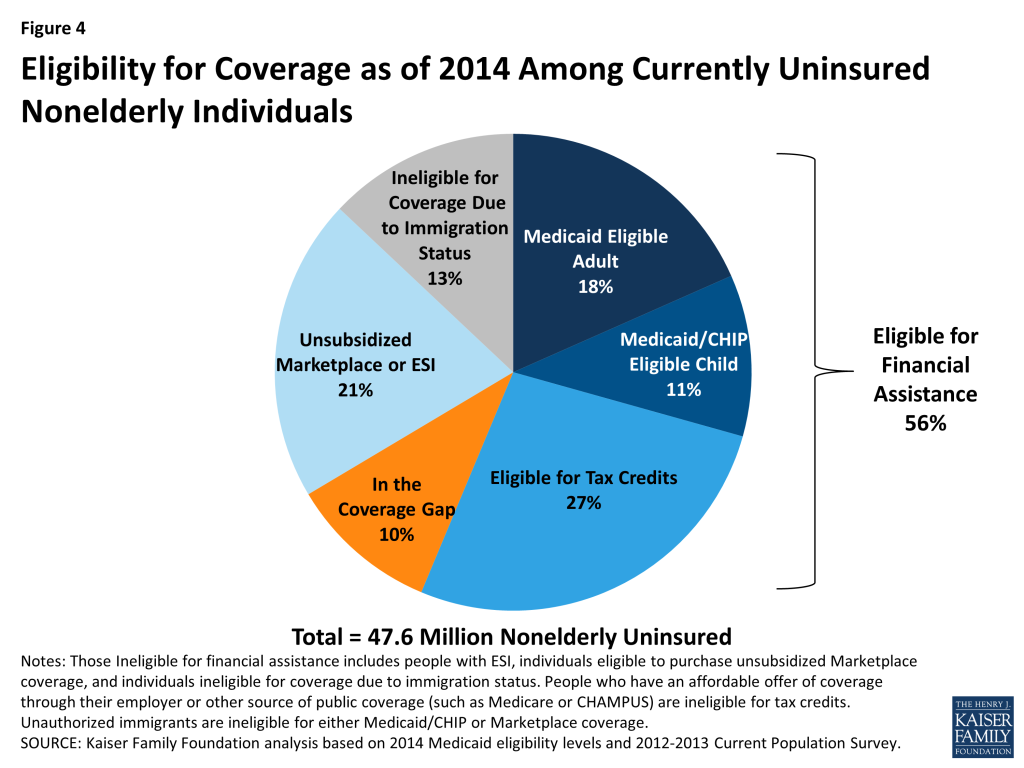
  11. Kaiser Family Foundation, The Uninsured:  A Primer, 2013. ↩︎
  12. Kaiser Family Foundation analysis of HRSA Data on Health Professional Shortage Areas, by state, as of January 1, 2014. ↩︎
  13. Melissa Van Dyne, Marie Ballew, Ben Harvey, et al., Rural Health Biennial Report 2012-2013 (Jefferson City, MO:  Office of Primary Care and Rural Health, 2014), http://health.mo.gov/living/families/ruralhealth/pdf/biennial2013.pdf. ↩︎
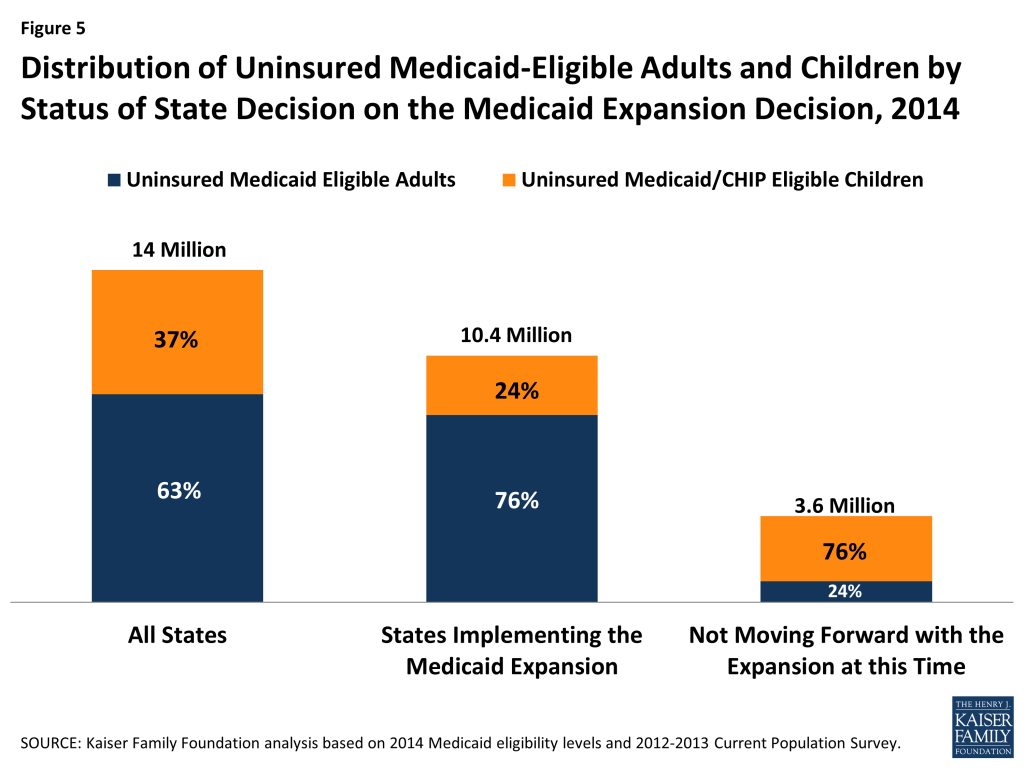
  14. Ibid. ↩︎
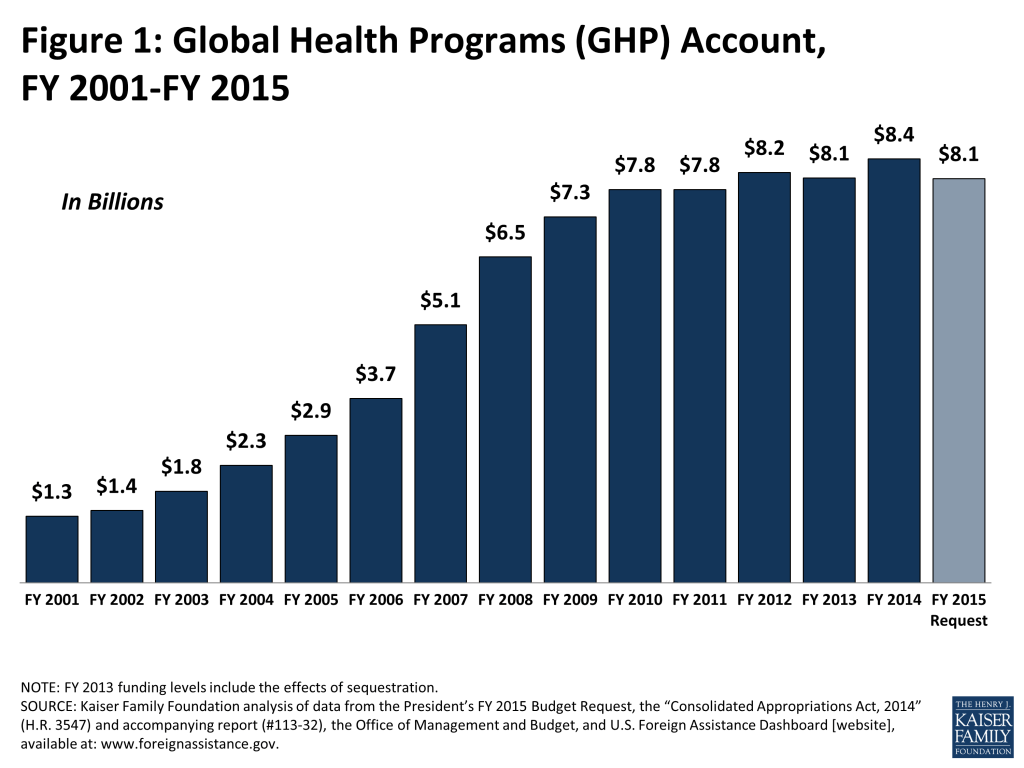
  15. Ibid. ↩︎
  16. American Community Survey, 2009-2012. American Fact Finder, March 6, 2014. ↩︎
  17. Single race only. U.S. Census Bureau, 2010 Census. American Fact Finder, March 6, 2014. ↩︎
  18. Kaiser Commission on Medicaid and the Uninsured, Status of State Medicaid Expansion Decisions, State Health Facts, Retrieved March 6, 2014 from http://kff.org/health-reform/slide/current-status-of-the-medicaid-expansion-decision/ ↩︎
  19. Kaiser Family Foundation, “How Will the Uninsured in Missouri Fare Under the Affordable Care Act?” (Washington, DC: Kaiser Family Foundation), January 6, 2014, https://modern.kff.org/health-reform/fact-sheet/state-profiles-uninsured-under-aca-missouri/ ↩︎
  20. Ibid. ↩︎
  21. Ibid. ↩︎
  22. Leighton Ku, Coordinating and Integrating Care for Safety Net Patients. ↩︎
  23. Ibid. ↩︎
  24. Ibid. ↩︎
  25. “Gateway to Better Health Extended to 2015,” St. Louis Regional Health Commission, St. Louis (September 28, 2013). Available at http://www.stlrhc.org/wp-content/uploads/2013/09/Gateway-to-Better-Health-Program-Extended-to-20152.pdf ↩︎
  26. Gateway to Better Health, 2013. ↩︎
  27. Kaiser Family Foundation, Uninsured in Missouri. ↩︎
  28. Ibid. ↩︎
  29. Kaiser Family Foundation, “State Exchange Profiles:  Missouri,” Access March 8, 2014, https://modern.kff.org/health-reform/state-profile/state-exchange-profiles-missouri/ ↩︎
  30. Ibid. ↩︎
  31. Centers for Medicare and Medicaid Services, “Missouri Medicaid Moving Forward in 2014,” Accessed March 6, 2014, http://medicaid.gov/Medicaid-CHIP-Program-Information/By-State/missouri.html ↩︎
  32. Centers for Medicare and Medicaid Services, Missouri Medicaid. ↩︎
  33. “Governor Nixon Delivers 2014 State of State Address,” Office of Missouri Governor Jay Nixon, January 21, 2014, Available at http://governor.mo.gov/news/archive/gov-nixon-delivers-2014-state-state-address-0 ↩︎
  34. Missouri HB 1901. Full text available http://www.house.mo.gov/billsummary.aspx?bill=HB1901&year=2014&code=R  Virginia Young, “Missouri House Republican Files Medicaid Expansion Bill,” Kaiser Health News, February 20, 2014. Available at http://www.kffhealthnews.org/stories/2014/february/20/missouri-medicaid-expansion.aspx ↩︎
  35. Missouri Economic Research and Information Center, “The Economic Impact of Medicaid Expansion,” (Missouri:  Missouri Department of Economic Development), February 21, 2014, http://www.missourieconomy.org/medicaidreport.pdf ↩︎
  36. Timothy McBride, Sidney Watson, Amy Blouin, “The Missouri Medicaid Expansion:  Good for All Missourians,” Missouri Budget Project, January 2013, Available at http://www.mobudget.org/files/medicaid_expansion_rural_1-2013.pdf ↩︎
  37. Paul Demko, “Federal judge strikes down Missouri’s regulations on exchange navigators, other outreach workers,” Modern Healthcare, January 24, 2014. Available at:  http://www.modernhealthcare.com/article/20140124/NEWS/301249974#   “Navigators Licensing Requirements and Application,” Missouri Department of Insurance, Available at http://insurance.mo.gov/otherlicensees/navigators.php ↩︎
  38. Demko, 2014. ↩︎
  39. Missouri SB 508. Full text available http://www.senate.mo.gov/14info/BTS_Web/Bill.aspx?SessionType=R&BillID=27723555 Jordan Shapiro, “Missouri Senate bills would impose requirements on health insurance exchange navigators,” The Republic, February 17, 2014. Available at http://www.therepublic.com/view/story/c12e020a510b4cafa680a7125d027914/MO-XGR–Health-Care-Exchange-Navigators ↩︎
  40. Tara Kulash, “Missouri Pulls Out Stops, But Lags Better-Funding Illinois Effort,” Health Care in the States, Kaiser Health News, March 11, 2014. http://capsules.kffhealthnews.org/index.php/2014/03/missouri-pulls-out-stops-but-lags-better-funded-illinois-effort/?utm_source=feedburner&utm_medium=feed&utm_campaign=Feed:+Capsules-TheKhnBlog+(Capsules+-+The+KHN+Blog) ↩︎
  41. CMS, Missouri Moving Forward in 2014. ↩︎
  42. Kaiser Family Foundation, “State Marketplace Statistics,” State Health Facts, Accessed March 6, 2014 from https://modern.kff.org/health-reform/state-indicator/state-marketplace-statistics-2/ ↩︎
  43. “Medicaid & CHIP:  January 2014 Monthly Applications and Eligibility Determinations Report,” Centers for Medicare and Medicaid Services, February 28, 2014. Accessed March 12, 2014 from http://www.medicaid.gov/AffordableCareAct/Medicaid-Moving-Forward-2014/Downloads/January-2014-Enrollment-Report.pdf ↩︎
  44. Virginia Young, “Medicaid applications from HealthCare.gov called flawed; Missouri enrollment dips,” St. Louis Post-Dispatch, February 4, 2014. Available at http://www.stltoday.com/news/special-reports/mohealth/medicaid-applications-from-healthcare-gov-called-flawed-mo-enrollment-dips/article_a4c715f2-02ad-5a1b-9204-634d7e0531ee.html ↩︎
  45. Young, Medicaid applications, 2014. ↩︎
  46. See “Protections in individual insurance markets” at https://modern.kff.org/state-category/health-insurance-managed-care/. ↩︎
  47. On February 10, 2014, the Obama Administration delayed penalties associated with this Employer Responsibility Provision until 2015. U.S. Department of the Treasury, Treasury and IRS Issue Final Regulations Implementing Employer Shared Responsibility Under the Affordable Care Act for 2015 (February 10, 2014), http://www.treasury.gov/press-center/press-releases/Pages/jl2290.aspx. ↩︎
  48. Excludes undocumented immigrants. ↩︎
  49. Collins S, et al. 2012. “Gaps in Health Insurance: Why So Many Americans Experience Breaks in Coverage and How the Affordable Care Act Will Help.” The Commonwealth Fund. http://www.commonwealthfund.org/~/media/Files/Publications/Issue%20Brief/2012/Apr/1594_collins_gaps_in_hlt_ins_tracking_brief_v2.pdf;  Cassedy A, Fairbrother G, and Newacheck PW. 2008. “The Impact of Insurance Instability on Children’s Access, Utilization, and Satisfaction with Health Care. Ambulatory Pediatrics. 8(5):321-8. ↩︎
  50. Martha Heberlein, et al., Getting into Gear for 2014:  Findings from a 50-State Survey of Eligibility, Enrollment, Renewal, and Cost-Sharing Policies in Medicaid and CHIP, 2012-2013 (Kaiser Family Foundation), January 2013. ↩︎
  51. Ibid. ↩︎
  52. For more information, see: Martha Heberlein, Tricia Brooks, Samantha Artiga, and Jessica Stephens, Getting into Gear for 2014: Shifting New Medicaid Eligibility and Enrollment Policies into Drive (Kaiser Family Foundation), November 2013, http://modern.kff.org/medicaid/report/getting-into-gear-for-2014-shifting-new-medicaid-eligibility-and-enrollment-policies-into-drive/. ↩︎
  53. Martha Heberlein, et al., Getting into Gear for 2014: Shifting New Medicaid Eligibility and Enrollment Policies into Drive (Kaiser Family Foundation), November 2013. ↩︎
  54. Includes people who had a choice of plans and reported that they made the choice themselves. ↩︎
  55. Zhou, C. and Zhang, Y. (2012). The vast majority of Medicare Part D beneficiaries still don’t choose the cheapest plans that meet their medication needs.  Health Affairs, 31: 2259-2264; McLaughlin, C.G., Chernew, M., & Taylor, E.F. (2002).  Medigap premiums and Medicare HMO enrollment.  Health Services Research 37: 1445-1468. ↩︎
  56. Kaiser Commission on Medicaid and the Uninsured. Oral Health and Low-Income Nonelderly Adults:  A Review of Coverage and Access (Washington, DC:  Kaiser Family Foundation), June 2012.  Available at: http://modern.kff.org/medicaid/issue-brief/access-to-affordable-dental-care-gaps-for/. ↩︎
  57. Institute of Medicine, Committee on the Consequences of Uninsurance, Board on Health Care Services, Care without Coverage: Too Little, Too Late (Washington, DC: National Academy Press: Institute of Medicine), May 2002, http://www.iom.edu/~/media/Files/Report%20Files/2003/Care-Without-Coverage-Too-Little-Too-Late/Uninsured2FINAL.pdf. ↩︎
  58. Institute of Medicine, Committee on the Consequences of Uninsurance, Board on Health Care Services Coverage Matters: Insurance and Health Care (Washington, DC: National Academy Press: Institute of Medicine), 2001. ↩︎
  59. Julia Paradise and Rachel Garfield, What is Medicaid’s Impact on Access to Care, Health Outcomes, and Quality of Care? Setting the Record Straight on Evidence (Washington, DC:  Kaiser Commission on Medicaid and the Uninsured), August 2, 2013, https://modern.kff.org/medicaid/issue-brief/what-is-medicaids-impact-on-access-to-care-health-outcomes-and-quality-of-care-setting-the-record-straight-on-the-evidence. ↩︎
  60. Kaiser Family Foundation, “Health Insurance Market Reforms:  Pre-Existing Condition Exclusions,” (Washington, DC:  Kaiser Family Foundation), October 8, 2012. https://modern.kff.org/health-reform/fact-sheet/health-insurance-market-reforms-pre-existing-condition/ ↩︎
  61. Stephen Zuckerman and Dana Goin, The Urban Institute, How Much Will Medicaid Physician Fees for Primary Care Rise in 2013?  Evidence from a 2012 Survey of Medicaid Physician Fees, (Washington, DC:  Kaiser Commission on Medicaid and the Uninsured, December 2012), https://modern.kff.org/medicaid/issue-brief/how-much-will-medicaid-physician-fees-for/. ↩︎
  62. Sandra L. Decker, “Two-thirds of Primary Care Physicians Accepted New Medicaid Patients in 2011-12: A Baseline to Measure Future Acceptance Rates,” Health Affairs 32, no. 7 (Jul. 2013): 1183-7, http://content.healthaffairs.org/content/32/7/1183.abstract. ↩︎
  63. Garfield, The Uninsured at the Starting Line. ↩︎
  64. Kaiser Commission on Medicaid and the Uninsured, Community Health Centers in an Era of Health Reform: An Overview and Key Challenges to Health Center Growth (Washington, DC:  Kaiser Family Foundation), March 1, 2013, https://modern.kff.org/health-reform/issue-brief/community-health-centers-in-an-era-of-health-reform-overview/. ↩︎
  65. “MO HealthNet for the Aged, Blind and Disabled – Who is Eligible,” Missouri Department of Social Services, June 4, 2013. Retrieved March 11, 2014 from http://www.dss.mo.gov/fsd/massist.htm For additional information on medically needy coverage please see:  https://modern.kff.org/medicaid/issue-brief/the-medicaid-medically-needy-program-spending-and/ ↩︎
  66. Cynthia Cox, Gary Claxton, Larry Levitt, Hana Khosla. An Early Look at Premiums and Insurer Participation in Health Insurance Marketplaces, 2014. Kaiser Family Foundation, Updated Table, as of October 22, 2013; available at: https://modern.kff.org/health-reform/issue-brief/an-early-look-at-premiums-and-insurer-participation-in-health-insurance-marketplaces-2014/. ↩︎
  67. State Health Facts, State Marketplace Statistics. ↩︎
  68. Ibid. ↩︎

Profiles of Medicaid Outreach and Enrollment Strategies: The Cook County Early Expansion Initiative

Author: Samantha Artiga
Published: Apr 7, 2014

Introduction

In late 2012, Illinois obtained a Section 1115 demonstration waiver that allowed the state to get an early start on the Affordable Care Act (ACA) Medicaid expansion for adults in Cook County. Named “CountyCare,” the demonstration was designed to help the state and Cook County Health and Hospitals System (CCHHS) build capacity and experience to support implementation of the expansion in 2014 and get a jump-start on enrollment. Cook County, Illinois encompasses 132 municipalities including the City of Chicago and has a total population of 5.2 million people, accounting for over 40 percent of all Illinois residents.1  Over 618,000 uninsured adults are estimated to be eligible for the ACA’s Medicaid expansion in Illinois, with over 341,000 of them residing in Cook County.2  CCHHS serves as a key safety-net provider for the low-income uninsured population in Cook County and is the third largest public hospital system in the nation.3 

This brief provides an overview of the CountyCare waiver experience, which may help inform continued efforts as the Medicaid expansion is implemented across states. It finds that, in just over 12 months, more than 82,000 Cook County residents successfully enrolled in CountyCare coverage, allowing the state and county to get a significant jump start on the Medicaid expansion (Figure 1).4  Illinois implemented the full Medicaid expansion in January 2014 and automatically transitioned CountyCare enrollees to the expansion. As of March 2014, CountyCare members account for nearly half of the total statewide enrollment of adults into the Medicaid expansion.5 

Figure 1: Total Number of Enrollees in CountyCare, March 2013 to February 2014

Overview of the CountyCare Waiver

On October 26, 2012, Illinois received approval from the Centers for Medicare and Medicaid Services (CMS) for its Cook CountyCare Section 1115 demonstration waiver, which allowed the state to expand coverage to adults with income at or below 133% of the federal poverty level (FPL), who reside in Cook County. Eligibility for CountyCare is limited to adults age 19-64, who meet citizenship and immigration status requirements and do not qualify for Medicare or Medicaid or CHIP. When initially implemented, CountyCare members were covered for a broad range of services provided through CCHHS sites and a network of community providers contracted with CCHHS to provide care under the waiver, similar to a managed care plan.

Application and Enrollment

Between February 2013 and February 2014, more than 113,000 applications were submitted for CountyCare, with more than 82,000 approved and approximately 18,000 pending review.6  The remaining applications were denied for a variety of reasons including the applicant having income above the eligibility limit, being eligible for regular Medicaid, or the application missing information needed to process the determination.

To enroll in CountyCare, individuals apply through a CountyCare application assister. Prior to initiating a full application, application assisters ask individuals six screening questions to determine if they will likely be eligible for CountyCare. This pre-screening process contributed to a high approval rate for submitted applications, with over eight in ten (85%) submitted applications for CountyCare approved.7 

Application assisters are available at locations across the county and through a call center. Some 375 CountyCare application assisters are located at 92 geographically dispersed sites throughout the county including CCHHS sites and Federally Qualified Health Centers (FQHCs) contracted to provide services as part of the CountyCare provider network under the waiver.8  In addition, CCHHS established a call center through which individuals can apply for CountyCare, which is open weekdays from 8:00am to 8:00pm and Saturdays from 9:00am to 2:00pm.9  Through the call center, application assisters complete the CountyCare application and then mail a signature page and self-addressed stamped envelope to applicants to return with necessary documentation. Over half of all applications have been initiated through the call center. Over 100 state eligibility caseworkers were hired to process applications submitted for CountyCare. These applications are processed centrally through an Illinois Department of Human Services local eligibility office. Cook County contributes the non-federal share of funding to cover the costs of administering the waiver.

Outreach

Broad outreach for County Care was conducted through a variety of avenues including earned media, primarily through neighborhood newspapers and digests; posters and flyers; and community outreach events. For example, local pastors and community leaders visited over 300 places of worship to educate people about CountyCare. In addition, CountyCare application assisters participated in an event hosted by the City of Chicago that brought together freelance musicians and artists, many of whom were uninsured and eligible for CountyCare.

In addition, targeted outreach was provided to uninsured patients at CCHHS and network health centers who were likely eligible for CountyCare. These patients received recorded calls that advised them about CountyCare and offered to connect them directly to the call center to begin an application. Health center staff also provided information about CountyCare to patients in waiting rooms.

Outreach was also conducted through other areas of Cook County government. For example, information was included with paychecks to CCHHS staff as a general education tool. Probation officers were also provided with information and training on CountyCare eligibility requirements, the application process, benefits, and network to help connect their clients to coverage. Further, local elected officials, including County Commissioners and Chicago Aldermen offices included information about CountyCare in their newsletters and communications to district residents.

An initiative was also established to assist detainees in applying for CountyCare while going through the Cook County Jail intake process. This partnership effort between CCHHS, the Cook County Sheriff, and Treatment Alternatives for Safe Communities, a local non-profit organization,resulted in over 13,700 initiated applications. About 4,400 of these applications have been submitted and over 2,400 individuals have enrolled.10 

Connecting CountyCare Enrollees to Care

Once an individual is determined eligible for CountyCare, he or she receives a welcome call and is asked to select a medical home and make an initial appointment for care. Many individuals enrolling in CountyCare need help understanding how to use their health coverage and the role of their primary care provider since they may not have previous experience with health coverage. Individuals have been enthusiastic about the coverage opportunity, particularly to gain coverage for physician and hospital services and prescription drugs. Overall, there are significant health needs among individuals enrolled in CountyCare, with many requiring case management and supportive services. As more understanding is gained about the health needs of the population, CCHHS intends to develop initiatives for care coordination that will build upon the existing strengths and assets within the CountyCare provider network.

Transition to the 2014 Medicaid Expansion

As of January 2014, Illinois expanded Medicaid under the ACA to include adults with incomes at or below 138% FPL. Prior to the expansion, Illinois already covered parents with incomes up to this level, but other adults without disabilities were not eligible, regardless of their income level.

CountyCare enrollees were automatically transitioned to the Medicaid expansion. Individuals enrolled in CountyCare did not need to reapply for coverage under the expansion as the state obtained federal approval to administratively enroll CountyCare members into the new adult expansion group. Moreover, when the expansion took effect, benefits for CountyCare members were expanded to align with the Medicaid benefits package provided to all expansion adults. Additional services covered under this benefit package include optometry care and eyeglasses, as well as audiology services. In addition, individuals who reside in Cook County and are eligible under the Medicaid expansion now have the option to continue to obtain services through the CountyCare provider network or may opt-out to receive care through any of the state’s Medicaid providers.

CMS approved the state’s request to temporarily extend the CountyCare waiver to June 30, 2014. This extension enables the state to continue using the same per member per month payment methodology it had been using under the waiver for services provided through the CountyCare provider network. The experience with this payment methodology is intended to help inform the state’s preparations to establish capitation rates as it transitions its overall Medicaid population in Cook County to managed care. Beginning as of February 2014 and phasing in over time, Medicaid beneficiaries in Cook County and other counties throughout Illinois will be asked to choose a managed care plan or coordinated care network. Those who do not make an active choice will be auto-assigned into a plan. CountyCare is intended to be available as a plan option as enrollees are transitioned to managed care plans.

CCHHS also is developing several low-cost private insurance plans that will be offered through the new Health Insurance Marketplace. The goal of these plans is to support continuity of care for individuals who move between Medicaid and Marketplace coverage. These private plans will build upon the structure of the current CountyCare network and will be available for purchase during the 2014-2015 open enrollment period.

Conclusion

Overall, Illinois was able to get a significant early jump start on its Medicaid expansion through the CountyCare waiver. Individuals successfully enrolled in coverage by applying both in-person with application assisters and through the call center and were connected to medical homes to help coordinate their care. Looking ahead, the state is seeking to build upon some of the successful CountyCare outreach and enrollment initiatives as it implements the broader ACA Medicaid expansion.

This issue brief is part of a Kaiser Commission on Medicaid and the Uninsured series of profiles on Medicaid and CHIP Outreach and Enrollment Strategies. The author extends her appreciation to Kathy Chan with the Cook County Health and Hospitals System for providing the data and information used in this report.


  1. United States Census Bureau, “State and County Quick Facts,” http://quickfacts.census.gov/qfd/states/17/17031.html and Cook County Clerk, “Municipality Maps,” http://www.cookcountyclerk.com/aboutus/map_room/pages/municipalitymaps.aspx. ↩︎
  2. “Visualizing Health Care Reform,” IllinoisHealthMatters,” http://visualizingreform.illinoishealthmatters.org. ↩︎
  3. “Dr. Raju’s Op Ed in Crain’s,” Press Releases, http://www.cookcountyhhs.org/press-releases/dr-rajus-op-ed-crains/. ↩︎
  4. CCHHS CEO Report to the Board of Directors, February 28, 2014, http://www.cookcountyhhs.org/wp-content/uploads/2013/12/02-28-14-Agenda2.pdf, Item VI, CEO Report. ↩︎
  5. Presentation on ACA adult enrollment numbers statewide at Care Coordination Subcommittee meeting on February 4, 2014 ↩︎
  6. CCHHS CEO Report to the Board of Directors, op cit. Some enrollees were able to receive up to three months of retroactive coverage, so their coverage effectively began as of November 2012. ↩︎
  7. CCHHS Finance Committee November 29, 2013 Meeting Minutes, http://www.cookcountyhhs.org/wp-content/uploads/2013/01/12-06-13-Fin-agenda3.pdf, pg. 3 ↩︎
  8. CountyCare Providers, http://countycare.com/providers.aspx ↩︎
  9. How to Apply, CountyCare, http://countycare.com/about/howtoapply.aspx. ↩︎
  10. State of Illinois through communications with Cook County Health and Hospitals System. ↩︎

How Will the Uninsured Fare Under the Affordable Care Act?

Published: Apr 7, 2014

The 2010 Affordable Care Act (ACA) has the potential to extend coverage to many of the 47 million nonelderly uninsured people nationwide. The ACA establishes coverage provisions across the income spectrum, with the expansion of Medicaid eligibility for adults serving as the vehicle for covering low-income individuals and premium tax credits to help people purchase insurance directly through new Health Insurance Marketplaces serving as the vehicle for covering people with moderate incomes. With the June 2012 Supreme Court ruling, the Medicaid expansion became optional for states, and as of March 2014, 27 states, including the District of Columbia, are implementing the Medicaid expansion and 24 states are not moving forward at this time. In 5 of these states, debate about wherther to implment the Medicaid expansion is ongoing (Figure 1). As a result, while many nonelderly uninsured individuals may gain coverage through the expansions in 2014, millions of uninsured adults who would have been newly-eligible for Medicaid will remain without a coverage option. As the ACA coverage expansions are implemented and coverage changes are assessed, it is important to understand the potential scope of the law nationwide.

Figure 1: Current Status of State Medicaid Expansion Decisions, 2014

How Does the ACA Expand Health Insurance Coverage?

Historically, Medicaid had gaps in coverage for adults because eligibility was restricted to specific categories of low-income individuals, such as children, their parents, pregnant women, the elderly, or individuals with disabilities. In most states, adults without dependent children were ineligible for Medicaid, regardless of their income, and income limits for parents were very low—often below half the poverty level.1  However, some states had expanded coverage to parents at higher income levels or provided coverage to adults without dependent children. The ACA aimed to fill in gaps in coverage by extending Medicaid to nearly all nonelderly adults with incomes at or below 138% of poverty (about $32,900 for a family of four in 2014). In the 27 states that are implementing the Medicaid expansion in 2014, Medicaid covers almost all nonelderly adults with incomes at or below at least 138% of poverty, as shown by the dark blue shading in Figure 2. Connecticut, the District of Columbia, and Minnesota extend coverage to parents and/or childless adults at higher incomes. All states previously expanded eligibility for children to higher levels than adults through Medicaid and the Children’s Health Insurance Program (CHIP), and in the states moving forward with the expansion, the median Medicaid and CHIP eligibility threshold for children in 2014  is 213% of poverty (about $50,800 for a child in a family of four).

Figure 2: Income Eligibility Levels for Medicaid/CHIP and Marketplace Tax Credits in States Implementing the Medicaid Expansion as of 2014

In states that do not implement the expansion, Medicaid eligibility for adults will remain quite limited. As of January 2014, the median Medicaid eligibility limit for non-disabled parents in states not implementing the expansion in 2014 is just 46% of poverty, or about $11,200 a year for a parent in a family of four. In all but one of these non-expansion states (Wisconsin), adults without dependent children remain ineligible for Medicaid regardless of their income. Eligibility levels for children compared to adults in these states remain much higher. As of 2014, the median income eligibility limit for children in Medicaid and CHIP in states not expanding Medicaid is 199% FPL (about $47,500 for a family of four) (Figure 3).

Figure 3: Income Eligibility Levels for Medicaid/CHIP and Marketplace Tax Credits in States Not Implementing the Medicaid Expansion as of 2014

As was the case before the ACA, undocumented immigrants will remain ineligible to enroll in Medicaid in all states, and recent lawfully residing immigrants are subject to certain Medicaid eligibility restrictions.2  Under the ACA, people with incomes between 100% and 400% of poverty may be eligible for premium tax credits when they purchase coverage in a Marketplace, as indicated by the bright blue shading in Figures 1 and 2. The amount of the tax credit is based on income and the cost of insurance, and tax credits are only available to people who are not eligible for other coverage, such as Medicaid/CHIP, Medicare, or employer coverage, and who are citizens or lawfully-present immigrants. Citizens and lawfully-present immigrants with incomes above 400% of poverty can purchase unsubsidized coverage through the Marketplace. Because the ACA envisioned low-income people receiving coverage through Medicaid, people below poverty are not eligible for Marketplace subsidies. Thus, in states not implementing the Medicaid expansion, some adults fall into a “coverage gap” of earning too much to qualify for Medicaid but not enough to qualify for premium tax credits, as shown by the orange shading in Figure 3. People in the coverage gap are ineligible for financial assistance under the ACA, while people with higher incomes are eligible for tax credits to purchase coverage.

How Many Uninsured Are Eligible for Assistance Under the ACA?

Nationally, over half (56%) of uninsured nonelderly people are eligible for financial assistance to gain coverage through either Medicaid or the Marketplaces (Figure 4). Over one-quarter (27%) of uninsured individuals are eligible for premium tax credits to help them purchase coverage in the Marketplace and approximately three in ten uninsured individuals (29%) are eligible for either Medicaid or CHIP as of 2014.

Figure 4: Eligibility for Coverage as of 2014 Among Currently Uninsured Nonelderly Individuals

Overall, most (63%) of the 14 million people eligible for Medicaid in 2014 are adults, although the share varies significantly by state (Figure 5). Over three quarters (77%) of Medicaid-eligible people in states that are implementing the expansion are adults. In states that are not currently implementing the Medicaid expansion, some uninsured people (nearly 4 million) are eligible for Medicaid or CHIP under eligibility pathways in place before the ACA. However, reflecting historically higher eligibility levels for children than for adults, the large majority (75%) of uninsured individuals in states not expanding Medicaid are children who are already eligible but not yet enrolled in coverage. Not all Medicaid-eligible individuals are enrolled in the program due to lack of knowledge about their eligibility and historic enrollment barriers. As the ACA coverage expansions are implemented, it is likely that broad outreach efforts and new streamlined enrollment processes will lead to increased enrollment of eligible individuals into Medicaid. Nationally, 4.8 million uninsured adults (10% of the nonelderly uninsured) who would be eligible for Medicaid if their states were to expand, fall into the coverage gap. These adults are all below the poverty line and thus have very limited incomes.  Because they do not gain an affordable coverage option under the ACA, they are most likely to remain uninsured. Two other groups of uninsured individuals are outside the reach of financial assistance for health coverage under the ACA. First, 21% of uninsured people have incomes above the limit for premium tax subsidies or have an affordable offer of coverage through their employer are thus ineligible for financial assistance. Some of these people are still able to purchase unsubsidized coverage in the Marketplace, which may be more affordable or more comprehensive than the coverage they could obtain on their own through the individual market. Second, uninsured undocumented immigrants (about 13% of uninsured) are ineligible for assistance under the ACA and barred from purchasing coverage through the Marketplace. This group is likely to remain uninsured, though they will still have a need for health care services.

Figure 5: Distribution of Uninsured Medicaid-Eligible Adults and Children by Status of State Decision on the Medicaid Expansion Decision, 2014

The ACA will help many currently uninsured individuals gain health coverage by providing coverage options across the income spectrum for low and moderate-income people. However, many who could have obtained financial assistance through the Medicaid expansion will remain outside its reach. Further, in all states, the impact of the ACA will depend on take-up of coverage among the eligible uninsured, and outreach and enrollment efforts are an important factor in determining how the law affects the uninsured rate in the state. The ACA includes a requirement that most individuals obtain health coverage, but some people (such as the lowest income or those without an affordable option) are exempt and others may still remain uninsured. Notably, there is no deadline for state decisions about implementing the Medicaid expansion, and open enrollment in the Marketplaces continues through March 2014. Continued attention to who gains coverage as the ACA is fully implemented and who is excluded from its reach—as well as whether and how their health needs are being met—can help inform decisions about the future of health coverage nationwide.

Table 1: Eligibility for Coverage Under the ACA Among those Uninsured Prior to 2014

Total Uninsured

Medicaid-Eligible Adult

Medicaid/CHIP Eligible Child

Tax credit eligible

In the Coverage Gap

Ineligible for Financial Assistance

United States Total

 47,601,000


18%

11%

27%

10%

34%

Implementing the Medicaid Expansion in 2014 (27  states, including DC)

Arizona

 1,140,000

30%

11%

22%

 –

37%

Arkansas

 510,000

46%

9%

22%

 –

23%

California

 6,993,000

32%

11%

20%

 –

38%

Colorado

 737,000

34%

12%

22%

 –

33%

Connecticut

 286,000

28%

10%

25%

 –

38%

Delaware

 92,000

28%

13%

22%

 –

37%

District of Columbia

 50,000

48%

6%

10%

 –

36%

Hawaii

 102,000

46%

11%

18%

 –

25%

Illinois

 1,772,000

36%

10%

21%

 –

34%

Iowa

 301,000

38%

10%

24%

 –

29%

Kentucky

 647,000

45%

9%

22%

 –

23%

Maryland

 756,000

26%

13%

20%

 –

40%

Massachusetts

 242,000

25%

12%

20%

 –

43%

Michigan

 1,111,000

38%

7%

26%

 –

29%

Minnesota

 462,000

41%

16%

11%

 –

33%

Nevada

 621,000

33%

16%

20%

 –

31%

New Hampshire

 158,000

45%

9%

22%

 –

23%

New Jersey

 1,251,000

27%

10%

26%

 –

37%

New Mexico

 422,000

36%

12%

23%

 –

29%

New York

 2,221,000

32%

11%

24%

 –

33%

North Dakota

 70,000

33%

7%

31%

 –

30%

Ohio

 1,460,000

40%

10%

26%

 –

23%

Oregon

 559,000

38%

8%

23%

 –

30%

Rhode Island

 126,000

35%

7%

24%

 –

33%

Vermont

 47,000

28%

9%

36%

 –

28%

Washington

 948,000

37%

10%

23%

 –

30%

West Virginia

 267,000

42%

11%

23%

 –

23%

Total (Expansion States)

 23,351,000

34%

11%

22%

  –

33%

Not Moving Forward with the Medicaid Expansion at this Time (24 states)

Alabama

 660,000

4%

12%

30%

29%

25%

Alaska

 129,000

10%

12%

36%

13%

29%

Florida

 3,867,000

2%

9%

33%

20%

36%

Georgia

 1,849,000

4%

13%

28%

22%

33%

Idaho

 258,000

2%

12%

34%

21%

31%

Indiana

 801,000

3%

14%

35%

23%

25%

Kansas

 369,000

4%

11%

30%

21%

33%

Louisiana

 866,000

4%

11%

34%

28%

22%

Maine

 130,000

3%

5%

45%

18%

28%

Mississippi

 454,000

4%

12%

34%

30%

19%

Missouri

 834,000

4%

18%

33%

23%

23%

Montana

 178,000

4%

12%

38%

22%

24%

Nebraska

 234,000

3%

13%

32%

14%

38%

North Carolina

 1,593,000

2%

8%

32%

20%

37%

Oklahoma

 632,000

3%

8%

33%

23%

33%

Pennsylvania

 1,426,000

3%

13%

34%

20%

31%

South Carolina

 765,000

4%

13%

32%

25%

25%

South Dakota

 110,000

5%

11%

36%

23%

26%

Tennessee

 850,000

9%

9%

34%

19%

29%

Texas

 6,167,000

2%

12%

28%

17%

40%

Utah

 407,000

2%

13%

31%

14%

39%

Virginia

 1,021,000

3%

7%

34%

19%

37%

Wisconsin

 566,000

25%

11%

34%

 –

30%

Wyoming

 93,000

2%

8%

38%

18%

33%

Total (Non-Expansion States)

 24,250,000


4%

11%

32%

20%

34%

Notes: Those ineligible for financial assistance include people with an offer of ESI, individuals eligible to purchase unsubsidized Marketplace coverage, and individuals ineligible for coverage due to documentation status. “–” In states expanding their Medicaid programs, there is no coverage gap population.

Source: Kaiser Family Foundation analysis based on 2014 Medicaid eligibility levels and 2012-13 Current Population Survey.

  1. Some states had expanded coverage to parents at higher income levels or provided coverage to adults without children. See http://modern.kff.org/medicaid/fact-sheet/medicaid-eligibility-for-adults-as-of-january-1-2014/ for more detail on pre- and post-ACA Medicaid eligibility for adults. ↩︎
  2. For more detail on Medicaid coverage for immigrants, see: http://modern.kff.org/disparities-policy/fact-sheet/key-facts-on-health-coverage-for-low/. ↩︎

The U.S. Global Health Budget: Analysis of the Fiscal Year 2015 Budget Request

Published: Apr 7, 2014

Overview:

The President’s FY15 budget request, which was released on March 4, 2014, proposed $9.4 billion1  in funding for global health programs.  If enacted, this would represent a decline of approximately $350 million (-4%) from levels set in the FY14 Omnibus Appropriation and would essentially be a return to FY13 post-sequestration funding amounts.2 

Figure 1: Global Health Programs (GHP) Account, FY 2001-FY 2015

Most of the global health budget ($8.1 billion) specified in the FY15 budget request is provided through the Global Health Programs (GHP) account at USAID and the State Department (see Figure 1 & Figure 2). Within the GHP account, all programs would decline, with the exception of funding for malaria and Family Planning and Reproductive Health (FP/RH), which would both increase slightly; funding for bilateral HIV, through PEPFAR, would remain flat (see Figure 3).  The FY15 budget request includes $1.35 billion as the base U.S. contribution to the Global Fund to Fight AIDS, Tuberculosis, and Malaria (Global Fund), which is $300 million below the FY14 level and would account for a significant share of the total decline in global health funding, although this is in large part due to legislative restrictions on the U.S. contribution to the Global Fund (see Global Fund section below).3   Funding for tuberculosis (TB) efforts would represent the second largest decrease (-$45 million), followed by pandemic influenza (-$22.5 million) and nutrition (-$14 million).

The FY15 budget request includes a newly proposed “Opportunity, Growth, and Security Initiative” that would provide additional funding across many areas, including some for global health activities (e.g. for the Global Fund; see below). However, this new initiative, which proposes an additional $56 billion in discretionary funding (divided evenly between defense and non-defense), would be offset by mandatory spending reforms and higher revenues;4  it therefore, requires Congressional approval and remains uncertain.

If Congress approves the President’s FY15 Budget Request, global health funding would be impacted more than other areas when compared to broader budgetary trends, particularly when compared to final FY13 post-sequestration levels (see Table 1).  For instance, while funding for global health would remain essentially flat between FY 13 and FY 15, funding for international affairs overall would increase by 7%.5   In addition, funding for all non-defense discretionary programs, of which global health is a part, would increase by 3%.6   In both FY13 and FY14, however, Congress approved higher funding levels for global health than those proposed in the President’s budget request. Whether or not Congress continues this trend remains to be seen.

The summary below provides an overview of global health funding levels by program area as proposed in the FY15 Budget Request (unless otherwise stated, all comparisons are to enacted FY14 levels).7 

PEPFAR/Bilateral HIV:

Figure 2: Global Health Programs (GHP) Account By Sector, FY 2015 Request

PEPFAR’s bilateral HIV funding through the GHP account totaled $4,350 million ($330 million at USAID and $4,020 at the State Department) matching the FY14 funding level (Table 2), but more than $600 million below its peak level of $4,959 million in FY10.  Bilateral HIV accounts for the largest share (54%) of the global health portfolio under the GHP account.  The FY15 budget request for HIV includes funding for microbicides research ($45 million), U.S. contributions to IAVI ($28.7 million), the Commodity Fund ($20.3 million), and the Joint United Nations Programme on HIV/AIDS (UNAIDS) ($45 million).

The budget request also includes $375.9 million for HIV research activities at the National Institutes of Health (NIH) and $128.7 million in HIV funding through the Centers for Disease Control and Prevention (CDC); both totals match FY14 levels. Additional funding for HIV programs at the Department of Defense (DoD) is not yet known (in prior years, it has ranged between $8 and $10 million).

Global Fund to Fight AIDS, Tuberculosis and Malaria (Global Fund):

Figure 3: Global Health Programs (GHP) Account, Funding Change by Sector, FY 2014–FY 2015

At the Global Fund’s 4th Replenishment Conference held in December 2013, President Obama announced that the U.S. would contribute $1 for every $2 pledged by other donors. The FY15 budget request proposes $1,350 million in base funding for the Global Fund towards fulfillment of this pledge.8   While base funding for the Global Fund is $300 million (-18%) below the FY14 level, the budget request includes an additional $300 million in potential funding that would be made available through the new “Opportunity, Growth, and Security Initiative” (if approved by Congress), but is dependent on additional pledges from other donors. The Global Fund accounts for the second largest share (17%) of global health funding (in the GHP account).  

Tuberculosis:

Funding for TB through the GHP account totaled $191 million, a $45 million (-19%) decrease below FY14 and would be the lowest level of funding since FY09. TB funding, which includes funding for the TB Drug Facility ($13.5 million), represented the second largest decrease (after the Global Fund) among all areas under the GHP account. Additional tuberculosis funding provided through the Economic Support Fund (ESF) account is not yet known (in prior years, it has ranged between $8 and $20 million).

Malaria:

Malaria funding totaled $674 million in the FY15 budget request and was one of only two program areas under the GHP account (the other being family planning & reproductive health) that increased above FY14 levels ($9 million or 1%). The budget request also includes $150.7 million for malaria research activities at NIH and $10.7 million in malaria funding through the CDC; both totals match FY14 levels. Additional malaria funding through DoD is not yet known (in prior years, it has ranged between $8 million and $30 million).

Family Planning & Reproductive Health (FP/RH):

FP/RH funding totaled $538 million and was one of only two program areas under the GHP account (the other being malaria) that increased ($14.1 million or 3%) from FY14 levels. The FY15 budget request also included $35.3 million for the U.S. contribution to the United Nations Population Fund (UNFPA), essentially matching the FY14 level ($35.0 million).9  Additional FP/RH funding provided through other accounts such as the Economic Support Fund (ESF) is not yet known.

Maternal & Child Health (MCH):

In the FY15 budget request, MCH funding through the GHP account totaled $695, a decrease of $10 million (-1%) below FY14 levels.  This includes $495 million in funding for bilateral programs and a $200 million contribution to GAVI.  Some additional MCH funding provided through other accounts, such as the ESF and Food for Peace (FFP) accounts, is not yet known. The FY15 budget request states that additional MCH funding would be provided through the new “Opportunity, Growth, and Security Initiative” (if approved by Congress), but does not specify an amount. Specific components of MCH funding include:

  • GAVI: The U.S. contribution to GAVI, which is included under MCH funding in the GHP account, totaled $200 million, a $25 million (14%) increase above FY14.
  • Polio: U.S. funding for polio programs is provided through USAID (as part of MCH funding via the GHP and ESF accounts) and CDC. Polio funding through the CDC totaled $161 million, a $10 million (7%) increase above FY14 levels; with the exception of new funding ($45 million) for the recently launched “Global Health Security Initiative” (see below) polio is the only area in the CDC global health budget that increased in the FY15 budget request. Polio funding through the GHP and ESF accounts at USAID is not yet known.
  • United Nations Children’s Fund (UNICEF): The U.S. contribution to UNICEF totaled $116.6 million in the FY15 budget request, a $15.4 million (-12%) decrease below FY14.10 

Nutrition:

Nutrition funding in the request through the GHP account totaled $101 million, a $14 million (-12%) decrease below FY14. Additional nutrition funding provided through other accounts, such as the ESF and FFP accounts, is not yet known.

Vulnerable Children:

Funding for vulnerable children, which is provided via the Displaced Children and Orphans Fund (DCOF), totaled $14.5 million in the GHP account, a $7.5 million (-34%) decrease below FY14. The decrease in funding for vulnerable children was the largest percentage decrease among all areas under the GHP account.

Pandemic Preparedness:

Pandemic Preparedness funding through the GHP account totaled $50 million, a decrease of $22.5 million (-31%) below FY14. The decrease in pandemic preparedness funding was the second largest percentage decrease among all areas under the GHP account. Additional funding provided through other accounts, such as the ESF account, is not yet known.

Global Public Health Protection:

The FY15 budget request for CDC includes $100.3 million in funding for Global Public Health Protection, of which $45.5 million is for Global Disease Detection and Emergency Response, $9.8 million is for Global Public Health Capacity Development, and $45 million is new funding to support the Global Health Security Initiative, a new effort launched in February 2014 aimed at improving global capabilities to prevent, detect, and respond to epidemics and other emerging public health threats.

Other Global Health Funding:

The U.S. provides additional global health funding in support of water, sanitation and hygiene (WASH) activities, for international global health research efforts conducted through the Fogarty International Center (FIC) at NIH, and for multilateral organizations, such as  the World Health Organization (WHO) and the Pan American Health Organization (PAHO), that play an important role in addressing global issues. The FY15 budget request proposes $67.8 for international global health research activities at FIC ($0.2 million or 0.3% above FY14), a $114 million contribution to WHO ($4.2 million or 4% above FY14), and a $66.5 million contribution to PAHO ($0.4 million or 0.6% above FY14); U.S. funding for WASH activities is not yet known.

Other Non-Global Health Funding:

The FY15 budget request also proposed funding for areas and agencies that are not directly focused on U.S. global health, but are related and may impact these efforts including: the Millennium Challenge Corporation (MCC), Feed the Future (FtF), which is the U.S. Government’s Global Hunger and Food Security Initiative, broader food assistance through Food for Peace (FFP) and McGovern-Dole International Food for Education and Child Nutrition (McGovern-Dole), and other funding through the State & Foreign Operations Development Assistance (DA) and ESF accounts. Within the budget request, funding for the MCC  ($1,000 million) increased by more than $100 million (11%) above FY14 enacted levels, while funding for McGovern-Dole remained flat and funding for FtF and FFP declined – FtF declined by approximately $100 million (-9%) and FFP declined by $66 million (-4.5%) (see Table 3). The FY15 budget request proposes additional funding through the new “Opportunity, Growth, and Security Initiative” (if approved by Congress) for the MCC ($350 million) and Feed the Future (additional amount not specified).

Table 1: Comparison of Global Health Funding to International Affairs and Non-Defense Discretionary Funding, FY 2013 – FY 2015
FY13*(millions)FY14(millions)FY15(millions)Difference
FY15 to FY14FY15 to FY13
$(millions)%$(millions)%
Global Health$9,359$9,794$9,441-$352-4%$821%
of which International Affairs$8,395$8,782$8,382-$400-5%-$130%
International Affairs Total**$51,906$50,725$50,011-$714-1%-$1,895-4%
Base (Enduring)***$41,084$44,205$44,098-$1060%$3,0157%
Discretionary Budget(Non-Defense)****$479,000$512,000$492,000-$20,000-4%$13,0003%

*FY13 includes the effects of sequestration.**International Affairs is Function 150 Account only and includes both Base (Enduring) and Overseas Contingency Operations (OCO) funding. OCO has historically included some funding for global health programs, but this amount is not yet known for the FY15 Budget Request.***The majority of U.S. global health funding is provided as part of Base (Enduring) funding.****Discretionary Budget funding amounts are rounded totals.

Back to top

Table 2: U.S. Funding for Global Health Programs, FY 2013 – FY 2015
Department / Agency / AreaFY13 Final (millions)*FY14 Omnibus (millions)FY15 Request (millions)Difference
FY15 – FY14 (millions)FY15 – FY13 (millions)
USAID – Global Health Programs (GHP)
HIV/AIDS$332.9$330.0$330.0$0 (0%)$-2.9 (-0.9%)
Tuberculosis$224.5$236.0$191.0$-45 (-19.1%)$-33.5 (-14.9%)
Malaria$656.4$665.0$674.0$9 (1.4%)$17.6 (2.7%)
Neglected Tropical Diseases (NTDS)$85.6$100.0$86.5$-13.5 (-13.5%)$0.9 (1%)
Pandemic Influenza$55.2$72.5$50.0$-22.5 (-31%)$-5.2 (-9.4%)
Maternal & Child Health (MCH)$627.3$705.0$695.0$-10 (-1.4%)$67.7 (10.8%)
of which GAVI$138.0$175.0$200.0$25 (14.3%)$62 (44.9%)
of which Polio$39.4$51.0Not Yet Known
Nutrition$95.1$115.0$101.0$-14 (-12.2%)$5.9 (6.2%)
Vulnerable Children$16.6$22.0$14.5$-7.5 (-34.1%)$-2.1 (-12.9%)
Family Planning & Reproductive Health (FP/RH)$532.4$524.0$538.0$14.1 (2.7%)$5.6 (1.1%)
Total USAID:$2,626.1$2,769.5$2,680.0$-89.4 (-3.2%)$53.9 (2.1%)
State Department – Global Health Programs (GHP)
HIV/AIDS Bilateral$3,870.8$4,020.0$4,020.0$0 (0%)$149.2 (3.9%)
of which UNAIDS$42.8$45.0$45.0$0 (0%)$2.2 (5.2%)
Global Fund**$1,569.0$1,650.0$1,350.0$-300 (-18.2%)$-219 (-14%)
Total State:$5,439.8$5,670.0$5,370.0$-300 (-5.3%)$-69.8 (-1.3%)
Total GHP – State & USAID
Total USAID & State GHP:$8,065.9$8,439.5$8,050.0$-389.5 (-4.6%)$-15.9 (-0.2%)
State & Foreign Operations – International Organizations & Programs (IO&P)
United Nations Children’s Fund (UNICEF)$125.2$132.0$116.6$-15.4 (-11.7%)$-8.6 (-6.8%)
United Nations Population Fund (UNFPA)$28.5$35.0$35.3$0.3 (0.9%)$6.8 (23.9%)
State & Foreign Operations – Contributions to International Organizations (CIO)
World Health Organization (WHO)$109.9$109.9$114.1$4.2 (3.8%)$4.2 (3.8%)
Pan American Health Organization (PAHO)$65.7$66.1$66.5$0.4 (0.6%)$0.8 (1.2%)
National Institutes of Health (NIH)
HIV/AIDS Research$389.2$375.8$375.9$0 (0%)$-13.3 (-3.4%)
Malaria Research$146.8$151.0$150.7$-0.3 (-0.2%)$4 (2.7%)
Fogarty International Center (FIC)$65.5$67.6$67.8$0.2 (0.3%)$2.2 (3.4%)
Total NIH:$601.5$594.4$594.4$0 (0%)$-7.1 (-1.2%)
Centers for Disease Control and Prevention (CDC)***
Global HIV/AIDS$125.3$128.7$128.7$0 (0%)$3.5 (2.8%)
Global Immunization$159.5$200.9$210.9$10 (5%)$51.4 (32.2%)
Polio Eradication$110.3$150.9$160.9$10 (6.6%)$50.6 (45.8%)
Other Global/Measles$49.1$50.0$50.0$0 (0%)$0.8 (1.7%)
Parasitic Disease and Malaria$23.7$24.4$24.4$0 (0%)$0.7 (2.9%)
Malaria$9.9$10.7$10.7$0 (0%)$0.7 (2.9%)
Global Public Health Protection$54.3$62.8$100.3$37.5 (59.8%)$45.9 (84.5%)
Global Health Security Initiative$45.0$45.0 (NA)$45.0 (NA)
Global Disease Detection & Emergency Response$44.8$45.5$45.5$0 (0%)$0.6 (1.4%)
Global Public Health Capacity Development$9.5$17.3$9.8$-7.5 (-43.4%)$0.3 (2.9%)
Total CDC:$362.8$416.8$464.3$47.5 (11.4%)$101.5 (28%)
Total Global Health Funding
Total Global Health Funding$9,359$9,794$9,441$-352.4 (-3.6%)$81.8 (0.9%)
*FY 2013 Final includes the effects of sequestration.**The FY15 Budget Request includes an additional $300 million in potential funding for the Global Fund that would be made available through the new “Opportunity, Growth, and Security Initiative” (if approved by Congress), but is dependent on additional pledges from other donors.***The FY15 Budget Request for the CDC includes a realignment of funds that has been applied to the FY13 Final and FY14 Omnibus levels.

Back to top

Table 3: Other Related Non-Global Health Funding, FY 2013 – FY 2015
Department / Agency / AreaFY13 Final (millions)*FY14 Omnibus (millions)FY15 Request (millions)Difference
FY15 – FY14 (millions)FY15 – FY13 (millions)
Development Assistance (DA) account (SFOPs)$2,717.7$2,507.0$2,620.0$113 (4.5%)$-97.7 (-3.6%)
Economic Support Fund (ESF) account$5,867.5$4,589.2$5,077.1$487.9 (10.6%)$-790.4 (-13.5%)
of which Overseas Contingency Operations$3,293.9$1,656.2$1,678.4$22.2 (1.3%)$-1,615.5 (-49%) 
Feed the Future (FtF) Initiative$957.1$1,100.0$1,000.6$-99.4 (-9%)$43.5 (4.5%)
Global Agriculture and Food Security Program (GAFSP)**$128.2$133.0
McGovern-Dole International Food for Education and Child Nutrition Program$174.1$185.1$185.1$0 (0%)$11.1 (6.4%)
Food for Peace (FFP-Title II)$1,359.4$1,466.0$1,400.0$-66 (-4.5%)$40.6 (3%)
Millennium Challenge Corporation (MCC)***$852.7$898.2$1,000.0$101.8 (11.3%)$147.3 (17.3%)

*FY 2013 Final includes the effects of sequestration.**If approved by Congress, the new “Opportunity, Growth, and Security Intiative” included in the FY15 Budget Request would provide $80 million in funding for GAFSP.***If approved by Congress, the new “Opportunity, Growth, and Security Initiative” included in the FY 2015 Budget Request would provide an additional $350 million for MCC, “which will support at least one additional compact in 2015 or enhancements to multiple compacts with a focus on enduring partner country policy reforms and sustainable development based on robust and transparent evidence and evaluation.”

Back to top

  1. This total represents funding amounts specified in the Department of State, Foreign Operations, and Related Programs FY 2015 Congressional Budget Justification, the National Institutes of Health FY 2015 Congressional Justification, and the Centers for Disease Control and Prevention FY 2015 Congressional Justification. Additional funding for some global health programs at USAID and DoD are not yet available. ↩︎
  2. Total known FY15 funding is $82 million (<1%) above FY13 post-sequestration levels. Of the $82 million increase, $45 million would support the recently launched Global Health Security Initiative at the CDC. ↩︎
  3. By law, U.S. contributions to the Global Fund may not exceed 33% of total contributions from all donors. During a hearing on the budget request held on March 12, 2014 before the State, Foreign Operations, and Related Programs Subcommittee of the House Committee on Appropriations, Secretary of State Kerry stated that the U.S. was acting to fulfill its pledge based on the existing commitments of other donors. ↩︎
  4. See “Budget of the United States Government, Fiscal Year 2015,” White House Office of Management and Budget (OMB), March 4, 2014. ↩︎
  5. The International Affairs total represents funding through the Function 150 account only and does not include funding for Overseas Contingency Operations (OCO) (see “FY 2015 Congressional Budget Justification – Department of State, Foreign Operations, and Related Programs”). ↩︎
  6. Discretionary funding levels are adjusted (and rounded) baseline totals (see summary tables in “Budget of the United States Government, Fiscal Year 2015,” released by the White House Office of Management and Budget (OMB) on March 4, 2014). ↩︎
  7. Unless otherwise specified, all totals refer to funding amounts under the GHP account. All comparisons are to FY14 levels. ↩︎
  8. By law, U.S. contributions to the Global Fund may not exceed 33% of total contributions from all donors. During a hearing on the budget request held on March 12, 2014 before the State, Foreign Operations, and Related Programs Subcommittee of the House Committee on Appropriations, Secretary of State Kerry stated that the U.S. was acting to fulfill its pledge based on the existing commitments of other donors. ↩︎
  9. U.S. funding for UNFPA and UNICEF is provided through the International Organizations and Programs (IO&P) account. ↩︎
  10. U.S. funding for UNFPA and UNICEF is provided through the International Organizations and Programs (IO&P) account. ↩︎
News Release

Paying a Visit to the Doctor: Current Financial Protections for Medicare Patients When Receiving Physician Services

Published: Apr 7, 2014

As the Congress continues to work on reforming Medicare payments for physician services, a new Kaiser Family Foundation brief examines key provisions in current law that help provide safeguards and financial protections for beneficiaries when they visit their doctor, and explains how potential changes could affect beneficiaries, providers, and the Medicare program. These provisions include:

  • The participating provider program encourages physicians and other practitioners to charge no more than Medicare fees for services provided to their Medicare patients, helping to limit the amount beneficiaries are required to pay for a visit to their doctor.  Today, 96% of physicians and practitioners who are registered with Medicare are “participating providers.”
  •  Limitations on balance billing cap the amount “non-participating providers” can bill their patients above and beyond Medicare’s standard fees for each service, again limiting beneficiaries’ exposure to high cost sharing for physician services.  Such balance billing has shrunk substantially over the past few decades, decreasing the total cost to beneficiaries from $2.5 billion in 1983 to $40 million in 2011.
  • Conditions on private contracting provide safeguards when physicians “opt out” of Medicare and privately contract with Medicare patients. The provisions are designed to make patients more aware of their financial obligations under these arrangements, and to protect beneficiaries and Medicare from fraud and abuse. Less than 1 percent of practicing physicians have “opted-out” of Medicare and see Medicare patients only through private contracts.

Read Paying a Visit to the Doctor: Financial Protections for Medicare Patients online.

The Kaiser Family Foundation, a leader in health policy analysis, health journalism and communication, is dedicated to filling the need for trusted, independent information on the major health issues facing our nation and its people. The Foundation is a non-profit private operating foundation, based in Menlo Park, California.