Olmstead’s Role in Community Integration for People with Disabilities Under Medicaid: 15 Years After the Supreme Court’s Olmstead Decision

Authors: MaryBeth Musumeci and Henry Claypool
Published: Jun 18, 2014

Executive Summary

June 2014 marks the 15th anniversary of the United States Supreme Court’s landmark civil rights decision in Olmstead v. L.C., finding that the unjustified institutionalization of people with disabilities is illegal discrimination.  While many cases are resolved without involving the courts, during the last 15 years, the lower courts have had the opportunity to apply Olmstead in a number of contexts, resulting in decisions furthering community integration for people with disabilities.   This issue brief examines the legacy of Olmstead, with an emphasis on legal case developments and policy trends emerging in the last five years and the related contributions of the Medicaid program. Medicaid is important because of its unique role in financing the home and community-based services (HCBS) that enable individuals in institutions to return to the community and those at risk of institutionalization to remain in the community with support.

Themes emerging from recent Olmstead cases highlight Medicaid’s role in

  • providing community-based services instead of institutionalization;
  • providing services in the most integrated setting to enable people with disabilities to interact with non-disabled peers to the fullest extent possible;
  • providing community-based services to prevent institutionalization for people at risk;
  • replacing sheltered workshops with supported employment; and
  • eliminating disability-based discrimination within the Medicaid program.

States continue to make significant progress in reducing the amount spent on institutional services relative to HCBS, with Medicaid continuing to offer the means to facilitate solutions that implement the Americans with Disabilities Act’s (ADA) integration mandate.  This brief is not a review of state progress, but rather an examination of the role of the Court’s Olmstead decision and its subsequent legal enforcement in providing a vehicle for people with disabilities to gain access to services to enable them to live in the community.  The on-going work of states, together with the U.S. Department of Justice, the Centers for Medicare and Medicaid Services, people with disabilities, and others, along with the important support offered by the Medicaid program can continue to strengthen the ADA’s promise of community integration for people with disabilities.

Executive Summary

June 2014 marks the 15th anniversary of the United States Supreme Court’s landmark civil rights decision in Olmstead v. L.C., finding that the unjustified institutionalization of people with disabilities is illegal discrimination. While many cases are resolved without involving the courts, during the last 15 years, the lower courts have had the opportunity to apply Olmstead in a number of contexts, resulting in decisions furthering community integration for people with disabilities. This issue brief examines the legacy of Olmstead, with an emphasis on legal case developments and policy trends emerging in the last five years and the related contributions of the Medicaid program. Medicaid is important because of its unique role in financing the home and community-based services (HCBS) that enable individuals in institutions to return to the community and those at risk of institutionalization to remain in the community with support.

Themes emerging from recent Olmstead cases highlight Medicaid’s role in

  • providing community-based services instead of institutionalization;
  • providing services in the most integrated setting to enable people with disabilities to interact with non-disabled peers to the fullest extent possible;
  • providing community-based services to prevent institutionalization for people at risk;
  • replacing sheltered workshops with supported employment; and
  • eliminating disability-based discrimination within the Medicaid program.

States continue to make significant progress in reducing the amount spent on institutional services relative to HCBS, with Medicaid continuing to offer the means to facilitate solutions that implement the Americans with Disabilities Act’s (ADA) integration mandate.  This brief is not a review of state progress, but rather an examination of the role of the Court’s Olmstead decision and its subsequent legal enforcement in providing a vehicle for people with disabilities to gain access to services to enable them to live in the community. The on-going work of states, together with the U.S. Department of Justice, the Centers for Medicare and Medicaid Services, people with disabilities, and others, along with the important support offered by the Medicaid program can continue to strengthen the ADA’s promise of community integration for people with disabilities.

Introduction

June 2014 marks the 15th anniversary of the United States Supreme Court’s landmark civil rights decision in Olmstead v. L.C., finding that the unjustified institutionalization of people with disabilities is illegal discrimination.1   Although the Olmstead ruling is based on states’ obligations under the Americans with Disabilities Act (ADA), the Medicaid program plays a key role in making the ADA’s community integration mandate a reality. This is because Medicaid is the major source of financing for the long-term services and supports (LTSS) on which people with disabilities rely to live independently and safely in the community.

While many cases are resolved without involving the courts, during the last 15 years, the lower courts have had the opportunity to apply the Supreme Court’s Olmstead holding in a number of contexts, resulting in decisions furthering the implementation of the ADA’s community integration mandate.  While some cases are brought by individual plaintiffs, the United States Department of Justice (DOJ) also plays an active role in enforcing Olmstead.  This issue brief examines the legacy of Olmstead, with an emphasis on legal case developments and policy trends emerging in the last five years, and highlights the important contributions of the Medicaid program to furthering and facilitating community integration for people with disabilities.2   This brief is not a review of state progress, but rather an examination of the role of the Court’s Olmstead decision and its enforcement in providing a legal vehicle for individuals in institutions, and those at risk of institutionalization, to gain access to services to enable them to live in the community.

Issue Brief

The Olmstead Case

The Plaintiffs

The Olmstead case was brought by Lois Curtis and Elaine Wilson, two women with cognitive and mental health disabilities who were institutionalized in Georgia.3   Ms. Curtis had first been institutionalized at age 13.4   In 1992, she was again admitted for inpatient psychiatric treatment.  Although her treatment team determined in 1993 that her needs could be met in the community, she remained institutionalized and was not discharged to a community-based treatment program until 1996.5   Similarly, Ms. Wilson was admitted to an inpatient psychiatric unit in 1995.  At one point, the hospital proposed discharging her to a homeless shelter, which she successfully challenged.  In 1996, Ms. Wilson’s treating doctor determined that she could be served in the community, but she was not discharged from the institution until 1997.6   Both women sued, arguing that the state’s failure to provide community-based services, as recommended by their treating professionals, violated the ADA.  While both women were receiving community-based treatment services when the Supreme Court heard their case, the Court recognized that the nature of their disabilities and their treatment history made it likely that they would again experience institutionalization.7 

The ADA’s Community Integration Mandate

In Olmstead, the SupremeCourt noted that Congress enacted the ADA to counteract the historical isolation and segregation of people with disabilities.  To address this “serious and pervasive social problem,” the ADA “provide[s] a clear and comprehensive national mandate for the elimination of discrimination against individuals with disabilities.”8   Olmstead involves Title II of the ADA, which prohibits disability-based discrimination by state and local governments.  Specifically, Title II provides that people with disabilities may not be excluded from participating in, or denied the benefits of, governmental services, programs, or activities.9 

The ADA’s implementing regulations contain its community integration mandate, which requires state and local governments to “administer services, programs, and activities in the most integrated setting appropriate” to the needs of people with disabilities.10   The preamble to the regulations explains that such a setting “enables individuals with disabilities to interact with non-disabled persons to the fullest extent possible.”11   The regulations also require state and local governments to make reasonable modifications to policies, practices, and procedures to avoid disability-based discrimination, unless such modifications would fundamentally alter the nature of the service, program or activity.12   These concepts – most integrated setting, reasonable modification, and fundamental alternation – are the fundamental elements used to analyze an Olmstead claim.

The Court’s Decision

In Olmstead, the Supreme Court considered whether people with disabilities must receive services in the community rather than in institutions.  Writing for the majority, Justice Ginsburg answered this question with “a qualified yes.”13   The Court found that community-based services must be offered if appropriate, if a person with a disability does not oppose moving from an institution to the community, and if the community placement can be reasonably accommodated, considering the state’s resources and the needs of other people with disabilities.14   Although Olmstead involved plaintiffs with mental disabilities, subsequent guidance confirms that its principles apply to people with all types of disabilities.15 

The Olmstead Court concluded that the “[u]justified institutional isolation of persons with disabilities is a form of discrimination.”16   The Court based its conclusion on two judgments made by Congress in enacting the ADA.  First, Congress recognized that the “institutional placement of persons who can handle and benefit from community settings perpetuates unwarranted assumptions that persons so isolated are incapable or unworthy of participating in community life.”17   Second, Congress found that “confinement in an institution severely diminishes the everyday life activities of individuals, including family relations, social contacts, work options, economic independence, educational advancement, and cultural enrichment.”18   In enacting the ADA, Congress sought to eliminate disability-based discrimination and promote the integration of people with disabilities in the community.

The Olmstead Court also suggested a standard to determine whether state governments are avoiding disability-based discrimination and complying with the ADA’s community integration mandate.  Specifically, the Court observed that if a state “demonstrat[ed] that it had a comprehensive, effectively working plan for placing qualified persons with mental disabilities in less restrictive settings, and a waiting list that moved at a reasonable pace not controlled by the State’s endeavors to keep its institutions fully populated, the reasonable modifications standard would be met.”19 

The Intersection of Medicaid and Olmstead

The Olmstead decision focused on the setting in which people with disabilities receive health care and related services.  The illegal discrimination in Olmstead arose because “[i]n order to receive needed medical services, persons with mental disabilities must, because of those disabilities, relinquish participation in community life they could enjoy given reasonable accommodations, while persons without mental disabilities can receive the medical services they need without similar sacrifice.”20   While Olmstead does not change or interpret federal Medicaid law, the Medicaid program plays a key role in community integration as the major payer for long-term services and supports (LTSS), including the home and community-based services (HCBS) on which people with disabilities rely to live independently in the community (Figure 1).  In 2010, nearly 3.2 million people received Medicaid HCBS, with expenditures totaling $52.7 billion.21 
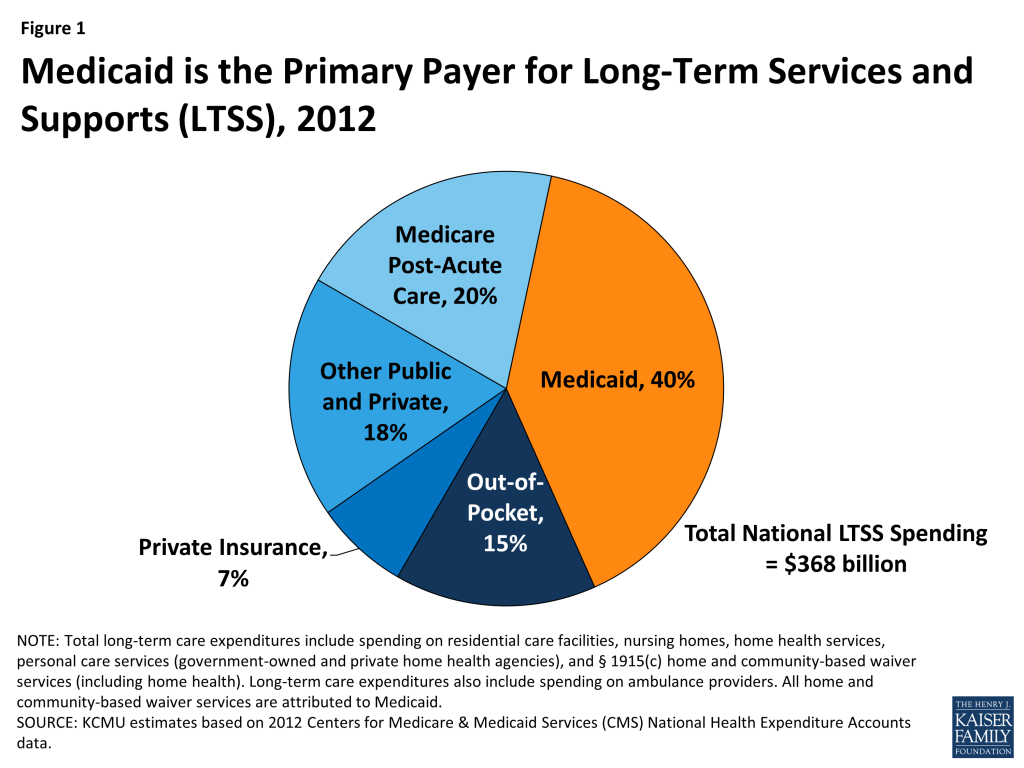
Figure 1: Medicaid is the Primary Payer for Long-Term Services and Supports (LTSS), 2012

Historically, however, the Medicaid program has had a structural bias toward institutional care because state Medicaid programs must cover nursing facility services, whereas most HCBS are provided at state option.22  While states can choose to offer HCBS as Medicaid state plan benefits, the majority of HCBS are provided through waivers.23   Unlike Medicaid state plan benefits, which must be available to all beneficiaries as medically necessary, waiver enrollment can be capped, resulting in waiting lists when the number of people seeking services exceeds the amount of available funding.   In 2012, nearly 524,000 people were on HCBS wavier waiting lists nationally, with the average waiting time exceeding two years; waiting lists vary both across states and within states among waiver target populations.24 

Over the last several decades, states have been working to rebalance their long-term care systems by devoting a greater proportion of spending to HCBS instead of institutional care.  These efforts are driven by beneficiary preferences for HCBS, the increased population of seniors and people with disabilities who need HCBS, and the fact that HCBS typically are less expensive than comparable institutional care.  In the last 15 years, the Olmstead decision has brought increased focus to state efforts in this area.  While the majority of Medicaid LTSS spending still goes toward institutional care, the proportion of Medicaid LTSS spending on HCBS continues to increase relative to spending on institutional services.  In FY 2011, HCBS accounted for 45 percent of total Medicaid LTSS spending nationally, up from 32 percent in FY 2002 (Figure 2).
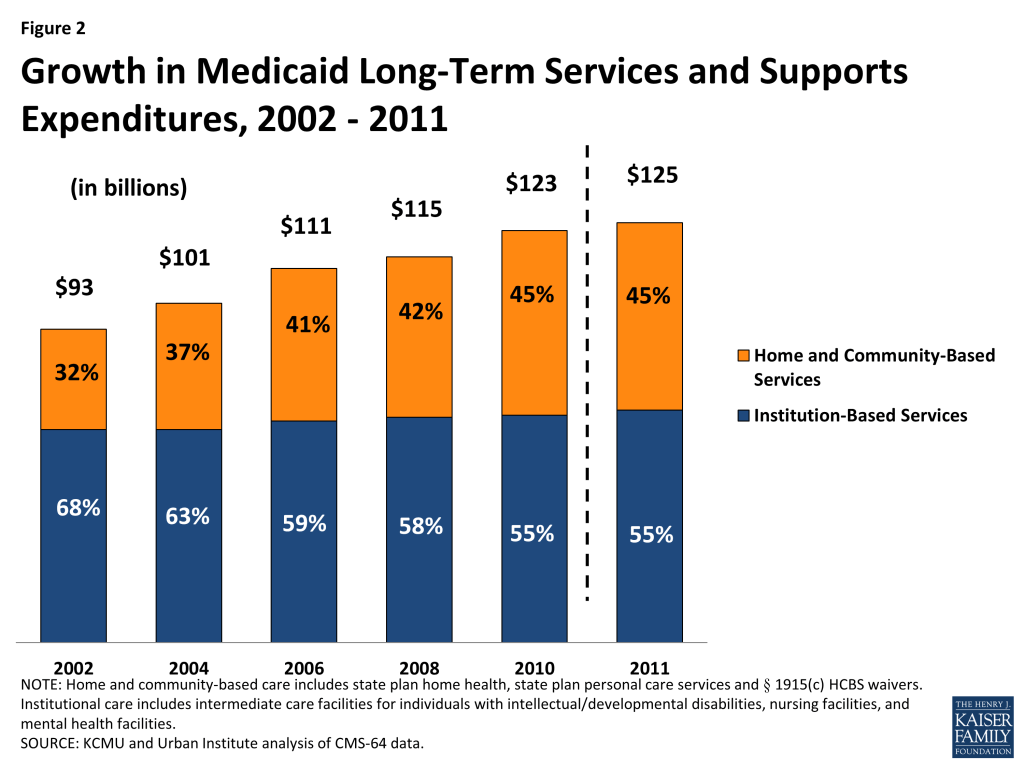
Figure 2: Growth in Medicaid Long-Term Services and Supports Expenditures, 2002 – 2011

Olmstead Implementation and Enforcement

There have been a number of developments in Olmstead implementation in the last five years, with Medicaid continuing to play a primary role in facilitating and advancing community integration for people with disabilities.  In June 2009, President Obama announced the “Year of Community Living” in recognition of the 10th anniversary of the Olmstead decision and the work remaining to be done to eliminate disability-based discrimination.  The President’s initiative included over $140 million in funding for independent living centers and new coordination between the Departments of Health and Human Services and Housing and Urban Development to support and promote opportunities for community integration, including increased access to community-based housing through federal housing subsidies.25 

At the same time, pursuant to the President’s directive, the U.S. Department of Justice (DOJ) initiated what it describes as an “aggressive effort to enforce” Olmstead and the ADA’s community integration mandate across the country.26   From 2009 to 2012, DOJ’s Civil Rights Division was involved in more than 40 Olmstead cases in 25 states,27  and DOJ’s Olmstead enforcement efforts continue today.  DOJ’s Olmstead work takes several forms.  It may file a “statement of interest” in an existing lawsuit in which the federal government is not a party but wishes to provide information about the ADA’s legal requirements to the court.  DOJ also investigates allegations of Olmstead violations, which can result in a letter of findings and a settlement agreement.  DOJ also may initiate litigation to enforce the ADA’s community integration mandate or seek to intervene in an existing case.28   In 2011, DOJ issued a technical assistance guide explaining the rights of people with disabilities and the obligations of state and local governments under the ADA’s community integration mandate.29 

The ADA’s community integration mandate also can be enforced by individuals with disabilities, as the Olmstead plaintiffs did with the assistance of legal aid attorneys.  Cases can be resolved by negotiating with the state or local governmental entity, without resorting to litigation.  Individuals may file an administrative complaint with the Department of Justice or with the Health and Human Services Office for Civil Rights (OCR), which is responsible for enforcing state and local government compliance with Olmstead.  From August 1, 1999 through September 30, 2010, OCR resolved 850 Olmstead complaints (32 percent after intake and review, 42 percent with corrective action, and 26 percent with no civil rights violations found) and conducted 581 Olmstead investigations, 61 percent of which resulted in corrective action.30   If necessary, individuals also may file a lawsuit seeking relief under the ADA.

Medicaid’s Role in Key Olmstead Implementation Issues

Recent Olmstead cases center around a number of major themes, described below.  The cases included are meant to be illustrative and are not an exhaustive list of all Olmstead litigation.31   In each area, Medicaid plays a key role in advancing community integration, as explained below and illustrated by the following short profiles of Medicaid beneficiaries receiving services to support independent living in their communities.  While the profiles are not drawn from formal Olmstead cases, they are examples of seniors and younger people with disabilities who benefit from the legacy of Olmstead.

Providing Community Services Instead of Institutionalization

Olmstead cases continue to involve claims similar to those of Lois Curtis and Elaine Wilson, in which people with disabilities seek access to services in the community rather than in institutions.  Recent Olmstead cases have involved people with mental illness, intellectual and developmental disabilities, and physical disabilities who are institutionalized.

Court Case Examples
  • In 2014, a federal court approved a settlement on behalf of a class of thousands of people with mental illness living in a state-operated psychiatric hospital and nursing facility in New Hampshire.  Under the settlement terms, the state agreed to provide expanded community mental health, mobile crisis, and supported employment services and additional scattered site supported housing units.32   DOJ investigated and then intervened in support of the plaintiffs in this case.
  • In 2013, an interim settlement agreement was reached on behalf of over 600 people with developmental disabilities living in nursing facilities in Texas. The settlement terms include expanded home and community-based waiver services, person-centered service and transition plans, and an assessment of nursing facility residents to identify those with developmental disabilities.  DOJ filed a statement of interest and then intervened in the case on behalf of the plaintiffs.33 
  • In 2013, DOJ filed a lawsuit in Florida, alleging that children with significant medical needs are unnecessarily institutionalized in nursing facilities when they could be served in the community.  The case is currently pending.34 
  • In 2011, DOJ filed a lawsuit and simultaneous settlement agreement in Delaware on behalf of adults in the state psychiatric hospital.  The settlement terms involve the state’s provision of intensive community-based treatment and crisis services, supported employment services, and subsidized housing vouchers to facilitate community transitions.  Implementation of the settlement is overseen by an independent court monitor.35 
Medicaid’s Role in Deinstitutionalization

Medicaid plays a notable role in deinstitutionalization cases because, as noted above, it is the major source of financing for LTSS, including the HCBS that support people with disabilities in independent community living (Figure 1).  In addition to long-standing Medicaid HCBS authorities, such as home health services, personal care services, and § 1915(c) waiver services, Congress created the Money Follows the Person (MFP) demonstration grant program, which provides enhanced federal funding for Medicaid services for beneficiaries who transition from institutions to the community.36   The Affordable Care Act (ACA) extended MFP and also establishes two new Medicaid authorities, Community First Choice attendant services and supports and the Balancing Incentive Program, both of which offer states enhanced federal funding and new options to expand HCBS as they continue efforts to transition people with disabilities from institutional to community-based settings.37 
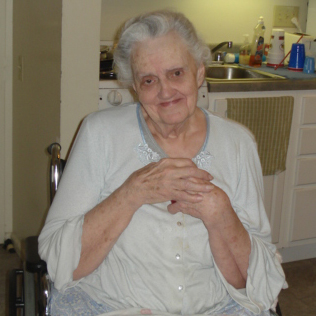
8602 - Wanda

Medicaid Supports Senior’s Move from Nursing Facility to Community Housing

Wanda, age 78

Tulsa, Oklahoma

Wanda was raised in California during the Great Depression and later moved to Oklahoma, where she helped to run her family’s farm.  She worked past age 65, but had to retire when she needed hip surgery.  Wanda also has degenerative joint disease in her lower back and poor circulation in her lower legs and takes thyroid and blood pressure medications.

Wanda spent nearly two years in a nursing facility after her hip surgery, but Medicaid HCBS made it possible for her to move to a senior living community, where she has resided for more than four years.  Medicaid provides the key supports she needs to live at home, including a case manager who coordinates her services, an in-home aide who visits four times a week, home-delivered groceries, and transportation for medical appointments.  Wanda says that she enjoys living in a real “community” and is grateful that Medicaid has made it possible for her to live on her own.

Providing Services in the Most Integrated Setting

In addition to deinstitutionalization, some recent Olmstead cases focus more specifically on the type of community setting in which people with disabilities receive services.  These cases emphasize the ADA’s requirement that people with disabilities receive services in the most integrated setting, which “enables individuals with disabilities to interact with non-disabled peers to the fullest extent possible.”38 

Court Case Examples

  • In 2013, DOJ reached a settlement in a New York case on behalf of people with mental illness seeking scattered-site supportive housing in apartments instead of large adult care homes with over 120 residents.  The settlement requires that within five years, the state will assess current adult care home residents and transition them to supported housing if appropriate and also provide supported employment and community mental health services, such as care coordination, psychiatric rehabilitation, assistance with medications, home health and personal assistance services, assertive community treatment, and crisis stabilization.  The terms of the settlement presume that supported housing is the most appropriate setting for beneficiaries, unless certain exceptions are met.39 
  • In 2010, a settlement agreement was reached between DOJ and North Carolina, which expands access to community-based supportive housing for thousands of adults with mental illness living in large adult care homes.  The settlement requires the provision of community-based mental health treatment and crisis services and supportive employment services for beneficiaries living in their own apartments.40 

Medicaid’s Role in Providing Services in the Most Integrated Community Setting

In addition to the long-standing authority to provide home and community-based waiver services, the Medicaid rehabilitative services state plan option also provides states with the flexibility to offer an array of community-based mental health services.  Medicaid finances a larger share of behavioral health spending than all-health spending compared to other payers (Figure 3).  The Affordable Care Act (ACA) expanded the § 1915(i) HCBS state plan option so that states now can provide any HCBS waiver service through state plan authority.  Section 1915(i) allows states to target HCBS to specific populations, such as people with mental illness.41   The ACA also established a new health homes state plan option, through which states can receive enhanced federal funding for care coordination services for beneficiaries with chronic conditions, including serious and persistent mental illness.42 
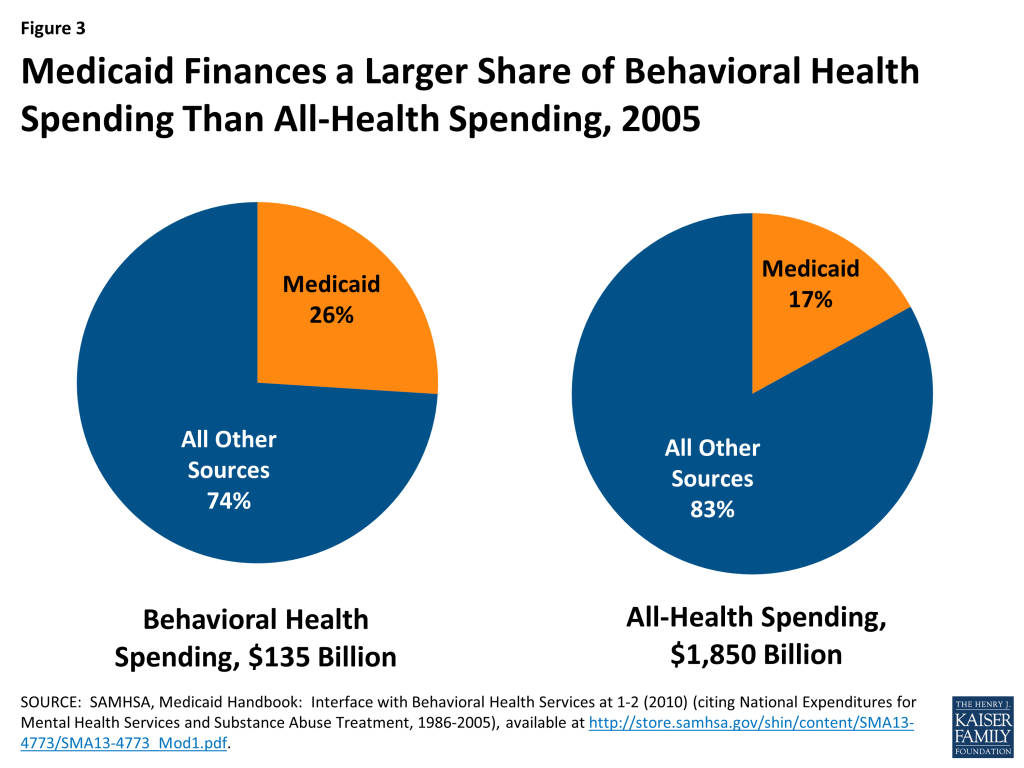
Figure 3: Medicaid Finances a Larger Share of Behavioral Health Spending Than All-Health Spending, 2005

8602 - Don

Medicaid Enables Man with Developmental Disabilities to Leave a Group Home to Live in His Own Apartment

Don, age 41

Owosso, Michigan

Don was born with developmental disabilities.  After his mother became too ill to continue caring for him, he lived in a series of group homes, where his sister, Mary, who is his legal guardian, observed that “he wasn’t very happy.” About 10 years ago, Mary was able to help Don put together an array of Medicaid services and supports to help him live safely and independently in his own apartment, which increased his autonomy and enabled him to participate more fully in his community.  Don now self-directs his services, which allows him to choose how to allocate his Medicaid dollars among the approved services that he needs to support his living arrangement.  Don uses most of his service budget to hire his own caregivers because having caregivers whom he trusts has greatly improved his quality of life.

Preventing Institutionalization for People at Risk

Another theme in recent Olmstead cases is the application of the ADA’s community integration mandate to people with disabilities who are at risk of institutionalization due to a lack of community-based services.

Court Case Examples
  • In 2013, the 4th Circuit Court of Appeals ruled that a change in eligibility rules that established more restrictive criteria to qualify for Medicaid personal care services in a beneficiary’s own home than in an adult care home created a significant risk of institutionalization.  North Carolina was requiring beneficiaries to have a limitation in one out of seven activities of daily living to receive services in an adult care home but two out of five activities of daily living to qualify for services in their own home.43 
  • In 2012, a case challenging Louisiana’s reduction of the maximum number of personal care services per week that beneficiaries could receive was settled, with the state agreeing to increase its number of Medicaid HCBS waiver slots to expand capacity.  DOJ filed a statement of interest supporting the beneficiaries’ claim that the reduction in service hours placed them at risk of institutionalization in violation of Olmstead.44   DOJ filed a statement of interest in support of the beneficiaries.
  • In another 2012 case involving personal care services, the 9th Circuit Court of Appeals held that across-the-board service reductions could place over 45,000 children with mental illness at serious risk of institutionalization in Washington.  The settlement agreement provides for intensive wrap-around services, including care coordination, mobile crisis, and community-based treatment, as well as a process to identify at-risk children.45   DOJ filed a statement of interest on behalf of the beneficiaries.
  • In 2011, a federal court in Missouri ruled that Medicaid beneficiaries were at risk of institutionalization as a result of the state’s decision to cover adult diapers as medical supplies for people in institutions but not in the community.  DOJ filed a statement of interest supporting the beneficiaries.46 
Medicaid’s Role in Providing Services for People at Risk of Institutionalization

Section 1915(i) is unique among the Medicaid HCBS authorities in that it allows states to provide HCBS as a preventive measure for people who do not yet require an institutional level of care.  Established by the Deficit Reduction Act of 2005, and expanded by the ACA, § 1915(i) permits states to offer HCBS as Medicaid state plan services and requires that beneficiaries meet functional needs-based eligibility criteria that are less stringent than the state’s criteria to qualify for an institutional level of care.47   In addition to the other Medicaid authorities that enable states to provide HCBS to beneficiaries who would otherwise require an institutional level of care, § 1915(i) allows states to provide services proactively to maintain beneficiaries in the community and prevent the need for more costly future services if their medical conditions deteriorated.

Medicaid Provides In-Home Supports That Allow Senior to Avoid Institutionalization

Mary, age 79

Winston-Salem, North Carolina

Mary lives alone in a subsidized apartment building for senior citizens.  She has diabetes, atrial fibrillation, chronic obstructive pulmonary disease, and a history of congestive heart failure and breast cancer.  She takes multiple medications and uses oxygen at night and sometimes during the day when she “tries to do too much.”  Medicaid provides certified nursing assistant services to help Mary with bathing and dressing, and she is about to start receiving additional Medicaid home and community-based waiver services which she hopes will help with tasks like grocery shopping and cleaning because she can no longer do any heavy work or lifting.  She also has difficulty reaching up to get a can down from the top shelf in her kitchen and sometimes needs help making her bed and preparing a meal if she is not feeling well.  Mary receives Social Security benefits and food stamps and does not have any extra money to pay for the help she needs after she covers her rent, utilities, and food.  She does not want to live in an assisted living or nursing facility and says that receiving Medicaid services will “make a whole lot of difference” in her life.

Replacing Sheltered Workshops with Supported Employment

Another emerging theme among recent Olmstead cases involves greater integration for people with disabilities in community-based employment instead of in segregated settings.

Court Case Examples
  • In 2014, DOJ entered into a settlement agreement with Rhode Island on behalf of over 3,000 people with developmental disabilities to resolve DOJ’s findings that the state over-relied on segregated settings such as sheltered workshops at the expense of integrated settings such as supported employment.48 
  • In 2012, DOJ intervened in an Oregon case in which beneficiaries with developmental disabilities alleged that the state failed to provide them with supported employment services in an integrated setting.  At the time, 61 percent of people with developmental disabilities were employed in sheltered workshops, while only 16 percent received supported employment services in the community.49 
Medicaid’s Role in Supporting Working People with Disabilities

The Medicaid authorities to provide rehabilitative services and home and community-based services are an important source of supports for working people with disabilities.  States elect to provide a range of community behavioral health services under the rehabilitative services option, such as peer support and counseling, basic life and social skills training, community residential services, and supported employment, among others.50   In addition, states can offer HCBS, such as homemaker, home health aide, personal care, and habilitation, through § 1915(c) and/or § 1915(i) to help people with disabilities accomplish the activities of daily living necessary to get ready for the work day.   States also can use these authorities to offer supported employment services.

8602 - Mark

Medicaid Provides Necessary Supports to Enable Man with Disabilities to Work in the Community

Mark, age 43

Nashville, Tennessee

Mark has worked as a grocery store courtesy clerk for 12 years and enjoys having a “real job” outside of a sheltered workshop.  He has autism and intellectual disabilities.  He is very rigid about his daily schedule and will not deviate from his routine.  He bathes and dresses himself but needs help with shaving because he will not look into a mirror.  When he first started at the grocery store, he received job coaching services, but he has since mastered his work tasks and no longer requires regular on-the-job supports.  In addition to his wages, his job provides him with the opportunity for social interaction in the community.

Mark has long been on a Medicaid HCBS waiver waiting list for a community-based residential placement.  He has lived with his parents for his entire life, but it is becoming increasingly difficult for his parents to provide his care now that they are getting older and developing their own health issues.  Mark’s mother would like him to live in a small group home and to move while she is able to assist with his adjustment during the transition.  Receiving Medicaid waiver services for a community-based residential placement would support Mark’s continued employment and provide peace of mind for his aging parents.

Eliminating Disability-Based Discrimination within the Medicaid Program

Another theme emerging from Olmstead cases involves modifying Medicaid rules, such as service hour and/or cost caps, to reasonably accommodate the needs of people with significant disabilities pursuant to the ADA.

Court Case Examples
  • In 2010, a Texas federal court ruled that the state Medicaid program’s cost cap on nursing services should be modified to prevent the institutionalization of a man with multiple disabilities.  Under Medicaid’s Early, Periodic, Screening, Diagnosis and Treatment (EPSDT) benefit for people up to age 21, this man had received 18 to 20 hours of nursing services per day.  However, when he aged out of EPSDT, the state applied a cost cap to nursing services for adults that prevented him from receiving enough services to remain in the community.51 
  • In 2004, the 7th Circuit Court of Appeals held that the ADA required Illinois to waive its cap on private duty nursing hours for adults.  In that case, the Medicaid beneficiary seeking services had received 16 hours per day under EPSDT, but qualified for only 5 hours per day as an adult, which was insufficient for him to remain safely at home.  The court applied Olmstead and concluded that waiving the service hour cap would not fundamentally alter the state’s Medicaid program because so few people had such extensive care needs.  The court also noted that providing HCBS was less expensive than comparable institutional care.52 
Medicaid’s Role in Eliminating Disability-Based Discrimination

Cases that grant reasonable modifications to Medicaid policies that would otherwise result in the institutionalization of beneficiaries underscore the fact that states’ obligations to people with disabilities under the ADA are independent of the requirements that states must meet under the Medicaid program.  CMS notes that states must administer their Medicaid programs in a way that does not discriminate against people with disabilities in keeping with the ADA.  In addition to typically being less expensive and in line with beneficiary preferences, providing community-based services enables states to meet their ADA obligations.

Developing Issues in Olmstead Implementation

While advancements such as those described above have been made, work remains to be done to achieve full community integration for people with disabilities.  In these areas, Medicaid continues to offer the means to facilitate solutions that implement the ADA’s integration mandate.  Issues to watch as Olmstead implementation proceeds include:

  • Whether LTSS spending is rebalanced toward HBCS in a way that affords the opportunity for community integration for people with disabilities.  A 2013 U.S. Senate Committee report notes that increased HCBS access for people with developmental disabilities has outpaced that for seniors and people with physical disabilities, and according to CMS, over 200,000 people remaining in nursing facilities in 2012, or nearly 16 percent, are under age 65.53   Through initiatives such as the Balancing Incentive Program, CMS and states are working to develop and expand no wrong door/single entry point systems and core standardized assessments to achieve greater equity among different populations receiving Medicaid HCBS.
  • Whether states’ Olmstead plans contribute to continued progress toward community integration.  While the Supreme Court suggested that states can use such plans as tools to comply with their ADA obligations, the 2013 Senate Committee report notes that these “planning efforts vary considerably, ranging from simple lists of recommendations to more comprehensive action plans” with many “lack[ing] detailed enforceable benchmarks.”54   The new and expanded Medicaid authorities to provide HCBS, such as MFP, Community First Choice, § 1915(i), and the Balancing Incentive Program, afford states additional options and flexibility to rebalance their LTSS spending which could be incorporated into state Olmstead plans.  Exploring ways to streamline the various Medicaid HCBS authorities may facilitate state adoption and expansion of HCBS.
  • Whether community-based settings provide the fullest extent of integration possible for people with disabilities, consistent with the ADA.  The 2013 U.S. Senate Committee report notes that states are making progress in increasing the number of people receiving HCBS and the amount spent on HCBS, but are not always providing services to people “in their own homes,” even though this is the most integrated setting for virtually all beneficiaries.55   CMS’s recent finalization of regulations that define a “home and community-based setting” for services across Medicaid HCBS authorities presents an opportunity for states, beneficiaries, providers, and other stakeholders to focus on this aspect of community integration.56 
  • How Olmstead’s principles are integrated into care delivery system reforms.  States are increasingly interested in delivery system reforms, such as moving to capitated or managed fee-for-service managed care models, within their Medicaid programs and/or as a way of integrating and coordinating Medicare and Medicaid services for dually eligible beneficiaries.  These initiatives are increasingly encompassing people with disabilities and LTSS.  CMS’s 2013 guidance specifies that states implementing Medicaid managed LTSS must administer these programs consistent with Olmstead and the ADA’s community integration mandate.57   While these models offer the opportunity for increased access to HCBS, they also could involve potential risks of disrupting established services for the most vulnerable beneficiaries.

Conclusion

The Supreme Court’s Olmstead decision has spurred progress toward community integration for people with disabilities, and the Medicaid program plays a key role in Olmstead implementation. Key trends in recent years include a continuing emphasis on deinstitutionalization, as well as efforts to provide services in the most integrated community setting, prevent institutionalization for beneficiaries at risk, increase opportunities for supported employment in the community, and eliminate disability-based discrimination that would otherwise prevent people with disabilities from participating in the community to the greatest extent possible. The benefits of Olmstead in all of these areas are illustrated by the cases described in this brief. Olmstead also impacted the life of plaintiff Lois Curtis, who in the last 15 years has lived in group homes and subsequently rented a house with a roommate where she self-directs her Medicaid home and community-based waiver services. She works as an artist and has presented one of her paintings to President Obama.58   The on-going work of states, together with DOJ, CMS, people with disabilities, and others, along with the important support offered by the Medicaid program can continue to strengthen the ADA’s promise of community integration for people with disabilities.

Endnotes

  1. 527 U.S. 581 (1999), available at http://www.law.cornell.edu/supct/html/98-536.ZS.html. ↩︎
  2. For previous discussions of Olmstead and Medicaid, see Kaiser Commission on Medicaid and the Uninsured, Olmstead v. L.C.:  The Interaction of the Americans with Disabilities Act and Medicaid (June 2004), available at https://modern.kff.org/medicaid/event/olmstead-v-l-c-the-interaction-of/; Kaiser Commission on Medicaid and the Uninsured, Olmstead at Five:  Assessing the Impact (June 2004), available at https://modern.kff.org/medicaid/report/olmstead-at-five-assessing-the-impact/; Kaiser Commission on Medicaid and the Uninsured, The Olmstead Decision:  Implications for Medicaid (March 2000), available at https://modern.kff.org/medicaid/issue-brief/the-olmstead-decision-implications-for-medicaid/. ↩︎
  3. A video interview with the Olmstead plaintiffs is available at Kaiser Commission on Medicaid and the Uninsured, Olmstead:  “I Did It” (June 2004), https://modern.kff.org/medicaid/video/olmstead-i-did-it/. ↩︎
  4. The White House, Office of Public Engagement, Olmstead Champion Meets the President (June 22, 2011), available at http://www.whitehouse.gov/blog/2011/06/22/olmstead-champion-meets-president. ↩︎
  5. 527 U.S. 581, slip opin. at 7. ↩︎
  6. Id. at 7-8. ↩︎
  7. Id. at 8, n.6. ↩︎
  8. Id. at 3 (citing 42 U.S.C. §§ 12101(a)(2), (b)(1)). ↩︎
  9. Id.at 4 (citing 42 U.S.C. § 12132). ↩︎
  10. Id. at 6 (citing 28 C.F.R. § 35.130(d)). ↩︎
  11. Id. (citing 28 C.F.R. Pt. 35, App. A, p. 450). ↩︎
  12. Id. at 6-7 (citing 28 C.F.R. § 35.130(b)(7)). ↩︎
  13. Id. at 1. ↩︎
  14. Id. ↩︎
  15. See, e.g., State Medicaid Director Letter from Timothy M. Westmoreland, Director, Center for Medicaid and State Operations, Health Care Financing Administration and Thomas Perez, Director, Office for Civil Rights (Jan. 14, 2000), available at http://downloads.cms.gov/cmsgov/archived-downloads/SMDL/downloads/smd011400c.pdf.  The ADA applies to people with a “physical or mental impairment that substantially limits one or more [specified] major life activities” or who have a “record of such an impairment” or who are “regarded as having such an impairment.”  42 U.S.C. § 12102(2). ↩︎
  16. Id. at 15. ↩︎
  17. Id. ↩︎
  18. Id. ↩︎
  19. Id. at 21. ↩︎
  20. 527 U.S. 581, slip opin. at 16. ↩︎
  21. Kaiser Commission on Medicaid and the Uninsured, Medicaid Home and Community-Based Services Programs:  2010 Data Update (March, 2014), available at https://modern.kff.org/medicaid/report/medicaid-home-and-community-based-service-programs/.  These figures reflect enrollment and expenditures for Medicaid state plan home health and personal care services and § 1915(c) waivers.  States also may provide Medicaid HCBS through § 1115 waivers, the Balancing Incentive Program, the Community First Choice state plan option, and § 1915(i). ↩︎
  22. For more information, see Kaiser Commission on Medicaid and the Uninsured, Medicaid Long-Term Services and Supports:  An Overview of Funding Authorities (Sept. 2013), available at https://modern.kff.org/medicaid/fact-sheet/medicaid-long-term-services-and-supports-an-overview-of-funding-authorities/. ↩︎
  23. Kaiser Commission on Medicaid and the Uninsured, Medicaid Home and Community-Based Services Programs:  2010 Data Update (March, 2014), available at https://modern.kff.org/medicaid/report/medicaid-home-and-community-based-service-programs/. ↩︎
  24. Id. ↩︎
  25. The White House, Office of the Press Secretary, President Obama Commemorates Anniversary of Olmstead and Announces New Initiatives to Assist Americans with Disabilities (June 22, 2009), available at http://www.whitehouse.gov/the_press_office/President-Obama-Commemorates-Anniversary-of-Olmstead-and-Announces-New-Initiatives-to-Assist-Americans-with-Disabilities; see also CMS, Center for Medicaid and CHIP Services Informational Bulletin, New Housing Resources to Support Olmstead Implementation (June 18, 2012), available at http://medicaid.gov/Federal-Policy-Guidance/Downloads/CIB-06-18-12.pdf. ↩︎
  26. U.S. Dep’t of Justice, Civil Rights Division, ADA.gov, Olmstead:  Community Integration for Everyone, available at http://www.ada.gov/olmstead/index.htm. ↩︎
  27. Testimony of Thomas E. Perez, Assistant Attorney General, Civil Rights Division, DOJ before the Senate Committee on Health, Education, Labor and Pensions, Olmstead Enforcement Update:  Using the ADA to Promote Community Integration (June 21, 2012), available at http://www.help.senate.gov/imo/media/doc/Perez4.pdf. ↩︎
  28. See National Disability Rights Network, Docket of Cases Related to Enforcement of the ADA Title II “Integration Regulation” at 13 (April 11, 2014) (organizing cases in these main categories), available at http://www.ndrn.org/images/Documents/Issues/Community_integration/Docket_of_Cases_Related_to_Enforcement_of_the_ADA_ Title_II_Integration_Regulation_april_2014.pdf. ↩︎
  29. U.S. DOJ Office of Civil Rights, Questions and Answers on the ADA’s Integration Mandate and Olmstead Enforcement (June 22, 2011) (citing 28 C.F.R. Pt. 35, App. A), available at http://www.ada.gov/olmstead/q&a_olmstead.htm#_ftnref11. ↩︎
  30. U.S. Dep’t of Health and Human Servs., Office for Civil Rights, Serving People with Disabilities in the Most Integrated Setting:  Community Living and Olmstead, Olmstead Enforcement Results available at http://www.hhs.gov/ocr/civilrights/understanding/disability/serviceolmstead/. ↩︎
  31. For additional case examples, see U.S. DOJ Civil Rights Division, Olmstead Enforcement, available at http://www.ada.gov/olmstead/olmstead_enforcement.htm; U.S. Dep’t of Health and Human Servs., Olmstead Enforcement Success Stories, available at http://www.hhs.gov/ocr/civilrights/activities/examples/Olmstead/successstoriesolmstead.html; National Disability Rights Network, Docket of Cases Related to Enforcement of the ADA Title II “Integration Regulation” (April 11, 2014), available at http://www.ndrn.org/images/Documents/Issues/Community_integration/Docket_of_Cases_Related_to_Enforcement_of_the_ADA_ Title_II_Integration_Regulation_april_2014.pdf; University of Michigan Law School Civil Rights Litigation Clearinghouse, available at http://www.clearinghouse.net/results.php?searchSpecialCollection=7; Center for Personal Assistance Services, available at http://www.pascenter.org/state_based_stats/olmstead/index.php. ↩︎
  32. Amanda D. v. Hassan; U.S. v. N.H., 1:12-cv-53 (D.N.H. 2012), http://www.ada.gov/olmstead/olmstead_cases_list2.htm#fla; see also NDRN docket at 26-27. ↩︎
  33. Steward v. Perry, 5:10-cv-1025 (W.D. Tex. 2010), http://www.ada.gov/olmstead/olmstead_cases_list2.htm#fla; see also NDRN docket at 31-32. ↩︎
  34. U.S. v. Florida, 1:13-cv-61576 (S.D. Fla. 2013), http://www.ada.gov/olmstead/olmstead_cases_list2.htm#fla. ↩︎
  35. U.S. v. Del., 11-cv-591 (D.Del. 2010), http://www.ada.gov/olmstead/olmstead_cases_list2.htm#fla; see also NDRN docket at 17-18. ↩︎
  36. For more information, see Kaiser Commission on Medicaid and the Uninsured, Money Follows the Person:  A 2013 State Survey of Transitions, Services, and Costs (April 2014), available at https://modern.kff.org/report-section/money-follows-the-person-a-2013-state-survey-of-transitions-services-and-costs-introduction/. ↩︎
  37. For more information, see Kaiser Commission on Medicaid and the Uninsured, How is the Affordable Care Act Leading to changes in Medicaid Long-Term Services and Supports Today?  State Adoption of Six LTSS Options (April 2013), https://modern.kff.org/medicaid/issue-brief/how-is-the-affordable-care-act-leading-to-changes-in-medicaid-long-term-services-and-supports-ltss-today-state-adoption-of-six-ltss-options/. ↩︎
  38. U.S. DOJ Office of Civil Rights, Questions and Answers on the ADA’s Integration Mandate and Olmstead Enforcement at question 1 (June 22, 2011) (citing 28 C.F.R. Pt. 35, App. A), available at http://www.ada.gov/olmstead/q&a_olmstead.htm#_ftnref11. ↩︎
  39. U.S. v. N.Y., 13-cv-4165 (E.D.N.Y. 2013), http://www.ada.gov/olmstead/olmstead_cases_list2.htm#fla; see also Disability Advocates v. Paterson, at id; NDRN docket at 41-42. ↩︎
  40. U.S. v. N.C., 5:12-cv-557 (E.D.N.C. 2012), http://www.ada.gov/olmstead/olmstead_cases_list2.htm#fla; see also NDRN docket at 4, 43. ↩︎
  41. For more information, see Kaiser Commission on Medicaid and the Uninsured, How is the Affordable Care Act Leading to changes in Medicaid Long-Term Services and Supports Today?  State Adoption of Six LTSS Options (April 2013), https://modern.kff.org/medicaid/issue-brief/how-is-the-affordable-care-act-leading-to-changes-in-medicaid-long-term-services-and-supports-ltss-today-state-adoption-of-six-ltss-options/. ↩︎
  42. For more information, see id. ↩︎
  43. Pashby v. Cansler (D.N.C. 2011), NDRN docket at 58-59. ↩︎
  44. Pitts v. Greenstein, 10-cv-635 (M.D.La. 2010), http://www.ada.gov/olmstead/olmstead_cases_list2.htm#fla. ↩︎
  45. M.R. v. Dreyfus, 10-cv-2052 (W.D.Wash. 2011); see also NDRN docket at 7, 33. ↩︎
  46. Hiltibran v. Levy, 10-cv-4185 (W.D. Mo. 2010), http://www.ada.gov/olmstead/olmstead_cases_list2.htm#fla. ↩︎
  47. For more information, see Kaiser Commission on Medicaid and the Uninsured, How is the Affordable Care Act Leading to changes in Medicaid Long-Term Services and Supports Today?  State Adoption of Six LTSS Options (April 2013), https://modern.kff.org/medicaid/issue-brief/how-is-the-affordable-care-act-leading-to-changes-in-medicaid-long-term-services-and-supports-ltss-today-state-adoption-of-six-ltss-options/. ↩︎
  48. U.S. v. R.I., 1:14-cv-00175 (D.R.I. 2014), http://www.ada.gov/olmstead/olmstead_cases_list2.htm#fla. ↩︎
  49. Lane v. Kitzhaber, 12-cv-00138 (D.Or. 2012), http://www.ada.gov/olmstead/olmstead_cases_list2.htm#fla; see also NDRN docket at 29. ↩︎
  50. SAMHSA, Medicaid Handbook:  Interface with Behavioral Health Services at 3-5 (2013), available at http://store.samhsa.gov/shin/content/SMA13-4773/SMA13-4773_Mod1.pdf. ↩︎
  51. Sidell v. Maram, (C.D. Ill. 2055), NDRN docket at 71. ↩︎
  52. Knowles v. Traylor, 10-10246 (N.D. Tex. 2008; 5th Cir. 2010), NDRN docket at 10, 70. ↩︎
  53. Chairman Tom Harkin, U.S. Senate Health, Education, Labor, and Pensions Committee, Separate and Unequal:  States Fail to Fulfill the Community Living Promise of the Americans with Disabilities Act at 18, 44, 46 (July 18, 2013) (citation omitted), available at http://www.harkin.senate.gov/documents/pdf/OlmsteadReport.pdf.  The report is based on a request to states for information about HCBS, to which 31 states provided substantive responses. ↩︎
  54. Id. at 60, 61. ↩︎
  55. Id. at 65. ↩︎
  56. 79 Fed. Reg. 2948-3039 (Jan. 16, 2014), available at http://www.gpo.gov/fdsys/pkg/FR-2014-01-16/pdf/2014-00487.pdf. ↩︎
  57. CMS, Guidance to States Using 1115 Demonstrations or 1915(b) Waivers for Managed Long Term Services and Supports Programs (May 20, 2013), available at http://www.medicaid.gov/Medicaid-CHIP-Program-Information/By-Topics/Delivery-Systems/Downloads/1115-and-1915b-MLTSS-guidance.pdf. ↩︎
  58. The White House, Office of Public Engagement, Olmstead Champion Meets the President (June 22, 2011), available at http://www.whitehouse.gov/blog/2011/06/22/olmstead-champion-meets-president; see also The Art and Advocacy of Lois Curtis, http://loiscurtisart.com/.   ↩︎
Potential Supreme Court Decision: Who Will Bear the Coverage “Burdens?”

Authors: Laurie Sobel, Alina Salganicoff, and Nisha Kurani
Published: Jun 18, 2014

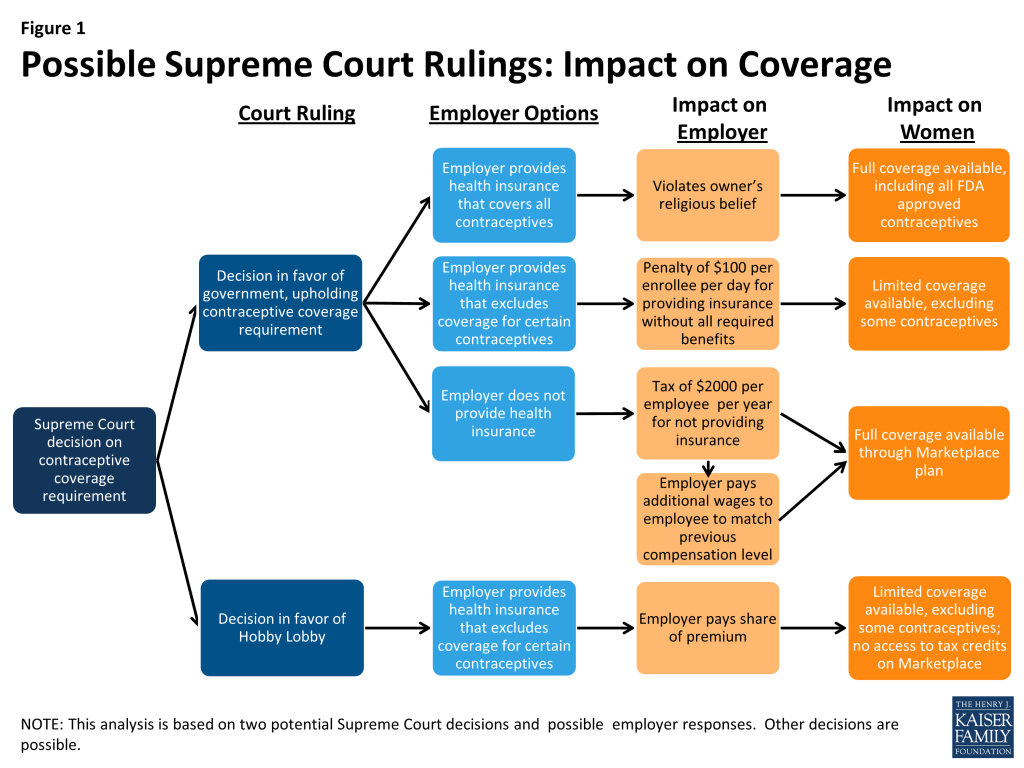
One of the elements of the Affordable Care Act that has received considerable national attention is the requirement that employers that provide health insurance to their workers must include coverage for all FDA approved contraceptive services and supplies.1  This requirement has been at the center of a case that has now reached the Supreme Court. The plaintiffs, Hobby Lobby and Conestoga Wood Specialties, are two for-profit corporations contending that the requirement that they include coverage for certain contraceptive services (emergency contraceptive pills and intrauterine devices) in their insurance plans “substantially burdens” both the corporation’s and the owners’ religious rights. In the March 2014 oral arguments, several of the justices discussed the extent to which the corporations did or not did not have a choice in offering coverage to their workers. In this brief, we explore some of the factors influencing coverage decisions and possible consequences2  for women and employers given two possible Supreme Court decision options: either upholding the contraceptive coverage requirement as it applies to Hobby Lobby or in favor of Hobby Lobby. For ease of using one example, we will use Hobby Lobby in this brief. Any decision will apply to both companies.

Background

Hobby Lobby is seeking relief from the contraceptive requirement on religious grounds. Depending on the court’s decision and Hobby Lobby’s response, there are multiple possible outcomes. Figure 1 illustrates two possible decisions and the potential impact on coverage, but the Court also could craft a decision that finds a middle ground. If Hobby Lobby provides employer sponsored insurance that does not include the full range of FDA approved methods then they will be forced to pay a steep penalty of $100 per day per enrollee, estimated to be almost $564 million a year for Hobby Lobby,3  a fine they say would lead them to bankruptcy. Alternatively, they state that the other option of not insuring their workers would be inconsistent with their religious beliefs to care for their workers, and it would also require them to pay an “Employer Shared Responsibility Payment” which is a $2,000 tax per full-time employee (excluding the first 30 employees) per year. With 16,000 full-time employees, Hobby Lobby would have to pay almost $32 million per year.4 

Figure 1: Possible Supreme Court Rulings: Impact on Coverage

Oral Arguments

During the oral argument, the Supreme Court Justices discussed what would be the impact if Hobby Lobby did not provide health coverage to its employees and instead paid the tax.5  Justice Sotomayor noted: “The briefs on both sides are written as if the penalty for not having a health insurance policy that covers contraceptives is at issue. But isn’t there another choice nobody talks about, which is paying the tax, which is a lot less than the penalty and a lot less than the cost of health insurance at all?” Justice Kagan echoed Justice Sotomayor and said “There’s a choice. And so the question is: why is there substantial burden at all?”

Chief Justice Roberts highlighted one of Hobby Lobby’s arguments: “I thought that part of the religious commitment of the owners was to provide health care for it employees.” Justice Kagan questioned whether Hobby Lobby’s religion mandates them to provide health insurance: “… I’m sure they want to be good employers. But again that’s a different thing than saying that their religious beliefs mandate them to provide health insurance, because here Congress has said that the health insurance that they’re providing is not adequate, it’s not the full package.” While Hobby Lobby offers health insurance to its 16,000 full-time employees it does not offer health insurance to its 12,000 part-time employees.6 

In their brief, Hobby Lobby asserts that it will suffer “significant competitive disadvantages in hiring and retaining employees” if it were to discontinue its plan.7  This point was raised by Justice Scalia: “Well of course it wouldn’t be the same price at the end of the day. If they deny health insurance, they’re going to have to raise wages if they are going to get employees.” Justice Kennedy questioned: “Let’s assume that the cost of providing insurance is roughly equivalent to the $2000 penalty. How – how is the employer hurt? He can just raise the wages.”

The Justices were attempting to estimate whether a financial burden would be placed on Hobby Lobby by dropping their health insurance and paying the $2,000 per employee tax. This is a very complicated equation with many variables including how much Hobby Lobby contributes toward health insurance for their workers, how comprehensive the plan is, household income, family size, and the workers’ wages.

Why Employers Offer Insurance

There are many reasons that insurance coverage is a good way to compensate workers from a business and tax perspective.8  Employees are not taxed on the employer’s contribution toward health insurance premiums, which reduces their overall tax liability. In addition, in the pre-ACA marketplace, it was difficult for individuals to buy affordable health insurance comparable to employer sponsored insurance. Many plans sold on the individual market either excluded or charged substantially more for coverage to many individuals with pre-existing conditions. The ACA introduced new variables into the equation by making premium subsidies available to low and modest income individuals, and ending higher pricing and coverage restrictions for pre-existing conditions.

Today, the value of employer sponsored insurance is shaped by worker income, with the value greater to higher income workers who benefit from the tax exclusions because they pay a higher tax rate and are not eligible for premium tax credits available on the Marketplace.9  Lower income workers, on the other hand do not benefit as much from this tax exclusion, since their tax rate is lower, and may now qualify for premium tax credits on the Marketplace.10  However, if their employer offers coverage, workers are not eligible for premium tax credits, regardless of how low their household income is.

Employee costs to obtain coverage on the Marketplace and the level of assistance for which they would qualify depend on their age, family size, household income, and where they live. Instead of offering employer sponsored insurance, firms could adjust workers’ compensation to offset the loss of that coverage, and enable workers to purchase insurance on the Marketplace. Firms, however, are not permitted to pay workers with the same job different amounts based on whether the worker qualifies for premium tax credits, but could make an adjustment based on the aggregate characteristics of their workforce.

Potential Coverage Consequences of Decision

The Supreme Court is expected to issue its decision by the end of June 2014. While the Court could write a nuanced opinion that finds a middle ground, it is instructive to consider the coverage and cost implications on the workers and the employers of the two decisions on each extreme: The Court either finds that Hobby Lobby must comply with the contraceptive requirement, or that Hobby Lobby does not need to comply with the contraceptive requirement because it violates their religious rights.

If the Court decides that Hobby Lobby must comply with the contraceptive coverage requirement, Hobby Lobby will likely choose to stop providing health insurance, given the litigation around the violation of religious rights and the very high costs of the $100 per employee penalty for not providing the required benefits. In this outcome, the option of paying a $2000 tax per employee seems to be the most likely outcome. This $2,000 tax per employee is not deductible as a business expense like health insurance or wages. Without information about Hobby Lobby’s sponsored insurance and characteristics of their workforce, it is not possible to estimate Hobby Lobby’s specific costs or savings of not offering health insurance to their workers or make a direct comparison to a plan on a Marketplace.11 

If Hobby Lobby were to adjust their worker’s compensation to offset the loss of employer sponsored insurance and maintain a competitive advantage, the amount and form of compensation will depend on a number of factors including: Hobby Lobby’s prior contribution toward worker coverage, the type of coverage, the age and income distribution of their workforce, and labor market conditions. As we discussed earlier, there would be different tax consequences for employees of varying incomes if they were to receive additional compensation in the form of wages rather than health insurance. Hobby Lobby could adjust compensation in various ways other than increased wages by offering additional vacation time, retirement, or other wellness benefits, that may be attractive to higher wage workers.12 

If, however, the Supreme Court exempts Hobby Lobby from the requirement that they include all prescribed FDA approved contraceptives as the ACA requires, some female employees and dependents who are covered by Hobby Lobby’s health insurance may either have to go without their preferred contraceptive method, pay out of pocket, or seek subsidized services at a government funded clinic. Intrauterine devices (IUDs), one of the contraceptives that Hobby Lobby has objected to, are the most effective form of contraceptives, but they also have more upfront charges, as the average cost of an IUD including insertion is over $1,000. In this case, the objection is to IUDs and emergency contraceptive pills, but it would be easy to envision that other corporations with religious objections to the full range of contraceptives would eliminate coverage of all contraceptive methods from their plans if this avenue were available to them. The “burden” of the costs of contraceptive care would be placed on the women and in some cases on the taxpayers who will pay for care at subsidized clinics, if they are available to the women.

Clearly, the impact of the Supreme Court’s decision will likely be far-reaching, affecting not only the corporations that are objecting to the requirement but also the scope of coverage and out of pocket costs, and contraceptive choices that the women workers and their dependents will have to make.

  1. Some employers are eligible for an exemption or accommodation. For an explanation of the legal background please see Kaiser Family Foundation, A Guide to the Supreme Court’s Review of the Contraceptive Coverage Requirement, Dec. 2013. ↩︎
  2. This brief will not delve into the possible broader ramifications of allowing for-profit corporations to have religious rights. ↩︎
  3. Hobby Lobby has estimated the penalty and tax based on 13,000 full-time employees. We calculate the penalty and the tax based on 16,000 full-time employees. This figure was provided in Hobby Lobby Press Release, February 5, 2014 and email correspondence on April 1, 2014 with Ashley Wilemon, Saxum, public relations firm representing Hobby Lobby. ↩︎
  4. To avoid a payment for failing to offer health coverage, employers need to offer coverage to 70 percent of their full-time employees in 2015 and 95 percent in 2016 and beyond. U.S. Treasury Department, Fact Sheet: Final Regulations Implementing Employer Shared Responsibility Under the Affordable Care Act (ACA) for 2015 ↩︎
  5. Professor Martin Lederman first wrote about this option. Some of the amicus briefs raised this issue. See Brief of Religious Organizations as Amici Curiae Supporting the Government, January 28, 2014, and Brief of The Guttmacher Institute and Professor Sara Rosenbaum as Amici Curiae in Support of the Government, January 2014 ↩︎
  6. Hobby Lobby Press Release, February 5, 2014 and email correspondence on April 1, 2014 with Ashley Wilemon, Saxum, public relations firm representing Hobby Lobby. ↩︎
  7. Sebelius v. Hobby Lobby, Brief for Respondents, February, 2014 page 10 ↩︎
  8. See, Kaiser Family Foundation, Tax Subsidies for Health Insurance, July 2008; Burtless G and Milusheva S, Effects of Employer Sponsored Health Insurance Costs on Social Security Taxable Wages, Security Bulletin, Vol. 73, No. 1, 2013 and Gruber J, The Tax Exclusion for Employer-Sponsored Health Insurance, Working Paper 15766, National Bureau of Economic Research, February 2010 ↩︎
  9. The 12.4% employee-employer assessment to support Social Security is capped; the assessment is only collected on wages up to an annual per employee earnings limit. The limit in 2014 is $117,000 per worker.The tax benefits of employer sponsored insurance are higher up to the Social Security earnings limit, after which the tax benefit falls. ↩︎
  10. Some experts have identified 250 percent of the Federal poverty level as the threshold at which the value of the premium tax credit will (on average) exceed the value of the tax exclusion for employer –sponsored insurance, although the calculation will depend on household circumstances, employee contributions, and plan parameters. Buchmueller Thomas, Carey, Colleen and Levy, Helen G. Will Employers Drop Health Insurance Coverage Because Of The Affordable Care, Health Affairs, 32, no.9 (2013):1522-1530 at page 1526 citing Blumberg L, Buettgens M, Feder J, Holahan J. Why Employers Will Continue to Provide Health Insurance: The Impact of the Affordable Care ActWashington (DC): Urban Institute; October 2011 ↩︎
  11. For example, silver plans have an actuarial value of 70% which means that means that for a standard population, the plan will pay 70% of their health care expenses, while the enrollees themselves will pay 30% through some combination of deductibles, copays, and coinsurance. The ACA requires employer sponsored plans to have a minimum value which requires an actuarial value of at least 60%. But in 2010, a majority of employer sponsored plans had actuarial values of over 80% using the Federal Employees Health Benefits program Blue Cross/ Blue Shield PPO as an external benchmark. See CMS, Department of Health and Human Services, Minimum Value Calculator Methodology and ASPE, Actuarial Value and Employer Sponsored Insurance Research Brief ↩︎
  12. Singhal S, Stueland J, Ungerman D, How US health Care Reform Will Affect Employee Benefits. McKinsey Quarterly, June 2011 ↩︎
News Release

Issue Brief Explores Consequences of Potential Supreme Court Decisions on the ACA Contraceptive Coverage Requirement

Published: Jun 18, 2014

A new Kaiser Family Foundation issue brief explores some of the factors influencing employers’ coverage decisions and possible consequences for employers and workers that could arise from possible Supreme Court decisions in the cases brought by Hobby Lobby and Conestoga Wood Specialties, for-profit corporations challenging the Affordable Care Act’s requirement to cover contraceptive services and supplies in health insurance.

Other resources about the Supreme Court case are also available online.

News Release

Walgreens and Greater Than AIDS Team With Health Departments and Local AIDS Service Organizations to Offer HIV Testing in Support of National HIV Testing Day

Published: Jun 17, 2014

Free HIV Testing Events at Select Walgreens Locations in More Than 140 Cities, June 26-28

DEERFIELD, Ill., June 17, 2014 – In support of National HIV Testing Day, June 27, Walgreens (NYSE: WAG) (Nasdaq: WAG), the nation’s largest drugstore chain, and Greater Than AIDS, a coalition of about 200 public and private sector partners united in response to the domestic AIDS epidemic, are teaming with health departments and local AIDS service organizations across the country to encourage community members to take advantage of free HIV testing.

Free HIV tests will be available June 26-28 at select Walgreens in more than 140 cities including Atlanta, Chicago, Houston, Los Angeles, Miami, New Orleans, New York City, San Francisco and Washington, D.C.  Nearly 200 state and local health departments and AIDS service organizations (ASOs) will lead testing events and will provide results on-site within minutes.

Of the more than 1.1 million people living with HIV in the U.S., an estimated one in six do not know that they are infected and only one and four has their virus under control with treatment.[1]   Early diagnosis and treatment saves lives and is known to reduce the spread of HIV.  Those with HIV who are on treatment and in care can reduce the risk of spreading the virus to others by as much as 96 percent.  The Centers for Disease Control and Prevention (CDC) encourages everyone to know their status.

“Since the beginning of the epidemic, Walgreens has served as a trusted resource to help people know their status and manage their condition,” said Glen Pietrandoni, senior director, virology, specialty products and services, Walgreens.  “We are proud to collaborate with Greater Than AIDS and community partners to increase access to testing and education which we know is critical to being a part of the solution to end AIDS.”

“Greater Than AIDS is about communities working together to achieve a greater goal.  These testing events are powerful examples of what can be achieved when the public and private sector come together in response to HIV/AIDS,” said Tina Hoff, Senior Vice President and Director of Health Communication and Media Partnerships, Kaiser Family Foundation, a founding partner of Greater Than AIDS. “Not only will thousands have access to free testing in a familiar and trusted location in their neighborhoods, but the very act of offering the tests in Walgreens helps to normalize HIV testing as a part of routine health care.”

Throughout the year, Walgreens and Greater Than AIDS distribute HIV informational resources through Walgreens 700 HIV-specialized pharmacies.  These specialized pharmacies have specially trained community pharmacists offering one-on-one, confidential medication counseling to encourage medication adherence, and can also assist with other care needs such as identifying co-pay assistance options.

BioLytical Laboratories donated 10,000 INSTI HIV one-minute, finger-prick test kits to support the effort at select testing sites.  Other locations will offer rapid results using available oral fluid or blood-based HIV testing technologies.  National organizations like the Black AIDS Institute’s Black Treatment Advocacy Networks and AIDS United are mobilizing community networks to recruit individuals in most affected communities to take advantage of the opportunity to learn their HIV status.

For more information on participating locations and testing hours, visit www.greaterthan.org/walgreens.

Walgreens

As the nation’s largest drugstore chain with fiscal 2013 sales of $72 billion, Walgreens (www.walgreens.com) vision is to be the first choice in health and daily living for everyone in America, and beyond. Each day, Walgreens provides more than 6 million customers the most convenient, multichannel access to consumer goods and services and trusted, cost-effective pharmacy, health and wellness services and advice in communities across America. Walgreens scope of pharmacy services includes retail, specialty, infusion, medical facility and mail service, along with respiratory services. These services improve health outcomes and lower costs for payers including employers, managed care organizations, health systems, pharmacy benefit managers and the public sector. The company operates 8,216 drugstores in all 50 states, the District of Columbia, Puerto Rico and the U.S. Virgin Islands. Take Care Health Systems is a Walgreens subsidiary that is the largest and most comprehensive manager of worksite health and wellness centers and in-store convenient care clinics, with more than 750 locations throughout the country.

 About Greater Than AIDS

Greater Than AIDS is a leading national public information response focused on the U.S. domestic epidemic. Launched in 2009, it is supported by a broad coalition of public and private sector partners, including: major media and other business leaders; Federal, state and local health agencies and departments; national leadership groups; AIDS service and other community organizations; and foundations, among others. Through targeted media messages and community outreach, Greater Than AIDS works to increase knowledge, reduce stigma and promote actions to stem the spread of the disease. While national in scope, Greater Than AIDS focuses on communities most affected.

The Kaiser Family Foundation provides strategic direction and day-to-day management, as well as oversees the production of the campaigns. The Black AIDS Institute – a think tank exclusively focused on AIDS in Black America – provides leadership and expert guidance and supports community engagement. Additional financial and substantive support is provided by the Elton John AIDS Foundation and Ford Foundation, among others.

#  #  # #  #

[1] CDC. HIV Surveillance Supplemental Report, Vol. 18, No. 5; October 2013. Data are estimates and do not include U.S. dependent area.

News Release

Showing OUR Pride: HRC and Greater Than AIDS Team to Speak Out About HIV/AIDS

Published: Jun 12, 2014

HRC and Greater Than AIDS Launch Pride Partnership to Mobilize LGBT Community 

WASHINGTON, DC — HRC (Human Rights Campaign) is proud to partner with Greater Than AIDS to provide information about HIV/AIDS treatment and prevention at 18 LGBT Pride festivals across the country this summer. The partnership builds on the Greater Than AIDS Speak Out campaign, launched last year, to engage the LGBT community in response to the HIV/AIDS epidemic and to confront the silence and stigma that too often surrounds this disease.

Leveraging its wide reach and network of volunteers, HRC will distribute more than 31,000 co-branded materials, including information guides, buttons, and other HIV-themed giveaways, developed with Greater Than AIDS, at HRC Pride booths at select Prides, including in some communities hit hardest by the epidemic, including Nashville, TN; Baltimore, MD; Columbus, OH; Knoxville, TN; Cleveland, OH; Harlem, NY; Houston, TX; San Antonio, TX; Charlotte, NC; Oakland, CA; Atlanta, GA; Dallas, TX; San Diego, CA; Orlando, FL; and Memphis, TN.

Gay and bisexual men and transgender women remain disproportionately affected by HIV/AIDS, representing a majority of new infections, with rising rates among young gay and bisexual men of color. In major U.S. cities today, it is estimated that about one in five gay and bisexual men – and more than one in four Black gay and bisexual men – is HIV-positive. Too many are unaware of their status.

“Thirty years ago, the LGBT community mobilized to decrease HIV infections dramatically, and worked to save lives and care for one another when no one else would, “said Jeff Krehely, HRC Vice President and Chief Foundation Officer. “Now it’s time to summon the power of our community to change the history of HIV once again. With recent advances in prevention and treatment options, this can be done. The time for speaking out, reducing stigma and taking action is now.”

There are more tools available today to prevent and treat HIV than ever before. Early diagnosis and treatment are critical to improving health, extending life and helping to prevent the spread of the disease. People with HIV who take their medications regularly can reduce the chance of transmitting the virus by as much as 96 percent.

A new HRC/Greater Than AIDS co-branded resource provides HIV/AIDS information tailored to the community, including about PrEP – pre-exposure prophylaxis – a one pill, once-daily prescription medication to reduce risk of infection. Given the overwhelming effectiveness of PrEP, the U.S. Centers for Disease Control and Prevention (CDC) recently issued new clinical guidelines encouraging its use for those at significant risk for HIV.

“We are thrilled to be working with HRC.  Through our partnership we hope to encourage more conversations about HIV/AIDS and provide the tools and resources that will end this epidemic,” said Tina Hoff, Senior Vice President and Director, Health Communication and Media Partnerships, Kaiser Family Foundation, a co-founding partner of Greater Than AIDS.

For more information about the partnership, visit greaterthan.org/HRC.

About HRC

The Human Rights Campaign is America’s largest civil rights organization working to achieve lesbian, gay, bisexual and transgender equality. By inspiring and engaging all Americans, HRC strives to end discrimination against LGBT citizens and realize a nation that achieves fundamental fairness and equality for all.

About Greater Than AIDS

Greater Than AIDS is a leading national public information response focused on the U.S. domestic epidemic. Launched in 2009, it is supported by a broad coalition of public and private sector partners, including: major media and other business leaders; Federal, state and local health agencies and departments; national leadership groups; AIDS service and other community organizations; and foundations, among others. Through targeted media messages and community outreach, Greater Than AIDS works to increase knowledge, reduce stigma and promote actions to stem the spread of the disease. While national in scope, Greater Than AIDS focuses on communities most affected.

The Kaiser Family Foundation provides strategic direction and day-to-day management, as well as oversees the production of the campaigns. The Black AIDS Institute – a think tank exclusively focused on AIDS in Black America – provides leadership and expert guidance and supports community engagement. Additional financial and substantive support is provided by the Elton John AIDS Foundation and Ford Foundation, among others.

###

News Release

New Interactive Takes a Look at Income and Assets Among Medicare Beneficiaries, Now and in the Future

Published: Jun 12, 2014

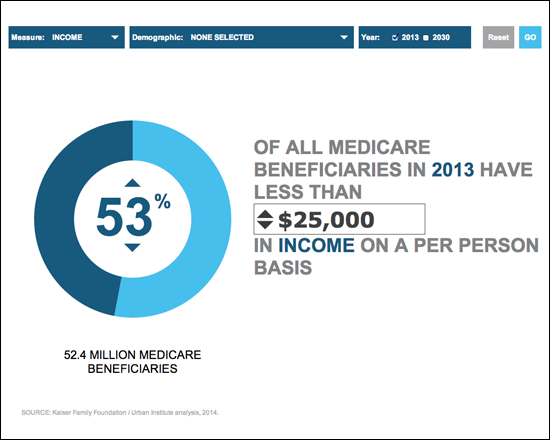
A small share of the 52.4 million elderly individuals and people with disabilities on Medicare have relatively high incomes, but most are of modest means — with half living on incomes of less than $23,500 last year. Although the majority of beneficiaries have some savings, the value of their assets varies dramatically, and is much lower for black and Hispanic than white beneficiaries, for widows than for widowers, and for younger Medicare beneficiaries with disabilities and seniors over age 85.

You can see for yourself, and explore these differences in Medicare beneficiaries’ income and assets using the Foundation’s newest interactive tool. Start by selecting one of the following three measures: income, savings, or home equity. Then, choose one or two demographic categories, such as age, education level, gender, marital status or race/ethnicity. If you want to look into the future, examine how these trends are expected to change over time by comparing 2013 data and 2030 inflation-adjusted projections. To learn how to further explore this data, a short video clip accompanies the interactive tool.

Distribution_of_income,_2013_550_x_440

Based on the Foundation’s earlier analysis of Medicare beneficiaries’ income and assets, this tool provides context for ongoing policy discussions about Medicare spending and the federal budget.

Strategies in 4 Safety-Net Hospitals to Adapt to the ACA

Authors: Teresa A. Coughlin, Sharon K. Long, Rebecca Peters, and Rachel Arguello
Published: Jun 11, 2014

Executive Summary

Safety-net hospitals have long played an important role in the US health care system in serving vulnerable populations, providing high cost services such as trauma and burn care and often in training medical and nursing students.  The Affordable Care Act (ACA) fundamentally changes the health care landscape and safety-net hospitals need to make major changes to compete.  New coverage from Medicaid expansions and new Marketplace coverage provide opportunities for safety-net hospitals.  However, these providers face challenges competing for newly insured patients and continuing to serve the remaining uninsured (including adults in states not expanding Medicaid and undocumented immigrants who remain ineligible for Medicaid or new ACA coverage).  Safety-net hospitals also face reductions in financing for uncompensated care.

Building off of a 2012 Health Affairs brief that looked at early ACA preparations by safety-net hospitals,1  this brief examines four safety-net hospitals to learn how they were preparing for the full implementation of health reform, in order to gain additional insight into the strategies being used and challenges being faced among safety-net hospitals across the country.  The four hospitals are Cook County Health and Hospitals System (Cook County HHS) in Chicago, Illinois; Harris Health System (Harris Health) in Houston, Texas; Santa Clara Valley Medical Center (SCVMC) in San Jose, California; and University Medical Center of Southern Nevada (UMC) in Las Vegas, Nevada (see tables in the Appendix for additional hospital information).  The findings are based on information gathered from site visits and interviews between June and September 2013 with local health care stakeholders and key hospital management.  While hospitals were employing strategies with different intensity, key findings about adapting for changes from health reform include:

  • Study hospitals were implementing an array of financial strategies focused on tapping Medicaid revenues (through early coverage expansion and delivery system reform waivers), improving patient billing, lowering cost structures to shore up revenues and using strategic contracting and purchasing arrangements.
  • To reduce fragmentation and increase efficiency, study hospitals were adopting delivery system reforms particularly related to developing community-based partners and systems of care.
  • Most study hospitals implemented changes in hospital leadership and management structure as well as efforts to better align physician incentives with hospitals and changing the culture of patient care to be more responsive to changing markets.
  • Improving infrastructure and Health Information Technology (HIT) were being employed to make hospitals more attractive to consumers and to increase efficiency.

Even after full implementation of the ACA, the study hospitals, as well as other safety-net hospitals across the country, are expected to continue to serve a critical role in their communities. While safety-net hospitals must adopt new strategies to thrive under reform, policy makers at the federal, state, and local levels of government will need to monitor and evaluate how safety-net hospitals are faring as the ACA is implemented to ensure that the safety-net is sustainable for vulnerable populations and for broader community needs.


Issue Brief: Introduction

Safety-net hospitals have long played an essential role in the US health care system. They are a major source of care for the nation’s most medically vulnerable, including Medicaid beneficiaries and the uninsured, and provide services that other hospitals generally do not offer, such as trauma and burn care. In addition, many of these hospitals serve as training facilities for medical and nursing students. Safety-net hospitals face more challenges compared to other hospitals because of limited revenue streams, due to a reliance on uncompensated care financing pools and a poor payer mix, often complex governance and leadership structures, and high needs for infrastructure (IT) investments.

The ACA makes fundamental changes to the health care landscape primarily in terms of coverage and financing.  First, the ACA extends coverage to many uninsured through an expansion of Medicaid for low-income adults and through premium tax credits to help people purchase insurance through new Health Insurance Marketplaces for individuals with moderate incomes. With the June 2012 Supreme Court ruling on the ACA, the Medicaid expansion became optional for states. As of May 2014, 27 states, including the District of Columbia, are implementing the Medicaid expansion and 24 states are not moving forward at this time. In states not implementing the Medicaid expansion, many adults will remain uninsured. In terms of financing, new coverage through Medicaid and the Health Insurance Marketplaces could mean additional revenues for hospitals and other providers, but the ACA also significantly reduces Medicare and Medicaid disproportionate share hospital (DSH) payments, which often represent a major revenue source for safety-net hospitals. In addition, state and local funding sources for uncompensated care could decline with reform. Finally, the ACA emphasizes value-driven care, which will challenge all hospitals to deliver quality care in a cost-effective way.

As a result of changes under the ACA, safety-net hospitals will need to make major changes to the way they do business in order to compete. Under reform, increases in coverage will mean that safety-net hospitals will face increases in patient demand from those newly insured through Medicaid and the Health Insurance Marketplaces. At the same time, they will need to actively compete with private hospitals for those newly insured patients, a sea change for many safety-net hospitals’ organizational culture as historically they have focused on caring for the uninsured and underinsured. In states that are not implementing the Medicaid expansion, safety-net hospitals will continue to serve a high number of uninsured patients, but could also see reductions in financing for uncompensated care. This is particularly true for safety-net hospitals that serve large shares of undocumented immigrants who remain ineligible for Medicaid or tax credits to purchase coverage in the new Marketplaces.

Building on earlier work,2  this report examines four safety-net hospitals to learn how they were adapting to changes in the ACA and what major challenges the hospitals will likely face as they enter the post-reform world. The four hospitals are Cook County Health and Hospitals System (Cook County HHS) in Chicago, Illinois; Harris Health System (Harris Health) in Houston, Texas; Santa Clara Valley Medical Center (SCVMC) in San Jose, California; and University Medical Center of Southern Nevada (UMC) in Las Vegas, Nevada. Each of these hospitals exists within broader health systems, which often includes an extensive outpatient infrastructure. Using a semi-structured protocol, site visits and interviews were conducted between June and September 2013 with key hospital management, including the chief executive officers, chief technology officers, chief financial officers, and chief medical officers. We also interviewed local health care stakeholders.

Issue Brief: Overview Of Study Hospitals

In selecting the hospitals diversity was sought along several dimensions— geography, whether the hospital is located in a state implementing the ACA Medicaid expansion, and level of state Medicaid DSH payments prior to the ACA (Table 1).  Each of the hospitals is located in an area expected to have significant numbers of uninsured remaining after ACA implementation due to high shares of immigrants (both undocumented and documented immigrants who have been in the US for less than five years) who will not be eligible for coverage under the ACA coverage expansions. For hospitals in states not implementing the Medicaid expansion, the number of uninsured will remain higher because many adults will not have a new coverage option.

Each hospital was described as the principal provider of inpatient and outpatient care in its community for the low-income and uninsured populations. For Cook County HHS and Harris Health, 85 percent of hospital discharges are either uninsured or Medicaid beneficiaries, with SCVMC and UMC somewhat lower at 76 and 63 percent, respectively (Table 2).  These are substantially higher than the figure for the average US hospital (25 percent; data not shown), and higher than the average safety-net hospital (54 percent; data not shown).3 

Characteristic of safety-net hospitals generally, the study hospitals rely heavily on revenues from Medicaid, Medicare, and state and local support (Table 2). They do differ, however, in their level of commercial revenue: Nearly 20 percent of SCVMC and UMC’s revenues come from commercial sources, whereas Cook County HHS and Harris Health have very little commercial revenue. Managed care plays a role to varying degrees across the four hospitals. For example, Medicaid managed care enrollment in 2010 accounted for 14 percent of total non-elderly Medicaid enrollment in Cook County; 46 percent in Santa Clara County; 76 percent in Clark County; and 82 percent in Harris County.4  Most individuals newly enrolled through ACA coverage initiatives in these states will receive care through managed care, providing yet another incentive for hospitals to cost-effectively coordinate and integrate care.

The study hospitals’ quality performance is comparable to national averages on some measures, including an “effective care” measure related to appropriate antibiotic use after outpatient surgery and 30-day mortality and readmission rates (Table 3). All four hospitals, however, scored lower on a measure of timely care based on the wait for an admission from the emergency department and on patient willingness to recommend the hospital. Nonetheless, UMC and SCVMC were categorized regionally as a top-ranked hospital in their respective metropolitan areas, according to US News and World Report’s ranking.5 

The context in which the study hospitals are operating varies greatly, including state preparations and support for the ACA (Table 1). SCVMC and Cook County HHS have benefited from active state preparations for the ACA. California (where SCVMC is located) opted to expand Medicaid early across the state and Illinois (where Cook County HHS is located) has supported a Medicaid Section 1115 waiver that has expanded Medicaid early in Cook County (see below). While Nevada (where UMC is located) is taking up the Medicaid expansion, the state has been less active in ACA preparations and did not seek a Medicaid waiver to expand coverage early. In contrast, Texas (where Harris Health is located) has not participated in the ACA expansion of coverage, opting not to implement the Medicaid expansion and deferring to a Federally-Facilitated Marketplace. Since Texas had a pre-ACA uninsurance rate that was the highest in the nation, Harris Health, in particular, will continue to serve a large number of uninsured adults as the ACA moves forward.6 


Issue Brief: Key Findings

Leading up to implementation of the ACA, the study safety-net hospitals were employing reform strategies that fell into four broad and interrelated categories—financial strategies, delivery system reforms, organizational changes, and infrastructure improvements, with all of the changes focused on insuring the long-term financial viability of the hospital in a changing market.

Financial Strategies

Perhaps the most important area where the hospitals devoted a significant amount of effort to prepare for reform is shoring up their financial situation. Overall, leadership from each hospital described efforts to reduce cost and improve efficiencies that would help them be successful in the post-reform world. To varying degrees, each of the hospitals undertook strategies aimed at tapping Medicaid revenues, improving patient billing and using strategic contracting and purchasing arrangements as key financial strategies. For Cook County HHS, SCVMC, and UMC, financial strategies were often tied to the Medicaid expansion and the expected gains in revenue associated with increases in the share of patients with insurance coverage. Since Harris Health is located in a state that is not expanding Medicaid at this time, it focused on expanding revenues beyond those available through the Medicaid expansion.

Study hospitals are tapping Medicaid revenues as a key financial strategy. Medicaid Section 1115 waivers for early expansions of coverage and for delivery system reforms have been an important way for the hospitals to obtain new revenues. Since 2010, California, Illinois, and Texas have each received Section 1115 waiver that have provided significant funding to three of the study hospitals—SCVMC, Cook County HHS, and Harris Health, respectively. Illinois’s waiver allowed Cook County HHS to begin covering the ACA Medicaid expansion population early. Since this population was almost entirely uninsured, the early expansion allowed Cook County to access Medicaid patient revenues for this population. Similarly, under California’s waiver, Santa Clara County opted to expand Medicaid early so they too were able to access new Medicaid patient revenues for a population that had previously been uninsured.

Both California and Texas also have Delivery System Reform Incentive Payment or “DSRIP” waivers. While the features and requirements of each state’s DSRIP waiver is unique, these waivers provide significant amounts of federal Medicaid funding for hospitals (and other providers) that are tied to payment and delivery system reforms, including system redesign, infrastructure development, population health improvements, and quality care improvements. To receive waiver funding, the hospitals must meet specified quality and other milestones. Texas’s waiver, called the Transformation and Quality Improvement Program, has the potential to increase state revenues to $30 billion during the five-year waiver period (2011 – 2016).  Harris Health would be a major beneficiary of these increased funds.  The funding for the California DSRIP waiver is about $3.3 billion over the five year waiver period. Leadership at each of the hospitals readily acknowledged the importance of the funding they received from the waivers.

Although not participating in an 1115 waiver program, UMC recently availed itself to a new infusion of federal funds by expanding its use of Medicaid Upper Payment Limits (UPL) payments. This funding helped UMC underwrite its electronic health record (EHR) initiative, which was viewed by management as an essential part of preparing for the ACA. The funding also helped to fill a UMC revenue gap created by cuts in local county support during the recession, which hit Nevada quite hard.

Study hospitals are also implementing efforts to improve patient billing. Executives at each of the hospitals conceded that they left significant funds on the table because of inefficient or, in some cases, a complete lack of patient billing. Through revamping its billing processes, Harris Health, for example, now collects more than $300 million per year from patients, up from $240 million. Cook County HHS has also overhauled its billing process. Previously, billing was spread across three different billing and medical records offices, while now it is consolidated into a single office and system. Related to improving their billing practices, the hospitals have also been educating physicians and other hospital staff to record all services that they provide to each patient to support the billing process. Management explained that this sounds easier than it actually is because many hospital staff have never been required to do this and, in some cases, are philosophically opposed to billing poor people for health care. Due to increases in coverage under the ACA, these improvements in patient billing are critical to operations.

Reducing costs and improving cost-effectiveness were other financial strategies study hospitals employed. Leadership from each hospital also described a renewed focus on cost reductions and efficiencies that would help them be successful in the post-reform world. Management at three of the hospitals (Cook County HHS, SCVMC, and UMC) acknowledged that their cost structures are high, and that longer term, they needed to adjust their operating costs to be competitive. In contrast, Harris Health felt its costs are already competitive. Even so, Harris Health is also implementing efficiency strategies.

Strategic contracting and purchasing arrangements is a cost-saving strategy the hospitals have employed. Hospitals are also looking to develop partnerships with community providers, in part to better serve patients, but also to reduce costs. Harris Health and Cook County HHS were most explicit about these plans, which included subcontracting certain services to community-based centers, like FQHCs and outpatient surgery centers. One hospital executive emphasized the cost motivations underlying this strategy – “some services will have to be contracted out; we can’t do everything ourselves and, even if we could, it would be too expensive. The best strategy is to have community partners.” In a similar strategy, SCVMC is contracting with primary care providers outside their system to expand its network and to more effectively control expenses.

Delivery System Reforms

Another critical area of change among these hospitals was delivery system reforms, particularly related to developing community-based partners and systems of care.  These efforts are highly inter-related with some of the financing strategies described above.

Management at study hospitals view strategies to enhance community-based care systems as critical to reduce fragmentation and improve efficiency. Overall, the goal of each of the hospitals is to create a more cooperative community-based system that leverages the strengths of the hospital with other resources in its area to reduce fragmented care and eliminate duplication of effort. Cooperation and coordination, however, are new to the hospitals in some cases (e.g., Cook County HHS, Harris Health, and UMC) as well as to community providers.

SCVMC is the furthest along, among the study hospitals, in developing a community-based care system. The hospital has long-standing relationships with community providers, dating back to when Santa Clara County implemented Medicaid managed care in the mid-1990s. In preparations for reform, SCVMC has further expanded and enhanced these partnerships through various efforts, such as integrating community providers into the hospital’s IT systems and jointly sponsoring community clinics that offer primary and specialty care. These well-established relationships forged as part of Medicaid managed care provided a strong foundation for SCVMC to cultivate deeper relationships with local providers, particularly aligning community physicians and the hospital.

Both Harris Health and Cook County HHS’s efforts to coordinate with community providers are being driven to a great extent by their recent Medicaid Section 1115 waivers, which, among other things, incent both hospitals to move from a system focused on inpatient and acute care toward one focused on outpatient care and community-based providers. Under its waiver, Cook County HHS has contracted with community-based providers and other area hospitals to start a managed care plan so there are now more than 150 access points to its network. In addition to expanding risk-based managed care, Texas’s waiver also calls on local areas to improve care delivery. As part of those efforts, Harris Health has developed contractual relationships with “same day” clinics, ambulatory care surgery centers, and began taking referrals from local FQHCs. Harris Health is expanding beyond its relatively well-established local integrated care system toward a more regional model of care delivery with the goal of developing an Accountable Care Organization (ACO) that serves a broad geographic region in the state.

In contrast, UMC has engaged in only very preliminary efforts to identify potential partners. Interviewees attributed this lack of development of a community-based system of care, in large measure, to UMC operating in the highly competitive Las Vegas hospital market, one that is dominated by private, for-profit hospitals that are wary of coordinating care with their competitors and have little interest in working together or supporting a safety-net. In addition, UMC, with its long-standing financial challenges, was not viewed as having the resources to take on the major system change that would be needed to create broad collaborative models in Las Vegas. Even so, in early 2013, UMC began conversations with community providers about how they might begin to create a system of collaboration in the future.

Study hospitals were also focused on strengthening primary care and better integrating services. Central to strengthening primary care capacity was a push to certify primary clinics as patient-centered medical homes. Hospitals planned to enhance preventive services through medical home implementation, and coordinate care efficiently in order to reduce unnecessary spending. Study hospitals were at various points of achieving medical home recognition for their primary care facilities. Harris Health was leading the way with its primary care clinics having reached NCQA Level 3 Certification. Harris Health is also working to integrate services and build “one big medical home” across its hospitals and clinics.

SCVMC is working to better integrate its mental health and alcohol services, which have historically operated in siloes. In addition, SCVMC is currently trying to unify its two county-sponsored managed care plans, as well as, take on more risk and narrow provider networks in an effort to retain more of the public health dollars in its system. Through its new managed care plan Cook County HHS is establishing relationships with hospitals and clinics across the county.

Hospital Organizational Changes

Significant organizational overhauls have occurred at each of the hospitals, due both to the lingering effects of the recession and preparations for health reform. Key organizational changes include changing the hospitals’ leadership and management structure, as well as, aligning physician and hospital priorities.

In three out of the four study hospitals, changes in the hospitals’ leadership and management structure have been key to responding to the rapidly changing health care landscapes. Prior work has highlighted the important role that strong leadership plays in the ability of safety-net hospitals to respond to rapidly changing circumstances. The importance of leadership was echoed in the experiences of the four study hospitals. Three of the hospitals—Cook County HHS, SCVMC, and UMC – have had significant changes in management within the last few years, while leadership at Harris Health has remained relatively stable.

Perhaps most striking has been the leadership shift at Cook County HHS, which introduced a wholesale reorganization of the hospital’s management structure, from one that was very hierarchical to one that is flat, which is intended to facilitate more rapid decision-making. This leadership change took place at the system-level, affecting not only Cook County HHS, but also the system’s extensive ambulatory care network.  Respondents from both inside and outside of Cook County HHS also noted an important move away from the hospital’s traditional crisis management model to one of a shared vision for system change. These changes were seen as key factors in securing Illinois’s 2012 Medicaid Section 1115 waiver, that is playing a critical role in the transformation occurring at Cook County HHS.

In 2012, UMC also had a noteworthy management change, bringing on chief officers for finance, medicine, and operations, positions that had been vacant for several years. Prior leadership turmoil and serious financial problems, however, have compromised the new leadership’s ability to make significant preparations for reform. UMC instead remains very much in a crisis management model, with hospital leadership struggling to address day-to-day financial and operational challenges. The hospital’s prior governance structure, which required the hospital CEO to report directly to the Clark County Commission, further thwarted its efforts for change. However, in 2013 UMC received approval from the commission to move its governance from the county to an independent board. The expectation both inside and outside of UMC is that the new governance structure will support the hospital’s ability to make more effective and timely decisions. This change in governance for UMC also holds the promise of being the starting point for the hospital to institute fundamental organizational reforms.

Finally, related to management structure, one Cook County HHS executive observed that hospitals that operate in less unionized environments enjoy a higher level of “nimbleness” in staffing than their heavily unionized counterparts, which can allow for a quicker adaptation to new initiatives and demands.

To remain competitive as more residents gain coverage, study hospitals were working on strategies to change the culture of patient care. While the four study hospitals have extensive experience in providing core safety-net services to their communities, each hospital is preparing for increased competition from private hospitals for newly-insured patients under the ACA. To prevent losing insured patients to other providers, each hospital is implementing initiatives to change the culture of patient care within their system. This is a seismic shift in the way the hospitals have traditionally done business. Historically, these hospitals have served the patients who “have nowhere else to go”. Across the board, hospital management conceded that changing the culture of patient care and how they are perceived in the community is a heavy lift. One SCVMC executive observed that improving the patient experience is among the biggest organizational challenges that SCVMC faces. Despite the challenges, these hospitals have strong foundations to build off of because they already provide quality care and critical community health care services, have loyal patient bases, and have strong track records of providing health care services that are culturally and linguistically sensitive.

Initiatives to improve the patient experience include altering patient processes to reduce wait times and educating staff about having positive interactions with patients. The hospitals are also pushing to have a cleaner and more attractive physical environment. SCVMC, for example, is altering inpatient rooms by increasing the number of private rooms and Harris Health is moving from four-bed rooms to semi-private rooms. UMC, on the other hand, lacks the resources for such improvements and is the only hospital in Las Vegas without private rooms. However, UMC is also the only hospital in Nevada ranked by US News and World Report.7 

The hospitals are also conducting outreach and education targeted to staff, patients, and the broader community. A major objective of these campaigns is to emphasize that the hospitals are providers to the entire community and not just standalone sources of care for the uninsured. These efforts were viewed as more important in Cook County HHS, SCVMC, and UMC, where significant shares of the uninsured are expected to gain coverage under the Medicaid expansion, than in Harris Health, where little change in insurance coverage is expected, given Texas’s decision not to expand Medicaid. While the hospitals plan to staff about their mission to serve the uninsured, it is also important that they understand that if insured patients go elsewhere, the hospital will cease to exist.

Study hospitals have sought to better align the incentives of their physicians with the hospital’s needs and goals to support more efficient care delivery. This has been less of an issue in SCVMC and Cook County HHS, where the hospitals’ physicians are county employees (Table 1). One Cook County HHS leader observed that having employed physicians “is a gigantic strength of our organization because we attract people who want to work here. They didn’t just get assigned here.”

In contrast, the majority of UMC’s physicians are based in the community and have limited ties to the hospital and Harris Health relies on contracts through two medical schools for its physicians. Respondents at both UMC and Harris Health acknowledge that the interests and motivation of the physicians are not necessarily consistent with the needs of the hospital. To help mitigate this, UMC is working to build a stronger relationship with the University of Nevada’s School of Medicine. Along the same lines, Harris Health is pushing against “fractionalization”—that is, where the medical schools fill a full-time position with multiple physicians rather than a single individual, compromising continuity of care. The goal of both UMC and Harris Health is to have a more limited group of physicians who have a stronger focus on prioritizing patient needs.

Infrastructure and Technology Investments

As the study hospitals prepare for the future, each has included infrastructure investments as part of their strategic plans. Improvements to their physical and information infrastructures, not only make the hospitals more attractive to consumers, including newly-insured consumers, but they also offer opportunities to improve efficiency, capacity, and can enable cost-savings over time to support the hospitals’ on-going financial viability. While some of the study hospitals had infrastructure projects underway before reform passed, the ACA provided additional incentives to undertake these investments. Local revenue as well as the priorities of each hospital’s governing boards also affected the hospitals’ ability to pursue infrastructure improvement projects.

Hospital strategic plans and governing board priorities played an important role in determining new infrastructure projects. As part of its strategic plan, Harris Health designed a capital building program, supported by its governing board that designated $370 million for the effort, made possible by an increase in Houston property values and a bond issue. Harris Health began capital construction in 2008, which was still ongoing as of late 2013. Meanwhile, lack of capital and support from its county commissioners have prevented UMC from making any investment in facility renovation, which executives fear may negatively affect the hospital’s competitiveness. UMC executives estimate that they would need an infusion of $50 million “to bring them up to where they should be” in terms of capital investment.

To better meet the needs of their patients and to control costs, both SCVMC and Harris Health have built new ambulatory care centers. Harris Health is also building nine new primary care and same-day clinic facilities, which are projected to enable an additional 30,000 primary care visits per year.

Health Information Technology (HIT) offers opportunity for increased efficiency, timelier patient information-sharing, and cost savings over time. The ACA has new billing collection and financial aid requirements that can be best met through the usage of EHRs, an area of significant infrastructure development for each of the hospitals. All four hospitals are working on modifying or improving their current HIT systems to better share patient health information among providers both within their own health system and throughout the community, as well as to enable patients to interact with doctors through the EHR.

Cook County HHS and Harris Health have had EHRs for several years, whereas UMC began installation of EHRs in late 2012 and SCVMC switched to EHRs at the beginning of 2013, with the goal of making the transition on an accelerated basis.

The new EHR frontier for the hospitals is improving communication among their hospitals, ambulatory, and urgent care centers, and with their partner clinics. Improving this type of communication was a priority for each of the study hospitals, but they were at different levels of integration. Cook County HHS, for example, uses a single EHR throughout its inpatient, outpatient and correctional care settings but it still has a limited ability to communicate and share information with its partnership clinics, and instead uses a separate web-based system. In contrast, SCVMC’s EHR linked the hospital and its associated ambulatory and specialty care centers, and plans to link to its community partners in the near future.

Looking Ahead

Leadership at the study hospitals thought the ACA provided them with opportunities and were optimistic that, in the long run, reform will have a positive impact on them. The opportunities for study hospitals were clearer at Cook County HHS, SCVMC, and UMC, because they operate in states that are moving forward with the Medicaid expansion, these hospitals have opportunities to reduce the number of uninsured patients and capture significant new Medicaid patient revenues. Some Harris Health hospital executives and local health care stakeholders believe that a “Texas Solution” for the ACA coverage expansion will eventually be executed, and that they could see an increase in Medicaid revenues for eligible but unenrolled individuals, in addition to those with new coverage purchased through the Health Insurance Marketplace.

At the same time hospital leaders were concerned about financial risks associated with the changes under the ACA. All were worried about the federal Medicare and Medicaid DSH cutbacks that have been key sources of financing for safety-net hospitals. This was a key issue in Texas where the numbers of uninsured are likely to remain significant despite reductions in DSH. Financial worries also stemmed from the potential decline in state or local funding. In California, for example, the governor has announced that because many individuals will gain Medicaid coverage with the ACA, the state is reducing funding that it had provided to counties to support health care services for the low-income. Similarly, UMC leadership noted that cutbacks in local indigent care funding will ensue once the ACA Medicaid expansion is implemented. While hospital leadership understand that new funds will be available to them under reform (particularly in states implementing the Medicaid expansion), given that each of the study hospitals is located in areas with high immigrant populations, many of whom will not qualify for coverage under the ACA, reductions in support for indigent care will be challenging.

For the three hospitals with 1115 waivers, management also expressed concern about the continued flow of revenue through this vehicle. While Harris Health hopes for another waiver, it acknowledges that the federal matching dollars provided through DSH, UPL payments, and the waiver are critical, they also need to consider strategies if the state cannot secure a second waiver.

Hospital executives also worry about being able to compete in a post-ACA health care market. Hospital leaders recognize the amount of work ahead in having the right patient culture and up-to-date infrastructure in place to compete for the expanded pool of insured patients and to operate in health care systems that are moving toward increasing levels of integration and coordination.

Another concern expressed by hospital leadership is whether they will effectively be able to compete for newly-insured patients and the revenue associated with those patients. Leadership at each hospital acknowledged that there is excess capacity in their local health care system, which will drive competition for the newly insured. Even with their preparations, management worried that the attitude and culture of their hospitals had not sufficiently shifted to keep their patients after they obtained insurance. As one Cook County HHS executive observed, when Medicaid shifted to managed care for pregnant women, the pregnant women often chose better facilities to get care. Now, Cook County HHS handles few deliveries. Harris Health’s experience was similar when Texas introduced managed care for pregnant women and children.

The ability to effectively broaden their mission was another major concern for management. While acknowledging that they “will always be the safety-net hospital,” they need to move beyond being “just” a safety-net provider and get their communities to view them differently. From their perspective, they need to be “a system of choice” or they will cease to exist. Making the transition from “the” safety-net hospital to the hospital for all of the community is a critical component of the hospitals’ plans to survive and hopefully thrive under health reform.


Issue Brief: Conclusion

This study has reviewed the major opportunities and challenges four safety-net hospitals were facing in adapting to changes under the ACA, as well as strategies to be better positioned to meet these challenges. Reflecting the diversity of safety-net hospitals’ situations across the country, study hospitals varied in both the intensity of effort and their availability of resources to adapt for health reform. SCVMC has taken a robust approach to its ACA preparations, which have included employing financial strategies, undertaking significant organizational changes, forging new relationships with community-based providers, and moving ahead with infrastructure improvements. Leading up to ACA implementation, SCVMC, Cook County HHS, and Harris Health all benefit from Section 1115 waivers that are supporting system transformation. Constrained financial resources and a highly competitive market in Las Vegas that is resistant to collaborative efforts, have strained UMC’s health reform preparations. However, the challenges are greater for Harris Health, given that Texas is not moving forward with the Medicaid expansion.

Even after full implementation of the ACA, the study hospitals, as well as other safety-net hospitals across the country, are expected to continue to serve a critical role in their communities in caring for uninsured and underinsured populations including undocumented immigrants who are not eligible for Medicaid and other coverage options in the ACA. Safety-net hospitals are also important as providers of core services for the entire community that are not available elsewhere (e.g., trauma and burn care services). So while these and other safety-net hospitals must adopt new strategies to thrive under reform, policy makers at the federal, state and local levels of government will need to monitor and evaluate how safety-net hospitals are faring as the ACA is implemented to ensure that the safety-net is sustainable for vulnerable populations and for broader community needs. We will also continue to track safety-net hospitals across the country as health reform is fully implemented to identify successful strategies hospitals are using to adapt to the changing health coverage environment and to better understand how they and the populations they serve are faring in the post-reform world.

Appendix

Table 1:  Study Hospitals Overview
Hospital/ Health System NameCity, StateAssociated FacilitiesACA ImplementationPhysician Staffing Arrangement and Academic AffiliationsPreliminary DSH Allotment to State, FY 2012(in millions) [2]
Medicaid Expansion [1]Marketplace Type [1]
Cook County Health and Hospitals SystemChicago, IL2 hospitals;16 ambulatory care clinics;1 managed care planYesFederal-state partnershipPhysicians are employed by Cook County, academic relationships with Rush Medical College and University of Illinois at Chicago.$225.9
Harris Health SystemHouston, TX2 acute-care hospitals;1 specialty hospital;16 community health centers; 6 school-based clinics;1 dialysis center;1 dental clinic; 1 managed care planNoFederally-facilitatedPhysicians are employed by Baylor College of Medicine and The University of Texas Health Science Center at Houston (UTHealth).$1,004.7
Santa Clara Valley Medical CenterSan Jose, CA1 hospital;11 clinics, (including a homeless and a mobile dental clinic);public health department, custody department;1 managed care planYesState-basedMost physicians are employed by the County of Santa Clara, academic relationship with Stanford School of Medicine.$1,151.8
University Medical Center of Southern NevadaLas Vegas, NV1 hospital;10 urgent and primary care clinicsYesState-basedMost physicians are community physicians, an academic relationship beginning with the University of Nevada School of Medicine.$48.6
SOURCES: [1] State Health Facts, Health Reform Indicators, https://www.kff.org/state-category/health-reform/; [2] Centers for Medicare & Medicaid Services, “Medicaid Program: Disproportionate Share Hospital Allotments and Institutions for Mental Diseases Disproportionate Share Hospital Limits for FY 2012, and Preliminary FY 2013 Disproportionate Share Hospital Allotments and Limits,” 78 Federal Register 45217 (July 26, 2013).
Table 2:  Selected Hospital Utilization and Financial Characteristics, 2010
Hospital/ Health System NameHospital DischargesNet Revenues by Payer Source
Total% Medicaid% Uninsured/ Self-Pay/ Indigent Care% Medicaid% Medicare% Commercial% Uninsured/ Self-Pay/ Indigent CareState/ Local Payments
Cook County Health and Hospitals System23,76333%52%54%7%1%1%37%
Harris Health System40,66645%40%33%7%3%2%54%
Santa Clara Valley Medical Center23,43355%21%42%13%19%3%21%
University Medical Center of Southern Nevada26,43631%32%36%13%17%17%13%
SOURCE: Zaman, O.S., Cummings, L.C., Laycox, S., America’s Safety Net Hospitals and Health Systems, 2010: Results of the Annual NAPH Hospital Characteristic Survey (Washington, DC: National Public Health and Hospital Institute, 2012).NOTE: Revenues from others sources, such as worker’s compensation, veterans’ care, prisoner care, not shown.
Table 3: Selected Hospital Quality Indicators
Hospital/ Health System NameOutpatients who received correct antibiotic after surgery [1]30-day mortality rates (from heart attack/heart failure/pneumonia) [2]30-day readmission rates (hospital-wide) [2]Average time spent in ED before admittance to hospital [1]Percent of patients who would definitely recommend hospital [3]
Cook County Health and Hospitals System97% vs. 97% statewideNo different from U.S. national ratesHigher than U.S. national rate602 minutes vs. 261 minutes statewide61% vs. 69% statewide
Harris Health System97% vs. 98% statewideNo different from U.S. national ratesNo different from U.S. national rate803 minutes vs. 270 minutes statewide70% vs. 73% statewide
Santa Clara Valley Medical Center97% vs. 97% statewideNo different from U.S. national ratesNo different from U.S. national rate423 minutes vs. 323 minutes statewide66% vs. 70% statewide
University Medical Center of Southern Nevada97% vs. 98% statewideNo different from U.S. national ratesNo different from U.S. national rate476 minutes vs. 350 minutes statewide49% vs. 68% statewide
SOURCE: Centers for Medicare & Medicaid Services, Hospital Compare (2014), http://www.medicare.gov/hospitalcompare/search.html?AspxAutoDetectCookieSupport=1.NOTES: [1] IQR and OQR Measures for effective and timely care, based on audited data for all adult patients for whom the treatment would be appropriate; [2] 30-day readmission and mortality rates based on Medicare claims and eligibility data and include only Medicare beneficiaries. The measures are risk-adjusted for patient characteristics that may make death or readmission more likely including age, gender, comorbidities and past medical history. Performance categories are based on the U.S. national 30-day mortality and readmission rates. If the interval estimate includes and/or overlaps with the national observed mortality or readmission rate, the hospitals performance is “no different from U.S. national rate”. If the entire interval estimate is above the national observed rate, it is “higher than U.S. national rate”. [3] HCAHPS survey data, which is a survey administered to a random sample of adult patients across all medical conditions continuously throughout the year, between 48 hours and six weeks after discharge. Results are adjusted for patient mix.


Endnotes

  1. Theresa Coughlin, Sharon Long, Edward Sheen, and Jennifer Tolbert, “How Five Leading Safety-Net Hospitals Are Preparing for the Challenges and Opportunities of Health Reform,” Health Affairs vol. 31, issue no. 8 (August 2012): 1690 – 1697, doi: 10.1377/hlthaff.2012.0258. ↩︎
  2. Theresa Coughlin, et al.  “How Five Leading Safety-Net Hospitals Are Preparing for the Challenges and Opportunities of Health Reform” (August 2012). ↩︎
  3. Authors tabulations based on the 2010 NAPH Characteristics Report and the Healthcare Cost and Utilization Project [HCUP]. ↩︎
  4. Authors’ tabulations based on the summary 2010 federal fiscal year Medicaid Statistical Information System data.  Figures cited represent the number of nonelderly enrolled in a comprehensive managed care plan as a percentage of the number of total nonelderly Medicaid enrollees in the given county. ↩︎
  5. U.S. News and World Report, Best Hospitals (2013) http://health.usnews.com/best-hospitals/area/nv/university-medical-center-6880071. ↩︎
  6. Urban Institute and Kaiser Commission on Medicaid and the Uninsured estimates based on the Census Bureau’s March 2012 and 2013 Current Population Survey (CPS: Annual Social and Economic Supplements). ↩︎
  7. U.S. News and World Report, Best Hospitals (2013). ↩︎

Medicaid Enrollment: An Overview of the CMS April 2014 Update

Published: Jun 10, 2014

The Centers for Medicare and Medicaid Services (CMS) recently released its latest update on Medicaid and Children’s Health Insurance Program (CHIP) enrollment data, covering the period through April 2014. The report is the most recent in a series of monthly reports on indicators on Medicaid and CHIP application and enrollment produced as part of a performance indicator initiative designed to support program management and policy making. This fact sheet provides a brief overview of the latest data and what it suggests about the impact of the Affordable Care Act (ACA) on Medicaid and CHIP enrollment. Data by state is available here.

The latest report shows continued growth in Medicaid and CHIP enrollment across states. This continued growth reflects the fact that enrollment in the programs is not limited to the open enrollment period for Marketplace coverage and continues year-round. Preliminary data for April 2014 show that 1.1 million additional people enrolled in April compared to March in the 48 states that reported data for both periods, bringing total Medicaid and CHIP enrollment to over 65 million. With this latest increase, over 6 million additional individuals have enrolled in Medicaid and CHIP compared to average monthly enrollment in the three months leading up to the start of open enrollment in October 2013. This represents an average enrollment growth rate of 10.3% between summer 2013 and April 2014 across all 48 states that reported data for both periods, but there are wide variations in reported growth across states.

Enrollment growth in states that have expanded Medicaid to low-income adults outpaced the national average and was significantly higher than growth in non-expansion states (15.3% vs.3.3%) (Figure 1). Among the 24 states that have implemented the Medicaid expansion and reported data for both periods, 18 states reported growth above 10%, including 8 states that reported growth exceeding 30%.1  The variation in growth among these states, in part, reflects differences in the size of the Medicaid expansion relative to their previous Medicaid eligibility levels. For example, states that had already expanded Medicaid to low income adults will experience a smaller increase than those who previously offered coverage to very low-income parents. In contrast, enrollment growth among the non-expansion states was below 10% in nearly all (21 of 23) states reporting data for both periods, with 16 states reporting growth below 5% including 4 states that reported net declines in enrollment over the period.2 

Figure 1: Percent Change in Medicaid and CHIP Enrollment Between Summer 2013 and April 2014

These recent enrollment increases are higher than historic enrollment trends from other data sources. Historic data show that Medicaid and CHIP enrollment grew by 8.5% across all states at the height of the most recent economic downturn, and then growth slowed to 1%-3% between December 2011 and 2013 as economic conditions improved (Figure 2). Among Medicaid expansion states, reported enrollment growth since open enrollment began far exceeds these historic trends. Reported growth in the non-expansion states is closer to the most recent historic trends, but does suggest some increased enrollment activity compared to earlier periods.3 

Figure 2: Annual Change in Medicaid and CHIP Enrollment, December 2000 – 2013

Overall, the data suggest the ACA is having a positive impact on Medicaid and CHIP enrollment, particularly in the expansion states, but it remains challenging to quantify the impacts of ACA policies on enrollment. All states were anticipated to experience gains in Medicaid and CHIP under the ACA, regardless of whether they implemented the Medicaid expansion to low-income adults or not. In states that expand Medicaid, the ACA will lead to enrollment gains among adults made newly eligible by the expansion. But, in all states, simpler enrollment processes and broad outreach and enrollment efforts implemented under the ACA will promote increased enrollment among individuals who were already eligible for Medicaid or CHIP before the ACA but not enrolled, many of whom are children. When compared to historic trends, the recent enrollment data suggest that the ACA is having a positive impact on Medicaid and CHIP enrollment, particularly in states that have expanded Medicaid. However, the enrollment changes cannot all necessarily be attributed to the ACA as they may reflect additional factors including underlying base program enrollment growth, seasonal fluctuations, changing economic conditions, and overall population growth.

Looking ahead, Medicaid and CHIP enrollment is expected to continue to grow. The reported enrollment data are preliminary and expected to increase as states finalize their data and incorporate additional enrollments into their counts as they are processed. Some states are experiencing backlogs and delays in processing Medicaid enrollments due to challenges associated with the electronic transfer of applications from Marketplaces to Medicaid agencies as well as constraints in the capacity of Medicaid agencies to process the increased volume of Medicaid applications that occurred during the open enrollment period. Enrollment will continue to increase as states work through these backlogs of applications. Moreover, as noted, new applications for and enrollments in Medicaid and CHIP may continue year-round.

  1. CMS did not include data from Connecticut or North Dakota as they were unable to report in one or both periods. CMS also did not include New Hampshire because the state has not yet implemented its expansion. ↩︎
  2. CMS did not include data from Maine as it was not comparable to data reported by other states. See CMS report for more details. ↩︎
  3. Laura Snyder, Robin Rudowitz, Eileen Ellis, and Dennis Roberts. Medicaid Enrollment: December 2013 Data Snapshot. (Washington, DC: Kaiser Family Foundation,) June 2014. Vernon Smith, Laura Snyder, Robin Rudowitz. CHIP Enrollment: December 2013 Data Snapshot, (Washington, DC: Kaiser Family Foundation,) June 2014. ↩︎

A Look At CBO Projections For Medicaid and CHIP

Author: Robin Rudowitz
Published: Jun 5, 2014

Issue Brief

Summary

Medicaid is the nation’s primary health insurance program for low-income and high-need Americans.  States administer Medicaid within broad federal rules and have a lot of flexibility to design their programs.  Medicaid is jointly financed by the states and the federal government.  The Affordable Care Act (ACA) expands Medicaid to a national eligibility floor of 138% of the federal poverty level (FPL) and provides significant federal funding for this new coverage.  The Supreme Court ruling on the ACA effectively made the Medicaid expansion a state choice.  Medicaid and the Children’s Health Insurance Program (CHIP) play an important role in providing health coverage for millions of children across the country.  Both programs are jointly financed by states and the federal government and largely administered by states within broad federal rules but differ in several key ways, including size and scope, financing, benefits and cost-sharing.1 

Generally once a year, the Congressional Budget Office (CBO) releases a detailed “baseline” for federal spending for Medicaid, CHIP and the ACA that serves as a neutral benchmark for Congress to measure the budgetary effect of proposed legislation and as a reference point for analysis of Medicaid enrollment and spending.  This baseline assumes current law remains in place, but adjusts for changes in the economy and other factors that will affect federal revenues and spending.  CBO does not provide state-by-state projections or estimates of the effects of legislation.  Key findings from the April 2014 CBO projections for federal Medicaid, CHIP and the ACA spending over the 2014-2024 period include the following:2 

  • Compared to the CBO Medicaid baseline from March 2012, federal spending projected for 2020 in the April 2014 baseline is 14% lower due to a number of factors including the Supreme Court decision effectively making the ACA Medicaid expansion an option.
  • Under the current baseline, federal Medicaid expenditures are expected to grow by an average annual rate of about 7% (including the effects of the ACA) with enrollment increasing by 2% on average.
  • Primarily due to expansion of coverage for adults under the ACA, by 2024, children and adults will account for 8 in 10 enrollees and nearly half of all spending which are higher shares compared to today.
  • Under current law CHIP funding expires in 2015.  The CBO baseline continues the budget authority levels set in the ACA for 2015.  As a way to reduce the costs for the ACA, budget authority for CHIP was reduced to $5.7 billion and the remaining funding was provided through a one-time appropriation.   As a result of lower spending level, CHIP enrollment is expected to decline over the projection period.
  • Due to the ACA, the number of uninsured is expected to decline by 26 million by 2024.  Federal Medicaid and CHIP outlays are expected to increase by $792 billion over the 2015-2024 period and state spending for matching funds by $46 billion (a reduction from $70 billion in the February 2014 projections primarily due to lower than expected take-up of current eligible).

Introduction

What is Medicaid?

Medicaid is the nation’s primary health insurance program for low-income and high-need Americans.   CBO estimates show that Medicaid covered 72 million low-income Americans including children, pregnant women, parents, elderly and individuals with disabilities at some point in 2013.  Medicaid provides critical assistance to low-income Medicare beneficiaries and is the primary payer for long-term services and supports.  The program accounts for about one in six dollars spent on health care; is the largest source of funding for safety-net providers, and the largest insurer of births.  States administer Medicaid within broad federal rules and have significant of flexibility to design their programs.  Medicaid is jointly financed by the states and the federal government.  The federal share (FMAP) averages 57 percent and ranges from a floor of 50 percent to a high of 73 percent based on a formula that relies on state per capita income and is recalculated each year.3 

The Affordable Care Act expands Medicaid to a national eligibility floor of 138% of the federal poverty level (FPL) which will primarily expand Medicaid coverage to adults.  In general, the ACA provides 100% federal financing for those newly eligible for Medicaid from 2014 to 2016 and then phases down the federal share to 90% by 2020 and beyond.  The Supreme Court upheld the ACA but limited the federal government’s ability to enforce the Medicaid expansion to low-income adults, effectively making implementation of the Medicaid expansion a state choice.

Medicaid is the third-largest domestic program in the federal budget following Medicare and Social Security.  In federal fiscal year 2014, spending from Medicaid will account of an estimated 8% of federal spending.  (Figure 1) 

Figure 1: In FY 2014, CBO projects that Medicaid will account for 8% of federal outlays.

What is the Role of the Congressional Budget Office?

The Congressional Budget Office (CBO) prepares reports and analyses with economic forecasts and budget projections that cover a 10 year period for all spending in the federal budget that is used in the Congressional budget process.  In addition, CBO prepares other reports for Congress including long-term budget projections, an analysis of the President’s budget, cost estimates, analysis of federal mandates, budget options, reports and estimates related to appropriations and other program specific reports affecting the federal budget like health care.  For legislation being considered by Congress, CBO provides cost estimates of the impact and offsets on the federal budget.  In this role, CBO is often referred to as the “scorekeeper.”  CBO provides aggregate estimates of the effects of legislative proposals on states, but CBO does not provide state-by-state Medicaid projections or estimates of the effects of legislation.

CBO regularly publishes projections of economic and budget outcomes which incorporate the assumption that current law regarding federal spending and revenues generally remains in place. Those baseline projections cover the 10-year period used in the Congressional budget process. Most of the reports on those projections also describe the differences between the current projections and previous ones; compare the economic forecast with those of other forecasters; and show the budgetary impact of some alternative policy assumptions.  The budget projections and economic forecast are generally issued each January and updated in August; the budget projections are also generally updated in March.4   The March (sometimes April or May) update includes more detailed “baseline” projections for federal spending for Medicaid, CHIP and the ACA which include estimates of federal spending by eligibility group and service as well as enrollment and spending by eligibility group.

What Are CBO’s Estimates for Medicaid?

Each year, CBO produces a fact sheet that provides more detail about federal Medicaid spending projections over the next decade.  The fact sheet shows federal Medicaid payments for benefits (acute and long-term care), disproportionate share hospital (DSH) payments, spending for the Vaccines For Children program and administrative expenses.  The fact sheet also shows estimates of federal benefit payments by eligibility category, enrollment by eligibility category and average federal spending on benefits per enrollee.  For the baseline released in April 2014, the projection period is for 2014-2024.  Given that the Affordable Care Act (ACA) was enacted and is now current law, the CBO baseline Medicaid projections include the effects of the ACA.  These projections also estimate the effect on federal spending of the Supreme Court decision that effectively gave states the option to implement the Medicaid expansion.

CBO generally reports on the legislative, economic and technical changes in the baseline from one projection period to the next; however, significant details about the underlying assumptions beyond what is included in the baseline fact sheet are not generally available.  Projections for Medicaid spending have declined from the CBO projections released in 2012 due to state decisions on whether to expand Medicaid, lower than anticipated year to date spending and other technical corrections.  Examining the components of the baseline fact sheet may help to better understand the overall projections.

Current Compared to Earlier CBO Medicaid Projections

For the year 2020, the CBO projections for federal Medicaid spending declined by 14% from the baseline issued in March 2012 to the baseline issued in April 2014.  (Figure 2)

  • From March 2012 to August 2012, the primary reason for lower spending was primarily driven by the Supreme Court decision which effectively gave states the option to implement the Medicaid expansion.  The August 2012 baseline were the first projections to assume that some states will not expand their Medicaid programs at all or will not expand coverage to the full extent authorized by the ACA.
  • From August 2012 to February 2013 the Medicaid baseline declined primarily due to lower anticipated enrollment (primarily tied to lower enrollment in the Supplemental Security Income program which is linked to Medicaid enrollment) and lower expected costs per person.
  • More recent estimates have been more stable.  Changes from February 2014 to April 2014 reflect increases in enrollment as a result of updates to the size and demographic characteristics of the overall population as well as increases in the cost of incentive payments related to the adoption of health information technology.  These increases were partially offset by a continued downward revision to SSI enrollment and a decrease in the projected costs per-person for newly eligible adults under the ACA.
Figure 2: Federal spending projections for Medicaid have fallen by 14% for the year 2020 from March 2012 to April 2014.

Spending

Over the next decade CBO expects federal Medicaid expenditures to grow from $299 billion in 2014 to $576 billion in 2024, an average annual rate of about 7 percent.  This growth rate includes higher federal Medicaid spending over the decade related to the implementation of the ACA.  The CBO baseline consists of four key parts: benefits, Disproportionate Share Hospital (DSH) payments, the Vaccines for Children Program and Administrative expenses.  More than 90 percent of federal Medicaid spending is on benefits (acute care, long-term care and payments for Medicare premiums for low-income Medicare beneficiaries).

Over the projection period, acute care spending (fee-for-service spending, payments to managed care and payments for Medicare premiums) accounts for about 75 percent of spending for Medicaid benefits.  Long-term care, which includes both institutional and community-based long-term care spending, accounts for the remaining 25 percent.  Fee-for-service and managed care spending both are projected to increase sharply in 2014 as the ACA expansion of Medicaid coverage become effective.  This translates to faster growth for these categories of spending over the 10 year period relative to long-term care spending.  (Figure 3)

Figure 3: Acute care spending increases faster than long-term care spending in the CBO baseline projections.

Enrollment and Spending by Eligibility Group

CBO estimates that total Medicaid enrollment will grow from 72 million in 2013 to 93 million by 2024.  These figures are based on the total number of individuals enrolled in Medicaid at any point during the fiscal year.  Average monthly enrollment is expected to increase from 58 million in 2013 to 73 million in 2024.  CBO projects enrollment for four categories: the aged, disabled, children and adults.  Overall enrollment is expected to grow at an average annual rate of about 2 percent per year between 2014 and 2024.  Generally, enrollment growth accounts for underlying population growth trends, economic assumptions (i.e. unemployment rates) and assumptions about state or individual behavior that may affect participation.  Since Medicaid enrollment is based on income, projections about the economy and unemployment will affect Medicaid.

Over the projection period, growth for adults is expected to increase significantly (from 21 million in 2013 to 37 million in 2024) due to the Medicaid expansion; however, these estimates assume that not all states will implement the expansion and in states that implement the expansion not all of those newly eligible will participate.  By 2024, adults account for 4 in 10 enrollees.  (Figure 4)  Prior to the implementation of the ACA Medicaid expansion, children accounted for nearly half of all enrollees.

As the share of enrollment shifts over the projection period, the share of spending by eligibility group is expected to shift as well.  Prior to the ACA, the elderly and disabled had historically accounted for about two-thirds of spending on Medicaid.  By 2024, children and adults are expected to account for slightly under half of Medicaid spending and the aged and disabled categories are expected to account for just over half of spending on Medicaid benefits.  (Figure 4)

Figure 4: By 2024, CBO estimates that children and adults will account for 8 in 10 enrollees and nearly half of spending on benefits.

Spending Per Enrollee

Growth in spending per enrollee largely reflects inflation and expectations of the costs to purchase medical services in the health care market place.  By 2024, spending for an aged or disabled enrollee is projected to be about five times greater than spending for a child or adult enrollee.  (Figure 5)  The aged and disabled tend to use more complex acute care services as well as expensive long-term care services.  Over the 2014 to 2024 period, spending per enrollee is expected to increase at rates ranging from 4 percent for the aged to 6 percent for adults.  Historically, Medicaid spending has increased at rates faster than inflation, but slower than per person increases for private health care premiums.

Figure 5: Spending for the aged and disabled is expected to be about 5 times greater than for children and adults in 2024.

What Are CBO’s Estimates for CHIP?

Under current law, CHIP was funded through FY 2015 as part of the ACA.  Generally, the CBO assumes that funding for an expiring program will be funded at a level equal to the last year it was financed in the law.  However, to reduce costs for the ACA in the CBO score, when CHIP financing was set in the ACA, the final year funding authority was reduced from $21.1 billion in FY 2015 to $5.7 billion in 2016.  (Figure 6)  The rest of the CHIP financing was provided through a one-time appropriation that is not assumed to continue in the baseline but would be required to maintain the program at current levels.  While this lowered the cost of the ACA, it increases the costs of extending CHIP beyond 2015 because these funds need to be paid for.  A similar financing mechanism was used during the CHIP Reauthorization Act (CHIPRA) in 2009.

Figure 6: According to the CBO baseline, budget authority for CHIP will be held at $5.7 billion after FY 2015.

Under the CBO baseline assumptions, CHIP enrollment is expected to decline due to limited financing.  By 2024, CHIP enrollment is expected to fall to 2.9 million over the course of the year or 2.1 million on an average monthly basis from a high of 10.2 ever-on and 7.3 average monthly enrollment in 2015.  (Figure 7)  CBO assumes that when states face federal CHIP funding shortfalls, children enrolled in CHIP-funded Medicaid coverage will be shifted to regular Medicaid (at the regular Medicaid matching rate). Other children will lose their CHIP coverage and shift to subsidized coverage in the marketplaces, and some children previously on CHIP will end up uninsured because coverage through ESI is unaffordable and they are not eligible for marketplace subsidies.  The affordability test in the law is based on whether the policy for a worker (not the family) is less than 9% of family income.

Figure 7: Under current law assumptions, lower budget authority for CHIP will result in fewer enrollees.

Medicaid, CHIP and the ACA

While the effects of the ACA are included in the current baseline projects for Medicaid, CBO also released updated estimates of the effects on the deficit and coverage related to the health insurance coverage provisions in the ACA.

Overall, the most recent estimates assume a reduction in the uninsured of 26 million (from 57 million to 31 million) by 2024 which is attributable to increases in coverage through the new marketplaces and Medicaid and CHIP.  The CBO estimates that 25 million will be newly covered in marketplaces and Medicaid and CHIP enrollment will increase by 13 million by 2024.  These estimates assume that not all states will implement the expansion.  The increase is a combination of those made newly eligible by the ACA as well as increased participation among those eligible but not enrolled prior to the ACA.  (Figure 8)

Figure 8: CBO estimates that there will be 26 million fewer uninsured in 2024 due to the ACA.

CBO estimates that on net the ACA is expected to reduce the federal deficit, but since the passage of the law, CBO has only continued to update the estimates for the coverage provisions of the ACA which are expected to result in increases in federal spending.  Overall, the coverage provisions in the ACA are expected to increase gross federal costs by $1.8 trillion over the 2015-2024 period.  Medicaid and CHIP outlays are expected to increase by $792 billion over the 2015 to 2024 period as a result of the ACA coverage provisions accounting for 43 percent of the total gross costs.

CBO estimates that state spending would increase by about $46 billion from 2015 to 2024 as a result of the ACA coverage provisions.  Compared to the February 2014 estimates, the federal cost estimates did not change but the estimate for state costs declined from $70 billion to $46 billion.  (Figure 9)  While CBO does not provide a direct explanation for this, the majority of this change is likely tied to reducing the estimate of those eligible for coverage without the ACA Medicaid expansion (reimbursed at the regular state match rate).  Since overall enrollment and federal costs are the same as February, the higher estimate of newly eligible enrollees appears to be offset by a lower estimate of cost per enrollee.

Figure 9: CBO’s latest estimates show a drop in state spending for Medicaid and CHIP from 2015-2024 due to the coverage provisions in the ACA.

Endnotes

  1. Robin Rudowitz, Samantha Artiga, and Rachel Arguello.  Children’s Health Coverage: Medicaid, CHIP and the ACA.  Kaiser Commission on Medicaid and the Uninsured, March, 2014.  https://modern.kff.org/health-reform/issue-brief/childrens-health-coverage-medicaid-chip-and-the-aca/ ↩︎
  2. CBO Updated Projections 2014-2024.  Baseline Projections for Health (Children’s Health Insurance Program, Effects of the Affordable Care Act on Health Insurance Coverage, and Medicaid.  http://www.cbo.gov/publication/45229 ↩︎
  3. The Medicaid Program at a Glance, Kaiser Commission on Medicaid and the Uninsured, March 2013.   ↩︎
  4. From the CBO website, about our products.  http://www.cbo.gov/about/our-products     ↩︎

Health Affairs Blog: The Cost of A Cure: Medicare’s Role in Treating Hepatitis C

Authors: Tricia Neuman, Jack Hoadley, and Juliette Cubanski
Published: Jun 5, 2014

 This post now available at the Health Affairs Blog by Tricia Neuman, Jack Hoadley, and Juliette Cubanski discusses Sovaldi (sofosbuvir), an oral drug recently approved by the FDA for the treatment of chronic hepatitis C, and the potential impact of this long-awaited cure on Medicare spending and Part D premiums.  It is authored by the Foundation’s Tricia Neuman, Jack Hoadley of Georgetown University’s Health Policy Institute, and the Foundation’s Juliette Cubanski.