KFF designs, conducts and analyzes original public opinion and survey research on Americans’ attitudes, knowledge, and experiences with the health care system to help amplify the public’s voice in major national debates.
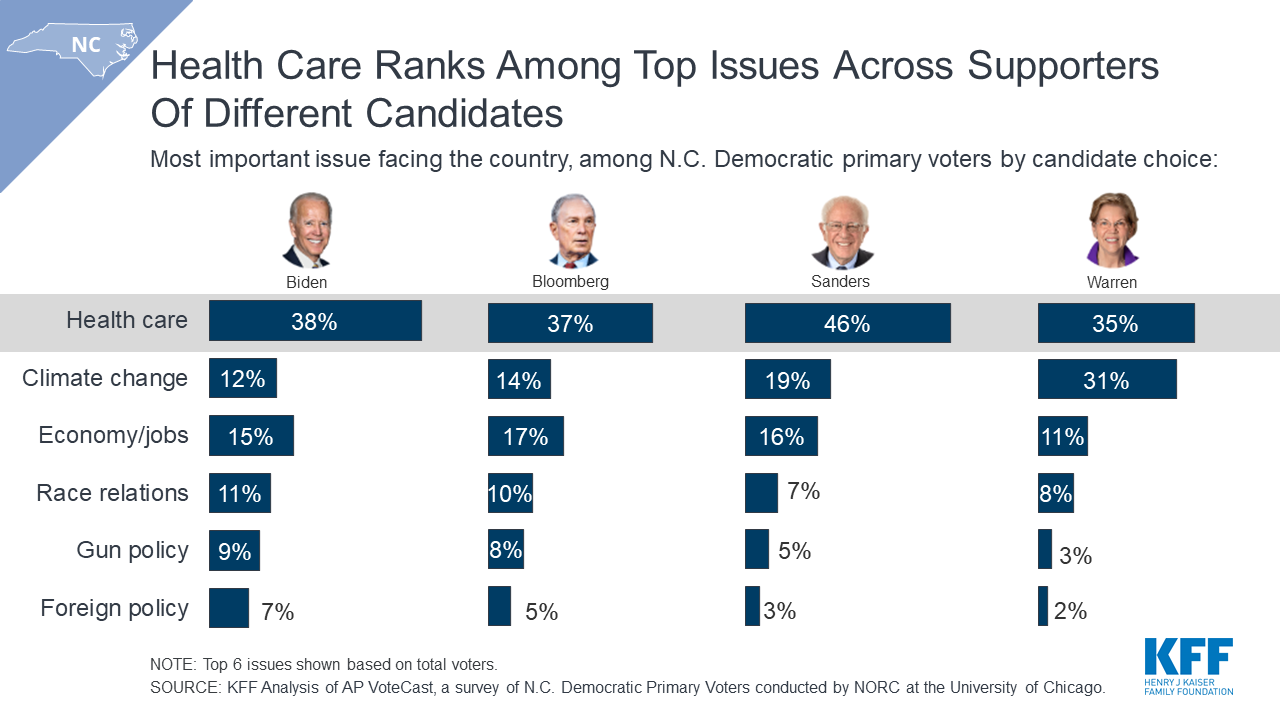
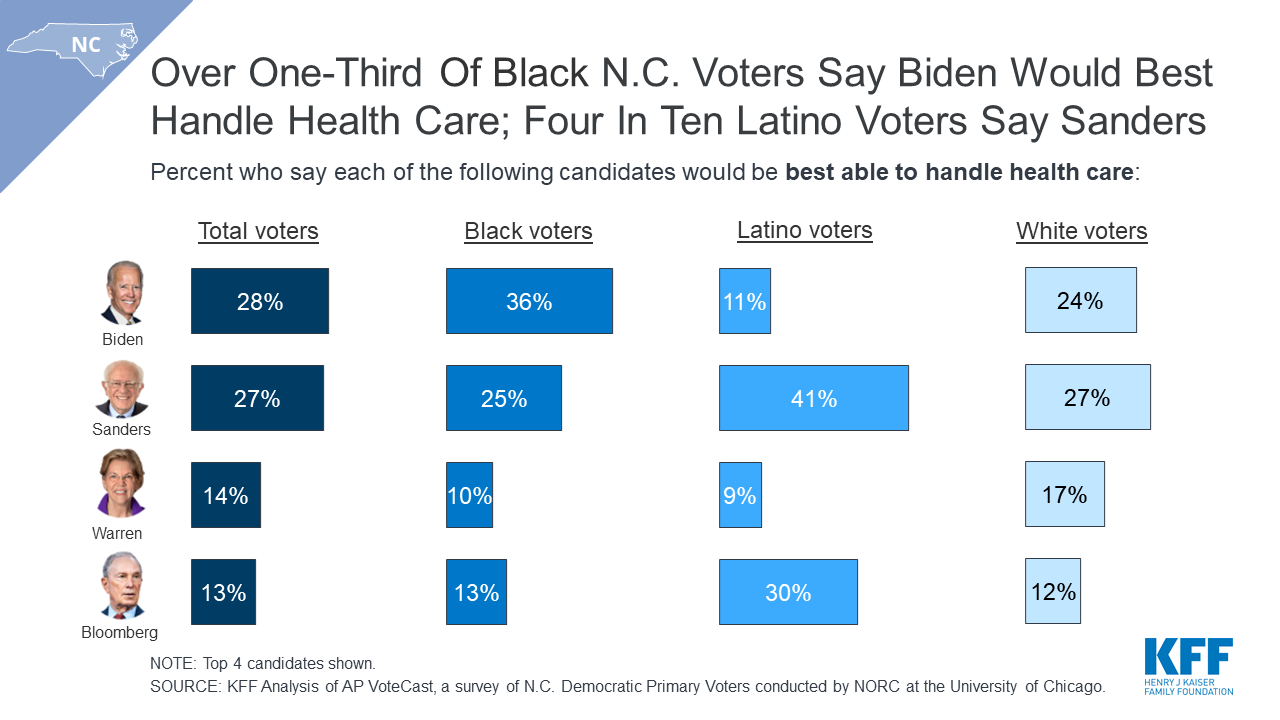
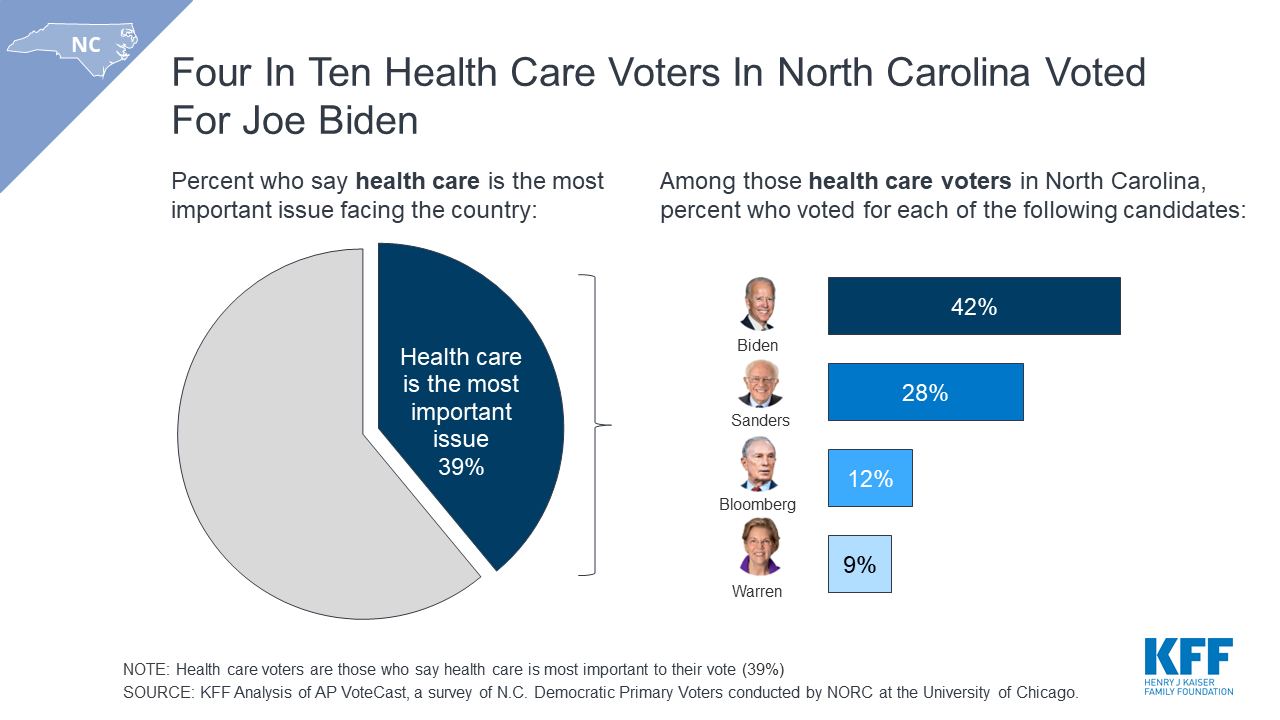
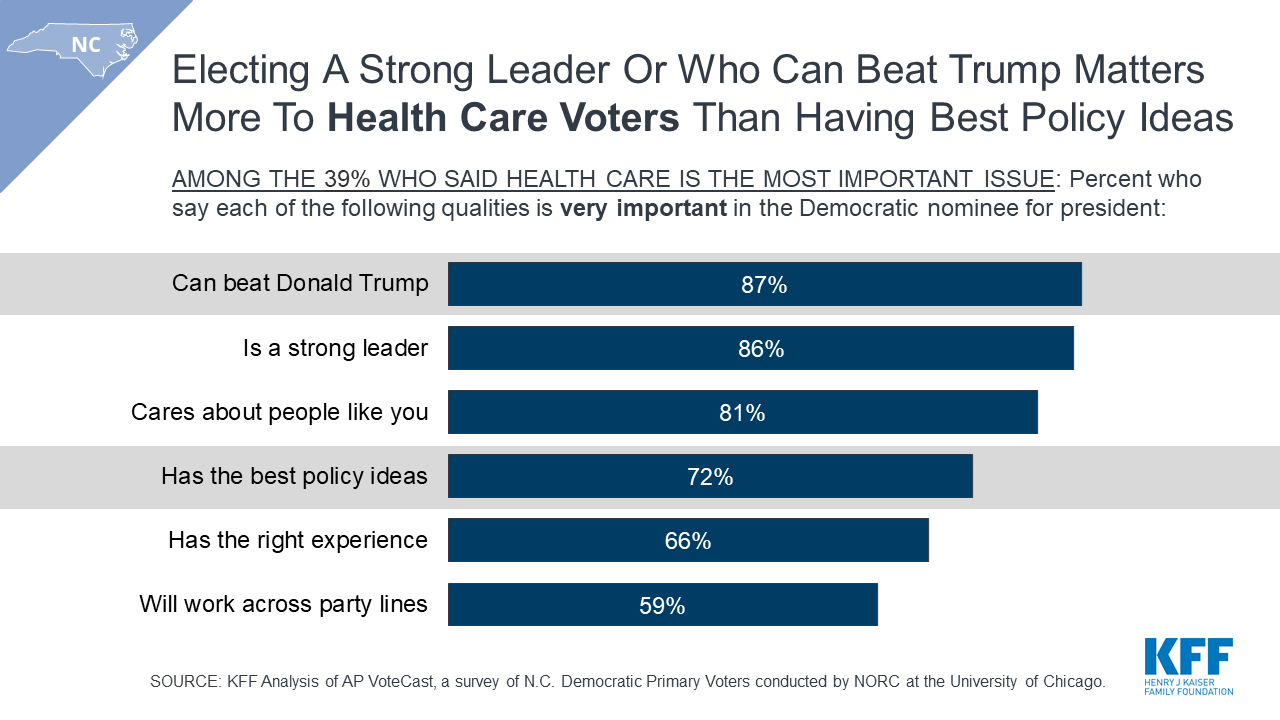
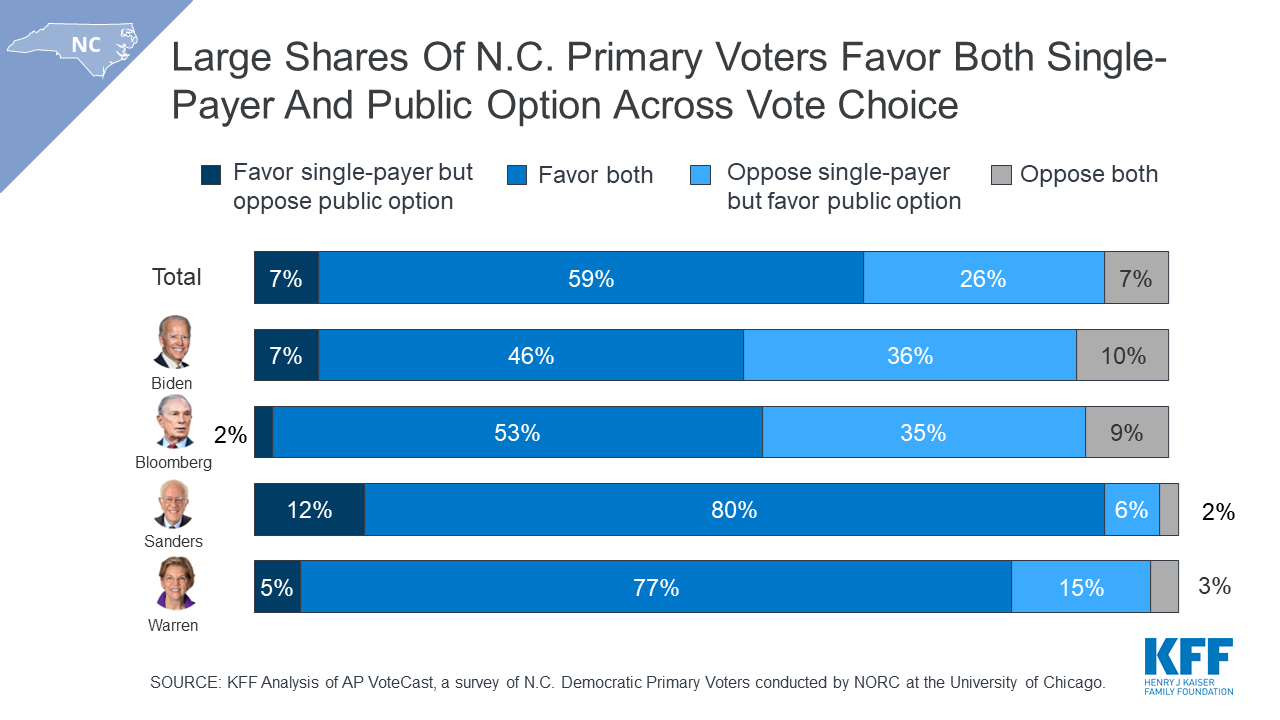
This slideshow examines the role of health care as an issue in the 2020 North Carolina Democratic primary and is based on KFF analysis of AP VoteCast, a survey of North Carolina primary voters conducted for the Associated Press by NORC at the University of Chicago.
The survey was conducted for seven days, concluding as polls closed, and is based on 2,706 interviews conducted in English and Spanish with registered voters drawn from a random sample of the state voter file and from self-identified registered voters selected from non-probability online panels. The margin of sampling error for results based on the full sample is plus or minus 4 percentage points. Find more details about AP VoteCast’s methodology here.
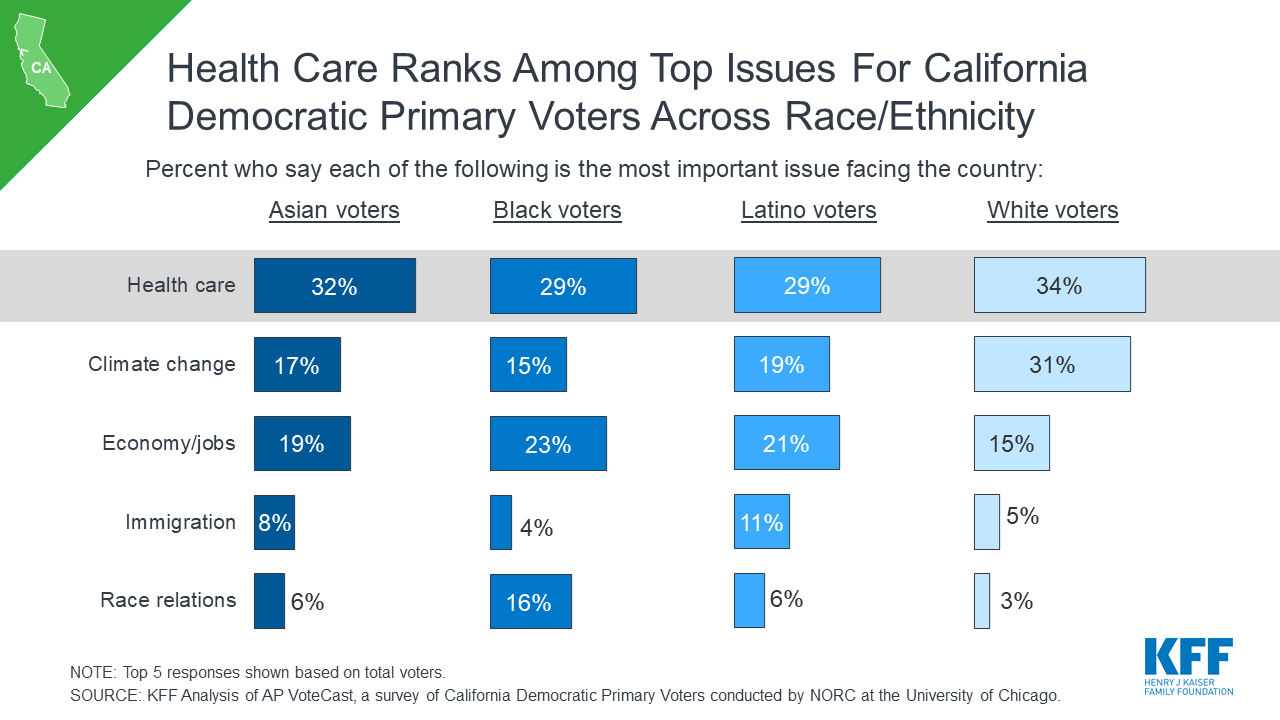
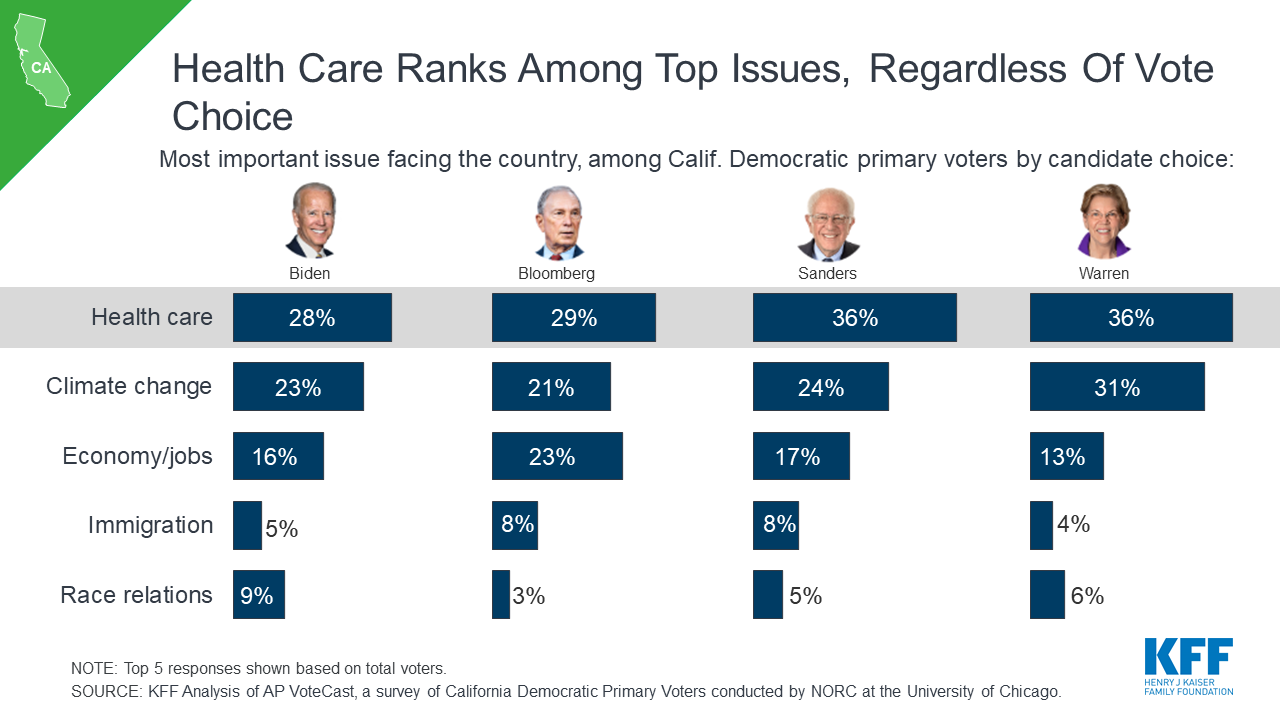
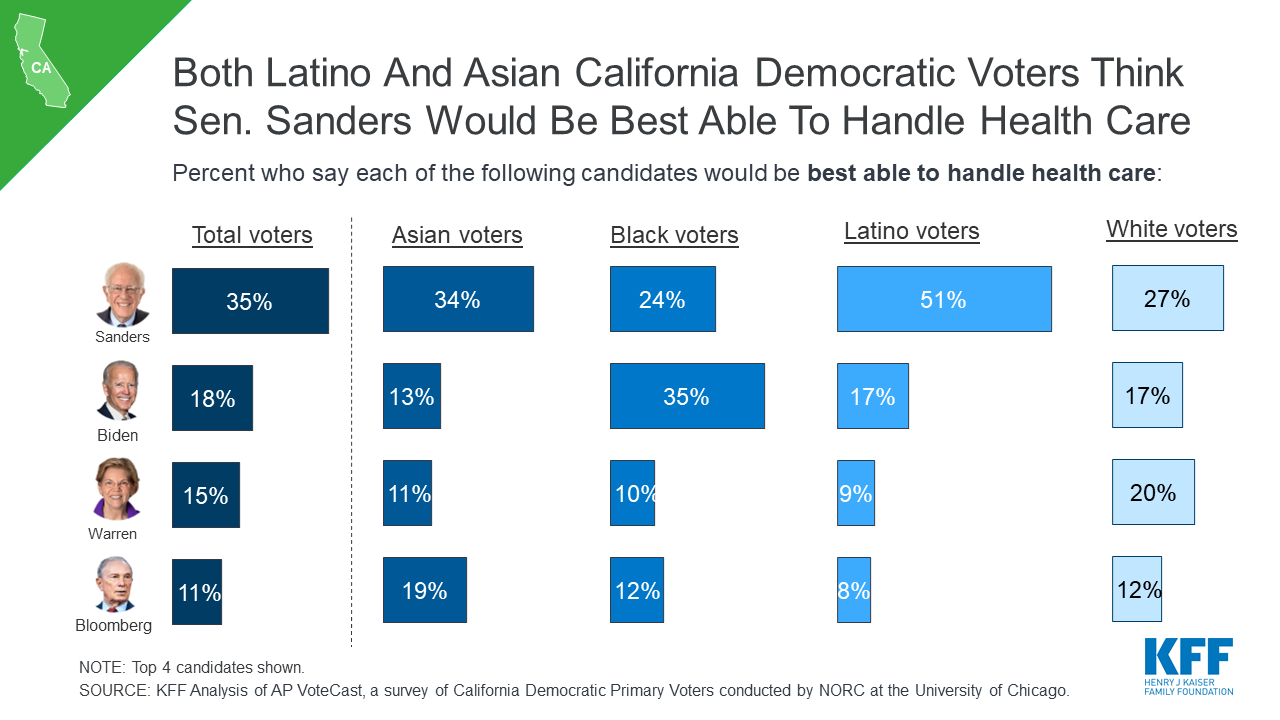
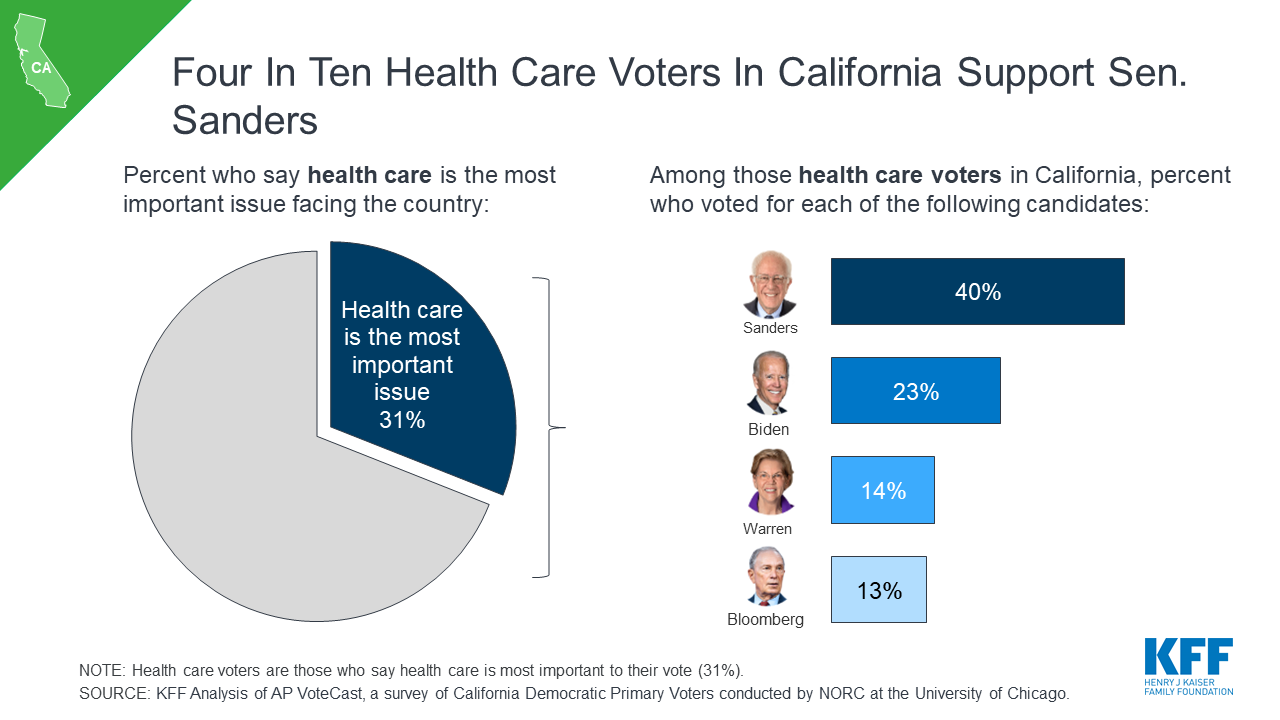
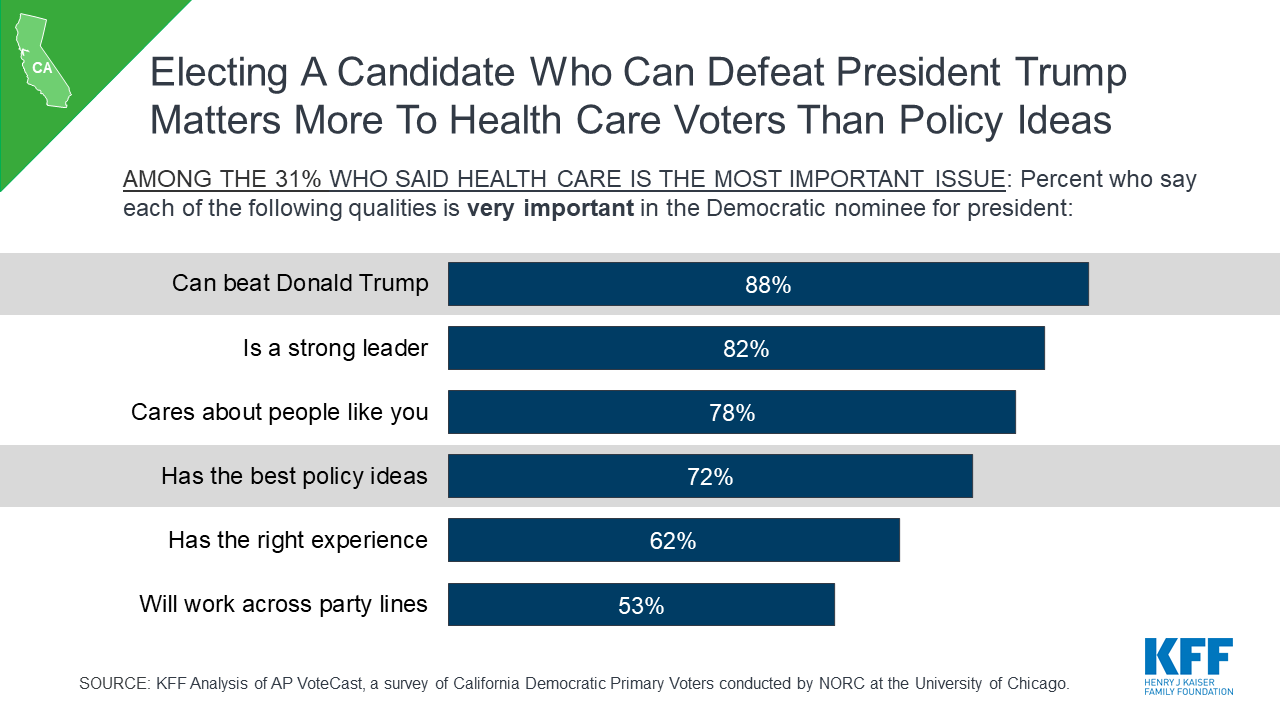
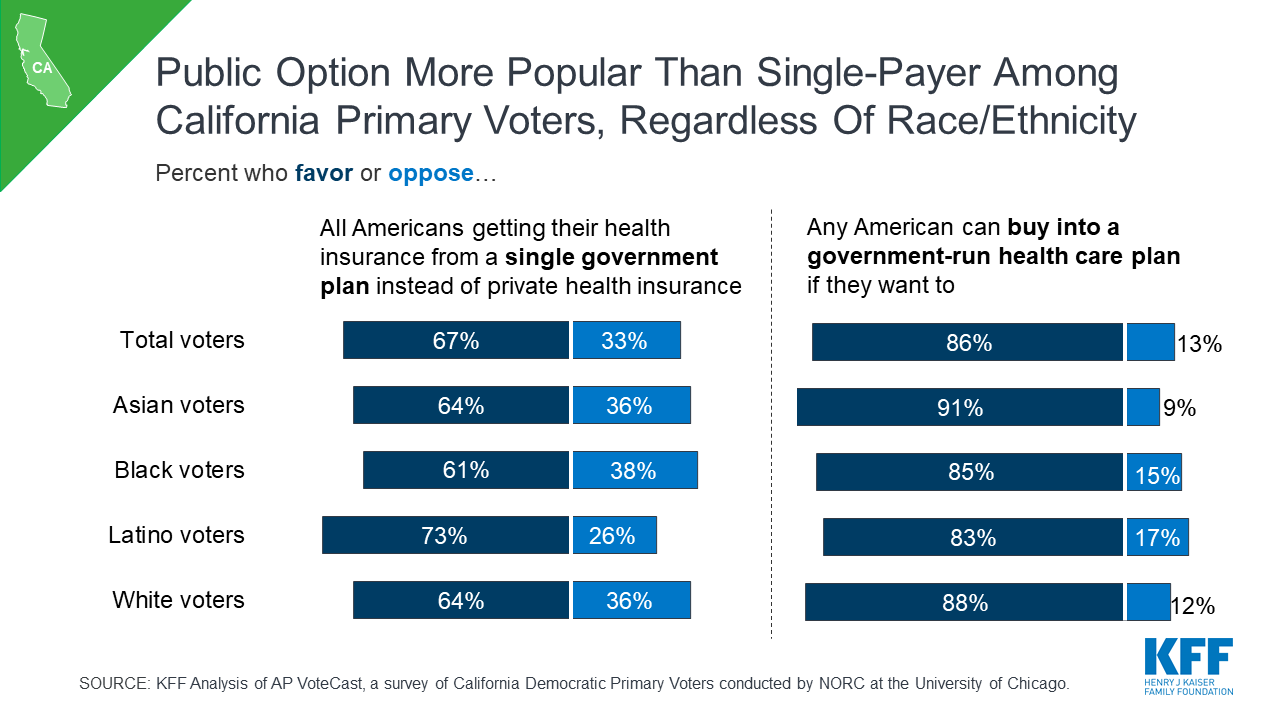
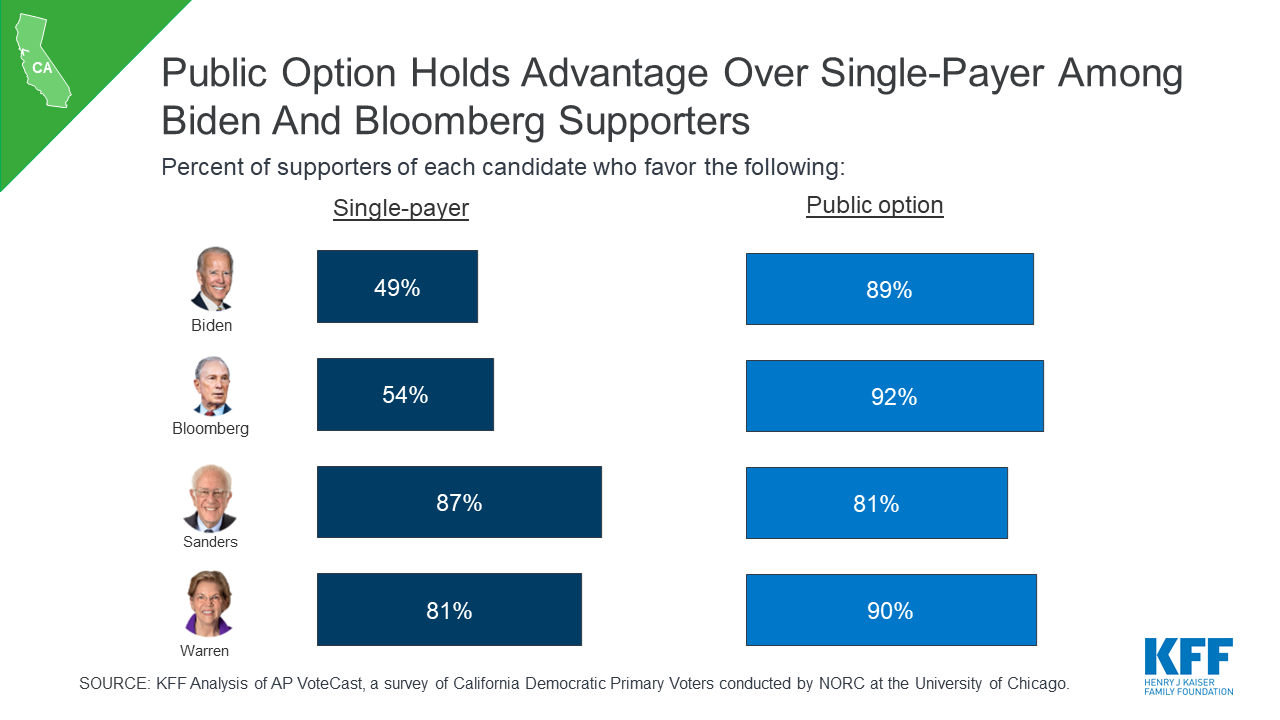
This slideshow examines the role of health care as an issue in the 2020 California Democratic primary and is based on KFF analysis of AP VoteCast, a survey of California primary voters conducted for the Associated Press by NORC at the University of Chicago.
The survey was conducted for seven days, concluding as polls closed, and is based on 4,023 interviews conducted in English and Spanish with registered voters drawn from a random sample of the state voter file and from self-identified registered voters selected from non-probability online panels. The margin of sampling error for results based on the full sample is plus or minus 3 percentage points. Find more details about AP VoteCast’s methodology here.
A new KFF brief explains June Medical Services LLC v. Russo, a challenge to a Louisiana abortion regulation that will be heard at the Supreme Court on March 4, 2020. The brief discusses the issues raised by this case and reviews the potential implications of various rulings.
The June Medical Services LLC v. Russo case is a challenge to a Louisiana law, the Louisiana Unsafe Abortion Protection Act (“Act 620”), which requires physicians who perform abortions in the state to have “active admitting privileges” at a hospital within 30 miles of the facility where the doctor provides abortions. Doctors who perform an abortion without having admitting privileges may be imprisoned or fined and the clinics that employ them can have their licenses revoked and may also be fined or face civil liability.
The law in dispute is nearly identical to the Texas admitting privileges law struck down in Whole Woman’s Health v. Hellerstedt in June 2016, the last time the Court ruled on abortion. In that case, the Court ruled that the Texas admitting privileges law was unconstitutional as the burden the law placed on women’s access to abortion outweighed the benefit.
The Supreme Court will likely issue its decision in this case at the end of its term, in late June 2020. With the election only months away, and party conventions in July, this case once again puts abortion right in the middle of the political debate. While the Court’s decision is unlikely to overturn Roe v. Wade, the decision could affect the type and scope of abortion restrictions that states can enact and the availability of abortion services in Louisiana and other states with similar laws.
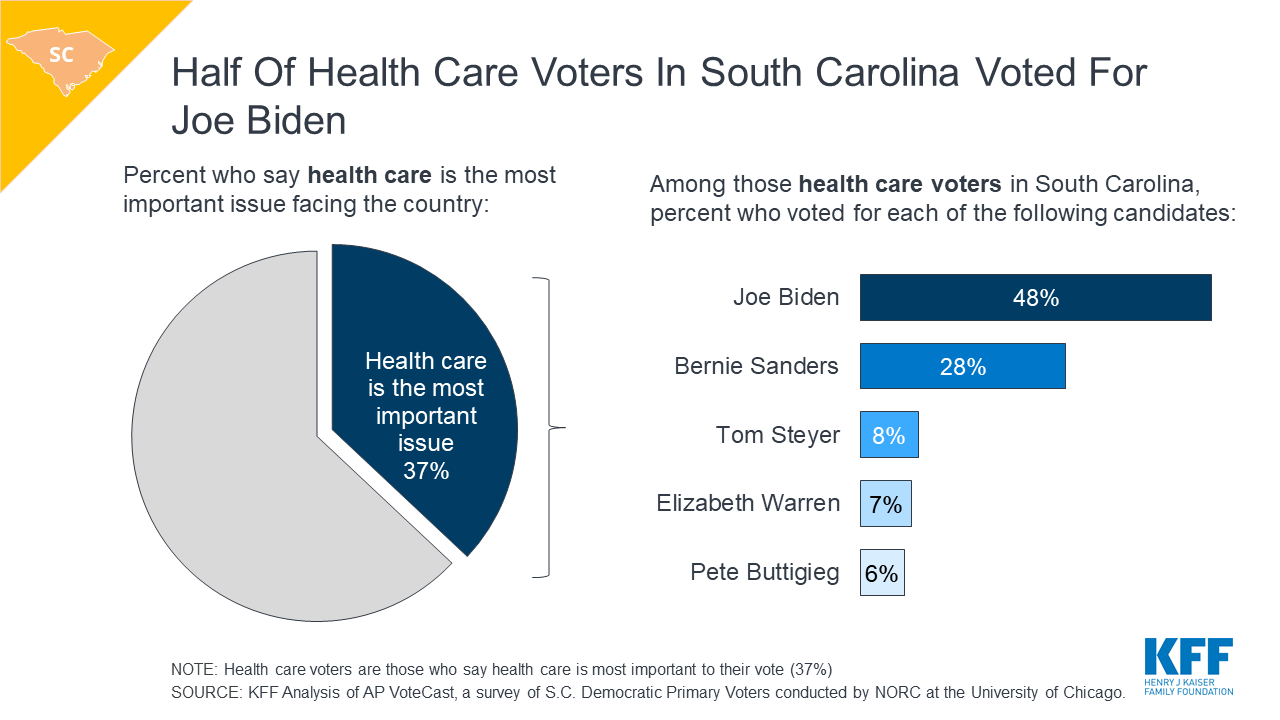
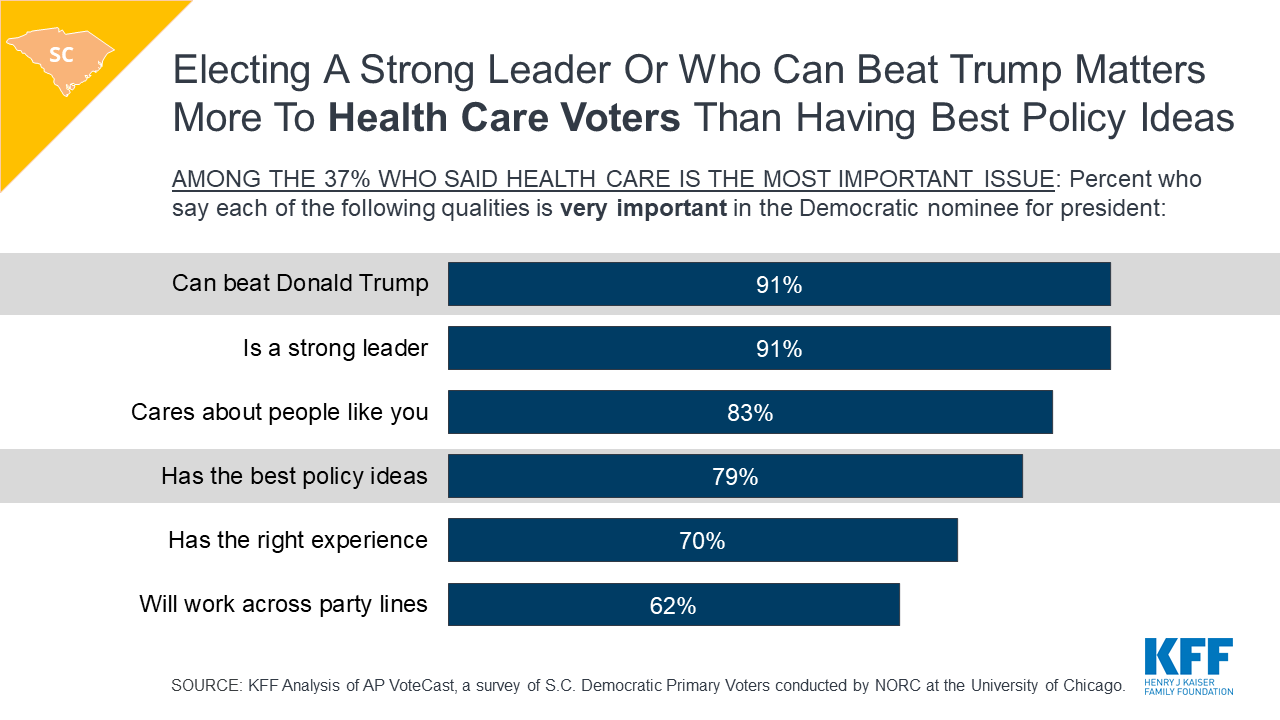
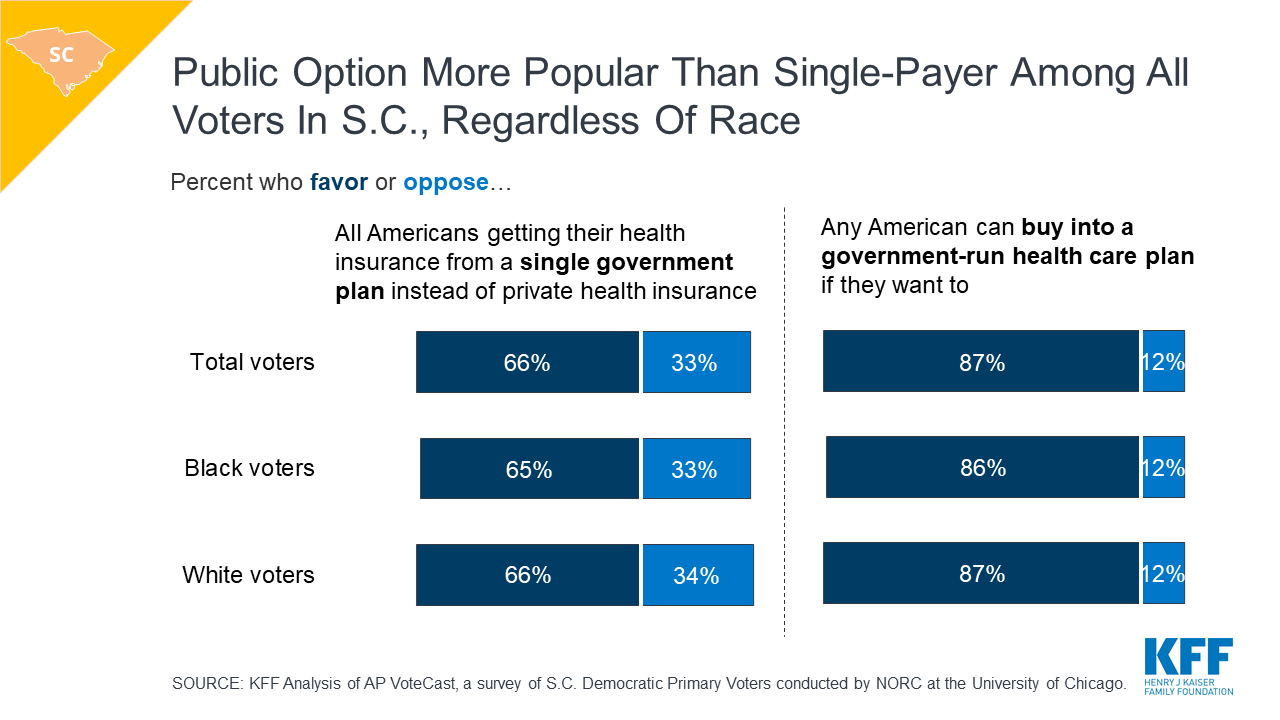
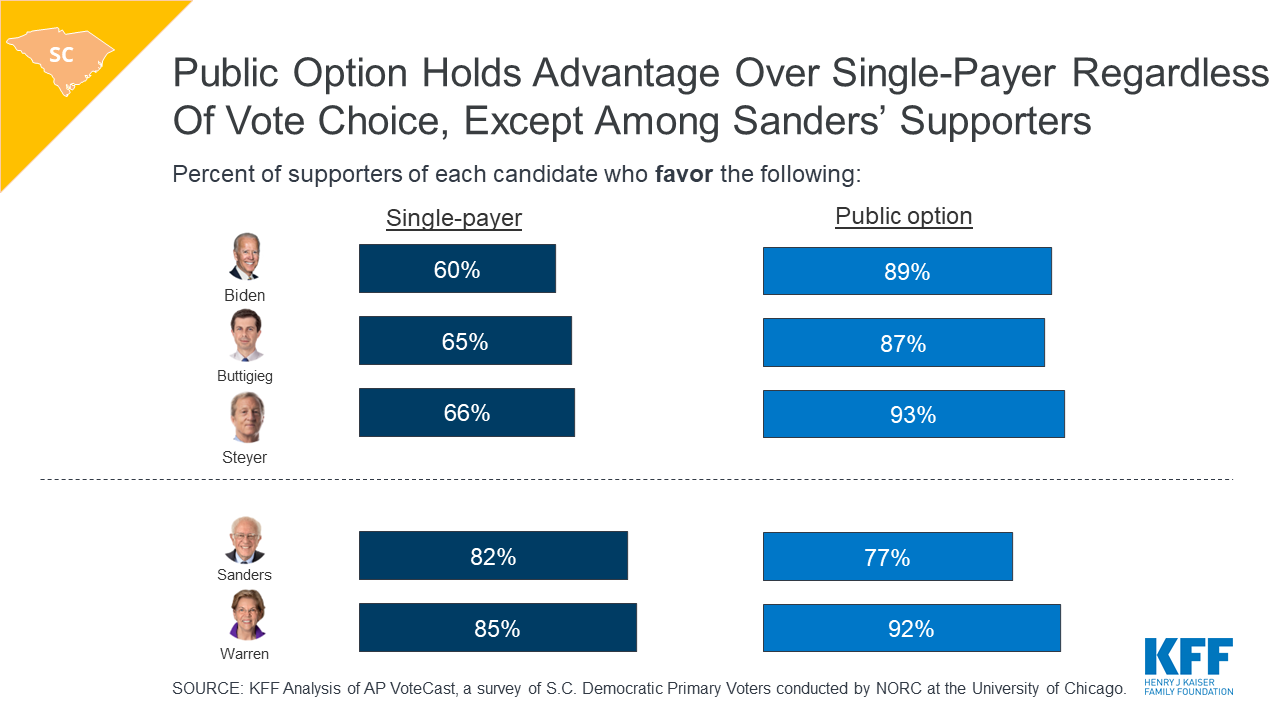
This slideshow examines the role of health care as an issue in the 2020 South Carolina Democratic primary and is based on KFF analysis of AP VoteCast, a survey of South Carolina primary voters conducted for the Associated Press by NORC at the University of Chicago.
The survey was conducted for seven days, concluding as polls closed, and is based on interviews conducted in English and Spanish with a random sample of 1,499 registered voters drawn from the state voter file. The margin of sampling error for results based on the full sample is plus or minus 4 percentage points. Find more details about AP VoteCast’s methodology here.
Early in the 2020 presidential election cycle, one consistent message from Democratic voters so far is that health care is an important issue in deciding their vote.
In this February 2020 post for The JAMA Health Forum, Mollyann Brodie and Ashley Kirzinger examine the role health care has played in the primary election to date, what the polling data says about the issue, including Medicare-for-all and a public option, and what to expect from the issue during the rest of the 2020 election campaign.
Other contributions to The JAMA Forum are also available.
Democrats and Republicans in Congress have been working on legislation to protect patients from surprise medical bills. As of February 2020, no legislation has been passed. The term “surprise medical bills” is usually used to describe charges incurred when an insured individual inadvertently receives care from an out-of-network provider, however there are various other scenarios in which patients might encounter medical bills that they weren’t expecting.
Two in three adults worry about unexpected medical bills
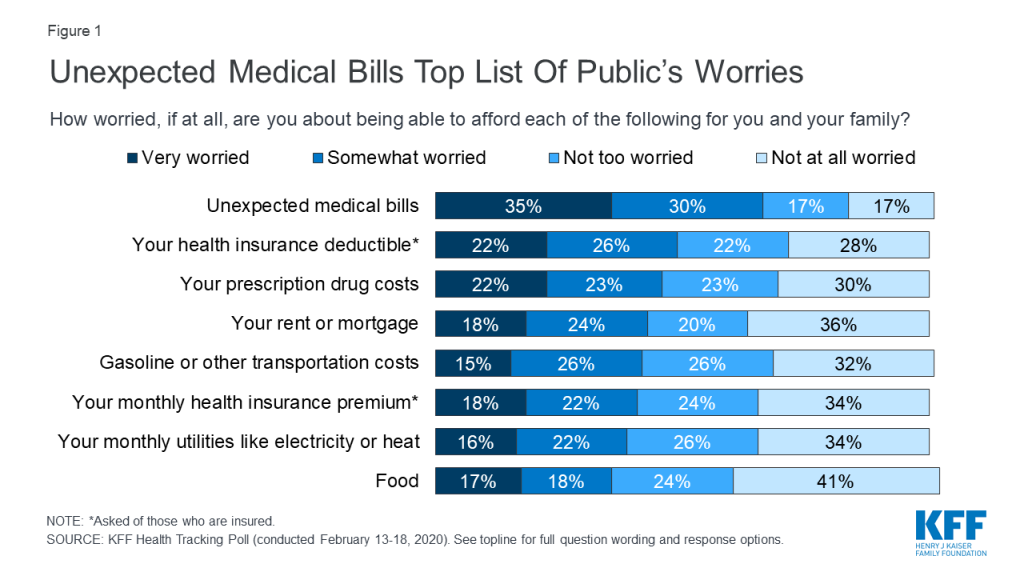
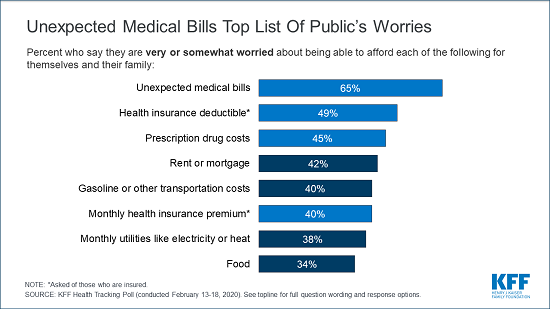
About two-thirds of Americans say they are either “very worried” (35%) or “somewhat worried” (30%) about being able to afford unexpected medical bills. This is larger than the share that say they are worried about affording a variety of expenses, including other types of health care costs as well as other household expenses. About half of insured adults say they worry about being able to afford their health insurance deductible (49%) and four in ten (40%) worry about being able to afford their premiums. More than four in ten adults overall worry about affording prescription drug costs (45%). Similar shares say they worry about affording their rent or mortgage (42%) and gasoline or other transportation costs (40%) and more than a third of adults say they worry about being able to afford utilities (38%) and food (34%).
Among insured adults, those ages 18-64 (65%) are more likely than those 65 and over (54%), most of whom have Medicare coverage, to say they are at least “somewhat worried” about unexpected medical bills. Among adults ages 18-64 without insurance, an even larger share (81%) say they are at least somewhat worried.
Figure 1: Unexpected Medical Bills Top List Of Public’s Worries
One-third of insured adults, 18-64, report RECEIVing An UNEXPECTED MEDICAL BILL IN THE PAST two YEARs
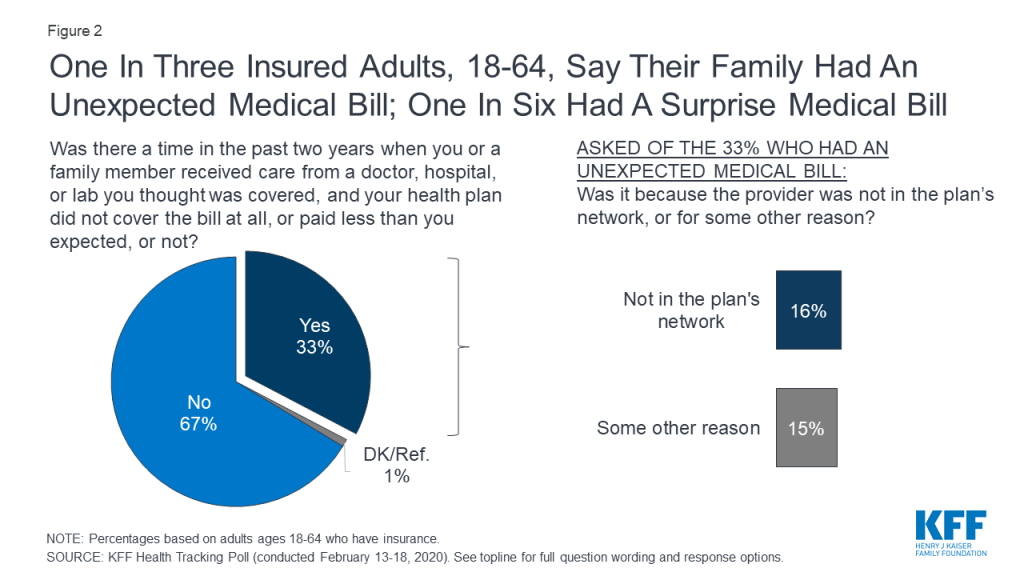
One-third of insured adults ages 18-64 say there has been a time in the past two years when they received an unexpected medical bill after they or a family member received care from a doctor, hospital, or lab that they thought was covered and their health plan either didn’t cover the bill at all or covered less than they expected. Overall, 16% of insured adults ages 18-64 say they have received a “surprise” bill related to care received from an out-of-network provider.
Figure 2: One In Three Insured Adults, 18-64, Say Their Family Had An Unexpected Medical Bill; One In Six Had A Surprise Medical Bill
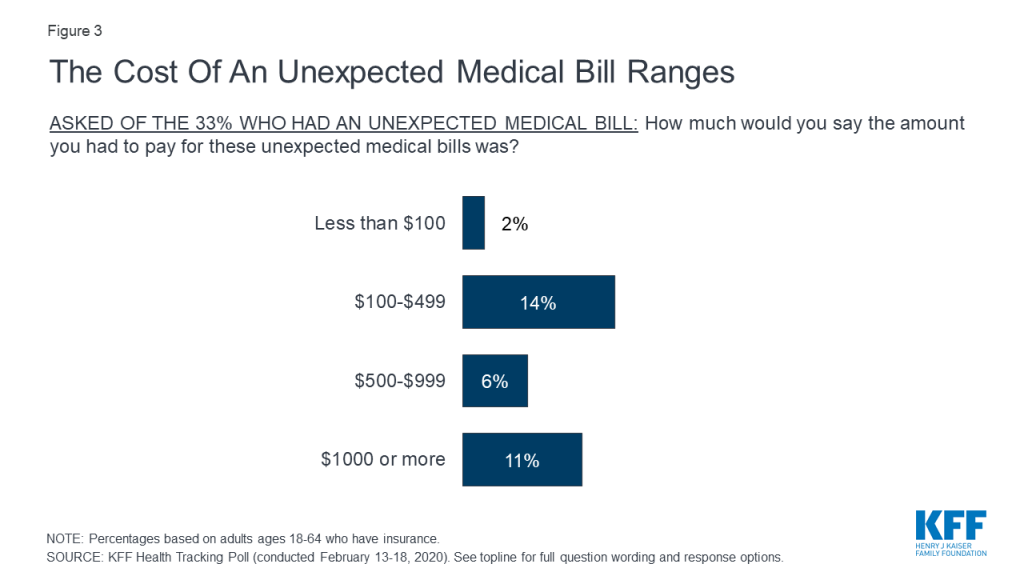
Unexpected medical bills can be of varying amounts. About half (49%) of those who report receiving an unexpected medical bill (16% of all insured adults ages 18-64) say the amount they were expected to pay was less than $500. One-third of those who received an unexpected bill (11% of all insured adults ages 18-64) say the amount was $1000 or more.
Figure 3: The Cost Of An Unexpected Medical Bill Ranges
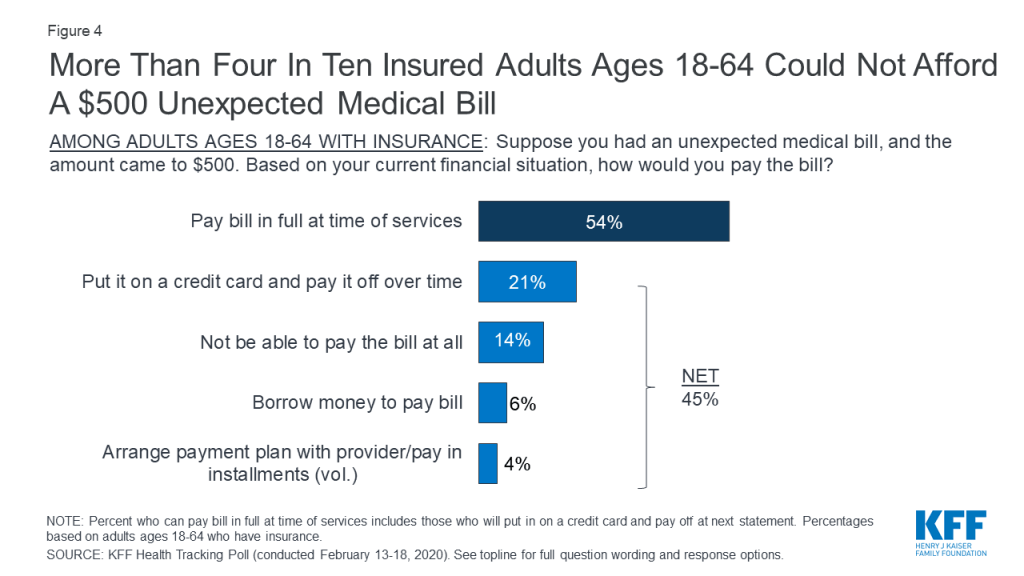
Even relatively small unexpected medical bills can present a financial hardship for some individuals. When asked how they would pay an unexpected $500 medical bill, 54% of insured adults, ages 18-64 say they would pay the bill in full at the time of service or put it on a credit card and pay it off at the next statement, while more than four in ten (45%) would not be able to immediately afford the $500 unexpected medical bill.
Figure 4: More Than Four In Ten Insured Adults Ages 18-64 Could Not Afford A $500 Unexpected Medical Bill
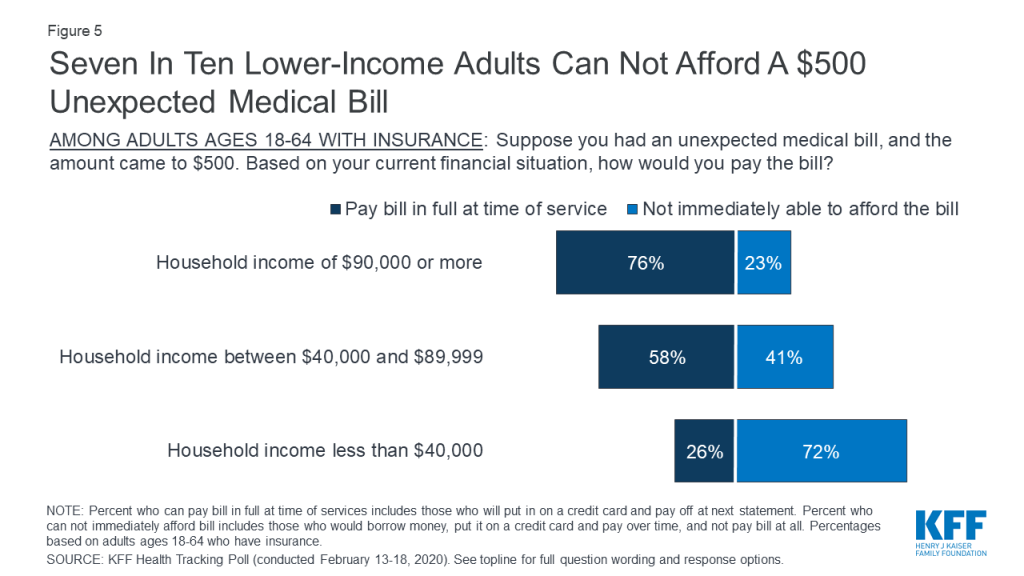
While more than seven in ten insured adults ages 18-64 with household incomes of $90,000 or more (76%) say they would pay their bill in full at the time of service or put it on a credit card and pay it off at the next statement, seven in ten of those with household incomes under $40,000 (72%) would not immediately be able to afford a $500 unexpected medical bill.
Figure 5: Seven In Ten Lower-Income Adults Can Not Afford A $500 Unexpected Medical Bill
Public Wants Congress to take action on surprise Billing
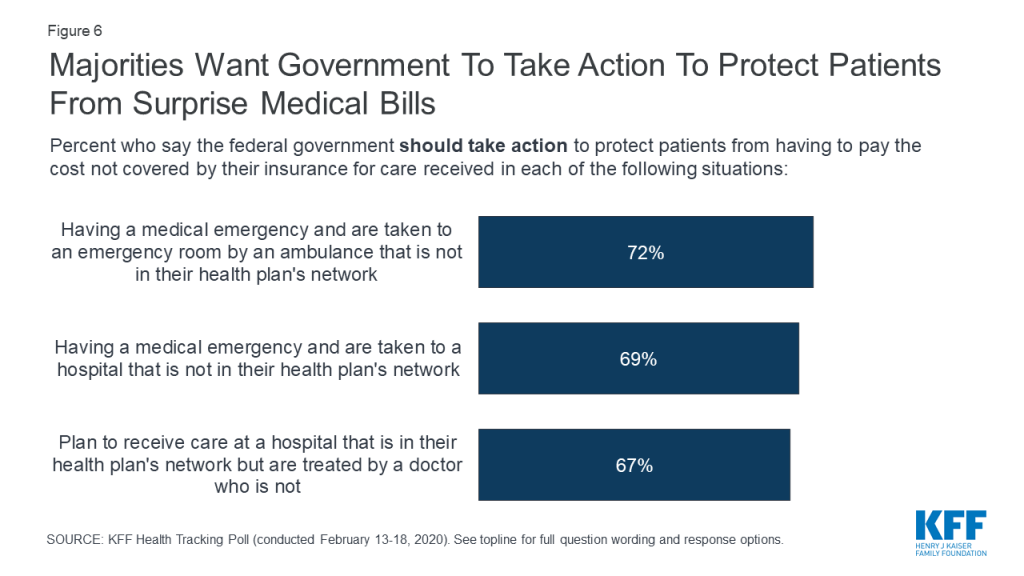
As Congress continues to work on legislation to address surprise medical bills, this month’s KFF Health Tracking Poll finds broad public support for federal government actions to protect patients. At least two-thirds of the public say the federal government should take action to protect patients from covering the cost of care when they are taken to an emergency room by an out-of-network ambulance (72%), when they are taken to an out-of-network emergency room during a medical emergency (69%), or when they are at an in-network hospital but treated by an out-of-network doctor or specialist (67%).
Figure 6: Majorities Want Government To Take Action To Protect Patients From Surprise Medical Bills
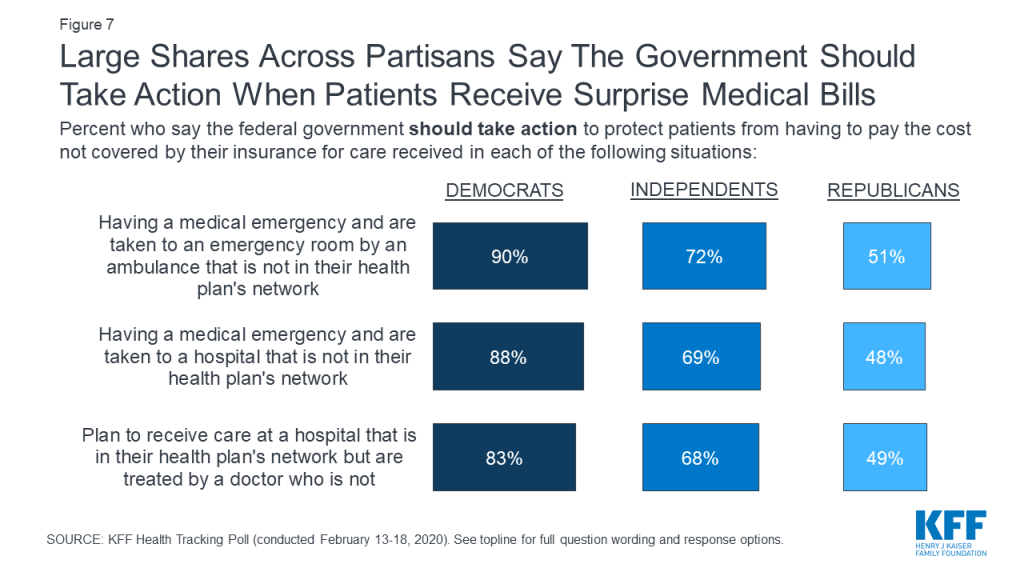
Across partisans, more than eight in ten Democrats and more than two-thirds of independents think the federal government should take action to protect patients from having to pay costs not covered by their insurance when they are taken to an emergency room by an out-of-network ambulance, taken to an out-of-network emergency room during a medical emergency, or when they are at an in-network hospital but treated by an out-of-network doctor. Among Republicans, about half think the federal government should take action to protect patients from surprise bills in these situations.
Figure 7: Large Shares Across Partisans Say The Government Should Take Action When Patients Receive Surprise Medical Bills
When it comes to family budget concerns, unexpected medical bills top Americans’ list of worries, with two-thirds (65%) of the public saying they are at least somewhat worried, including 35% who say they are “very” worried, the latest KFF Health Tracking Poll finds.
Fewer Americans say they are at least somewhat worried about seven other potential family expenses, including their health insurance deductible, transportation costs including gas, prescription drug costs, their rent or mortgage, their health insurance premiums, or paying for food.
Unexpected bills do not only mean surprise bills for out-of-network care to consumers. One third of insured adults ages 18-64 (33%) say their family has received an unexpected medical bill in the past two years, including one in six (16%) who say it was because the provider was out of network.
Congress continues to weigh whether and how to protect insured patients from “surprise” medical bills, a term that often refers to unexpected bills when a patient unknowingly receives care from an out-of-network provider.
Not surprisingly, the poll finds broad support for federal action to protect patients from surprise medical bills, including situations when they are taken to an emergency room by an out-of-network ambulance (72%), when they are taken to an out-of-network hospital during a medical emergency (69%), and when they are treated by an out-of-network doctor or specialist while in an in-network hospital (67%).
At least eight in 10 Democrats and two-thirds of independents support federal action in each of these three situations. Among Republicans, about half support federal action in each situation. The polling does not speak to the policy debate about the technical details of how best to pay for surprise bills while protecting consumers.
Designed and analyzed by public opinion researchers at KFF, the poll was conducted February 13-18, among a nationally representative random digit dial telephone sample of 1,207 adults. Interviews were conducted in English and Spanish by landline (302) and cell phone (905). The margin of sampling error is plus or minus 3 percentage points for the full sample. For results based on subgroups, the margin of sampling error may be higher.
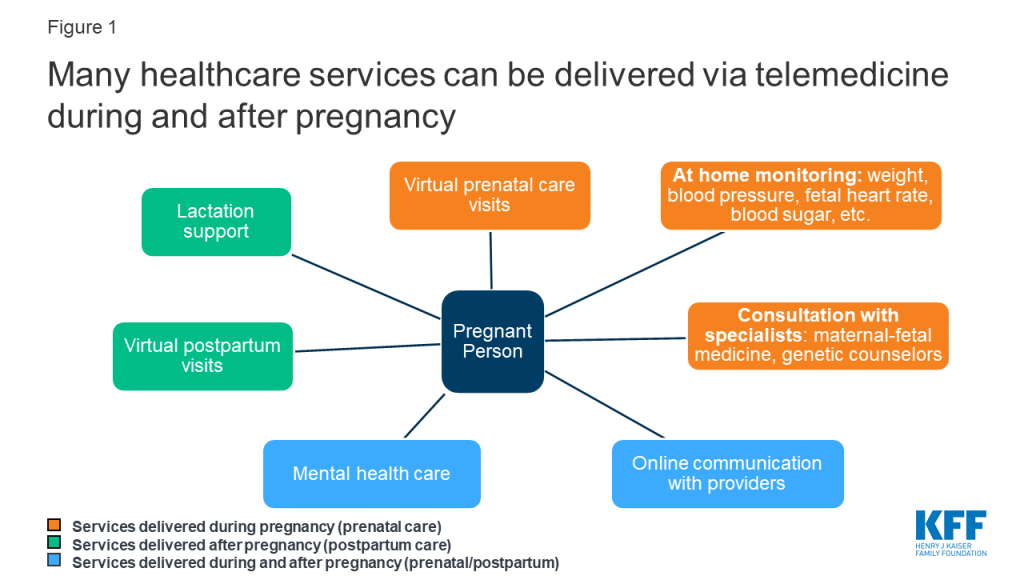
A range of obstetrical services have been implemented using telemedicine by a handful of medical centers. In the prenatal period, these include using videoconference to replace in-person visits, implementing at-home monitoring, and enabling consultation with remote specialists, including maternal fetal medicine doctors. In the postpartum period, telemedicine has been used to enable earlier postpartum follow up visits and access to lactation consultants. Throughout pregnancy and postpartum, telemedicine can connect patients to mental health care.
Although there are a number of uses for telemedicine in obstetrics, implementation of such technologies has been is minimal. Limiting factors include high startup costs, limited internet access in rural areas and inconsistent reimbursement requirements across different state Medicaid programs and commercial insurance plans.
As half of births in the U.S. are financed by Medicaid, expanded access to these technologies in pregnancy will also largely depend on state and federal decisions regarding telemedicine coverage. Only 19 state Medicaid programs reimburse for telemedicine services delivered to the patient in their home, which limits the opportunities to expand telemedicine approaches to provide care to pregnant patients on Medicaid.
Growth in the field will likely depend on developing models for how to finance use of telemedicine in pregnancy, investments in broadband, research demonstrating improved maternal and infant outcomes, and payor willingness to reimburse providers for services provided to patients through a telemedicine platform.
Introduction
While global trends show maternal morbidity and mortality improving, the U.S. stands out as one of the only countries where maternal morbidity and mortality have actually worsened over the last few decades. The U.S. has lagged behind other high-income countries, often attributed to poor access to prenatal care, high rates of chronic disease, and the highest rate of skipping necessary health care due to cost barriers. Poorer obstetrical outcomes are particularly pronounced among Black women and American Indian/Alaska Native women, as well as women living in rural areas. Ten million women in the U.S. live in rural counties where obstetricians are scarce and pregnant people often must travel significant distances to access care due to hospital closures. A recent study found that rural residents have a 9% greater likelihood of severe maternal morbidity/mortality than their urban counterparts because of factors including workforce shortages, transportation barriers, the opioid epidemic and limited access to specialty care.
Telemedicine, or telehealth, is one proposed method to address these disparities, defined broadly as the provision of health care services by health care professionals, using technology to exchange information in the diagnosis, treatment and prevention of disease. In fact, the American College of Obstetricians and Gynecologists (ACOG) has endorsed telemedicine to improve maternal morbidity and mortality, encourages OBGYNs to adopt these technologies. ACOG writes that telehealth opportunities “enhance, not replace, the current standard of care.” This brief outlines how telemedicine is currently used in obstetrical care, how these services are financed and regulated, and reviews federal efforts to expand the use of telemedicine, particularly to address maternal health disparities.
Telemedicine in Obstetrical Care
A broad range of pregnancy-related services can be offered via telemedicine. Telemedicine has been used for innovative approaches to prenatal/postpartum care, at-home monitoring for conditions like diabetes and hypertension, and for phone/video consultation with specialists (i.e. high-risk obstetricians, lactation consultants, mental healthcare providers) (Figure 1).
Figure 1: Many healthcare services can be delivered via telemedicine during and after pregnancy
Utilization for pregnancy-related care is very low. Using a sample of outpatient medical claims of reproductive age women enrolled in large employer plans, KFF analyzed telemedicine utilization within the following domains of pregnancy-related care: supervision of normal and high-risk pregnancies, mental health disorders associated with pregnancy and lactation services.1 Of all de-duplicated claims analyzed within pregnancy-related care, just 0.1% were delivered via telemedicine. The majority of telehealth encounters took place over the phone, while a minority took place online. Examples of the claims delivered via telemedicine included visits for lactation complications, postpartum mood disturbances, postpartum follow up and routine prenatal care. These data do not include uninsured patients or patients with public insurance, and also may not capture services delivered using bundled payment plans for pregnancy care.
Prenatal Care: Reducing the Need to Travel
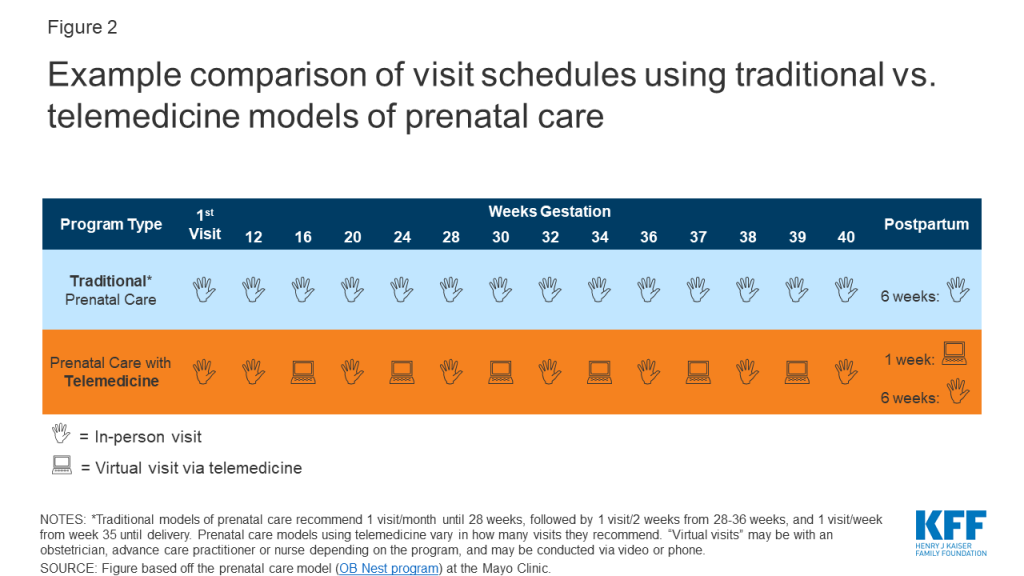
Traditional prenatal care models recommend upwards of 14 in-person visits2 throughout pregnancy. This requires significant travel time and time away from work or family responsibilities. But only some prenatal visits truly require in-person care, like those for ultrasounds, lab testing and vaccinations. Many visits are to provide patient education, answer questions and monitor maternal and fetal vitals, measurements that could be taken at home if given the supplies. Research suggests that fewer prenatal visits are safe for low-risk pregnancies. In response, some medical centers have started to use telemedicine “virtual visits” via videoconference or phone to replace some in-person visits. Patients are given instructions and supplies to monitor blood pressure, weight, fetal heart rate and fundal height at home. These programs allow for patients to maintain continuity of care with their OB providers, while partaking in parts of their care from home or a convenient location. This can be especially helpful for patients who need to travel long distances to care, or have barriers to taking time off from work or family responsibilities. Figure 2 provides an example of how a virtual prenatal care schedule may compare to traditional care.
Figure 2: Example comparison of visit schedules using traditional vs. telemedicine models of prenatal care
Currently, the vast majority of prenatal care in the U.S. happens in-person, but there are some medical centers who have begun to implement telemedicine in their prenatal care (Table 1). Research shows comparable pregnancy outcomes between telemedicine and traditional care groups, with the caveat that in one program, patients using virtual visits had a higher incidence of preeclampsia than in traditional care. Telemedicine was also saved patients time and potentially lowered visit-related costs to the patient.
Table 1: Examples of Prenatal Care Programs Using Telemedicine
Virtual prenatal care program for low-risk pregnancies
Videoconferencing with OB provider in lieu of some in-person visits
At home monitoring: weight, blood pressure, fetal heartbeat
Study of 200 low-risk parous women carrying a singleton fetus randomized to combination telemedicine and 5 scheduled in-clinic prenatal visits or traditional in-clinic care
Fewer in-clinic prenatal visits for telemedicine group compared to the traditional prenatal group (7.2 vs 11.3 visits)
Visit-related costs significantly lower for telemedicine: cost savings $13/telemedicine visit and an overall patient savings of approximately $56
Time savings: 40 mins/telemedicine visit and an overall time savings of 3 hours
Fewer prenatal visits with telemedicine group (7.8 vs. 10.2 visits)
Similar patient satisfaction
Not powered to comment on pregnancy outcomes
At-Home Monitoring
High risk pregnancies can also benefit from telemedicine, particularly through use of at-home monitoring for high blood pressure and diabetes, which is then transmitted to their providers. Studies show patients value at-home monitoring, as it allows for active participation in their care and promotes self-efficacy. For patients with diabetes, at-home monitoring of blood sugar may allow for fewer visits to diabetes specialists, and improved health-related quality of life. A review of 7 studies found the use of telemedicine for blood sugar monitoring was as effective as standard care in achieving glucose control in pregnancy. Multiplestudies of women with gestational diabetes showed similar pregnancy outcomes between telemedicine and traditional care.
Hypertension management normally requires frequent in-person checks.3 With telemedicine, patients may monitor their blood pressure at home, with results sent to their providers who can decide if they need in-person evaluation. Two studies of women with hypertension in pregnancy (both prenatal and postpartum) found at-home blood pressure measurement was feasible in detecting spikes in blood pressure and acceptable to most patients. More research is warranted to compare blood pressure control and pregnancy outcomes between telemedicine and traditional in-person models.
Consultation with Specialists
Many rural areas lack access to specialists, in particular maternal-fetal medicine doctors (MFMs) (high risk obstetricians). In fact, in 2010, there were only 1,355 MFMs across the entire U.S., with nearly all in urban centers. With telemedicine, patients and their local prenatal care providers can videoconference with a MFM or other specialist rather than traveling to see them in-person. Specialists can not only evaluate patients remotely and recommend management plans using this technology, but can even review ultrasound imaging as a remote technician conducts the exam. Telemedicine can also connect patients to genetic counselors, fetal cardiologists, and diabetes educators (Table 2).
Evaluations of these programs show that remote consults are generally feasible, acceptable to patients, and can save patients time and money on travel. Telemedicine may also increase access to specialty care for patients who may otherwise forgo this care due to lack of availability in their communities. Having specialists accessible via telemedicine may also encourage local providers to maintain care of their high-risk patients and safely facilitate more deliveries in nearby hospitals.
Table 2: Telemedicine Specialist Consultations in High-Risk Pregnancies
In telemedicine group, lower rates of premature delivery & NICU use compared to in-person consults
No differences in infant birth weight
Telemedicine group saved $90.28/consult in travel and work expenses. 56% saved >2 hours/visit driving. 74% said telemedicine allowed family to be present for the visit. 11% would have otherwise forgone MFM care.
80% of telemedicine users satisfied with their visit, 95% would use telemedicine in the future.
University of Arkansas Medical Sciences (UAMS) “ANGELS” program (AR)
Telemedicine consults with MFMs and genetic counselors via videoconference
Patients perform at-home monitoring
24/7 nursing call center available to patients
Collaborates with Arkansas Medicaid
Study of 156 women (2011-2012) found use of telemedicine consults for high-risk pregnancies feasible. 75% of women able to deliver at local hospitals.
Study of referral trends in AR Medicaid patients: telemedicine MFM consults increased from 7.6% (2001) to 13.3% (2006). Mean distance to UAMS hospital 82.9 miles.
Telemedicine consults with MFMs, genetic counselors and diabetes educators
Process: local physicians make referral to STORC, who sends an advanced practice clinician and ultrasonographer to remote sites à specialist videoconferences and remotely reviews ultrasound in real time
Goal: promote delivery at local hospitals
Services covered by BlueCross BlueShield and TN Medicaid
Telemedicine consults with MFMs and fetal cardiologists
Goal for care to remain with local doctor
Via videoconference, discuss diagnoses/treatment plans
Interpret diagnostic tests remotely (ultrasounds, MRIs and fetal echocardiograms)
Study of fetal telecardiology program: 455 ultrasounds performed remotely over 37 months at telemedicine clinic 250 miles from the hospital
1 false negative testing result for detection of fetal cardiac anomaly
Estimated cost of care: $61 if done locally via telemedicine, $581 if conducted at distant hospital
Telemedicine found to be feasible, accurate and acceptable to patients. 100% of patients preferred having evaluation locally via telemedicine, rather than traveling
Telemedicine can also facilitate direct communication with providers, via online platforms or web-based apps. For example, participants in the Mayo Clinic telemedicine program can message nurses and peers through an online platform. Similarly, on Due Date Plus, a free mobile app created by Wyoming Medicaid patients can directly access nursing support. This app also includes pregnancy education, appointment reminders and information about Medicaid benefits and providers. A study of 85 app users compared to over 5000 non-users found app use was associated with a lower risk of delivering a low birth weight infant and a higher likelihood of completing prenatal care appointments.
Postpartum Visits
Postpartum care is key to addressing not only the physical well-being of the patient after delivery, but also their emotional and social well-being, breastfeeding concerns, contraceptive needs, birth spacing and any ongoing chronic disease management. However, the postpartum period, is often overlooked. Traditionally, patients wait 6 weeks before their postpartum visit, even though problems may arise before then. ACOG now recommends contact with the patient within 3 weeks of delivery, but up to 40% of women do not attend any postpartum visit. Use of telemedicine in postpartum care could help address this, through use of app-based support, enhanced phone or text communication with providers, and at-home blood pressure monitoring.
Most programs using telemedicine for prenatal care have a postpartum telemedicine visit built into the program. For example, patients enrolled in MultiCare’s program see a nurse practitioner via a virtual visit at 1 week postpartum, and their doctor in person at 6 weeks postpartum. Patients in the Mayo Clinic program have a phone call with a nurse at 1 week postpartum, before seeing their doctor in clinic at 6-8 weeks. Patients in these telemedicine programs already have monitoring equipment at home, which means they can monitor their blood pressure postpartum, important in delayed preeclampsia.
Lactation Support
Several telemedicine platforms allow individuals with breastfeeding difficulties to access lactation consultants from their home or a nearby telemedicine “hub” (Table 3). These “telelactation” services allow clients to message consultants (typically International Board Certified Lactation Consultants), and participate in virtual visits by phone or videoconference. This model can offer benefits over in-person care, including increased convenience, eliminating travel costs and allowing for more timely delivery of services, often within minutes or hours of when the need arises. Virtual visits can be challenging, however, especially for those with inadequate internet access and limited computer literacy.
NOTES: IBCLC = International Board Certified Lactation Consultants. WIC = Women, infants and children program.SOURCE: Uscher-Pines et al. The emergence and promise of telelactation. 2017.
A recent review of 23 articles from 2000 to 2018 evaluated lactation support delivered via phone calls, videoconference, text messaging, mobile apps and interactive websites. While evidence in the field is limited due to small sample sizes, researchers found telelactation services were feasible and associated with user satisfaction. In a study of 10 mom-baby pairs who videoconferenced weekly with a lactation consultant, 100% of women were comfortable talking about breastfeeding via videoconference and found the service helpful. Sound quality and connectivity issues were cited as barriers. Further, in a study of 724 women, those who received weekly telephone support from lactation consultants were significantly more likely to continue breastfeeding at 1 and 2 months postpartum as compared to those with standard care.
Obstetrics & Mental Health
Many individuals require mental health services while pregnant or postpartum. This could include help for mood disorders, including postpartum depression and anxiety, postpartum psychosis, trauma, and substance use disorders. Some medical centers have started to offer telemedicine mental health services alongside pregnancy care. The Medical University of South Carolina (MUSC) offers behavioral health telemedicine visits for pregnant/postpartum patients living outside the Charleston area, and accepts most insurance plans. The University of Arkansas Medical Sciences will expand their Women’s Mental Health Program in the upcoming year, to include telemedicine services for pregnant patients. Yale University received a large federal grant to study the use of telemedicine for substance use disorders in pregnancy.
Patients can also access mental health clinicians through Amwell, an online platform offering video visits to diagnosis and treat postpartum depression. This service is accessed completely online, rather than in conjunction with an in-person health system. An initial psychiatry visit costs $199. Follow up visits cost $95; Amwell accepts many private insurance plans but does not accept public insurance at this time.
Research to support use of telemedicine for prenatal/postpartum mental health is limited. A systematic review (10 studies) showed cognitive behavioral therapy via telemedicine (phone, email, app/websites) overall resulted in improvements in maternal depression, although the quality of evidence varied. Preliminary data from another systematic review (4 studies) on telemedicine for postpartum mood disorders suggested improvement in symptoms at 3-12 months post-intervention. The crossover between reproductive health and psychiatry constitutes a growth opportunity in telemedicine, especially given that outside of pregnancy, tele-mental health is reimbursed more often than other specialties.
Cost Considerations
It remains unclear how many of the aforementioned telemedicine services in obstetrics are financed and how cost compares to in-person care. For medical centers experimenting with video visits for prenatal care, these virtual visits may be able to be included as part of a bundled care model, as is the case for the Mayo Clinic OB program. For practices using fee for service models, it is less clear how the cost of using telemedicine would compare to an in-person prenatal care visit. An important consideration when using telemedicine to consult with specialists is for referring providers to ensure consulting providers are in-network for their patients.
For at-home monitoring in pregnancy, purchasing of the monitoring devices poses a challenge to implementing this care model. While some medical practices provide devices free of charge to patients for home monitoring, others require the patients purchase equipment out of pocket, which is prohibitive for low-income patients. This may involve purchasing a scale, blood pressure cuff, fetal doppler monitor and glucometer, not to mention having access to a smartphone or computer with reliable internet.
Coverage Regulations
While the Affordable Care Act (ACA) requires private insurance plans4 and Medicaid expansion programs5 to cover maternity care without cost sharing to the patient, including prenatal screenings and lactation consultations, there is no federal requirement to reimburse for telemedicine, or telemedicine in pregnancy. Each state regulates and reimburses for telemedicine differently, and regulations differ between public and private insurance plans. In a recent committee opinion, ACOG encouraged insurance companies to provide clear guidelines regarding telehealth coverage and reimbursement, as variation in payment models poses a barrier to telehealth implementation.
Medicaid
In 2018, Medicaid financed 42% of all births in the U.S., including 65% of births for Black women, 59% of births for Hispanic women, and 77% of births for women under 20 years old. Under federal law, Medicaid must cover pregnancy-related services and provide 60 days of postpartum coverage for women with incomes up to 133% of the federal poverty line (FDL), while many state Medicaid programs extend eligibility beyond this income level. While maternity care services may be covered in-person, few states require coverage if delivered via telemedicine.
Only a handful of state Medicaid programs specifically address obstetrical care in their telemedicine reimbursement laws; some choose to explicitly cover services like video visits with an OBGYN or behavioral health provider in pregnancy, real-time OB ultrasounds via telemedicine, and at home monitoring during pregnancy for certain conditions (Table 4). Meanwhile, North Dakota’s Medicaid program specifically excludes coverage of live video services for use in case management for high-risk pregnancies. Only 19 state Medicaid programs reimburse for telemedicine services delivered to the patient in their home, therefore limiting the reimbursement of tele-lactation services and at-home monitoring in pregnancy. Most states do not specifically mention pregnancy-related care in their Medicaid reimbursement laws and policies, meaning these technologies may be out of reach for low-income women.
Table 4: Examples of State Medicaid Programs that Require Coverage of Some Telemedicine Services in Pregnancy
State
Required to cover
Eligible conditions include:
AZ
Live video
Services within obstetrics/gynecology and behavioral health
IL
At-home uterine monitoring
Pregnancies after 24 weeks complicated by multiple gestations or preterm labor
At-home blood pressure monitoring
For pregnancies complicated by pregnancy-induced hypertension (does not cover patients with chronic hypertension)
MA
Live video
Behavioral health services for pregnant/postpartum patients
MO
At-home monitoring
Pregnancy but only if other risk factors present like documented history of care access challenges, documented history of missed appointments, etc.
TX
At-home monitoring
Pregnancy, diabetes, hypertension
VA
Live video
Specialty procedures like obstetric ultrasound
At-home monitoring
Pregnant women who are injecting insulin
NOTES: This is not an exhaustive list of telemedicine services covered during pregnancy under Medicaid. Rather, this list highlights only those states that specifically mention pregnancy-related conditions in their telemedicine laws.SOURCE: Center for Connected Health Policy. State Telehealth Laws & Reimbursement Policies. Fall 2019.
Private Insurance
No states specifically require private insurance plans to cover pregnancy services in their telemedicine reimbursement laws. However, in approximately half of states, if telemedicine services are shown to be medically necessary and meet the same standards of care as in-person services, private insurance plans must cover telemedicine services if they would normally cover the service in-person, called “service parity.” Fewer states require “payment parity,” meaning telemedicine services are reimbursed at the same rate as equivalent in-person services. Before utilizing telemedicine services during pregnancy, patients would need to check with their insurance carrier for coverage information, as these services are not explicitly required to be covered. KFF’s brief on telemedicine in sexual and reproductive health goes into further detail on how states regulate telemedicine more generally, including licensing/malpractice concerns, online prescribing laws, and reimbursement/coverage of services.
Access and Policy
The majority of pregnant individuals do not have access to telemedicine services at this time. Only a handful of medical centers have adopted telemedicine into their prenatal care schedules. While more have incorporated telemedicine services for specialist consults, including MFMs, lactation consultants and psychiatric care, utilization is minimal. Aside from insurance considerations, barriers to initiating a telemedicine program include significant planning time and start-up costs, reliable broadband connections both at the site of the provider and the patient, HIPPA compliance, and integration into the electronic health record. This can be particularly challenging in low-resource and rural settings; however, efforts are in place by the Federal Communications Commission (FCC) to increase internet access for use in telehealth for these populations. Clinicians must also ensure they are licensed to practice in other states (if applicable), and their malpractice insurance covers telemedicine.
A few states have included telemedicine interventions in their plans for addressing maternal health care disparities. For example, the Montana Obstetric and Maternal Support program launching in 2020 received $10 million from the federal government to address maternal health disparities; the program will focus in part on expanding telehealth interventions, including connecting rural patients and clinicians to OBGYN specialists in urban communities. Similarly, Maine is one of 10 states to receive a Centers for Medicare and Medicaid funded grant to tackle opioid use disorder in pregnancy; part of their approach will include use of telehealth to increase provide capacity across the state. Other states have introduced legislation to expand telemedicine’s use. In 2019, New Jersey proposed bills to create telemedicine practice standards for midwives and genetic counselors. Texas proposed multiple telemedicine projects, including researching the costs/benefits of reimbursing prenatal and postpartum care, establishing a program to treat mood disorders in pregnancy and requiring hospitals to have obstetricians available by telemedicine or in-person at all times, but these efforts all failed to pass. At a federal level, several bills addressing maternal morbidity and mortality have included telemedicine interventions, all of which are currently referred to or in committee (Table 5).
Table 5: Federal Maternal Health Legislation that Incorporate Telemedicine
Would study the efficacy of using telemedicine in maternity care for Medicaid beneficiaries (including demographics of users, health outcomes, patient satisfaction and cost savings)
NOTES: As of January 2020, all bills have been either referred to or are being discussed in committee.
Looking forward
Despite low utilization at this time, there are a myriad of ways telemedicine can be integrated into prenatal and postpartum care. These technologies could be particularly useful in addressing rural-urban health disparities in maternal care, by improving access to specialists like MFMs and mental health providers, enabling at-home monitoring of hypertension and diabetes, and reducing transportation barriers. While these interventions hold great promise in improving access and maternal/infant health disparities, major implementation challenges persist. Nearly half of births in the U.S. are financed by Medicaid, however state Medicaid programs rarely require coverage for telemedicine services in pregnancy, limiting utilization in a significant portion of the pregnant population. In addition, limited internet access among low-income and rural populations and high startup investments for health systems pose challenges to telemedicine’s implementation. Federal and state efforts to support use of telemedicine services for maternity care exist, but expansion of these services will likely depend on decisions regarding insurance coverage and reimbursement. Broadening the reach of telemedicine to more underserved communities may help improve maternal and infant health outcomes.
Endnotes
KFF analyzed a sample of medical claims obtained from the 2017 IBM Health Analytics MarketScan Commercial Claims and Encounters Database, which contains claims information provided by large employer plans. We only included claims for women ages 15-44 who were enrolled in a plan for more than half a year. Claims were de-duplicated, meaning they were limited to one claim per person per day. We defined outpatient telemedicine utilization to include any clinical interaction between a patient and health care provider (physician or non-physician), delivered via live-video, remote patient monitoring, store and forward technology or telephone. Telehealth claims were captured using procedure modifiers specific to telehealth, including GT and 95 for synchronous telecommunication and GQ for asynchronous telecommunication, and “place of service 2” to indicate delivery by telemedicine. We also analyzed the following procedure codes specific to telehealth: 99441-99444, 98966-98969, G2010, G2012, G9868-G9870, S9110, G0071. Inpatient and emergency department uses of telemedicine were excluded, as were provider-provider interactions. Codes used to capture pregnancy-related care are as follows: Z34, Z39.2, O09, O10-16, O20-29, O30-48, O85-92, 094-O9A, Z34, Z39.2, O09, O10-16, O24, F53, F53.0, F53.1, O99.34, O99.340, O99.341, O99.342, O99.343, O99.344, O99.345, O90.6, B37.89, L01.00, O91.02, O91.03, O91.13, O91.219, O91.22, O91.23, O92.03, O92.13, O92.20, O92.29, O92.3, O92.4, O92.5, O92.6, O92.70, O92.79, Q83.8, R20.3, Z39.1. CPT codes for ultrasound imaging in pregnancy were also analyzed: 76801, 76802, 76805, 76810, 76811, 76812, 76813, 76814, 76815, 76816, 76817, 76818, 76819, 76825, 76826). ↩︎
Traditional prenatal care models typically recommend 1 visit per month in the 1st trimester, 2 visits per month in the 2nd trimester and 1 visit per week in the 3rd trimester. ACOG now recommends all patients are seem in the first 3 weeks postpartum, but traditionally patients were seen at 6 weeks postpartum. ↩︎
ACOG recommends at least weekly or biweekly blood pressure measurement for women with gestational or chronic high blood pressure. ↩︎
These requirements apply to most private plans – including individual, small group, large group, and self-insured plans in which employers contract administrative services to a third party. ↩︎
These requirements do not apply to traditional Medicaid programs. ↩︎
The February KFF Health Tracking Poll gauged the public’s knowledge of and concerns about the Coronavirus in addition to exploring public opinion on how the outbreak is being addressed by the U.S. government.
The public is hearing a lot about the Coronavirus
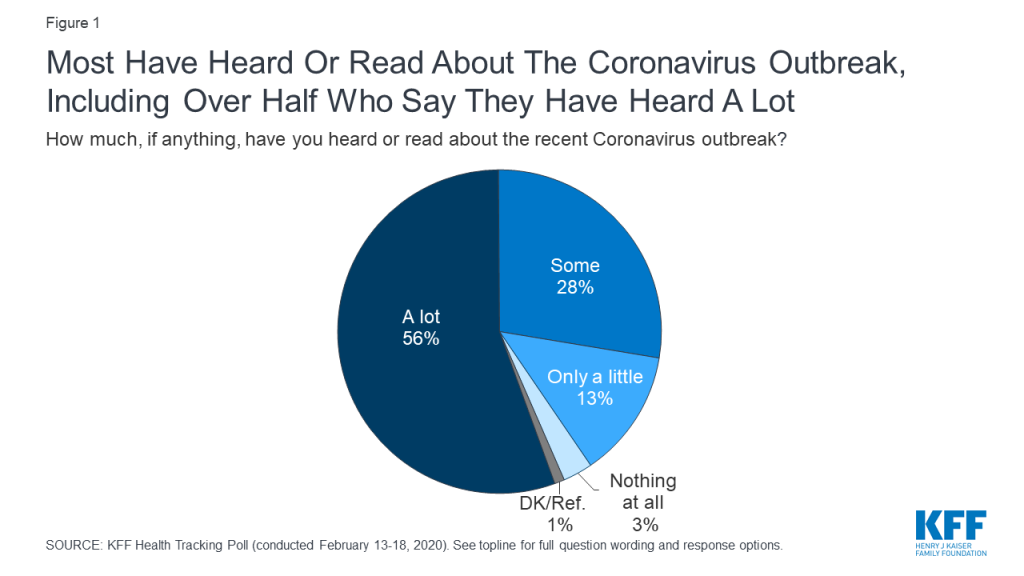
Our poll indicates that the Coronavirus outbreak is on the public’s radar, with an overwhelming majority saying they have heard or read at least “a little” about the outbreak, and over half (56%) saying they have heard or read “a lot.” In addition, nearly nine in ten (87%) are aware that there have been cases of Coronavirus diagnosed in the U.S. As of February 25, there have been 35 confirmed cases of Coronavirus in the United States, and no confirmed deaths. Track the virus’ spread on the KFF COVID-19 Coronavirus Tracker.
Across demographic groups, substantial shares report having heard “a lot” about the Coronavirus, including large shares across gender, education levels, and health status. Adults ages 50 and older are somewhat more likely than younger adults to have heard or read “a lot” about the outbreak compared to other age groups, with about half of adults under age 50 saying they have heard or read “a lot,” and this share rising to nearly two-thirds among adults ages 50 and older. In addition, roughly half of adults with less than a 4-year college degree say they’ve heard “a lot”, and this share rises to 66% among those with a college degree or higher. These patterns by age and education mirror findings from previous surveys showing that older adults and those with higher levels of education tend to pay closer attention to health news. See Appendix 1 for more information on demographic differences.
Figure 1: Most Have Heard Or Read About The Coronavirus Outbreak, Including Over Half Who Say They Have Heard A Lot
The Public IS concerned about the health and economic effects of Coronavirus
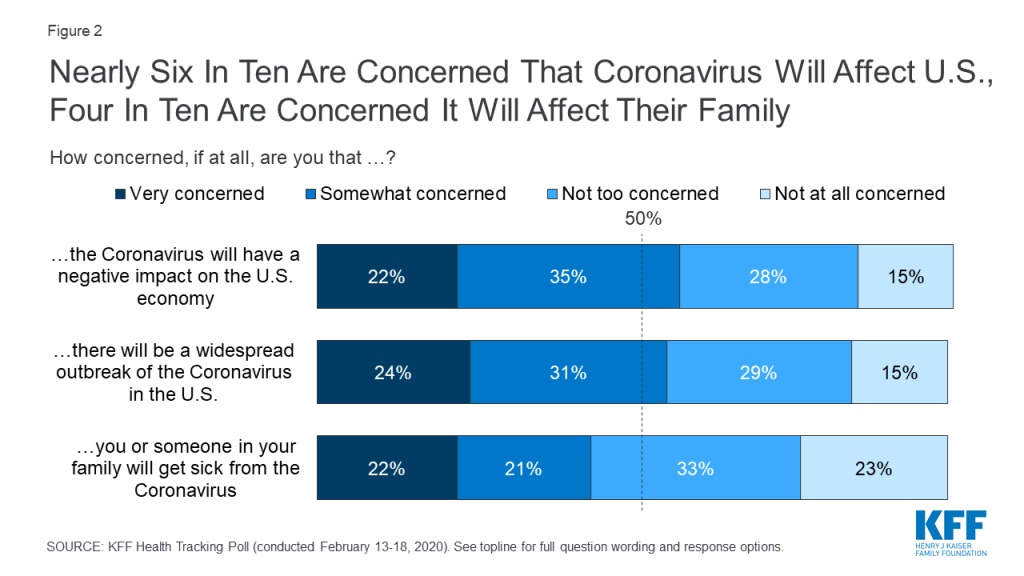
Large shares of the public report feeling concerned about various possible effects of the Coronavirus. At the time the survey was fielded (February 13-18, prior to the U.S. stock market decline on February 24), a majority (57%) said they were very or somewhat concerned that the Coronavirus would have a negative impact on the U.S. economy. A similar share (55%) expressed concern that there will be a widespread outbreak of the Coronavirus in the U.S.
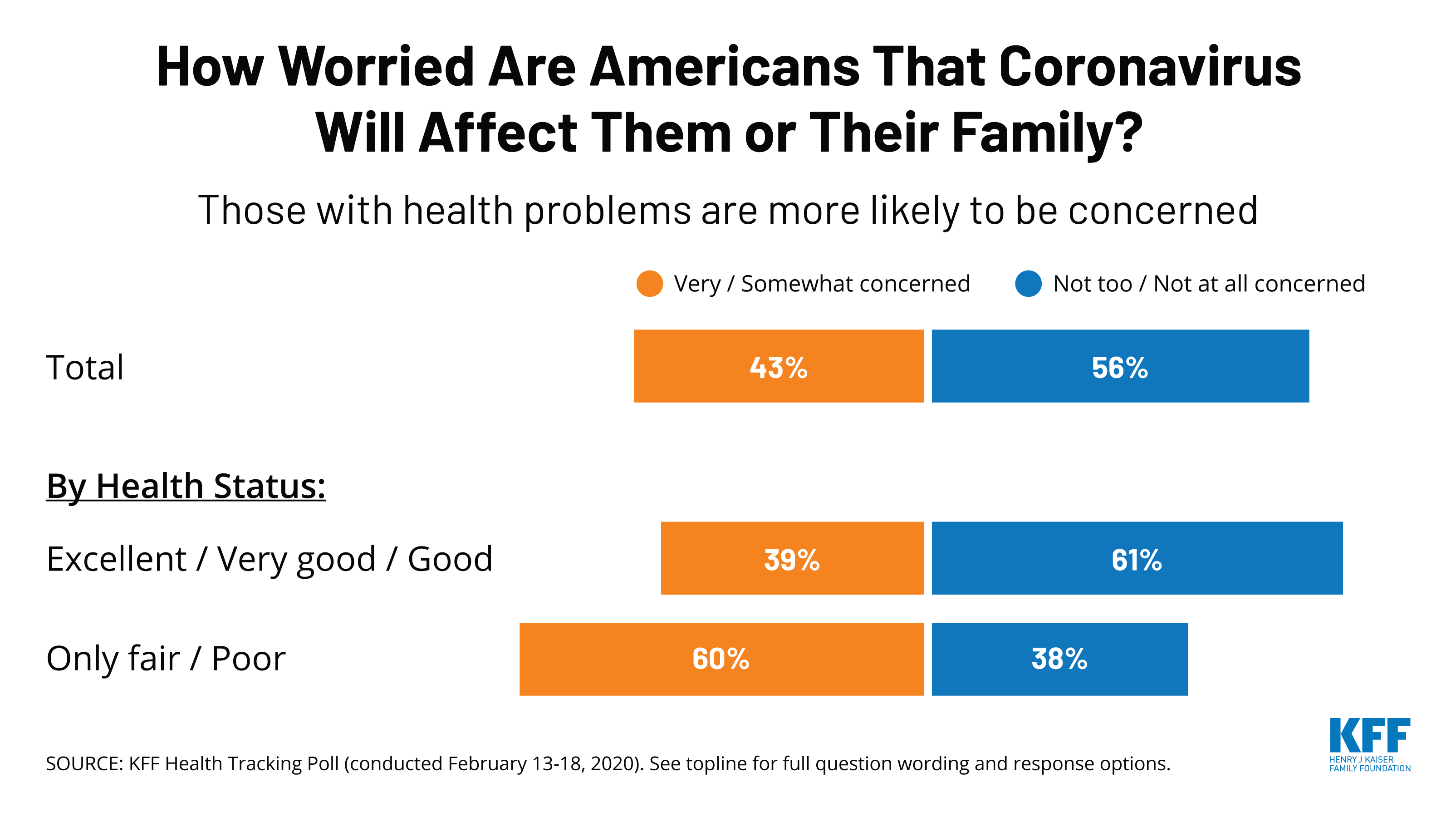
On a personal level, a smaller, yet sizeable share (43%) is concerned that they or someone in their family will get sick from the Coronavirus. Those in fair or poor health are more likely to say they are very or somewhat concerned that they or a family member will contract the Coronavirus compared to those who report having an excellent, very good, or good health status (60% vs. 39% respectively). Furthermore, women, people with lower levels of education as well as adults ages 65+ are more likely to be concerned about this possibility than their counterparts (See Appendix 1).
Figure 2: Nearly Six In Ten Are Concerned That Coronavirus Will Affect U.S., Four In Ten Are Concerned It Will Affect Their Family
Majorities across partisans say the U.s. government is doing enough in their Coronavirus response, and one in five Report Taking Personal Actions
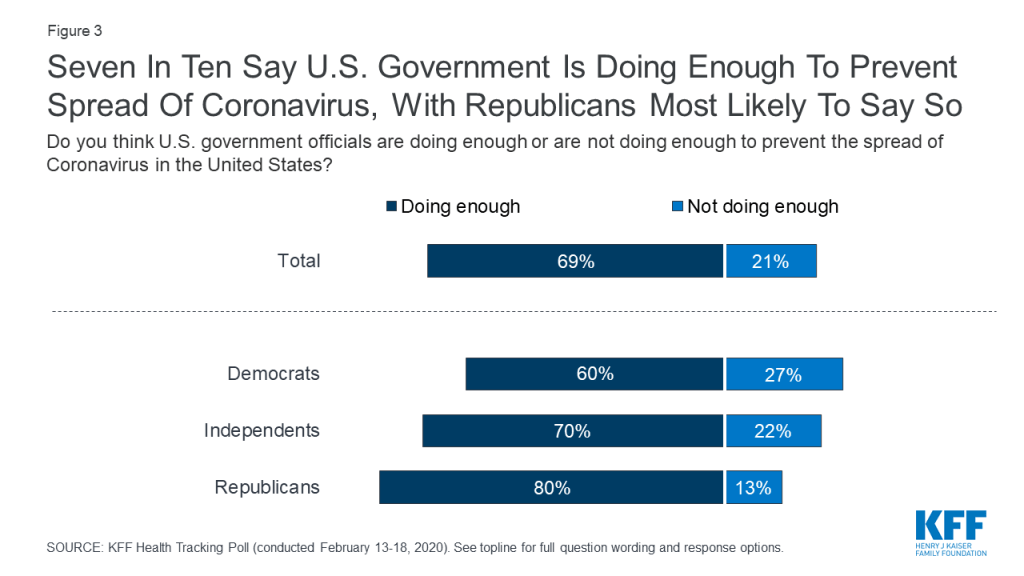
When it comes to the government’s response, seven in ten (69%) say they think U.S. government officials are “doing enough” to prevent the spread of Coronavirus, including large majorities across partisans. Republicans are most likely to say the U.S. government officials are doing enough (80%), followed by independents (70%) and Democrats (60%).
Figure 3: Seven In Ten Say U.S. Government Is Doing Enough To Prevent Spread Of Coronavirus, With Republicans Most Likely To Say So
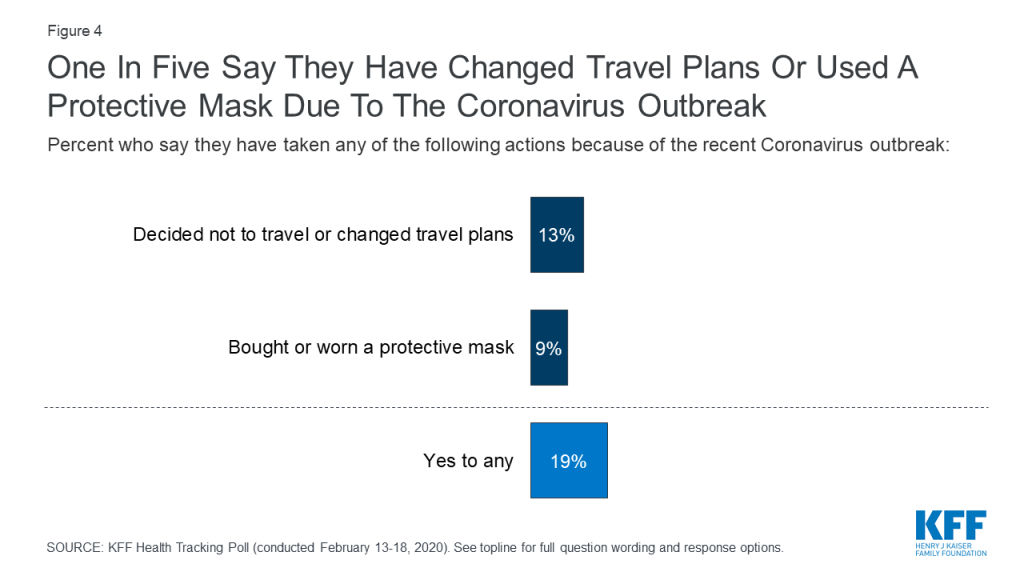
Despite concerns about the possible effects of Coronavirus on the nation as a whole and on individuals and their families, as of the time of this poll, few say that they have taken personal preventive actions due to the Coronavirus outbreak. Roughly one in ten say they have cancelled or changed their travel plans (13%), or have bought or worn a protective mask due to the Coronavirus outbreak (9%). About two in ten overall (19%) say that they have taken either one of these actions.
Figure 4: One In Five Say They Have Changed Travel Plans Or Used A Protective Mask Due To The Coronavirus Outbreak
Appendix
Table A.1: Demographic Characteristics
Age
Gender
Education
Health status
Percent who say…
Total
18–29
30–49
50–64
65+
Male
Female
High school or less
Some college
College+
Excellent/Very good/Good
Fair/Poor
They have heard “a lot” about the recent outbreak
56%
49%
48%
63%
66%
53%
58%
49%
55%
66%
56%
54%
There have been cases of the Coronavirus diagnosed in the U.S.
87
80
87
90
89
87
86
82
86
94
88
85
They are very or somewhat concerned that they or someone in their family will get sick from the Coronavirus
43
34
40
46
54
39
47
53
39
34
39
60
They are very or somewhat concerned that the Coronavirus will have a negative impact on the U.S. economy
57
49
55
60
63
55
59
61
55
53
54
66
They are very or somewhat concerned that there will be a widespread outbreak of the Coronavirus in the U.S.
55
40
52
64
65
50
60
61
54
49
52
69
They have taken any individual actions (changed or cancelled travel or worn a protective mask) due to the Coronavirus