Key Questions About the New Increase in Federal Medicaid Matching Funds for COVID-19

Author: MaryBeth Musumeci
Published: May 4, 2020

Issue Brief

Recent federal legislation, the Families First Coronavirus Response Act,1  amended by the Coronavirus Aid, Relief, and Economic Security (CARES) Act,2  authorizes a 6.2 percentage point increase in federal Medicaid matching funds to help states respond to the COVID-19 pandemic. The additional funds are available to states from January 1, 2020 through the quarter in which the public health emergency period ends, provided that states meet certain conditions. The HHS Secretary declared COVID-19 a nationwide public health emergency on January 31, 2020, retroactive to January 27, 2020. The public health emergency ends when the Secretary declares that the emergency no longer exists or after 90 days, whichever happens first, although the Secretary can renew the public health emergency declaration for subsequent periods.3  This issue brief answers key questions about the new federal funds, drawing on two sets of frequently asked questions about the Families First Coronavirus Response Act and CARES Act issued by the Centers for Medicare and Medicaid Services (CMS). A separate issue brief answers key questions about another provision of the new law, which provides 100% federal funding for states to cover coronavirus testing for uninsured people.

Why is increasing federal Medicaid funding significant at this time?

Increasing the amount of federal matching funds available to states during significant economic downturns is an effective means of providing fiscal relief. An increase in states’ federal medical assistance percentage (FMAP) leverages Medicaid’s existing financing structure, which allows federal funds to be provided to states more quickly and efficiently than establishing a new program or allocating money from a new funding stream. Increased federal matching funds support states in responding to the increased need for services, such as testing and treatment during the COVID-19 public health emergency, as well as increased enrollment as more people lose income and qualify for Medicaid during the economic downturn.

When can states access the increased federal funding?

CMS already has made the enhanced federal funding available to states, and the funding increase will continue through the quarter in which the public health emergency ends. States could draw down the increased federal matching funds beginning in late March for claims paid in the first quarter of 2020, and in early April for the second quarter of 2020.4  Expenditures are considered to be incurred for purposes of drawing down the enhanced matching funds on the date that the state pays a provider, not on the date of service.5  The amount of increased funds available to states is based on states’ estimated budget requests, with claims to be reconciled with allowable expenditures when states file their quarterly expenditure reports.6  U.S. territories also are eligible to receive the increased federal matching funds.

What spending is subject to the increase?

The enhanced federal matching funds generally apply to Medicaid spending that is otherwise reimbursed at the state’s regular FMAP. The FMAP is based on state per capita income and ranges from 50% to 78% in FY 2021. The enhanced federal matching funds do not apply to administrative expenses or to most Medicaid spending that is already subject to an increased match, including ACA expansion adults (90%), family planning services (90%), services received through an Indian Health Services facility (100%), Medicare cost-sharing assistance for Qualified Individuals (100%), and health home services (90% during first eight quarters). CMS recently clarified that the 6.2% enhanced matching funds do apply to Community First Choice (CFC) attendant services and supports, in addition to the regular 6% CFC enhanced match.7  The new enhanced funds also apply to Medicaid disproportionate share hospital expenditures.

The enhanced federal matching funds do not apply to CHIP spending but will result in an indirect increase to the state’s CHIP enhanced FMAP (EFMAP). The CHIP EFMAP is based on a state’s regular FMAP, which is now higher. Specifically, the EFMAP is the state’s regular FMAP increased by the number of percentage points equal to 30 percent of the number of percentage points by which the FMAP is less than 100%, but not to exceed an EFMAP of 85%. In addition, the EFMAP had already been temporarily increased by 11.5 percentage points through September 30, 2020 by previous legislation, not to exceed an EFMAP of 100%.8  For example, a state with a 50% FMAP usually would receive an EFMAP of 76.5% in 2020, but with the 6.2 percentage point increase, the state’s regular FMAP would be 56.2% and the EFMAP would be 80.84%.9 

What are the conditions for states to receive the increased funding, and how do states comply?

States must meet five conditions to receive the enhanced federal matching funds during the COVID-19 public health emergency. First, states must apply Medicaid eligibility standards, methodologies, and procedures that are no more restrictive than those in effect on January 1, 2020. States also must not increase Medicaid premiums above those in effect on January 1, 2020, except that a state could receive the enhanced funds from March 18 through April 17, 2020 if a premium in effect during this period is higher than those in effect on January 1, 2020. This provided a 30-day grace period for states to restore premiums to the amount required on January 1st. In addition, states must reimburse individuals for any higher premiums charged after January 1st to receive the enhanced FMAP.10  States also must cover coronavirus testing and COVID-19 treatment, including vaccines, specialized equipment, and therapies, without cost-sharing while they receive the increased funds. States also cannot increase political subdivisions’ contributions to the non-federal share of Medicaid costs beyond what was required on March 1, 2020.

Finally, states must provide continuous eligibility through the end of the month in which the public health emergency ends for those enrolled as of March 18, 2020 or at any time thereafter during the public health emergency period, unless the person ceases to be a state resident (including those deceased11 ) or requests a voluntary coverage termination. Medicaid eligibility during this time must continue “regardless of any changes in circumstances or redeterminations at scheduled renewals that would otherwise result in termination.”12  For example, individuals who age out of an eligibility group,13  who have changes in income, who lose eligibility for benefits that may affect their Medicaid eligibility such as Supplemental Security Income,14  whose whereabouts become unknown, or who fail to pay premiums must maintain Medicaid eligibility during the public health emergency period.15  Additionally, after the public health emergency period ends, states cannot collect any premiums that were due but unpaid during the continuous eligibility period.16  In response to any changes in circumstances during the public health emergency period, states can increase the level of assistance provided, such as moving an individual to another eligibility group that provides additional benefits, but states cannot move an individual to a group that is eligible for fewer benefits.17  The continuous eligibility requirement does not apply to individuals determined only presumptively eligible for Medicaid.18 

CMS has stated that states “should make a good faith effort” to reinstate coverage for individuals for whom the state had sent a termination notice prior to March 18, 2020, and automatically reinstate coverage “where feasible.”19  “At a minimum, states are expected to inform individuals whose coverage was terminated after March 18, 2020 of their continued eligibility and encourage them to contact the state to reenroll.”20 

By drawing down the enhanced federal funds, states are “passively attesting” to CMS that they will assure compliance with the five conditions.21  If CMS later determines that the state does not satisfy all of the conditions, the state must return the enhanced funds.22  CMS “believe[s] that all states can take steps to be compliant and earn the enhanced funding.”23 

What remaining challenges might states face?

While the FMAP increase is an effective tool, states may still face shortfalls resulting from increased costs from the public health and economic crises associated with COVID-19. The National Association of Medicaid Directors and the National Governor’s Association have called for an additional FMAP increase of 5.8 percentage points, which when combined with the current increase would total 12 percentage points. The conditions attached to states’ receipt of the FMAP increase, such as continuous eligibility, are designed to keep people connected to coverage and provide access to care during the public health emergency period.

Endnotes

  1. Pub. L. 116-127 (March 18, 2020), https://www.congress.gov/116/plaws/publ127/PLAW-116publ127.pdf. ↩︎
  2. Pub. L. 116-136 (March 27, 2020), https://www.congress.gov/116/bills/hr748/BILLS-116hr748enr.pdf. ↩︎
  3. 42 U.S.C. § 247d (a). ↩︎
  4. CMS, Families First Coronavirus Response Act – Increased FMAP FAQs, question C.1 (updated as of 4/13/2020), https://www.medicaid.gov/state-resource-center/downloads/covid-19-section-6008-faqs.pdf. ↩︎
  5. Id. at question A.6. ↩︎
  6. Id. at question C.1. ↩︎
  7. Id. at question A.2; CMS, Families First Coronavirus Response Act, Coronavirus Aid, Relief, and Economic Security Act Frequently Asked Questions, question 36 (posted 4/13/20), https://www.medicaid.gov/state-resource-center/downloads/covid-19-section-6008-CARES-faqs.pdf. ↩︎
  8. 42 U.S.C. § 1397ee (b). ↩︎
  9. See calculation at CMS, Families First Coronavirus Response Act – Increased FMAP FAQs, supra. note 4, question A.4. ↩︎
  10. CMS, Families First Coronavirus Response Act, Coronavirus Aid, Relief, and Economic Security Act Frequently Asked Questions, supra. note 7, question 23. ↩︎
  11. CMS, Families First Coronavirus Response Act – Increased FMAP FAQs, supra. note 4, question B.13. ↩︎
  12. Id. at question B.6. ↩︎
  13. See, e.g., CMS, Families First Coronavirus Response Act, Coronavirus Aid, Relief, and Economic Security Act Frequently Asked Questions, supra. note 7, questions 27, 28, and 32. ↩︎
  14. Id. at question 33. ↩︎
  15. Id. at question 22; CMS, Families First Coronavirus Response Act – Increased FMAP FAQs, supra. note 4, question B.11. ↩︎
  16. CMS, Families First Coronavirus Response Act, Coronavirus Aid, Relief, and Economic Security Act Frequently Asked Questions, supra. note 7, question 24. ↩︎
  17. CMS, Families First Coronavirus Response Act – Increased FMAP FAQs, supra. note 4, question B.12. ↩︎
  18. Id. at question B.8. ↩︎
  19. Id. at question B.7. ↩︎
  20. Id. ↩︎
  21. Id. at question D.3. ↩︎
  22. Id. at question D.1. ↩︎
  23. Id. at question A.1. ↩︎

Key Questions About the New Medicaid Eligibility Pathway for Uninsured Coronavirus Testing

Author: MaryBeth Musumeci
Published: May 4, 2020

Issue Brief

In response to the need to increase access to testing during the COVID-19 pandemic, recent federal legislation, the Families First Coronavirus Response Act,1  amended by the Coronavirus Aid, Relief, and Economic Security Act,2  creates a new optional Medicaid eligibility pathway, with 100% federal matching funds, for states to cover coronavirus testing and testing-related services for uninsured individuals. This new option is available from March 18, 2020 through the end of the public health emergency period. The HHS Secretary declared COVID-19 a nationwide public health emergency on January 31, 2020, retroactive to January 27, 2020. The public health emergency ends when the Secretary declares that the emergency no longer exists or after 90 days, whichever happens first, although the Secretary can renew the public health emergency declaration for subsequent periods.3  This issue brief answers key questions about how the new eligibility pathway is being implemented, drawing on frequently asked questions issued by the Centers for Medicare and Medicaid Services. A separate issue brief answers key questions about implementation of another new provision of the law, which provides increased federal Medicaid matching funds to help states respond to the COVID-19 emergency.

Who is eligible for the new Medicaid coverage group?

Uninsured individuals are eligible for the new “COVID-19 testing group” without regard to income or assets. Individuals are considered uninsured if they are not enrolled in another federal health care program, such as Medicare or Veterans Administration coverage or a commercial group or individual health plan, except that those enrolled in short-term limited duration plans do qualify as “uninsured” for the new group. The new Medicaid coverage group also excludes people who are eligible for a mandatory Medicaid group, except that those in non-expansion states who would be eligible for the ACA expansion group if their state adopted the expansion do qualify for the new group. (People in non-expansion states with income from 100-138% of the federal poverty level are not eligible for the new group if they are enrolled in Marketplace coverage.) The new group also can include current Medicaid enrollees who receive a limited benefit package based on tuberculosis, family planning only services, or medically needy eligibility. In addition to being “uninsured,” individuals in the new group must be a state resident, provide a Social Security Number, and have a qualifying citizenship or immigration status.

How can states adopt the new group?

States can adopt the new group by completing the Medicaid Disaster Relief State Plan Amendment (SPAs) template, which a few states have done to date. States cannot receive federal funds for the new group until they have an approved SPA, although approvals can be retroactive to March 18, 2020.4  As of April 24, 2020 Arizona, Colorado, Louisiana, and Rhode Island have approved SPAs to cover the new group, and California, Iowa, New Mexico, and West Virginia report that they will cover the new group.

How is eligibility determined for the new group?

States can use a variety of simplified and streamlined policies to process applications and determine eligibility for the new group. Initial application processing for the new group can be done at disproportionate share hospitals (which receive Medicaid funds for serving a large number of Medicaid and uninsured individuals) and federally qualified health centers, and states can adopt a simplified application form. Hospitals can determine individuals presumptively eligible for the new group. States can accept self-attestation of uninsured status to establish eligibility for the new group in lieu of documentation.5 

What services are covered in the new group?

The benefit package for the new group is limited to coronavirus testing and testing-related services at no cost-sharing and with 100% federal matching funds. Testing includes diagnostic tests as well as serological tests to detect antibodies.6  Testing-related services include those directly related to the administration of an in vitro diagnostic product or the evaluation of an individual for purposes of determining the need for such a product, such as an X-ray.7  Testing-related services do not include those for treatment of COVID-19 or vaccines.

What remaining challenges might uninsured individuals and states face?

Allowing Medicaid to cover coronavirus testing for the uninsured can help expand access to testing, though individuals may not be aware of this new option and a gap in coverage for treatment services remains for the uninsured. Currently, there are a number of coronavirus test providers that charge an up-front fee to all patients, including those who are uninsured. Examples of posted testing fees in states with high numbers of coronavirus cases to date range from $59 to $229. These fees can be unaffordable for people with low incomes and could prohibit people who are uninsured from obtaining a test. States and providers may face challenges with public education and outreach to individuals who likely do not know that this new coverage option for testing exists during a time in which time and resources are limited.

If an individual eligible for the new group already has incurred an unpaid medical bill for testing, they may be able to have the bill covered under Medicaid’s 90-day retroactive coverage period. However, coverage is only available as of March 18, 2020, so any unpaid testing bills prior to that date do not qualify for provider reimbursement. If an individual already has paid for a test out-of-pocket, even though they would have been eligible for coverage in the new group, they cannot subsequently enroll in the group and be reimbursed, as Medicaid is generally prohibited from reimbursing individuals directly in this way.

While few states have adopted the new optional group to date, states can continue to do so and request that the SPA approval be retroactive to March 18, 2020, using Section 1135 emergency authority, to reimburse providers for outstanding testing bills incurred for uninsured individuals up to 90 days prior to the Medicaid application. Separately, the Families First Coronavirus Response Act authorized $1 billion in federal funds to reimburse providers for coronavirus testing for the uninsured through the National Disaster Medical System outside of Medicaid, though it is not yet clear how the two funding streams will interact.

In addition, HHS recently released guidance detailing how of the CARES Act Relief Fund will be used to reimburse providers for testing as well as treatment services for uninsured COVID-19 patients. Providers receiving these funds cannot balance bill patients. It is not yet clear how much money from the Relief Fund will be used for this purpose.

Endnotes

  1. Pub. L. 116-127 (March 18, 2020), https://www.congress.gov/116/plaws/publ127/PLAW-116publ127.pdf. ↩︎
  2. Pub. L. 116-136 (March 27, 2020), https://www.congress.gov/116/bills/hr748/BILLS-116hr748enr.pdf. ↩︎
  3. 42 U.S.C. § 247d (a). ↩︎
  4. CMS, Families First Coronavirus Response Act, Coronavirus Aid, Relief, and Economic Security Act Frequently Asked Questions, question 46 (posted 4/13/20), https://www.medicaid.gov/state-resource-center/downloads/covid-19-section-6008-CARES-faqs.pdf. ↩︎
  5. Id. at question 9. ↩︎
  6. Id. at question 16. ↩︎
  7. Id. at question 8. By contrast, these items and services are covered only during a visit that results in an order for or administration of a coronavirus test in the private insurance context. 42 U.S.C. § 1320b-5 note (specifying that group and individual health plan coverage is limited to tests and “[i]tems and services furnished to an individual during health care provider office visits. . . urgent care center visits, and emergency room visits that result in an order for or administration of” a testing product, “to the extent such items and services relate to the furnishing or administration of such product or to the evaluation of such individual for purposes of determining the need of such individual for such product.”). ↩︎

When Will The Unemployed Go Back To Work? Many Laid Off Workers Expect To Get Jobs Back In The Short-Term But Experts Caution About Long-Term Unemployment

Published: May 4, 2020

Every Thursday morning the U.S. Department of Labor releases the latest figures on the number of Americans who have filed for unemployment benefits. Last week found another 3.8 million people filing for unemployment, bringing the total initial jobless claims over 30 million adults in the past 6 weeks. While the weekly unemployment claims are staggering, an equally troubling report was released at the end of April by the Congressional Budget Office (CBO) projecting the unemployment rate through the summer will average close to 15 percent (the unemployment rate prior to the coronavirus outbreak was around 4 percent nationwide). The CBO report projects the U.S. labor market will improve after the third quarter, largely driven by a decrease in social distancing restrictions and businesses opening up, but the unemployment rate is expected to stay above 10 percent throughout 2021. This means many of those workers who have been laid off or lost jobs due to the coronavirus outbreak may not be going back to work this year.

The latest KFF Health Tracking Poll finds 55% of those who were employed either full-time or part-time on February 1, 2020 report that they have either lost their job, been furloughed, or had their salary or hours reduced (Note. the CBO report projects about total unemployment not about those who experienced partial job loss including hours or salary reduction).

This includes two-thirds of those in households earning less than $40,000 annually (65%) or between $40,000 and $75,000 (66%). Four in ten of those earning $75,000 or more annually (41%) say they have lost their job or had their income reduced due to the coronavirus outbreak.

Table 1: Lower Income Groups More Likely To Report Job Or Income Loss Due To Coronavirus
Total Employed As Of Feb. 1 (66% of all adults)Household income
<$40K$40k to <$75K$75K+
Lost job, had hours reduced, had to take a pay cut, furloughed55%65%66%41%

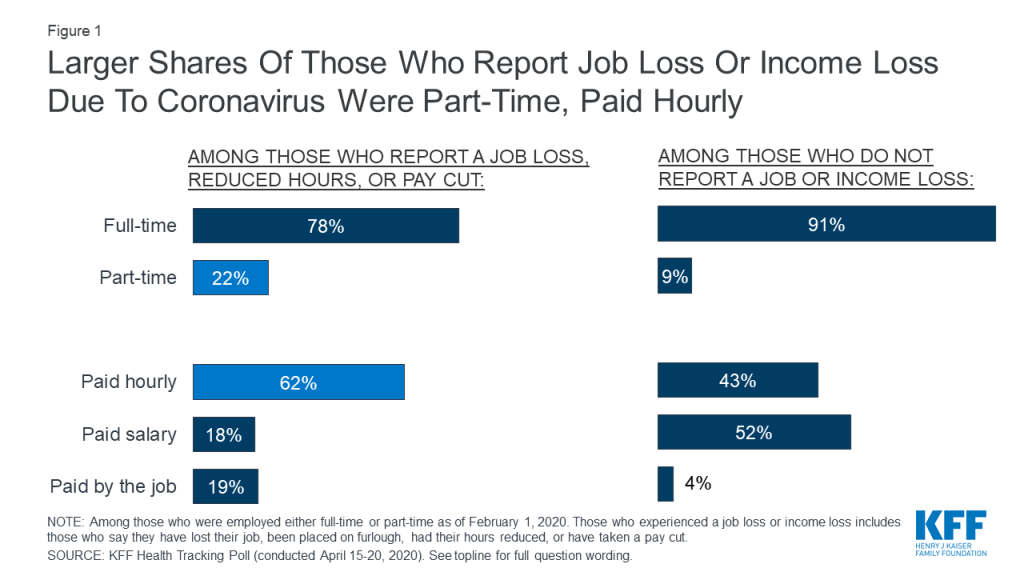
Most of those who report losing their jobs or having their hours reduced were hourly workers (62%), and this group was also more likely than those who didn’t experience a loss of job or hours to say they were part-time workers (22% vs. 9%).

Figure 1: Larger Shares Of Those Who Report Job Loss Or Income Loss Due To Coronavirus Were Part-Time, Paid Hourly

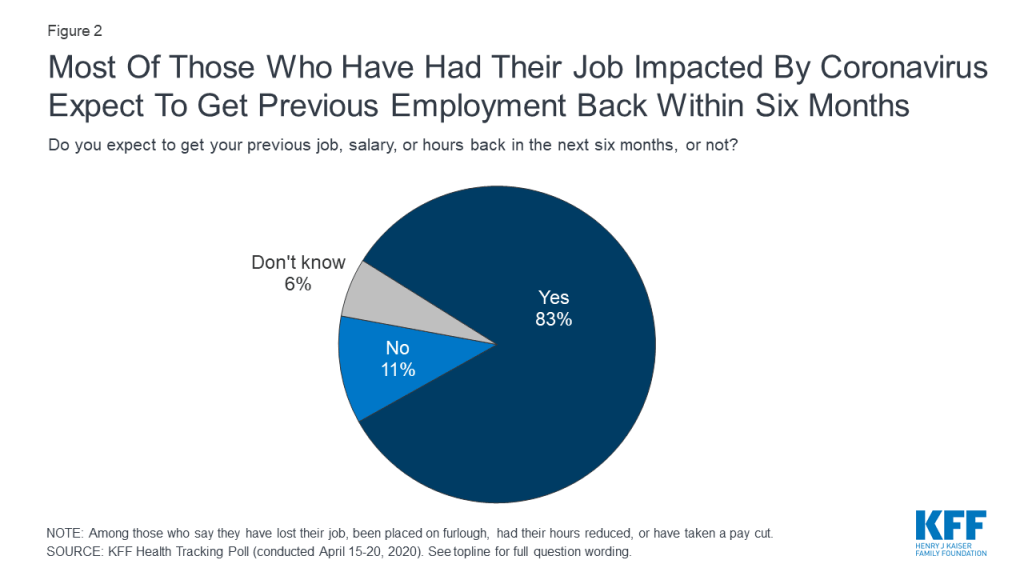
Yet contrary to the CBO projections, the vast majority of these individuals (83%) believe they will get their previous hours, income, or job back within six months, including at least eight in ten across all three income groups (less than $40,000 annually, between $40,000 and $75,000, and $75,000 or more).

Figure 2: Most Of Those Who Have Had Their Job Impacted By Coronavirus Expect To Get Previous Employment Back Within Six Months

In addition, among those who have lost their jobs entirely (26% of those who were employed on February 1st), most say that while their former place of employment is closed, it is only closed temporarily (56%). Few (2%) say their business has been closed permanently.

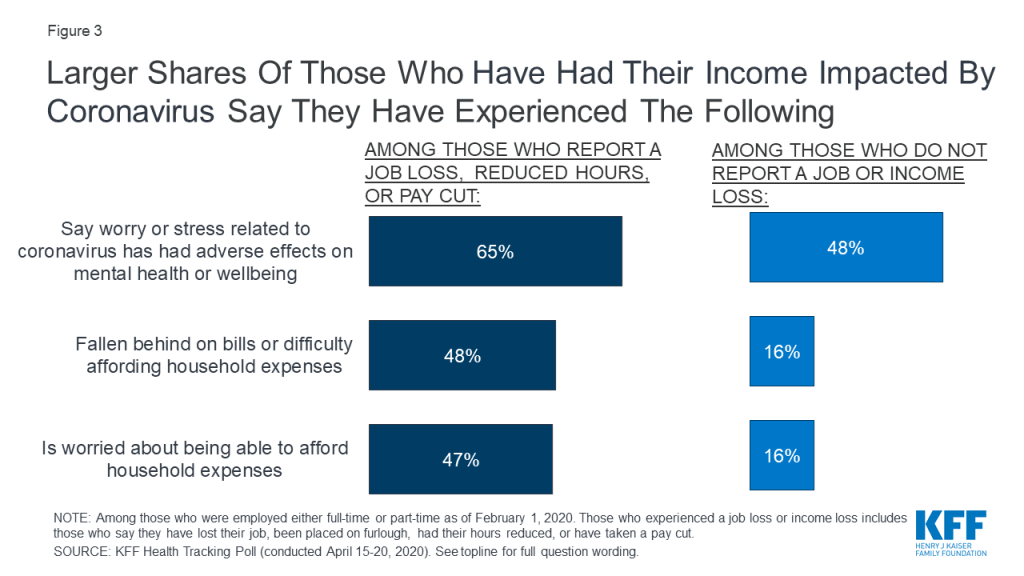
While it is unknown how many businesses may close permanently as a result of the economic impact of the coronavirus outbreak or how long these workers will be without employment or working reduced hours, these workers are already reporting disproportionate impacts on both their economic situation and their mental health and well-being compared to those who were employed as of February 1st and haven’t lost a job, been laid off, or had hours reduced. Two-thirds (65%) of those who lost their job or had income impacted say that worry or stress related to coronavirus has had at least one adverse effect on their mental health or wellbeing such as loss of sleep or appetite, and half say they have fallen behind on household bills or had trouble affording household expenses (48%) or that they are worried about being able to afford these expenses in the future (47%).

Figure 3: Larger Shares Of Those Who Have Had Their Income Impacted By Coronavirus Say They Have Experienced The Following

While those who have lost their jobs or had their employment impacted by coronavirus are incredibly optimistic about how quickly they will regain their previous employment or income, there is a lot of uncertainty about when the U.S. economy will come back. While workers expect to go back to work soon, economic experts suggest that the economic impact of COVID-19, and the personal impact that a loss of employment has on workers and their families, could last much longer than many workers may think. Depending on how the economic situation continues into the fall, these former workers may be entering the voting booths (or voting by mail which is more likely) with their expectations about a return to normal work-life being largely unmet. It is too early to tell who they will hold responsible or blame for their circumstance, but their economic hardships will most certainly be on their minds.

This Week in Coronavirus: April 24 to April 30

Published: May 1, 2020

Every Friday we’ll recap our new coronavirus policy analysis, polling, and journalism. Total cases in the U.S. surpassed 1 million this week. Since last Thursday, actions to ease social distancing requirements went into effect in 14 states: Alabama, Alaska, Colorado, Georgia, Michigan, Minnesota, Mississippi, Missouri, Montana, Oklahoma, South Carolina, Tennessee, Vermont, and Wisconsin.

Here are the latest coronavirus stats from KFF’s tracking resources:

Global Cases and Deaths: This week, total cases worldwide passed 3 million – with approximately 549,000 new cases added between April 23 and April 30. There were approximately 40,000 new confirmed deaths worldwide between April 23 and April 30.

U.S. Cases and Deaths: There have been over 1 million cases in the U.S. There were approximately 200,000 new cases and 13,000 deaths in the United States between April 23 and April 30.

U.S. Tests: There have been approximately 6 million total COVID-19 tests with results in the United States — with over 1.5 million added since last Thursday. 17% of the total tests were positive. There were 19 tests with results per 1,000 people. Our new dashboard highlights the variability by state.

Adults at Higher Risk of Serious Illness if Infected with Coronavirus: 38% of all U.S. adults are at risk of serious illness if infected with coronavirus (92,560,223 total) due to their age (65 and over) or pre-existing medical condition. Of those at higher risk, 45% are at increased risk of serious illness if infected with coronavirus due to their existing medical condition such as such as heart disease, diabetes, lung disease, uncontrolled asthma or obesity.

States Easing Social Distancing Measures: 14 states – Alabama, Alaska, Colorado, Georgia, Michigan, Minnesota, Mississippi, Missouri, Montana, Oklahoma, South Carolina, Tennessee, Vermont, and Wisconsin – have eased some social distancing measures since Thursday, 4/23 Our tracker is updated daily as the quickly changing state responses go into effect. More will go into effect today.

Statewide Actions to Mitigate the Spread of COVID-19 (includes Washington D.C.):

  • Stay At Home Order: 36 statewide orders, 3 orders for high-risk groups only, other action in 1 state, expired orders in 5 states, no action in 6 states
  • Mandatory Quarantine for Travelers: 14 orders for all travelers, 1 order for all air travelers, 6 for travelers coming from certain states, other action in 1 state, no action in 29 states
  • Non-Essential Business Closures: 24 orders to close all non-essential businesses; 4 orders to close all non-essential retail businesses, 14 to close certain non-essential businesses, open with reduced capacity in 3 states, no action in 6 states
  • Large Gatherings Ban: All gatherings prohibited in 15 states, gatherings of 10+ people prohibited in 25 states, gatherings of 20+ people in 1 state, other actions in 4 states, expired bans in 3 states, no action in 3 states
  • State-Mandated School Closures: Closed in 11 states, closed for school year in 33 states, recommended closure in 1 state, recommended closure for school year in 6 states
  • Bar/Restaurant Limits: Closed except takeout/delivery in 44 states, limited on-site service in 5 states, other action in 1 state, no action in 1 state
  • Primary Election Postponement: Postponement in 14 states, cancelled in 1 state, no postponement in 36 states
  • Emergency Declaration: There are emergency declarations in all states and D.C.

State COVID-19 Health Policy Actions (Includes Washington D.C.)

  • Waive Cost Sharing for COVID-19 Treatment: 3 states require, state-insurer agreement in 3 states; no action in 45 states
  • Free Cost Vaccine When Available: 9 states require, state-insurer agreement in 1 state, no action in 41 states
  • States Requires Waiver of Prior Authorization Requirements: For COVID-19 testing only in 5 states, for COVID-19 testing and treatment in 6 states, no action in 40 states
  • Early Prescription Refills: State requires in 18 states, no action in 33 states
  • Premium Payment Grace Period: Grace period extended for all policies in 11 states, grace period extended for COVID-19 diagnosis/impacts only in 5 states, no action in 35 states
  • Marketplace Special Enrollment Period: Marketplace special enrollment period in 12 states, no special enrollment period in 39 states
  • Paid Sick Leave: 13 states enacted, 2 proposed, no action in 36 states

Approved Medicaid State Actions to Address COVID-19 (Includes Washington D.C.)

  • Approved Section 1115 Waivers to Address COVID-19: 1 state has an approved waiver
  • Approved Section 1135 Waivers: 51 states have approved waivers
  • Approved 1915 (c) Appendix K Waivers: 37 states have approved waivers
  • Approved State Plan Amendments (SPAs): 23 states have temporary changes approved under Medicaid or CHIP disaster relief SPAs, 1 state has an approved traditional SPA
  • Other State-Reported Medicaid Administrative Actions: 51 states report taking other administrative actions in their Medicaid programs to address COVID-19

This week’s blog posts in Coronavirus Policy Watch:   

  • Taking Stock of Essential Workers (Blog)
  • States are Shifting How They Cover Prescription Drugs in Response to COVID-19 (Blog)
  • Public Attitudes Towards the Coronavirus Outbreak in Highly Affected Counties (Blog)

The latest KFF COVID-19 resources:

COVID-19 in the United States

  • COVID-19 in Rural America – Is there cause for concern? (Issue BriefNews Release)
  • Double Jeopardy: Low Wage Workers at Risk for Health and Financial Implications of COVID-19 (Issue Brief)
  • Public Attitudes Towards the Coronavirus Outbreak in Highly Affected Counties (Blog Post)
  • Data Note: Requirements for Nursing Homes and Assisted Living Facilities in Response to COVID-19 Vary Across States (Issue Brief)
  • Updated: State Action to Limit Abortion Access During the COVID-19 Pandemic (Issue Brief)

Global COVID-19 Response

  • Archived Recording: KFF and Global Health Council Present a Virtual Town Hall on COVID-19 Response in Low- and Middle-Income Countries (Archived Recording)
  • Pandemic, Global Warming Can Spur Nations To ‘Rebuild Our World For The Better,’ U.N. SG Says In Climate Dialogue Address (KFF Daily Global Health Policy Report)

Trackers and Tools

  • COVID-19 Coronavirus Tracker – Updated May 1, 2020 (Tracker)
  • COVID-19 and Related State Data (State Health Facts)
  • State Data and Policy Actions to Address Coronavirus – Updated April 30, 2020 (Issue Brief)
    • This tracker has been updated with a new data dashboard that integrates data on cases, deaths, testing, hospitalizations, and race/ethnicity into a single resource. The tracker also includes new data on cases in long-term care facilities
  • Medicaid Emergency Authority Tracker: Approved State Actions to Address COVID-19 – Updated April 30, 2020 (Issue Brief)

The latest KHN COVID-19 stories:

  • Trump’s Claim That U.S. Tested More Than All Countries Combined Is ‘Pants On Fire’ Wrong (KHN)
  • Do-It-Yourself Cheek Swab Tested As Next Best Thing To Detect Coronavirus (KHN)
  • California To Widen Pipeline Of Psychiatric Nurse Practitioners (KHNChico Enterprise-Record)
  • Lost On The Frontline (KHNThe Guardian)
  • KHN’s ‘What The Health?’: SCOTUS Decides An ACA Case. No, Not THAT Case. (Podcast)
  • Free Clinics Try To Fill Gaps As COVID Sweeps Away Job-Based Insurance (KHN)
  • ‘An Arm And A Leg’: If Insurer Bills You For COVID Testing, Talk — And Maybe Tweet — It Out (Podcast)
  • As Coronavirus Strikes, Crucial Data In Electronic Health Records Hard To Harvest (KHNFortune)
  • Trump Says N95 Masks Can Be Sterilized For Reuse. Only In A Pinch, Experts Warn. (KHN)
  • COVID Tests Are Free, Except When They’re Not (KHNNPR)
  • Amid Coronavirus Distress, Wealthy Hospitals Hoard Millions (KHNWashington Post)
  • Telehealth Will Be Free, No Copays, They Said. But Angry Patients Are Getting Billed. (KHNNPR)
  • Health Insurers Prosper As COVID-19 Deflates Demand For Elective Treatments (KHNLos Angeles Times)
  • Widely Used Surgical Masks Are Putting Health Care Workers At Serious Risk (KHNThe Guardian)
  • Lost On The Frontline (KHNThe Guardian)
  • Lawmaker Pushing Mental Health Reform: It’s ‘More Needed Than Ever’ (KHN)
  • Consumer Beware: Coronavirus Antibody Tests Are Still A Work In Progress (KHN)
  • The Challenges Of Keeping Young Adults Safe During The Pandemic (KHN)
  • Fear Of Coronavirus Propels Some Smokers To Quit (CHL)

The Paycheck Protection Program and Health Care Enhancement Act: Summary of Key Health Provisions

Author: Kellie Moss
Published: May 1, 2020

On April 24, 2020, the Paycheck Protection Program and Health Care Enhancement Act was signed into law, marking the fourth major legislative initiative to address COVID-19. The three earlier initiatives include:

  • the Coronavirus Preparedness and Response Supplemental Appropriations Act, 2020, which was signed on March 6 and provided emergency funding relief for domestic and global efforts;
  • the Families First Coronavirus Response Act, which was signed on March 18 and provided emergency funding relief for domestic efforts; and
  • the Coronavirus Aid, Relief, and Economic Security (CARES) Act, which was signed into law on March 27 and provided emergency funding relief for domestic and global efforts.

The Paycheck Protection Program and Health Care Enhancement Act includes a number of health provisions to address the domestic outbreak, which are summarized in the table below. This summary does not include other aspects of the domestic response addressed by the Act, such as additional funding provided for the paycheck protection program under the Small Business Administration.

Among the areas addressed is $100 billion for the Public Health and Social Services Emergency Fund at the Department of Health and Human Services (HHS), including $75 billion for additional funding to reimburse hospitals and other health care entities for health care related-expenses or lost revenues attributable to coronavirus (referred to as the CARES Act Provider Relief Fund, which now totals $175 billion overall) and $25 billion for necessary expenses related to COVID-19 testing. The testing funding includes:

  • Not less than $11 billion for states, localities, territories, tribes, tribal organizations, urban Indian health organizations, or health service providers to tribes, of which:
    • Not less than $750 million shall be allocated to tribes and tribal organizations, and
    • Not less than $4.25 billion shall be allocated to States, localities, and territories according to a formula based on the relative number of COVID-19 cases;
  • Not less than $1 billion for the Centers for Disease Control and Prevention (CDC);
  • Not less than $1.8 billion for the National Institutes of Health (NIH);
  • Not less than $1 billion for HHS’ Biomedical Advanced Research and Development Authority (BARDA);
  • $22 million for the Food and Drug Administration (FDA);
  • $600 million for the Health Resources and Services Administration (HRSA);
  • $225 million for rural health clinics; and
  • Up to $1 billion to cover the cost of testing for the uninsured.
Table 1: Division B of the Paycheck Protection Program and Health Care Enhancement Act – Summary of Key Health and Related Provisions
DepartmentOperatingDivision/OfficeKey ProvisionsFund/AccountFundingAvailablePeriod
DIVISION B–ADDITIONAL EMERGENCY APPROPRIATIONS FOR CORONAVIRUS RESPONSE
Title I
DEPARTMENT OF HEALTH AND HUMAN SERVICES (HHS)


Office of the Secretary


Reimbursement for Hospitals and Other Eligible Health Care Providers for Coronavirus-Related Expenses or Lost Revenues: For an additional amount for “Public Health and Social Services Emergency Fund” to prevent, prepare for, and respond to coronavirus, domestically or internationally, for necessary expenses to reimburse, through grants or other mechanisms, hospitals and other eligible health care providers for health care related expenses or lost revenues that are attributable to coronavirus (this pool of funding is known now as the “CARES Act Provider Relief Fund”).

Of the funds provided:

  • These funds may not be used to reimburse expenses or losses that have been reimbursed from other sources or that other sources are obligated to reimburse.
  • Recipients of payments shall submit reports and maintain documentation as the HHS Secretary determines are needed to ensure compliance with conditions that are imposed for such payments.
  • Here “eligible health care providers” means public entities, Medicare or Medicaid enrolled suppliers and providers, and such for-profit entities and not-for-profit entities as the HHS Secretary may specify, within the United States (including territories), that provide diagnoses, testing, or care for individuals with possible or actual cases of COVID-19.
  • The HHS Secretary shall, on a rolling basis, review applications and make payments.
  • That funds shall be available for building or construction of temporary structures, leasing of properties, medical supplies and equipment including personal protective equipment and testing supplies, increased workforce and trainings, emergency operation centers, retrofitting facilities, and surge capacity.
  • Here the term “payment” means a pre-payment, prospective payment, or retrospective payment, as determined appropriate by the HHS Secretary.
  • Payments shall be made in consideration of the most efficient payment systems practicable to provide emergency payment.
  • To be eligible for a payment, an eligible health care provider shall submit to the HHS Secretary an application that includes a statement justifying the need of the provider for the payment and the eligible health care provider shall have a valid tax identification number.
  • Not later than 3 years after final payments are made, the Office of HHS Inspector General shall transmit a final report on audit findings with respect to this program to the Committees on Appropriations of the House of Representatives and the Senate.
  • Not later than 60 days after the date of enactment of this Act, the HHS Secretary shall provide a report to the Committees on Appropriations of the House of Representatives and the Senate on obligation of funds, including obligations to such eligible health care providers summarized by State of the payment receipt. Such reports shall be updated and submitted to such Committees every 60 days until funds are expended.
Public Health and Social Services Emergency Fund

(including transfer of funds)


$75,000,000,000To remain available until expended
Office of the SecretaryCOVID-19 Testing: For an additional amount for “Public Health and Social Services Emergency Fund” to prevent, prepare for, and respond to coronavirus, domestically or internationally, for necessary expenses to research, develop, validate, manufacture, purchase, administer, and expand capacity for COVID-19 tests to effectively monitor and suppress COVID-19, including tests for both active infection and prior exposure, including molecular, antigen, and serological tests, the manufacturing, procurement and distribution of tests, testing equipment and testing supplies, including personal protective equipment needed for administering tests, the development and validation of rapid, molecular point-of-care tests, and other tests, support for workforce, epidemiology, to scale up academic, commercial, public health, and hospital laboratories, to conduct surveillance and contact tracing, support development of COVID-19 testing plans, and other related activities related to COVID-19 testing.

Of the funds provided:

  • States, Localities, Territories, and Certain Others: Not less than $11,000,000,000 shall be for States, localities, territories, tribes, tribal organizations, urban Indian health organizations, or health service providers to tribes for necessary expenses to develop, purchase, administer, process, and analyze COVID-19 tests, including support for workforce, epidemiology, use by employers or in other settings, scale up of testing by public health, academic, commercial, and hospital laboratories, and community-based testing sites, health care facilities, and other entities engaged in COVID-19 testing, conduct surveillance, trace contacts, and other related activities related to COVID-19 testing.
    • Of this:
      • not less than $2,000,000,000 shall be allocated to States, localities, and territories according to the formula that applied to the Public Health Emergency Preparedness cooperative agreement in fiscal year 2019,
      • not less than $4,250,000,000 shall be allocated to States, localities, and territories according to a formula methodology that is based on relative number of cases of COVID-19, and
      • not less than $750,000,000 shall be allocated in coordination with the Director of the Indian Health Service, to tribes, tribal organizations, urban Indian health organizations, or health service providers to tribes.
    • The HHS Secretary shall submit such formula methodology to the Committees on Appropriations of the House of Representatives and the Senate one day prior to awarding such funds.
    • The HHS Secretary may satisfy these funding thresholds by making awards through other grant or cooperative agreement mechanisms.
    • Not later than 30 days after the date of enactment of this Act, the Governor or designee of each State, locality, territory, tribe, or tribal organization receiving funds pursuant to this Act shall submit to the HHS Secretary its plan for COVID-19 testing, including goals for the remainder of calendar year 2020, to include:
      • (1) the number of tests needed, month-by-month, to include diagnostic, serological, and other tests, as appropriate;
      • (2) month-by-month estimates of laboratory and testing capacity, including related to workforce, equipment and supplies, and available tests; and
      • (3) a description of how the State, locality, territory, tribe, or tribal organization will use its resources for testing, including as it relates to easing any COVID-19 community mitigation policies.
    • Funds shall be allocated within 30 days of the date of enactment of this Act.
  • CDC: Not less than $1,000,000,000 shall be transferred to the “Centers for Disease Control and Prevention — CDC-Wide Activities and Program Support” for surveillance, epidemiology, laboratory capacity expansion, contact tracing, public health data surveillance and analytics infrastructure modernization, disseminating information about testing, and workforce support necessary to expand and improve COVID-19 testing.
  • NIH/NCI: Not less than $306,000,000 shall be transferred to the “National Institutes of Health — National Cancer Institute” to develop, validate, improve, and implement serological testing and associated technologies for the purposes specified under this paragraph in this Act.
  • NIH/NIBIB: Not less than $500,000,000 shall be transferred to the “National Institutes of Health — National Institute of Biomedical Imaging and Bioengineering” to accelerate research, development, and implementation of point of care and other rapid testing related to coronavirus.
  • NIH/Office of the Director: Not less than $1,000,000,000 shall be transferred to the “National Institutes of Health — Office of the Director” to develop, validate, improve, and implement testing and associated technologies; to accelerate research, development, and implementation of point of care and other rapid testing; and for partnerships with governmental and non-governmental entities to research, develop, and implement the activities outlined in this proviso. These funds may be transferred to the accounts of the Institutes and Centers of the NIH for these purposes; this transfer authority is in addition to all other transfer authority available to the NIH.
  • BARDA: Not less than $1,000,000,000 shall be available to the Biomedical Advanced Research and Development Authority for necessary expenses of advanced research, development, manufacturing, production, and purchase of diagnostic, serologic, or other COVID-19 tests or related supplies, and other activities related to COVID-19 testing at the discretion of the Secretary.
  • FDA: $22,000,000 shall be transferred to the “Department of Health and Human Services — Food and Drug Administration–Salaries and Expenses” to support activities associated with diagnostic, serological, antigen, and other tests, and related administrative activities.
  • Funds may be used for:
    • grants for the rent, lease, purchase, acquisition, construction, alteration, renovation, or equipping of non-federally owned facilities to improve preparedness and response capability at the State and local level for diagnostic, serologic, or other COVID-19 tests, or related supplies.
    • construction, alteration, renovation, or equipping of non-federally owned facilities for the production of diagnostic, serologic, or other COVID-19 tests, or related supplies, where the HHS Secretary determines that such a contract is necessary to secure, or for the production of, sufficient amounts of such tests or related supplies.
    • purchase of medical supplies and equipment, including personal protective equipment and testing supplies to be used for administering tests, increased workforce and trainings, emergency operation centers, and surge capacity for diagnostic, serologic, or other COVID-19 tests, or related supplies.
  • Products purchased with these funds may, at the discretion of the HHS Secretary, be deposited in the Strategic National Stockpile.
  • HRSA: $600,000,000 shall be transferred to “Health Resources and Services Administration–Primary Health Care” for grants under the Health Centers program and for grants to federally qualified health centers.
    • Certain requirements regarding consideration of applications providing care to those medically underserved in rural vs. urban areas and distribution of grants under the Public Health Service Act shall not apply to these funds.
  • Rural Health Clinics: $225,000,000 shall be used to provide additional funding for COVID-19 testing and related expenses, through grants or other mechanisms, to rural health clinics as defined in section 1861(aa)(2) of the Social Security Act, with such funds also available to such entities for building or construction of temporary structures, leasing of properties, and retrofitting facilities as necessary to support COVID-19 testing.
    • Such funds shall be distributed using the procedures developed for the CARES Act Provider Relief Fund; may be distributed using contracts or agreements established for such program; and shall be subject to the process requirements applicable to such program.
    • The HHS Secretary may specify a minimum amount for each eligible entity accepting such assistance.
  • Up to $1,000,000,000 may be used to cover the cost of testing for the uninsured, using the definitions applicable to funds provided under this heading in Public Law 116-127.
  • Not later than 21 days after the date of enactment of this Act, the HHS Secretary, in coordination with other appropriate departments and agencies, shall issue a report on COVID-19 testing. Such report shall:
    • include data on demographic characteristics, including, in a de-identified and disaggregated manner, race, ethnicity, age, sex, geographic region and other relevant factors of individuals tested for or diagnosed with COVID-19, to the extent such information is available.
    • include information on the number and rates of cases, hospitalizations, and deaths as a result of COVID-19.
    • be submitted to the Committees on Appropriations of the House and Senate, and the Committee on Energy and Commerce of the House of Representatives and the Committee on Health, Education, Labor, and Pensions of the Senate, and updated and resubmitted to such Committees, as necessary, every 30 days until the end of the COVID-19 public health emergency first declared by the HHS Secretary on January 31, 2020.
  • Not later than 180 days after the date of enactment of this Act, the HHS Secretary shall issue a report on the number of positive diagnoses, hospitalizations, and deaths as a result of COVID-19, disaggregated nationally by race, ethnicity, age, sex, geographic region, and other relevant factors. Such report shall include epidemiological analysis of such data.
  • Not later than 30 days after the date of the enactment of this Act, the HHS Secretary, in coordination with other departments and agencies, as appropriate, shall report to the Committees on Appropriations of the House and Senate, the Committee on Energy and Commerce of the House of Representatives, and the Committee on Health, Education, Labor, and Pensions of the Senate on a COVID-19 strategic testing plan. Such plan shall:
    • assist States, localities, territories, tribes, tribal organizations, and urban Indian health organizations, in understanding COVID-19 testing for both active infection and prior exposure, including hospital-based testing, high-complexity laboratory testing, point-of-care testing, mobile-testing units, testing for employers and other settings, and other tests as necessary.
    • include estimates of testing production that account for new and emerging technologies, as well as guidelines for testing.
    • address how the HHS Secretary will increase domestic testing capacity, including testing supplies; and address disparities in all communities.
    • outline Federal resources that are available to support the testing plans of each State, locality, territory, tribe, tribal organization, and urban Indian health organization.
    • be updated every 90 days until funds are expended.
Public Health and Social Services Emergency Fund

(including transfer of funds)


$25,000,000,000To remain available until expended
General Provisions (including transfer of funds)Section 101. Applies certain requirements, authorities, and conditions described in Division B of the CARES Act (specifically, sections 18108 (allows the HHS Secretary to appoint candidates needed for positions to perform critical work relating to coronavirus), 18109 (allows these funds to be used to enter into contracts with individuals for the personal services to prevent, prepare for, and respond to coronavirus, within the U.S. and abroad), and 18112 (requires the HHS Secretary to provide a detailed spend plan to certain committees not later than 30 days after enactment)) to these HHS funds.
Section 102. Funds, except for the $75 billion provided for hospitals and other eligible health care providers’ reimbursement and the $11 billion provided for States and certain others for COVID-19 testing, may be transferred to, and merged with, other appropriation accounts under the headings “Centers for Disease Control and Prevention,” “Public Health and Social Services Emergency Fund,” “Food and Drug Administration”, and “National Institutes of Health” to prevent, prepare for, and respond to coronavirus following consultation with the Office of Management and Budget and provided that the Committees on Appropriations of the House of Representatives and the Senate shall be notified 10 days in advance of any such transfer. Upon a determination that all or part of the funds transferred are not necessary, such amounts may be transferred back.
Section 103. Of the funds provided, up to $6,000,000 shall be transferred to, and merged with, funds made available under the heading “Office of the Secretary, Office of Inspector General” for oversight of activities supported with funds appropriated to HHS to prevent, prepare for, and respond to coronavirus, domestically or internationally.Office of the Secretary/Office of the Inspector General


Funds transferred from Public Health and Social Services Emergency Fund within amounts aboveTo remain available until expended
Title III
GENERAL PROVISIONSSection 304. Funds made available in this Act, or transferred pursuant to authorization granted in this Act, may only be used to prevent, prepare for, and respond to coronavirus.
SOURCE: KFF analysis of the Paycheck Protection Program and Health Care Enhancement Act (P.L. 116-139).

What Does CMS Approval of First COVID-19 Section 1115 Waiver in Washington Mean for Other States?

Authors: Elizabeth Hinton, Robin Rudowitz, and MaryBeth Musumeci
Published: May 1, 2020

Prior to the pandemic, the Trump Administration was encouraging and states were pursuing a range of changes to state Medicaid programs through Section 1115 waivers that ranged from waivers to enable states to receive federal Medicaid funds for services delivered in an institution for mental disease (IMD) for treatment of substance use disorder or serious mental illness, condition Medicaid eligibility on meeting work requirements, and, more recently, not to apply an array of federal rules in exchange for capped federal financing. The focus of Section 1115 waivers has taken a sharp turn to using waivers as a vehicle to respond to needs tied to COVID-19. Historically, Section 1115 authority has provided states with broader flexibility to expand coverage and/or provide uncompensated care to address the direct impact of natural disasters and public health emergencies (like New York City after 9/11, Hurricane Katrina, and Flint Michigan) on state Medicaid and Children’s Health Insurance Program (CHIP) programs. State actions under Section 1115 can help complement what states are doing under other emergency authorities (e.g., Section 1135 and 1915 (c) Appendix K) as well as their own existing authority to respond to emergency needs if approved by CMS.

In response to the COVID-19 public health emergency, CMS developed a new Medicaid section 1115 demonstration opportunity and application template. These demonstrations are intended to enable states to provide medical assistance in ways to help protect the health, safety and welfare of individuals and providers affected by COVID-19. There are requirements for monitoring and evaluation, but CMS is not requiring states to submit calculations showing that the waiver would be budget neutral to the federal government like traditional waivers due to the unprecedented emergency nature of the pandemic. These demonstrations can be retroactive to March 1, 2020 and will expire no later than 60 days after the end of the public health emergency. To date, at least 15 states have submitted Section 1115 COVID-19 related emergency waivers.

CMS approved the first emergency COVID-19 Section 1115 waiver for Washington on April 21, 2020. Most of the approved provisions in the waiver relate to long-term services and supports (LTSS) and follow the “pre-printed” waiver and expenditure authorities outlined in the CMS template. Most of the provisions extend HCBS flexibilities available under 1915 (c) home and community-based services waiver Appendix K to beneficiaries receiving LTSS under SPA authorities. The changes can help support HCBS enrollees and providers.

In the letter to the state, CMS noted that some provisions requested by the state were not approved and others were still under consideration.

  • New temporary coverage: CMS did not approve the state’s request to establish a temporary eligibility group for individuals with incomes at or below 200% FPL. Washington had proposed using Medicaid funds to provide additional subsidies for people enrolled in Qualified Health Plans (QHPs) with income at or below 200% FPL to allow individuals to purchase and use Marketplace coverage with no or low out-of-pocket costs.
  • Coverage for COVID-19 treatment for the uninsured: CMS is continuing to review Washington’s request for Medicaid expenditure authority to create a Disaster Relief Fund to cover costs associated with the treatment of uninsured individuals with COVID-19, housing, nutrition supports and other COVID related expenditures.
  • Other provisions still under review: Other requests under continuing review include the state’s request to make retainer payments to HCBS providers beyond the 30-day limit, other payments to providers beyond those approved, and to allow transportation brokers to directly provide Non-Emergency Medical Transportation (NEMT).

Based on the Washington approval, it is not clear whether/when/how far CMS will go beyond the template to approve other state requests. Similar to CMS’ approach to reviewing/approving Section 1135 emergency waivers, CMS has approved provisions in the template but noted they will continue to consider other requests. During state stakeholder calls, CMS has said they will consider other available federal funds before approving state requests for expenditure authority for certain activities. For example, CMS pointed to relief funds available through CARES as rationale for not approving Washington’s request to cover treatment costs for the uninsured through Medicaid. In addition to Washington, other states have turned to Section 1115 waivers seeking additional flexibility to address pressing health coverage, benefit, delivery, and payment issues. For example, states are seeking to provide temporary housing for homeless individuals who test positive for coronavirus, extend/broaden coverage of home delivered meals, and the authority to use Medicaid funds to cover coronavirus-related testing and treatment for individuals in jails and prisons. During state stakeholder calls, CMS has noted they will not be approving Medicaid expenditure authority now for housing or additional nutrition services nor will they approve provisions that states could implement through other authorities. As the cases and deaths from the pandemic continue to rise, states continue to struggle to address the myriad of issues related to COVID-19. Whether CMS will consider other state requests and how quickly they will respond are outstanding questions.

Taking Stock of Essential Workers

Authors: Audrey Kearney and Cailey Muñana
Published: May 1, 2020

The COVID-19 pandemic has changed the reality of working life for most of the U.S. workforce. Whether they find themselves laid off, working from home, or continuing to go to a workplace while taking measures to protect themselves and their families from infection, nearly all workers have felt some form of disruption in their jobs. In this post, we use data from the latest KFF Health Tracking Poll to examine the experiences of essential workers – those who are still required to work outside of their home during the coronavirus outbreak. Since the start of the pandemic, essential workers have been on the front lines making sure that people are able to continue to access their basic needs. While states have determined different criteria for what is deemed an essential business and essential worker, some jobs are universally essential across the country: hospital and health care delivery workers, grocery store clerks, pharmacy and convenience store employees, airline workers, and first responders, to name a few. While most workplaces have put measures in place to protect workers, essential workers still have a higher risk of contracting coronavirus compared to those who are able to stay home. So, who are these essential workers?

One-third (34%) of U.S. adults say they have been deemed an essential worker and are currently working outside their home. Compared to others who are currently employed (most of whom are presumably able to do their jobs from home), essential workers working outside the home are more likely to be Black (15% vs 5%), have a household income of less than $40,000 (31% vs 19%), and a majority (70%) of essential workers do not hold a college degree, while six in ten (61%) non-essential workers have at least a 4-year degree. One-fourth (26%) of essential workers say that they or someone in their family is a health care worker, one classification of employment that has been considered essential across the country.

Table 1: Demographic Makeup of Essential and Non-Essential Workers
Currently employed -Essential workerCurrently employed -Not an essential worker
Gender
               Male58%50%
               Female42%50%
Race/Ethnicity
               White, non-Hispanic61%72%*
               Black, non-Hispanic15%*5%
               Hispanic16%11%
Household Income
               Less than $40K31%*19%
               $40K- <$90K35%27%
             $90K or more29%49%*
Education
               High school or less35%*17%
               Some college35%*22%
               College +30%61%*
Insurance Status
               Insured86%91%
               Uninsured13%8%
Do you or anyone in your household work in a health care delivery setting, such as a doctor’s office, clinic, hospital, nursing home, or dentist’s office?
               Yes26%*8%
               No74%92%*
NOTE: * indicates a statistically significant difference between columns

Workplaces across the country look very different now than they did just a few months ago, regardless of whether that business or service has been deemed essential or not. While many non-essential workers have been able to adapt to conduct their work online and over the phone, essential places of employment have had to restructure their hours and occupancy to accommodate both the demand of their services and the safety of their workers. Hospitals have also had to reprioritize in order to help care for the influx of possible coronavirus patients. Life has been disrupted for the vast majority of workers, with members of both groups reporting their lives have been disrupted at least some by the pandemic (82% and 90% respectively). Our polling finds that essential workers are more likely than their non-essential counterparts to say that they have had their working hours reduced because of the outbreak (35% vs 24%), while one in five in both groups report experiencing pay cuts (19% of essential workers and 20% of non-essential workers).

Table 2: The Adapting Work Environment
Currently employed -Essential workerCurrently employed -Not an essential worker
How much, if at all, has your life been disrupted by the coronavirus outbreak?
“A lot” or ”some”82%90%*
“Just a little” or “not at all”18%*10%
Have you had your work hours reduced or limited due to the coronavirus outbreak, or not?
Yes35%*24%
No65%76%*
Have you had to take a pay cut or had your income or salary reduced because of the coronavirus outbreak, or not?
Yes19%20%
No81%79%
NOTE: * indicates a statistically significant difference between columns

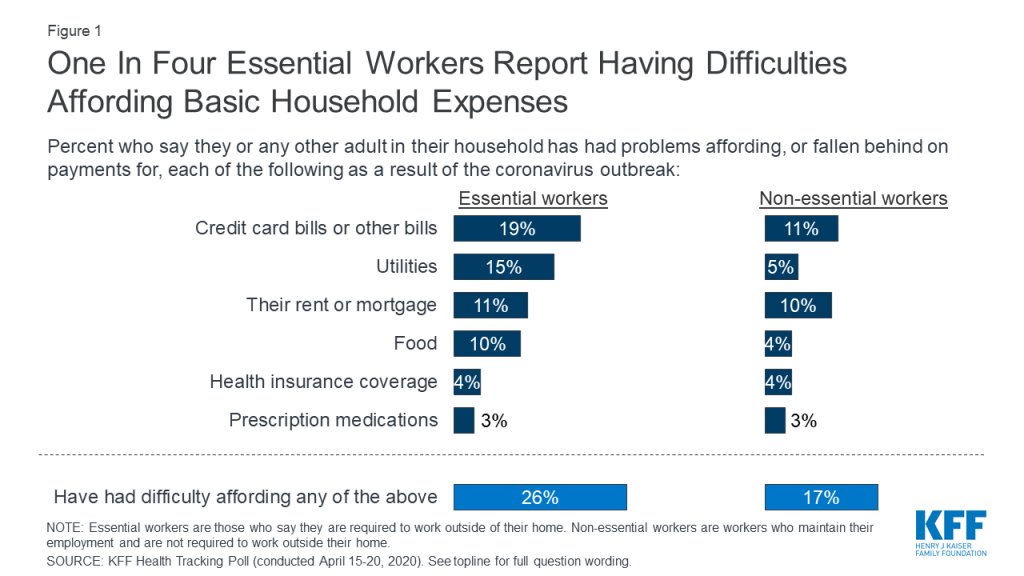
In addition to being more likely to live in lower-income households, essential workers also report experiencing a heavier financial burden due to the coronavirus pandemic. Essential workers report having more difficulty affording necessities, such as credit card bills (19% vs 11%), utilities (15% vs 5%), and food (10% vs 4%), and are also more likely to say they are “very worried” or “somewhat worried” about affording food (24% vs 12%) specifically because of the crisis.

Figure 1: One In Four Essential Workers Report Having Difficulties Affording Basic Household Expenses

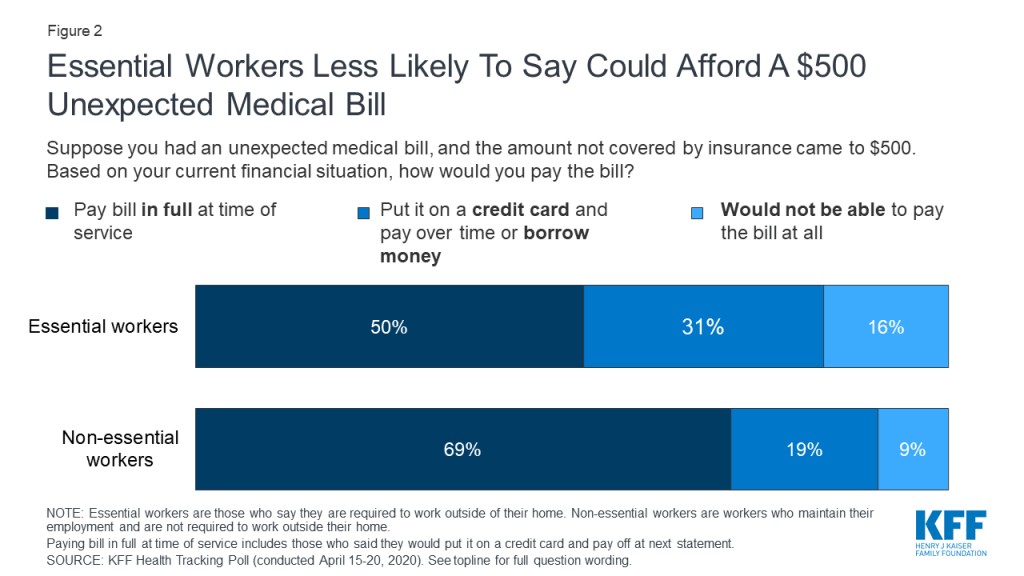
Essential workers working outside their homes may have an elevated risk of contracting coronavirus, and by extension, an increased risk of incurring expenses related to coronavirus treatment. Yet this group is less likely to have the financial resources to pay an unexpected medical bill without going into debt. When asked how they would pay for an unexpected $500 medical bill, a larger share of essential workers say they would have to borrow money to pay back the bill (31% compared to 19% of currently employed non-essential workers) or say they would not be able to pay the bill at all (16% vs 9%).

Figure 2: Essential Workers Less Likely To Say Could Afford A $500 Unexpected Medical Bill

Furthermore, as some of the most vulnerable members of the workforce, essential workers are experiencing the pandemic up-close and personal. KFF polling finds at least three in ten workers—both essential and non-essential—report knowing someone who has tested positive for the coronavirus (33% and 30% respectively). However, a larger share of essential workers say they know someone who has died from complications related to coronavirus (13% vs 6%).

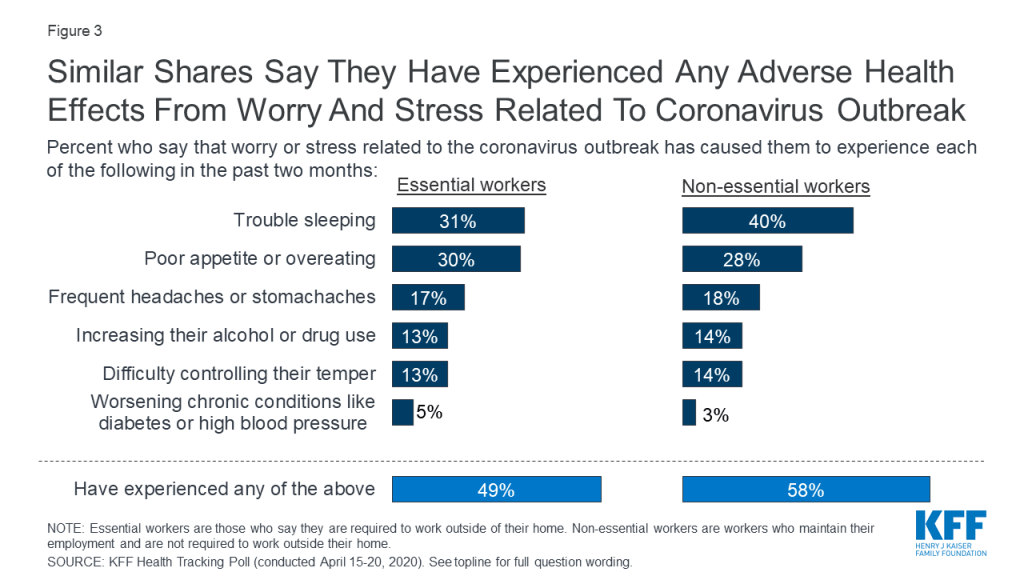
Despite being more likely to report financial challenges and knowing someone who has died from the virus, essential workers are no more likely than non-essential workers to report any adverse effects on their mental health and well-being due to the pandemic. About half of essential workers (49%) and a statistically similar share of non-essential workers (58%) say the coronavirus outbreak has caused them to experience at least one negative effect, including trouble sleeping, appetite problems, increased alcohol or drug use, or worsening chronic health problems.

Figure 3: Similar Shares Say They Have Experienced Any Adverse Health Effects From Worry And Stress Related To Coronavirus Outbreak
News Release

Just Released – COVID-19 in Rural America – Is There Cause for Concern? 

Published: Apr 30, 2020

While to date big cities and major urban areas have seen the greatest number of coronavirus cases and deaths, a new KFF analysis finds the growth rate is now higher in rural areas, where the population tends to be older, younger people are more likely to have high-risk health conditions, and there are fewer intensive-care beds.

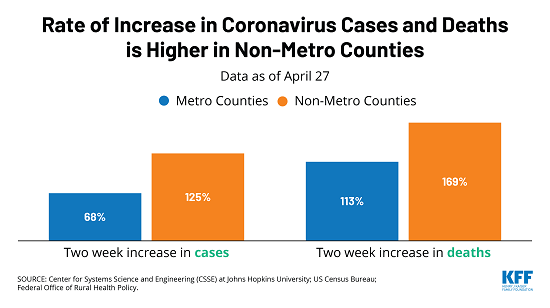
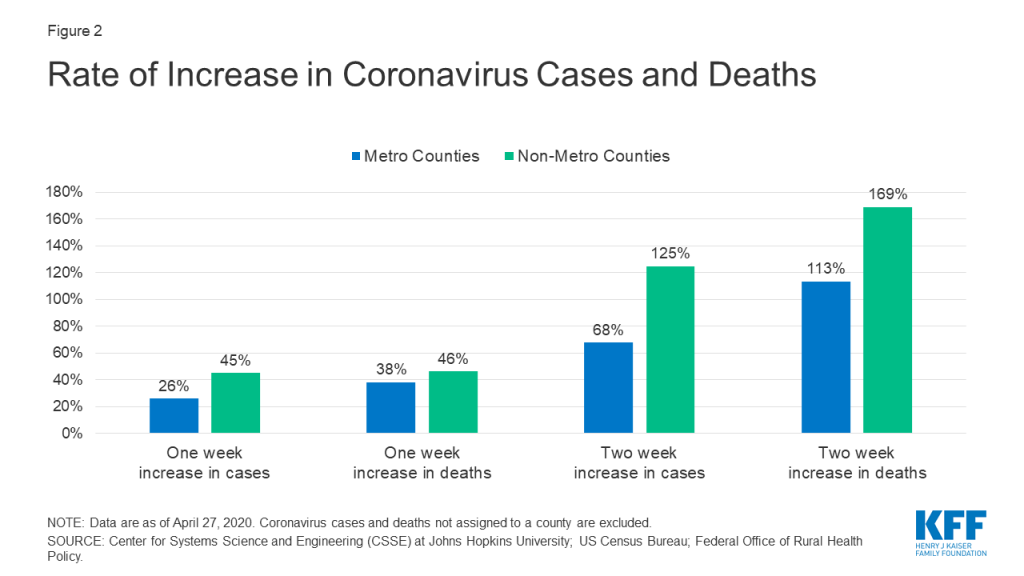
The analysis finds that in the two-week period ending April 27, non-metro, mostly rural counties saw a 125% increase in coronavirus cases (from 51 to 115 cases per 100,000 people) and a 169% increase in deaths (from 1.6 to 4.4 deaths per 100,000 people). Meanwhile, metro counties saw a 68% increase in cases (from 195 cases per 100,000 people to 328) and a 113% increase in deaths (from 8.0 deaths per 100,000 people to 17.0).

Some counties with the highest rates of cases and deaths are located in Georgia, Oklahoma and Montana, which are beginning to ease social-distancing measures originally implemented to slow the spread of coronavirus. The analysis suggests such states could face particular challenges in easing such restrictions, given recent case and death trends in their rural counties.

COVID-19 in Rural America – Is There Cause for Concern?

Authors: Rachel Fehr, Jennifer Kates, Cynthia Cox, and Josh Michaud
Published: Apr 30, 2020

More recent data on COVID-19 in rural America is available here.

While the earliest cases of coronavirus in the United States were reported primarily in urban areas, which still remain hardest hit, there is increasing concern about the impact of the pandemic in rural America. To the extent that rural areas face an increasing impact, they could experience particular challenges given their relative lack of hospital capacity, older average age, and higher shares of their populations with underlying health conditions.

In this analysis, we compare coronavirus cases and deaths in metropolitan and non-metropolitan counties in the United States. We find that while metro counties still have significantly higher cases and deaths per capita, non-metro counties are experiencing faster growth rates, potentially signaling challenges ahead. Some counties with the highest rates of cases and deaths are located in Georgia, where the state has moved to significantly ease social distancing measures.

Differences in Coronavirus Cases and Deaths in Metro and Non-Metro Counties

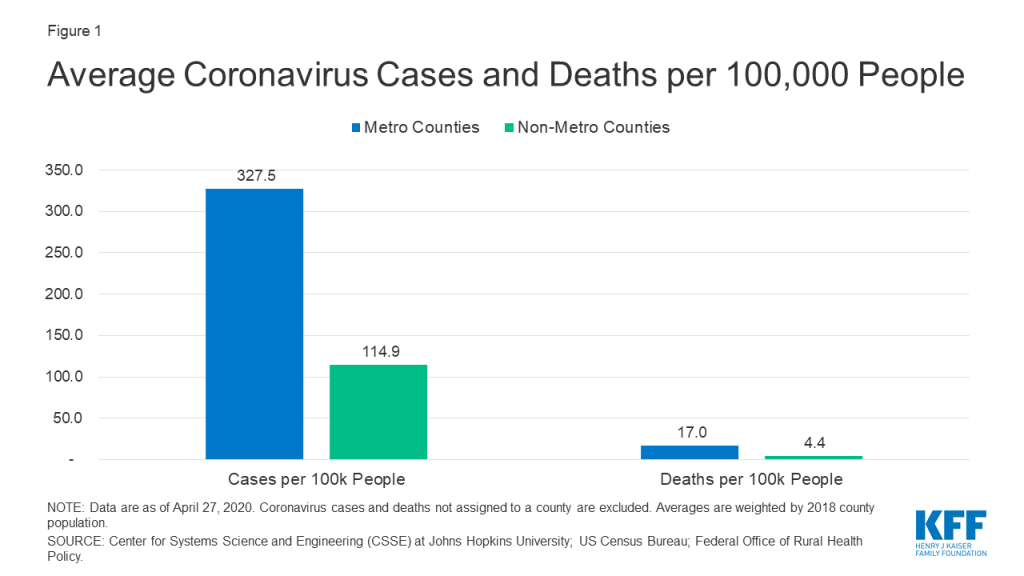
In the United States, about 86% of the population lives in more densely populated metro counties, while 14% lives in non-metro (largely rural) counties. Even adjusting for population size, metro counties have nearly three times as many confirmed coronavirus cases as non-metropolitan counties, and nearly four times as many deaths from COVID-19 as of April 27 (Figure 1), similar to findings in other recent analyses. The general pattern holds true whether we include counties in or around New York City, which has seen the largest number of infections and deaths in the country.

Figure 1: Average Coronavirus Cases and Deaths per 100,000 People

The death rate (COVID-19 deaths per confirmed coronavirus case) is only slightly higher in metro compared to non-metro counties (4.2% compared to 3.8%), meaning that differences in deaths are largely due to differences in infection rates.

The county with the most cases per capita (Lincoln County, Arkansas) is a metro county, while the county with the most deaths per capita (Randolph County, Georgia) is a non-metro county (Table 1).

Table 1: Top Counties by Coronavirus Cases and Deaths (as of April 27)
CountyCases per 100k PeopleDeaths per 100k People
Top 5 Metro Counties by Cases per 100k People
   Lincoln County, Arkansas*5,6340
   Rockland County, New York3,490148
   Pickaway County, Ohio2,9239
   Westchester County, New York2,89499
   Nassau County, New York2,567119
Top 5 Metro Counties by Deaths per 100k People
   Terrell County, Georgia1,939209
   Bronx County, New York2,472177
   Queens County, New York2,123157
   St. John the Baptist County, Louisiana1,739148
   Rockland County, New York3,490148
Top 5 Non-Metro Counties by Cases per 100k People
   Bledsoe County, Tennessee*3,9850
   Marion County, Ohio3,3536
   Cass County, Indiana2,7013
   Louisa County, Iowa2,39118
   Randolph County, Georgia2,283278
Top 5 Non-Metro Counties by Deaths per 100k People
   Randolph County, Georgia2,283278
   Early County, Georgia1,971146
   Mitchell County, Georgia1,320126
   Toole County, Montana598124
   Greer County, Oklahoma1,099103
* High case rates per 100,000 reflect recent testing increases in prisons in these counties.

The map below shows the per capita number of coronavirus cases and deaths across metro and non-metro counties.

While non-metro areas currently have fewer coronavirus cases per capita, both cases and deaths are growing at a faster rate compared to metro counties (Figure 2). In the two-week period between April 13 and April 27, non-metro counties saw a 125% increase in coronavirus cases (from 51 cases per 100,000 people to 115), on average, and a 169% increase in deaths (from 1.6 deaths per 100,000 people to 4.4). Meanwhile, metro counties saw a 68% increase in cases (from 195 cases per 100,000 people to 328) and a 113% increase in deaths (from 8.0 deaths per 100,000 people to 17.0).

Figure 2: Rate of Increase in Coronavirus Cases and Deaths

Discussion

Less densely populated rural areas initially saw slower spread of the new coronavirus, and both cases and deaths remain lower in non-metro areas than metro areas. However, there are troubling signs that the rates of growth in both cases and deaths are increasing more rapidly in rural areas, where the population tends to be older, younger people are more likely to have-risk health conditions, and hospitals have fewer ICU beds per capita.

Due to concerns over the economic effects of stay-at-home orders, some states have started to ease social distancing measures previously put in place. For example, Georgia has started to reopen certain businesses and allow limited dine-in at restaurants, despite some of its counties rising toward the top of this list of U.S. metro and non-metro counties with the highest numbers of COVID-19 deaths per capita. Similarly, Oklahoma and Montana have also begun easing restrictions, despite each having a county among the top five for non-metro COVID-19 deaths per capita. The findings presented here suggest that there may be particular challenges in these states and others, given recent case and death trends in their rural counties.

Methods

Data are current as of April 27, 2020.

We used the Federal Office of Rural Health Policy definitions of metro and non-metro counties, and then compared their reported case and death rates, as well as recent changes in cases and deaths.

This analysis does not include up to 6,971 confirmed COVID-19 cases and 503 COVID-19 deaths for which an associated county cannot be identified.

States are Shifting How They Cover Prescription Drugs in Response to COVID-19

Author: Rachel Dolan
Published: Apr 30, 2020

Medicaid covers 70 million Americans, many with chronic conditions who may be at increased risk for COVID-19. Medicaid beneficiaries, particularly those with chronic conditions, will need access to medications even during social distancing and their ability to meet with providers to obtain refills may be hindered. States are updating policies to allow beneficiaries to access medications during this public health emergency. States can allow beneficiaries to have more of their medication on hand and reduce the barriers to receiving medication by eliminating cost sharing, changing administrative requirements and reducing the need for in-person contact by encouraging mail delivery or eliminating signatures.

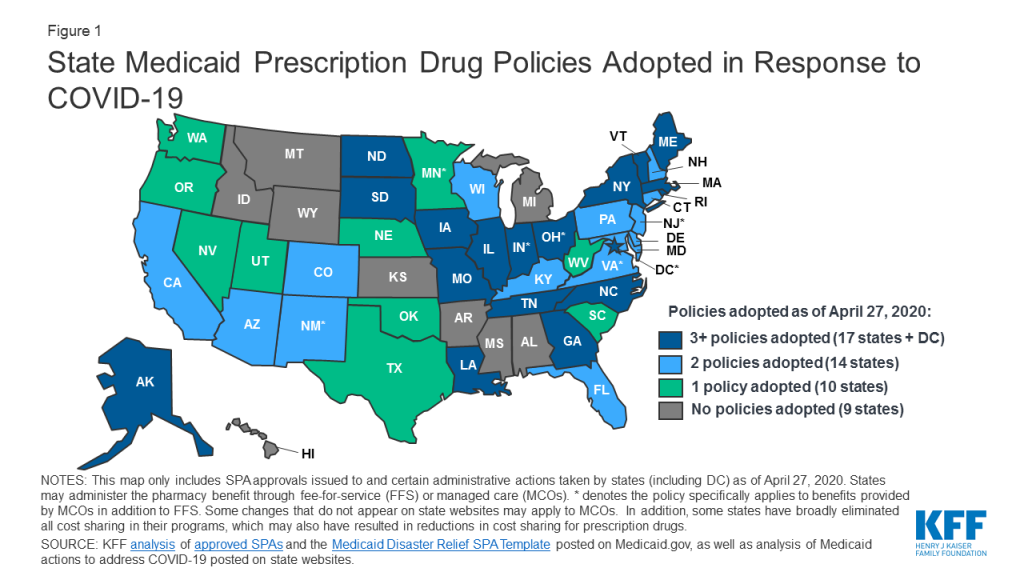
States can use many of the tools traditionally used to manage prescription drug utilization to increase beneficiary access to medications during an emergency, like COVID-19. These tools include prior authorization (PA) requirements, use of preferred drug lists (PDLs), quantity limits and restrictions on refill frequency.  States have flexibility in how they administer their programs and can make a number of changes without the need for approval from CMS. We are tracking state changes to the pharmacy benefit in response to COVID-19 on our SPA and Other Administrative Actions Tracker (Figure 1). We also just posted a comprehensive survey of how states administer the Medicaid pharmacy benefit, which can serve as benchmark going forward.

Figure 1: State Medicaid Prescription Drug Policies Adopted in Response to COVID-19

Most of the changes states are making apply to the fee-for-service (FFS) benefit but some apply more broadly to managed care plans as well and are noted as such in the tracker.  In response to COVID-19, states are:

  • Relaxing restrictions on quantity limits. Quantity limits set the amount of a particular prescription that a beneficiary can have on hand as well as the total number of prescriptions they can access in a month without PA. Most states are allowing beneficiaries to have up to a 90 day supply of maintenance medications. Other states are lifting any limits on the number of drugs a beneficiary can receive at one time or increasing the amount of emergency medication supply allowed. Thirty-two states have either increased quantity amounts or reduced limits on prescriptions.
  • Allowing early refills. States typically set a certain percentage of the medication that must be used before a refill is allowed but many are relaxing these limits and allowing beneficiaries to refill their prescriptions sooner. So far at least thirty-three states have taken action to relax policies around refills.
  • Suspending prior authorization. Prior authorization requires prescribers to obtain approval from the state Medicaid agency before a particular drug can be dispensed. At least nineteen states are suspending prior authorization requirements for specific drugs or extending prior authorization for drugs that have already been authorized. Eleven states have changed the status of certain drugs to “preferred” on their PDLs, like asthma medications, which make them easier for beneficiaries to access. At least five states have eliminated cost-sharing specifically for medications (others have eliminated cost-sharing more broadly in Medicaid).
  • Increasing mail delivery. To assist beneficiaries with social distancing and those in quarantine, states are encouraging mail delivery and relaxing restrictions for delivery. At least eight states have eliminated the need for a signature to show receipt of a prescription.

Our pharmacy benefits survey reports on state management of the pharmacy benefit prior to the COVID-19 emergency, providing context for state policy changes. According to our survey, 46 states maintain a PDL of outpatient prescription drugs, which is a list of drugs states encourage providers to prescribe over others. Prior authorization is also widely used: forty-six states reported that new drugs are “always” or “sometimes” subject to prior authorization. Thirteen states set limits on prescription amounts and total number of prescriptions a beneficiary can have on hand.  States may also charge nominal cost-sharing; 37 states require pharmacy copayments for certain adults. Because states can operate prescription drug programs in fee-for-service (FFS) or managed care, rules and policies may differ based on how the state administers their program – in some cases MCOs must follow rules set by the state for FFS, but in other states MCOs may have more flexibility to manage most of the prescription drug program and assume the risk.  Thirty-five states carve prescription drugs into managed care.

State pharmacy benefit decisions will be important to watch going forward as cases of COVID-19 grow and impact more communities across the US. Medicaid will be a major source of health coverage as individuals lose income and become unemployed. For current and any new enrollees, ensuring access to prescription drugs will be important to manage on-going chronic conditions, particularly as the health system is strained dealing with COVID-19.  We are continuing to update our tracker with the latest information from states and are watching for federal policy and legislative changes.