Racial Equity and Health Policy

the Essentials
  • How Experiencing Racial Discrimination Impacts Health

    This brief highlights research examining mechanisms underlying health outcomes linked to self-reported experiences of racial discrimination, including biological changes, chronic stress, mental health, substance use, pregnancy-related outcomes, and sleep.
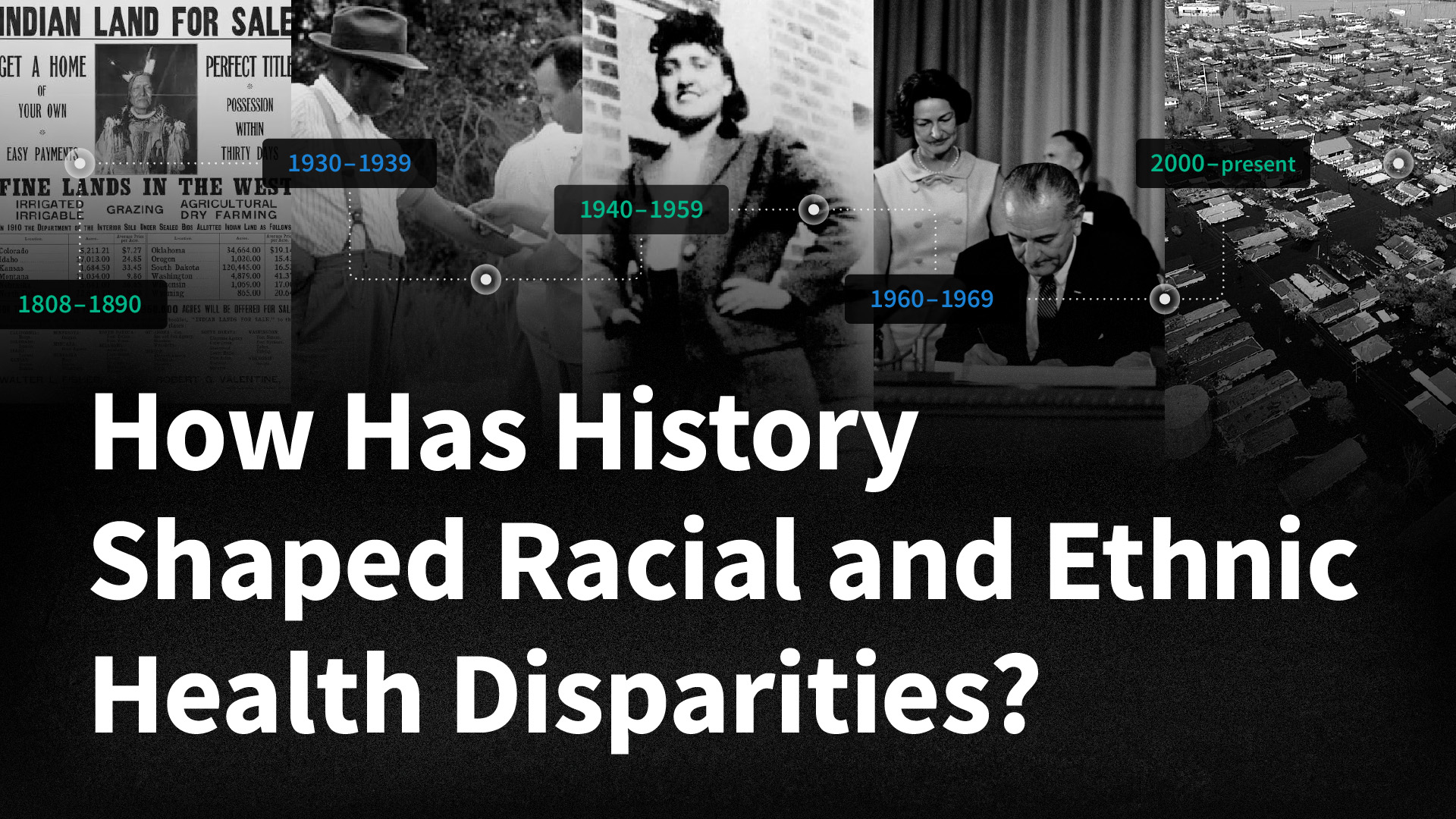
  • Timeline: How History Has Shaped Racial and Ethnic Health Disparities

    This timeline offers a historical view of significant U.S. federal policies and events spanning the early 1800s to today that have influenced present-day health disparities.
  • Health Policy 101: Chapter on Race, Inequality and Health

    Addressing persistent racial and ethnic disparities in health and health care is important for improving the nation’s health and economic prosperity. KFF explains such disparities and the factors that drive them, examines the actions to address them, and outlines future considerations.
  • Key Data on Health and Health Care by Race and Ethnicity

    Racial and ethnic disparities in health and health care remain a persistent challenge in the United States. An updated KFF resource examines how people of color fare compared to White people across 64 measures of health, health care, and social determinants of health.

Survey of Immigrants

KFF-New York Times Survey: Immigrants Report Rising Fear, Negative Economic and Health Impacts, and Changing Political Views During the First Year of President Trump’s Second Term

The 2025 Survey of Immigrants, a partnership between KFF and The New York Times, takes an in-depth look at the experiences of immigrants during the first year of President Trump’s second term, including their worries related to increased immigration enforcement, their health and economic wellbeing, and the political views and preferences of immigrant voters. The survey paints a portrait of families under strain — where fear of detention and economic instability are negatively impacting immigrants’ health and reshaping immigrant families’ daily lives and views of U.S. political parties.

Read the News Release | Explore The New York Times’ Reporting
Stay informed.

Stay informed.

Filter

11-20 of 609 results

  • Overview of Health Coverage and Care for Individuals with Limited English Proficiency (LEP)

    Issue Brief

    As of 2024, approximately 28.5 million people in the United States ages five and older have limited English proficiency (LEP). Individuals with LEP disproportionately experience gaps in health insurance coverage and poor health outcomes, in part, due to language access barriers. Because people of color are more likely than White people to have LEP, these barriers can also exacerbate racial and ethnic disparities in health and health care.

  • Five Key Facts About People Experiencing Homelessness

    Issue Brief

    This data note reviews trends in homelessness and characteristics of people who are homeless using data from HUD’s Point-in-Time (PIT) count of sheltered and unsheltered people experiencing homelessness.

  • Recent Research on How Experiencing Racial Discrimination Impacts Health

    Issue Brief

    This brief provides an overview of the relationship between racial discrimination and health and highlights research examining mechanisms underlying health outcomes linked to experiences of racial discrimination, including biological changes, chronic stress, mental health, substance use, pregnancy-related outcomes, and sleep.

  • State Health Coverage for Immigrants and Implications for Health Coverage and Care

    Issue Brief

    Noncitizen immigrants, particularly those who are undocumented, face significant barriers to accessing health coverage and care and are significantly more likely than citizens to be uninsured. This brief provides an overview of state health coverage programs for immigrants, including among states that have taken up options in Medicaid and the Children’s Health Insurance Program (CHIP) to expand coverage for lawfully present immigrants and/or established fully state-funded programs to fill gaps in coverage for immigrants.

  • Children in Immigrant Families: Key Facts on Health Coverage and Care

    Issue Brief

    This brief provides key data on socioeconomic characteristics and health coverage among children (aged 18 and under) of immigrants based on KFF analysis of 2024 American Community Survey data. It also examines potential implications of recent policies and actions on the health and well-being of children in immigrant families drawing on KFF survey data from Fall 2025.

  • Key Facts on Health Coverage of Immigrants

    Fact Sheet

    This fact sheet provides an overview of health coverage for immigrants based on data from the 2023 KFF/LA Times Survey of Immigrants, the largest nationally representative survey focused on immigrants and discusses potential implications of incoming Trump administration policies for coverage of immigrants.