Public Opinion

Caregivers in the U.S.

Experiences of Unpaid Caregivers in the U.S.

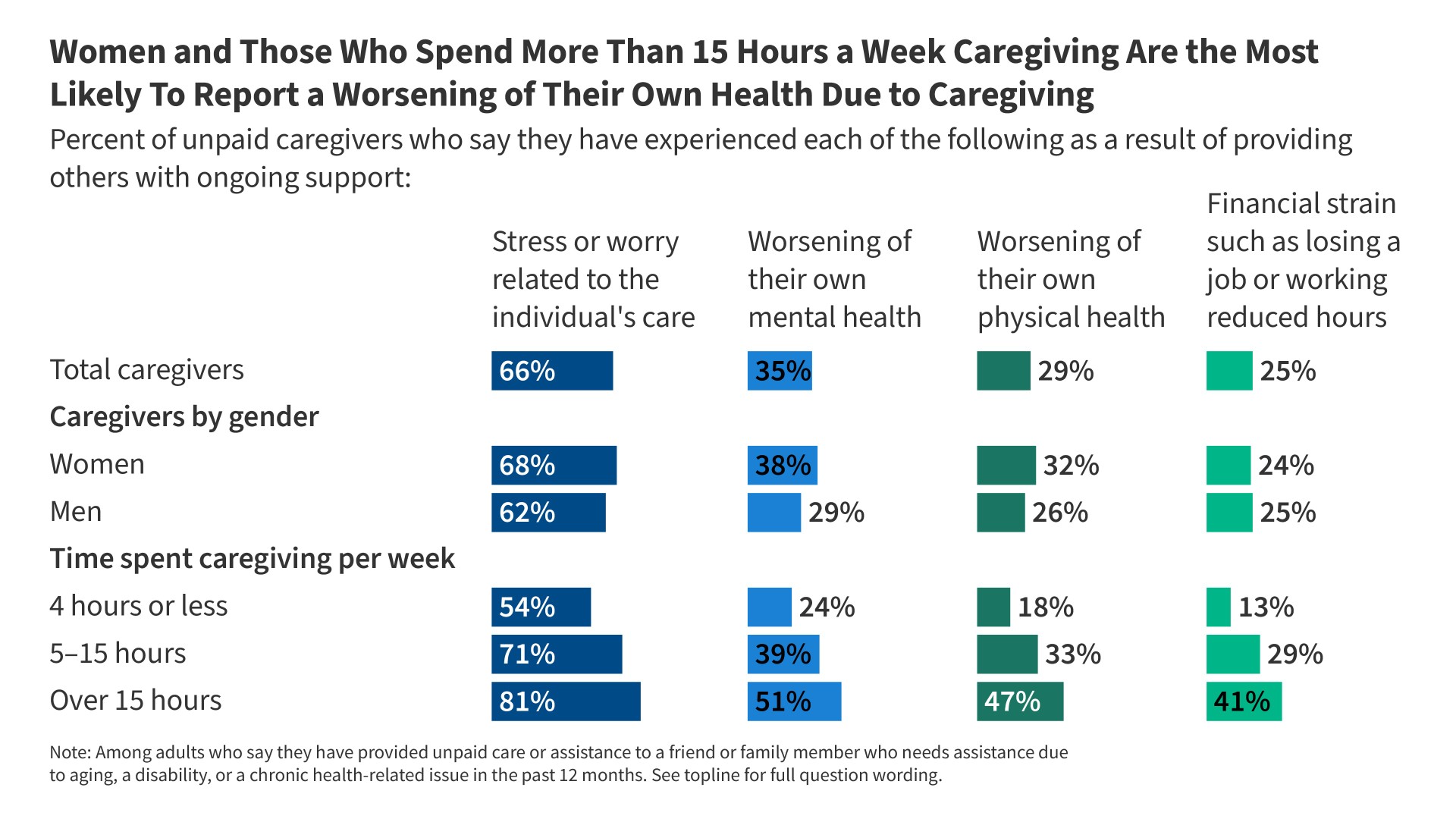
About 3 in 10 adults in the U.S. say they have provided unpaid care to a friend or family member who needs assistance due to aging, disability, or a chronic condition in the past 12 months. The median amount of time that such caregivers provide unpaid assistance is five hours per week, though the number of hours varies widely. Unpaid caregivers are disproportionately women. Read the news release.
HeaLTH in the Midterms

Health Care in the 2026 Midterm Election

This dashboard focuses on KFF’s analysis of the role health care costs and other health policy issues played in voters’ decisions in the 2026 midterm elections, including in key Senate races. It examines the role of rising health costs on voters’ decisions, views on the Trump administration’s health care policies, and opinions on the government’s role in health care amid discussions of Medicare for All.

Abortion on the Ballot in 2026: Polling Insights from Voters in Four States

This dashboard provides KFF’s analysis of the role abortion played in voters’ decisions in the 2026 midterm elections, with a focus on four states with abortion-related ballot measures: Idaho, Missouri, Nevada, and Virginia. It examines support for each of the measures across groups, including additional questions in Missouri.

What Do the Midterm Election Results Mean for Health Care? 

Event Date:

On November 5 at Noon ET, join KFF for a special post-election discussion and live “What the Health” podcast taping. Part of the discussion will focus on public opinion survey data on how voters weighed health care as they went to the polls nationally and in the four states with abortion-related ballot initiatives. 

Midterm Voters Give Democrats a Big Advantage to Handle Health Care

Quick Insights

KFF’s analysis of the 2026 Voter Poll by SSRS shows midterm voters gave Democrats a 19-percentage-point advantage on which party is better able to handle health care. Voters also gave Democrats a narrow edge on handling the economy (43% vs. 37%), a reversal from 2024, when Trump had a 10-point advantage over Harris. "In an election focused on affordability, Democrats’ messaging on health care costs appears to have resonated with voters and may have contributed to the party’s gains."

Health Information and Trust

About Half of Parents Mistakenly Believe Spacing Out Vaccines Is Healthier for Children; Half Say No Strong Evidence to Support Such a Claim

KFF Tracking Poll on Health Information and Trust: Fall 2026 Update on Vaccine Views

The latest KFF Tracking Poll on Health Information and Trust finds about half of parents mistakenly believe spacing out vaccines is healthier for children, while confidence in many long-standing childhood vaccines is high across partisans. These findings take on new relevance following President Trump’s recent executive order calling for changes in U.S. childhood vaccine recommendations, including splitting the measles, mumps, and rubella (MMR) vaccine—currently given as a single combined shot—into three separate vaccines across multiple visits.

Dashboard: Polling on Health Information and Trust

Drawing on KFF’s poll findings, this interactive dashboard tracks the public’s trusted sources for health information, attitudes toward vaccines, and use of news, social media, and AI for health-related information.

Health Tracking PollS

Democrats Hold a Nearly 2-to-1 Advantage Over Republicans on Handling the Cost of Health Care

Health Care Issues in the Lead-Up to the 2026 Midterm Election 

In the lead up to the midterms, health care costs remained tied with gas as voters’ top midterm concerns. Two-thirds of U.S. adults also favored Medicare-for-all, a new high in KFF Polling, but support shifts when competing claims from critics and proponents are heard.

Most Democratic Voters Want To Hear Candidates Discuss Health Costs and Future of Health Programs; More Republicans Focused on Fraud

Public Views on Fraud in Health Programs

As the 2026 midterms approach, health care costs remain voters’ top health priority, but fraud in government health programs, including Medicaid and Medicare, is resonating with Republican voters, 55% of whom say it’s extremely important for candidates to address.

Mifepristone and the Midterms

Amid an ongoing FDA re-review of mifepristone, awareness of the safety and prevalence of the abortion pill remains limited. This KFF poll also finds that the voters who say abortion policy is an important issue for 2026 midterm candidates to discuss are disproportionately Democrats.

MAHA and the Midterms

This KFF Health Tracking Poll finds that the cost of health care is a more prominent focus for Make America Healthy Again (MAHA) voters than issues like food and vaccine policy. Four in ten MAHA voters (42%) choose lowering health costs as the most important health priority, outranking other MAHA priorities.

the essentials

Health Tracking Poll

Our signature survey project provides up-to-date data on the public’s health care views, knowledge, and experiences.

Tracking the Public’s Views on the ACA

Tracking the Public’s Views on the ACA

This interactive tool tracks public opinion on the Affordable Care Act, from the inception of the law to the present, including trends based on party identification, income, age, gender, and race/ethnicity.

Health Information and Trust Tracking Poll

The Health Information and Trust Tracking Poll is part of KFF’s Health Information and Trust Initiative, which tracks health misinformation and analyzes its impact on the public.

Stay informed.

Stay informed.

Filter

71-80 of 1,870 results

  • KFF Health Tracking Poll: Health Care Costs in the Current Moment of Economic Anxiety

    Poll Finding

    As economic anxiety rises, KFF's Health Tracking Poll finds that younger adult, LGBT adults, Hispanic adults, and adults with modest incomes are among groups most likely to report difficulty earning a living and affording health care. Large shares of those who are uninsured or purchase their own insurance also report challenges earning a living and paying for care.

  • KFF Health Tracking Poll: Knowledge and Views of Medication Abortion

    Poll Finding

    This KFF Health Tracking Poll finds that many, including women of reproductive age, remain unfamiliar with key facts about mifepristone. Fewer than half of all adults say they believe abortion pills are safe now, compared to over half of all adults two years ago. This poll explores awareness and perception of the recent FDA review of the medication, and support for policies aimed at restricting it.

  • Poll: 1 in 3 ACA Marketplace Enrollees Say They Would “Very Likely” Shop for a Cheaper Plan If Their Premium Payments Doubled; 1 in 4 Say They “Very Likely” Would Go Without Insurance

    News Release

    If the amount they pay in premiums doubled, about one in three enrollees in Affordable Care Act Marketplace health plans say they would be “very likely” to look for a lower-premium Marketplace plan (with higher deductibles and co-pays) and one in four would “very likely” go without insurance next year, finds a new survey of Marketplace enrollees fielded shortly after open enrollment began in the first weeks of November. The survey captures the views and…

  • 2025 KFF Marketplace Enrollees Survey

    Poll Finding

    This survey explores how ACA Marketplace enrollees expect to respond if their premium payments doubled as expected in 2026 when enhanced premium tax credits are set to expire. About a third would very likely look for a lower-cost plan, even if it had higher deductibles, and about a quarter would very likely end up uninsured. The survey also examines how increased health care costs may affect their finances and the potential impact in next year's…

  • KFF/New York Times 2025 Survey of Immigrants: Health and Health Care Experiences During the Second Trump Administration

    Poll Finding

    Since President Trump took office in January 2025, four in ten immigrant adults say they have experienced negative health impacts due to immigration-related worries and about one in five say their child’s well-being has been impacted. Many also report skipping or delaying health care and avoiding applying for or stopping participation in government assistance programs, with some of the largest impacts among likely undocumented immigrants and immigrant parents.

  • KFF/New York Times 2025 Survey of Immigrants: Political Implications of Immigrant Voters’ Views on Immigration Enforcement

    Poll Finding

    Most immigrant voters disapprove of President Trump’s handling of immigration, including large majorities who disapprove of policies like “third country” deportations and efforts to end birthright citizenship. These views may have implications for future elections, as six in ten immigrant voters say the administration’s immigration enforcement actions have had an impact on which political party they support.

  • KFF/New York Times 2025 Survey of Immigrants: Worries and Experiences Amid Increased Immigration Enforcement

    Poll Finding

    Amid the Trump administration’s increased immigration enforcement efforts, one in five immigrants say they personally know someone who has been arrested, detained or deported since January. Four in ten worry they or a family member could face such action. Many immigrants, including naturalized citizens and those who are lawfully present, say they feel less safe, are avoiding activities outside their home, and no longer view the U.S. as a good destination for immigrants.